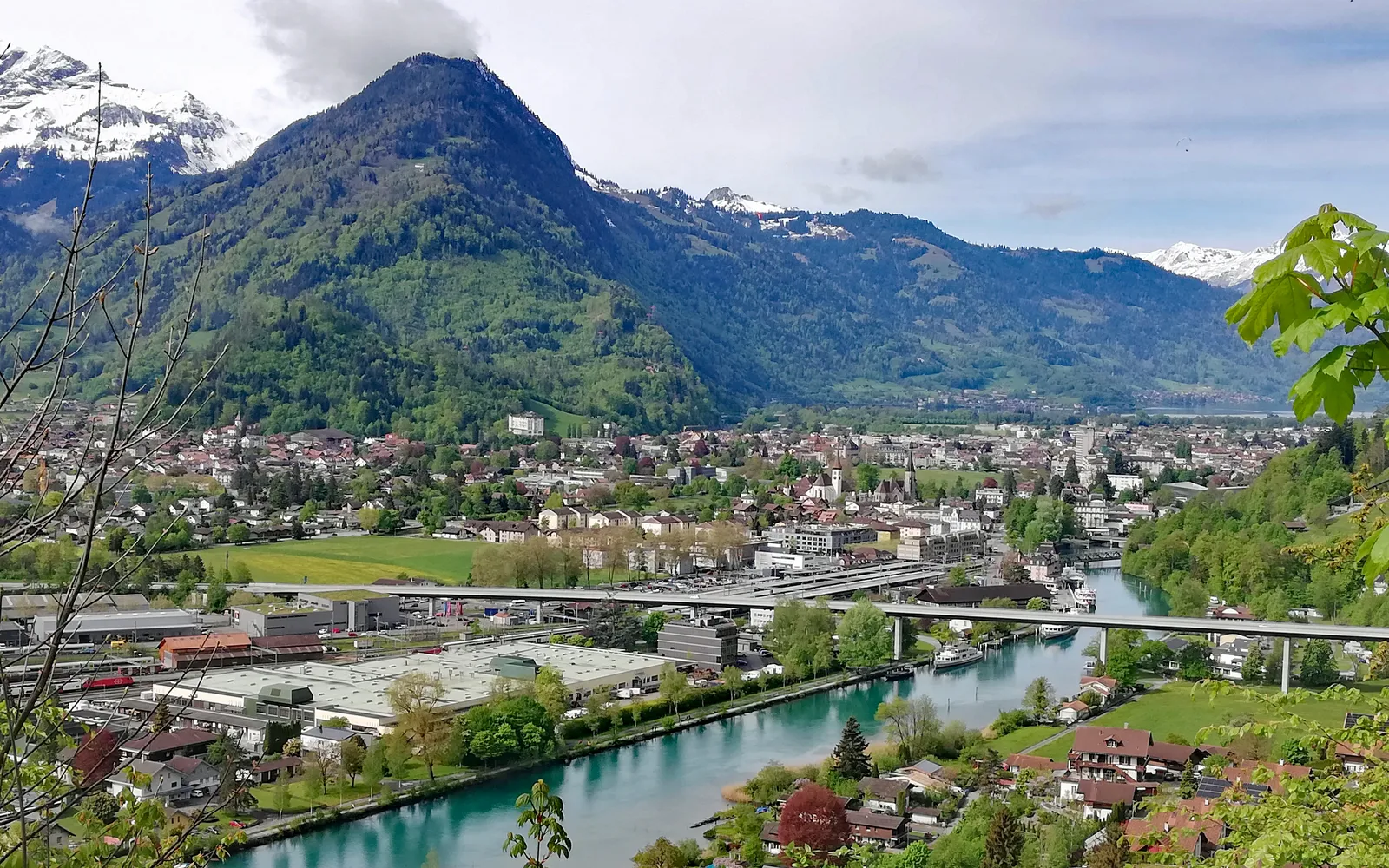
Interlaken is the most complete gateway into the Swiss Alps. This compact town sits on a narrow strip of land between two lakes, with a cog railway that climbs to the highest train station in Europe — Jungfraujoch at 3,454 metres. Travelers from every corner of the world describe that summit as a genuinely life-changing experience. But Interlaken is more than Jungfraujoch: emerald-green lakes fed by glacial melt, waterfall trails, and Alpine meadows that stay green all year are waiting to be explored.
 #1
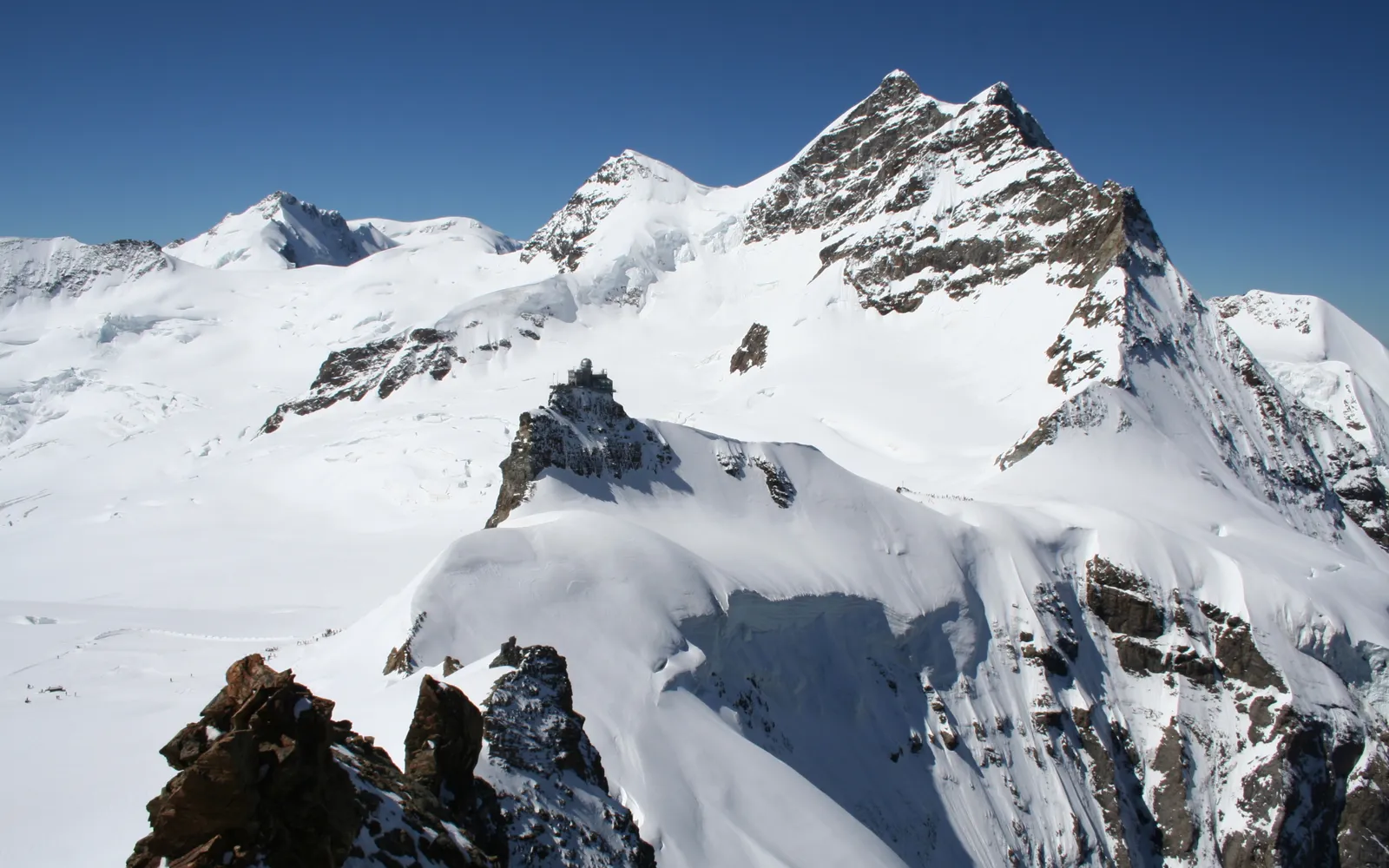
#1 Jungfraujoch
Europe's highest railway station at 3,454 metres. You ride a cog train from Grindelwald or Lauterbrunnen through a tunnel bored into granite before emerging into a world of permanent ice. At the top, the Sphinx Observatory delivers views over the Aletsch Glacier — 23 kilometres long and the largest glacier in the Alps. On a clear day you can see as far as France and Germany. Come prepared: temperatures can drop below -10 °C even in summer.
- Return train tickets to Jungfraujoch cost CHF 145-215 depending on your departure point. The Good Morning Ticket (departing before 9:00 AM) saves 25-30%.
- Wear a warm jacket, windproof trousers, and gloves regardless of the season. The summit runs 20-25 °C colder than the town below.
- Check conditions at jungfrau.ch before you go. On overcast days there is nothing to see from the top — always keep a backup day in your schedule.
 #2
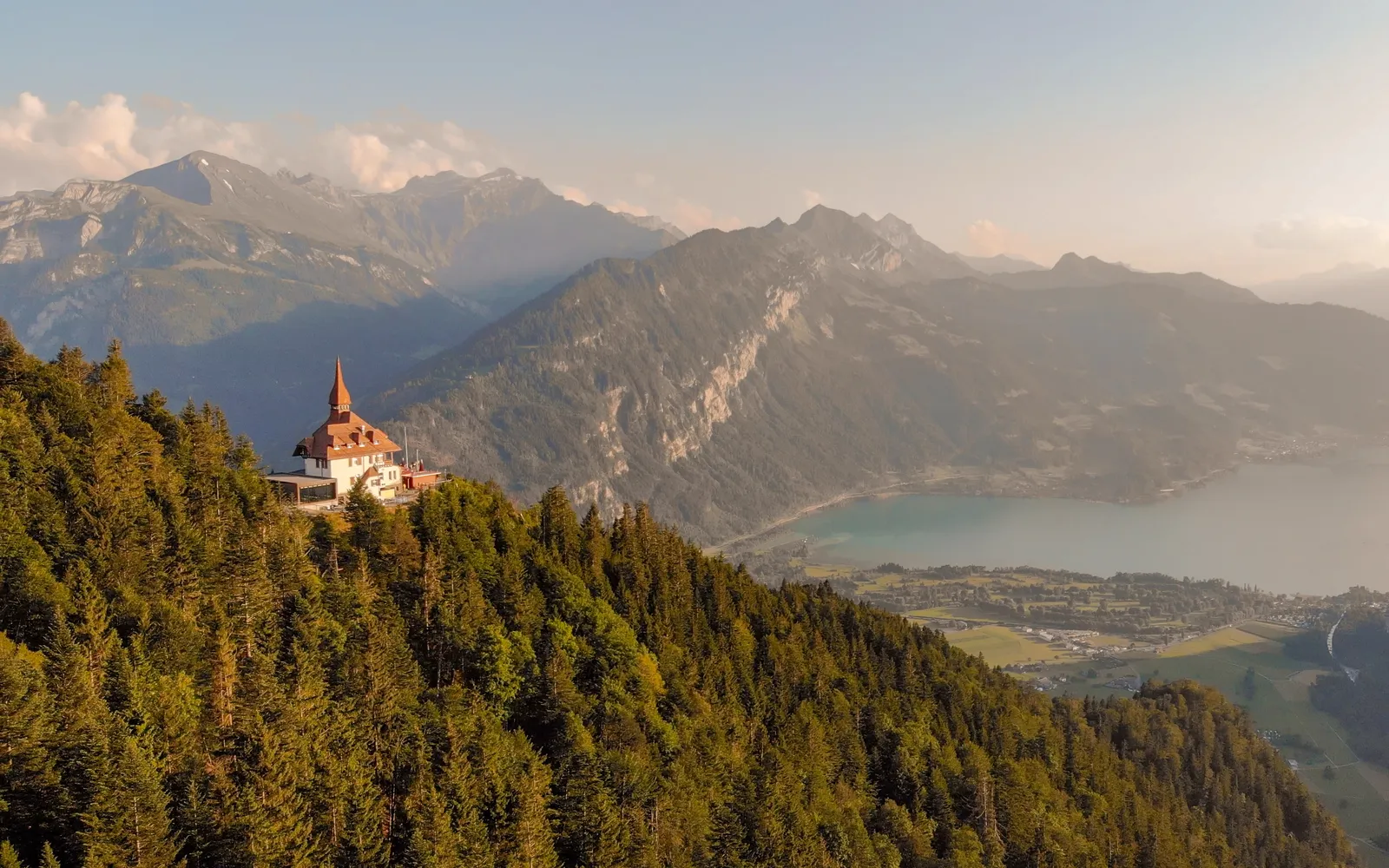
#2 Harder Kulm
The easiest and most rewarding viewpoint in Interlaken. A 10-minute funicular ride from town delivers a 360-degree panorama that takes in both Lake Thun, Lake Brienz, and the trio of Alpine peaks — Jungfrau, Mönch, and Eiger — lined up together. The Harder Kulm restaurant on the summit has the best view of any dining room in Interlaken, and the two-legged observation bridge has become one of the most photographed spots in the region.
- Return funicular tickets cost CHF 34 per person. Swiss Travel Pass holders ride for free — excellent value if you're already travelling by rail.
- Come between 8 and 10 AM before mist or cloud builds up. The view is sharpest in the early morning.
- Combine Harder Kulm with Jungfraujoch on a Jungfrau Travel Pass to save money across multiple sites in the region.
 #3
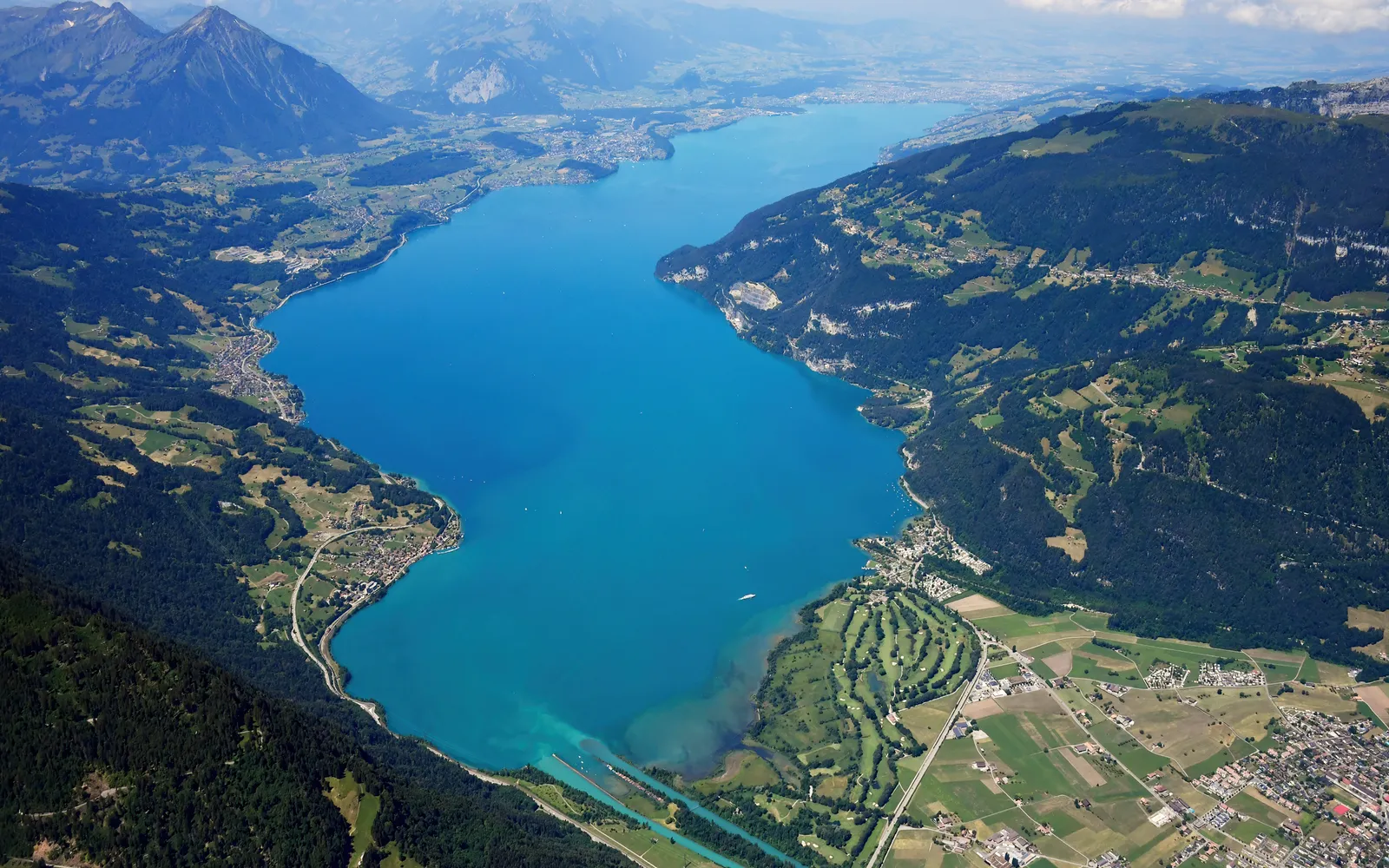
#3 Lake Thun
The larger and older of Interlaken's two glacial lakes, with water so clear in places you can see the lakebed through shades of blue-green. The shoreline holds Thun Castle, built in the 12th century, the lakeside town of Spiez — home to what many consider the most beautiful castle setting in Switzerland — and the quiet village of Hilterfingen. A boat cruise or a cycling loop along the shore are the two most popular ways to take it in.
- Lake Thun boat tickets run CHF 25-40 per route. Swiss Travel Pass holders ride free — plan ahead to make the most of it.
- Stop at Spiez for its lakeside castle (entrance CHF 10). The view from the castle tower down to the water is the best in the area.
- Swimming is free at the public beach near Interlaken Ost. The water stays cold even in summer — expect 15-18 °C.
 #4
#4 Lake Brienz
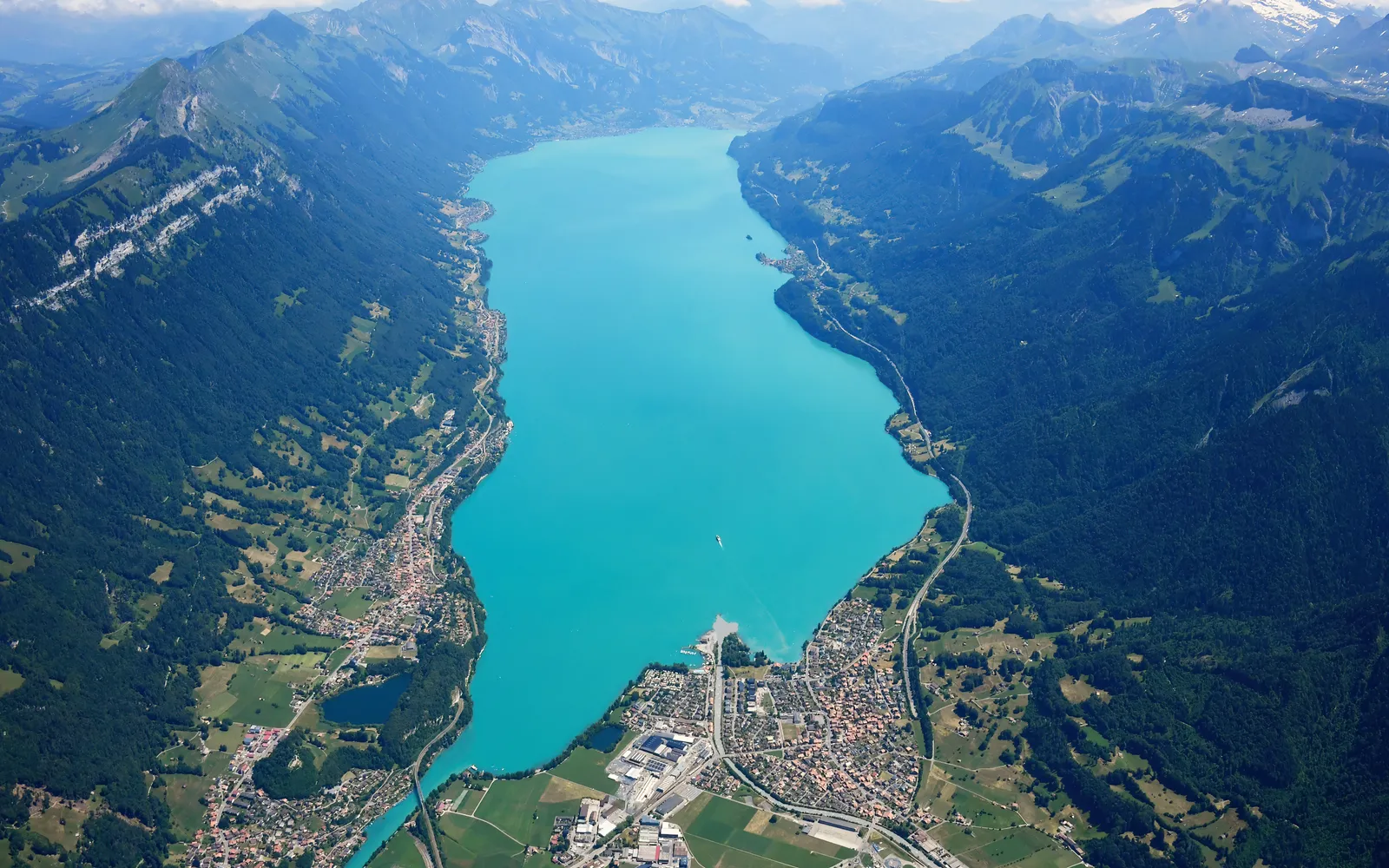
The lake with the most intense water colour in Switzerland — a deep emerald green driven by glacial minerals. Along the shore, the Giessbach waterfall drops in 14 cascades straight from the cliff face into the lake, and the town of Brienz is Switzerland's best-known centre for wood carving. Less touristed than Lake Thun and arguably more dramatic in colour, it is the better pick if you want somewhere quieter.
- Giessbach waterfall is reached by a historic funicular (in operation since 1879) from Giessbach pier. Tickets cost CHF 5 return.
- Brienz town has a wood-carving market selling quality work. Pieces cost more than souvenir shops in tourist centres, but they are the genuine article.
- Lake Brienz's emerald colour is at its most intense in May and June when snowmelt is feeding the lake from the Alps above.
 #5
#5 Schynige Platte
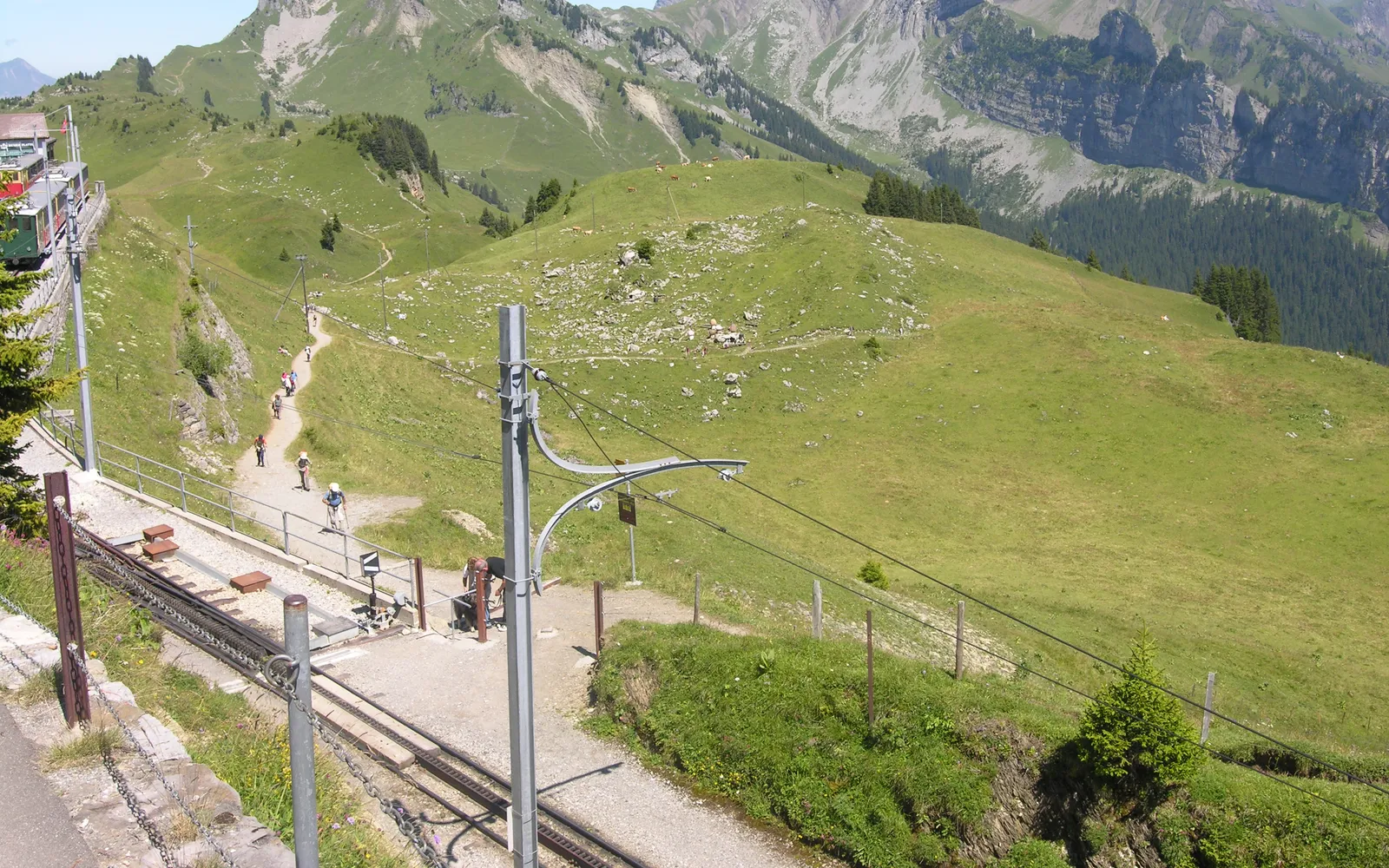
A spot that most visitors overlook but nature lovers know well. The Schynige Platte summit holds an Alpine botanical garden with more than 600 species of mountain wildflowers gathered in one place, alongside one of the rare viewpoints where both lakes appear in the same frame. The vintage narrow-gauge railway — still using its original steam-era heritage engine — is part of the experience itself. The Panoramaweg hiking trail around the summit takes 2-4 hours and is consistently beautiful.
- The Schynige Platte Bahn from Wilderswil takes 50 minutes. Tickets cost CHF 52 return; Swiss Travel Pass holders get 25% off.
- The summit restaurant serves Rösti and Fondue with a genuine Alpine atmosphere. Book a table in advance during summer.
- The railway only runs from late May to early November. Check the operating calendar on the website before planning your visit.
 #6
#6 Lauterbrunnen Valley
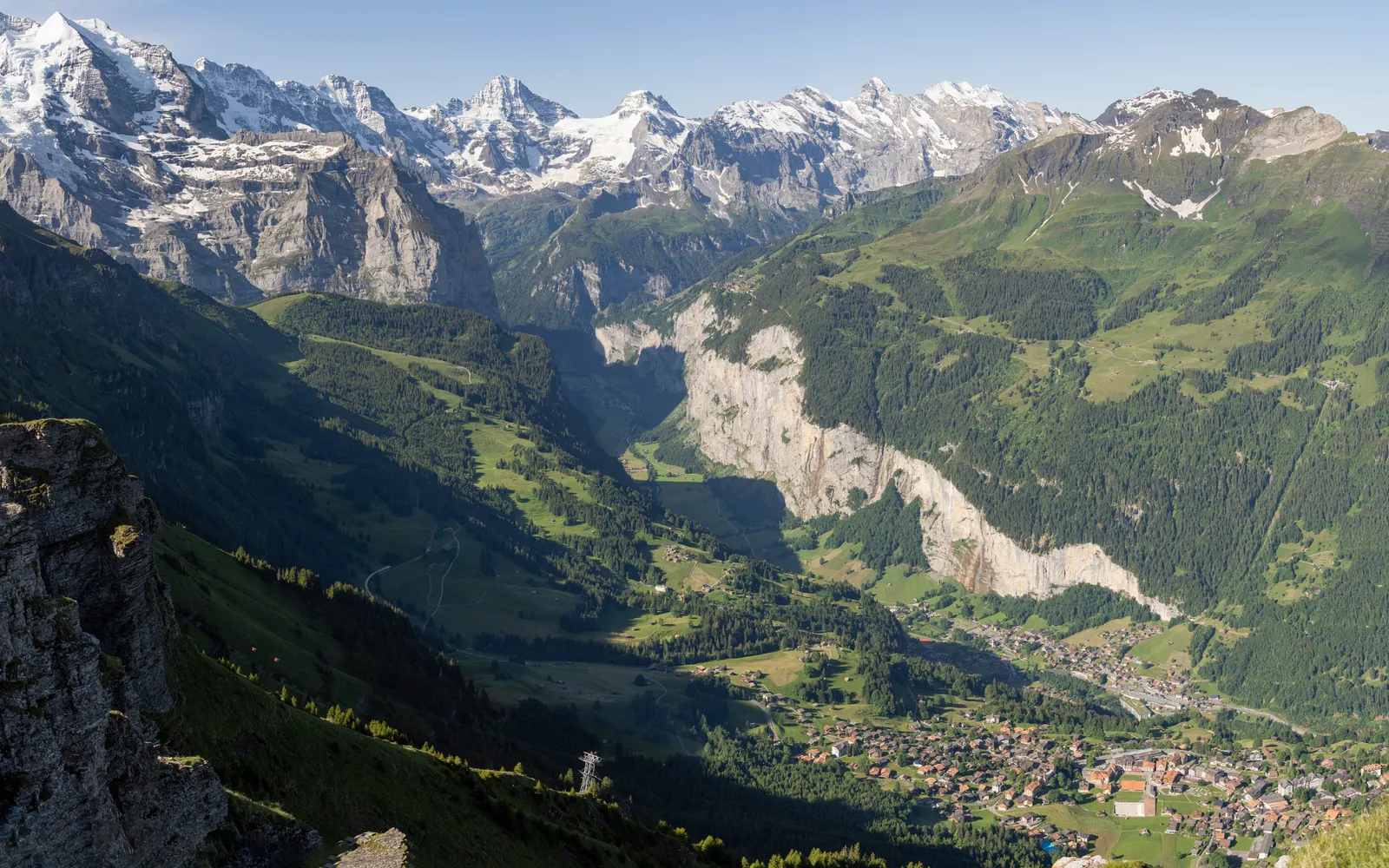
A valley of extraordinary beauty — scholars widely believe it inspired Tolkien's vision of Middle-earth. Cliffs more than 300 metres high line both sides, with over 72 waterfalls cascading down continuously. The most prominent is the 297-metre Staubbach Falls, visible from the village itself. Trümmelbach Falls, carved inside the cliff and accessed by a lift through the rock, is something different entirely. Hiking routes lead through the car-free villages of Wengen and Mürren on the valley walls above.
- Trümmelbach Falls charges CHF 14 admission and is open daily. It is the largest accessible glacial waterfall cave system in Europe and should not be skipped.
- The clifftop village of Mürren (no road access) is reached by cable car from Grütschalp plus a small railway. It is quieter and more dramatic than Wengen.
- Lauterbrunnen is also the departure point for the Jungfraujoch train — combining both in a single day saves a significant amount of travel time.
Where to stay in Interlaken for this trip
A well-located hotel means less commuting and more sightseeing. Here are real, top-rated stays in Interlaken — compare Agoda · Booking · Trip.com in one click.
Victoria Jungfrau Grand Hotel & Spa
Affiliate links — we may earn a commission at no extra cost to you. Details
Swiss Inn & Apartments Interlaken
Affiliate links — we may earn a commission at no extra cost to you. Details
Hotel Merkur West Station Interlaken
Affiliate links — we may earn a commission at no extra cost to you. Details
Youth Hostel Interlaken
Affiliate links — we may earn a commission at no extra cost to you. Details
Tours, tickets & activities in Interlaken
Day tours, attraction tickets and travel essentials for Interlaken — book ahead on Klook with mobile e-tickets.
Affiliate links — we may earn a commission at no extra cost to you.
Before You Pack
Interlaken is at its best in summer (June to September) when the weather holds and all hiking routes are open. Winter brings a beautiful snow-world atmosphere but some routes close. Allow at least 3-4 days — enough time to get up to Jungfraujoch and keep a backup day in reserve, because Alpine weather changes fast.