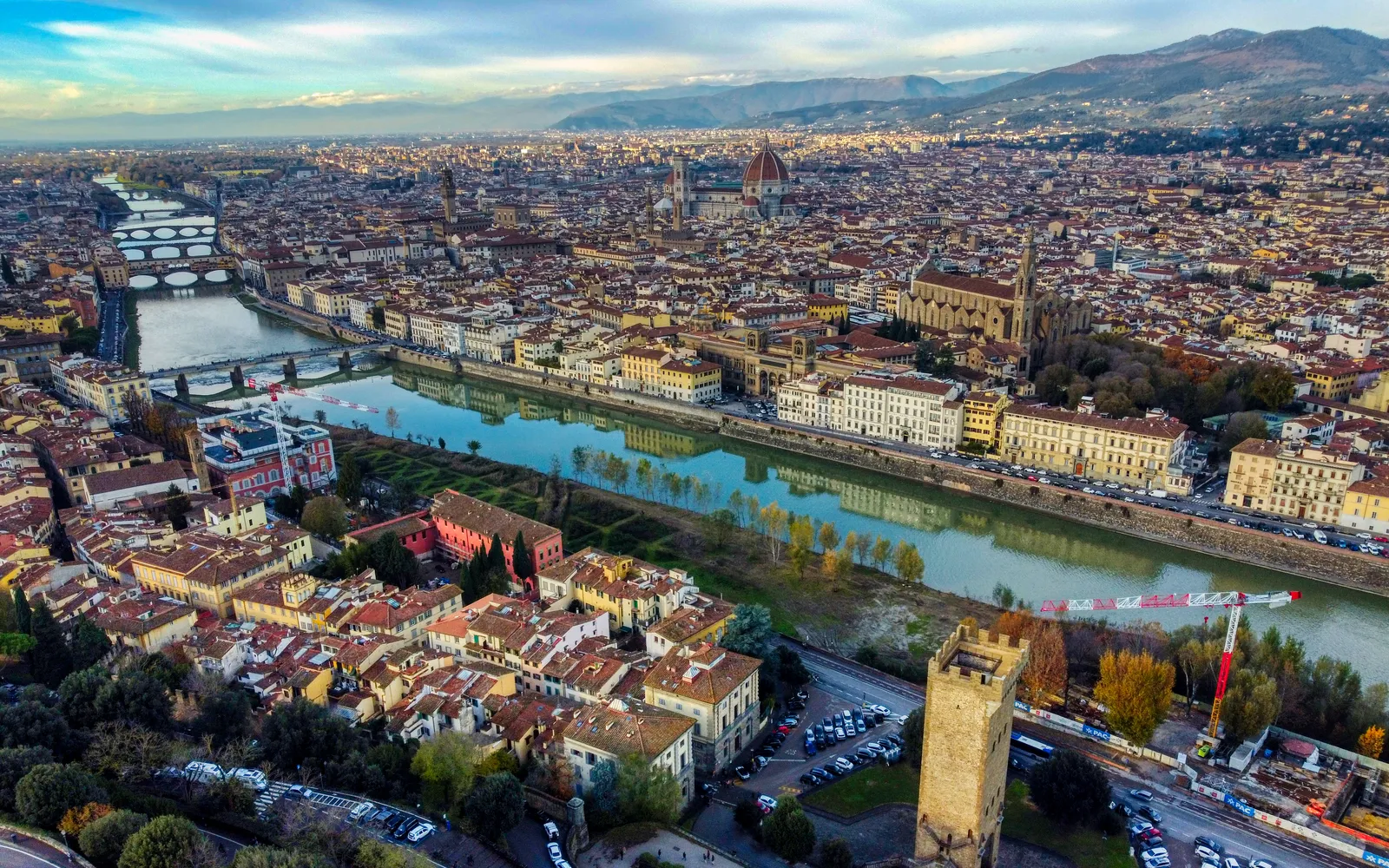
Florence is the city that makes you feel you're walking through the largest museum on earth. Every street corner holds a church, a sculpture, or a piazza built when Florence was the centre of art and ideas for the entire Western world. Bring comfortable shoes and a fully charged camera — there is genuinely no end to what you'll find.
 #1
#1 Florence Cathedral (Duomo)
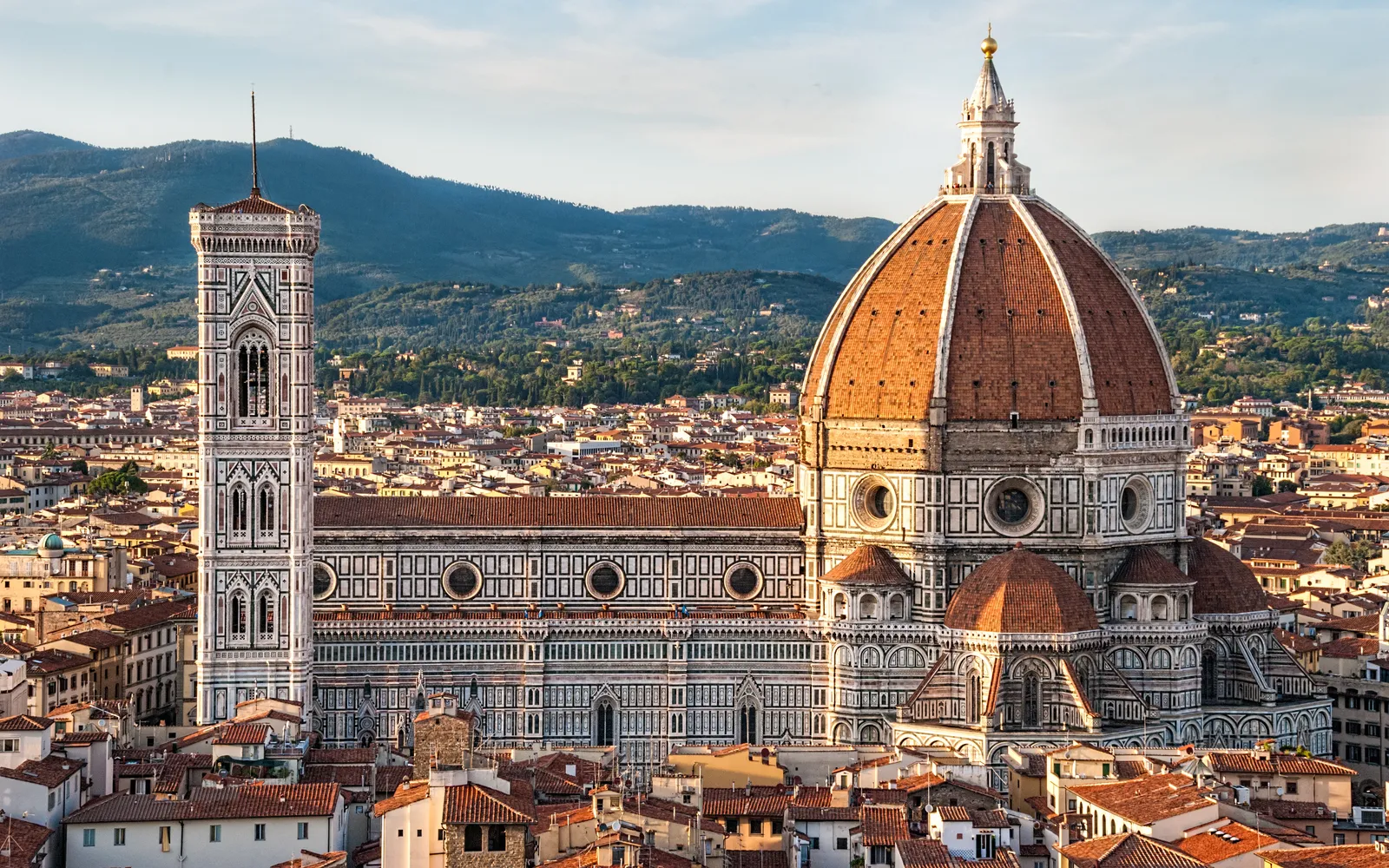
The defining symbol of Florence. The terracotta dome built in the 15th century by Filippo Brunelleschi was the greatest feat of engineering in the Renaissance — and it still looks impossible today. Inside, the cathedral is decorated with large-scale frescoes across the dome ceiling. Entry is free but must be booked in advance. Climbing the 463 steps to the top of the dome rewards you with the finest rooftop view in the city.
- Always book tickets online in advance at the official site operaduomo.firenze.it — there is no ticket sales at the door.
- Dress modestly: shoulders and knees must be covered. Bring a scarf or light layer if you're wearing a sleeveless top.
- Climbing Giotto's Bell Tower is a better option than the dome if you want a close-up photo of the dome itself — and the queue is typically shorter.
 #2
#2 Uffizi Gallery
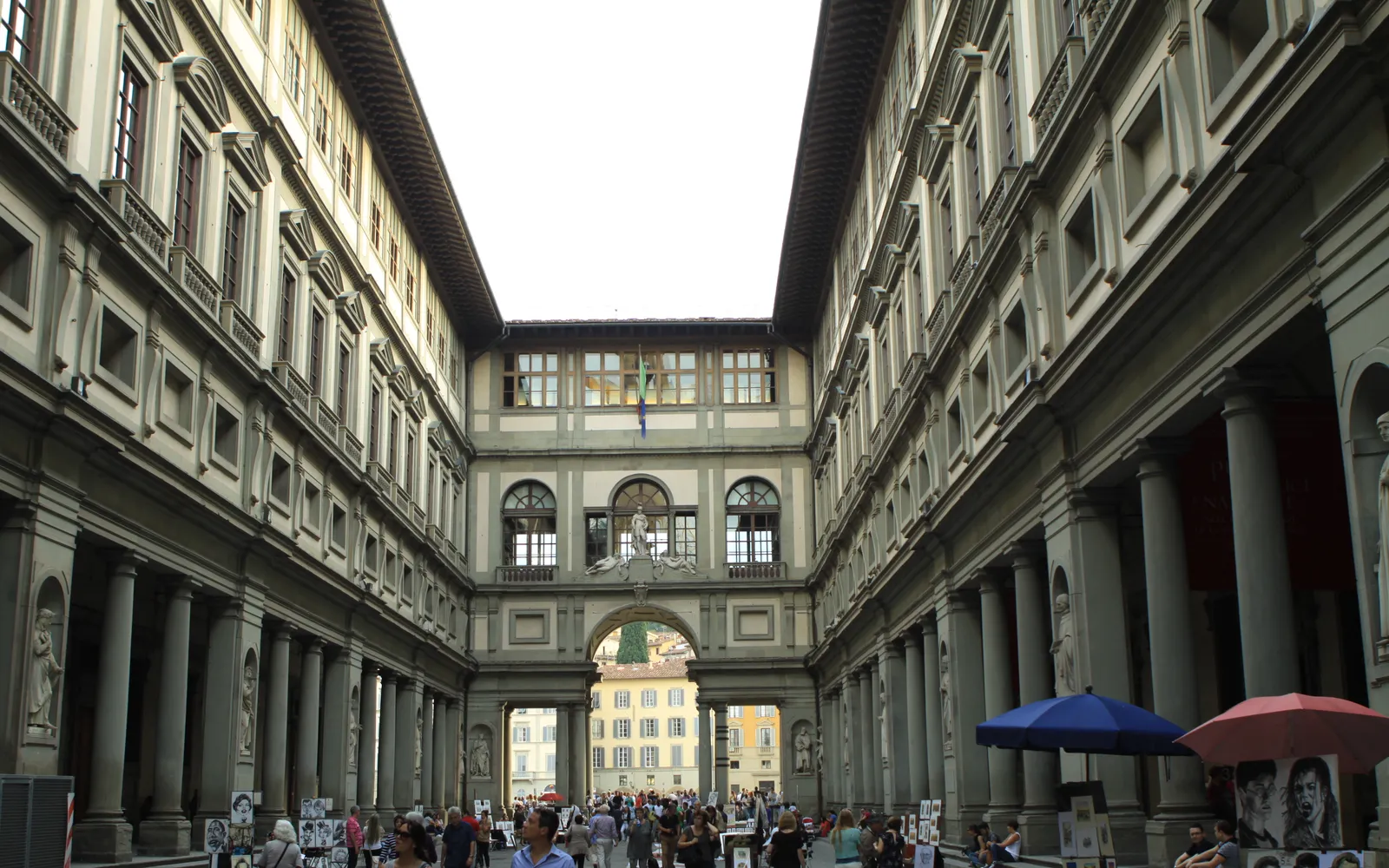
The most important art museum in Italy and among the top in the world. The Uffizi holds works by Botticelli, Leonardo da Vinci, Michelangelo, Raphael, and hundreds of other Renaissance masters. The highlights are Botticelli's The Birth of Venus and Primavera. The building itself was constructed in the 16th century and contains more than 90 rooms — you can spend an entire day here and still not see everything.
- Booking in advance at uffizi.it is essential — there are no walk-up tickets in high season, and the queue can stretch to over an hour.
- If time is short, pick 2–3 rooms you genuinely care about. The museum is enormous and cannot be fully covered in a single visit.
- The Botticelli rooms (rooms 10–14) are the most crowded. Go right at opening or mid-afternoon for slightly thinner crowds.
 #3
#3 David — Galleria dell Accademia
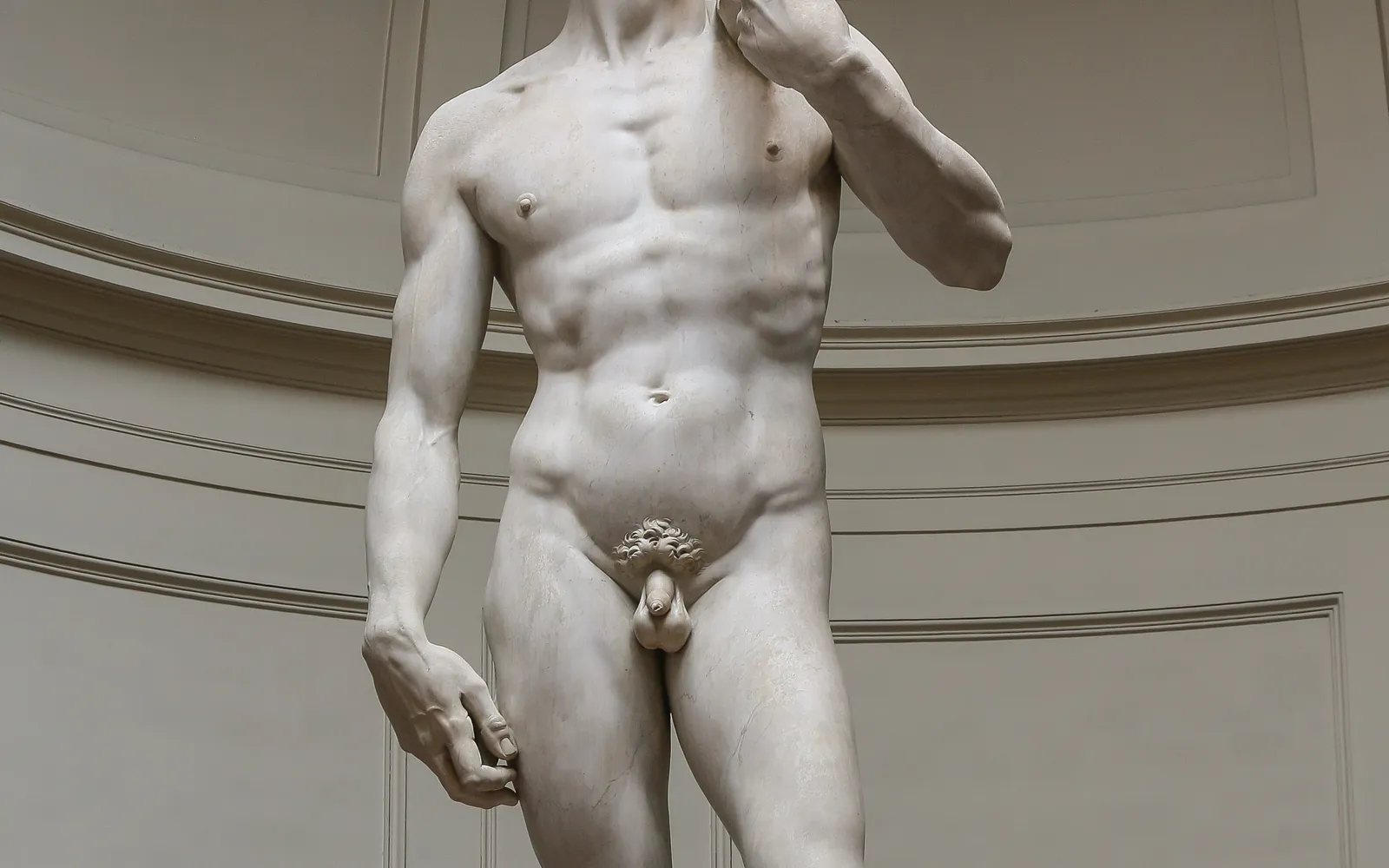
A 5.17-metre marble statue completed by Michelangelo in 1504, when he was just 29 years old. It stands as the defining symbol of Renaissance ideals of human beauty and potential. The precision of the musculature and the expression on David's face — caught in the moment before he faces Goliath — have led experts to call this the most perfect work in marble ever created. It is displayed inside the Accademia museum under a specially built dome designed for it.
- Book at least one week ahead at gallerieaccademia.it — the walk-up ticket queue is very long.
- Photography is permitted but flash and commercial video are not allowed.
- The other rooms in the museum beyond David are often overlooked, but they hold other Michelangelo works in various unfinished states that are well worth your time.
 #4
#4 Ponte Vecchio
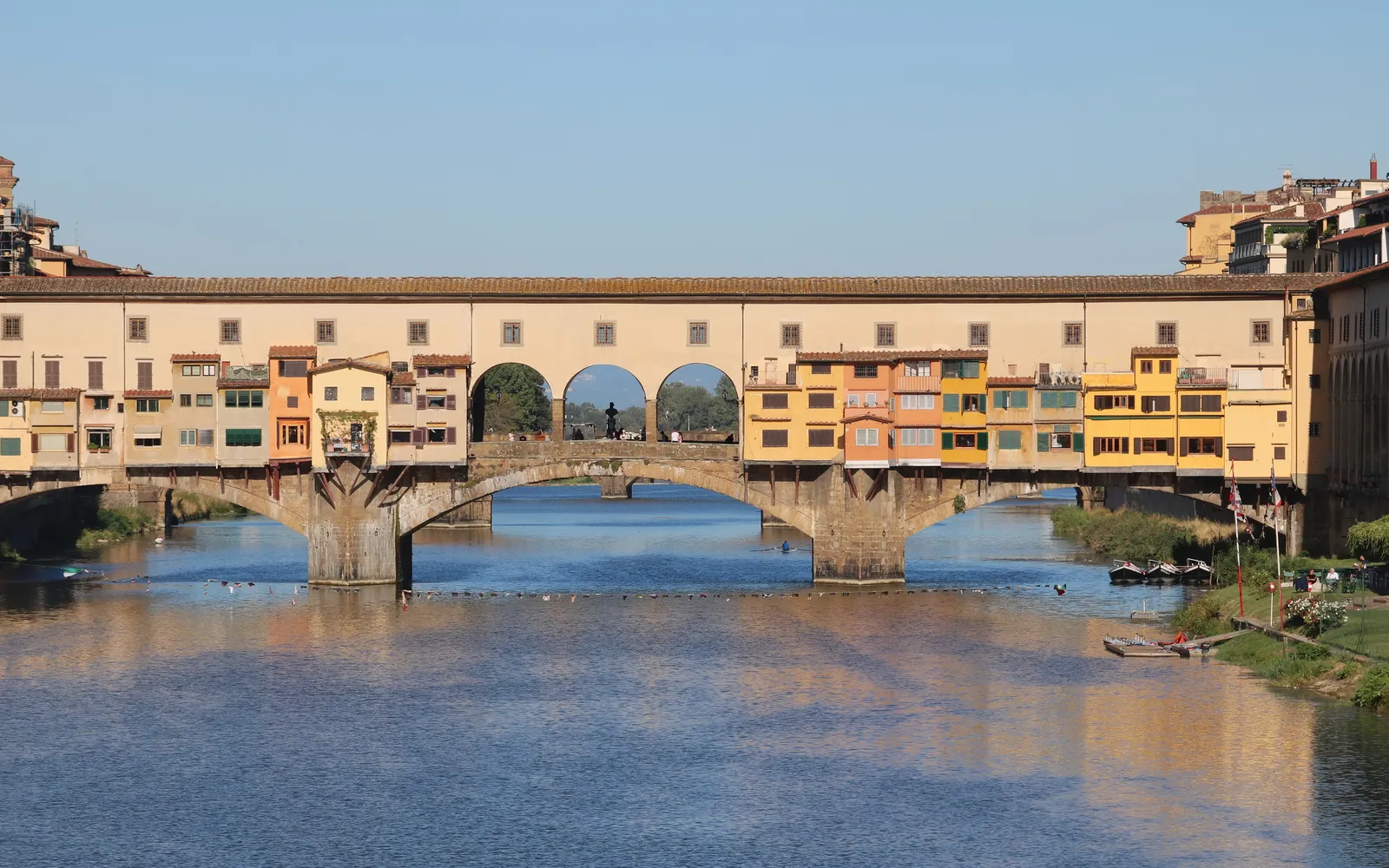
Florence's oldest medieval bridge, built in 1345. It survived the Nazi destruction of every other bridge in the city during World War II — reportedly because Hitler personally ordered it preserved. Today the bridge is lined with jewellery and gemstone shops that have occupied the site for centuries. Running along the top is the Medici Corridor, a secret passageway connecting the family's palaces on both banks. Ponte Vecchio is the most photogenic spot in the city.
- The best angle to photograph the bridge is from the riverbank to the east, or from the nearby Ponte Santa Trinita.
- The jewellery shops on the bridge are expensive — better for browsing than buying. For serious jewellery shopping, look in the streets surrounding the bridge instead.
- Between 19:00 and 21:00, street musicians play on the bridge and the atmosphere becomes genuinely romantic.
 #5
#5 Piazzale Michelangelo
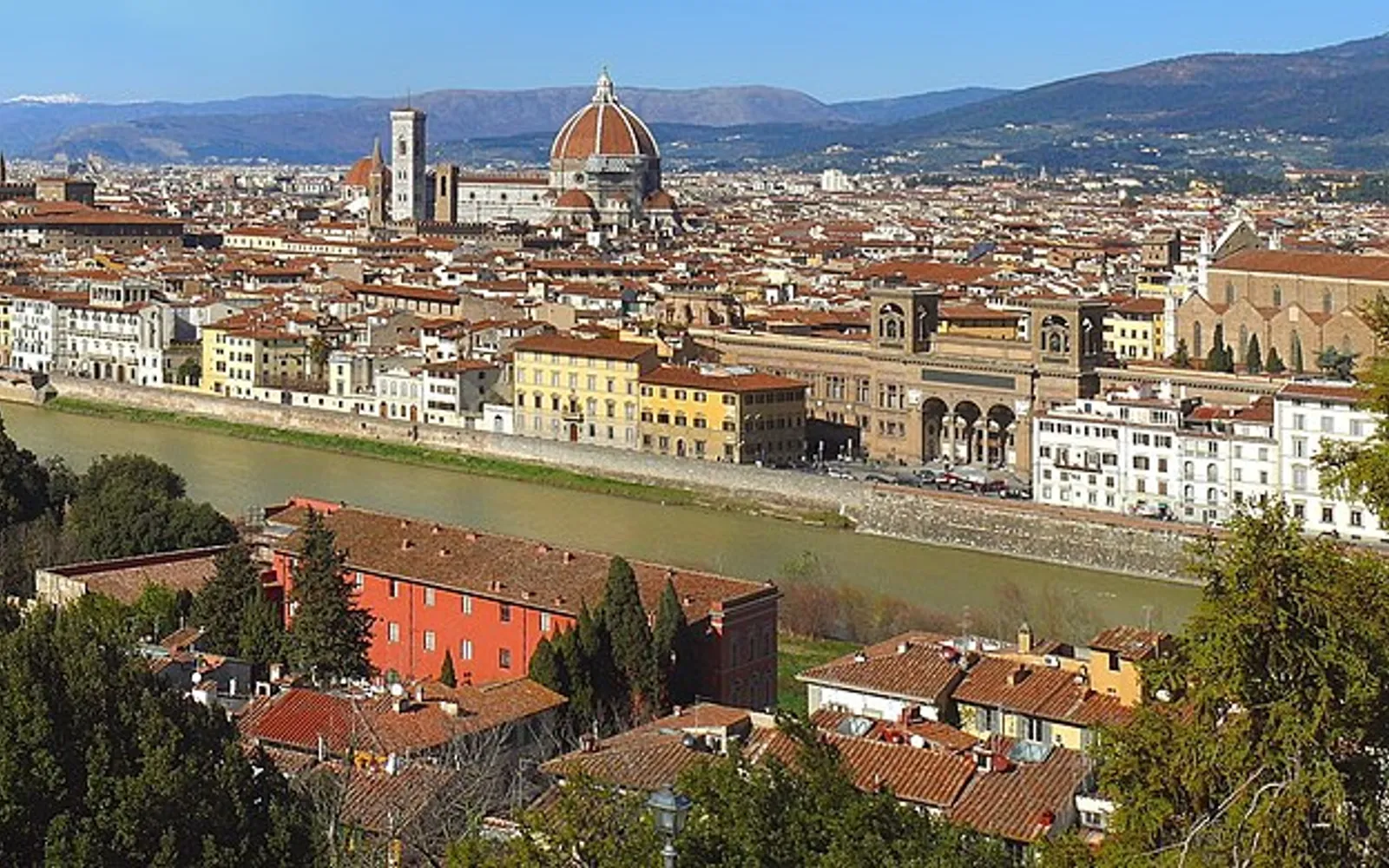
The hilltop viewpoint every visitor should make time for. This square on the Oltrarno hillside offers a 180-degree panorama of Florence's skyline — the Duomo dome, Giotto's Bell Tower, terracotta rooftops, and the Arno cutting through the city below. At the centre of the square stands a bronze replica of David. It is a favourite evening gathering spot for locals, and it is not hard to see why.
- Sunset from this point is one of the finest views in Europe. Arrive at least 30 minutes before the sun drops below the horizon.
- Take bus 13 from Santa Maria Novella station, or Minibus D from Piazza Stazione, to get up the hill without the climb.
- The café and gelato stalls on the square charge slightly more than the city below — the view makes it worthwhile.
 #6
#6 Palazzo Vecchio and Piazza della Signoria
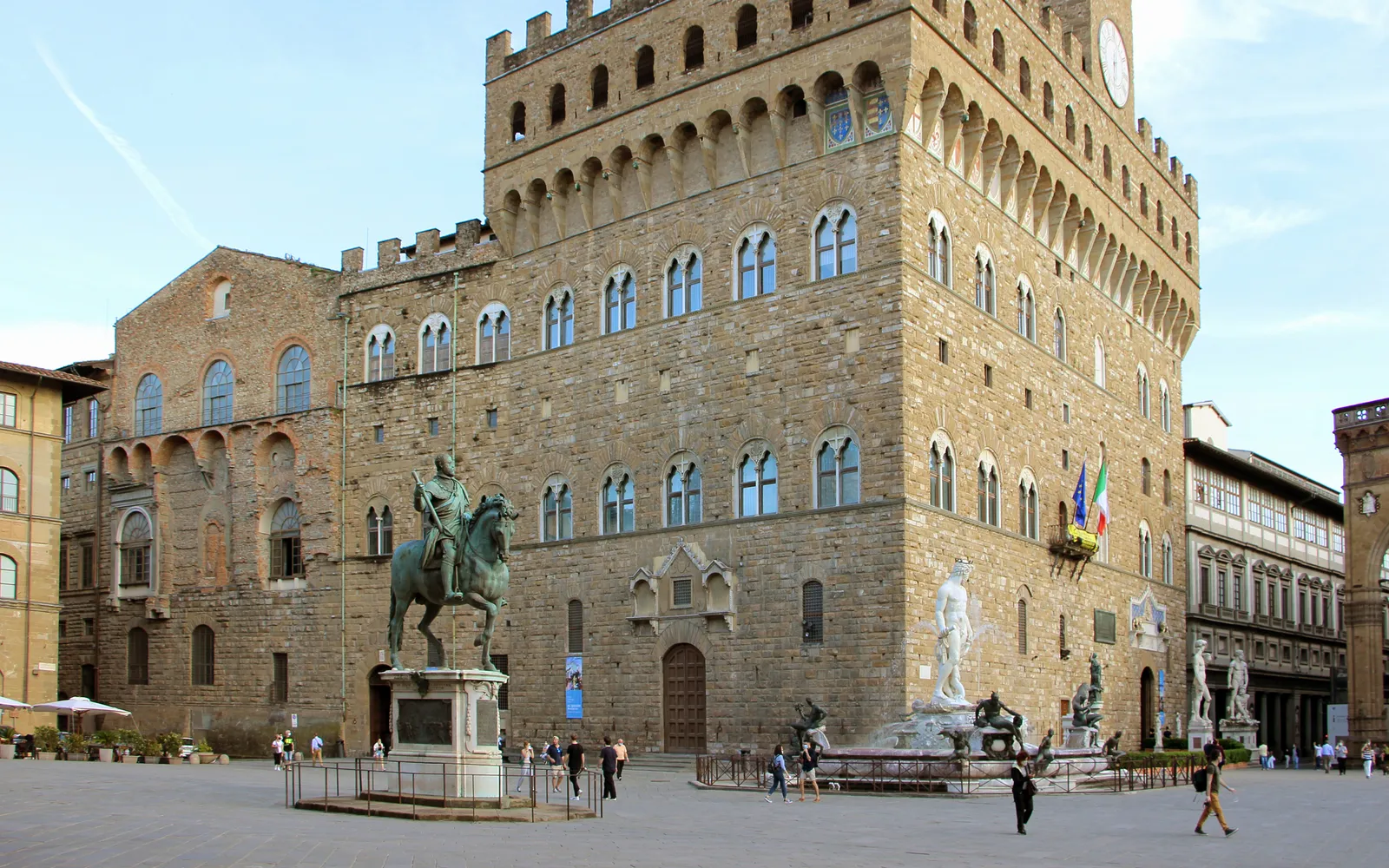
The political heart of Florence since the age of the Medici. Palazzo Vecchio is the city's town hall, built in 1299 and now open as a museum where you can visit grand halls decorated with frescoes and maps. In front of the building stands a replica of David alongside other monumental sculptures. The adjacent Loggia dei Lanzi is an open-air sculpture gallery that is free to enter at any time — including Perseus by Benvenuto Cellini, one of the great bronze works of the Renaissance.
- The Loggia dei Lanzi next to Palazzo Vecchio holds world-class sculptures including Cellini's Perseus — it is free and open all day.
- Climbing the Palazzo Vecchio tower gives you a close-up view of the Duomo dome, quite different from the wide panorama at Piazzale Michelangelo.
- This piazza served as a public execution ground — Girolamo Savonarola was burned here in 1498. A stone marker in the pavement marks the exact spot.
Where to stay in Florence for this trip
A well-located hotel means less commuting and more sightseeing. Here are real, top-rated stays in Florence — compare Agoda · Booking · Trip.com in one click.
Relais Luce Florence
Affiliate links — we may earn a commission at no extra cost to you. Details
J.K. Place Firenze
Affiliate links — we may earn a commission at no extra cost to you. Details
Grand Hotel Baglioni
Affiliate links — we may earn a commission at no extra cost to you. Details
Hotel Bella Firenze
Affiliate links — we may earn a commission at no extra cost to you. Details
Tours, tickets & activities in Florence
Day tours, attraction tickets and travel essentials for Florence — book ahead on Klook with mobile e-tickets.
Affiliate links — we may earn a commission at no extra cost to you.
Before You Pack
Florence is at its best in April–May and September–October, when the weather is good and the crowds are manageable. July and August are very hot and very busy. Plan at least 3–4 days to visit the major museums at a comfortable pace.