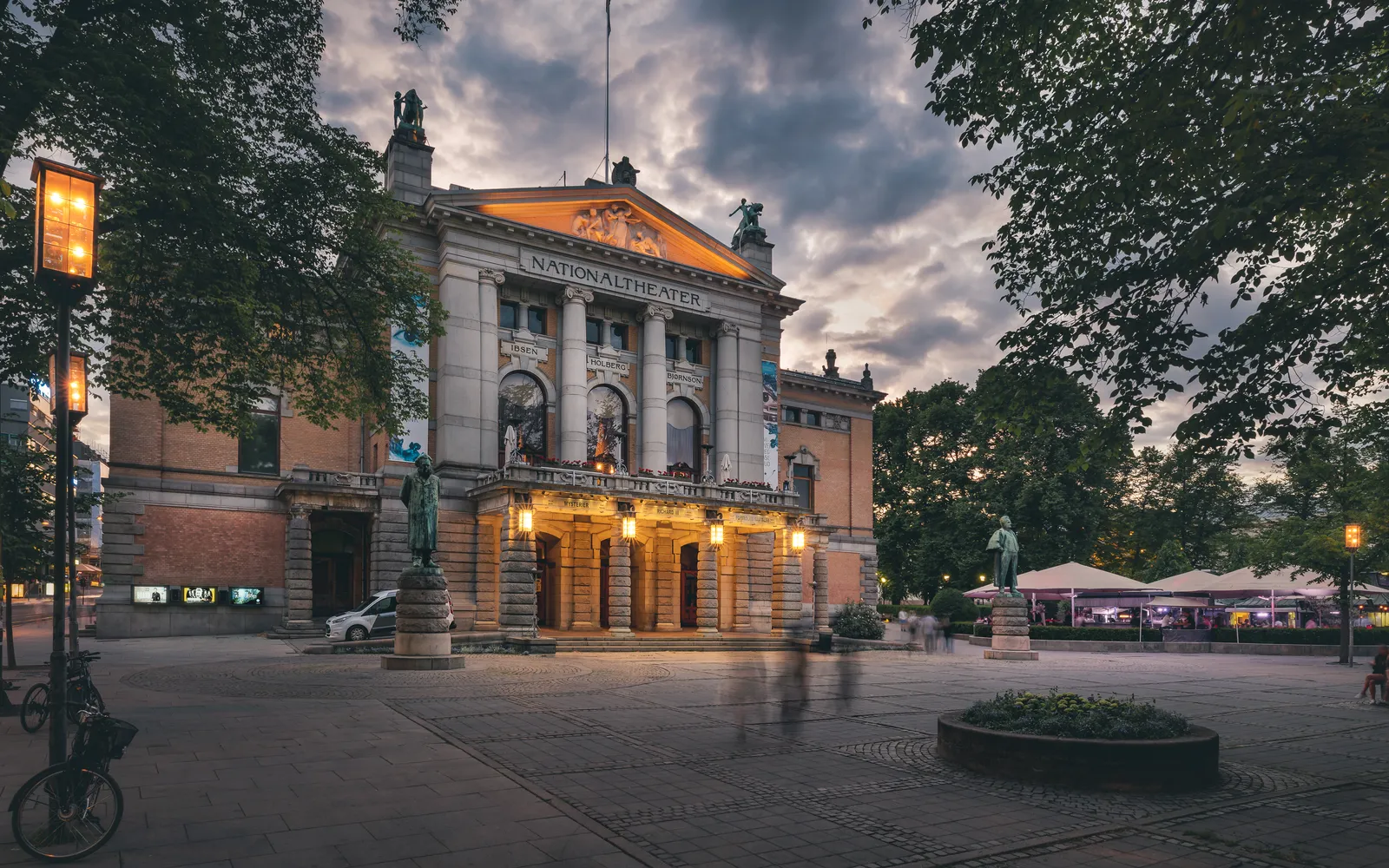
Where to stay in Oslo — pick the right hotel, book in 3 clicks
Oslo is a fjord-side capital that blends nature and design like nowhere else. Walk up the sloping roof of the white marble Opera House, wander the free Vigeland Sculpture Park, then take in the 13-floor MUNCH museum on the waterfront. The city is compact and easy on foot, but packed with things to see, so we break down which neighborhood suits which traveler, because Oslo isn't cheap and you don't want to waste time crossing town.
Why stay in Oslo
World-class museums, all close
MUNCH (the largest Edvard Munch collection on earth), the Fram polar-expedition ship, and the Viking Age museum on Bygdøy peninsula are all within one compact city.
Nature on the metro line
Ride a single metro line up to the Holmenkollen forest. Swim in the fjord in summer, ski after work in winter, all without leaving town.
Bold contemporary design
A walkable Opera House roof, the brand-new Bjørvika waterfront, and the striking Deichman library have turned Oslo into an architecture destination.
An easy, human-scale city
The center is fully walkable. Karl Johans gate runs straight from the train station to the Royal Palace, with green parks tucked into every district.
Pick an area first — where to stay in Oslo
Location is the single most important thing about a hotel — choose the right area first, then pick the hotel
Sentrum (city center)Right in the middle of everything: Karl Johans gate, the Royal Palace, and Oslo Central Station are all walkable. Ideal for first-timers and short stays.
Coming soonAker Brygge & TjuvholmenUpscale fjord-side harbor with seafood restaurants, the Astrup Fearnley museum, and water views. The most expensive area in the city.
Coming soonGrünerløkkaHip district along the Akerselva river: cafés, vintage shops, and nightlife. A more affordable, creative atmosphere.
Coming soonFrogner & BygdøyQuiet, leafy upscale residential area near Vigeland Park; Bygdøy is the museum peninsula. Great for families wanting calm.
Coming soonRanked reviews — find your ideal stay in Oslo
Start with where to stay (the heart of the trip), then explore food and sights
Find the right Oslo hotel for you
1 ranked reviewsNo reviews match these filters — try removing one or two
Local dishes to try in Oslo
- 1🧀
Brunost (brown cheese)
Whey cheese cooked until it caramelizes into a sweet, fudge-like brown block. Sliced paper-thin and eaten on bread or waffles; an essential Norwegian taste.
📍 National - 2🧇
Norwegian waffles (vafler)
Thin, soft heart-shaped waffles served with brunost, jam, or sour cream. Spots like Haralds Vaffel in Grünerløkka make them fresh with all kinds of toppings.
📍 Snack - 3🍤
Reker (fjord shrimp)
Fresh shrimp from the Oslofjord, served simply with mayonnaise, lemon, and bread. A classic summer treat along the harbor.
📍 Seafood - 4🐟
Gravlaks (cured salmon)
Norwegian salmon cured with salt, sugar, and dill until silky and delicate, served with mustard-dill sauce, bread, and boiled potatoes.
📍 Seafood - 5🥘
Fårikål (mutton & cabbage stew)
Norway's national dish: mutton slow-cooked with cabbage and black peppercorns, served hot with boiled potatoes. Hearty cold-weather comfort food.
📍 National dish - 6🏛️
Mathallen food hall
A food hall in a restored industrial building along the Akerselva in the Vulkan area, gathering artisan cheesemakers, smoked-fish vendors, bakeries, and small eateries under one roof.
📍 Food market
- 1🎭
Oslo Opera House
A white marble landmark on the Bjørvika waterfront whose sloping roof you can walk up for free panoramic views over the city and fjord. World-class opera and ballet inside.
📍 Landmark - 2🗿
Vigeland Sculpture Park
An open-air park with 200+ bronze, granite, and iron sculptures by Gustav Vigeland depicting every stage of human life. Free and open all day, year-round.
📍 Free entry - 3🖼️
MUNCH Museum
A 13-floor waterfront building holding the world's largest collection of Edvard Munch's work, including a key version of The Scream, with a top-floor fjord-view bar.
📍 Art - 4⚓
Akershus Fortress
A 700-year-old medieval fortress on a rise above the fjord. The grounds are free to wander, with great views over the harbor and a popular spot for a stroll.
📍 History - 5🛳️
Fram Museum
On Bygdøy peninsula, home to the original Fram polar-expedition ship you can board, plus exhibits on Norwegian explorers like Roald Amundsen.
📍 Bygdøy - 6⛷️
Holmenkollen Ski Jump
A world-class ski jump overlooking the whole city, home to the world's oldest ski museum (4,000 years of ski history) and a viewing platform at the top.
📍 Panorama - 7🚶
Karl Johans gate
Oslo's main boulevard running straight from Central Station to the Royal Palace, passing the Parliament and National Theatre, lined with shops and cafés.
📍 Main street - 8⛵
Aker Brygge & fjord cruise
A harbor promenade for seafood and strolling, and the departure point for Oslofjord cruises past Akershus Fortress and the scattered little islands.
📍 Waterfront
Things to do in Oslo
Day tours, attraction tickets and travel essentials for Oslo — book ahead on Klook with mobile e-tickets.
Affiliate links — we may earn a commission at no extra cost to you.
3 Oslo hotels our team picked for you
Selected from real reviews — one per budget tier, each with a score and instant 3-site price comparison
 ★ 9.2Luxury
Sommerro
#2 Iconic Boutique · Art Deco in the heart of Frogner
 ★ 9.1Luxury
 ★ 9.0Upper-mid
โรงแรมแนะนำทั้งหมดในOslo
ครบทุกระดับงบ — คัดจากคะแนนรีวิวจริง พร้อมเทียบราคา 3 เว็บ
Grand Hotel Oslo by Scandic
#3 City-Centre Landmark · Opposite the Royal Palace
Haven't found the one? Search all 3 sites yourself
Compare real-time room availability for your Oslo dates
🚆 Getting around Oslo
Flytoget airport express
From Gardermoen airport to the city center in 19 minutes, every 10 minutes. Adult tickets are around 268 NOK; children under 16 travel free with an adult.
Vy train (budget option)
Vy's regional train reaches the center in about 23 minutes for around 134 NOK, roughly half the price, and includes transfers to buses, trams, and metro for 2.5 hours.
Ruter public transport app
Metro, trams, buses, and ferries all run on a single Ruter ticket. Buy and plan routes in the Ruter app, which also covers the zones out to the airport.
Cards accepted everywhere
Norway is nearly cashless: Visa/Mastercard and Apple/Google Pay work almost everywhere, so you barely need cash. The currency is the Norwegian krone (NOK).
Walking & cycling
The center is compact and walkable, with Oslo City Bike rentals across town. In summer the days stretch to 18 hours, so sightseeing runs late into the evening.
Where to go next near Oslo
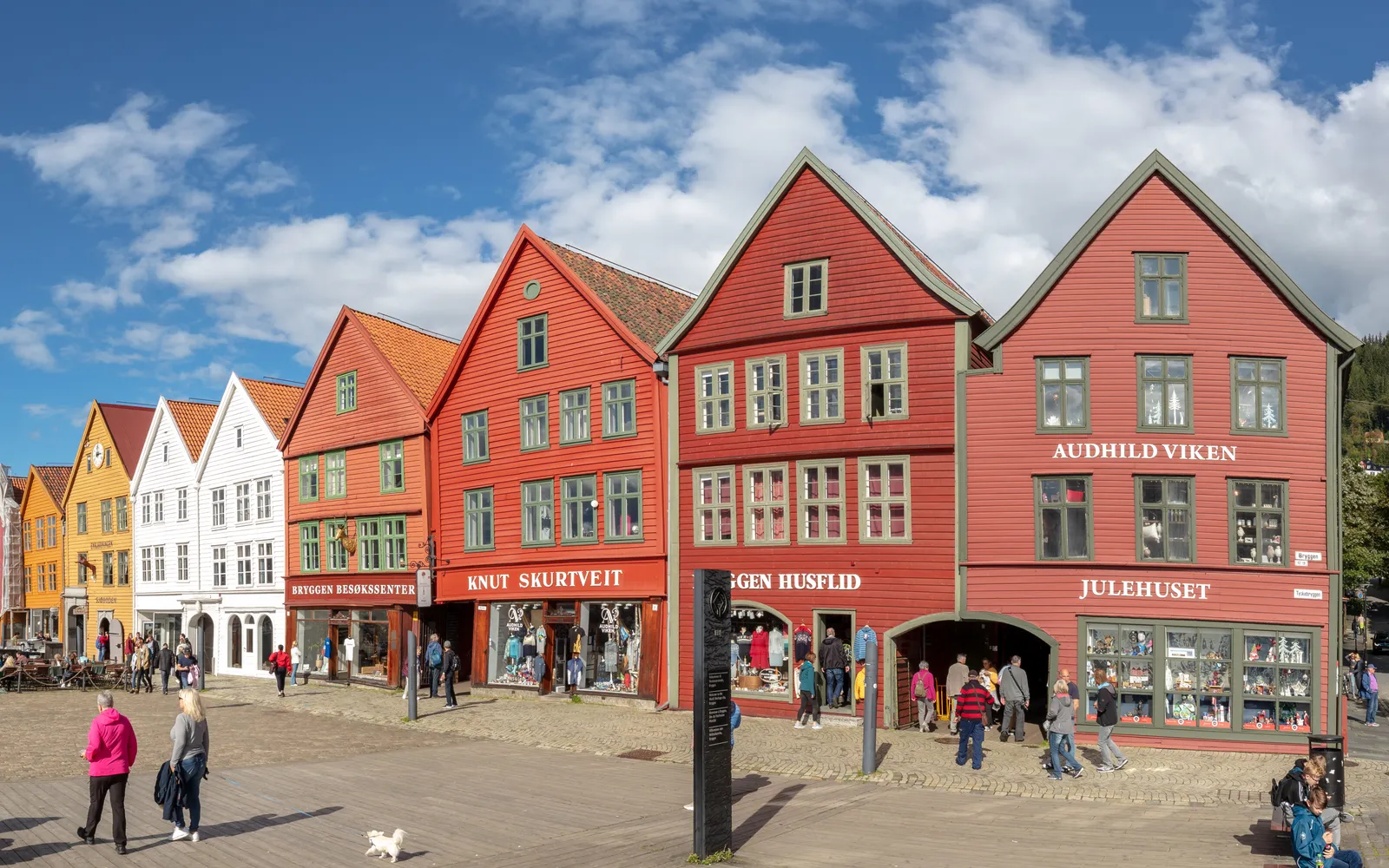 Bergen
Where to stay in Bergen, Norway — best neighbourhoods, UNESCO sights, world-class seafood, and how to get from the airport into town.
See this city's guide → Stavanger
Norway's oil capital on the fjord, gateway to Pulpit Rock, white old town and a rainbow street.
See this city's guide →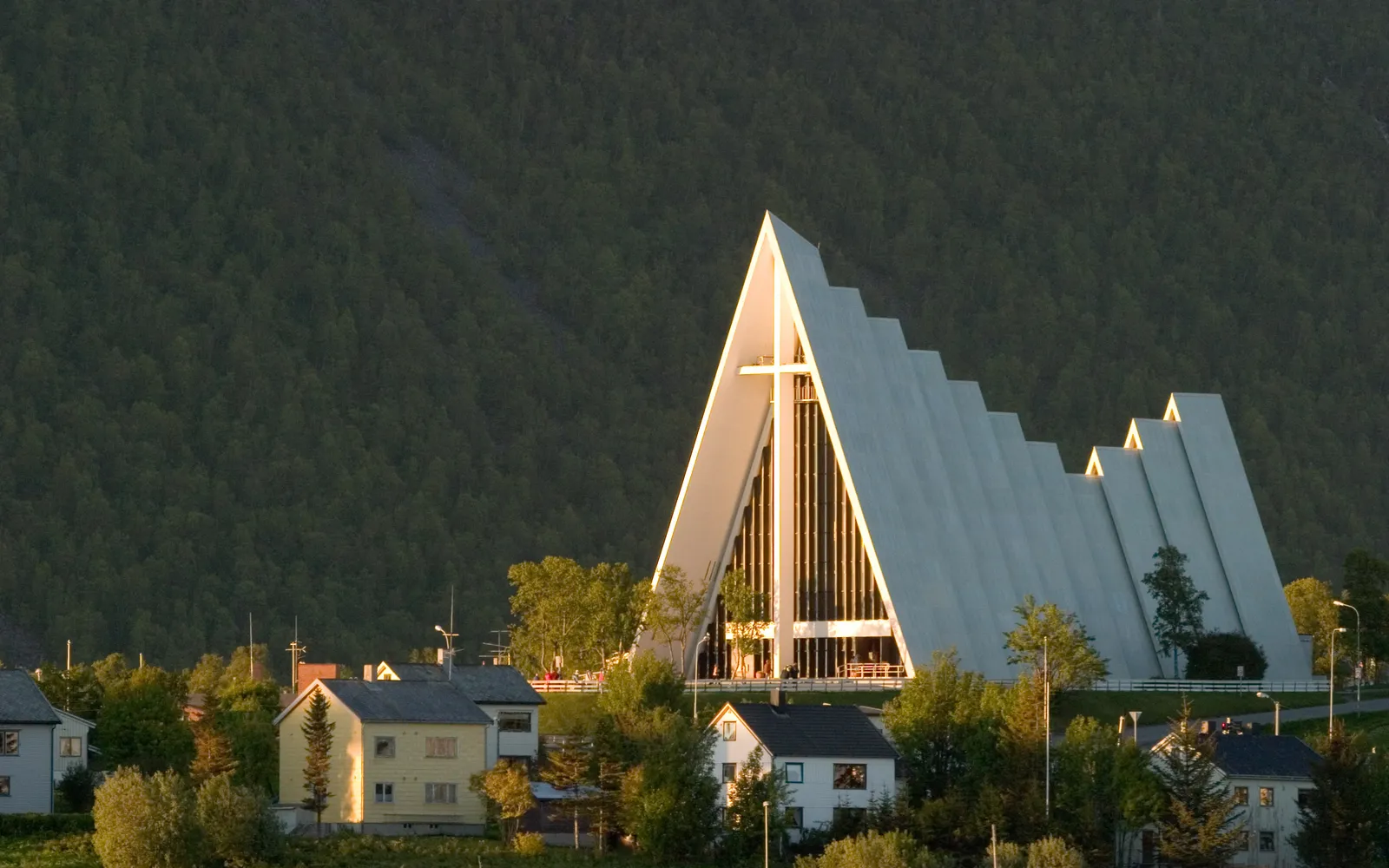 Tromsø
Arctic city of the Northern Lights and Midnight Sun — Arctic Cathedral, cable-car views, and polar seafood
See this city's guide →Frequently asked — where to stay in Oslo
What's the best way from Oslo airport to the city?+
For speed, take the Flytoget express: 19 minutes to the center, every 10 minutes, around 268 NOK. For value, the Vy regional train takes about 23 minutes for around 134 NOK (roughly half price) and includes transfers within the city for 2.5 hours.
Which neighborhood should I stay in?+
First-timers and short stays should pick Sentrum, walkable to everything. Want fjord-side luxury? Choose Aker Brygge/Tjuvholmen. For hip cafés at friendlier prices, head to Grünerløkka. For a quiet base near the parks and museums, try Frogner/Bygdøy.
When is the best time to visit Oslo?+
The best window is summer, June to August, with mild 18-22°C weather and up to 18 hours of daylight, perfect for walking and fjord cruises. Winter is cold with short days, but brings Christmas markets, skiing, and ice skating for cold-weather travelers.
Ready to book your Oslo stay?
Start with the 3 hotels our team picked, or search all 3 sites — always compare before booking