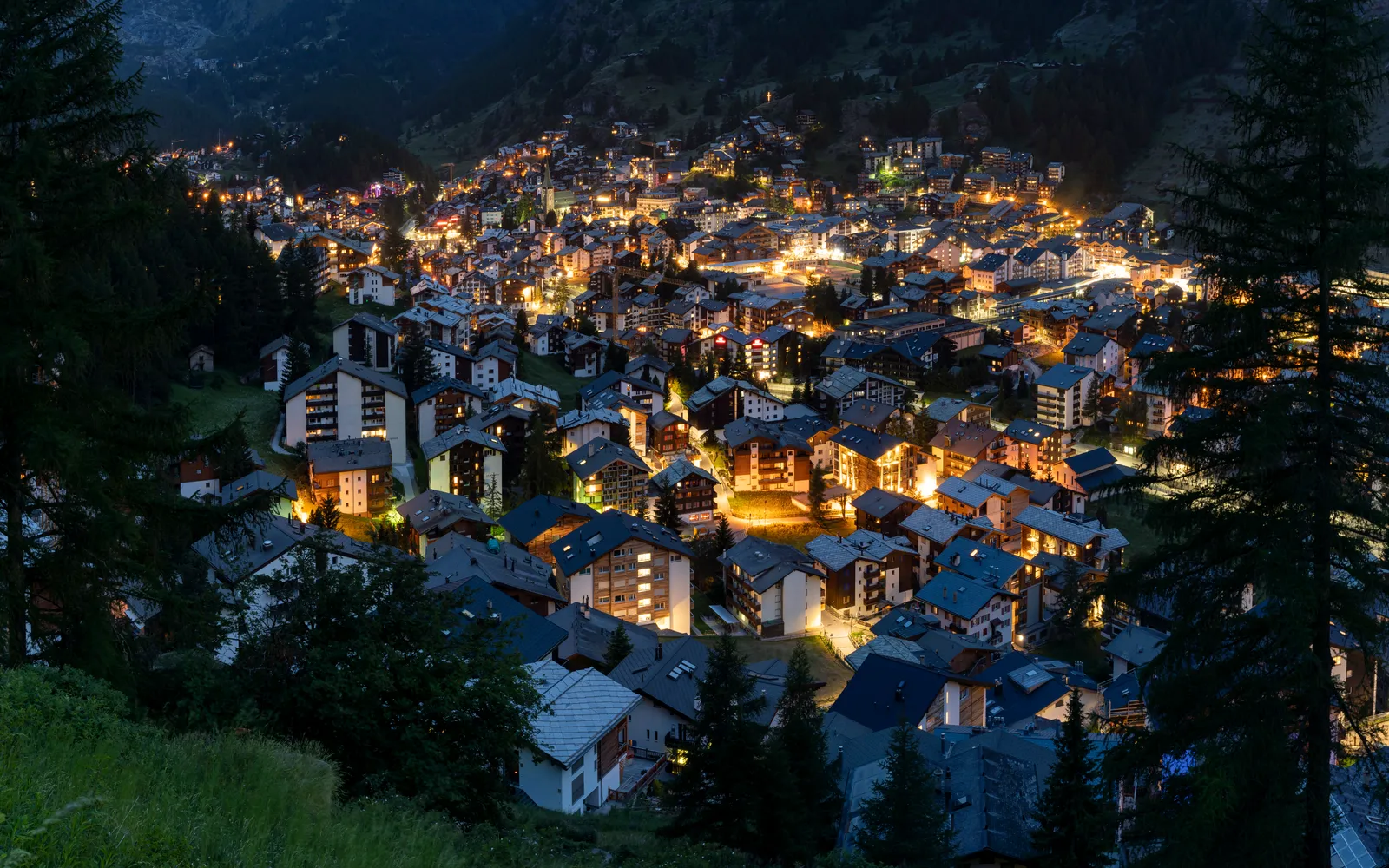
Zermatt is not just a ski resort — it's one of the most beautiful villages in the world, in every season. The Matterhorn rises in a near-perfect pyramid, and that image stays with you long after you leave. The village bans combustion-engine vehicles entirely; only electric cars and horse-drawn carriages move through the streets, keeping the air clean, the noise almost non-existent, and the walking genuinely pleasant. It costs more than almost anywhere else in Europe, but the views are worth every franc.
 #1
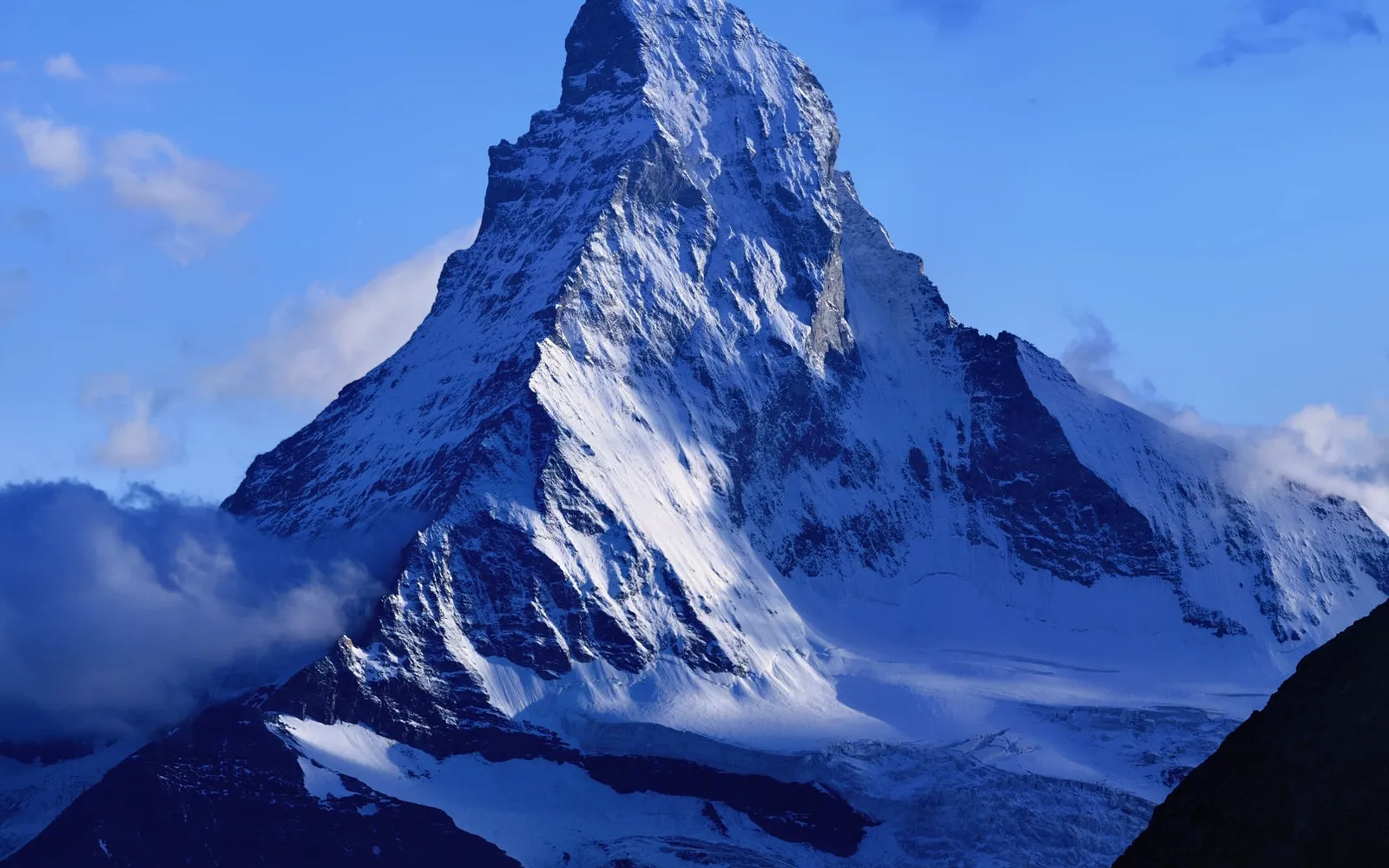
#1 Matterhorn
Switzerland's most recognizable landmark and one of the most striking peaks in the Alps. The Matterhorn stands at <strong>4,478 metres</strong>, its pyramid shape carved by four glaciers grinding in from different directions over millions of years. Every street corner in Zermatt frames it — from the village lanes to hotel windows. Early morning, before clouds roll in, the light on the rock face is simply unlike anything else.
- Get up before 7 a.m. to see the Matterhorn before clouds build — in summer the peak is often hidden by 10 or 11 a.m.
- The best free viewpoint in the village is near the Brücke bridge close to the old church. No cable-car ticket required.
- The Matterhorn's reflection in Riffelsee is one of the most sought-after shots in Switzerland — take the Gornergrat train, get off at Riffelberg station, then walk 20 minutes to the lake.
 #2
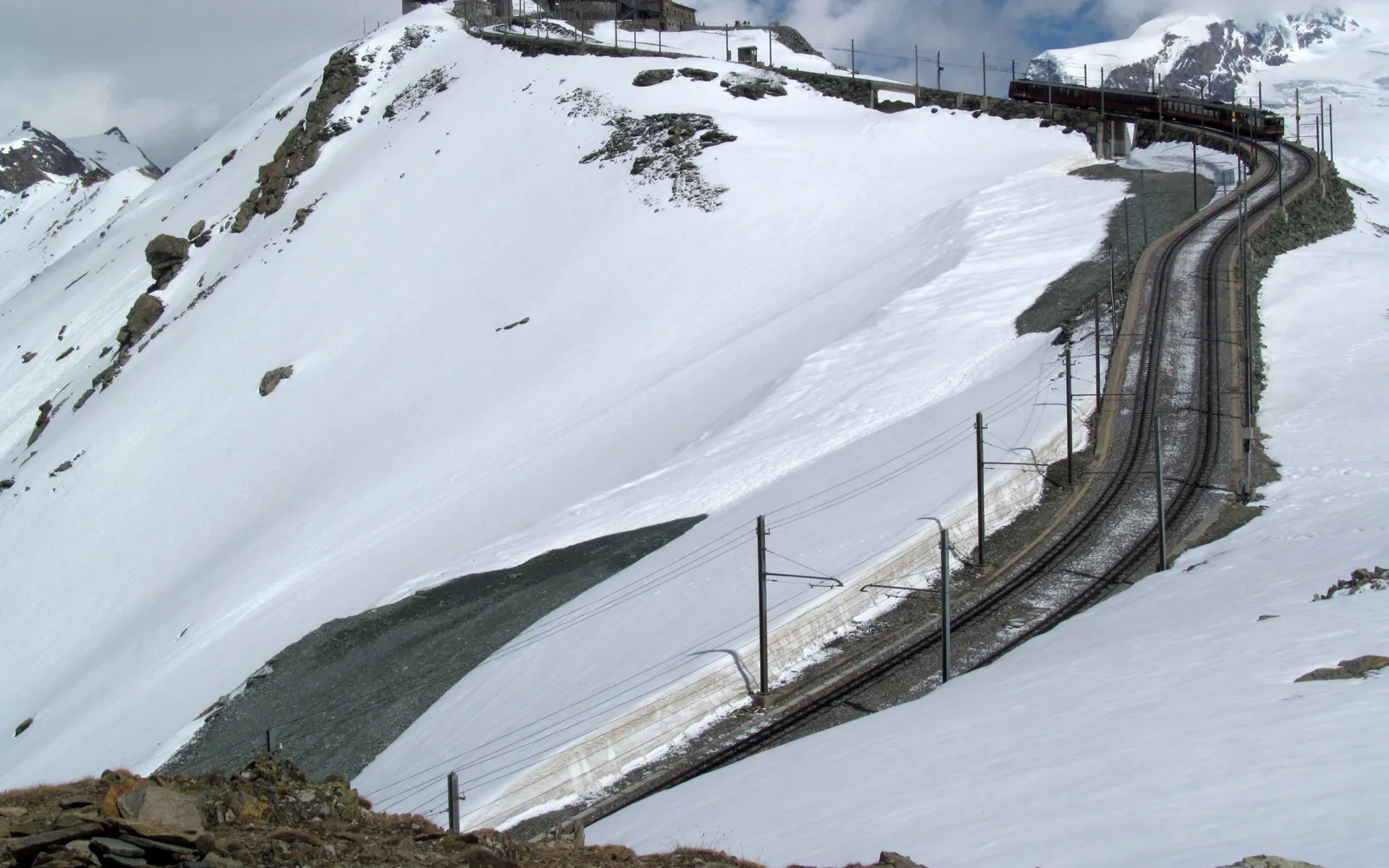
#2 Gornergrat Railway
Switzerland's first public rack railway, running since <strong>1898</strong>. It departs from central Zermatt and reaches the <strong>Gornergrat summit at 3,089 metres</strong> in 33 minutes. Along the route you have uninterrupted views of the Matterhorn and the Gorner Glacier — the longest glacier entirely within Swiss territory. At the top there's a historic observatory and a panorama terrace looking out over <strong>29 peaks</strong>, including Monte Rosa, Switzerland's highest mountain.
- Book tickets online in advance — it's cheaper than at the station and skips long queues during peak season.
- Sit on the right side going up (from Zermatt) for the best Matterhorn views throughout the journey.
- The summit is far colder than the village even in summer — temperatures can drop below 10°C, so pack a warm layer regardless of what month it is.
 #3
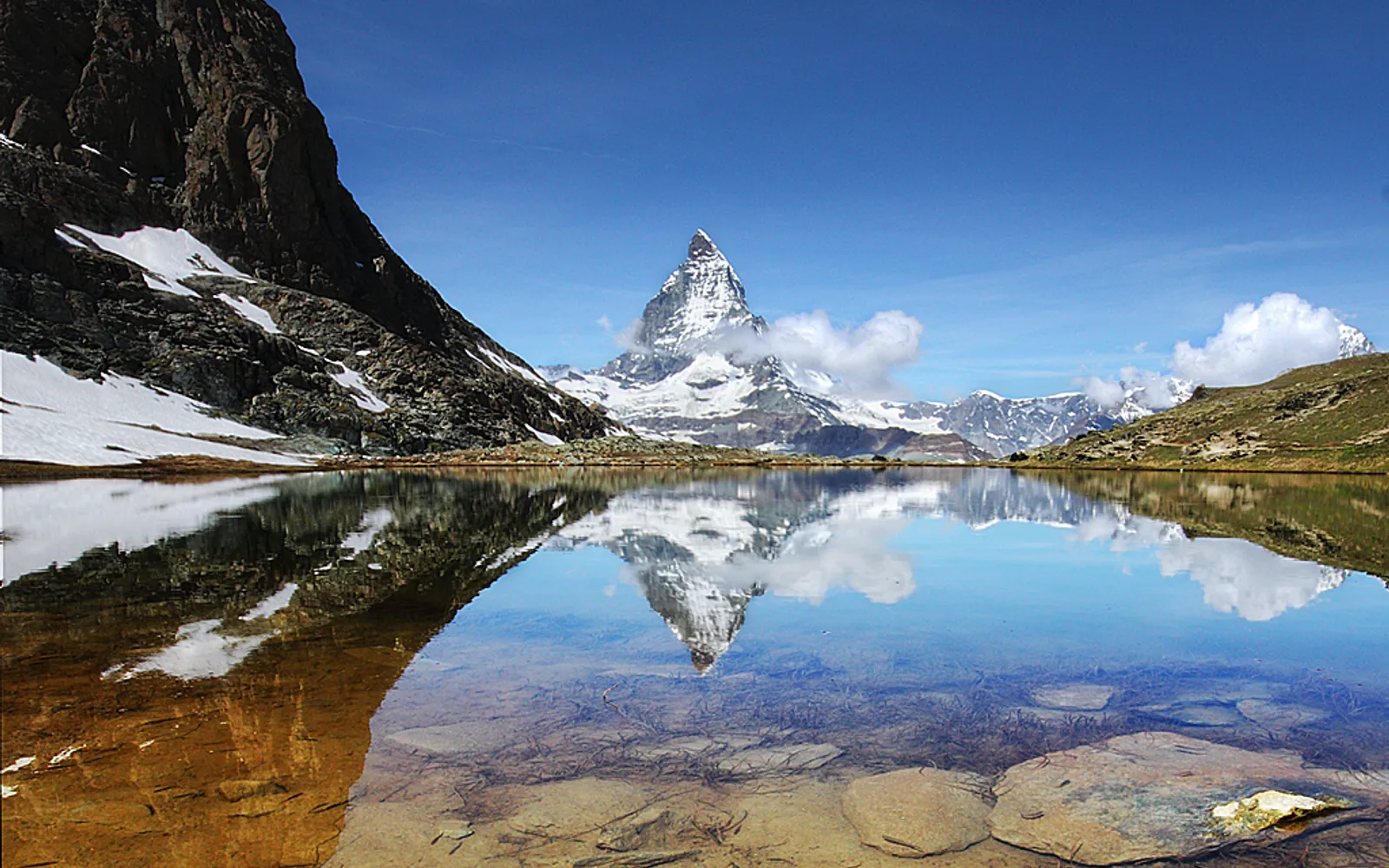
#3 Riffelsee
A small natural lake at <strong>2,757 metres</strong>, famous worldwide for its reflection of the Matterhorn inverted on the water surface. The lake itself is not large, but the shot it gives you is among the most shared photographs from Switzerland. The walking path from Riffelberg station down to the lake passes through alpine meadows filled with purple and yellow wildflowers. In summer the water is clear enough to see the stones on the bottom.
- Take the Gornergrat train and get off at Riffelberg (not the top) — then follow the signs to Riffelsee, about a 20–25 minute walk.
- Arrive before 9 a.m. to beat the photography groups and tour buses that start arriving mid-morning. The water is calmer and the reflection sharper early.
- Alpine wind ripples the surface easily — wait patiently for a calm moment before shooting the reflection.
 #4
#4 Klein Matterhorn
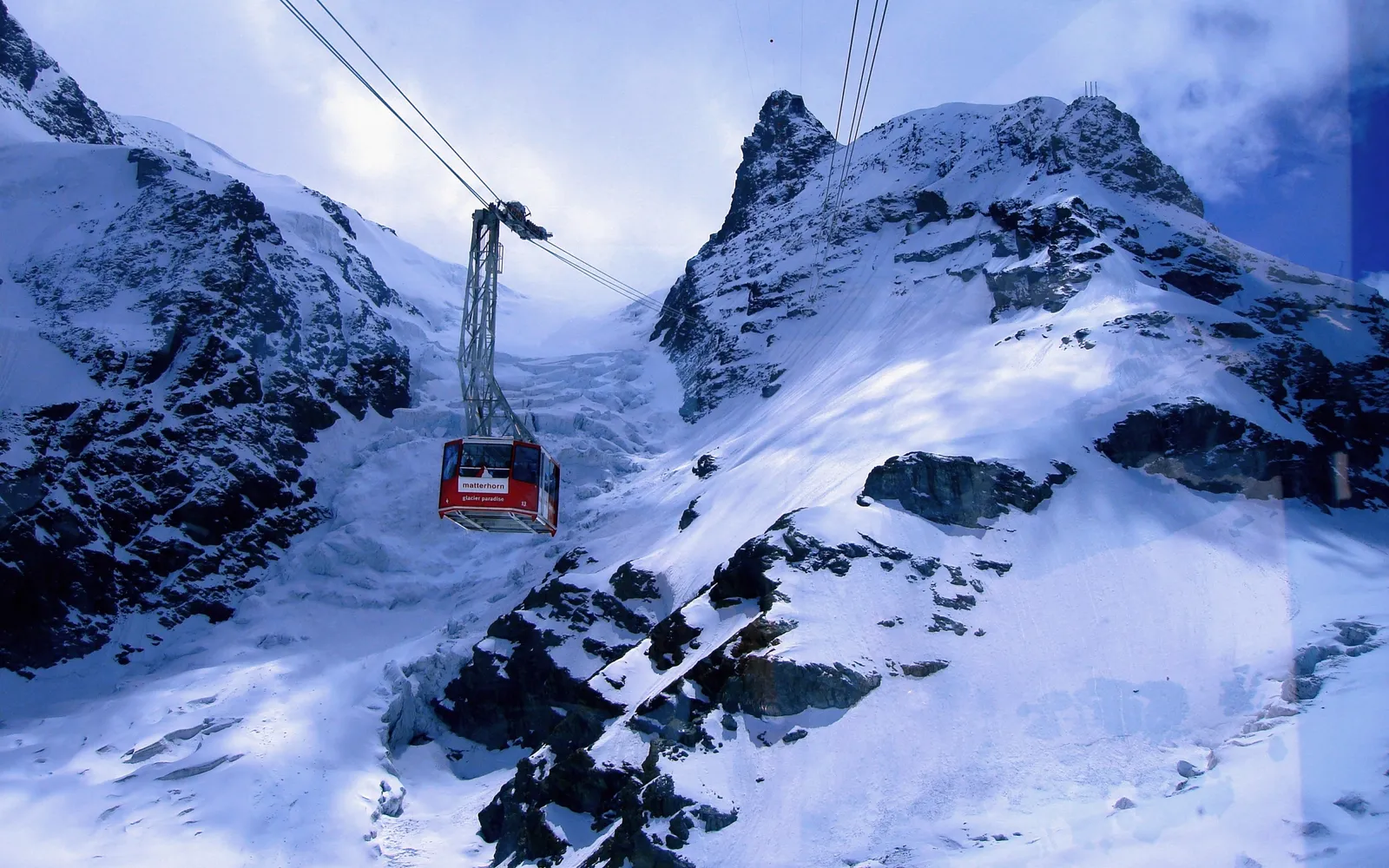
The highest point reachable by ordinary visitors in western Europe, at <strong>3,883 metres</strong>. The Matterhorn Glacier Paradise cable car brings you to a 360-degree viewing terrace looking out over <strong>38 peaks across four countries</strong>. Inside the summit building is a natural ice tunnel carved into the Theodul Glacier, which is more than a thousand years old. The temperature inside holds at <strong>-3°C year-round</strong>. There's genuinely nothing else like it.
- The summit is cold even in July — bring a warm jacket and gloves. Cable car cabins have limited luggage space.
- People unaccustomed to altitude may feel mild headaches at 3,883 m. Drink extra water and move slowly for the first 30 minutes.
- Buy tickets online and check the weather before your day. If there's thick fog or a storm, visibility at the summit is zero — worth rescheduling.
 #5
#5 Zermatt Village and Matterhorn Museum
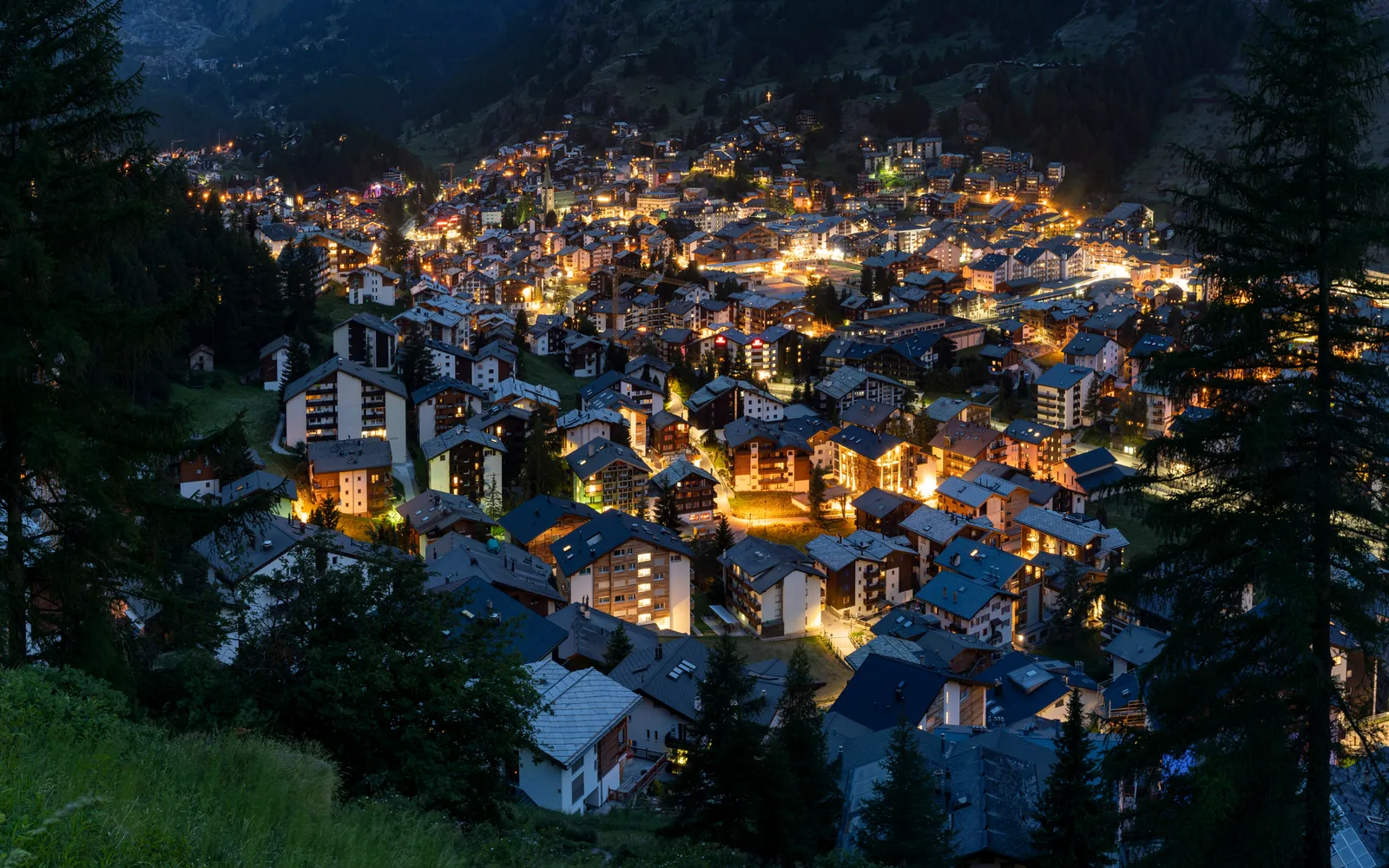
The village itself is a destination. The main street is free of combustion engines — only electric vehicles and horse-drawn carriages move through it, almost silently. The <strong>Hinterdorf quarter</strong> preserves centuries-old Valaisian timber houses still standing as built. Underground, the <strong>Matterhorn Museum</strong> tells the story of the first ascent in <strong>1865</strong> and the tragedy that followed on the descent. For anyone interested in mountaineering history, it's not optional.
- Walk past the main shopping strip into the Hinterdorf quarter to see traditional timber houses built without modern methods — some are over 400 years old.
- The Matterhorn Museum is open 11:00–18:00, admission CHF 10, and takes about an hour. The content is genuinely worth it.
- Zermatt is expensive even by Swiss standards — a single coffee can run CHF 6–8. Budget accordingly.
 #6
#6 5 Seenweg (Five Lakes Trail)
Ranked by multiple publications as the most beautiful hiking trail in Switzerland. The route passes <strong>five lakes</strong> — Stellisee, Grindjisee, Grünsee, Moosjisee, and Leisee — each reflecting the Matterhorn from a different angle. Total distance is <strong>9.5 km</strong> and the walk takes <strong>3–4 hours</strong>, passing alpine wildflower meadows, boulder fields, and clear mountain streams. The gradient is manageable for anyone in reasonable shape.
- Take the Sunnegga–Rothorn cable car from Zermatt to Blauherd, then follow the 5-Seen-Wanderweg signs downhill, finishing back in Zermatt.
- Wear ankle-support hiking boots — the trail surface includes loose rock and muddy sections, especially after rain.
- Hit Stellisee first: it's the first lake on the route and gives the most complete Matterhorn reflection of all five.
Where to stay in Zermatt for this trip
A well-located hotel means less commuting and more sightseeing. Here are real, top-rated stays in Zermatt — compare Agoda · Booking · Trip.com in one click.
ARCA Solebad Wellness & Spa
Affiliate links — we may earn a commission at no extra cost to you. Details
Alpenhotel Fleurs de Zermatt
Affiliate links — we may earn a commission at no extra cost to you. Details
Wellness Hotel Alpenhof
Affiliate links — we may earn a commission at no extra cost to you. Details
Hotel Sarazena
Affiliate links — we may earn a commission at no extra cost to you. Details
Tours, tickets & activities in Zermatt
Day tours, attraction tickets and travel essentials for Zermatt — book ahead on Klook with mobile e-tickets.
Affiliate links — we may earn a commission at no extra cost to you.
Before You Pack
Zermatt is at its best in summer (July–September) when wildflowers are out and skies are clear — but winter (December–March) has its own romantic pull with snow on every surface. Plan at least 3–4 days to cover all the highlights. Book accommodation well in advance: this is a small village and hotels fill up fast.