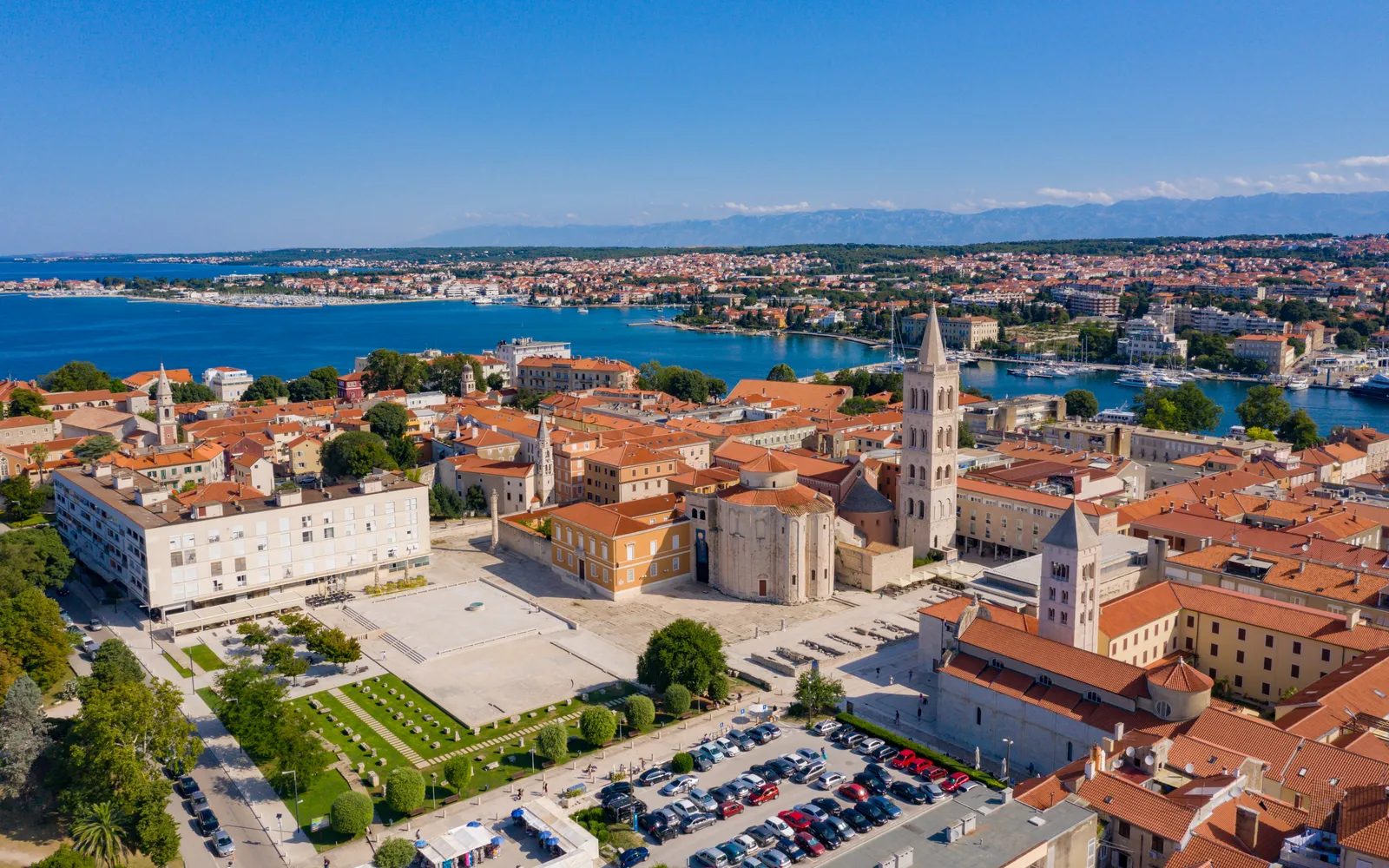
Zadar may not have the fame of Dubrovnik, but travelers who have been there will tell you it is their favorite city in Croatia. The old town sits on a walkable peninsula where a 2,000-year-old Roman forum shares the same stone with a sea organ that composes music from real Adriatic waves. At dusk, this is one of the most beautiful sunset spots in Europe — by Alfred Hitchcock's own account.
 #1
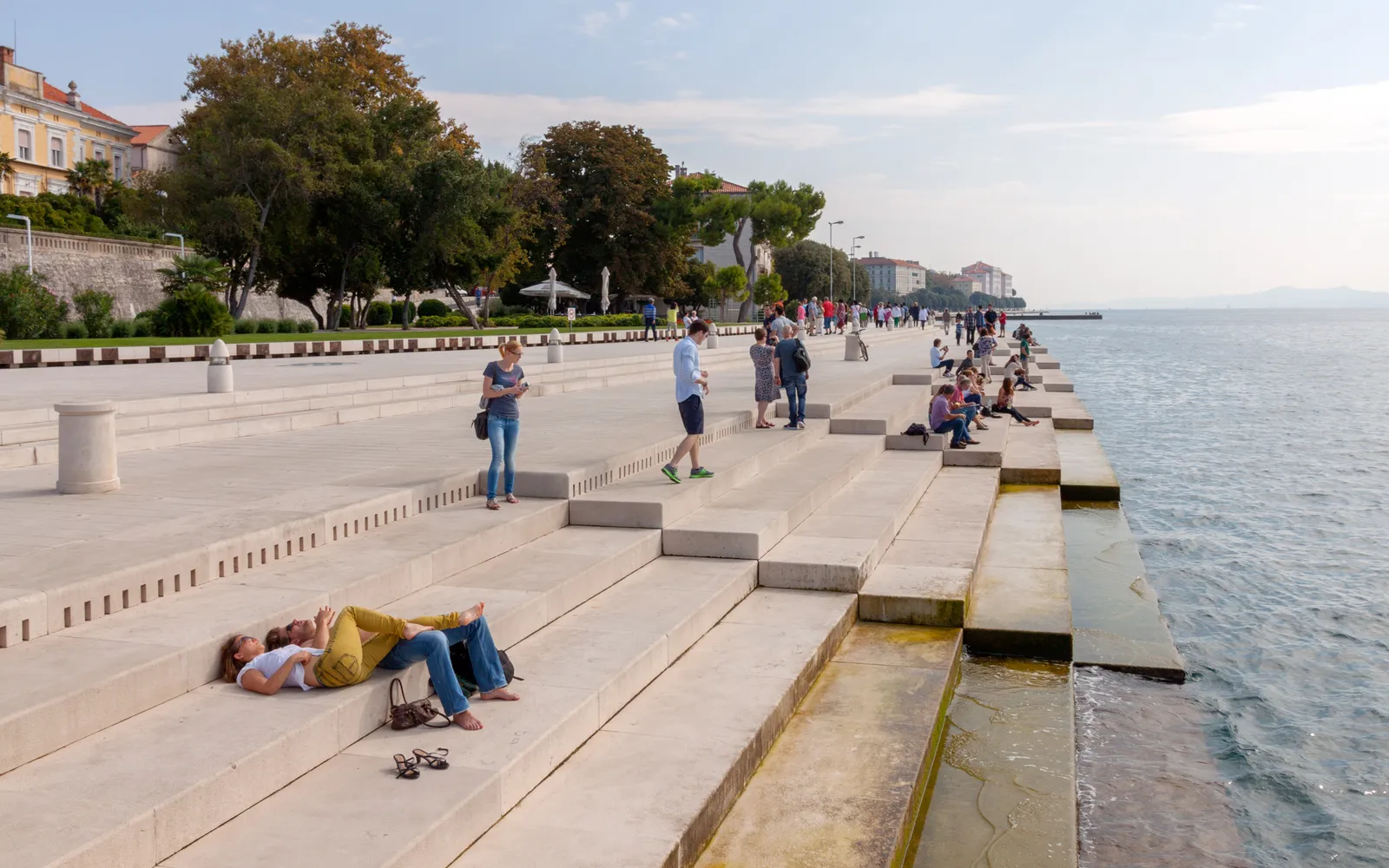
#1 Sea Organ
A public artwork with no parallel anywhere in the world. Designed by architect Nikola Basic in 2005, 35 organ pipes are set into the stone steps along the waterfront. When Adriatic waves push through each pipe, they produce a different tone depending on the force and rhythm of the swell — no two days ever sound the same. Sitting on the white stone steps, listening to the music against an open-sea view, is what traveler after traveler calls one of the most memorable experiences of their lives.
- The sound is loudest and most melodic in moderate swell. If the sea is too calm, the notes become very faint.
- Open and free 24 hours. At dawn or just after sunset the crowds thin out and the atmosphere is exceptional.
- Sun Salutation is only 60 metres to the north — combine both in a single walk.
 #2
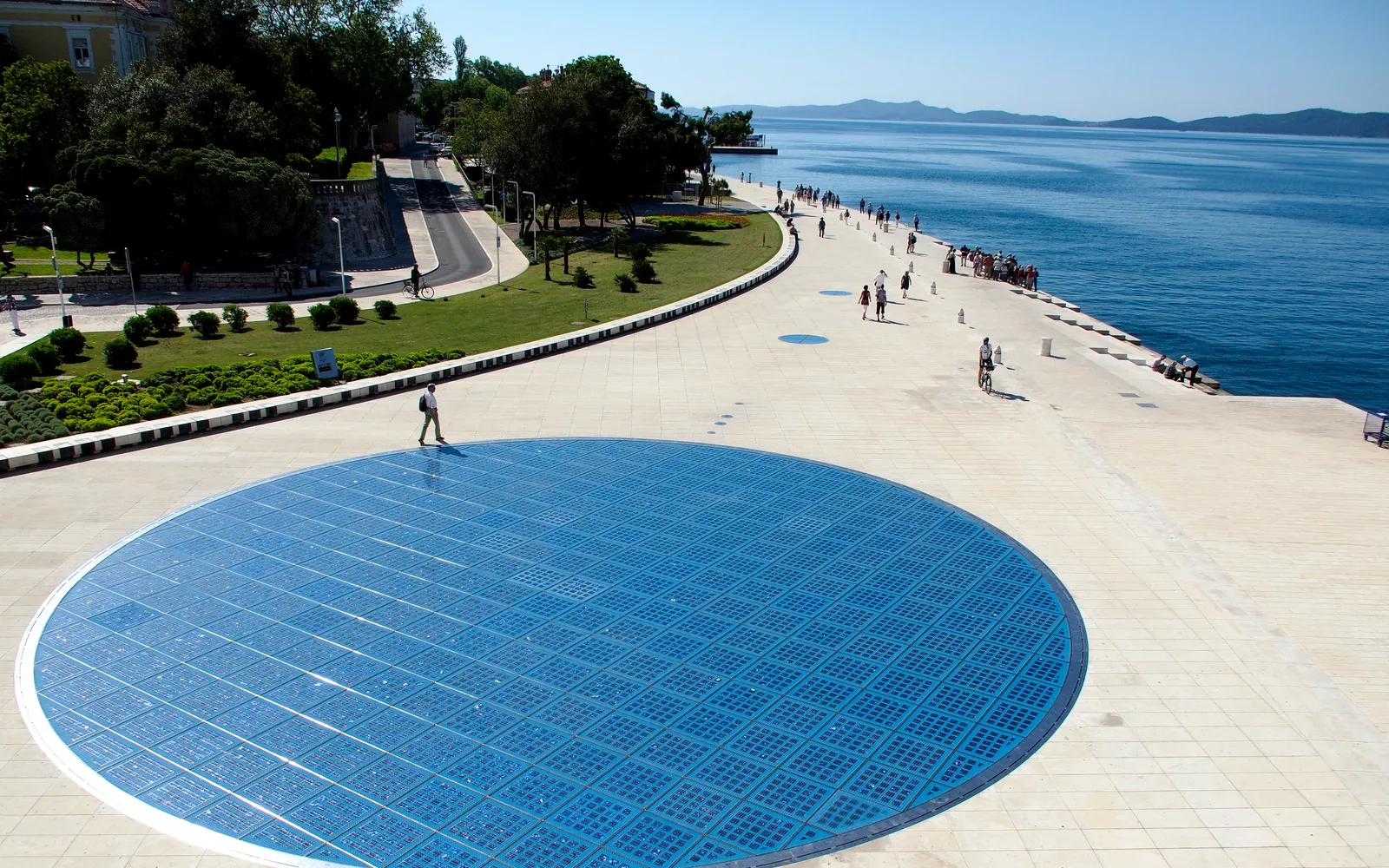
#2 Sun Salutation
Just a few steps from the Sea Organ, a 22-metre-diameter photovoltaic disc is embedded in the waterfront stone. It stores solar energy all day and releases it at night as a constantly shifting light show — blues, purples, oranges, and golds flowing across the pavement. People walk, sit, and lie on the lit surface as if they're floating inside a galaxy. This is the spot Alfred Hitchcock called home to the most beautiful sunset in the world.
- The display is most vivid on clear nights. About half an hour after sunset the colours intensify further.
- Children love running across the shifting light — a favorite spot for families to photograph.
- The photovoltaic disc also generates electricity for the old town's street lighting — it is functional, not just decorative.
 #3
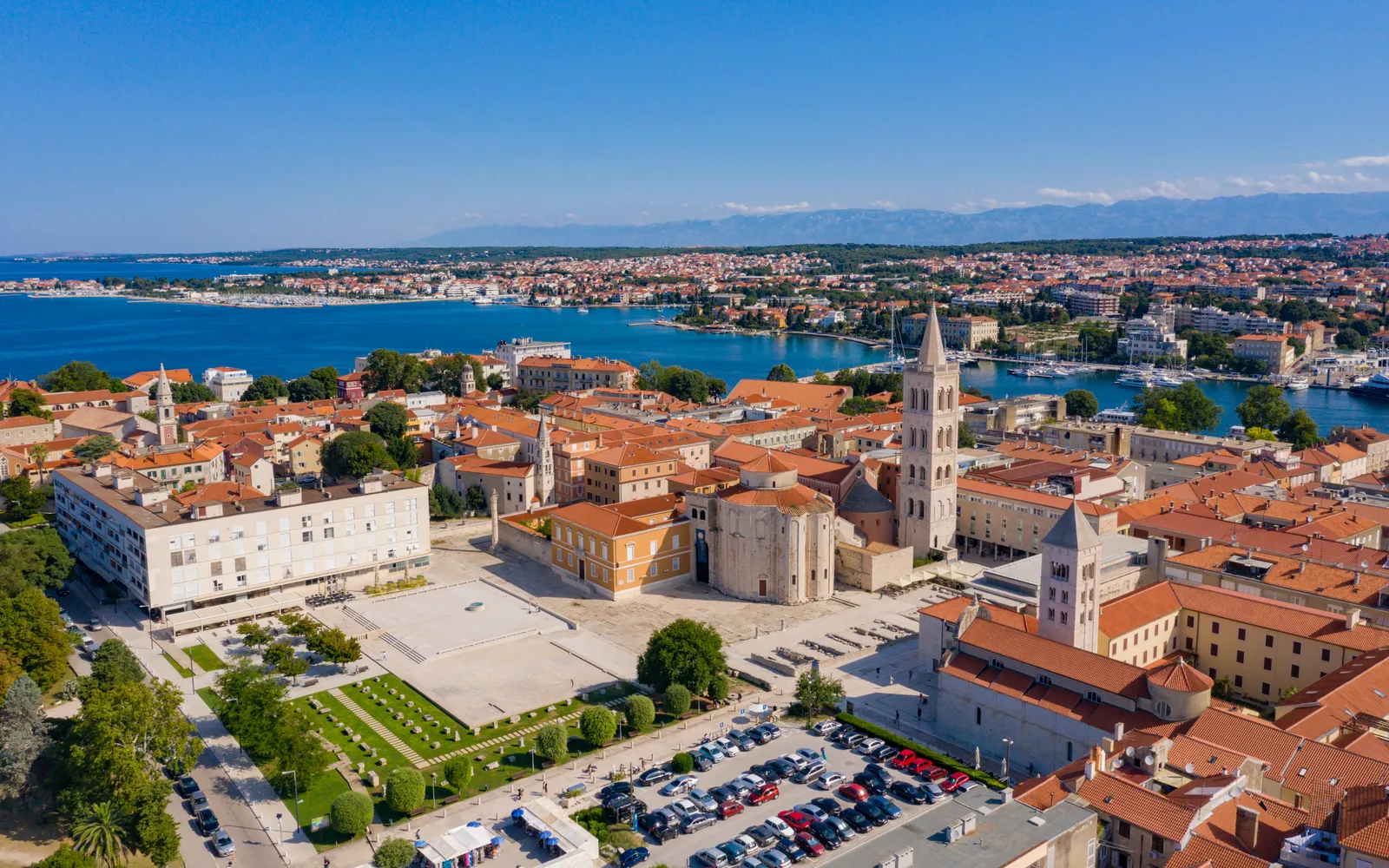
#3 Roman Forum Zadar
The largest Roman forum in the Illyrian region, built under Emperor Augustus between 1 BC and AD 14, covering an area of more than 90 by 45 metres. The tall columns, temple foundations, and the central pillar once used to publicly punish offenders are still standing. The open stone square remains a gathering point for locals and visitors alike, hosting a street market and outdoor concerts through the summer.
- Free to visit at all hours — the columns and foundations are open to walk around.
- Some of the stones embedded in the ground still carry ancient Latin inscriptions. Look for 2 or 3 as you cross the square.
- At night the Roman columns are lit up — a great atmosphere for an after-dinner stroll.
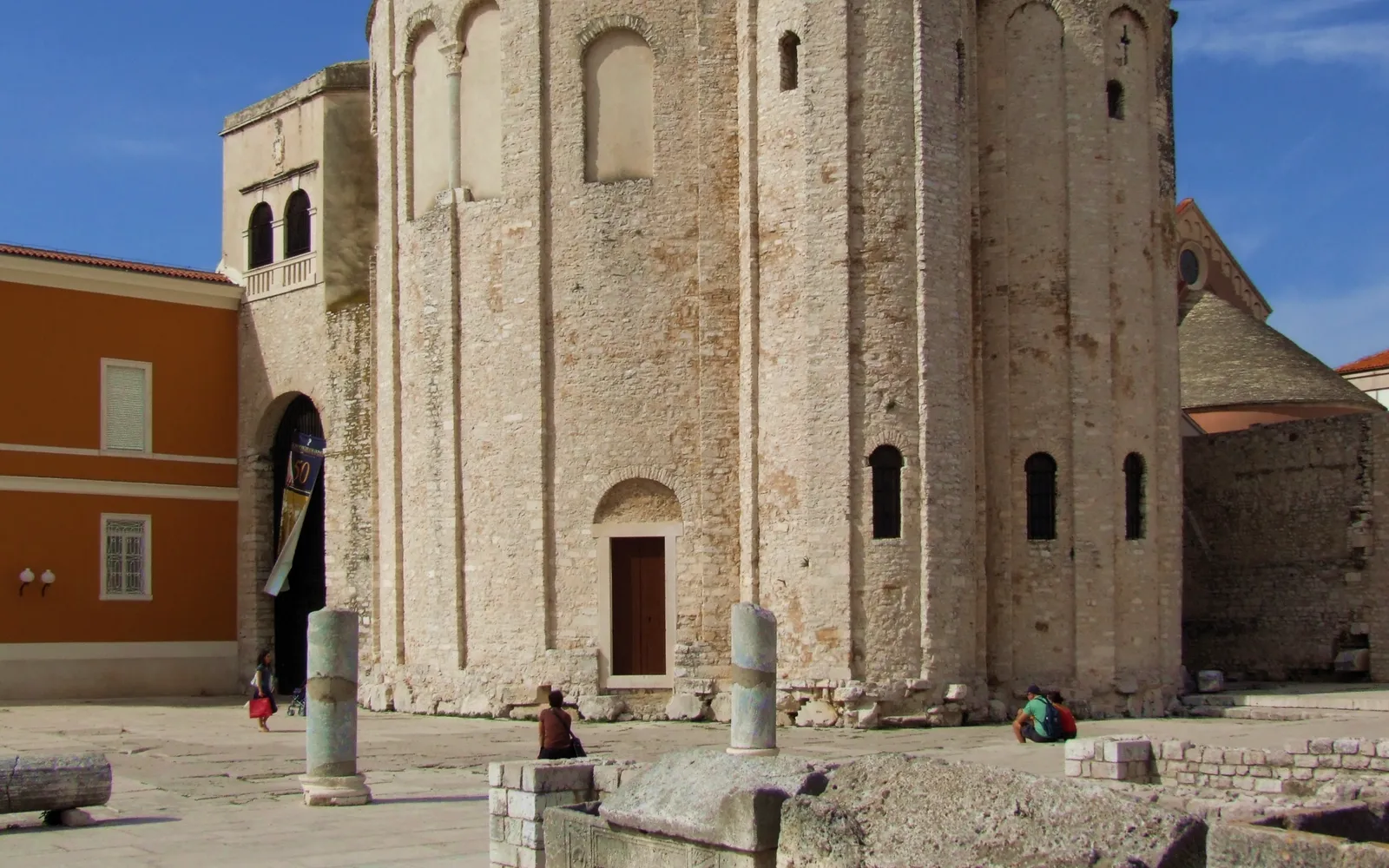 #4
#4 Church of St. Donatus
The round Byzantine church that has become the symbol of Zadar, built in the 9th century on top of an ancient Roman temple. The structure blends old Roman stone with Byzantine architecture in a way you can literally see in the walls. It is no longer used as a place of worship but serves as an exhibition space and, in summer, a venue for classical music concerts — the acoustics of a round building make performances here unlike anything in a conventional hall.
- Entry is 5 euros. Open 9 am – 9 pm in summer; may close for periods in winter.
- Look at the lower courses of the church wall — those stones came directly from the Roman forum. You can see exactly where one era ends and the other begins.
- Medieval and Renaissance music concerts run during Musical Evenings in St. Donatus (June–September). Book ahead.
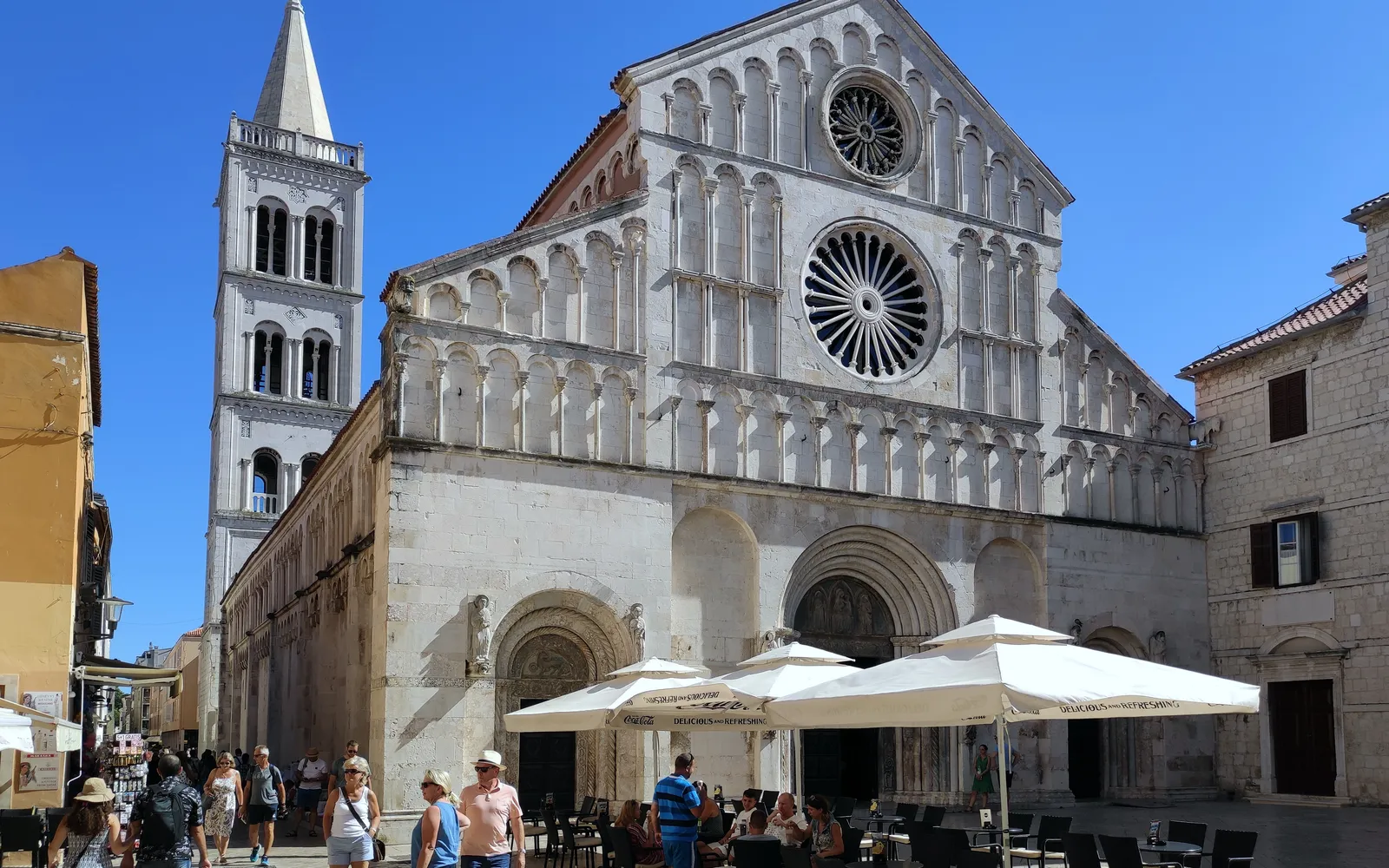 #5
#5 Zadar Cathedral
The Cathedral of St. Anastasia, over 1,000 years old, was built and expanded continuously from the 9th to the 13th century. It is considered the finest Romanesque building in Dalmatia. Inside are the relics of St. Anastasia and several significant religious artworks. The bell tower can be climbed for a panoramic view of the old town and the Adriatic — at 3 euros, one of the best-value viewpoints in Croatia, with no hill required.
- Climb the bell tower for 3 euros — from the top you can see the entire old town and the island of Ugljan.
- The cathedral itself is free to enter. Sunday morning Mass has a wonderful atmosphere; dress modestly.
- Several cafes opposite the cathedral let you sit and admire the facade in comfort.
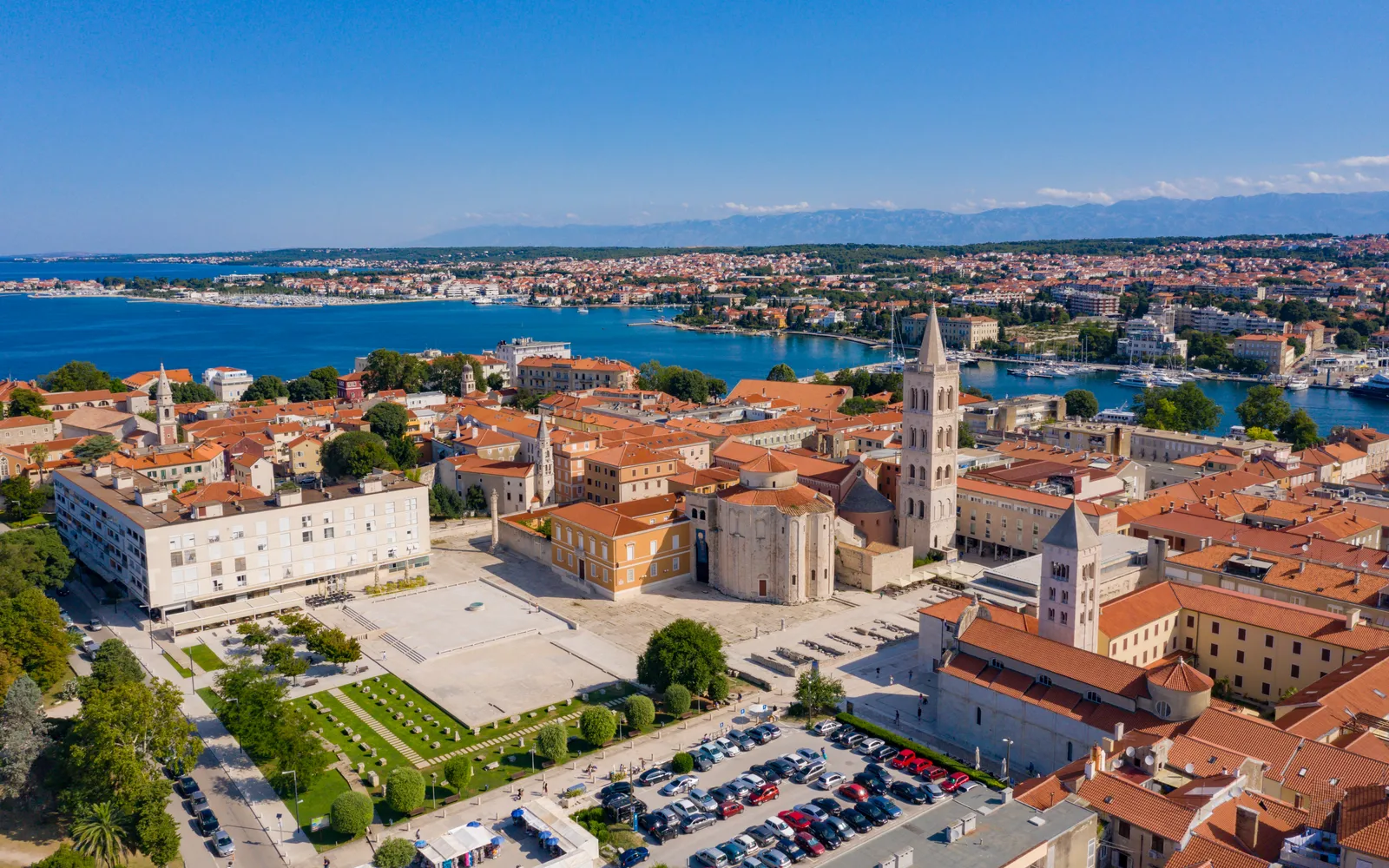 #6
#6 Zadar Green Market
An open-air market on the edge of the old city wall that has been running for centuries. Islanders and villagers from across Dalmatia bring their goods here every morning: home-cured olives, lavender honey, Pag cheese, homemade wine, and seasonal vegetables. The atmosphere is genuinely warm and unhurried, prices are well below what you'll pay in shops, and it is the best place in Zadar to see everyday local life rather than the tourist version of it.
- Open daily 6 am – 1 pm. Fresh produce sells out quickly — arrive before 9 am for the best selection.
- Ask to try the cured olives and cheese before buying. Vendors are always happy to let you taste.
- Pick up olives, pâté, and fresh bread here and carry them to the Sea Wall for a picnic with an Adriatic view.
Where to stay in Zadar for this trip
A well-located hotel means less commuting and more sightseeing. Here are real, top-rated stays in Zadar — compare Agoda · Booking · Trip.com in one click.
Hyatt Regency Zadar
Affiliate links — we may earn a commission at no extra cost to you. Details
Almayer Art & Heritage Hotel
Affiliate links — we may earn a commission at no extra cost to you. Details
Hotel Pinija
Affiliate links — we may earn a commission at no extra cost to you. Details
Falkensteiner Hotel & Spa Iadera
Affiliate links — we may earn a commission at no extra cost to you. Details
Tours, tickets & activities in Zadar
Day tours, attraction tickets and travel essentials for Zadar — book ahead on Klook with mobile e-tickets.
Affiliate links — we may earn a commission at no extra cost to you.
Before You Pack
Zadar is at its best in May–June or September–October: cooler temperatures, far fewer crowds than the July–August peak. The entire old town is walkable in half a day, but plan at least 2 nights to catch the evening atmosphere properly — and to make a day trip to Plitvice Lakes, which is close enough to be very manageable.