
Javanese food in Yogyakarta runs sweeter than anywhere else in Indonesia — a direct echo of the royal court, where sweetness was a mark of refinement. Gudeg and bakpia are the two local staples that put Jogja on Indonesia's food map, while the angkringan — the humble roadside coffee stall — is a social institution where students and artists sit elbow-to-elbow nursing charcoal coffee from dusk until well past midnight. The food here doesn't just fill you up; every bite tells a piece of this city's history.
 #1
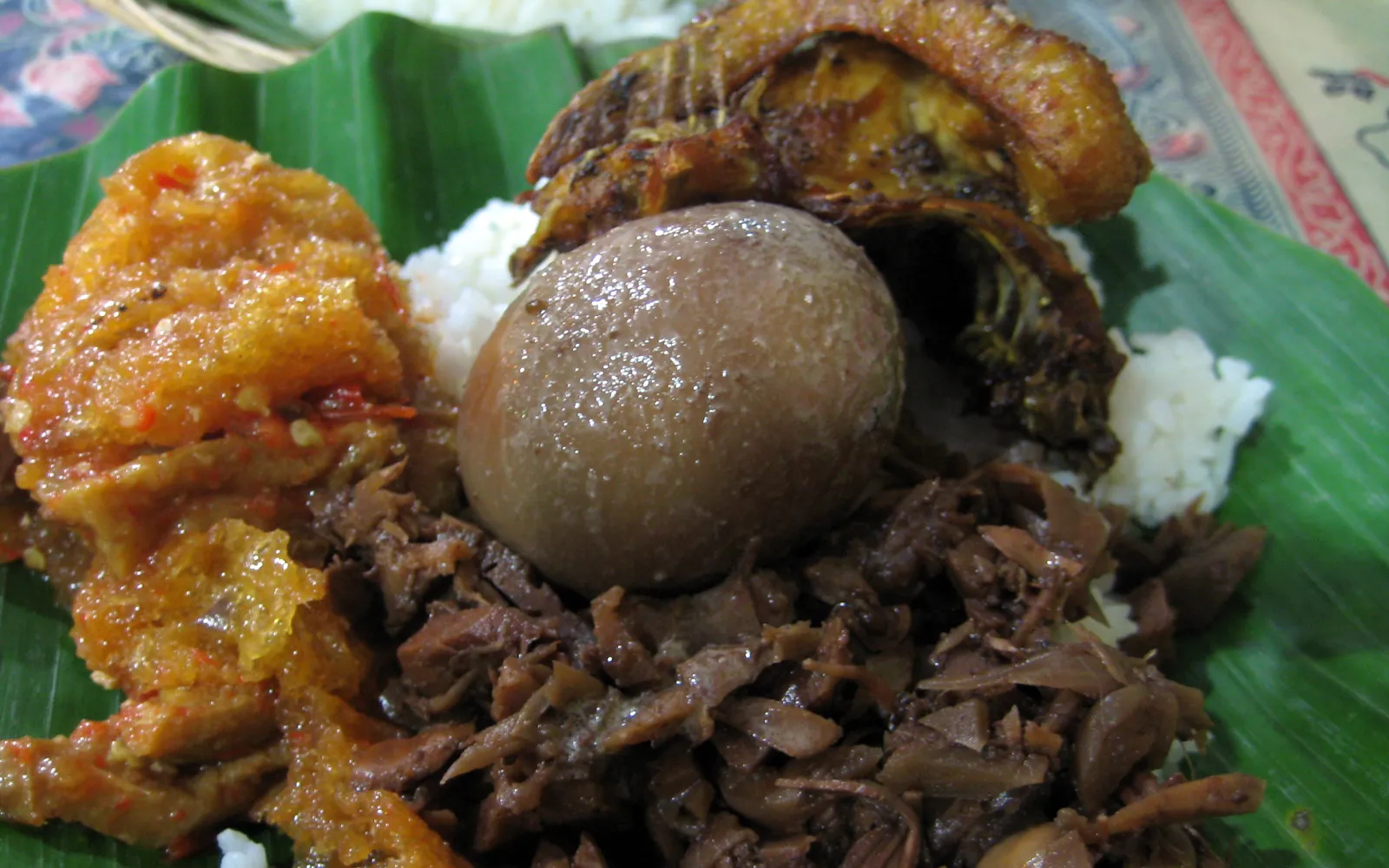
#1 Gudeg
The defining dish of Yogyakarta: young jackfruit braised for hours with coconut milk, palm sugar, teak leaves, and spices until it turns a deep reddish-brown with a gently sweet, yielding texture. It comes with rice, chicken, a brown-braised egg (<em>areh</em>), salted dried beef (<em>krecek</em>), and sambal. The most celebrated gudeg house is <strong>Gudeg Yu Djum</strong>, in business since the 1950s.
- Go at dawn — most traditional gudeg stalls open at 5:30-6:00 a.m. and sell out before noon.
- Dry-style gudeg (<em>kering</em>) is richer in flavor than the wet version — worth trying if you prefer something less brothy.
- The Wijilan alley near Kraton Palace has several legendary gudeg shops within a single lane.
 #2
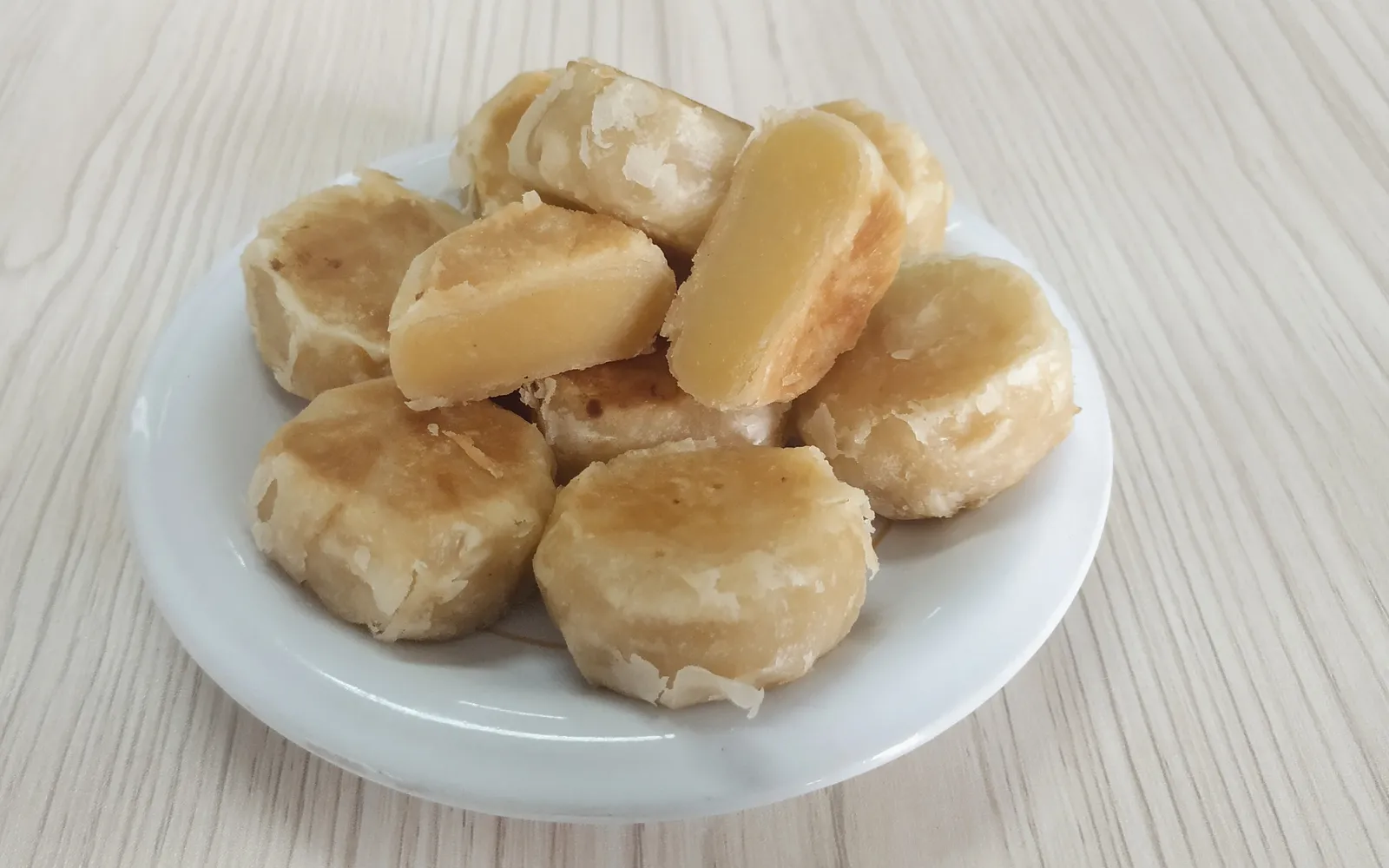
#2 Bakpia
These palm-sized baked pastries have roots in the Hakka Chinese community that settled in Jogja generations ago. The classic version is a thin shell wrapped around sweet mung bean paste, though today you'll find fillings ranging from chocolate and cheese to coconut and peanut butter. Straight from the oven they're soft and fragrant. They are by far the most popular edible souvenir travelers take home from Yogyakarta.
- Buy them fresh from the oven — the difference in texture and flavor versus day-old bakpia on a shelf is remarkable.
- Pathuk Street, where shop numbers run from 25 to 145, is the original bakpia strip; you can taste-test several makers in one walk.
- Bakpia keep for 7-14 days, making them a reliable long-distance gift.
 #3
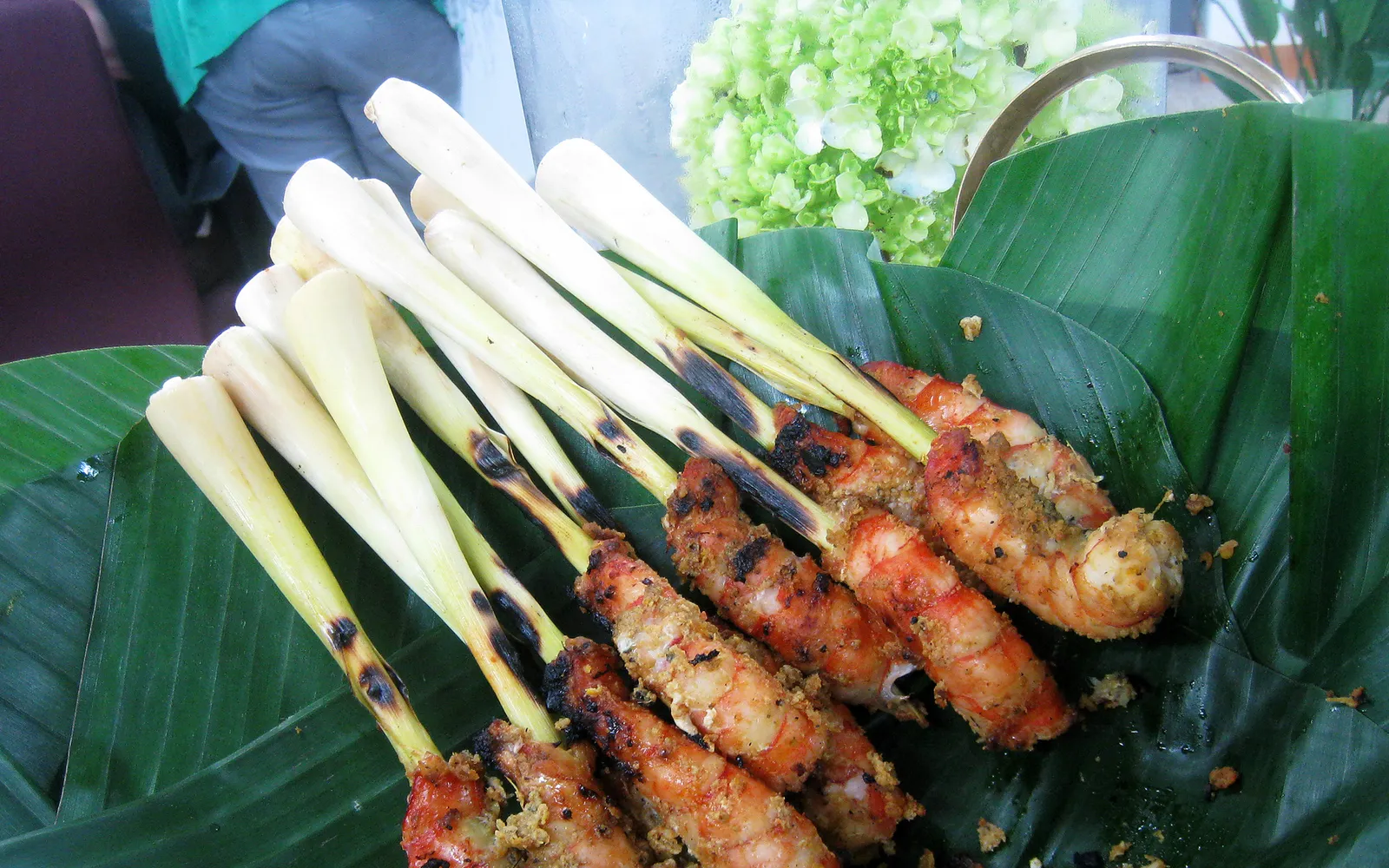
#3 Sate Klathak
A style of satay unique to Jogja that departs from the usual in one key way: the skewers are iron, not bamboo. The metal conducts heat inward, cooking the meat from the inside out simultaneously. Large cuts of mutton or goat are seasoned with only salt and black pepper before hitting the charcoal, letting the meat's natural flavor and the smoke carry the dish. A bowl of curry broth (<em>gulai</em>) comes alongside.
- The most famous spot is <strong>Sate Klathak Pak Pong</strong> on Jalan Imogiri Timur — it opens at noon and sells out before evening.
- The minimum order is typically 10 skewers, so this is a good shared meal.
- Order with <em>lontong</em> (rice steamed inside a banana-leaf parcel) instead of plain rice for the most traditional version.
 #4
#4 Oseng Mercon
A stir-fry of beef cartilage and fat (<em>kikil</em>) cooked with a heavy load of chilies until the heat is genuinely explosive — <em>mercon</em> means firecracker in Javanese, and that's not an exaggeration. The dish was invented by <strong>Warung Bu Narti</strong> in 1997 and has since become a staple that practically every Javanese restaurant in Jogja puts on its menu.
- Specify your heat level when ordering — medium is still very spicy for those not used to large quantities of chili.
- Eat it with plain steamed rice and something very cold to drink to cut the heat.
- Warung Bu Narti opens at 09:00 and typically sells out before 20:00 on weekdays.
 #5
#5 Wedang Ronde
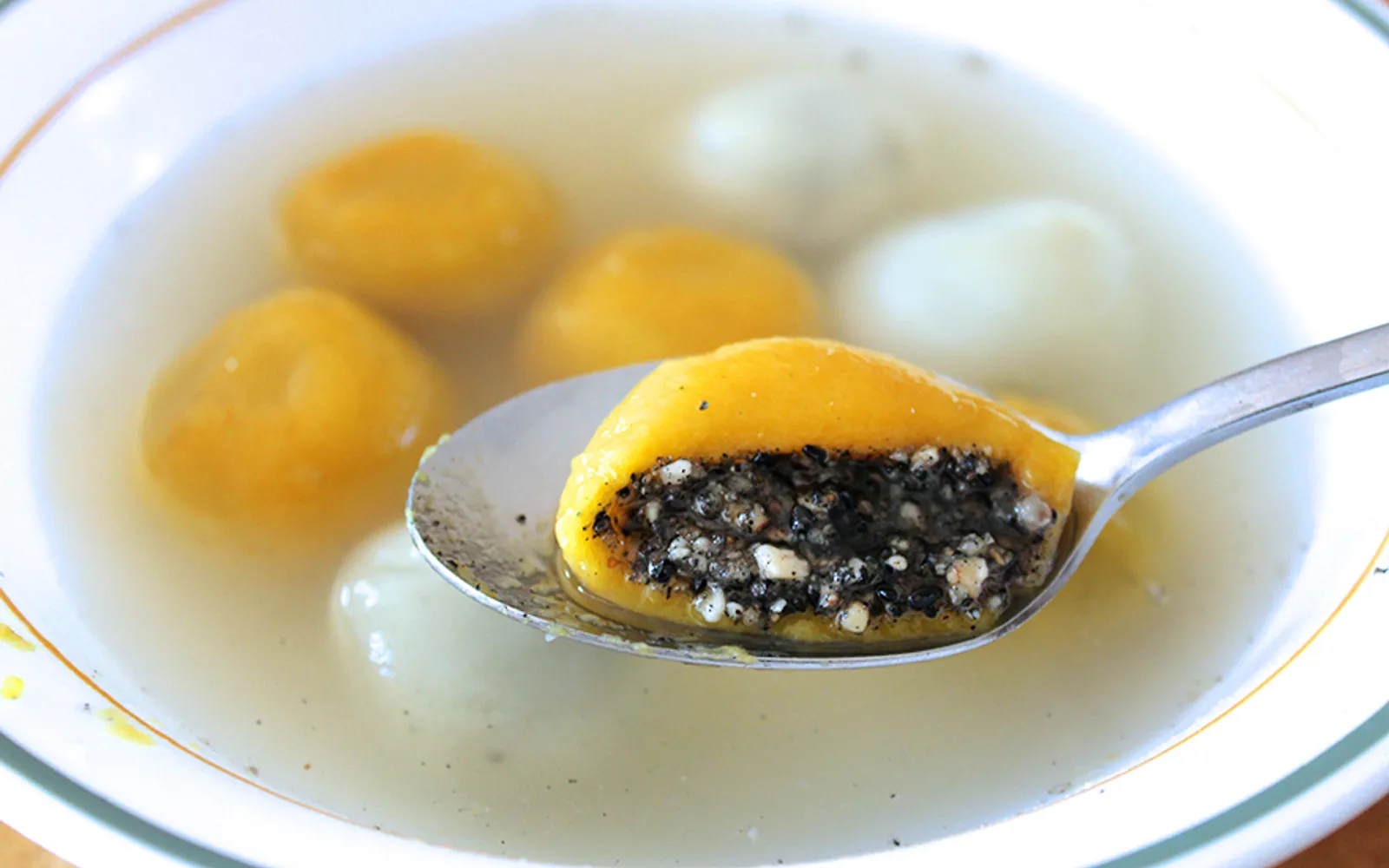
A traditional Javanese hot drink with Chinese origins: chewy glutinous rice balls filled with mung bean paste, floating in sweetened ginger broth infused with lemongrass and pandan. The bowl comes garnished with roasted peanuts, thin rice noodles, and fried tofu. The ginger warms you from the inside out — exactly what you want on a cool Jogja evening.
- Drink it at a Malioboro street stall at night — a bowl runs about IDR 15,000-25,000 (roughly US$1-1.50).
- Ask for extra ginger if you want more heat.
- Best consumed freshly made; avoid stalls where the rice balls have gone hard or cold.
 #6
#6 Angkringan Kopi Joss
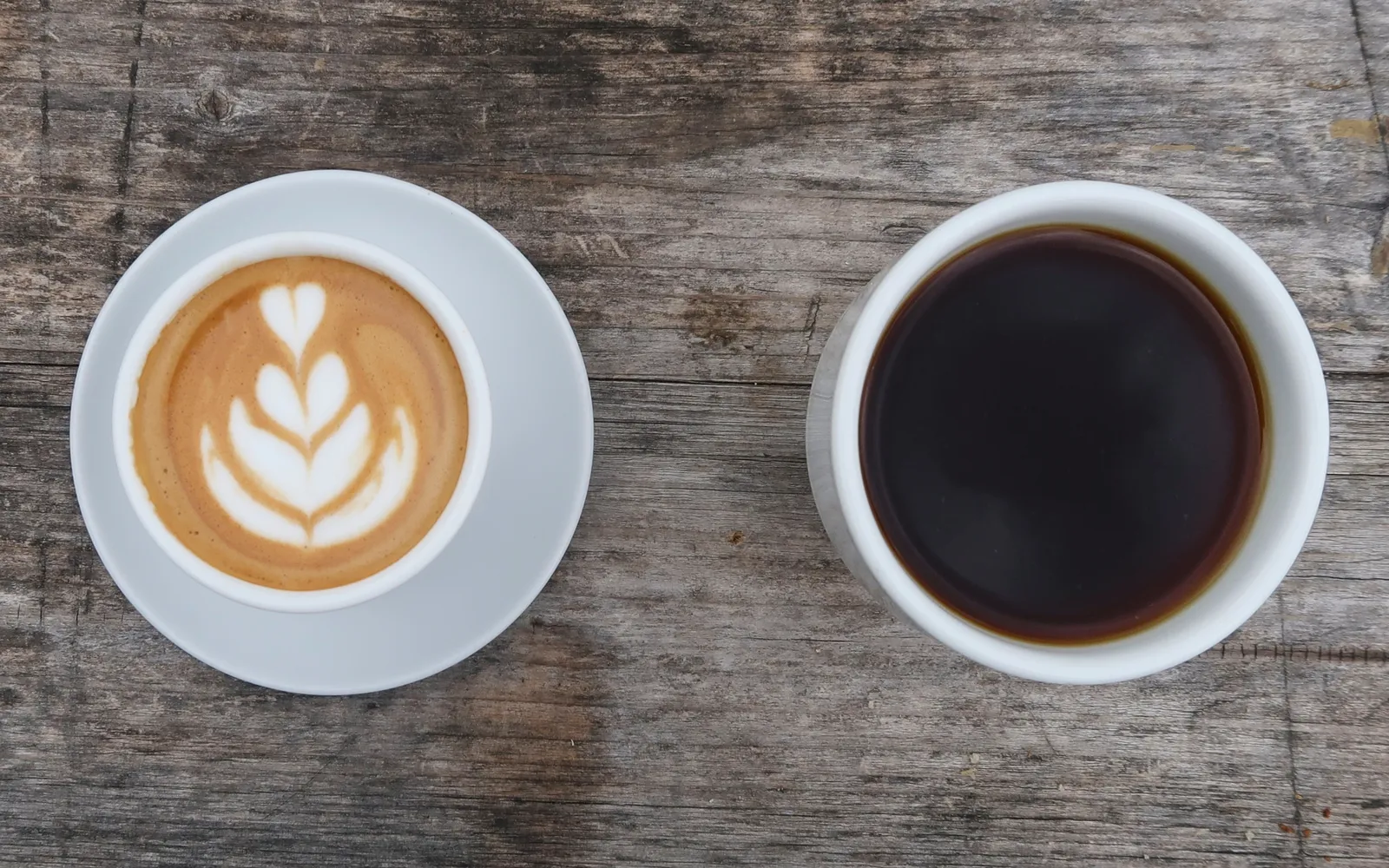
The <em>angkringan</em> is Jogja's answer to a neighborhood food cart: a wheeled stand selling cheap food and drinks. Its signature offering is <strong>Kopi Joss</strong> — black coffee into which a glowing charcoal ember is plunged, producing a hiss and a distinct smoky aroma that no other coffee in Indonesia has. Locals believe the charcoal absorbs excess acid and caffeine, making it easier on the stomach. Pair it with <em>nasi kucing</em>, banana-leaf parcels of rice each just a few bites in size.
- <strong>Angkringan Lik Man</strong> near Tugu station opens 17:00-03:00 and is the most celebrated stall in the city.
- Drink the coffee warm, after the charcoal has stopped glowing — do not drink while the coal is still hot and active.
- <em>Nasi kucing</em> comes in several fillings; pick what you like from the tray laid out on the cart. Each parcel costs around IDR 3,000.
Where to stay in Yogyakarta for this trip
A well-located hotel means less commuting and more sightseeing. Here are real, top-rated stays in Yogyakarta — compare Agoda · Booking · Trip.com in one click.
Amanjiwo
Affiliate links — we may earn a commission at no extra cost to you. Details
Grand Hotel De Djokja (อดีตชื่อ Grand Inna Malioboro)
Affiliate links — we may earn a commission at no extra cost to you. Details
Hotel Tentrem Yogyakarta
Affiliate links — we may earn a commission at no extra cost to you. Details
Royal Ambarrukmo Yogyakarta
Affiliate links — we may earn a commission at no extra cost to you. Details
Tours, tickets & activities in Yogyakarta
Day tours, attraction tickets and travel essentials for Yogyakarta — book ahead on Klook with mobile e-tickets.
Affiliate links — we may earn a commission at no extra cost to you.
Before You Pack
Yogyakarta is one of the best food destinations in Indonesia. A daily food budget of around US$8-12 gets you a full run from breakfast gudeg to late-night kopi joss, with sate klathak and oseng mercon in between. Don't skip the morning markets and roadside stalls — that's where the real flavor lives.