
The food in Yekaterinburg is not flashy — but it is honest, warming, and more faithful to local ingredients than you will find in most tourist cities. The city claims to be the birthplace of pelmeni, the boiled dumplings that Siberian and Ural communities developed to preserve meat through the long winters. Traditional Russian food here means dark bread, hot soup, and the kind of Soviet-era canteen warmth that makes perfect sense when the temperature outside drops well below zero.
 #1
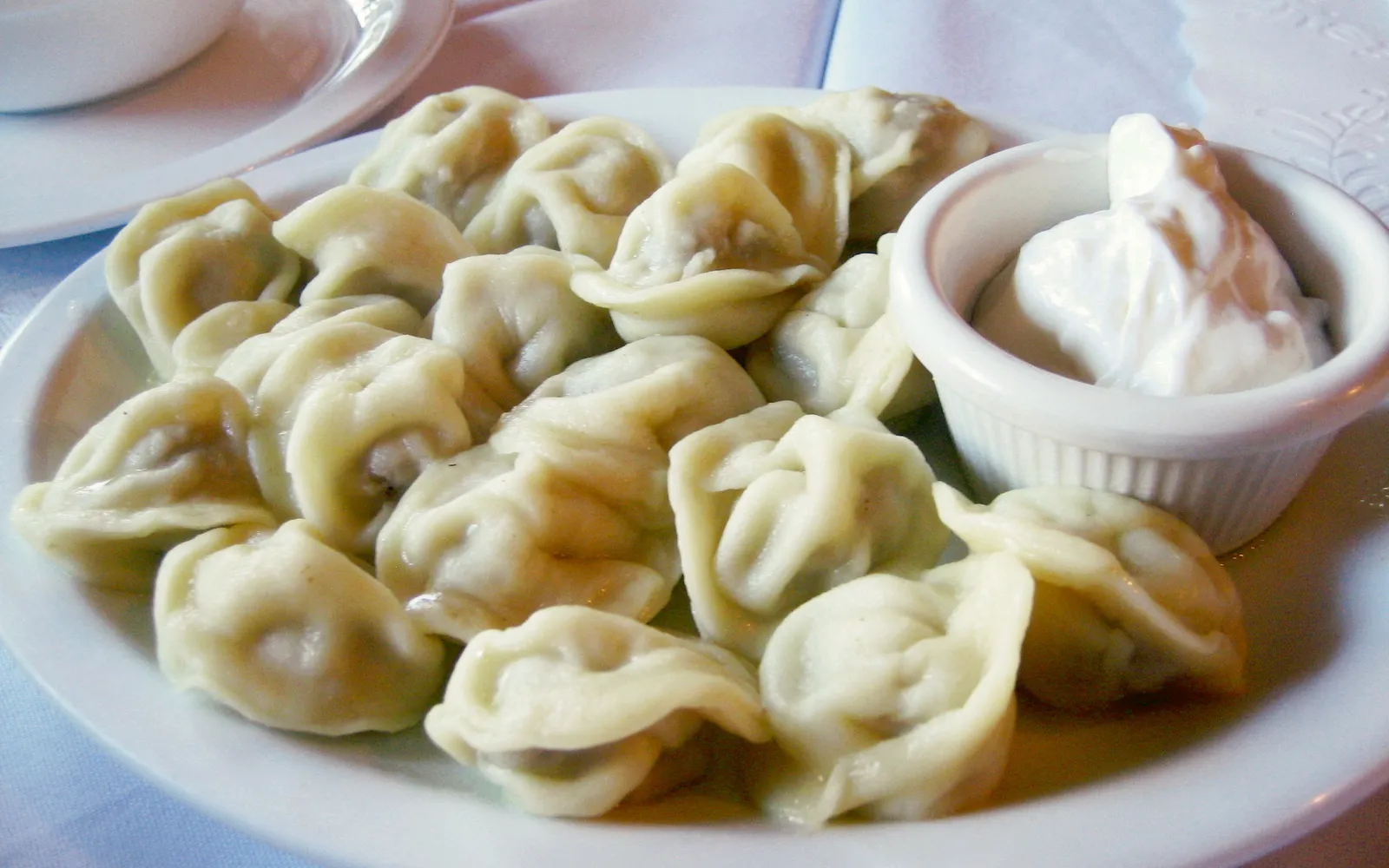
#1 Pelmeni
The dumpling that Yekaterinburg and the Ural cities claim as their own. Thin, soft dough wraps a simply seasoned filling of coarsely minced pork and beef, boiled in a rolling pot of water until cooked through, then eaten hot with sour cream, melted butter, or a splash of vinegar according to taste. Good restaurants in Yekaterinburg make fresh pelmeni every day, hand-shaped to old Russian recipes — the flavour is straightforward and comforting in a way that needs no explanation.
- Order pelmeni 'so smetanoy' — meaning with sour cream. It is the most popular and classic way to eat them in Russia.
- A good restaurant makes pelmeni fresh daily and you can often watch the shaping through the front window. Avoid anywhere using pre-frozen factory dumplings.
- A plate costs 200–400 roubles — inexpensive, filling, and ideal as a lunch main.
 #2
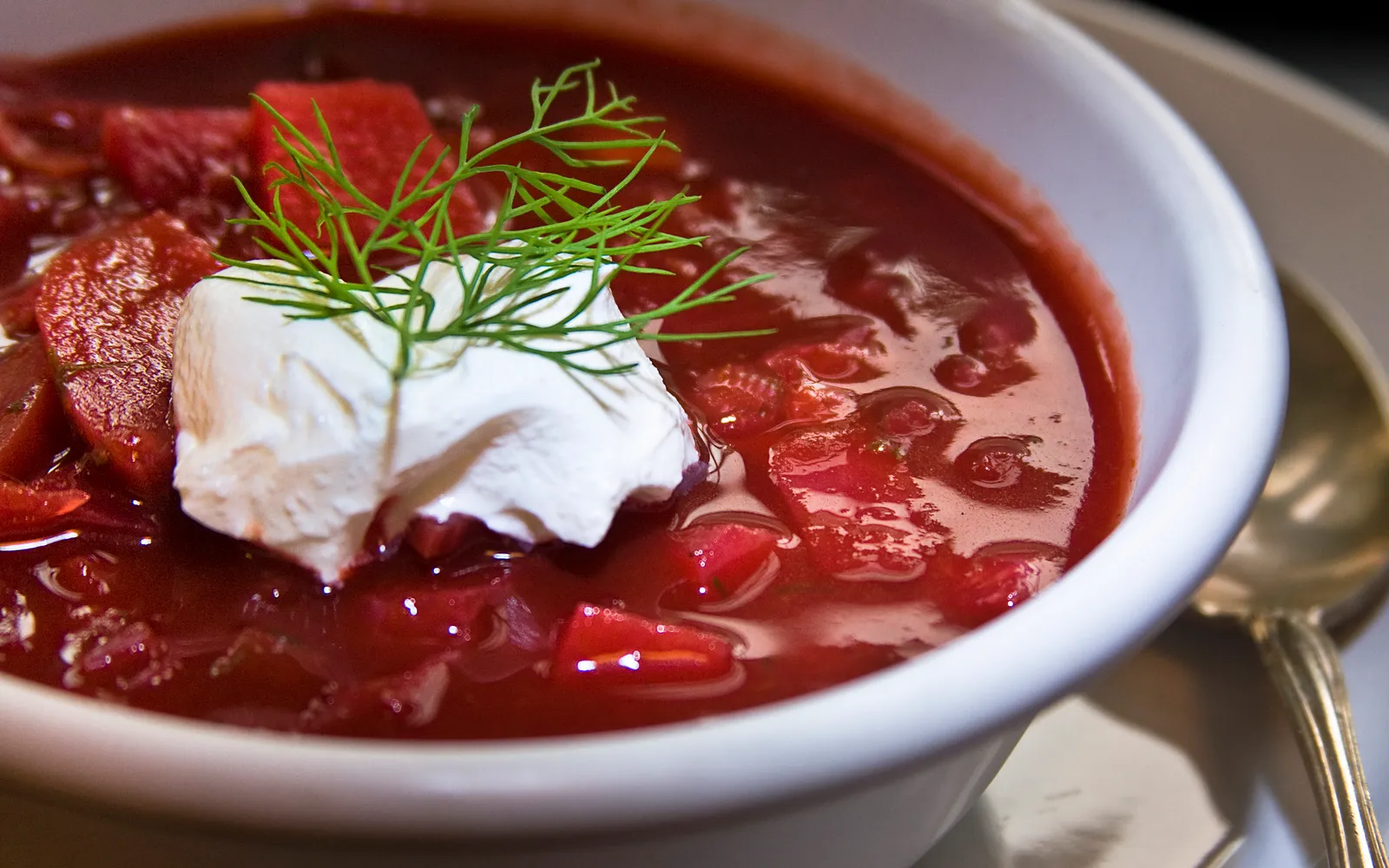
#2 Borscht
The deep-red beetroot soup that has become the symbol of Eastern Slavic food. The Russian version uses beetroot, cabbage, potato, carrot, onion, and long-simmered beef, served piping hot with a generous spoonful of sour cream floating on top and dark rye bread on the side. The flavour is pleasantly sweet-sour from the beetroot, cut by the richness of the beef. Every family has its own recipe, but the Yekaterinburg preference leans toward the northern Russian version — thicker, meatier, and more substantial.
- Order borscht as a starter before pelmeni or a main of grilled meat. It is light enough to warm the stomach and sharpen the appetite without filling you up.
- In a Soviet-style canteen (stolovaya), borscht costs as little as 80–150 roubles — the quality matches restaurants costing twice as much.
- Dark rye bread (chyorny khleb) is always served alongside. If a restaurant does not have dark bread — that is not authentic Russian borscht.
 #3
#3 Blini
Thin, crisped-edge pancakes that go well beyond the dessert category. Russian blini work both savoury and sweet — savoury versions are filled with smoked salmon, cream cheese, or black caviar; sweet versions come with jam, honey, or sour cream. The traditional version uses buckwheat flour, which gives a gentle nuttiness quite different from ordinary pancakes. Specialist blinnaya shops — dedicated entirely to blini — operate across the city and typically open early.
- Try both a sweet version (with jam or honey) and a savoury one (with salmon) in the same sitting — the contrast makes the point.
- Buckwheat blini (grechnevye blini) are more nutritious and more complex in flavour than wheat-flour versions. Worth asking whether the shop makes them.
- Blini are the ceremonial food of Maslenitsa, the early-spring festival — during that period every shop makes them fresh daily and runs special promotions.
 #4
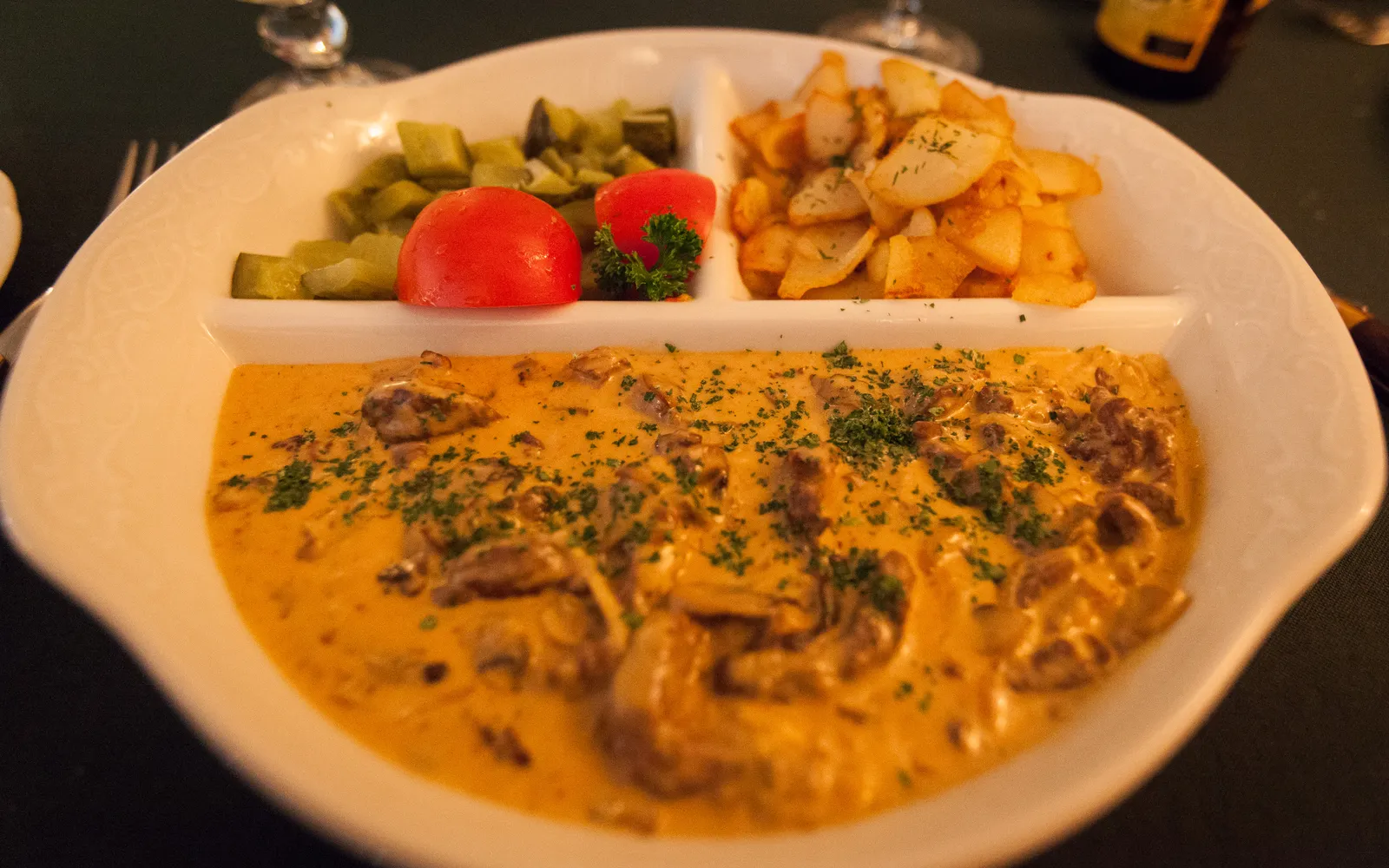
#4 Beef Stroganoff
Russia's most internationally recognised dish, invented in the 19th century by the wealthy Stroganov noble family. Long-cut strips of beef are fried with onion and mushroom in a thick sour cream sauce (smetana), then served over mashed potato, rice, or pasta. The flavour is rich, aromatic, and gently silky. The authentic Russian version uses quality beef and a freshly made sauce — noticeably different from the instant-powder stroganoff most of the world knows.
- Ask whether the sauce is made fresh or from a packet. A good restaurant will tell you proudly that everything is made in-house.
- The beef should be tender enough to barely hold together. Chewy meat means it was cooked too fast or the cut was poor quality.
- Stroganoff is best eaten immediately while hot. Do not order it and leave it sitting — the sauce separates.
 #5
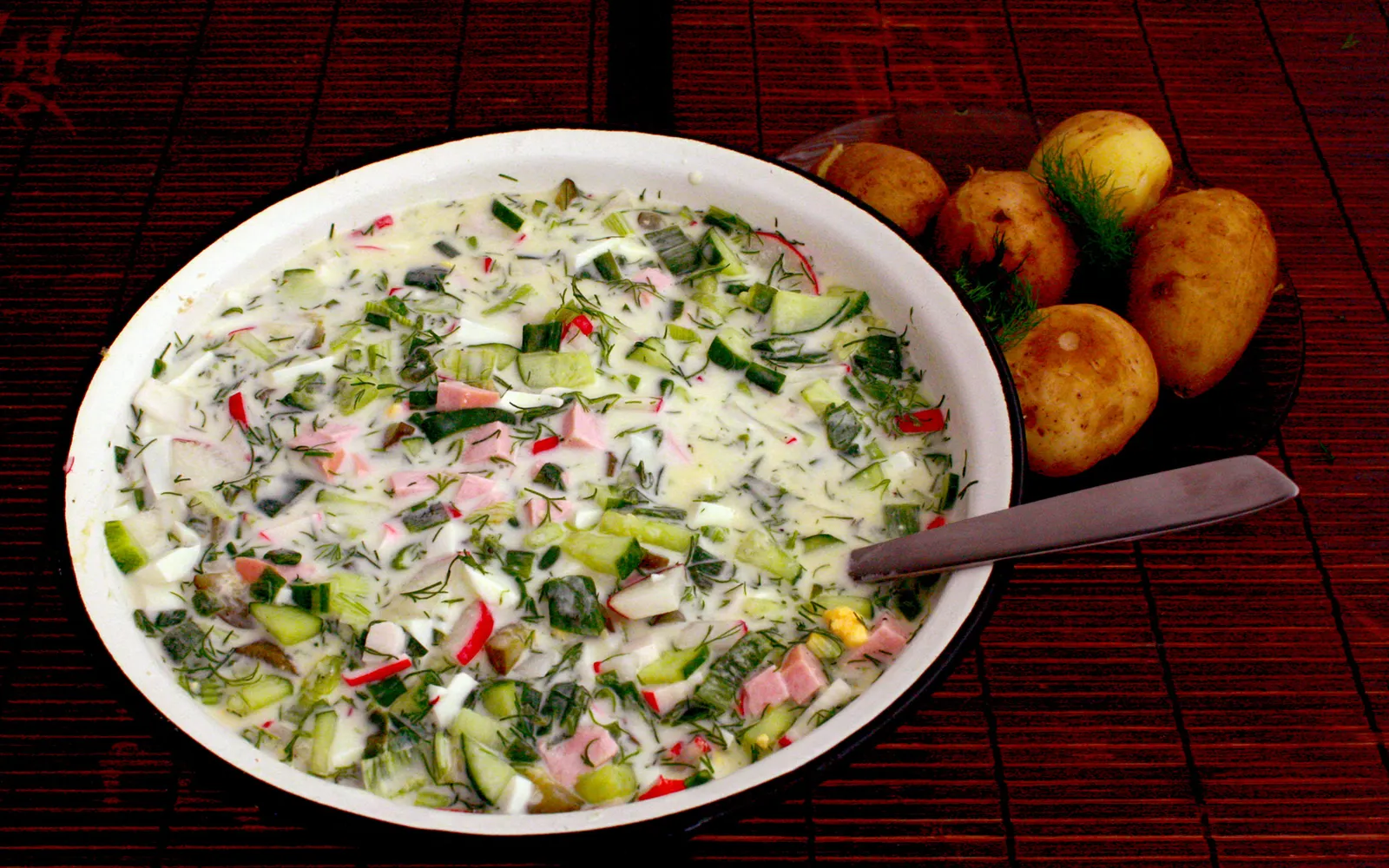
#5 Golubtsy
The home food that every Russian household makes to a grandmother's recipe. Softened cabbage leaves are wrapped around a simple filling of minced pork and cooked rice, then braised in tomato sauce and sour cream until the whole thing is tender and collapsing. Served hot, ladled with thick sauce and another layer of sour cream. The flavour is warm and familiar in exactly the way the term comfort food implies — inexpensive, filling, and the kind of dish Russians eat on a rainy afternoon or a day of bitter cold.
- In a Soviet canteen (stolovaya), golubtsy cost 100–200 roubles — homier and more honest than the tourist-restaurant version.
- If the kitchen makes them fresh that day, the tomato sauce will be thick and fragrant. Avoid anywhere that reheats the same batch multiple times.
- Pair with dark rye bread and hot tea for the most complete, lived-in Russian experience.
 #6
#6 Russian Tea with Varenie
Russia's tea culture runs deeper than most visitors expect. Tea is brewed in a samovar — the ornate brass hot-water urn that has been the centrepiece of Russian domestic life for centuries — and served in a tall glass fitted with a metal podstakannik holder. It comes with varenie: thick homemade fruit jam that is not spread on bread but spooned directly into the mouth before sipping the tea, or dissolved into the cup. The range of jams you find in Russia is wide — cherry, raspberry, apricot, and the distinctly Ural pine-shoot jam with its sharp, resinous fragrance.
- Ask for tea with varenie rather than with plain sugar — that is what Russian tea actually tastes like.
- Pine-shoot jam (sosnovoe varenie) is specific to the Ural and Siberia regions, lightly sweet with a faintly bitter edge, and makes an excellent edible souvenir.
- Old-style Russian tea rooms decorated with real samovars tend to have the best atmosphere — a good stop between sights.
Where to stay in Yekaterinburg for this trip
A well-located hotel means less commuting and more sightseeing. Here are real, top-rated stays in Yekaterinburg — compare Agoda · Booking · Trip.com in one click.
Renomme Hotel by Original Hotels
Affiliate links — we may earn a commission at no extra cost to you. Details
Tenet Hotel
Affiliate links — we may earn a commission at no extra cost to you. Details
Green Park Hotel
Affiliate links — we may earn a commission at no extra cost to you. Details
Novotel Yekaterinburg Centre
Affiliate links — we may earn a commission at no extra cost to you. Details
Tours, tickets & activities in Yekaterinburg
Day tours, attraction tickets and travel essentials for Yekaterinburg — book ahead on Klook with mobile e-tickets.
Affiliate links — we may earn a commission at no extra cost to you.
Before You Pack
Traditional Russian restaurants in Yekaterinburg often hide behind the plain facades of old Soviet buildings — but step inside and they are warm, and the food is made fresh every day. If you see a queue of middle-aged Russian women waiting to order, you have found the right place.