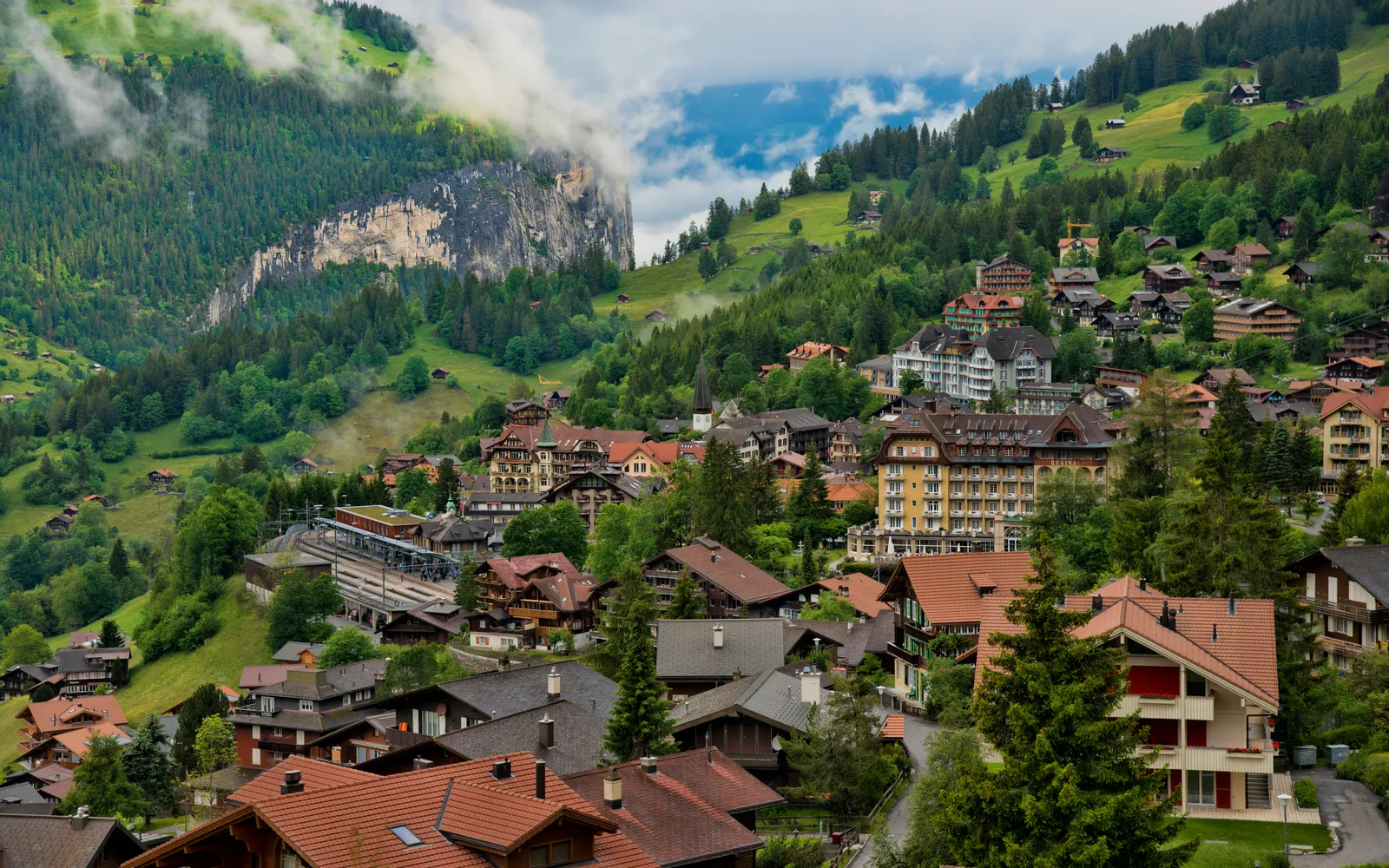
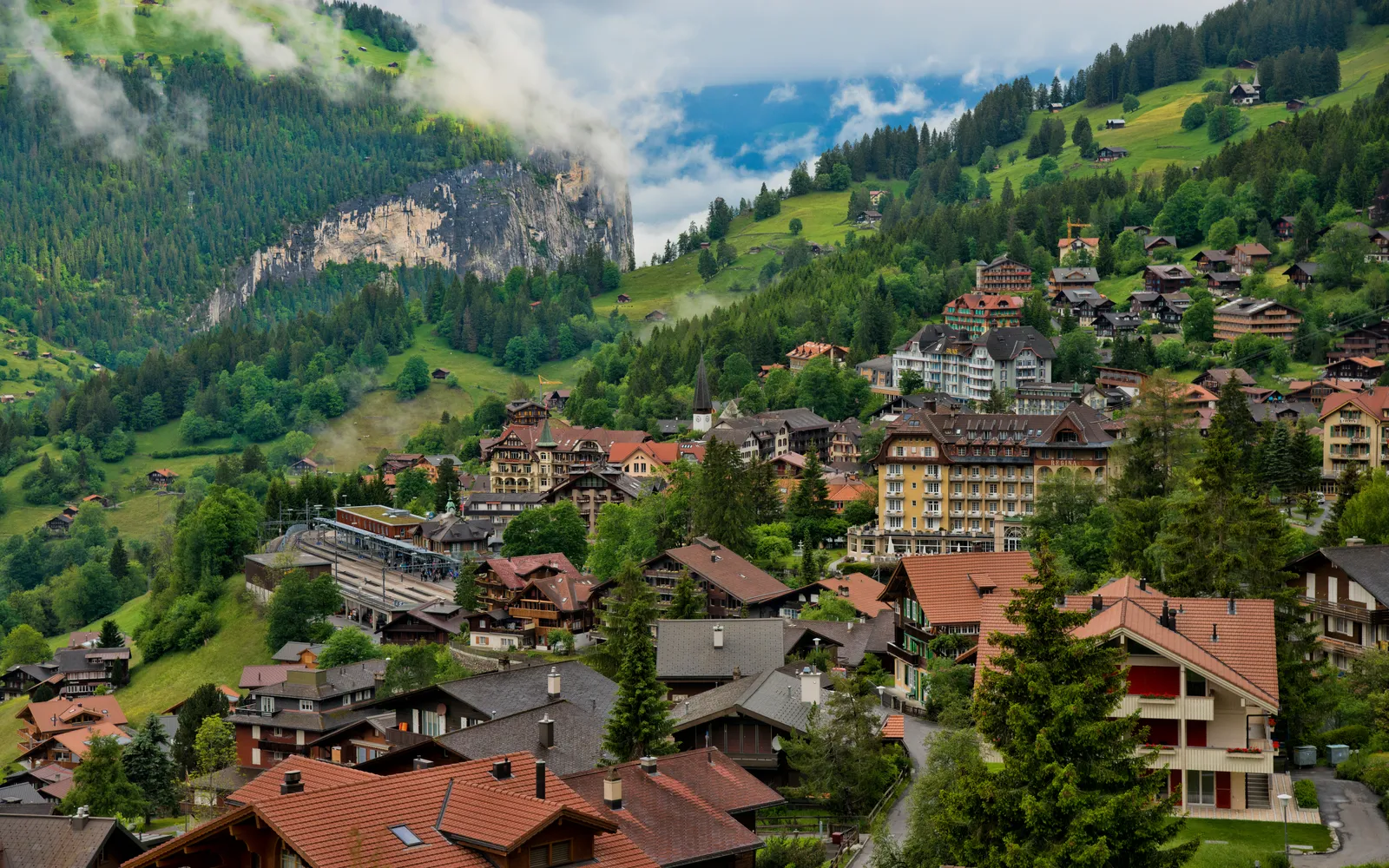
Wengen has not a single car on its streets. Everything moves by small electric vehicle or on foot. The Jungfrau, at 4,158 metres, stands as a permanent backdrop — whether you're drinking coffee outside your chalet or walking through a meadow of wild flowers. The quiet here is real: on calm mornings you can hear cowbells drifting up from the pastures below. If you want the Alps the way people imagine them, Wengen is the answer.
 #1
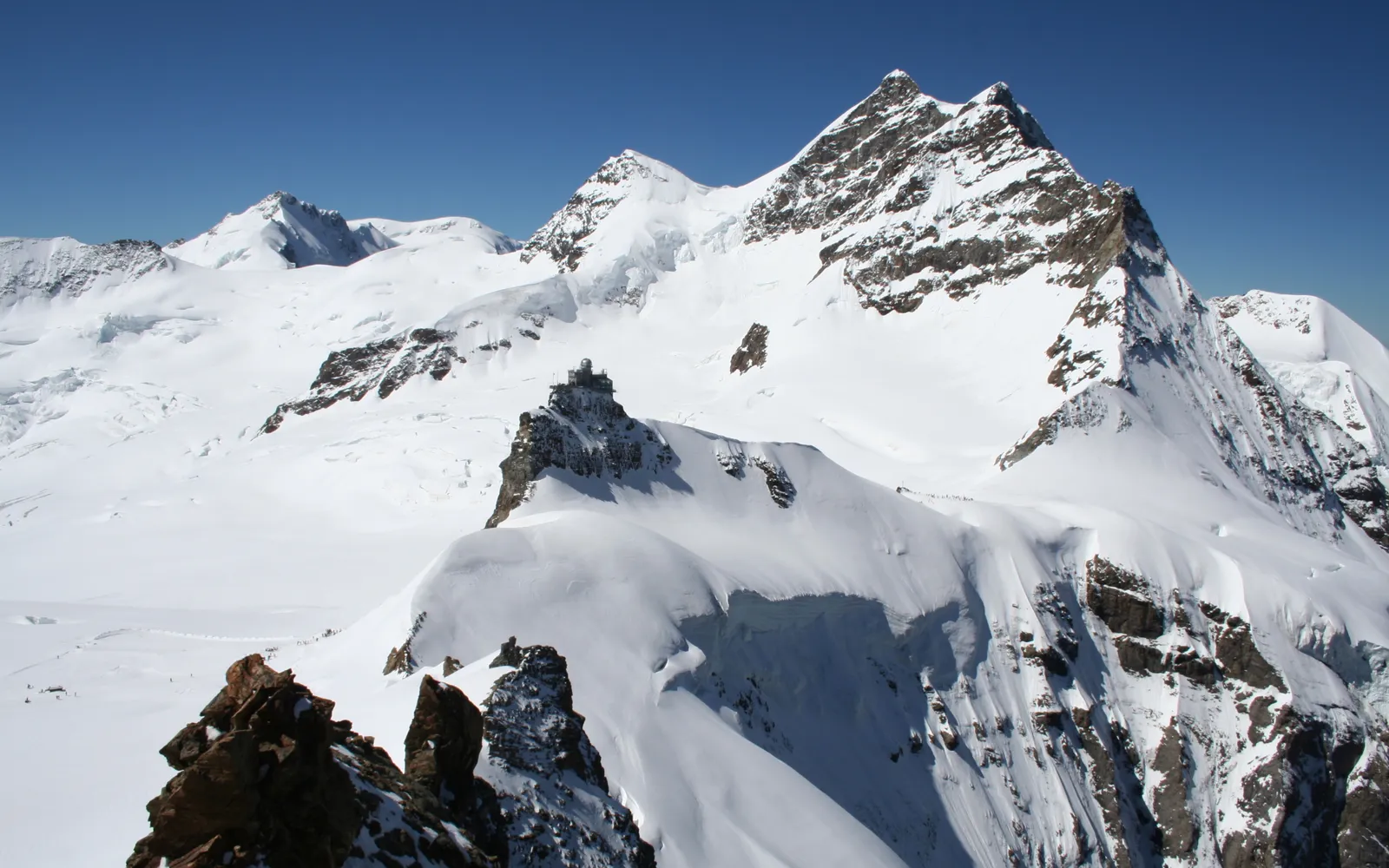
#1 Jungfraujoch — Top of Europe
Europe's highest railway station, sitting at 3,454 metres and open since 1912. The train bores through more than 50 minutes of tunnel cut directly through the rock of the Jungfrau and Mönch before emerging at the top. Up here you look out over the Aletsch Glacier — 23 kilometres long, the longest glacier in the Alps. There's the Sphinx Observatory at 3,571 m and the Ice Palace, a series of sculpted chambers carved inside the living glacier. Temperatures stay below 0°C even in summer.
- Buy the Good Morning Ticket and depart before 08:00 — it's around 30% cheaper than the standard fare and the sky is clearer before afternoon clouds build.
- Pack a heavy fleece and high-UV sunglasses: snow reflects intense glare even in summer.
- Anyone with blood-pressure problems or a heart condition should consult a doctor first — at 3,454 m the reduced oxygen is noticeable.
 #2
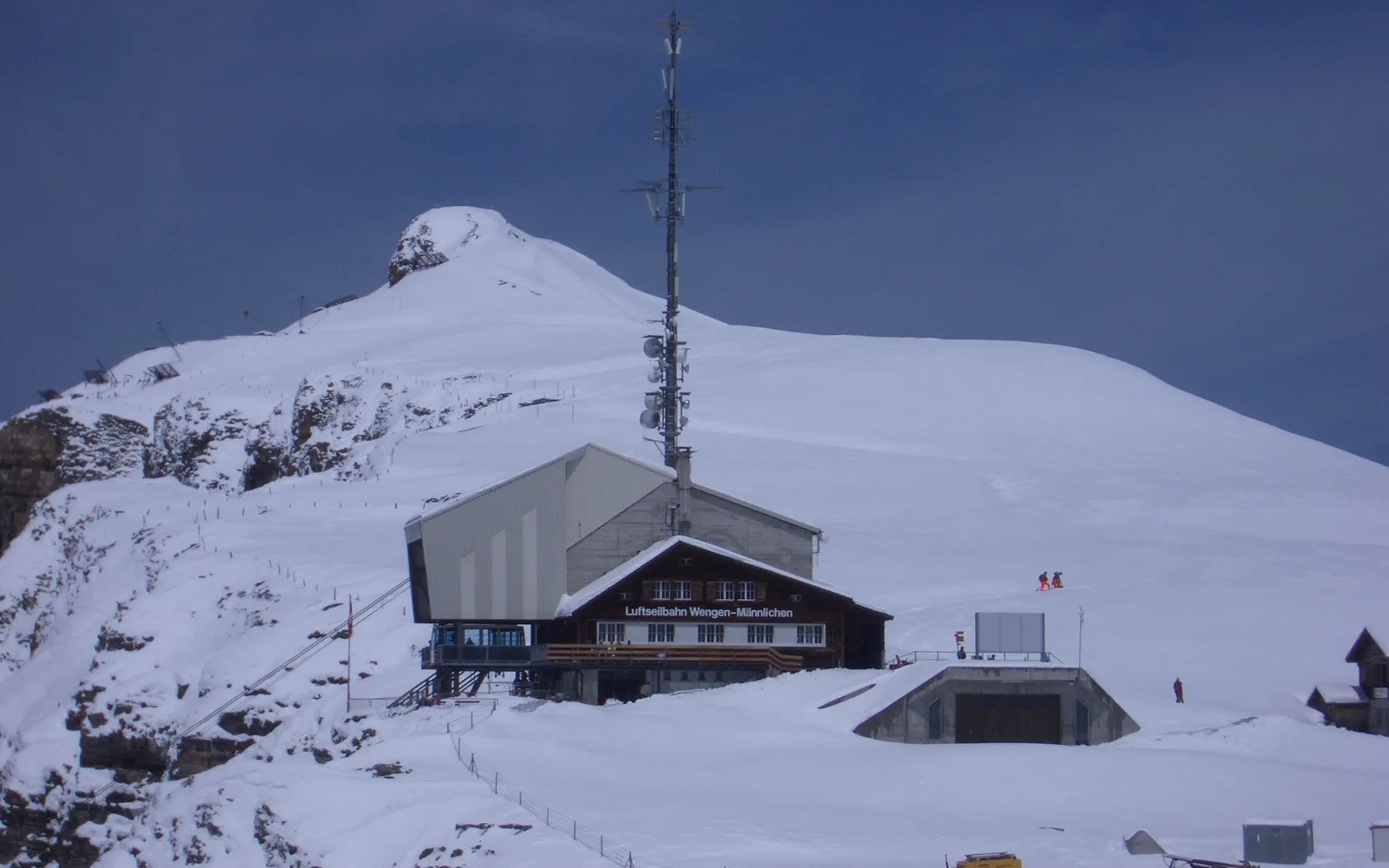
#2 Männlichen
Widely regarded as the finest 360-degree viewpoint in the Bernese Oberland. From this ridge you get all three giants — Eiger, Mönch, and Jungfrau — in a single frame. Gondolas run from both the Wengen and Grindelwald sides. The Royal Walk, a 4.5 km trail from Männlichen down to Kleine Scheidegg, is the most popular route on the mountain: it runs downhill the whole way, takes about 1.5 hours, and the views hold up at every step.
- The Royal Walk runs one-way downhill — no need to climb back. Allow about 1.5 hours at an easy pace.
- There's a restaurant at the Männlichen summit, open throughout the season. Prices are what you'd expect at this altitude, but the view makes up for it.
- Alpine weather turns fast — carry a rain jacket even if the morning is perfect.
 #3
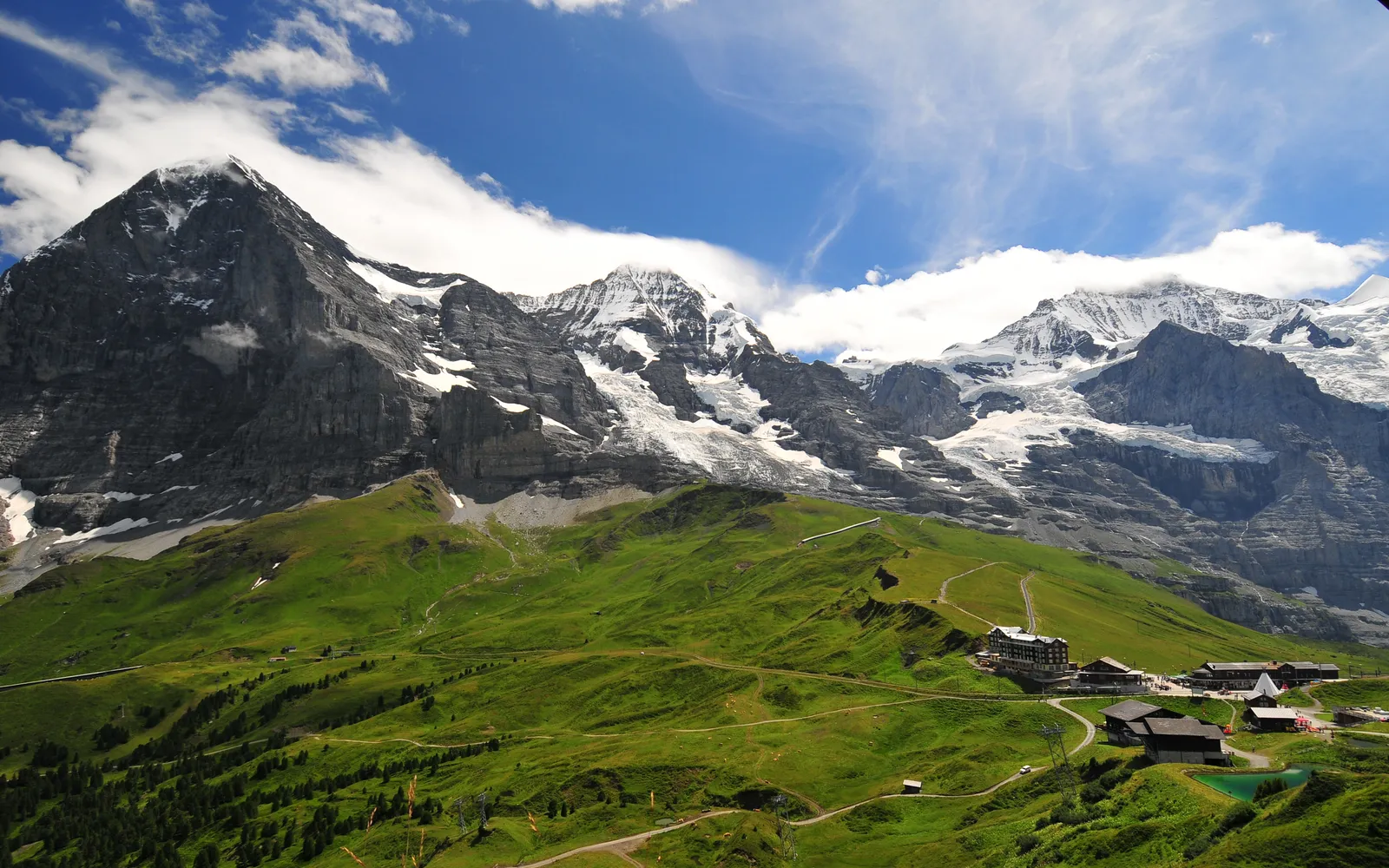
#3 Kleine Scheidegg
A high-altitude pass that serves as both a rest stop and the transfer point for the Jungfraujoch train. From here the Eiger's North Face (Nordwand) fills the skyline — the same wall that elite climbers have been attempting for hundreds of years. There are restaurants, a hotel, and outdoor sun terraces. The trail between Männlichen and Kleine Scheidegg delivers constantly shifting views with every hundred metres. It also works well as a base before heading up to Jungfraujoch or back down to Wengen.
- The Wengernalp Railway from Wengen is slower than the gondola but the scenery from the carriage is better — and the price is about the same.
- If clouds have closed Jungfraujoch, Kleine Scheidegg itself still has impressive views worth the trip.
- The best spot to photograph the Eiger North Face is behind the station — a 5-minute walk.
 #4
#4 Wengen-Wengernalp Trail
An easy-to-moderate trail that leaves the village and climbs to Wengernalp through alpine meadows thick with wildflowers in summer. The Jungfrau, Mönch, and Eiger are visible along almost the entire route. You'll hear cowbells and birdsong the whole way up. No specialist climbing gear needed — standard hiking boots are fine, and the path is well signed throughout. Good for families with older children or anyone who wants to be out in the mountains without spending the whole day on lifts.
- Start before 09:00 to reach Wengernalp before clouds close in over the Jungfrau.
- There are natural drinking-water springs along the route, but carry a bottle as backup.
- Thick-soled, anti-slip boots matter — especially early in summer when patches of snow can still linger on the trail.
 #5
#5 Lauberhorn
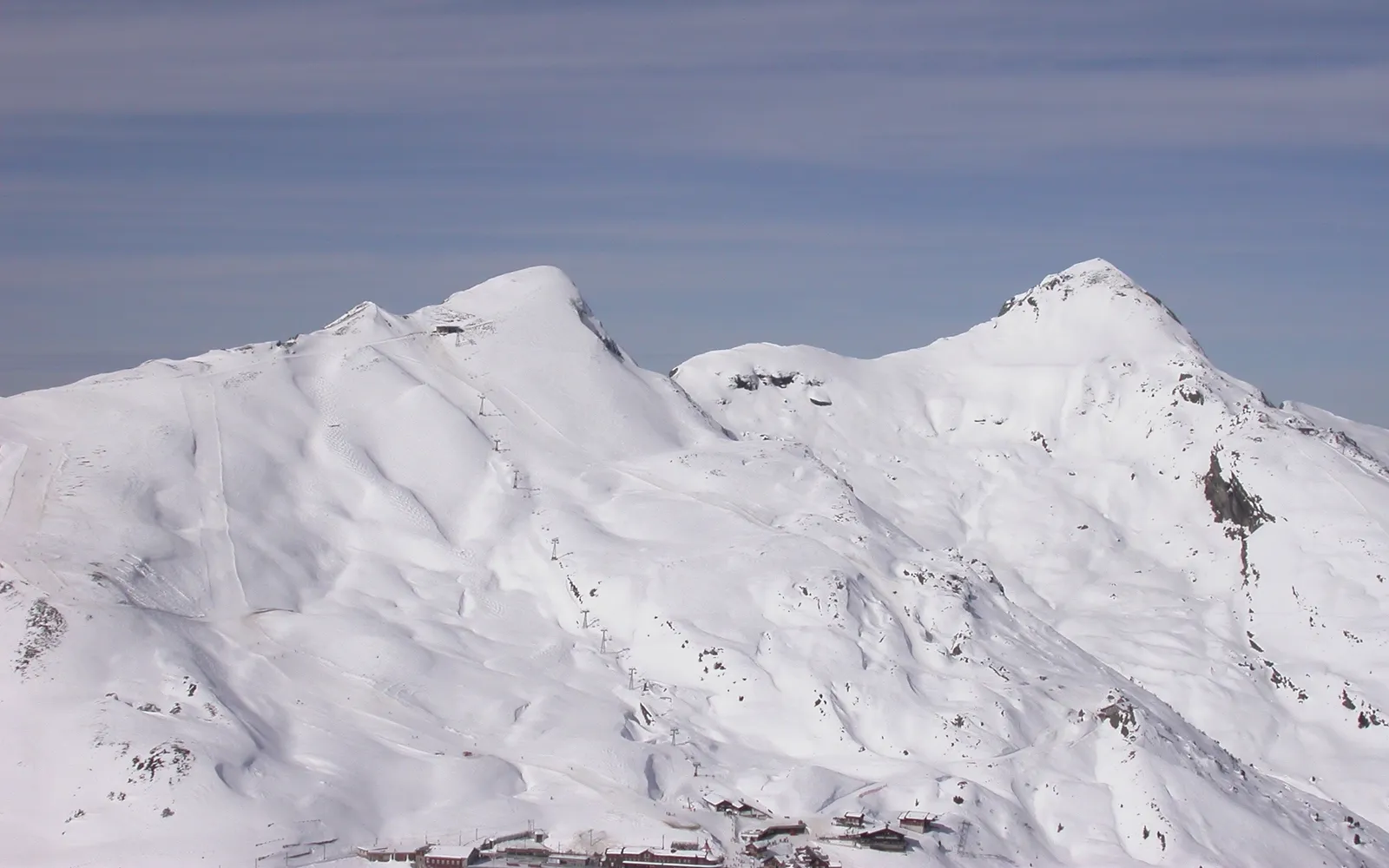
The longest and oldest downhill course on the FIS Alpine Ski World Cup circuit. The Lauberhorn Classic run measures 4.48 km with a maximum gradient of 45 degrees in its steepest sections. The Lauberhorn Race, held every January, is the event that classic-skiing fans around the world follow closely. In summer the same slopes turn into quiet, scenic hiking terrain, offering angles of Wengen and the Lauterbrunnen Valley that very few visitors see.
- Winter: the Lauberhorn difficulty suits intermediate-to-advanced skiers — not beginners.
- Summer: the Lauberhorn cable car takes you up for the views without any hiking — suitable for all ages.
- Ski passes in Wengen cover the full Jungfrau Ski Region — over 200 km of runs combined. Compare multi-day passes before buying.
 #6
#6 Wengen Car-Free Village
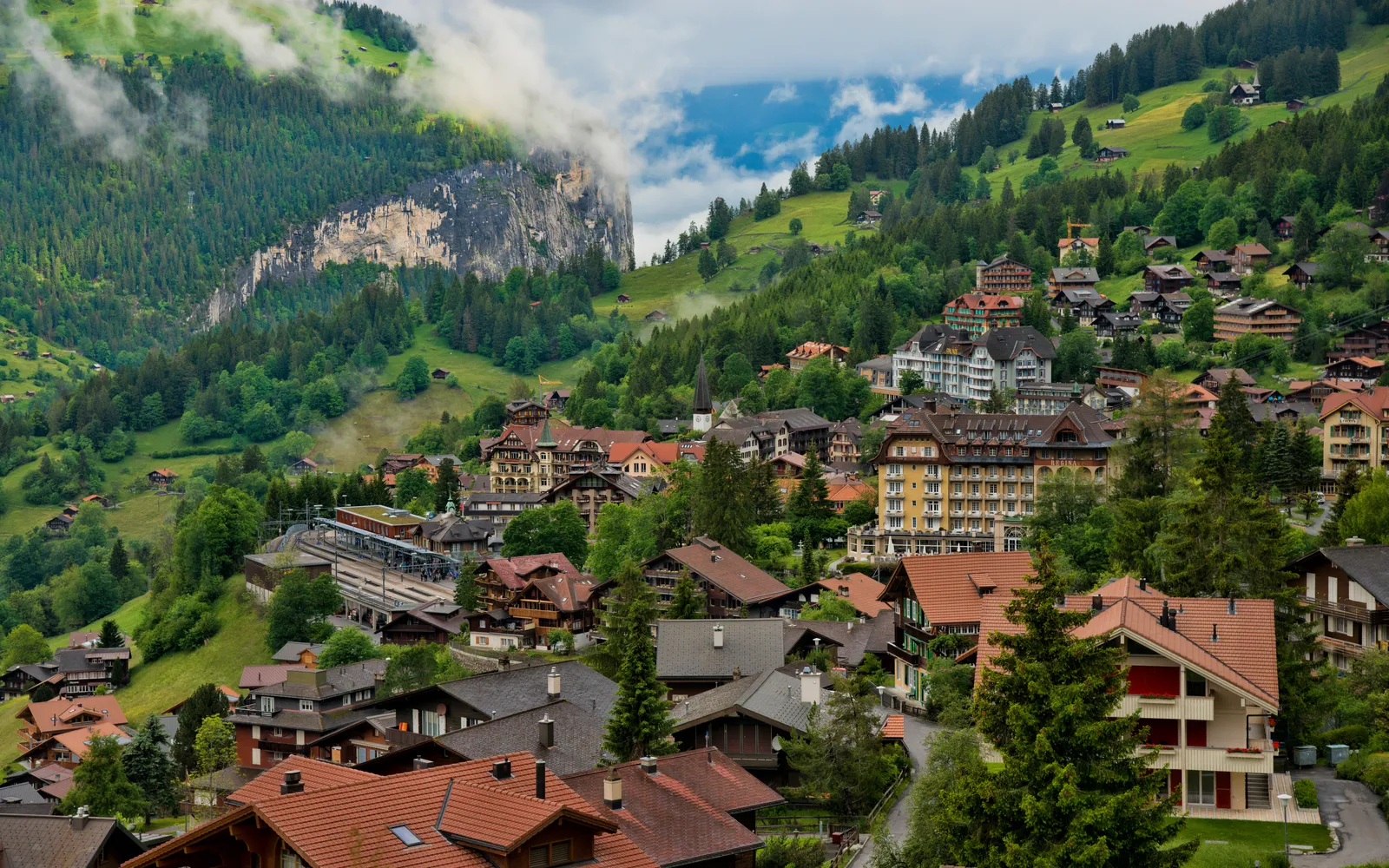
Wengen is one of the very few car-free villages in Switzerland. There is no road connecting it to the outside world — the only way in or out is the Berner Oberland Bahn railway. Inside the village, small electric vehicles and foot traffic are the only movement. That absence of engine noise makes Wengen feel genuinely different from other Alpine resorts. You can spend an entire day walking the narrow lanes between timber chalets, restaurants, and long-established hotels without once thinking about traffic.
- The best souvenirs in Wengen are Swiss chocolate and watches from shops that have been open for decades.
- Anything ordered from outside takes time to arrive — everything comes by train. Plan ahead for items you'll need.
- A short walk away from the village lights at night reveals a full sky of stars that you won't see from any city.
Where to stay in Wengen for this trip
A well-located hotel means less commuting and more sightseeing. Here are real, top-rated stays in Wengen — compare Agoda · Booking · Trip.com in one click.
Beausite Park Hotel
Affiliate links — we may earn a commission at no extra cost to you. Details
Hotel Belvedere Wengen
Affiliate links — we may earn a commission at no extra cost to you. Details
Hotel Caprice
Affiliate links — we may earn a commission at no extra cost to you. Details
Hotel Silberhorn Wengen
Affiliate links — we may earn a commission at no extra cost to you. Details
Tours, tickets & activities in Wengen
Day tours, attraction tickets and travel essentials for Wengen — book ahead on Klook with mobile e-tickets.
Affiliate links — we may earn a commission at no extra cost to you.
Before You Pack
Wengen is at its best in midsummer (July–August), when the meadows are green and wildflowers cover the slopes, and again in winter (December–March) when snow blankets the entire valley. Plan at least 2–3 days: one for Jungfraujoch, one for the trails and ridge walks, and a spare day for whatever the weather allows.