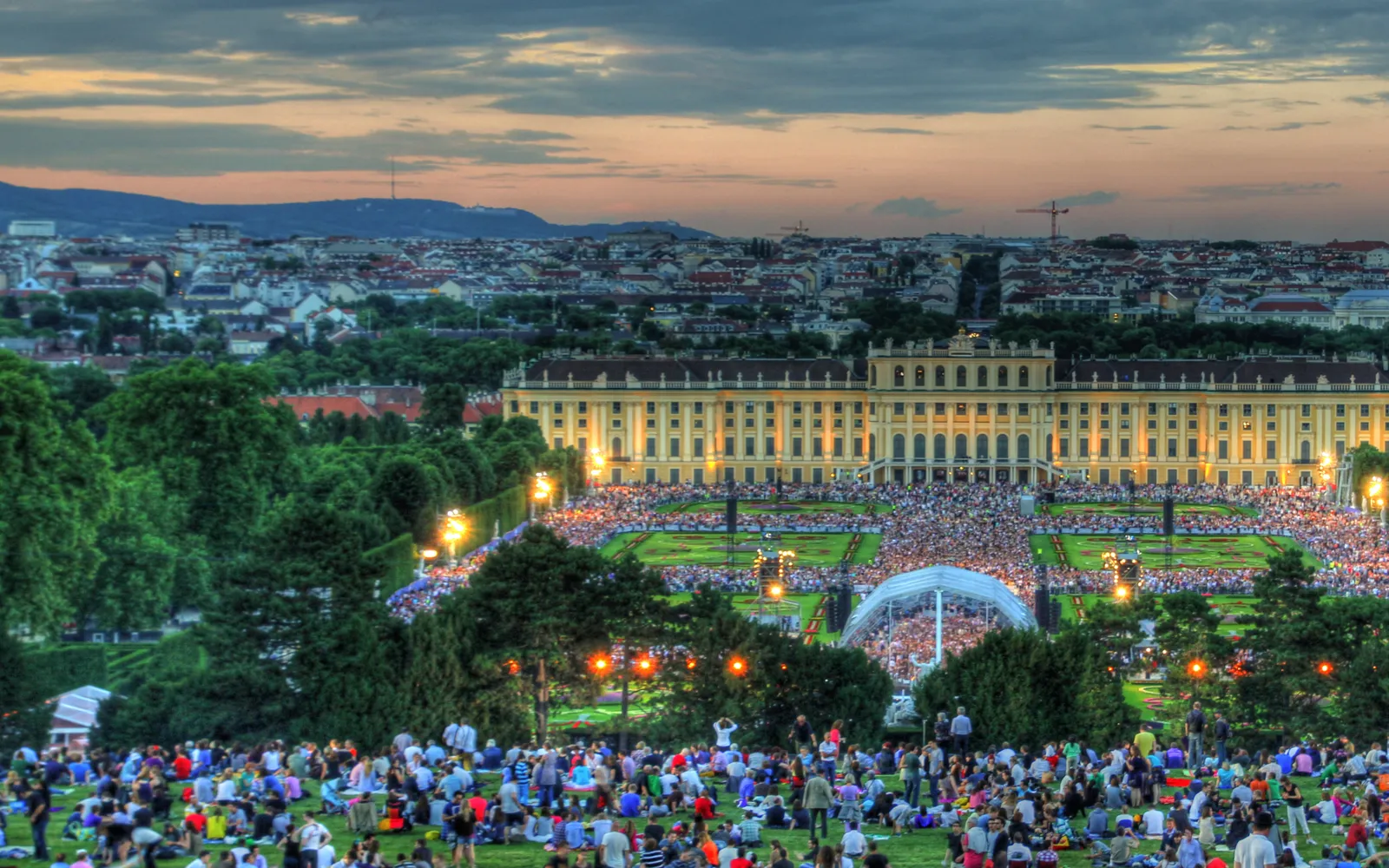
Vienna's food isn't only food — it's imperial history on a plate. Wiener Schnitzel, the coffee house and Sachertorte all began in palace kitchens and Habsburg-era cafes before they became world legends. The flavours here aren't flashy; they're deep and refined, like a city that knows it's great without having to shout.
 #1
#1 Wiener Schnitzel
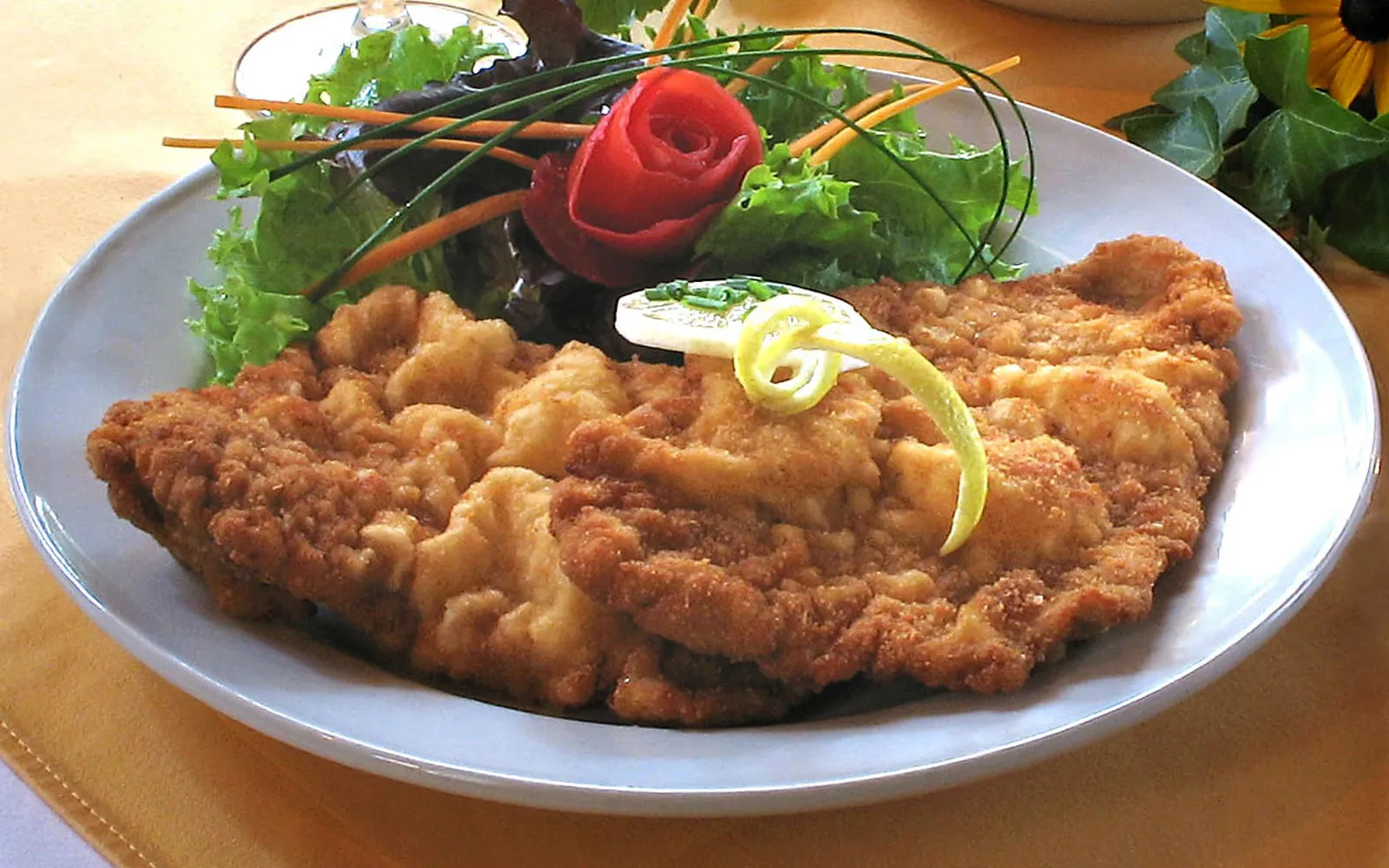
Austria's national dish, and a must for anyone coming to Vienna. Veal (Kalbsschnitzel) or pork (Schweinsschnitzel — though a true schnitzel must be veal) is pounded thin, dipped in egg and breadcrumbs, and fried in clarified butter until crisp and puffed outside but tender and juicy within. Squeeze fresh lemon over it before eating; it's served with potatoes boiled in butter, pickled cabbage, and Preiselbeeren lingonberry jam. Simplicity done greatly.
- A true schnitzel (Wiener Schnitzel) must, by law, be veal only. If a menu says Schnitzel Wiener Art it means pork — and it'll be cheaper.
- Figlmueller (in the Wollzeile and Bäckerstrasse area) is the most famous, but the queue is long. Book ahead or arrive before noon.
- A schnitzel should be bigger than the plate it's served on. If it fits the plate or is smaller, the place isn't up to standard.
 #2
#2 Sachertorte
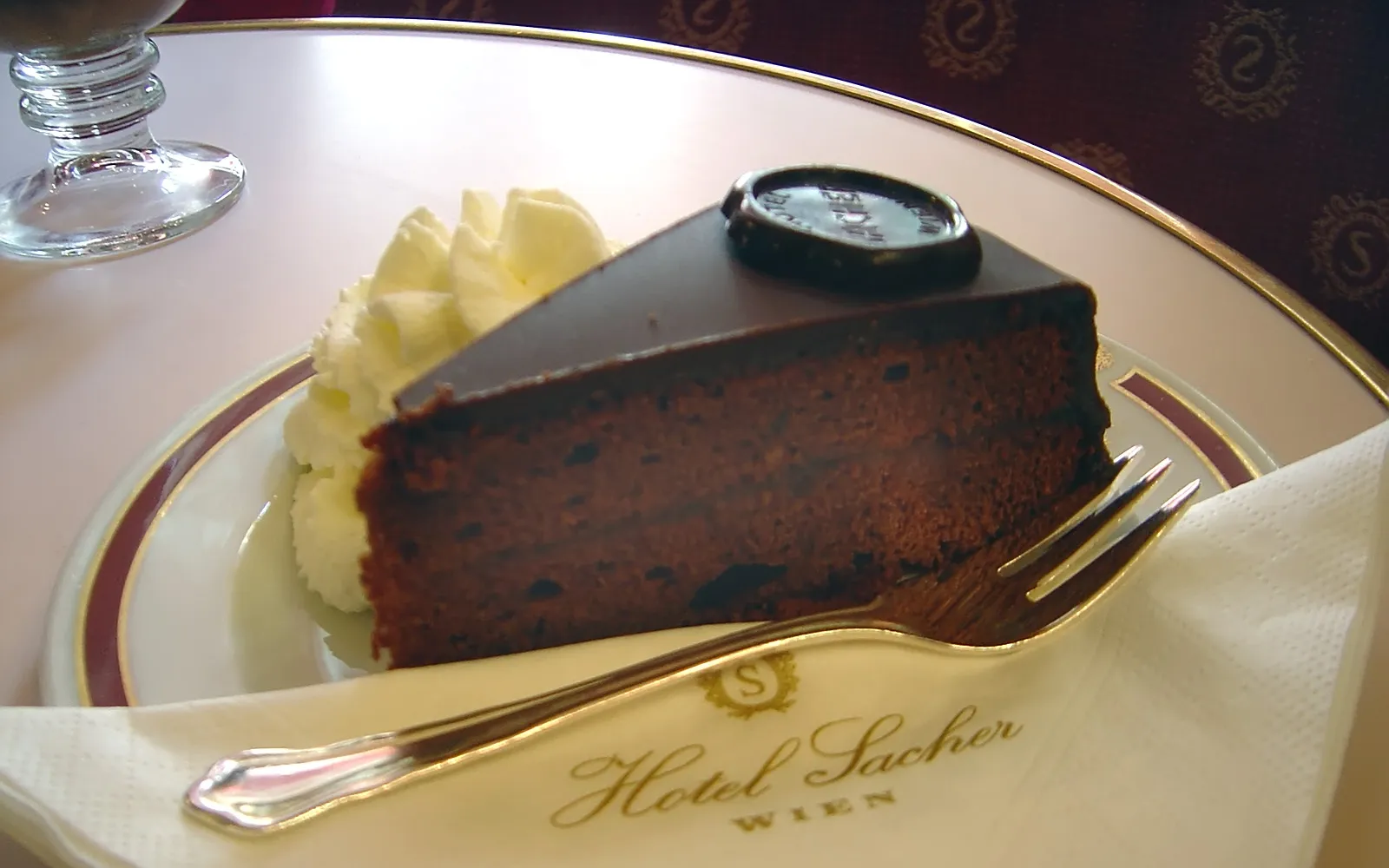
The most famous chocolate cake in the world, created in 1832 by Franz Sacher, a 16-year-old chef, for Prince Metternich. The original recipe is built from a dense chocolate sponge layered with apricot jam, then coated in smooth chocolate ganache. You eat it with unsweetened whipped cream served on the side. Hotel Sacher has kept the secret original recipe for more than 190 years.
- Hotel Sacher serves the Original Sachertorte for around 7-8 EUR a slice — pricey, but the original flavour really is different from everywhere else.
- Café Central and Demel have their own recipes that are tasty and a little cheaper, so you can compare.
- Buy a box to take home (keeps for 3 weeks) for around 40-50 EUR at the Hotel Sacher Shop at the front of the hotel.
 #3
#3 Viennese Coffee House
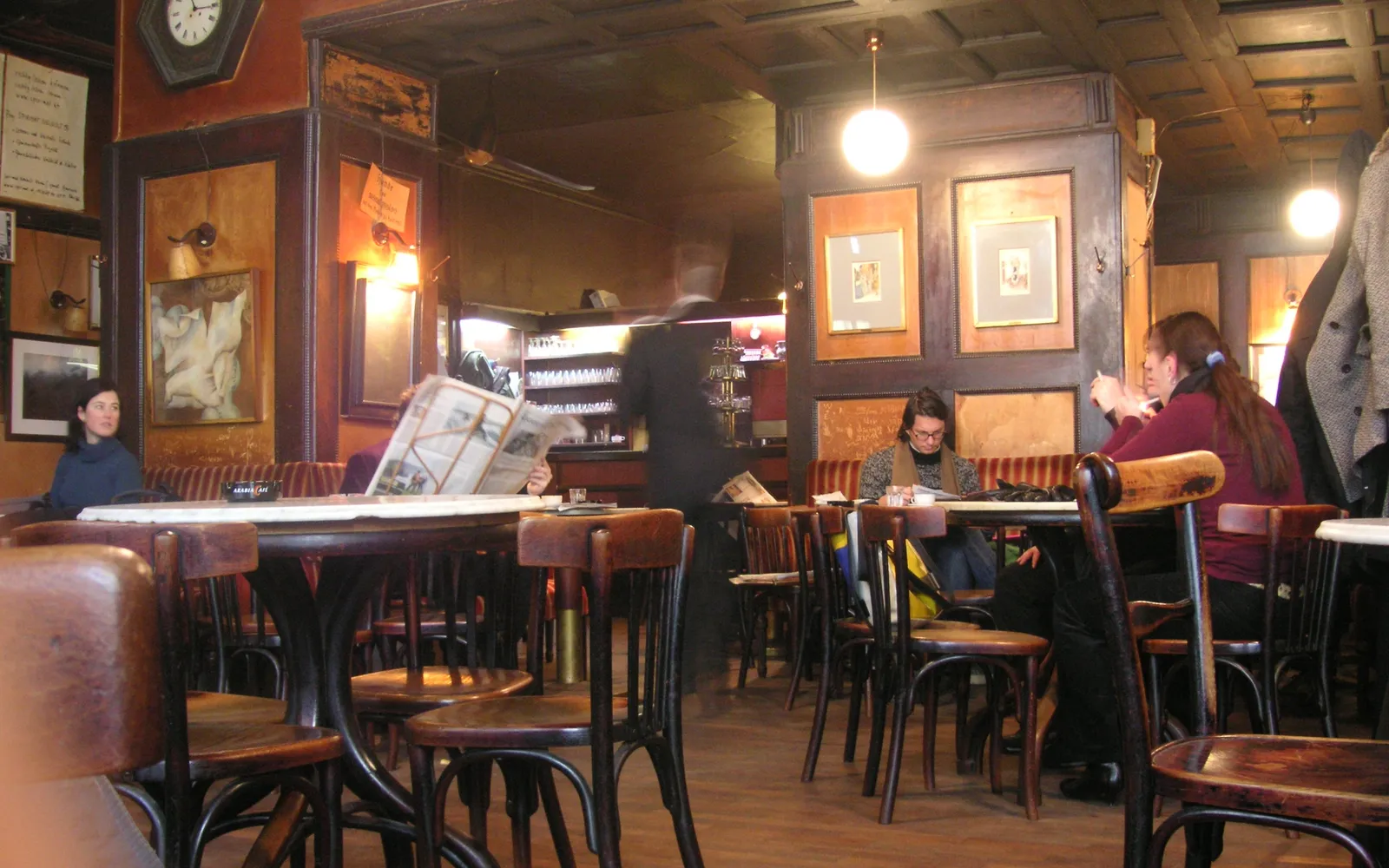
Vienna's coffee house culture is listed by UNESCO as intangible cultural heritage — not just coffee drinking, but a social institution where guests sit for hours over a single cup, read the newspaper, write poetry, or argue philosophy. A Melange (espresso with hot milk) is the classic order, served with a glass of water on a silver tray. The quiet and the unhurried life are part of the experience too.
- Viennese coffee houses don't rush you out. You can sit for hours over a single cup — it isn't considered rude.
- Order a Kleiner Brauner (espresso with a little cream) or a Melange (espresso with hot milk and milk foam) for the most local coffee.
- Café Central (Herrengasse 14) is the most beautiful but crowded; Café Hawelka is the oldest with the most original atmosphere.
 #4
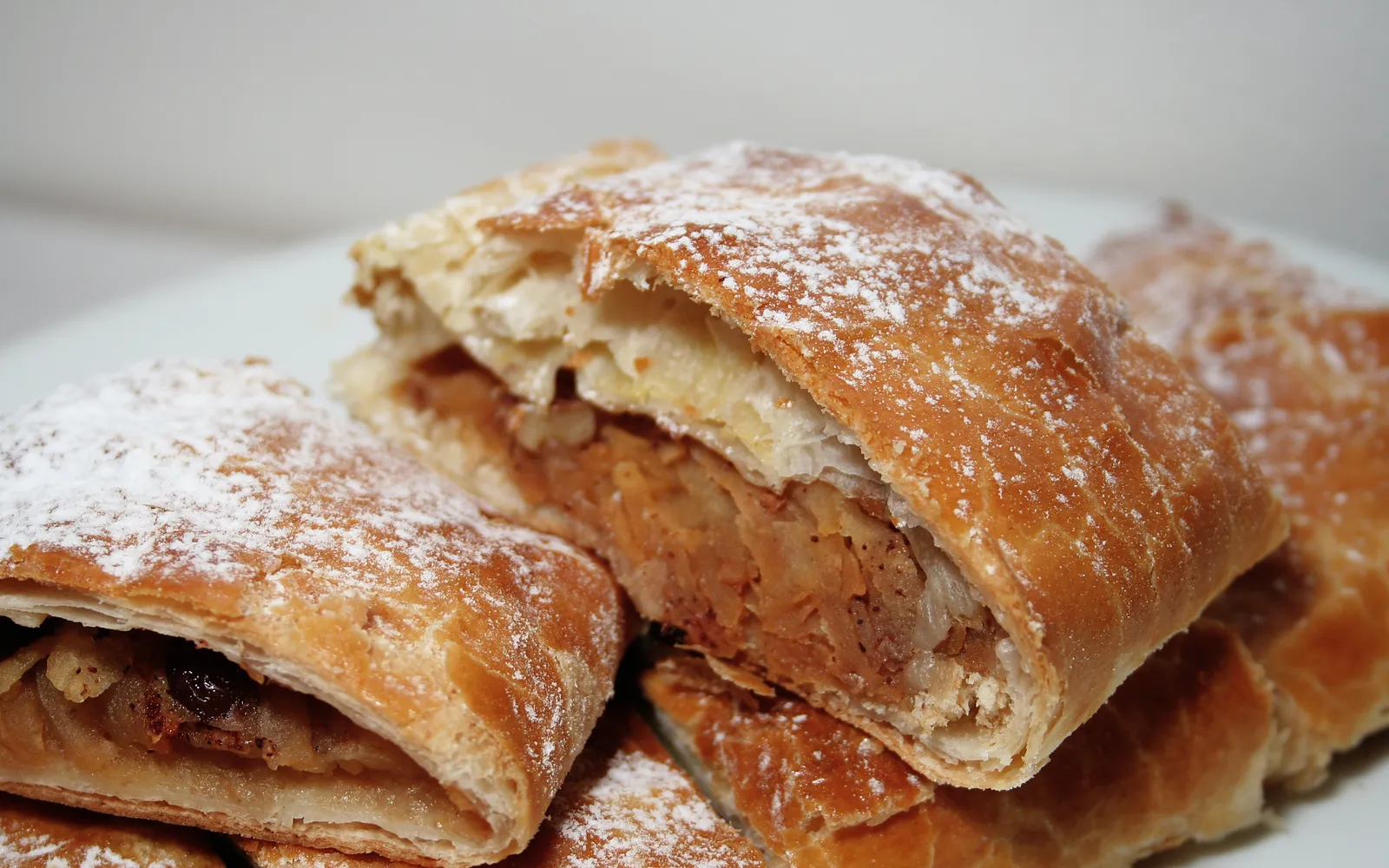
#4 Apfelstrudel
An Austrian national pastry everyone should know. The pastry is rolled so thin you can see light through it (legend says it must be thin enough to read a newspaper through), then wrapped around a filling of tart apples baked with sugar, cinnamon, raisins and fried breadcrumbs, and baked until golden and crisp. It's served hot with whipped cream or vanilla sauce — gently sweet, fragrant with cinnamon, and crunchy. Travelers often call it the best dessert they've ever had.
- Watch a live strudel-making demonstration at Café Residenz in Schönbrunn Palace, coffee and strudel included for around 15 EUR — well worth seeing.
- Strudel is best fresh and hot out of the oven. Ask the staff when it was last baked.
- The Topfenstrudel version (sweet ricotta filling) is just as good — try comparing the two.
 #5
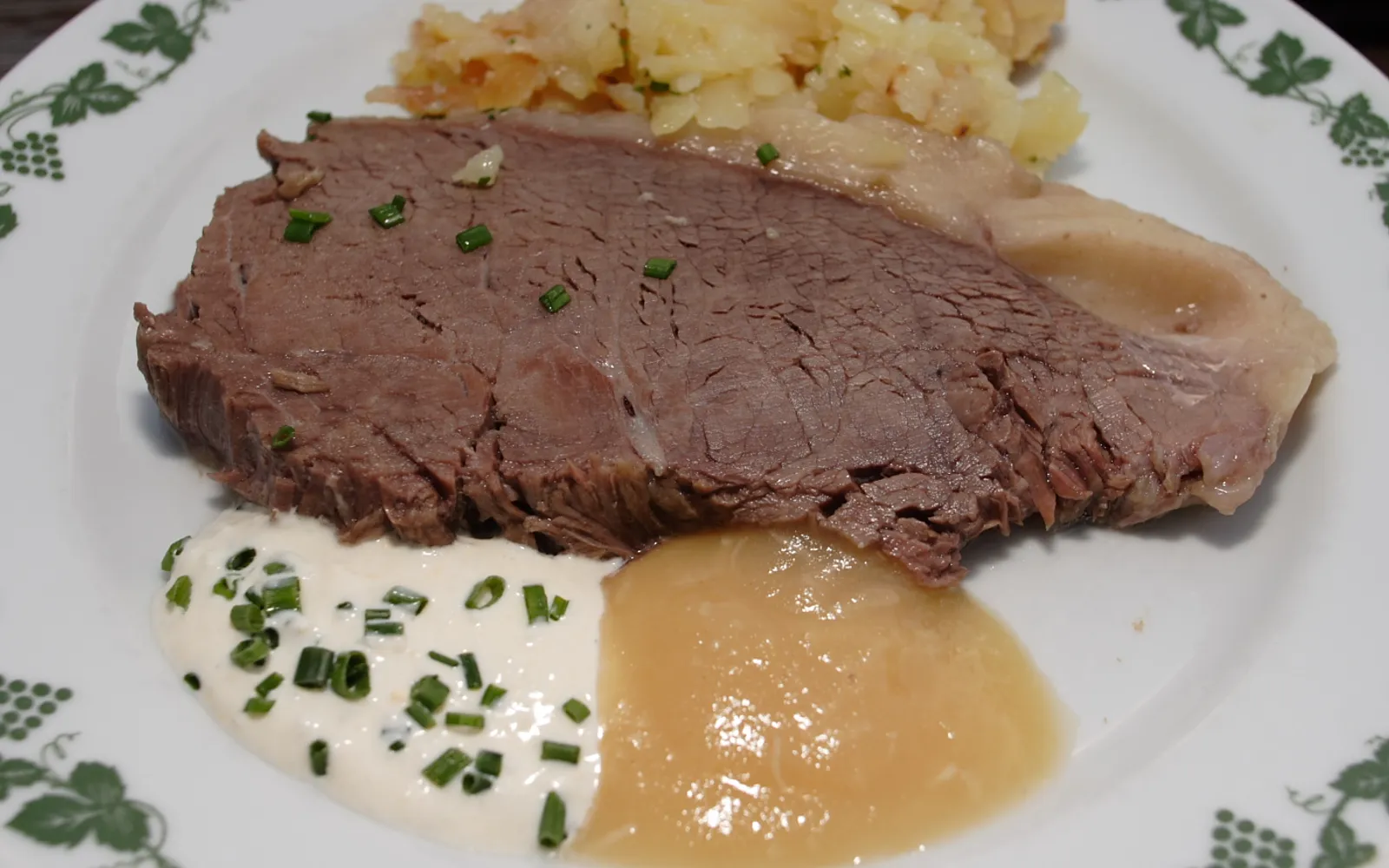
#5 Tafelspitz
The favourite main course of Emperor Franz Joseph, who ate it almost every day. The tip of the round of veal is simmered in a sweet root-vegetable broth for several hours until tender but not falling apart. The broth is served first as a soup, the meat with Apfelkren (grated horseradish with apple) and Semmelkren (a creamy bread sauce). The flavour is simple but deeper than you'd expect — a dish that takes patience to cook.
- Good Tafelspitz has to be ordered ahead at some places because it simmers for more than 3 hours — ask before you sit down.
- Plachutta (Wollzeile 38) is known for the best Tafelspitz in Vienna, around 35-45 EUR a plate.
- Suck the marrow from the bone that comes with it — it's part of the traditional experience Viennese diners go through.
 #6
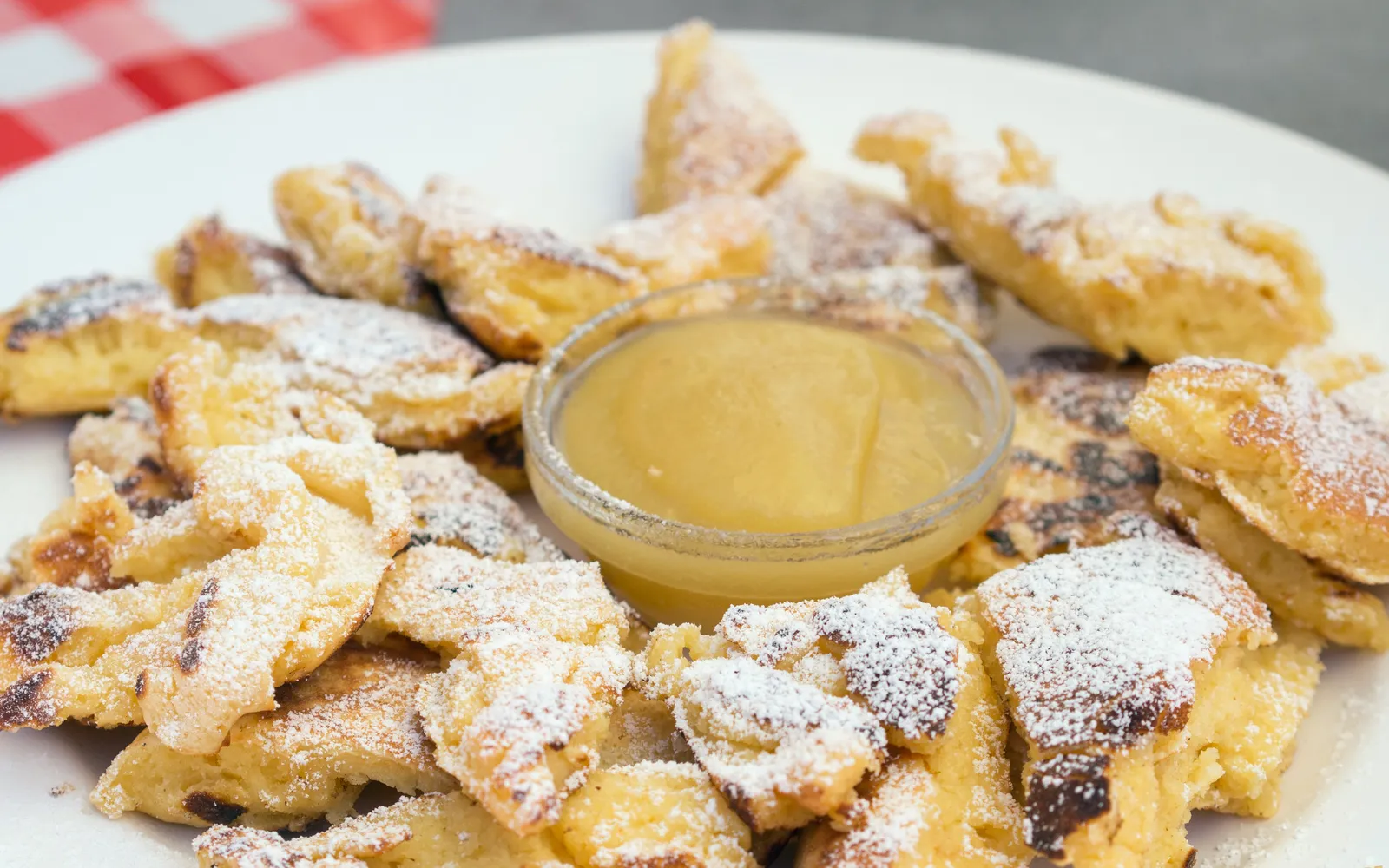
#6 Kaiserschmarrn
An Austrian dessert that legend says came from a chef's mistake: making a pancake for Emperor Franz Joseph, he tore it apart, so he dusted the pieces with sugar and served them in small bits instead. The emperor loved it so much it became a court regular. A fluffy egg batter mixed with raisins is fried in clarified butter, torn into small pieces, dusted with icing sugar and served with plum jam. It's lightly sweet, soft and fluffy, and easier to eat than you'd think.
- Kaiserschmarrn is a dessert, but some Austrians eat it as a main course because the portion is so large.
- Café Residenz in Schönbrunn has a very good version, around 14 EUR, with the palace setting.
- Order Zwetschkenröster (stewed plum) jam instead of Preiselbeeren if you want the original, properly Viennese flavour.
Where to stay in Vienna for this trip
A well-located hotel means less commuting and more sightseeing. Here are real, top-rated stays in Vienna — compare Agoda · Booking · Trip.com in one click.
Hollmann Beletage Design & Boutique Hotel
Affiliate links — we may earn a commission at no extra cost to you. Details
Hotel Sacher Wien
Affiliate links — we may earn a commission at no extra cost to you. Details
Hotel Imperial, a Luxury Collection Hotel, Vienna
Affiliate links — we may earn a commission at no extra cost to you. Details
Hotel Imperial, a Luxury Collection Hotel
Affiliate links — we may earn a commission at no extra cost to you. Details
Tours, tickets & activities in Vienna
Day tours, attraction tickets and travel essentials for Vienna — book ahead on Klook with mobile e-tickets.
Affiliate links — we may earn a commission at no extra cost to you.
Before You Pack
Vienna's food is at its best in old places that don't need to advertise. If you walk past a small Beisl with white tablecloths and the chatter of locals, go in. The prices may be higher than Asia, but the experience will stay with you for life.