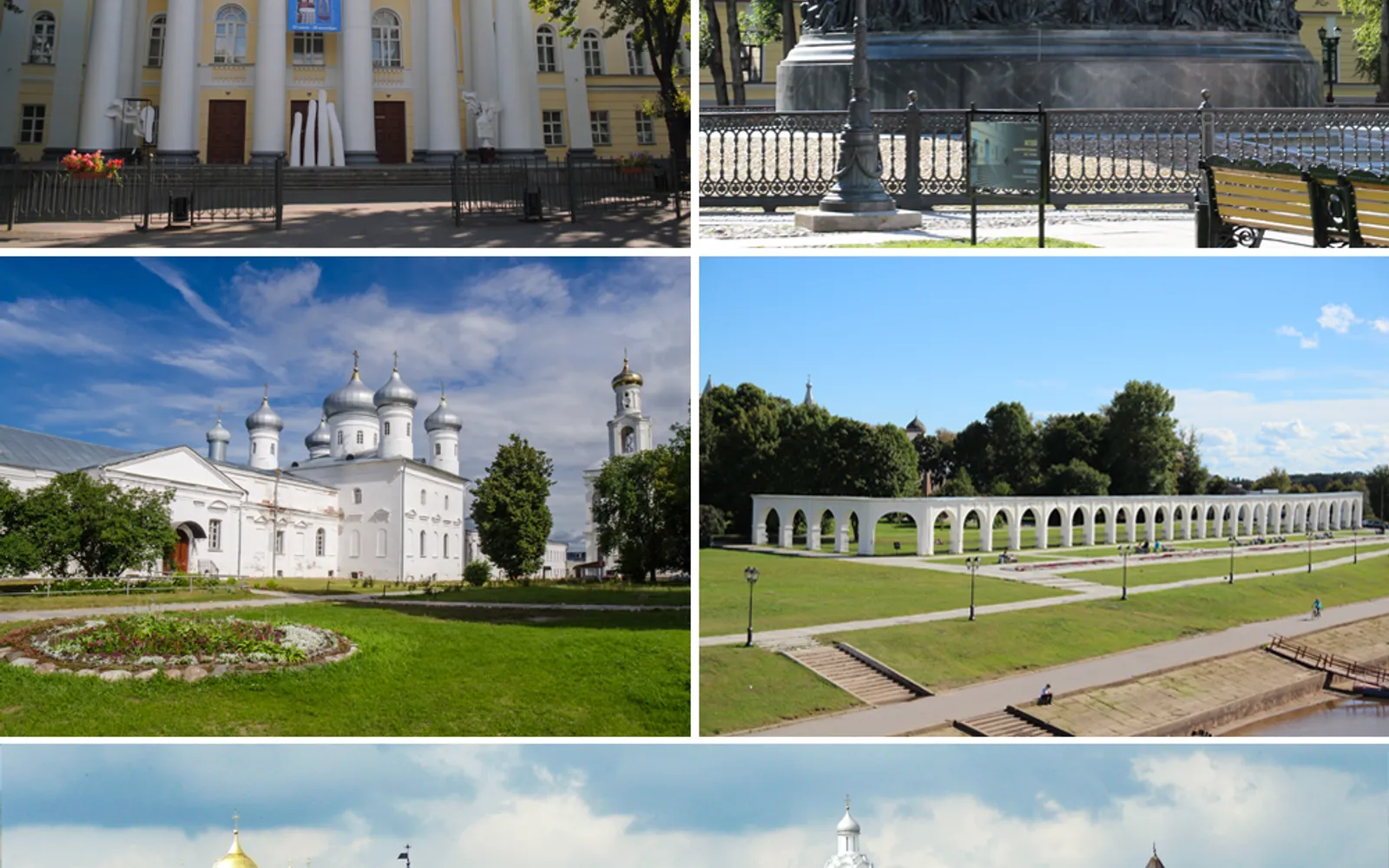
The food in Veliky Novgorod is Russia at its most authentic — not Moscow-glamorous, but ancient Russian home cooking passed down over a thousand years. Deep-red borscht simmered from fresh beets, thin crispy blini with sour cream, and pelmeni dumplings that taste best eaten in the cold northern Russian air. Come here and make sure you try them all.
 #1
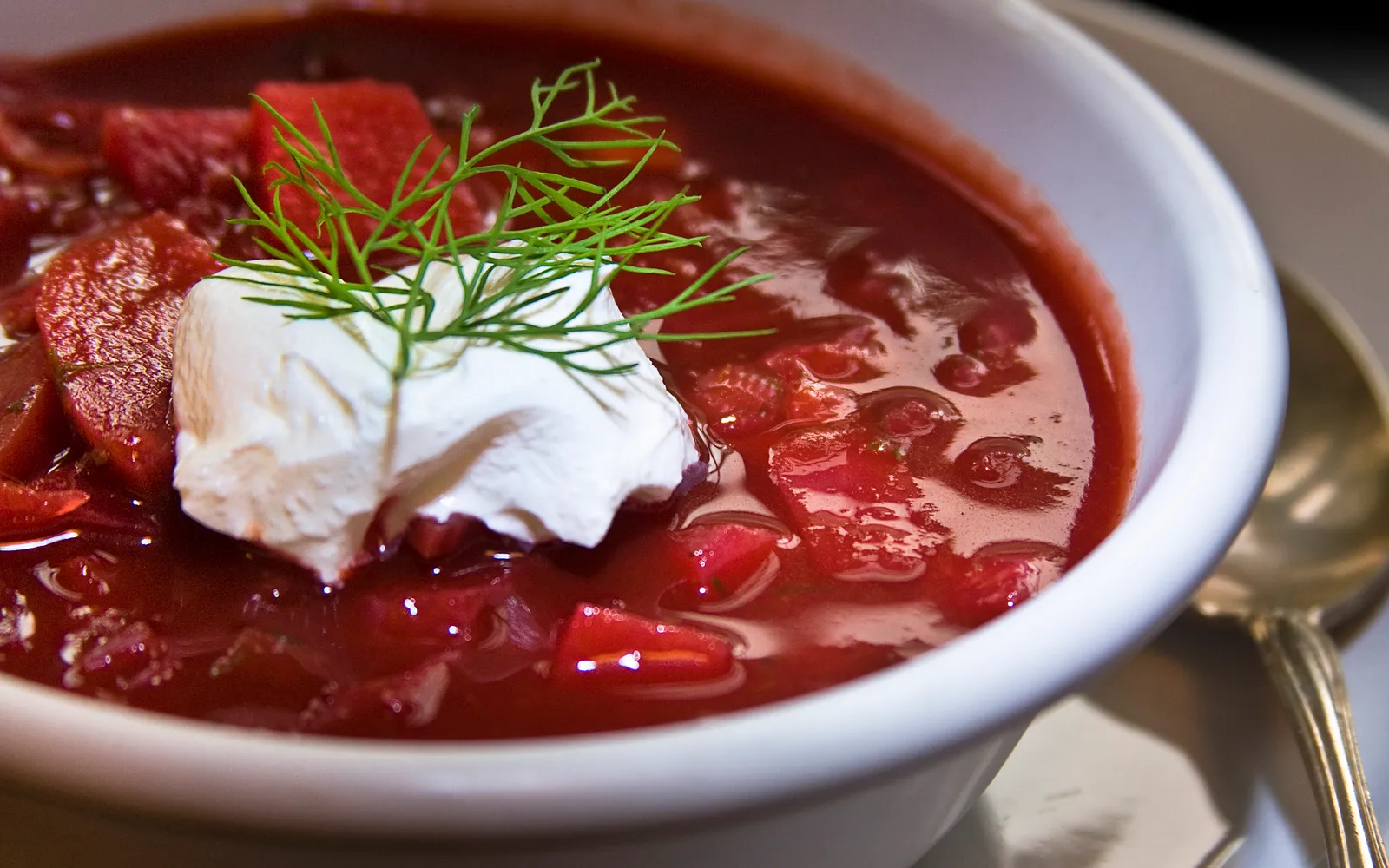
#1 Borscht
The deep-red beet soup that is a symbol of Russian and Eastern European food. In Veliky Novgorod it is made in the northern Russian style — slow-cooked with beef or pork, fresh cabbage, potato, carrot, and beets until the broth turns thick and carries a sweet-sour note from the beets. Served hot with smetana (sour cream), chopped dill, and dark rye bread. The flavor is rich and warming, especially on a cold day, and it tends to be the midday dish most travelers order again.
- Order it 's myasom' (с мясом — with meat) for a more satisfying bowl than the vegetarian version.
- Stir the smetana directly into the soup before eating, not on the side — Russians mix it in until the broth turns pale pink.
- Russian dark bread (dense, slightly bitter) is far better for dipping than white bread; most restaurants will bring extra if you ask.
 #2
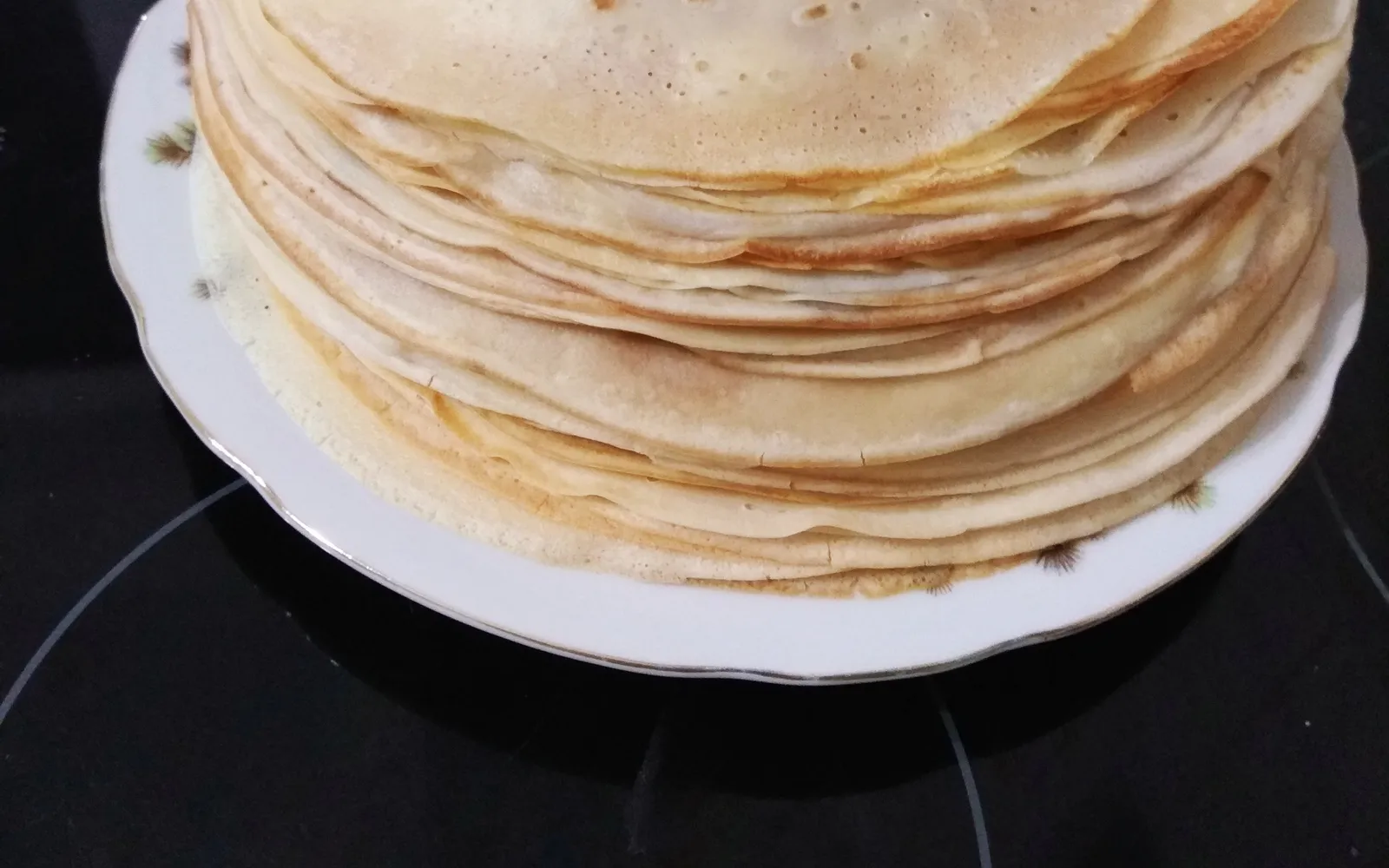
#2 Blini
Russia's paper-thin pancakes with a history stretching back over a thousand years. Made from wheat or buckwheat flour, fried on a hot iron pan to a golden, lacy-edged crêpe. They come sweet (with honey, jam, sour cream, or fruit) or savory (with fish roe, salmon, minced meat, or mushrooms). Blini are the symbol of Maslenitsa — the annual winter-farewell festival — but here you can eat them year-round in any local café.
- Try the buckwheat blini (darker in color) with sour cream and fish roe — this is the most traditional version from northern Russia.
- Blini in Veliky Novgorod are very affordable; 3–4 pieces per person is a solid portion, at roughly 80–150 rubles each.
- Eat them straight off the pan — blini cool fast and the texture changes noticeably once cold.
 #3
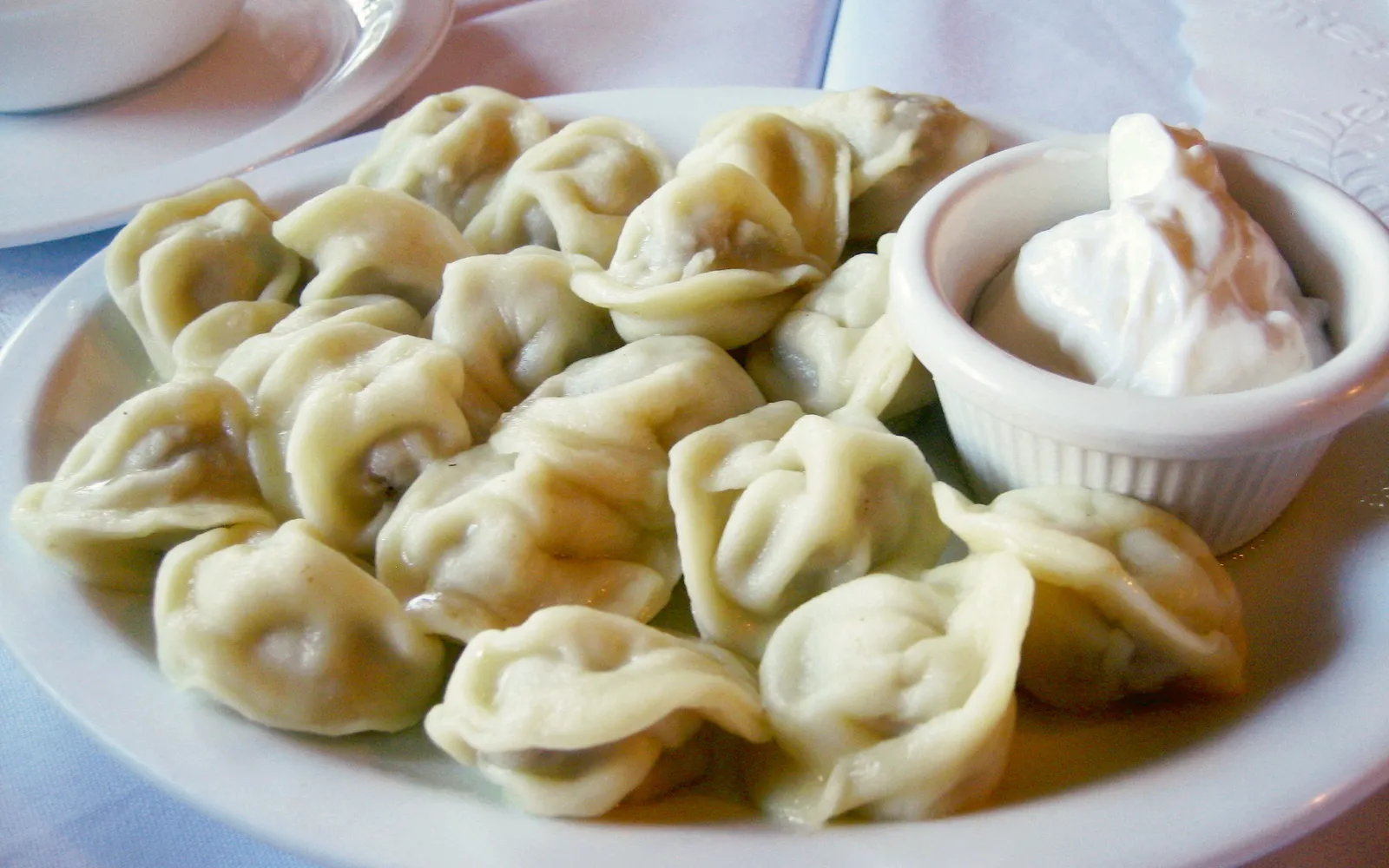
#3 Pelmeni
Traditional Russian boiled dumplings that originated in Siberia and spread across the country. Thin, soft dough wraps around a filling of pork, beef, or a mixture of both, seasoned with onion and black pepper, then boiled in water or broth until cooked through. Served with sour cream, butter, or a splash of vinegar. Simple in flavor but filling — the staple of northern Russia in winter, keeping you warm for hours.
- Always order sour cream on the side; spooning it over the hot dumplings is the best way to eat them.
- House-made pelmeni beat frozen every time. Ask staff if they are 'domashnie' (домашние — homemade) before you order.
- If the dumplings arrive in under 3 minutes, they came from a microwave. Skip those places.
 #4
#4 Medovukha
Russia's oldest fermented honey drink, with a history in the Novgorod region going back over a thousand years. The taste is gently sweet, fragrant with honey and spice, and the alcohol content runs from about 5 to 16 percent depending on the recipe. Drink it cold or warm — some versions include ginger, cinnamon, cloves, and wild berries. Veliky Novgorod's medovukha has a particularly strong reputation across Russia because the region's honey is high quality.
- Try a few different recipes — the flavors vary widely. The wild-berry versions (cranberry or lingonberry) are especially good.
- Bottles are sold in souvenir shops for around 300–500 rubles each and travel well as gifts.
- If you skip alcohol, order kvas instead — a fermented dark-bread drink with less than 1 percent alcohol.
 #5
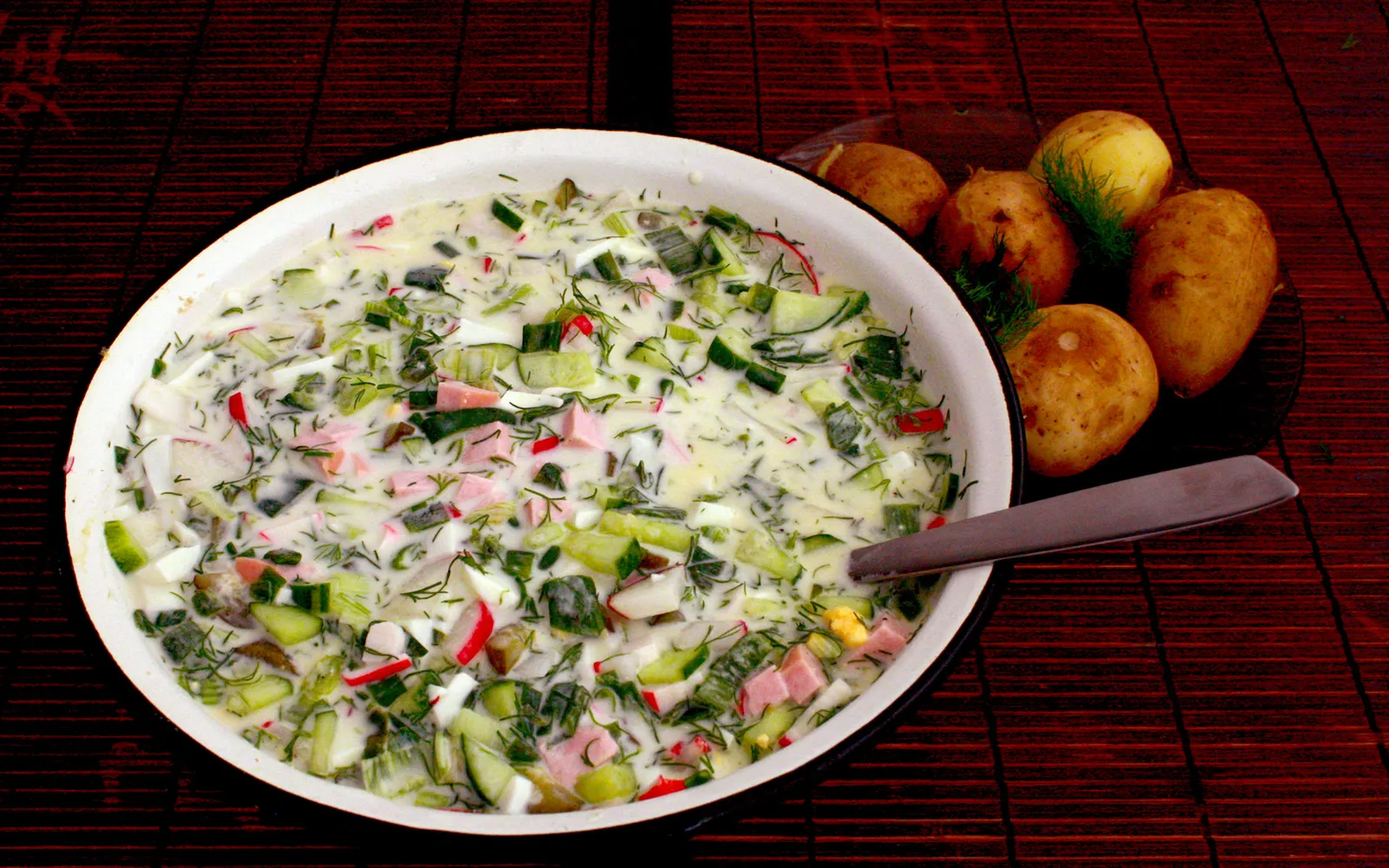
#5 Solyanka
Russia's most complex traditional soup — sour, salty, faintly spicy, and smoky all at once. A single bowl holds several types of meat: beef, smoked sausage, ham, along with tomato, olives, pickled cucumber, and spices. The broth is thick and intense; the sourness comes from pickle brine, which is the dish's signature note. Served with lemon slices and sour cream. Russians swear by it as a hangover cure and commonly eat it the day after a long celebration.
- The flavor is very bold — if it seems too salty at first, squeeze the lemon wedge in and stir; it balances the dish immediately.
- Ask for extra dark rye bread for dipping; it pairs perfectly with the thick broth.
- Two versions exist: myasnaya (meat) and rybnaya (fish). Start with the meat version — it has a more rounded flavor profile.
 #6
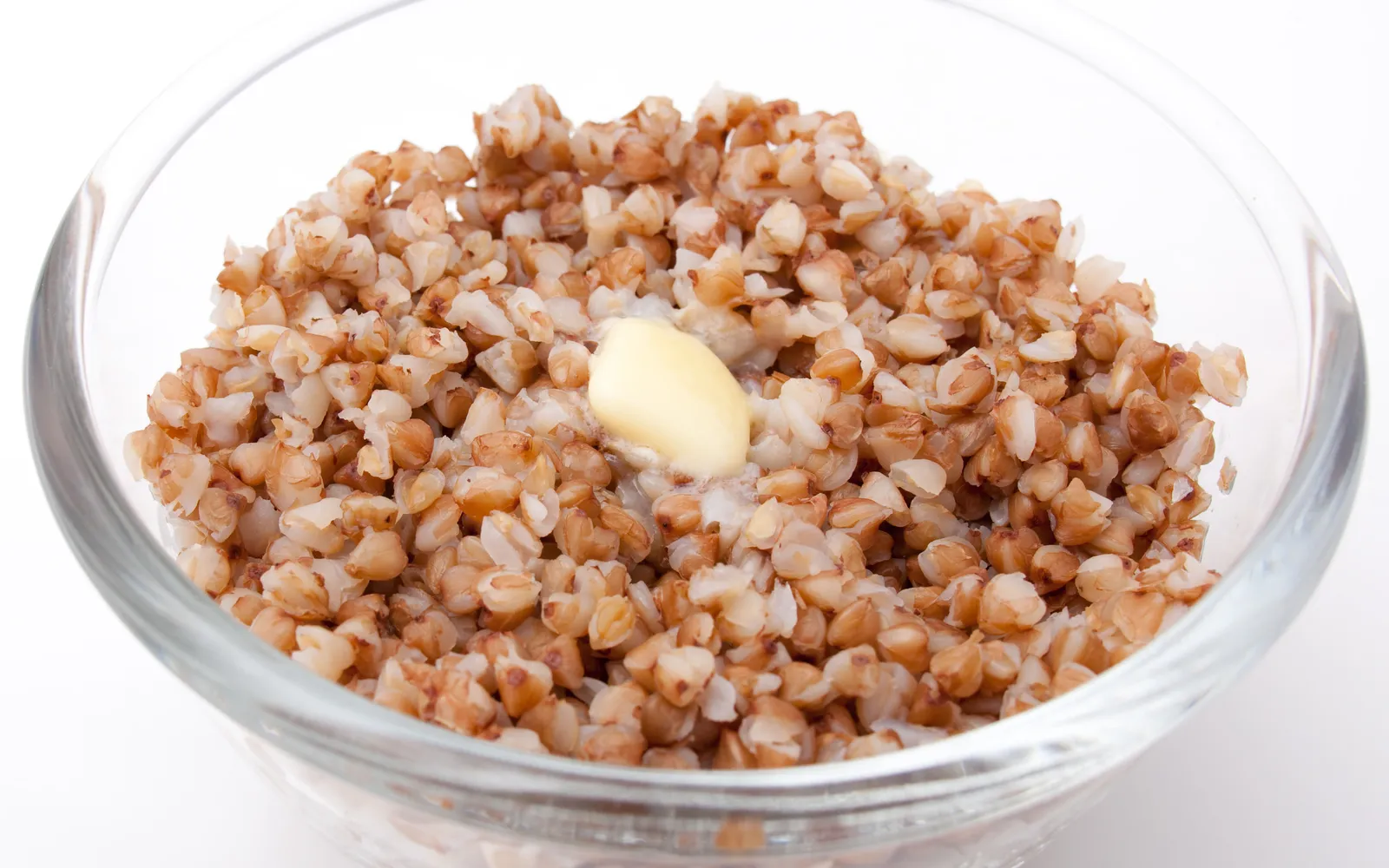
#6 Kasha
A grain porridge eaten in Novgorod since the city's heyday, over a thousand years ago. The most popular grain is buckwheat (grechka), which has a nutty, earthy flavor. Cooked until soft, then finished with fresh butter and salt, and served either as breakfast or a side dish. Some restaurants serve it with wild mushrooms, milk, or dried berries. Oat and millet porridge versions are also popular. Kasha is the longest-running foundation of Russian food — something every Russian household has eaten since morning for generations.
- Try the buckwheat-with-wild-mushroom (griby) version instead of plain; the earthy, nutty depth is a northern regional specialty.
- If buckwheat flavor is unfamiliar, start with oat kasha (ovyanka) with milk and honey — lighter and closer to what most travelers already know.
- Kasha is very cheap at 80–150 rubles, making it an ideal breakfast before a full day exploring the city.
Where to stay in Veliky Novgorod for this trip
A well-located hotel means less commuting and more sightseeing. Here are real, top-rated stays in Veliky Novgorod — compare Agoda · Booking · Trip.com in one click.
Park Inn by Radisson Veliky Novgorod
Affiliate links — we may earn a commission at no extra cost to you. Details
Volkhov Hotel
Affiliate links — we may earn a commission at no extra cost to you. Details
Hotel Yurievskoe Podvorye
Affiliate links — we may earn a commission at no extra cost to you. Details
Hotel Beresta
Affiliate links — we may earn a commission at no extra cost to you. Details
Tours, tickets & activities in Veliky Novgorod
Day tours, attraction tickets and travel essentials for Veliky Novgorod — book ahead on Klook with mobile e-tickets.
Affiliate links — we may earn a commission at no extra cost to you.
Before You Pack
The best Russian restaurants in Veliky Novgorod tend to cluster near the Kremlin and the Golden Fields district, and prices are noticeably lower than Moscow — a solid mid-to-upper meal runs around 500–800 rubles. Don't leave without trying the medovukha (honey mead) that the region is known for.