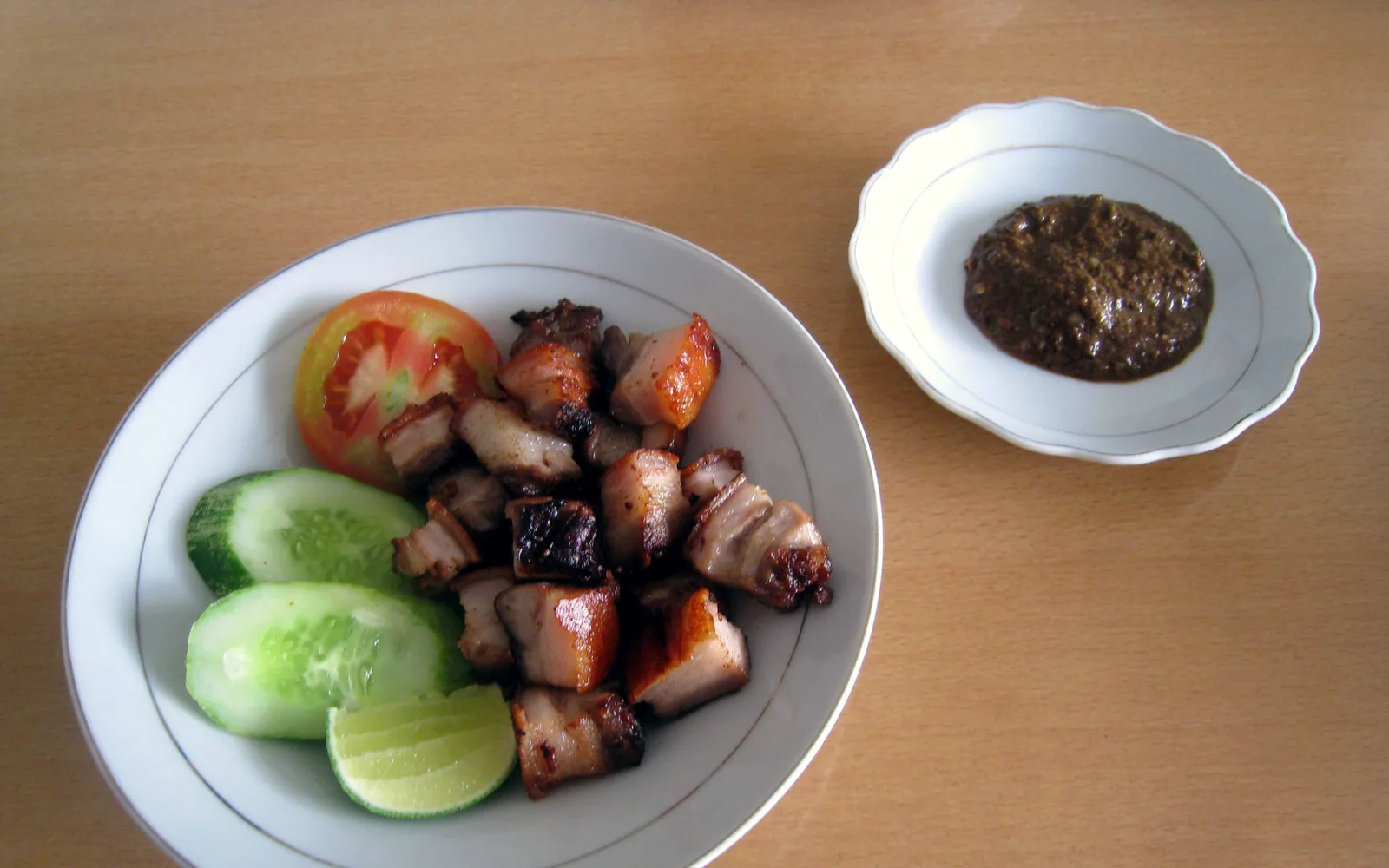
Balinese food in Ubud is more than a meal — it's part of a ritual and a way of life passed down over hundreds of years. Babi guling and bebek betutu were originally prepared only for religious festivals before becoming everyday staples. The defining flavors of Bali come from the complexity of fresh herbs, chilies, and coconut milk, slow-cooked for hours until the aroma and taste become something found nowhere else.
 #1
#1 Babi Guling
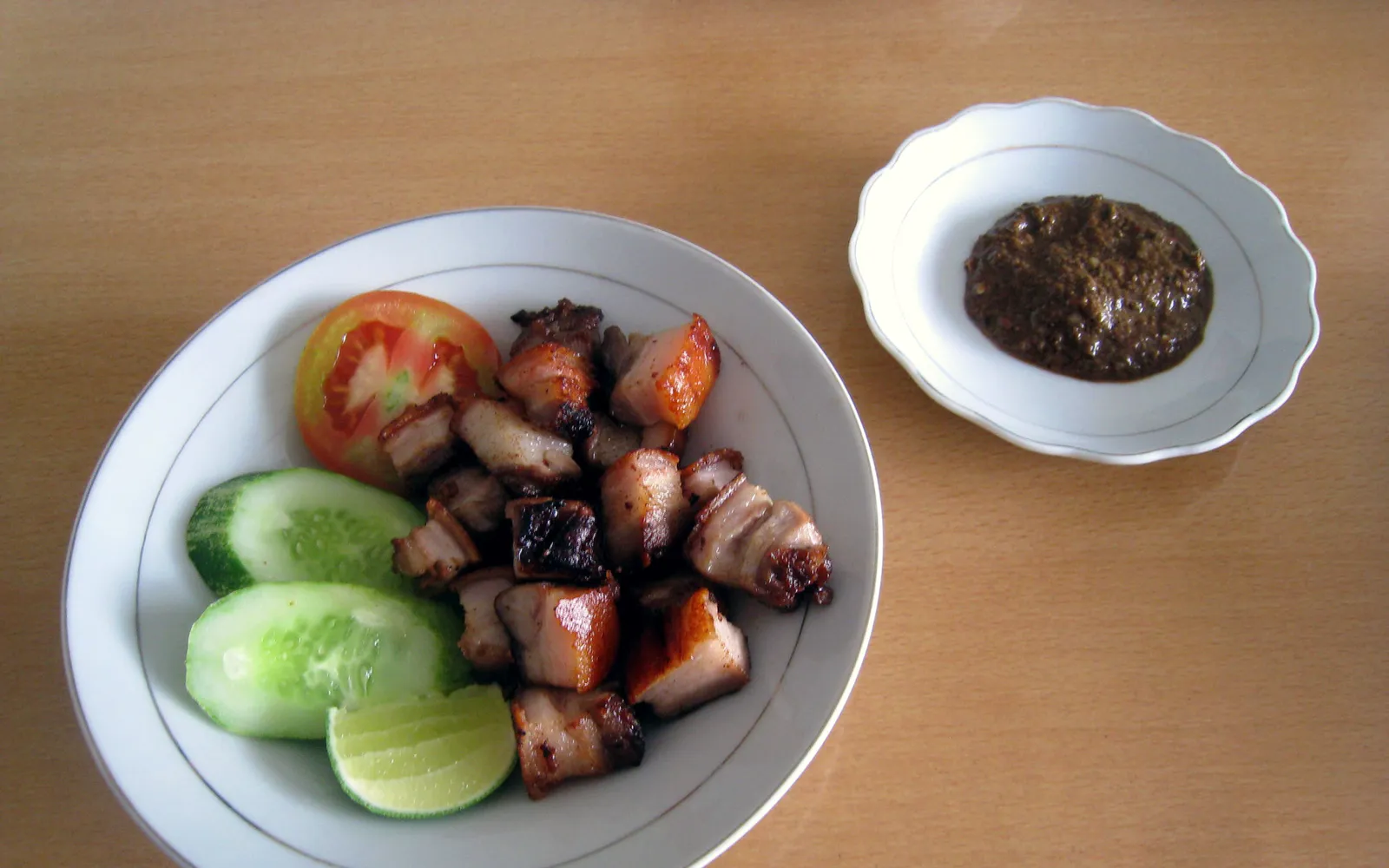
The most famous Balinese dish in the world. A young suckling pig is stuffed with Base Gede herb paste — lemongrass, turmeric, ginger, galangal, chili, shallots, garlic — then rotated on a spit for more than 6 hours. The skin shatters into crackling; the meat is tender and deep with herb fragrance. Originally a Hindu-Balinese ceremonial dish, it is now Ubud's most popular breakfast and sells out before noon.
- Ibu Oka, directly opposite Ubud Palace, is the most famous spot — Gordon Ramsay has eaten here. Opens early and typically sells out before midday.
- Babi guling is served with lawar (shredded coconut salad), white rice, and organ soup. Eat the full set to experience the complete flavor.
- Guests who do not eat pork can request lawar and rice only, or choose another Balinese dish from the same menu.
 #2
#2 Bebek Betutu
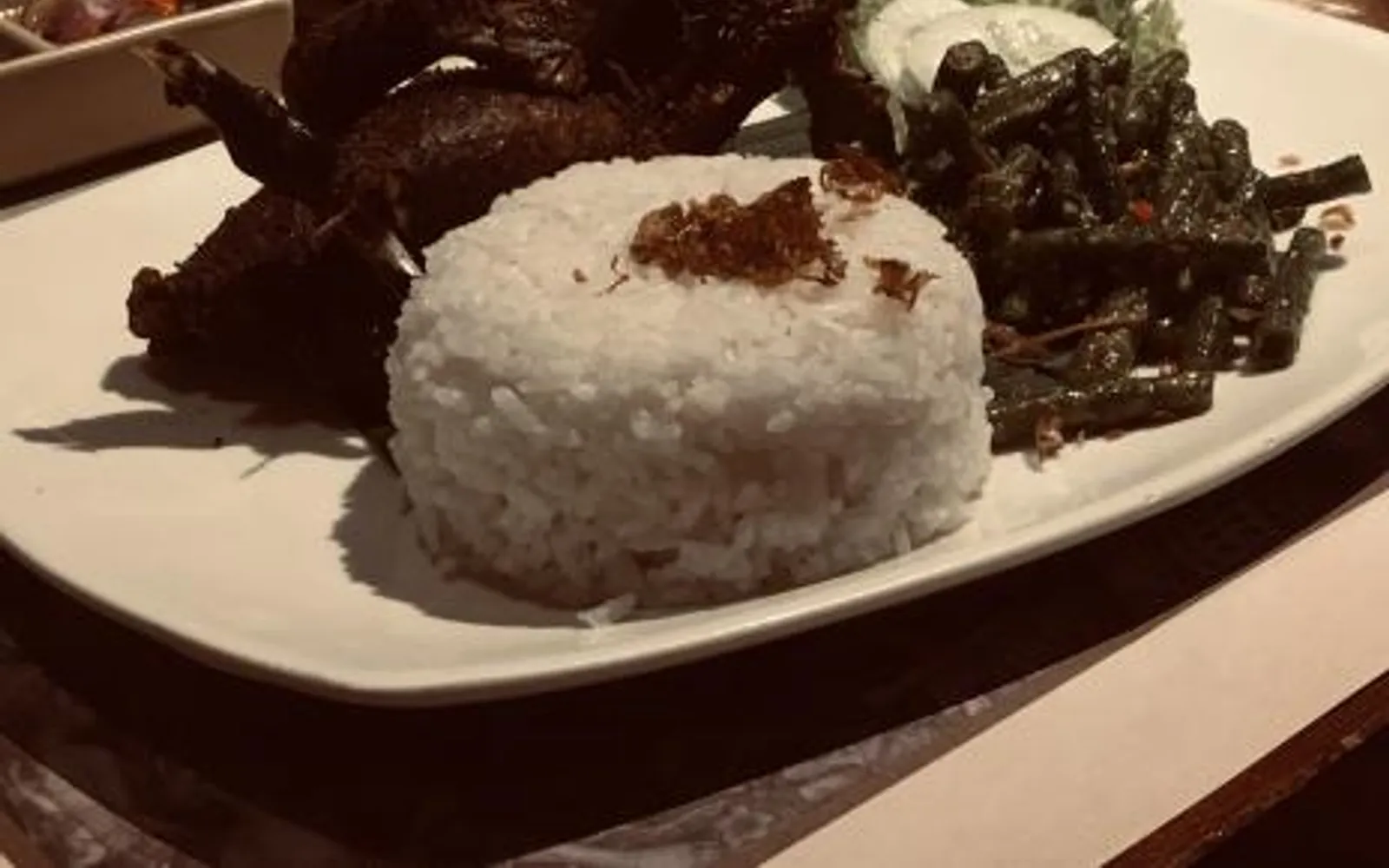
The most time-intensive of all traditional Balinese dishes. A whole duck is stuffed with Base Genep — a blend of 11 spices — tightly wrapped in banana leaves, then baked or buried in hot coals for 8 to 10 hours until the meat falls apart. Every fiber is saturated with herb flavor. Originally made only for weddings, temple ceremonies, and the Galungan festival, some Ubud restaurants now offer it by advance order.
- Many restaurants require a day's advance notice — the preparation and cooking alone take most of a day. Place your order by the evening before.
- Bebek Bengil (Duck Palace) in Ubud serves this dish with paddy-field views, though prices run higher than a typical warung.
- Eat it with white rice, sambal, and fresh vegetables to cut the richness of the duck — the balance is noticeably better.
 #3
#3 Nasi Campur Bali
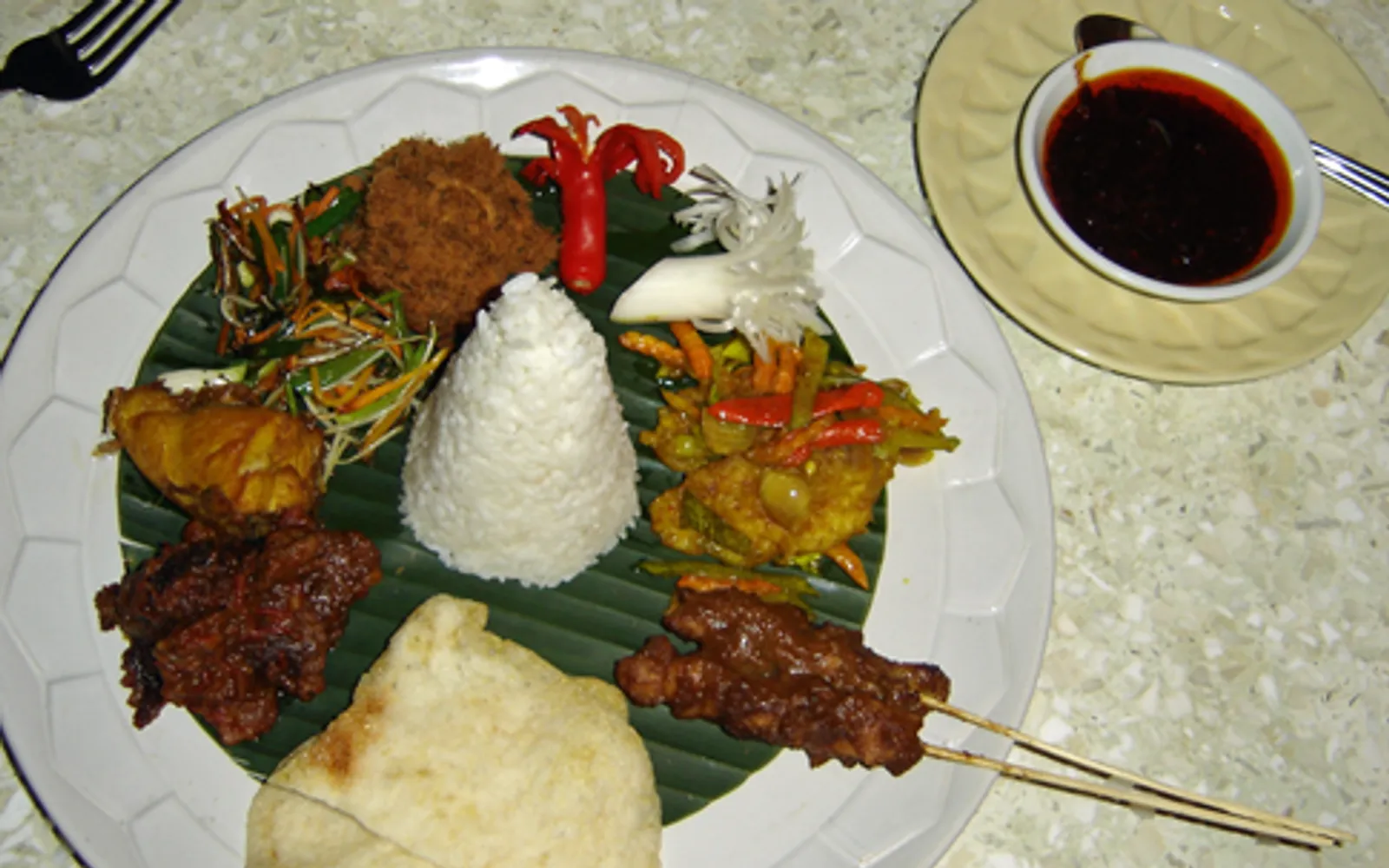
The everyday staple of the Balinese table, reflecting the depth of the island's kitchen. Steamed rice sits at the center of the plate, ringed by small portions of many accompaniments: sate lilit, coconut lawar, fried tofu, tempeh, boiled egg, roasted peanuts, and bright-fresh sambal matah. Every warung puts its own accompaniments together, so no two plates are identical. The flavor is grounded in Base Genep, Bali's complex spice base.
- Small warungs with local regulars are usually tastier and cheaper than tourist-facing restaurants. Expect to pay 25,000–40,000 rupiah.
- Say tidak pedas if you want no heat, or pedas sekali if you want it very spicy.
- Morning and lunchtime nasi campur is freshest — everything is cooked that morning, and some items may run out by evening.
 #4
#4 Sate Lilit
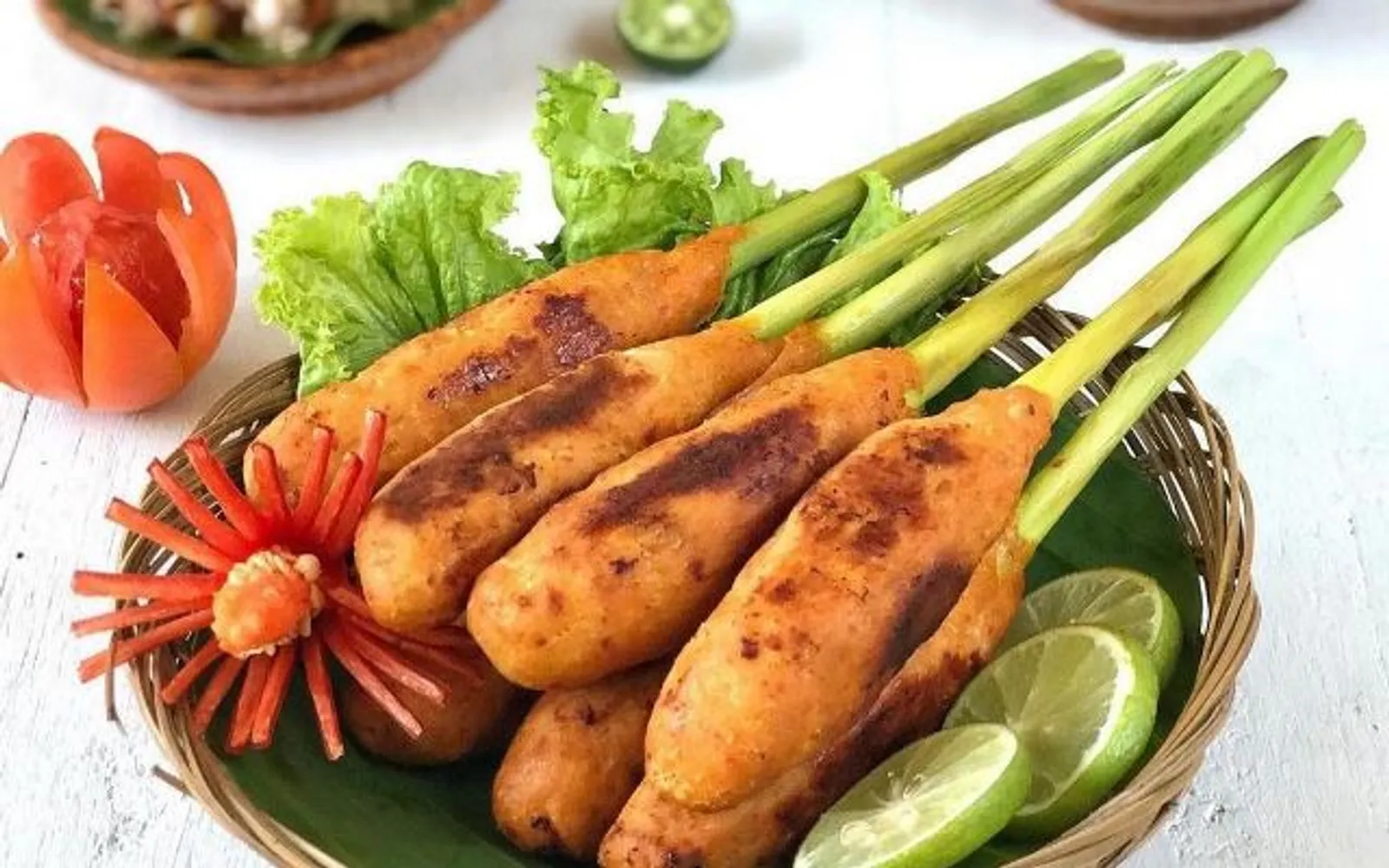
A Balinese take on satay that is entirely its own thing. Rather than threading chunks of meat onto a skewer, finely minced fish or prawn or chicken is blended with grated coconut, coconut cream, and Base Genep, then wound (lilit means 'to wrap') around stalks of lemongrass or bamboo and grilled over coconut charcoal. The lemongrass perfumes every bite as it cooks. The result is mildly spicy, rounded, and deeply fragrant.
- Sate lilit often appears as a side in nasi campur, but many restaurants also serve it as a standalone dish.
- Street carts and market stalls in Ubud sell them for 5,000–8,000 rupiah per skewer — one of the best-value bites in town.
- Serve with sambal matah and rice or lontong rice cake to get the full Balinese flavor.
 #5
#5 Sambal Matah
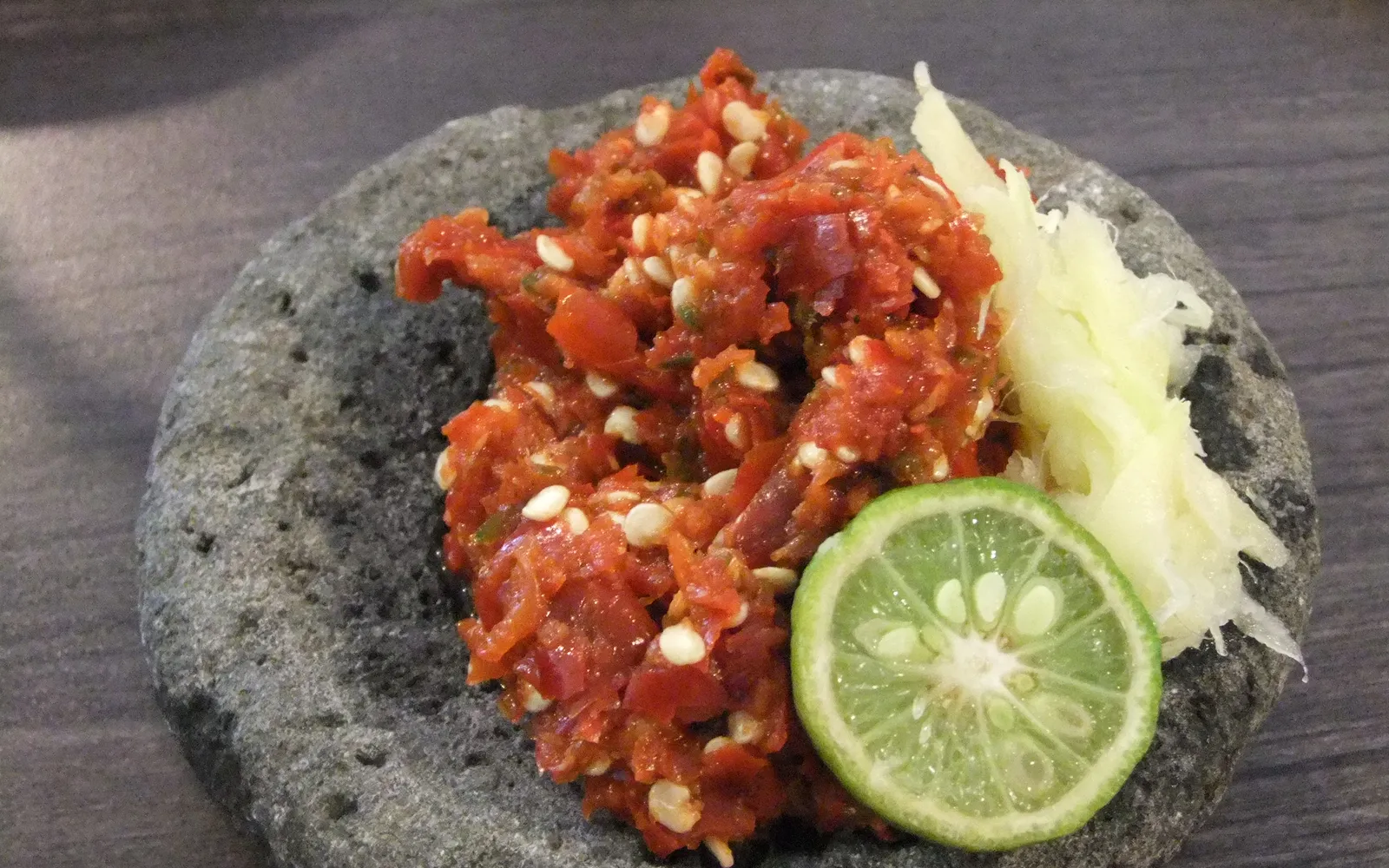
Bali's signature raw relish, made from entirely fresh, uncooked ingredients. Shallots, long chilies, shredded lemongrass, kaffir lime leaves, salt, and lime juice are combined, then finished with a pour of hot coconut oil. The heat of the oil draws out the fragrance without wilting the crunch of the raw ingredients. The flavor is bright, lemongrass-forward, and lightly spicy — a condiment that appears alongside almost every Balinese plate.
- If you prefer less heat, ask the kitchen to reduce the chili. Sambal matah is easy to adjust.
- Several cooking schools in Ubud teach you to make it yourself — classes run 150,000–350,000 rupiah per person.
- Sambal matah is milder than sambal terasi or sambal olek, making it a good entry point for those new to Balinese flavors.
 #6
#6 Jaje Bali
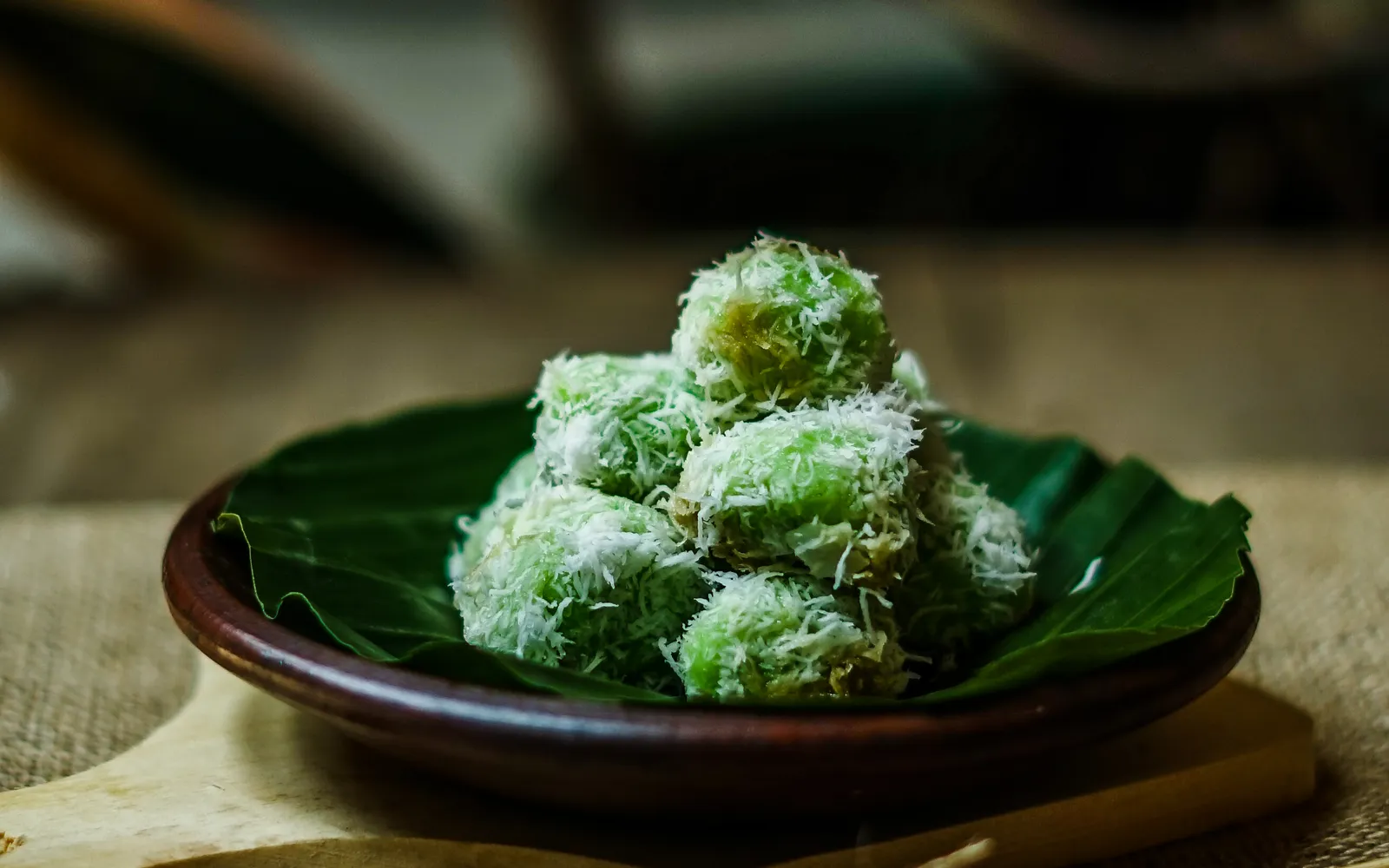
Traditional Balinese sweets sold every morning at the market — not one item but a collection of several kinds on a single plate. Klepon: round glutinous rice balls in pandan green, stuffed with palm sugar and rolled in shredded coconut. Lak-lak: small green pandan-scented rice pancakes. Jaje Abug: multicolored hand-shaped glutinous rice sweets. The two key ingredients across all of them are palm sugar (gula merah) and pandan leaf.
- Ubud morning market opens 05:00–09:00. The fresh-food section has rows of colorful sweets priced at 2,000–5,000 rupiah per piece.
- Jaje Bali is at its best within the first 2 to 3 hours after it is made — the earlier you go, the fresher it is.
- Sweet shops along the main road sell assorted jaje Bali in gift boxes — a practical edible souvenir.
Where to stay in Ubud for this trip
A well-located hotel means less commuting and more sightseeing. Here are real, top-rated stays in Ubud — compare Agoda · Booking · Trip.com in one click.
Mandapa, a Ritz-Carlton Reserve
Affiliate links — we may earn a commission at no extra cost to you. Details
Purana Suite Ubud
Affiliate links — we may earn a commission at no extra cost to you. Details
Capella Ubud, Bali
Affiliate links — we may earn a commission at no extra cost to you. Details
The Kayon Jungle Resort
Affiliate links — we may earn a commission at no extra cost to you. Details
Tours, tickets & activities in Ubud
Day tours, attraction tickets and travel essentials for Ubud, Bali — book ahead on Klook with mobile e-tickets.
Affiliate links — we may earn a commission at no extra cost to you.
Before You Pack
The best Balinese food in Ubud is usually inside a warung — a small family kitchen, not a hotel restaurant. Walk the morning market, or ask your GoJek driver where he eats his rice. That answer will take you to something far more honest than any review app.