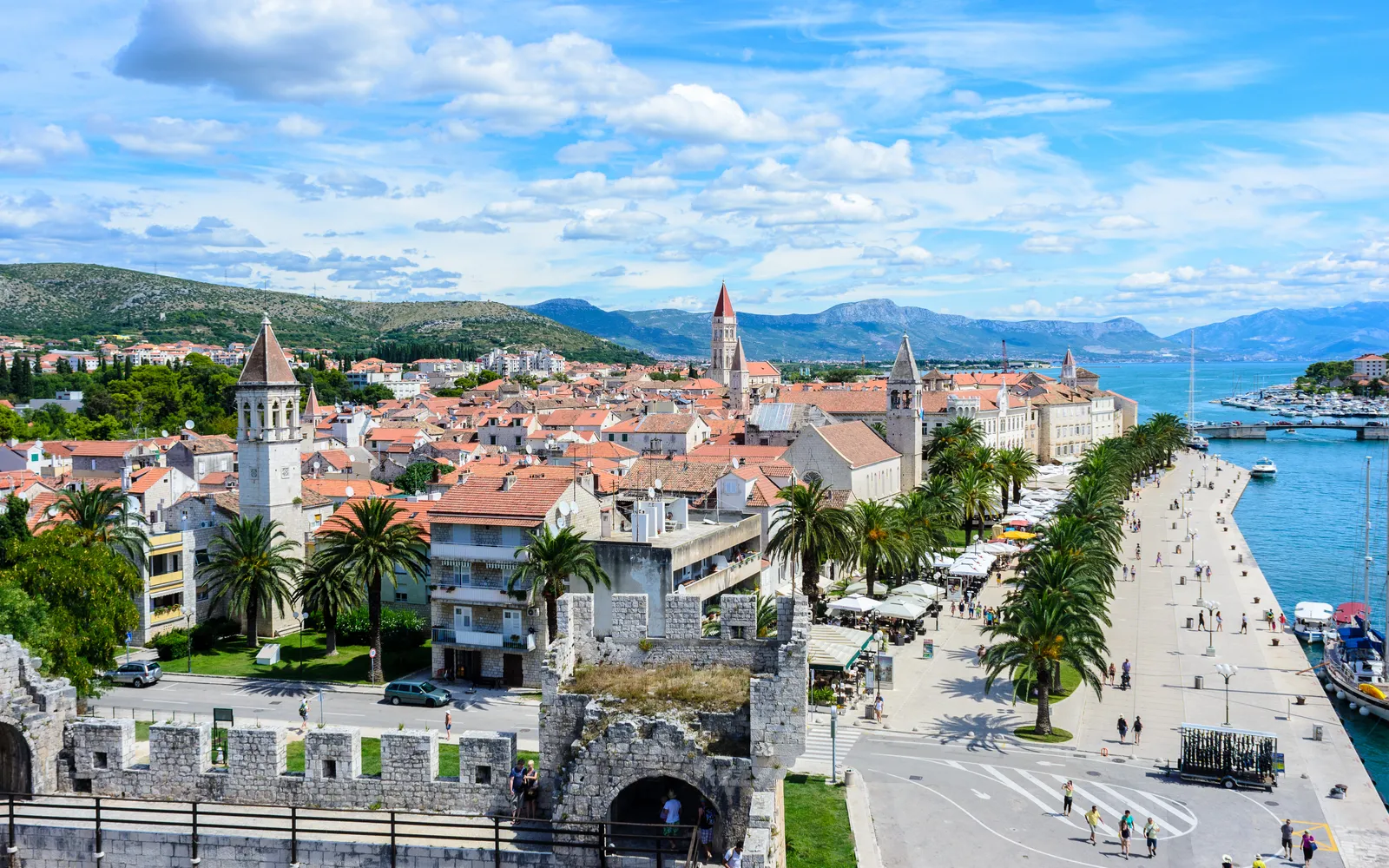
Trogir is one of the best-preserved medieval towns in the Mediterranean. This small island — connected to the mainland by two bridges — is packed with narrow stone streets, Romanesque buildings, and a faint salt breeze that follows you all day. Honestly, Trogir is tiny: you can walk the entire old island in under half an hour. But every alley holds over 2,300 years of layered history — ideal for a day trip from Split or a 1–2 night stay to catch the atmosphere once the tour groups have headed home.
 #1
#1 Trogir Old Town
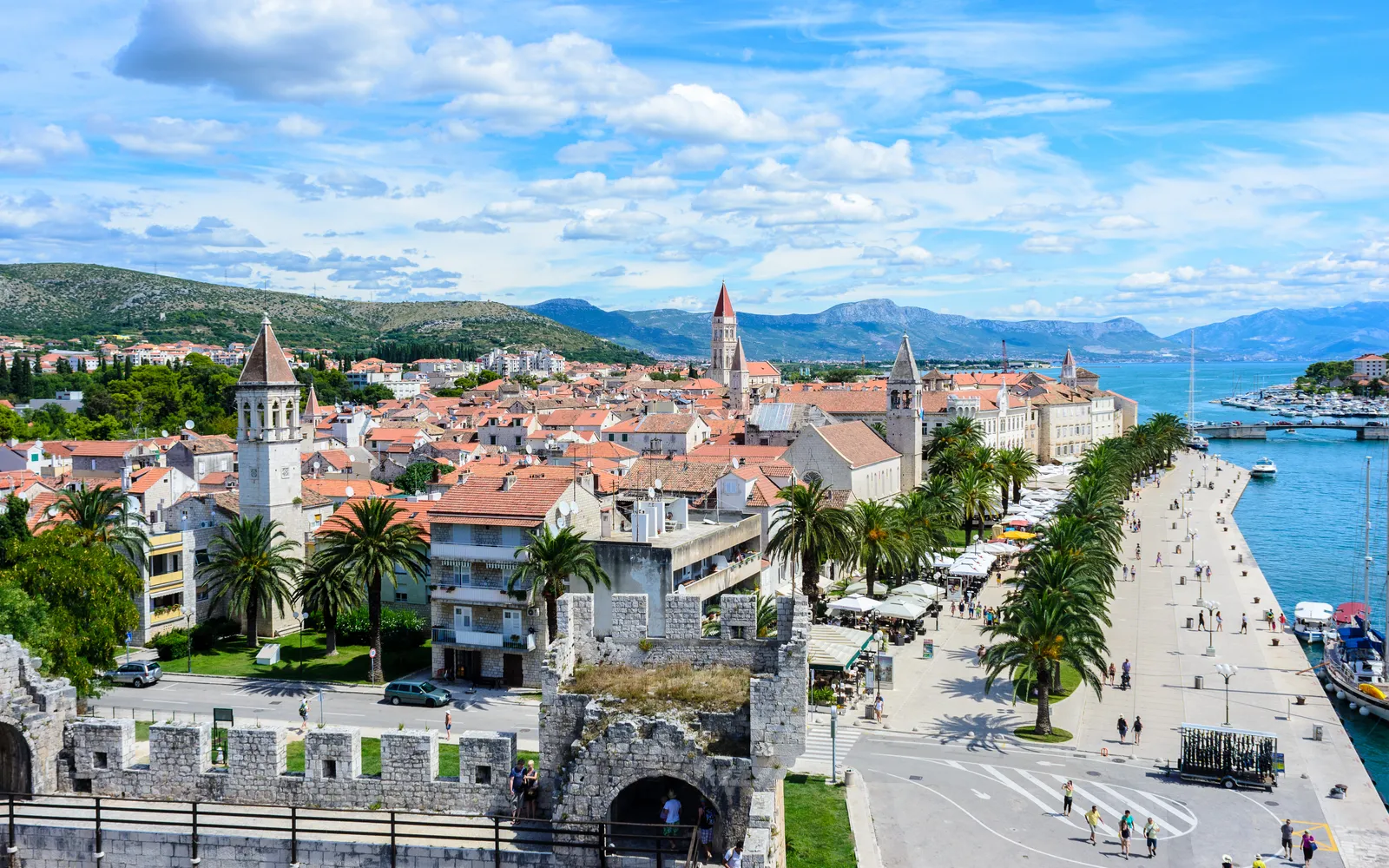
The heart of Trogir is a small island you can circle on foot in a matter of minutes, yet every square metre carries history from the Greek period through Roman, Byzantine, Venetian, and Austro-Hungarian eras. Marble streets and Venetian Gothic buildings press up against each other with almost no gap between them. Getting lost is fine — the island is compact enough that you always find your way back to the waterfront. A word of warning: in July and August, cruise-ship passengers pack the narrow lanes to the point of gridlock.
- Explore from 8–9 am before the cruise-ship groups arrive — the streets are quiet and the morning light is exceptional.
- The stone pavement is smooth and slippery, especially after rain. Wear flat, grip-soled shoes.
- Duck into the side alleys away from the Riva promenade — you often find small courtyards and handsome old houses with no one else around.
 #2
#2 Trogir Cathedral (Cathedral of St. Lawrence)
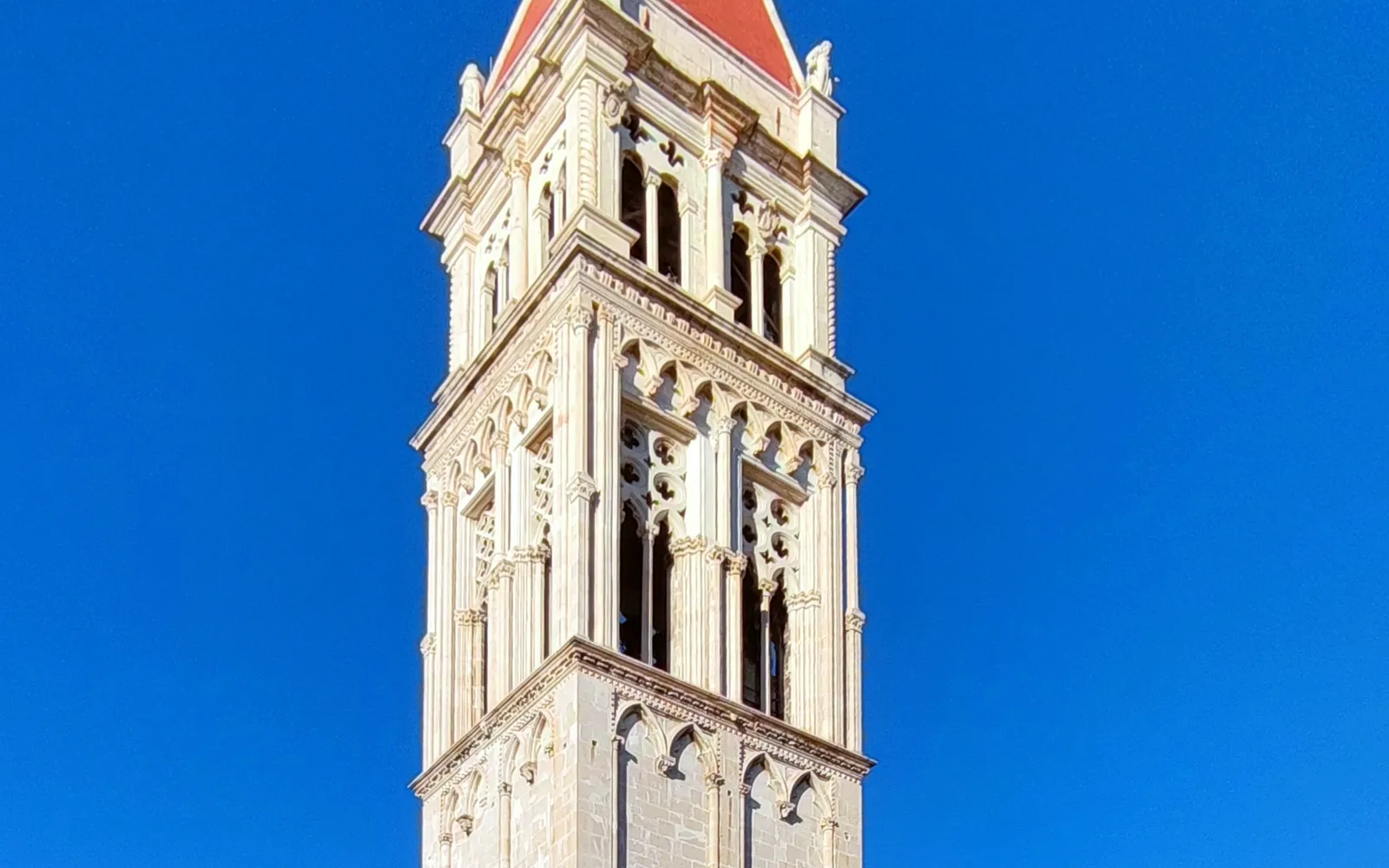
The crown jewel of Trogir and one of the finest Romanesque-Gothic buildings on the Adriatic coast. The main portal was carved by Master Radovan in 1240 and carries 72 individual sculptures — saints, animals, and biblical scenes detailed enough that art historians still come each year to study them. Inside, the Chapel of St. John Orsini is lined with white marble, and the three-storey bell tower took more than 300 years to complete.
- Entry including the bell tower is around 30–35 HRK (roughly €4–5). Climbing the tower is well worth it for the panoramic view.
- Spend 15–20 minutes studying Radovan's carved portal before going inside — it is old enough and detailed enough to deserve its own stop.
- Open 8 am–8 pm in summer; closed during religious services. Check before you visit.
 #3
#3 Kamerlengo Fortress
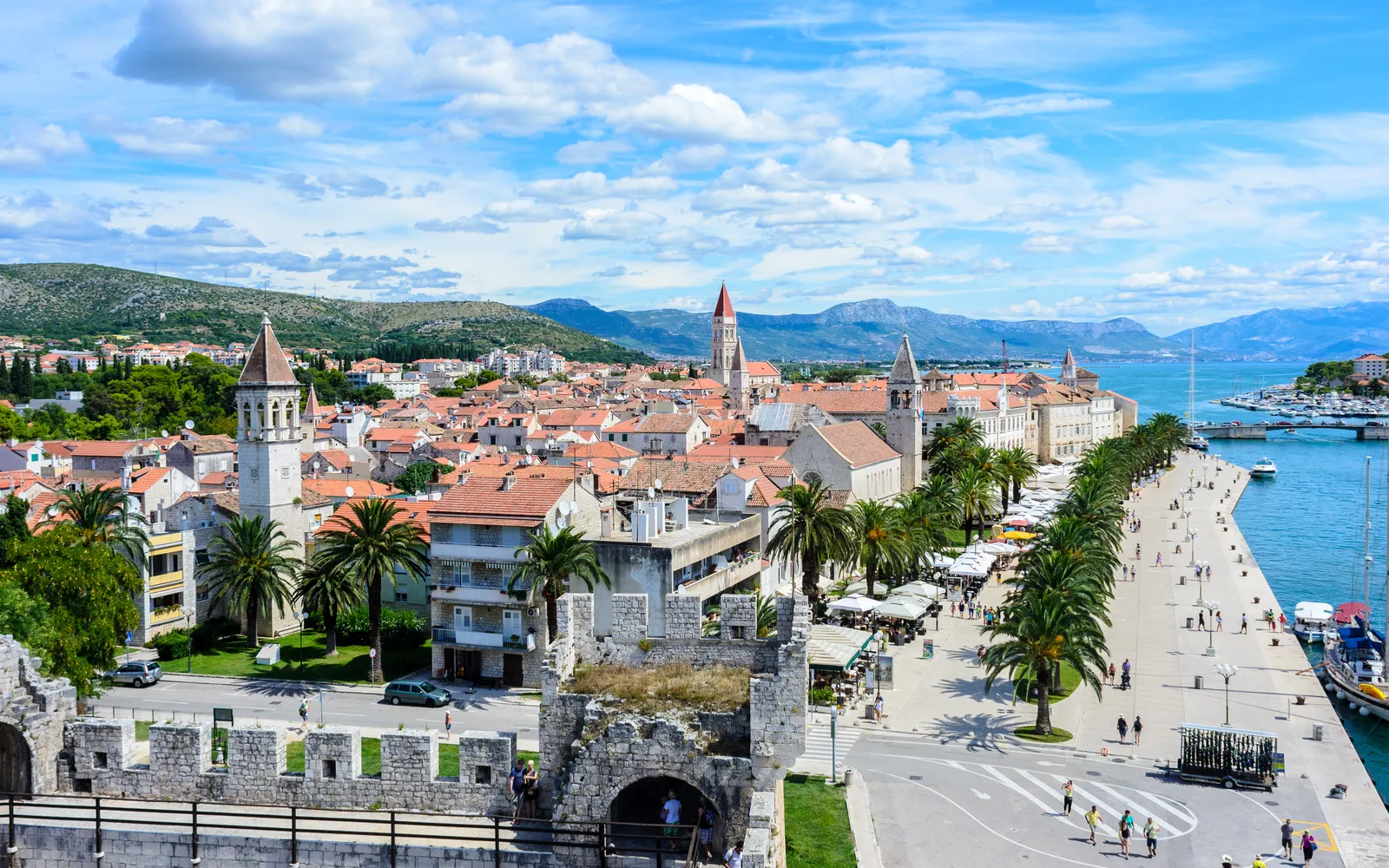
A 15th-century Venetian fortress in excellent condition and Trogir's most recognisable landmark when seen from the sea. Positioned at the westernmost point of the island beside the channel, its large round tower and fortress walls give sweeping views over the Adriatic and Čiovo Island. In summer, the inner courtyard hosts an open-air cinema — a genuinely memorable way to spend an evening.
- Entry is around 25–30 HRK. You can walk along the walls for a 360-degree view of the sea and Čiovo.
- In July and August, open-air film screenings take place in the courtyard. Check programme boards in town or ask your accommodation.
- Direct sun on the fortress walls can be intense during midday — bring water and a hat.
 #4
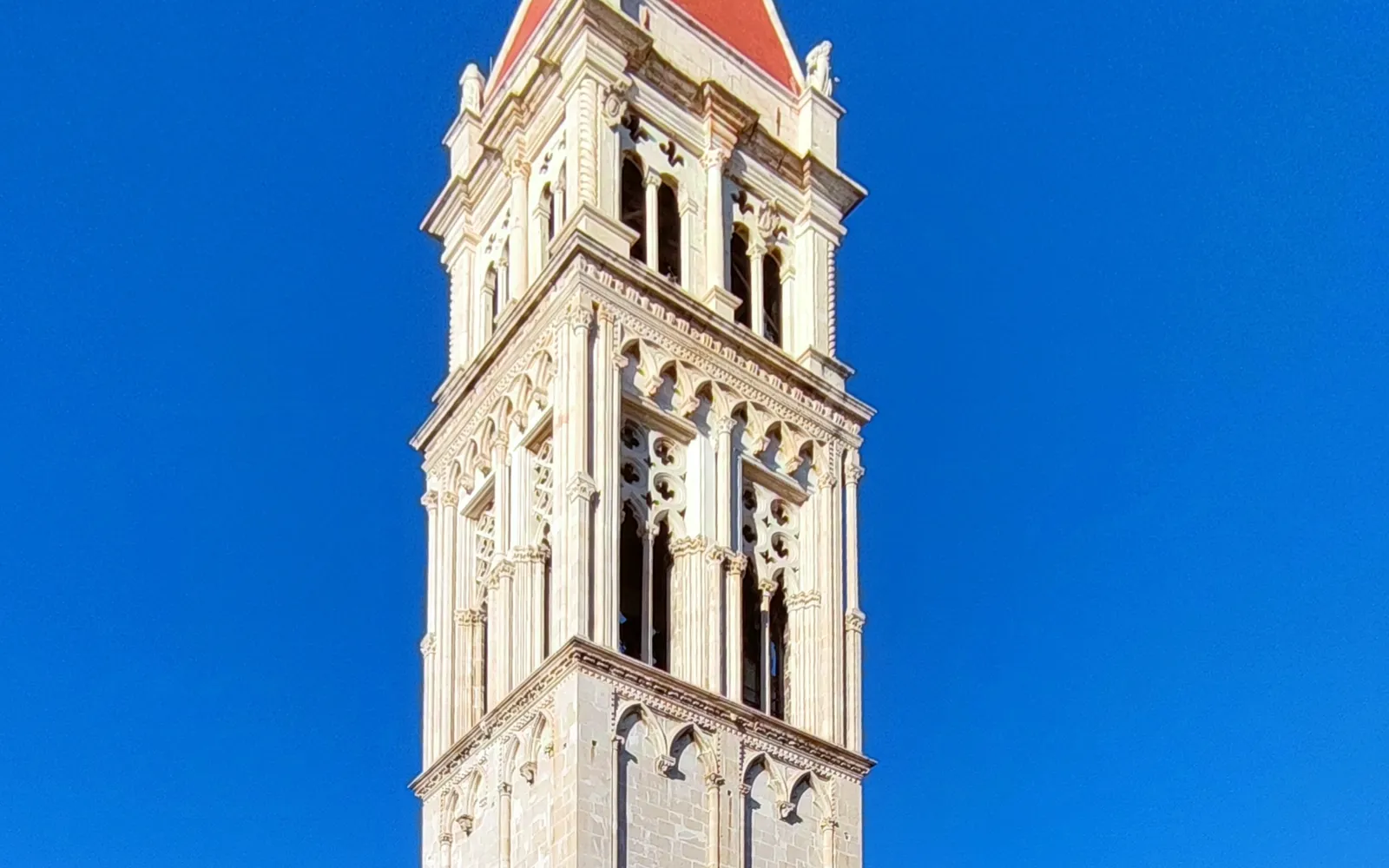
#4 Cathedral Bell Tower
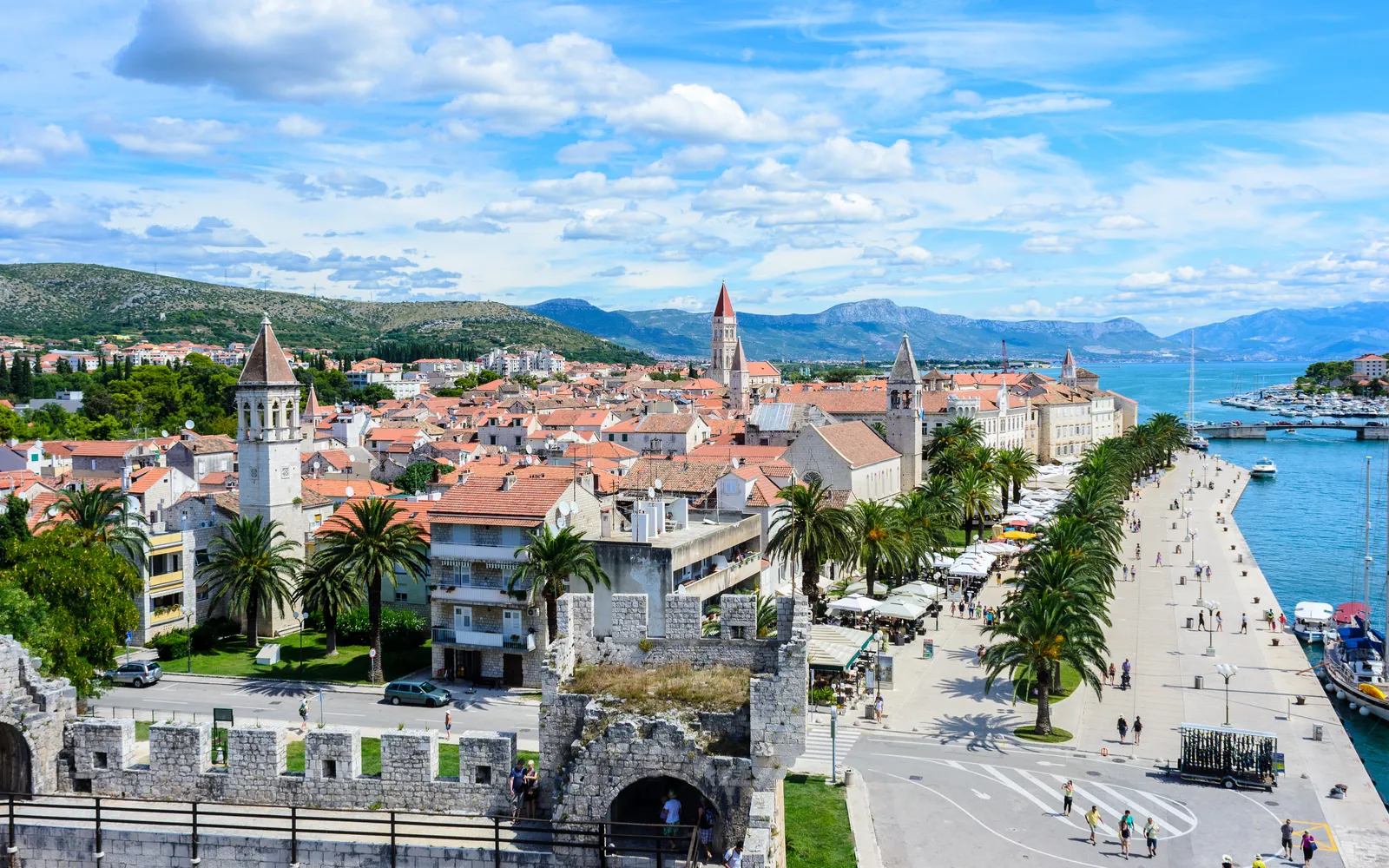
The cathedral's three-storey bell tower offers the best vantage point in Trogir and one of the finest views on the entire Dalmatian coast. Construction ran continuously from the 14th to the 17th century — over 300 years — which is why each storey reflects a different architectural style. From the top you see the grid of stone streets in the old town below, the Riva harbour, and a sharp line between the blue sea and orange rooftops. The stairs are steep and narrow, but photographers will find it completely worth it.
- Bell tower admission is combined with the cathedral ticket — around 30–35 HRK total.
- The stairs are very steep and narrow; not recommended for anyone with knee problems or claustrophobia.
- Morning 9–10 am gives the best light for photographing the sea to the east.
 #5
#5 Cipiko Palace
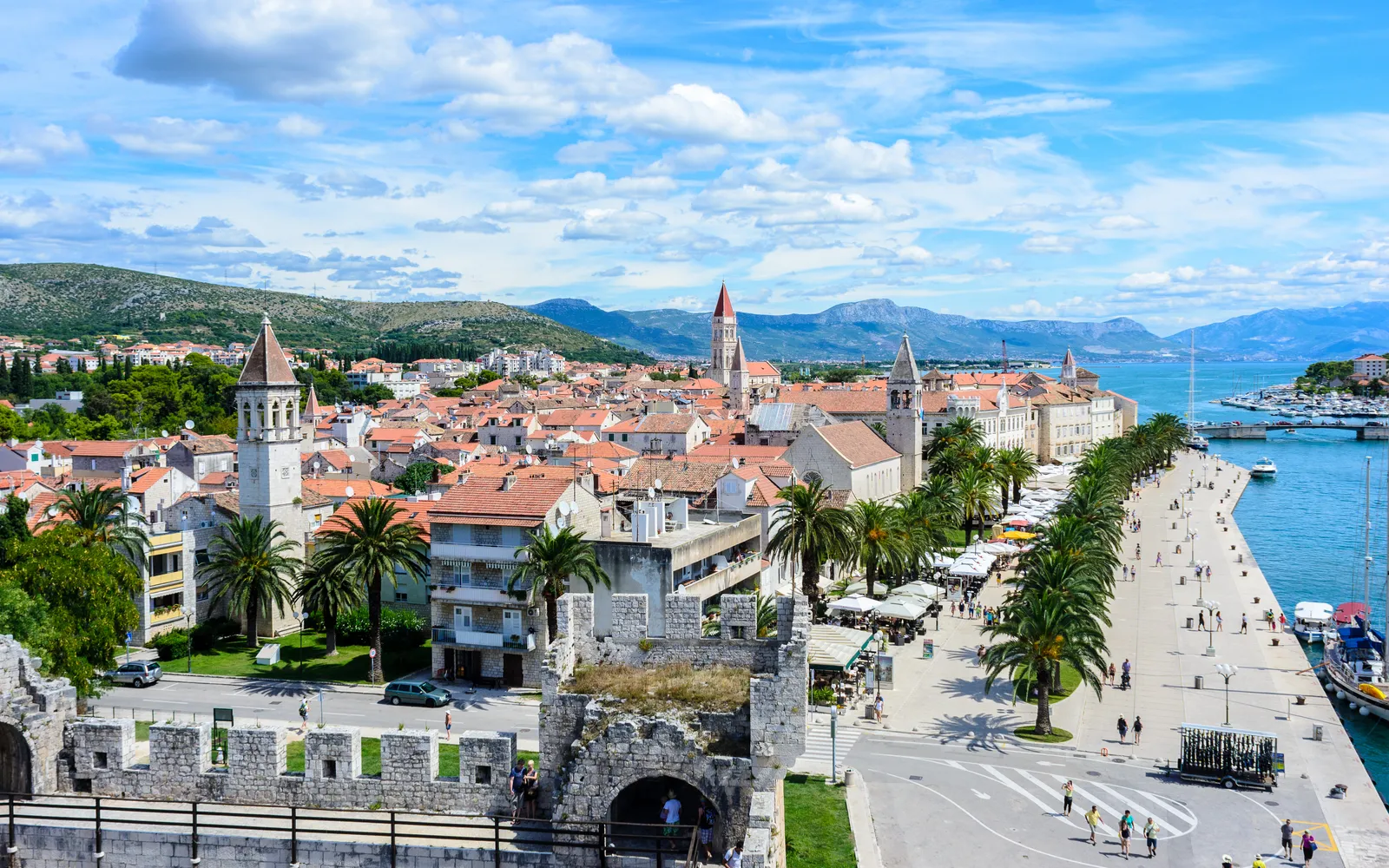
The finest example of Venetian Gothic architecture in Trogir. Built in the 15th century by the Cipiko family, one of the most powerful dynasties in the town during the Venetian period, its facade features two storeys of arched windows and a delicately carved balcony that set the standard for Venetian-era buildings across Dalmatia. The building is still privately owned today, so you can only view it from the street — but it is worth stopping to photograph.
- View is from the street only; no entry fee and no ticket required — just stop as you walk the old town.
- Compare the arched window details here with other buildings in the same street to see how craftsmanship varied across different eras.
- The palace sits directly on the main walking route between the cathedral and Kamerlengo Fortress — no detour needed.
 #6
#6 Riva Promenade
The Riva waterfront is the social centre of Trogir — where locals and visitors sit for coffee, watch the yachts, and simply take their time at any hour of the day. The atmosphere is especially good in the evenings, when the orange light catches the stone walls and reflects off the water. Waterfront cafés have outdoor seating where you can watch boats pass by. Fair warning: prices at Riva cafés run noticeably higher than the same drinks in the alleys just behind.
- Morning coffee on the waterfront is worth the slight premium — settle in and watch the town wake up.
- Between 6 and 8 pm, locals come out for the evening stroll and drinks (the Italian-influenced passeggiata habit). The atmosphere before dark is excellent.
- Boats and island tours depart from the Riva quay — check the timetables here if you want to continue to nearby islands.
Where to stay in Trogir for this trip
A well-located hotel means less commuting and more sightseeing. Here are real, top-rated stays in Trogir — compare Agoda · Booking · Trip.com in one click.
Brown Beach House & Spa
Affiliate links — we may earn a commission at no extra cost to you. Details
Hotel Pasike
Affiliate links — we may earn a commission at no extra cost to you. Details
Old Town Trogir Apartments
Affiliate links — we may earn a commission at no extra cost to you. Details
Hotel Villa Sikaa
Affiliate links — we may earn a commission at no extra cost to you. Details
Tours, tickets & activities in Trogir
Day tours, attraction tickets and travel essentials for Trogir — book ahead on Klook with mobile e-tickets.
Affiliate links — we may earn a commission at no extra cost to you.
Before You Pack
Trogir is at its best in May–June and September–October, before and after the high season when cruise ships fill the harbour and tour groups crowd the stone lanes. Half a day to a full day covers all the highlights — but if you want to really feel the place, stay overnight and try dinner by the water after sunset.