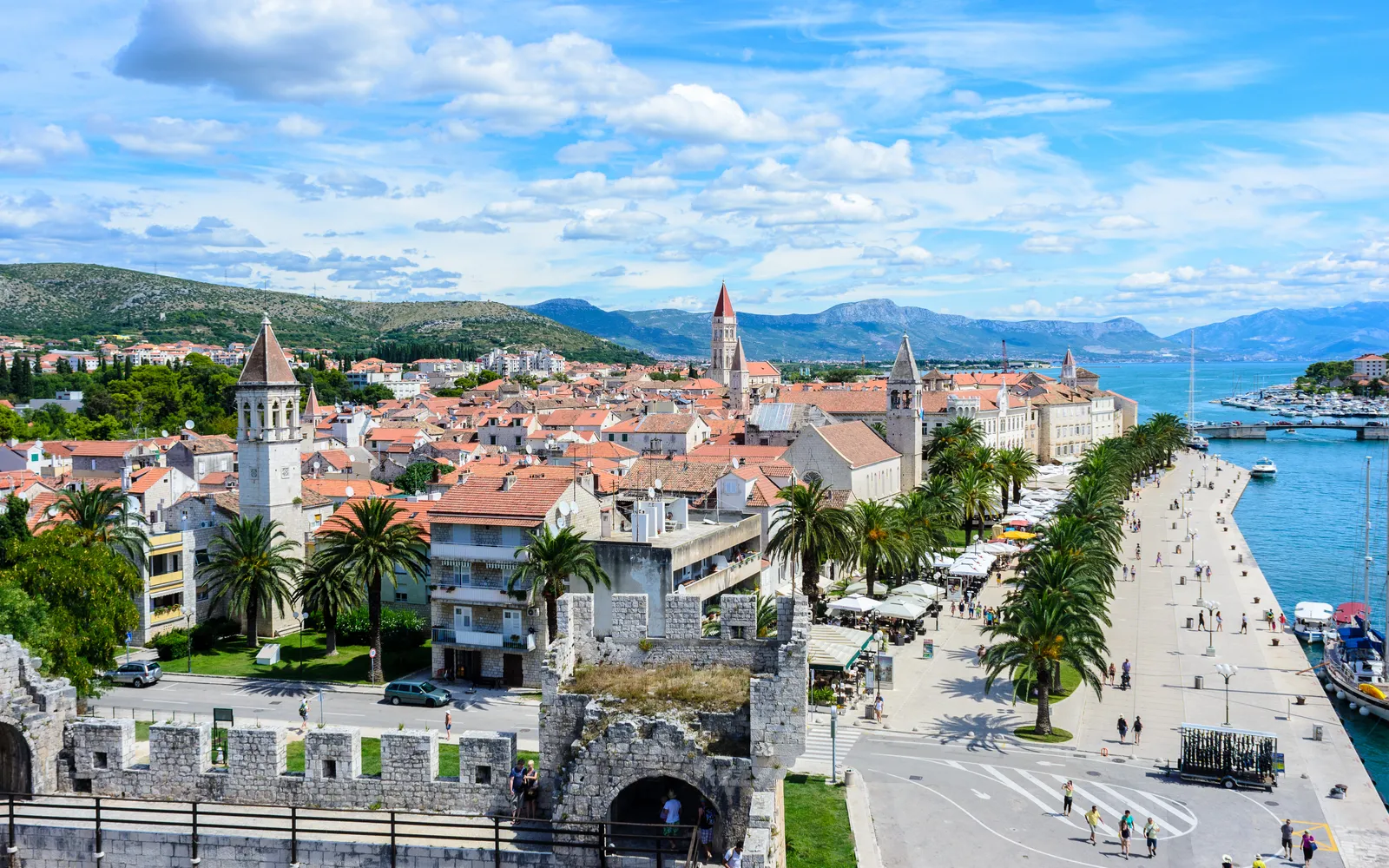
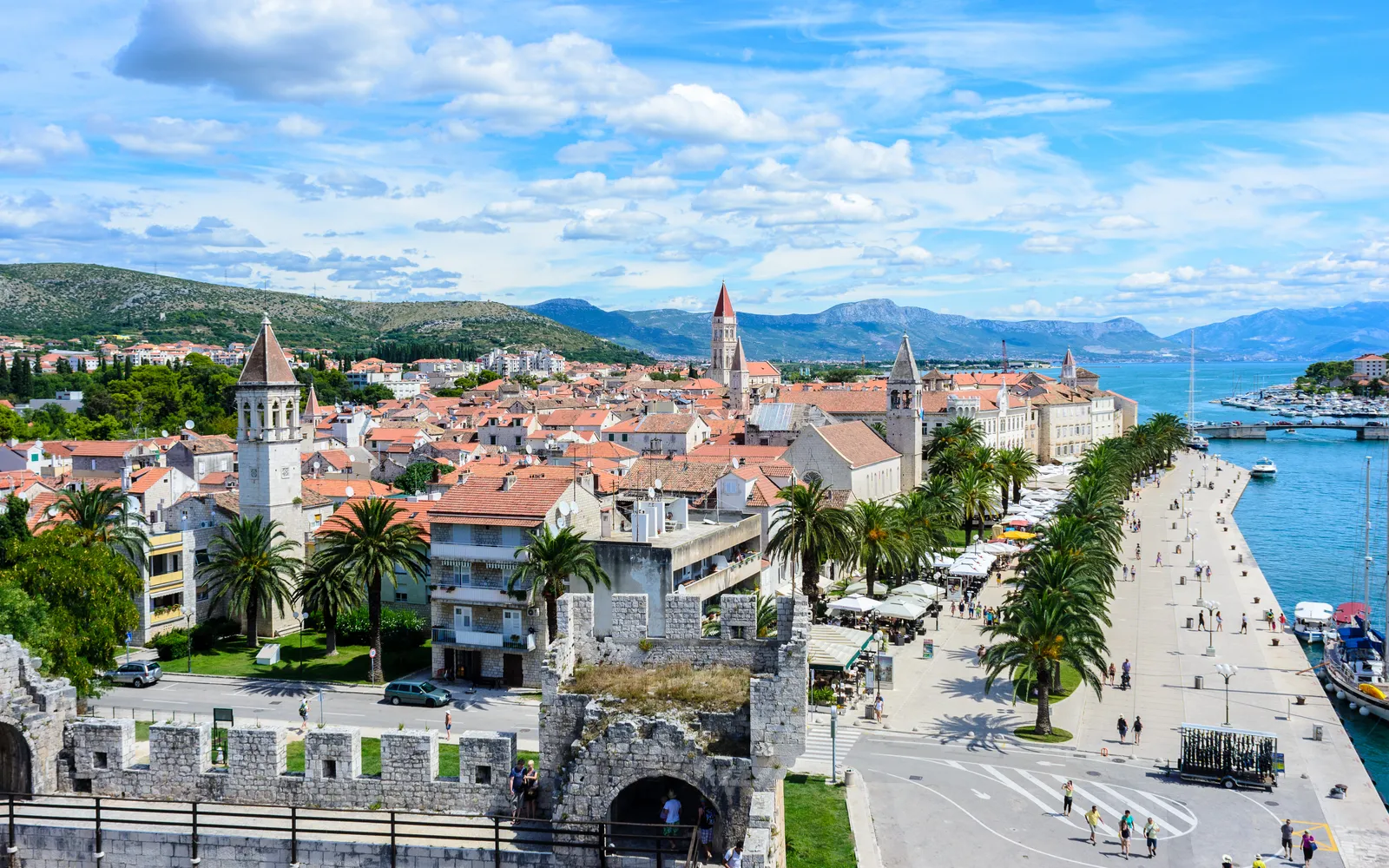
Dalmatian food isn't flashy — it's deeply honest about its ingredients. Fish and seafood from the Adriatic are cooked with olive oil, garlic, and rosemary that grows wild on nearby islands. The peka technique — slow-cooking under a heavy iron bell covered with hot embers — is ancient know-how still very much alive in every local kitchen. The flavours are simple but deep and memorable. Trogir is a small town, but several of its waterfront restaurants cook at a genuinely impressive level.
 #1
#1 Peka
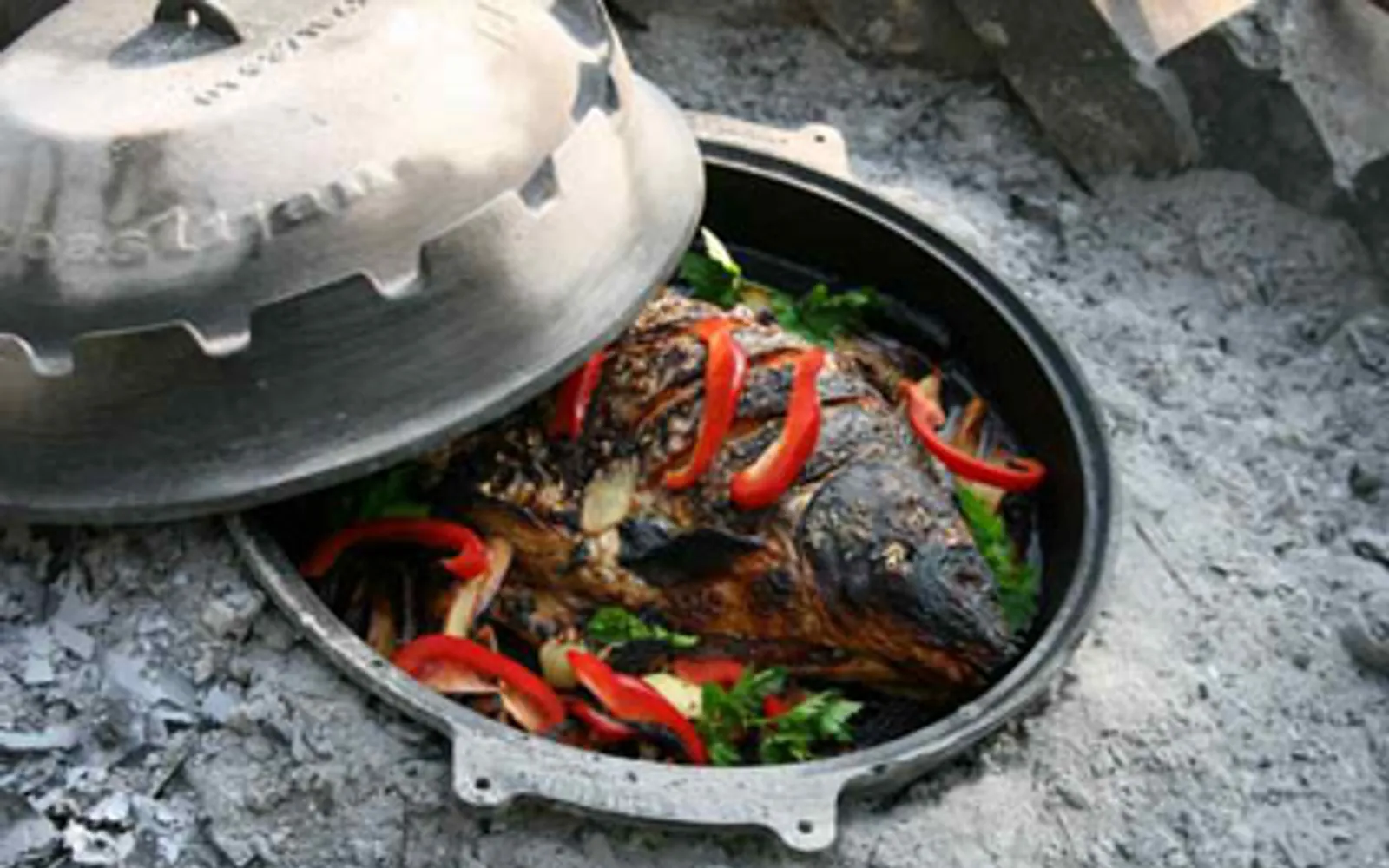
The defining Dalmatian cooking method — and an exercise in patience. Lamb, chicken, or octopus is placed in a clay or cast-iron pot with vegetables and olive oil, sealed under a heavy domed iron lid, then buried under hot embers for 2 to 3 hours. The result is meat that falls apart and a concentrated sauce built from fat and vegetable juices that never escape the pot. This is a dish you must order at least 24 hours ahead, and once you eat it you'll understand immediately why Dalmatians take such pride in it.
- Order at least 24 hours in advance — tell the restaurant when you book. Most will not make peka for walk-ins.
- Octopus peka is rarer than meat peka but equally good. Ask whether they offer it before deciding.
- Eat it with plain house bread and a chilled white wine. Nothing more is needed.
 #2
#2 Black Risotto
One of the standout dishes of the Dalmatian coast. The rice is cooked with fresh squid ink — which gives it its deep black colour and an intense oceanic umami — along with garlic, onion, white wine, and fish stock. Large, tender squid pieces sit on top. The flavour is richer and more complex than it looks. Many visitors who hesitate at the inky appearance end up saying it was the best thing they ate on the entire Dalmatian trip.
- The squid ink will temporarily stain your lips and teeth black — completely normal in any restaurant, don't worry about it.
- Order it with a chilled Dalmatian white wine such as Posip or Grk to cut through the richness.
- Riva-side restaurants tend to charge more. Step into the side streets and look for where locals eat — the price difference is noticeable.
 #3
#3 Pasticada
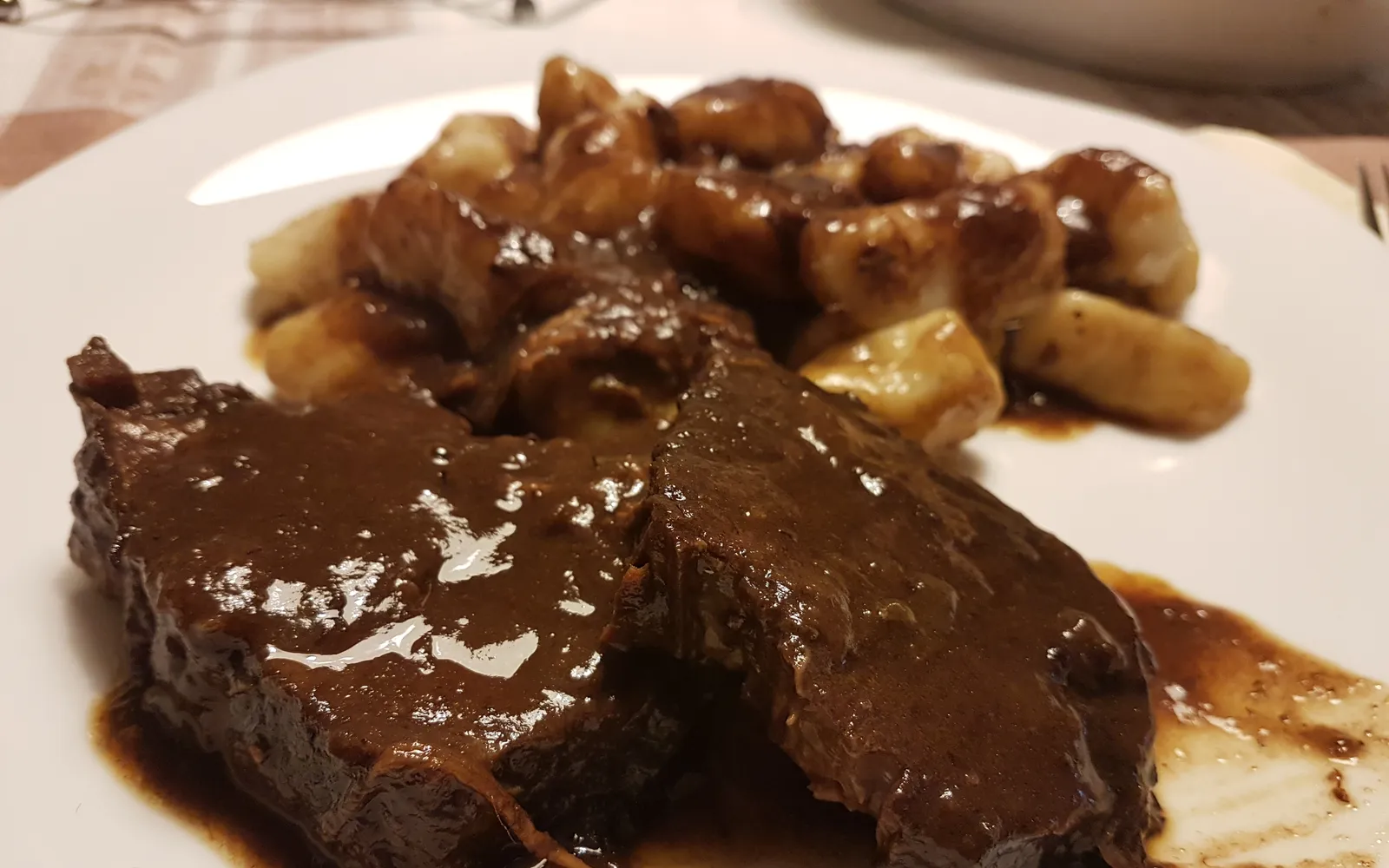
The centrepiece of Dalmatian festive cooking, appearing at celebrations and special occasions for centuries. Beef is marinated overnight in red wine and vinegar, then slow-braised for hours with dried figs, plums, cloves, and spices. The resulting sauce is thick, glossy, and carries a sweet-sour richness. It comes with homemade gnocchi that soaks up every drop. Good restaurants will take pride in a family recipe passed down through generations — and you can taste the difference.
- Seek out a konoba (a traditional home-style tavern) rather than a tourist-facing restaurant — that's where you'll find pasticada made from scratch, not from a jar.
- Homemade gnocchi pairs far better than standard pasta. Ask the restaurant if they make their own.
- It costs a little more than the seafood dishes, but the time and care involved make it worth it.
 #4
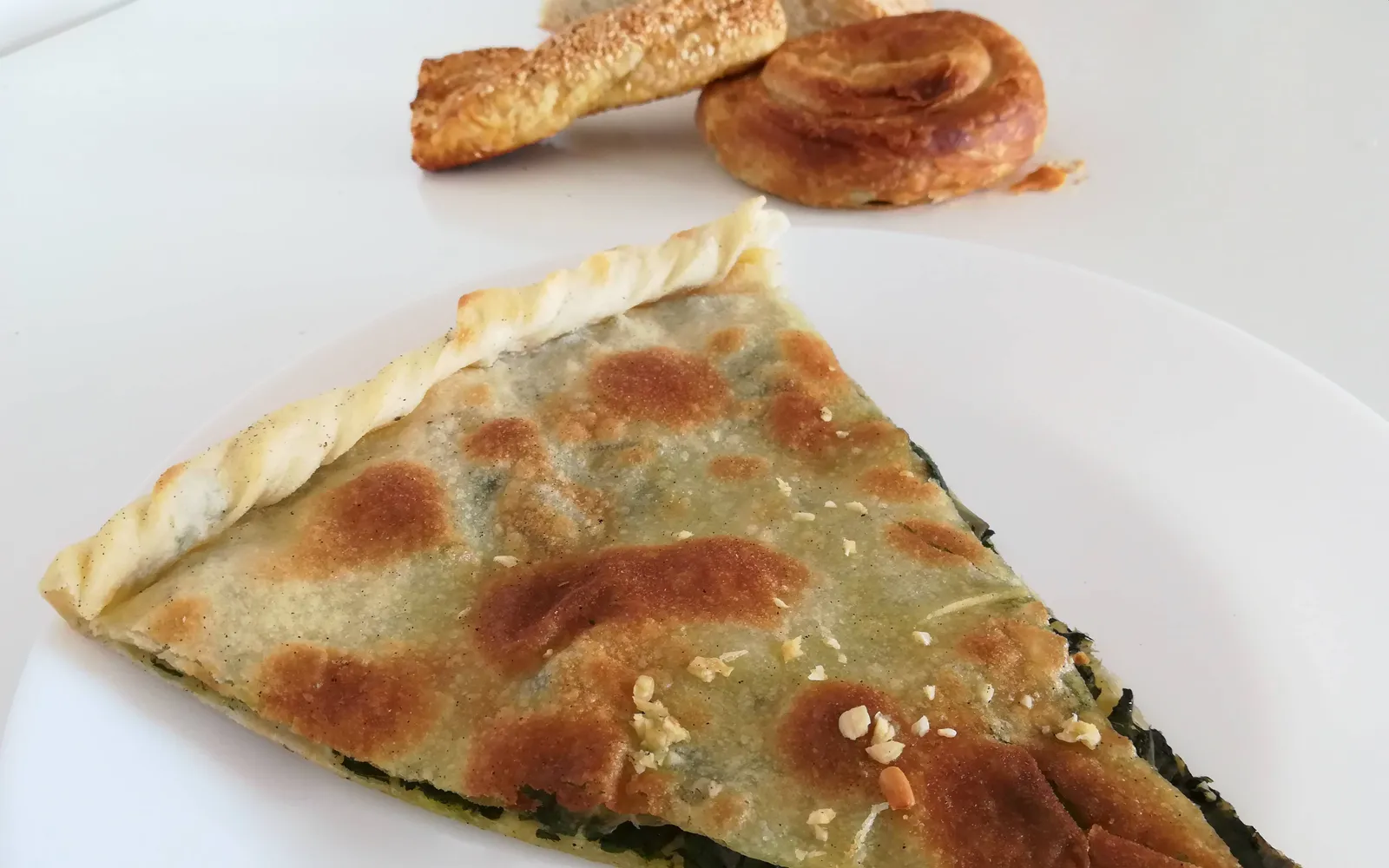
#4 Soparnik
A UNESCO-listed piece of intangible cultural heritage. Soparnik is a thin pastry filled with Swiss chard, garlic, and olive oil, baked directly on embers until the dough blisters and chars in all the right places. It's finished with fresh olive oil and chopped garlic just before serving. The flavour is clean and unfussy — and quietly impressive. It originates in the Poljica region but turns up at markets and food festivals across the coast.
- If you can't find it in Trogir, look for it at markets or shops in Split, or ask a restaurant whether they have it.
- It's good hot or at room temperature. Hot off the embers, the pastry is crispier; once cooled it softens.
- Very affordable — this is everyday food, not a restaurant dish. Perfect as a snack while walking around.
 #5
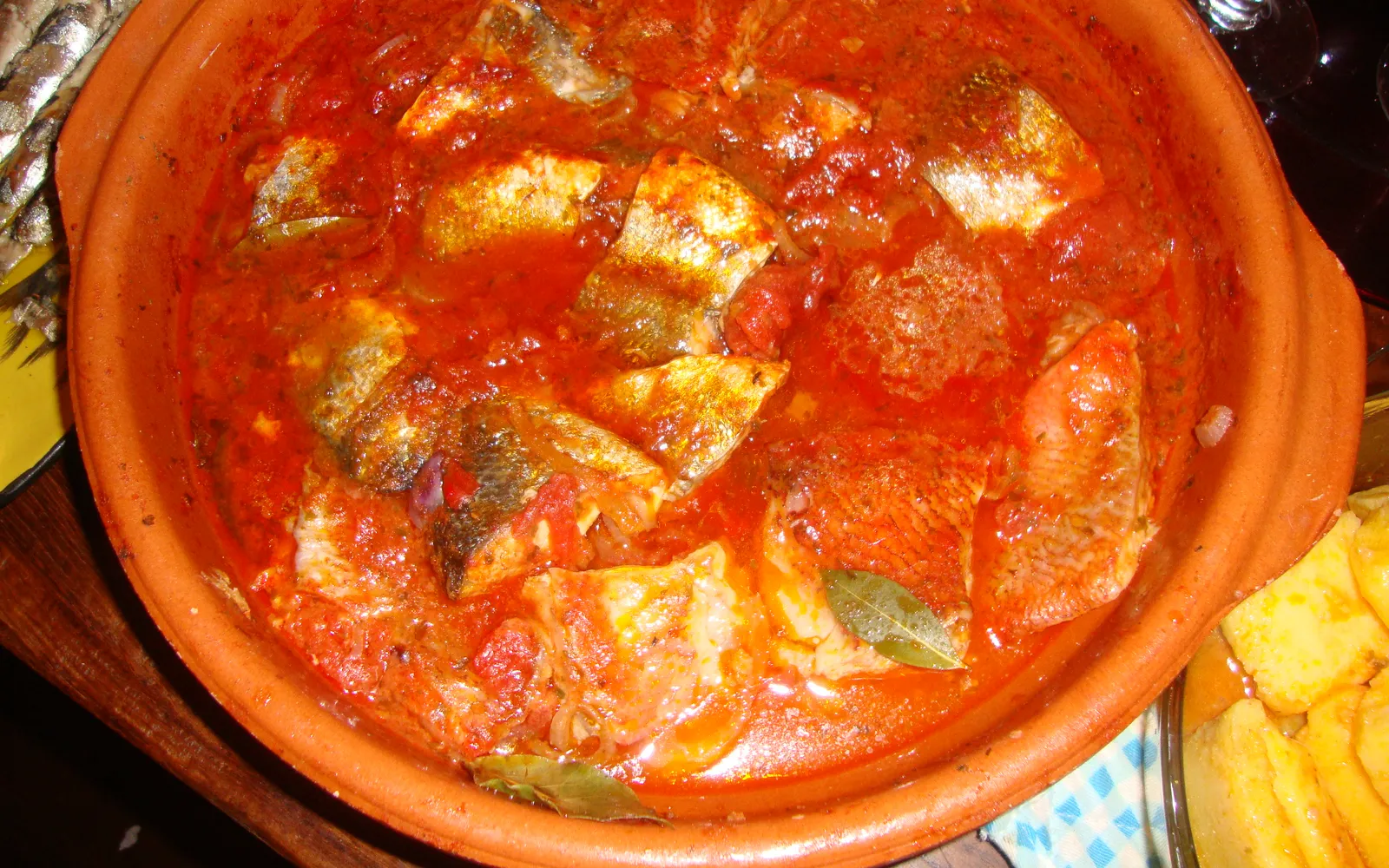
#5 Brudet
A traditional fish stew that Dalmatian fishermen have been making for over a thousand years. Whatever fish was caught that day goes into the clay pot with olive oil, garlic, tomatoes, white wine, and herbs. The key rule: you never stir brudet while it cooks — that keeps the fish intact and lets the flavours meld slowly. It comes with polenta or bread. The orange broth is arguably the best part — do not leave it behind.
- Ask what fish they're using today. A good restaurant changes the fish daily based on what's fresh off the boat, not what's been frozen.
- Go for polenta alongside if the restaurant offers it — it's the traditional pairing.
- Good brudet needs at least 30 to 40 minutes to cook. If your order arrives suspiciously fast, that's worth noting.
 #6
#6 Posip and Prosek
The Dalmatian coast has been growing grapes and making wine for over 2,500 years. Posip is a native white grape from the island of Korcula — crisp, mineral-edged, and ideal with fresh seafood on a warm afternoon. Prosek is a sweet wine made from sun-dried grapes, drunk as a dessert wine or sipped slowly in the early evening. Trogir itself doesn't produce wine, but restaurants and bars in town carry a good range of Dalmatian labels.
- Order a glass before committing to a bottle — it's worth sampling a few producers.
- Prosek should be served lightly chilled, not ice-cold. Pair it with local cheese or cured Dalmatian meats as an aperitivo.
- A specialist wine shop in the old town is typically cheaper than a restaurant and the owners usually know their stock well.
Where to stay in Trogir for this trip
A well-located hotel means less commuting and more sightseeing. Here are real, top-rated stays in Trogir — compare Agoda · Booking · Trip.com in one click.
Brown Beach House & Spa
Affiliate links — we may earn a commission at no extra cost to you. Details
Hotel Pasike
Affiliate links — we may earn a commission at no extra cost to you. Details
Old Town Trogir Apartments
Affiliate links — we may earn a commission at no extra cost to you. Details
Hotel Villa Sikaa
Affiliate links — we may earn a commission at no extra cost to you. Details
Tours, tickets & activities in Trogir
Day tours, attraction tickets and travel essentials for Trogir — book ahead on Klook with mobile e-tickets.
Affiliate links — we may earn a commission at no extra cost to you.
Before You Pack
The best food in Trogir is in the side streets, not along the Riva where prices are higher. Ask your accommodation host where local people actually eat — that answer tends to lead to the most worthwhile meals. Fresh fish and seasonal seafood are Trogir's strength; for peka and other slow-cooked meat dishes, always order at least 24 hours in advance.