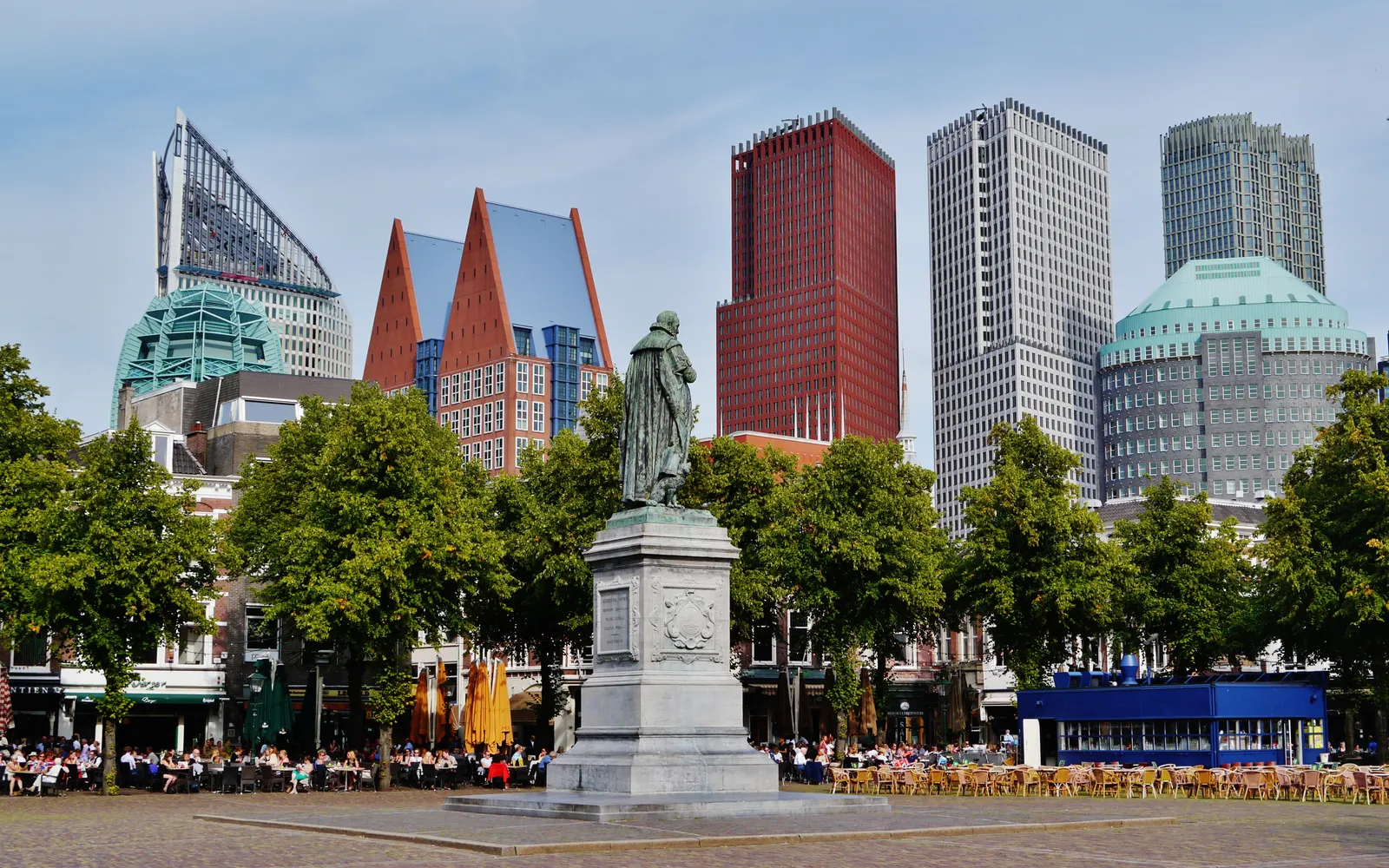
Dutch food doesn't have a glamorous reputation — but give it a real chance and you'll find it's honest, unfussy, and genuinely good. Raw herring sold from street carts is a Dutch institution that has been running for several hundred years. Resting a stroopwafel on the rim of a hot coffee cup until the syrup softens is something every Dutch person just knows to do. And bitterballen — deep-fried ragout balls eaten with beer in a pub — are a ritual that spans every age group.
 #1
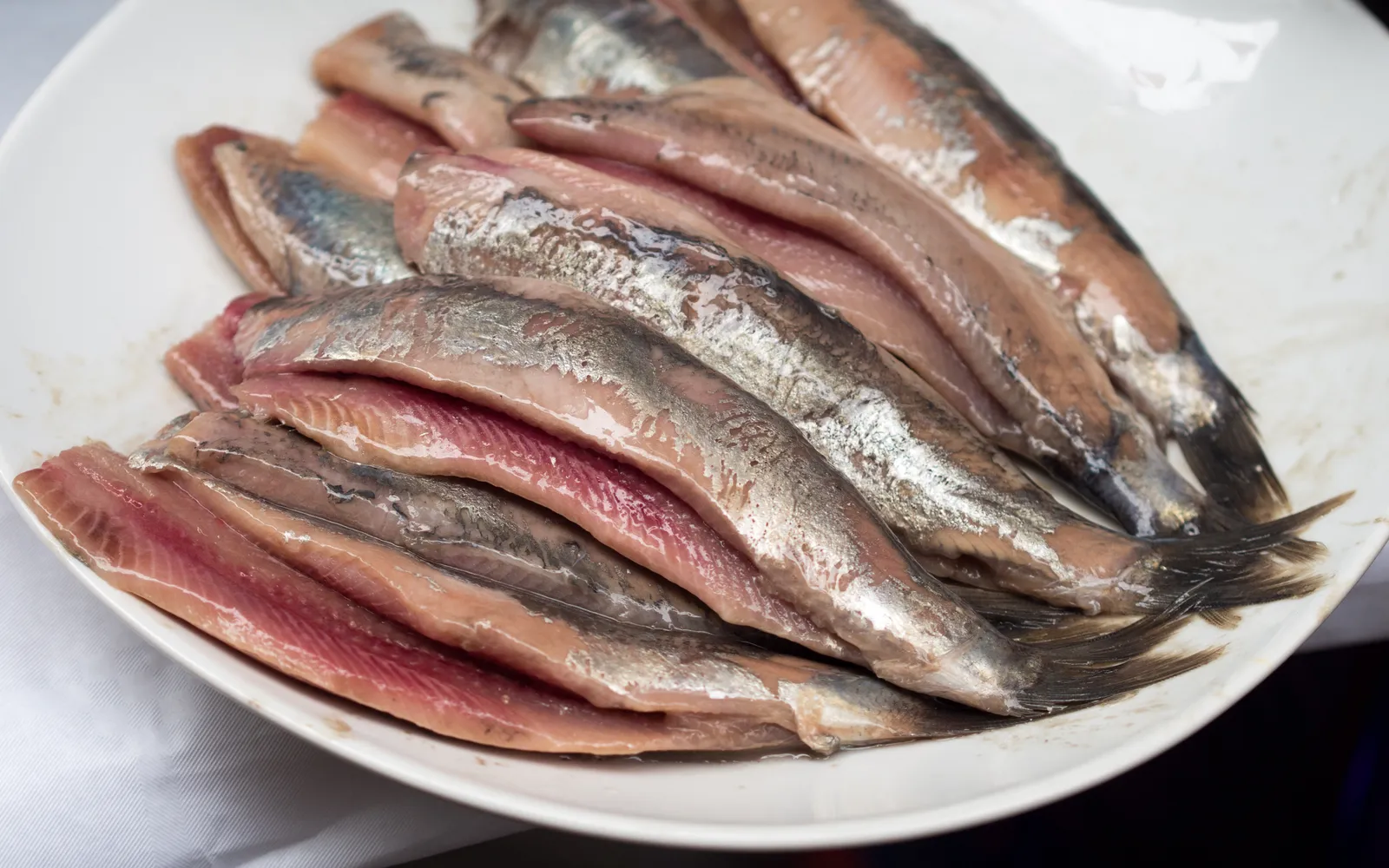
#1 Soused Herring
A Dutch food tradition over 600 years old. North Sea herring is lightly brined in cold salt water and served raw on a paper tray with chopped onion and pickled gherkin. The classic Dutch way to eat it: hold the fish by the tail, tip your head back, and bite straight down. The flavour is gently salty and the texture smooth — far less fishy than you might expect, because the fish is brined at carefully controlled low temperatures. The new-herring season (Hollandse Nieuwe) runs May through June and is treated as an annual celebration.
- Order a broodje haring — the herring in a soft bread roll — if you're not quite ready for plain raw fish. The flavour is milder and the whole thing is easier to manage.
- A cart displaying the Hollandse Nieuwe sign in May and June means seasonal fish at its freshest and best all year.
- One fish costs around €3–4. Fresh, cheap, and sourced that morning — no need to pay more at an indoor market stall.
 #2
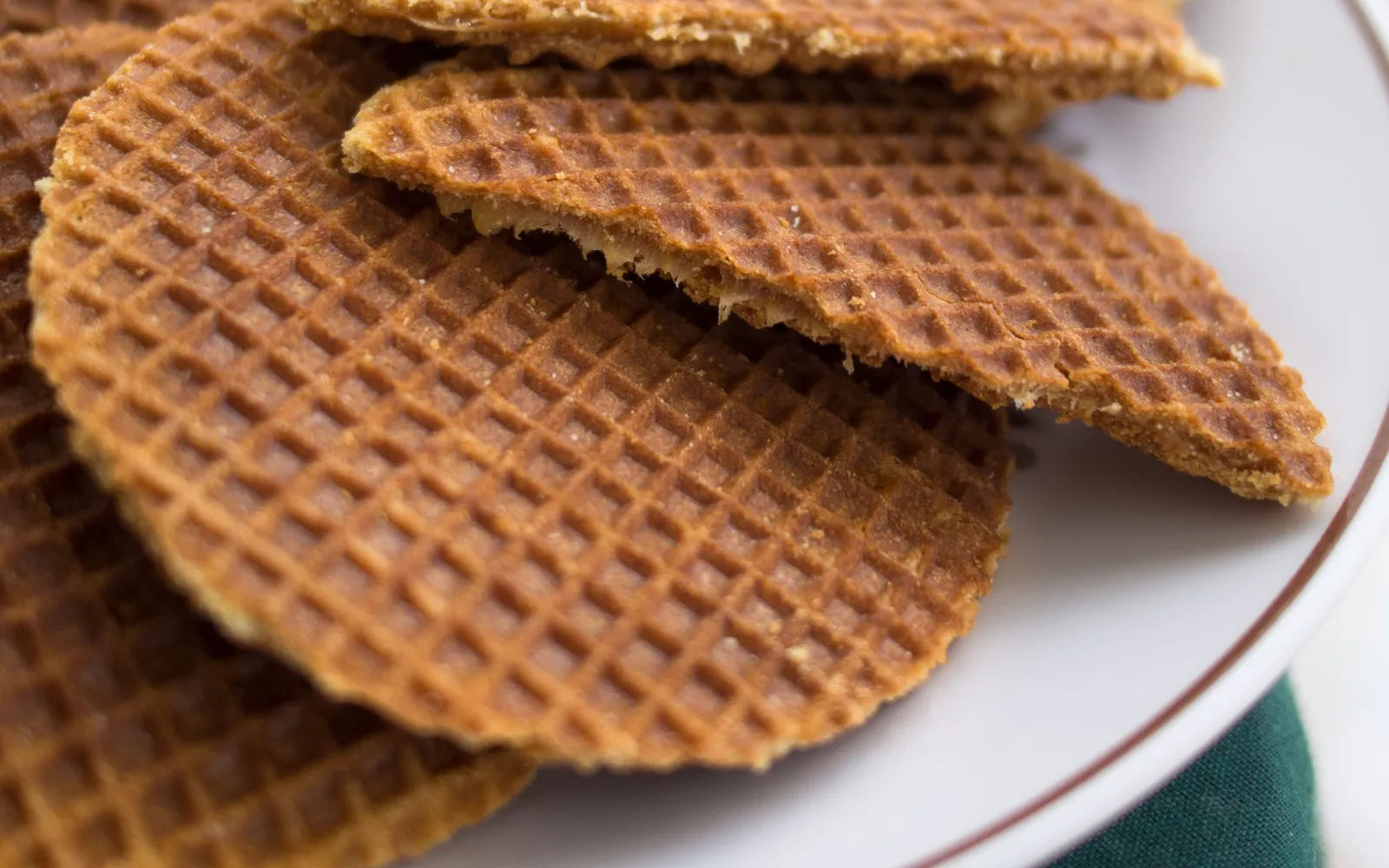
#2 Stroopwafel
Two thin, crisp wafer layers sandwiching a chewy caramel syrup — invented in the city of Gouda around 1810 from leftover bread crumbs after baking. The correct Dutch method: rest the stroopwafel on the rim of a hot coffee or tea cup, wait 1–2 minutes for the steam to soften the syrup inside, then eat. The stroopwafel is now exported worldwide and is the official in-flight snack of KLM, but a fresh one from a market stall beats anything in a foil packet.
- Buy from a fresh market stall or local bakery — made-today stroopwafels are crispier and more fragrant than the packaged supermarket version.
- For gifts, a gift box with multiple flavours (vanilla, caramel, chocolate) runs €5–8.
- Skip the airport — airport stroopwafels are more expensive and much less fresh than what you'll find at the market.
 #3
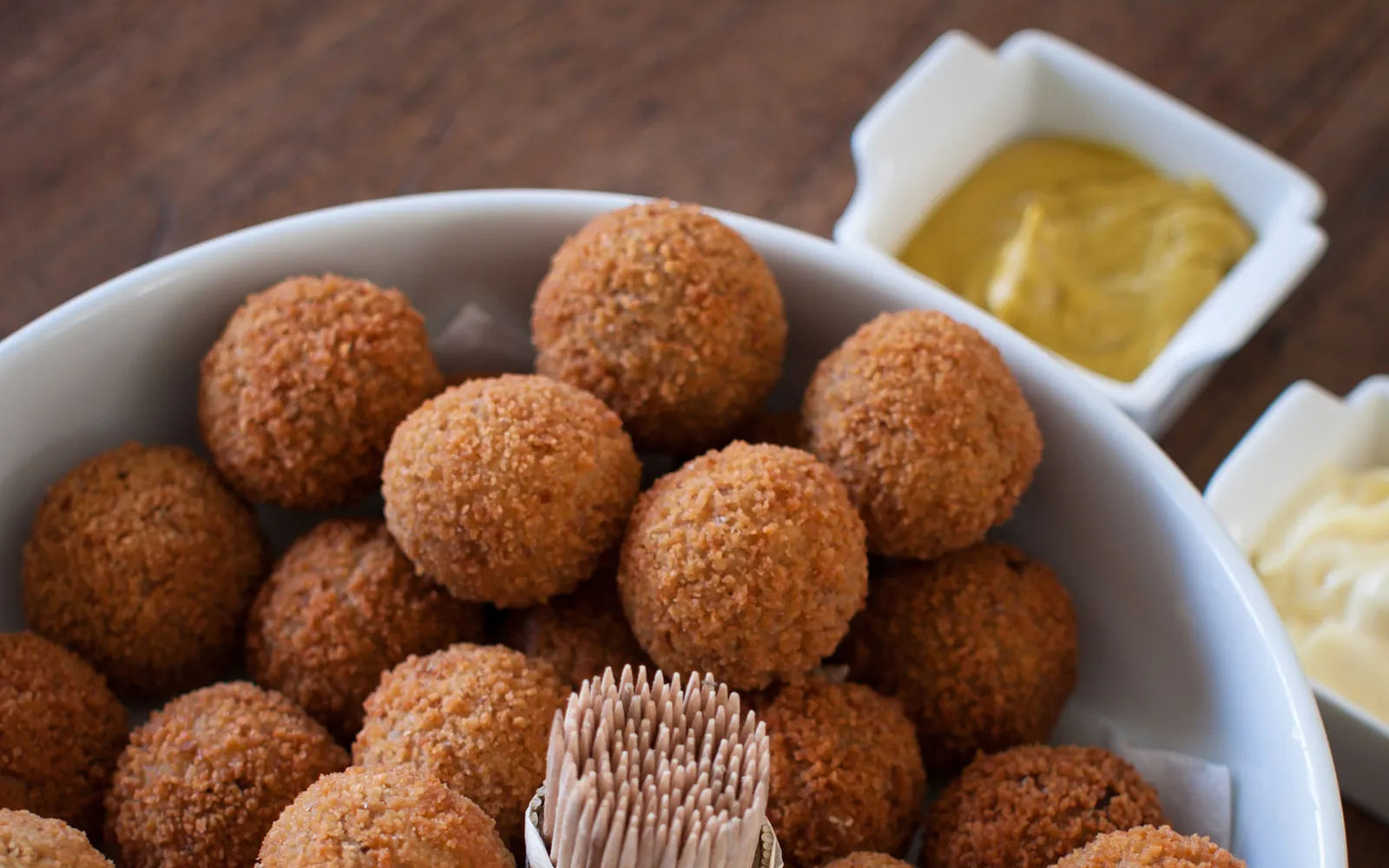
#3 Bitterballen
The definitive Dutch pub snack — crisp outside, molten inside, eaten with beer at any hour. The filling is a slow-cooked beef or chicken ragout reduced to a thick, deeply savoury roux, rolled into balls, coated in breadcrumbs, and deep-fried until golden all over. They come out very hot alongside Dutch mustard. The inside stays scorching for a while, so bite carefully. Rich, warming, and the kind of thing Dutch people eat from childhood through old age at every possible occasion.
- The inside is extremely hot right out of the fryer — bite in slowly or split one open first to let the heat escape.
- Vegetarian bitterballen (met paddenstoel, mushroom, or kaas, cheese) are available at many pubs and hold up well against the meat version.
- A plate of 5–6 runs €6–9 — a light dinner with an Amstel or Heineken.
 #4
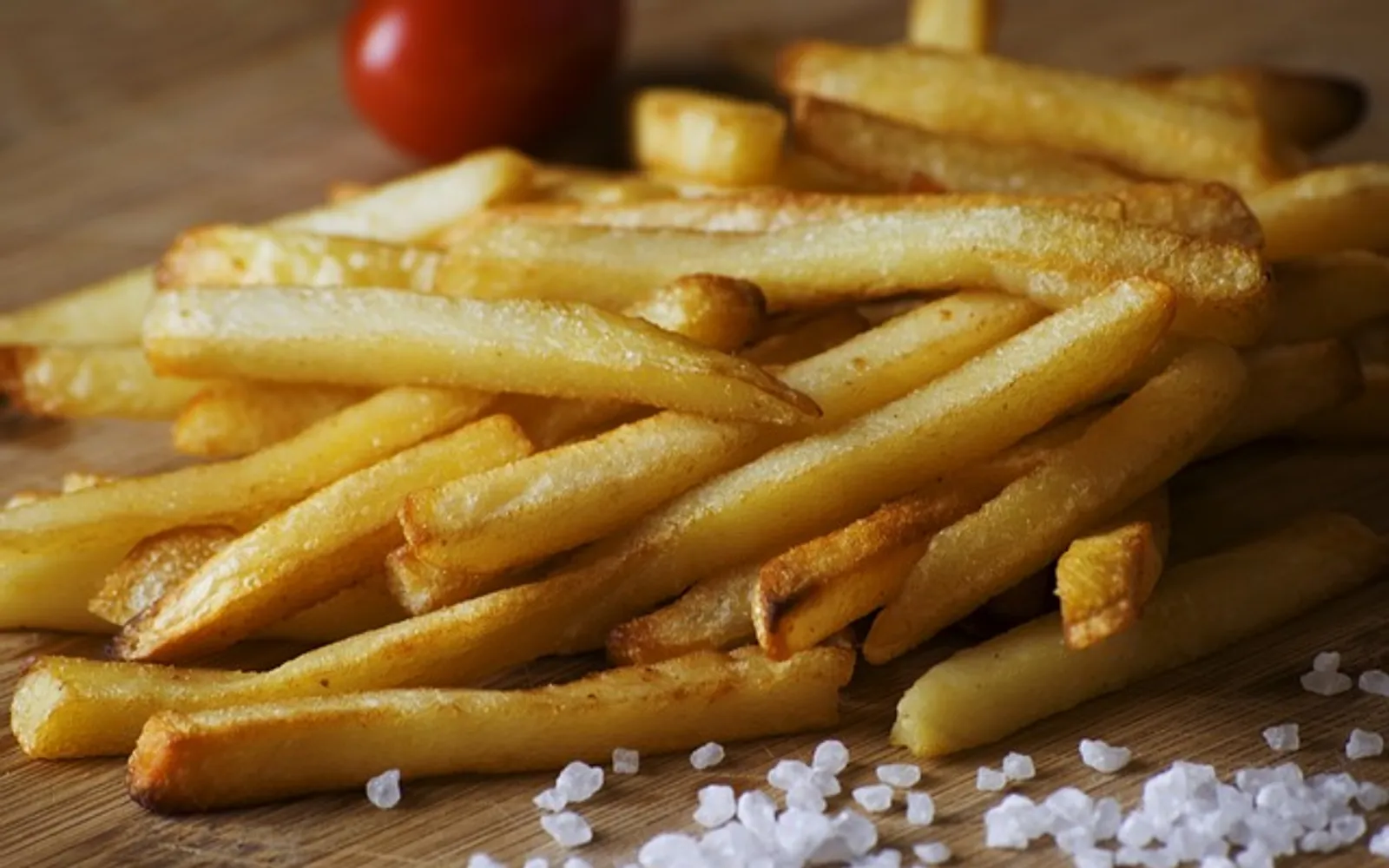
#4 Patat
Dutch fries that make a credible claim to predating Belgian frites. They're cut thicker, double-fried for a crisp exterior and fluffy centre, and served in a paper cone with a range of toppings. The most popular order is patat oorlog ('war fries') — a combination of mayonnaise, peanut sauce, and raw onion all at once. It sounds unlikely; the flavour is better than expected. Cheap, filling, and everywhere — the right fuel for a day on your feet.
- Order patat oorlog for the full Dutch experience. Ask for sambal on the side if you want some heat.
- FEBO vending machines on the main shopping streets sell patat and kroket around the clock — useful for a late-night meal.
- A small cone costs €3–4, large €5–6. Most shops don't charge extra for sauce.
 #5
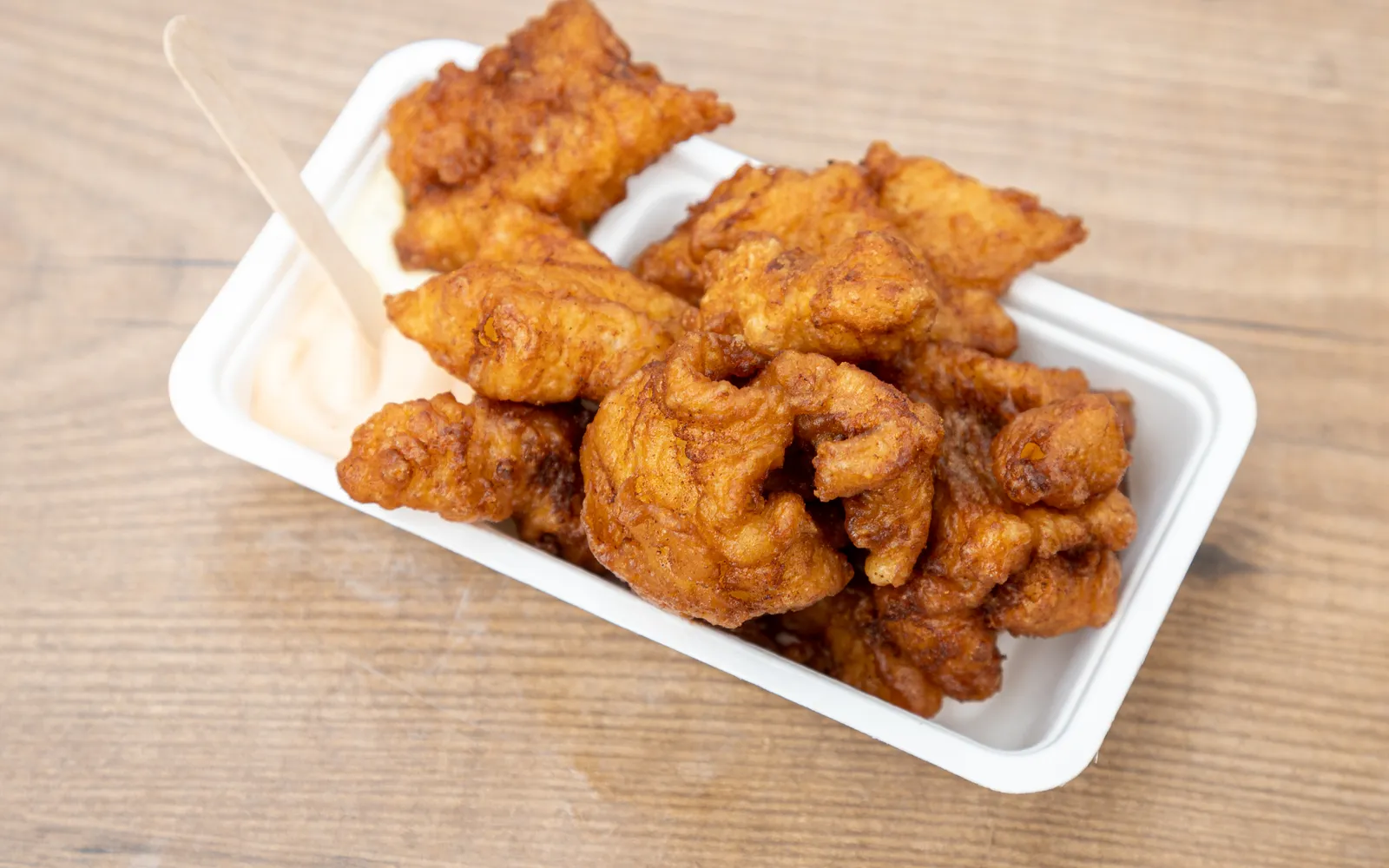
#5 Kibbeling
Battered fried fish eaten on the seafront — one of those combinations that simply works. Bite-sized pieces of cod or another firm white fish are coated in a thin beer batter and fried to a golden, lightly crisp finish, then served in a paper cup with remoulade or a herb cream sauce or a squeeze of lemon. Clean-tasting, crisp outside, soft inside, not greasy. Dutch people of every age have been buying these while walking along the harbour and beach for well over a century.
- The best stalls are near the fishing harbour — they take in fresh fish every morning. The difference versus day-old fish is noticeable.
- Uitje sauce (onion sauce) is the traditional pairing Dutch locals recommend — a mild tanginess that cuts through the batter.
- A small cup runs €4–6. Buy one and eat it on a bench looking out to sea.
 #6
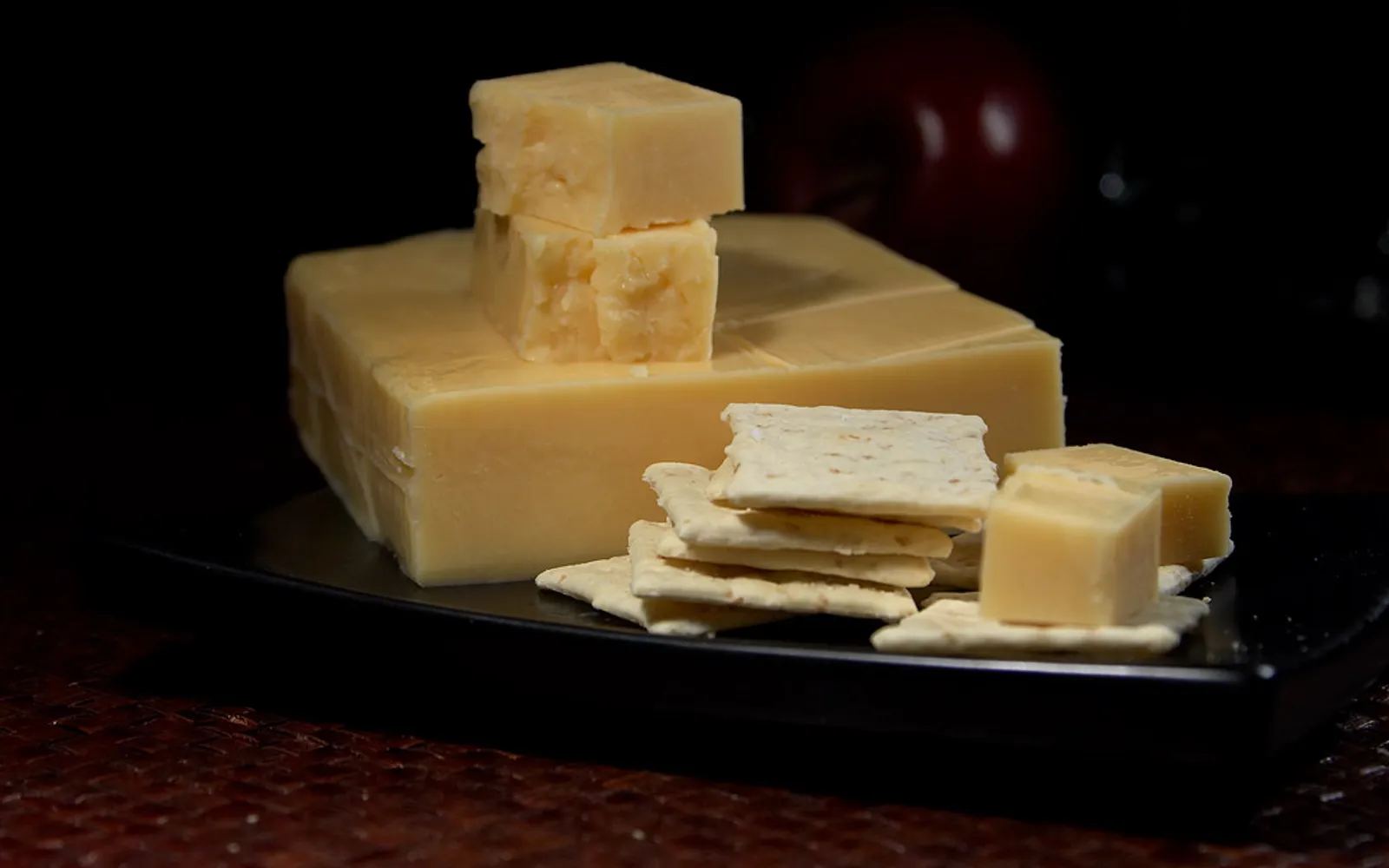
#6 Dutch Cheese
The Netherlands produces more than 650,000 tonnes of cheese a year and exports over half of it. The names most people know are Gouda and Edam, but at a Dutch market there's a much wider range: young cheese (jong) that's mild and buttery; medium-aged (belegen) with a firmer texture and sharper flavour; and old cheese (oud) that's salty and intense, closer in character to a Parmesan. Most market cheese stalls offer free tasting before you buy — which makes the whole thing both informative and very filling.
- Ask to taste a jong (young) and an oud (aged) side by side before deciding what to buy — the difference is significant.
- Belegen (medium-aged) travels well as a gift: it holds for 2–3 days unrefrigerated and markets will vacuum-seal it on the spot.
- Try ontbijtkoek (Dutch spiced cake) alongside a young cheese and butter — a classic Dutch breakfast combination available at hotels and morning cafés.
Where to stay in The Hague for this trip
A well-located hotel means less commuting and more sightseeing. Here are real, top-rated stays in The Hague — compare Agoda · Booking · Trip.com in one click.
Hotel Des Indes The Hague
Affiliate links — we may earn a commission at no extra cost to you. Details
Staybridge Suites The Hague – Parliament
Affiliate links — we may earn a commission at no extra cost to you. Details
The Collector Hotel
Affiliate links — we may earn a commission at no extra cost to you. Details
Marriott Hotel The Hague
Affiliate links — we may earn a commission at no extra cost to you. Details
Tours, tickets & activities in The Hague
Day tours, attraction tickets and travel essentials for The Hague — book ahead on Klook with mobile e-tickets.
Affiliate links — we may earn a commission at no extra cost to you.
Before You Pack
The best Dutch food is usually in the fresh markets and street stalls, not the upscale restaurants. Markt market near the Binnenhof opens every Wednesday and Saturday, packed with cheese, fish, and local produce at prices locals actually pay. Try the raw herring at least once — and once you do, you'll understand why the Dutch have been eating it their entire lives.