
Eating in Suzdal is a door into old Russia — not fine dining, but warm, honest Russian peasant food. Hot soup after a walk through the snow, fat steamed meat dumplings, and honey mead that Suzdal produces better than almost anywhere else in Russia. Prices run far cheaper than Moscow, and the quality doesn't drop a notch.
 #1
#1 Medovukha
Suzdal has been famous for medovukha — fermented honey mead — since the Middle Ages, and local producers still follow traditional recipes. Alcohol content runs low, around 5–16%, with a gentle sweetness and natural honey aroma. It works cold in summer and warm in winter. Several varieties are available: the classic, a berry version, and an herbal blend. A bottle makes one of the most distinctive souvenirs you can take home from the city.
- Try several varieties before buying — most shops offer free tastings. The 'dark honey' variety is richer and more aromatic.
- A glass costs 100–200 rubles; a large gift bottle runs 300–600 rubles.
- Warm medovukha in winter is an experience worth having on its own, especially after a walk through the snow.
 #2
#2 Borscht
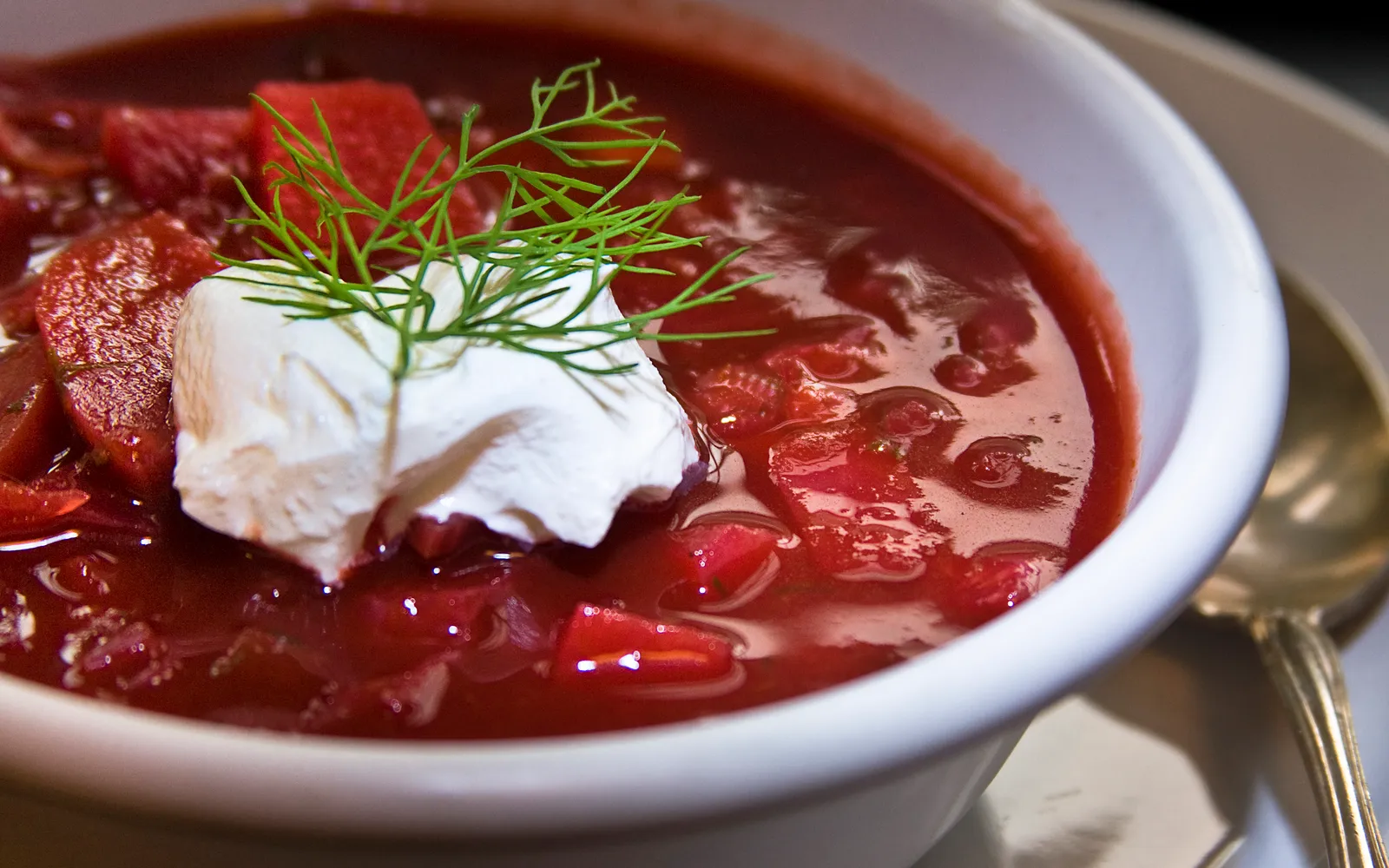
Borscht is the defining soup of Slavic cooking. In Suzdal it's made from fresh beetroot, cabbage, potato, carrot, and slow-simmered beef — the result is a sweet-sour depth from beetroot and tomato. Served hot with a spoonful of smetana (sour cream) on top and a thick slice of Russian dark bread, it's a profoundly warming meal, especially in cold weather. Good restaurants in Suzdal keep the pot going all day.
- Order borscht 's myasom' (with meat), not the vegetarian version — it's richer and far more filling.
- Ask for extra sour cream; Russians use considerably more than the kitchen sends out by default.
- Quality varies sharply between restaurants. The ones that make it fresh daily will have a brighter red color and a sweeter finish.
 #3
#3 Pelmeni
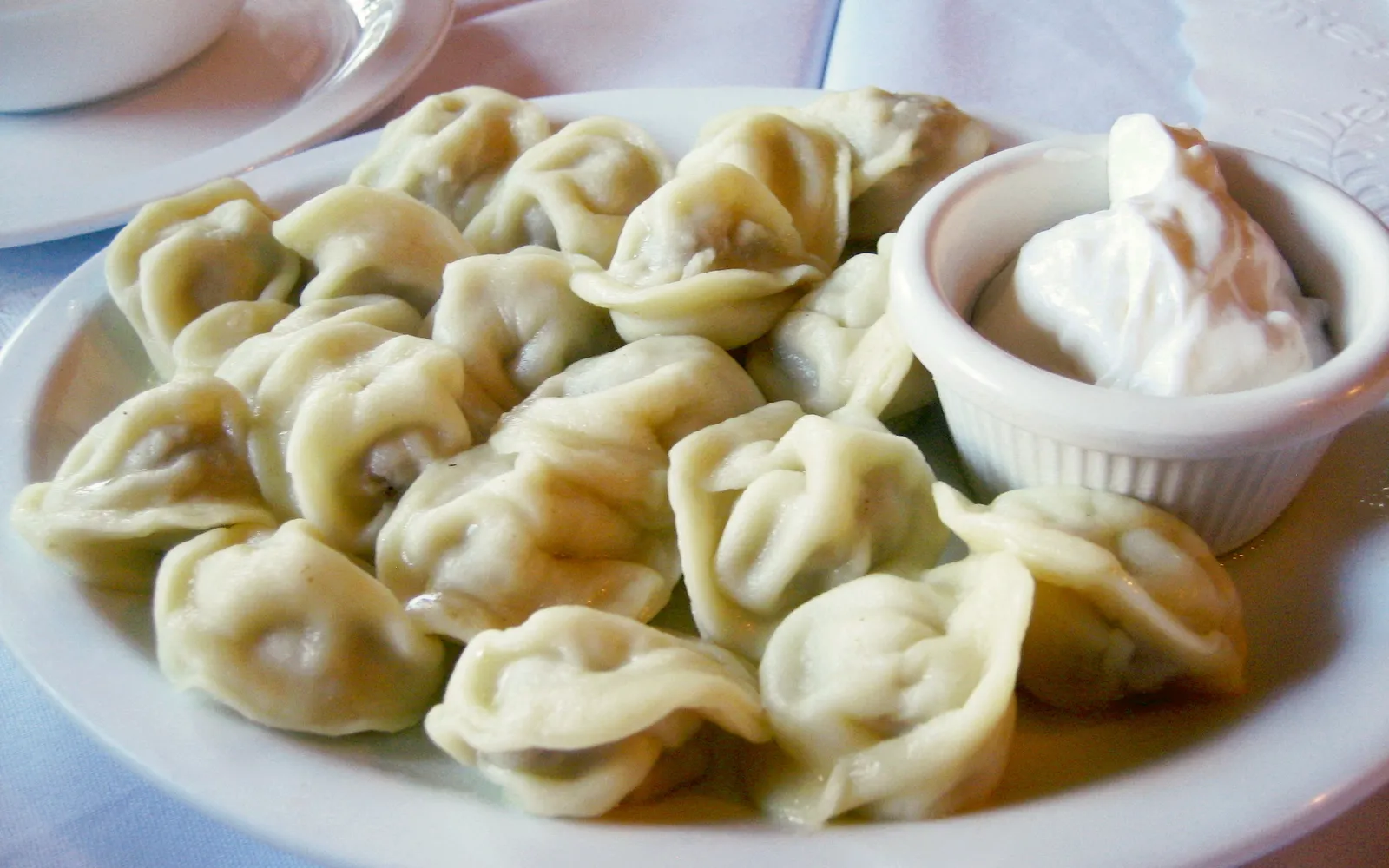
Pelmeni have been a Russian staple for hundreds of years — thin wheat dough folded around a filling of minced pork and beef mixed with onion and spices, then boiled or steamed and served hot with melted butter and sour cream. Some Suzdal restaurants make their pelmeni fresh every day; the difference from the frozen version sold in big-city shops is immediate — the filling is dense, the skin thin and tender, and one plate is never quite enough.
- Ask whether the restaurant makes them fresh or uses frozen. Places that make their own often advertise 'domashnie pelmeni' (house-made dumplings).
- A plate of 10–15 pieces costs 300–500 rubles — enough for a full meal.
- Try them in a clear bouillon broth instead of the dry version; it's the traditional Siberian way and genuinely delicious.
 #4
#4 Blini
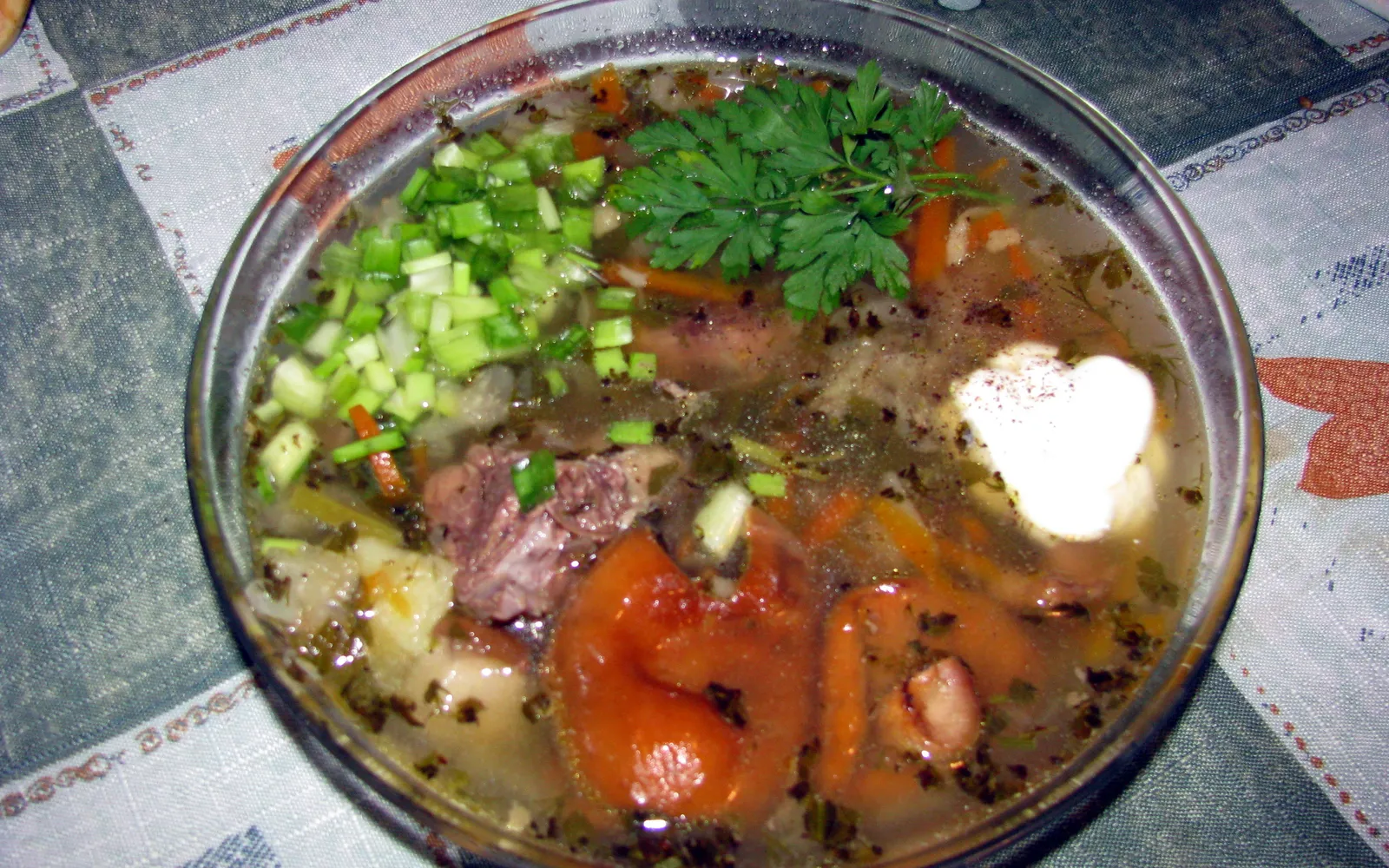
Blini are thin, soft Russian pancakes that work equally well as breakfast, a snack, or dessert. In Suzdal they typically come with local honey, sour cream, or tart fruit preserve; the savory versions come with smoked salmon, caviar, or sautéed mushrooms. The flavor is gentle and buttery. Small cafés in Suzdal bake them fresh every morning — you'll smell them before you see the sign.
- Blini with Suzdal honey and sour cream is the best starting combination before you experiment with other toppings.
- The savory mushroom-in-butter version (s gribami) is especially popular with locals in autumn.
- Prices are low — 150–300 rubles for a plate of 3–5 blini, making this an easy, relaxed breakfast.
 #5
#5 Shchi
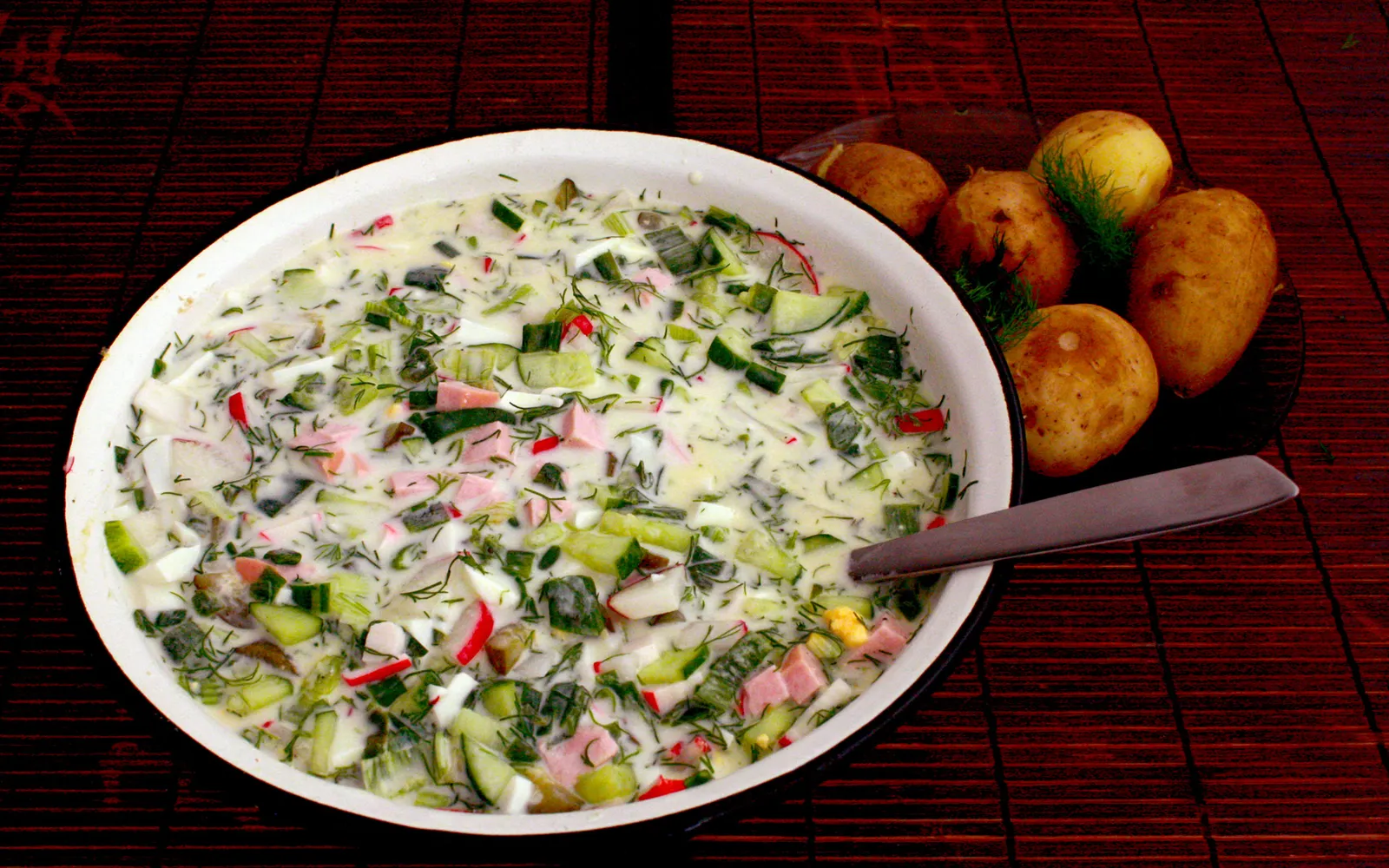
Shchi has been a Russian staple for a thousand years — cabbage soup made from either fresh cabbage or fermented sauerkraut, simmered with beef, onion, carrot, and potato into a gently sour, lightly salted broth that warms you from the inside. In Suzdal the soup often uses house-fermented sauerkraut, which gives a rounder, more developed flavor than the versions found in city restaurants. It's the indispensable winter soup of every Russian household.
- Order 'shchi iz kisloy kapusty' (from sauerkraut) — it's sharper and more complex than the fresh-cabbage version.
- Eat it with Russian Borodinsky dark bread — the combination is traditional for good reason.
- A bowl costs 200–350 rubles — cheap, filling, and exactly right after a morning of walking around churches in the cold.
 #6
#6 Selyodka and Russian Pickles
Russian pickled dishes (zakuski) are an inseparable part of eating in Suzdal: crunchy pickled cucumbers, sweet-sour pickled tomatoes, fermented cabbage, and selyodka — herring marinated with onion and cream. The sharp, salty, crunchy flavors cut right through the richness of meat dishes and heavy mains. Many Suzdal restaurants use house pickling recipes; the difference from factory-made pickles sold in cities is immediately obvious.
- Order a shared zakuski plate (mixed pickles) to start before the main course — it's a traditional Russian custom.
- Herring 'pod shuboy' (under a fur coat) — layered with mayonnaise, beetroot, and hard-boiled egg — looks alarming but tastes excellent.
- You can buy home-pickled jars at the central market; local grandmothers bring them out in summer and autumn.
Where to stay in Suzdal for this trip
A well-located hotel means less commuting and more sightseeing. Here are real, top-rated stays in Suzdal — compare Agoda · Booking · Trip.com in one click.
Surikov Guest House
Affiliate links — we may earn a commission at no extra cost to you. Details
Svetliy Terem Hotel
Affiliate links — we may earn a commission at no extra cost to you. Details
Art Hotel Nikolaevsky Posad
Affiliate links — we may earn a commission at no extra cost to you. Details
Pushkarskaya Sloboda Hotel Complex
Affiliate links — we may earn a commission at no extra cost to you. Details
Tours, tickets & activities in Suzdal
Day tours, attraction tickets and travel essentials for Suzdal — book ahead on Klook with mobile e-tickets.
Affiliate links — we may earn a commission at no extra cost to you.
Before You Pack
The best food in Suzdal comes from small owner-run places following a grandmother's recipe, usually tucked inside an old wooden house along a side street. If you see steam coming from a doorway and smell soup, push the door open — you're almost never disappointed.