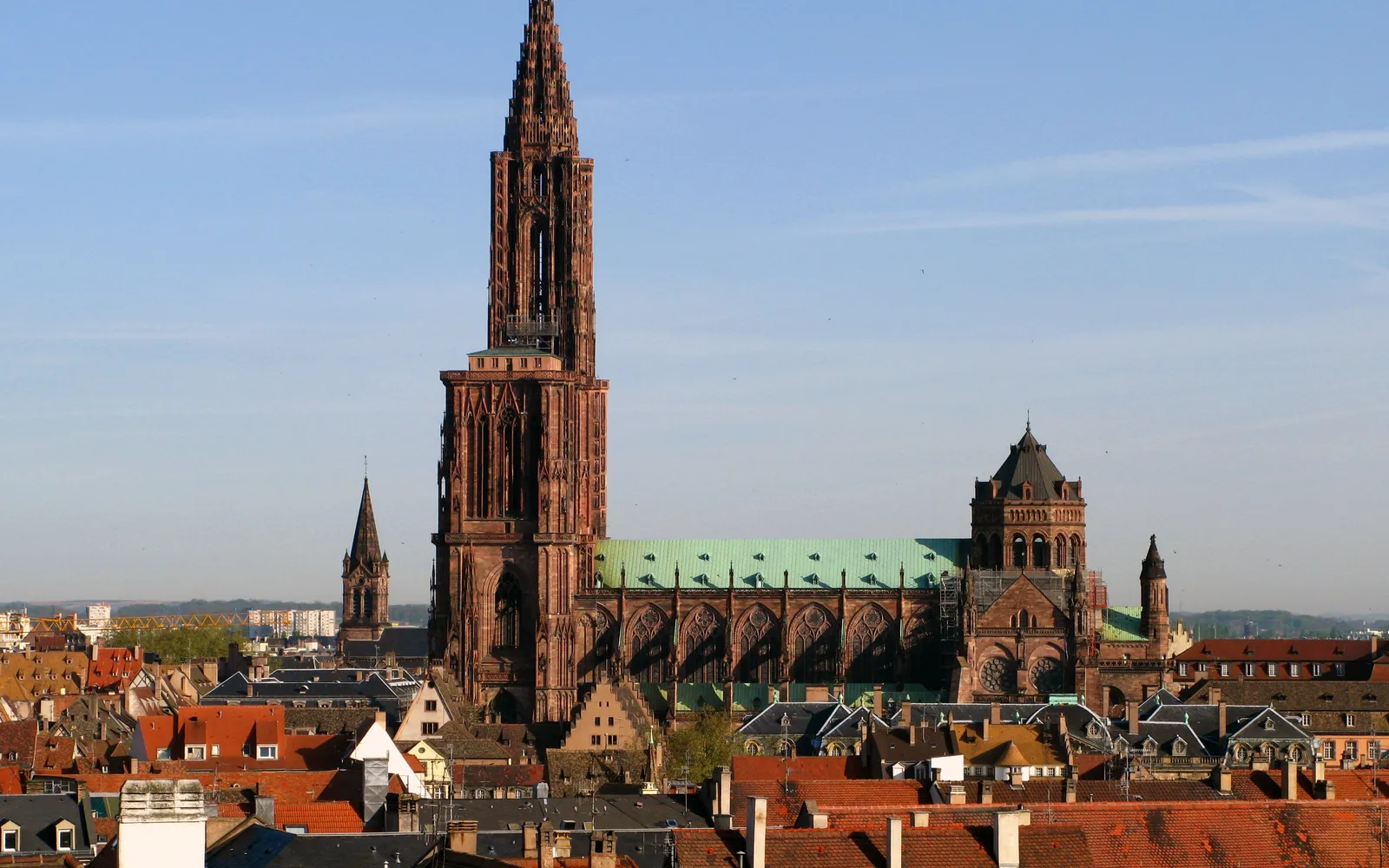
Strasbourg is a city many travelers stumble into without planning — and then struggle to leave. Vivid half-timbered houses line the canals, a Gothic cathedral took over 300 years to build, and the scent of kugelhopf (Alsatian butter cake) drifts from bakeries on every corner. Sitting right on the French-German border, this city has a character unlike anywhere else in Europe.
 #1
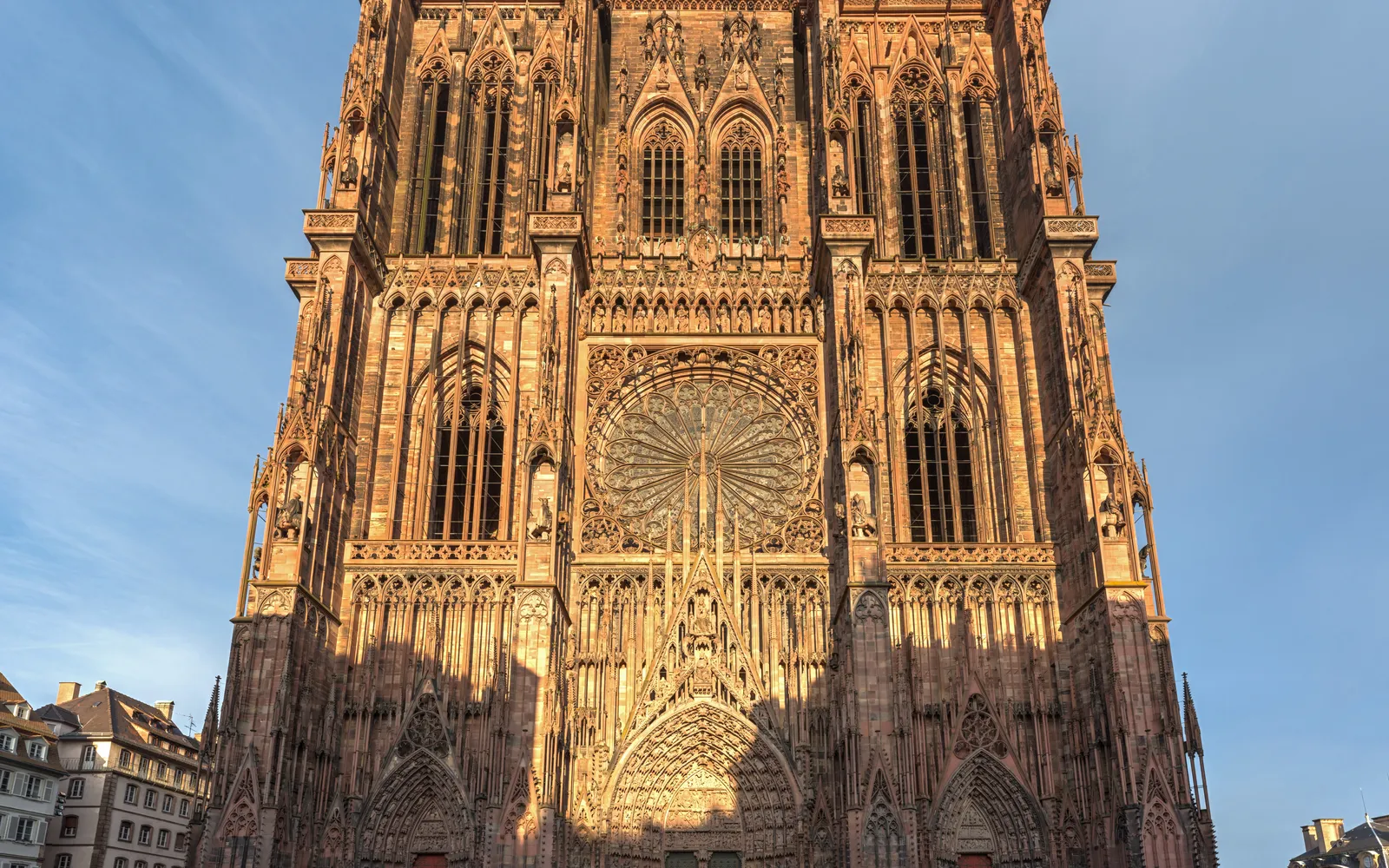
#1 Strasbourg Cathedral
One of the great Gothic cathedrals of Europe, built from distinctively pink-orange Vosges sandstone. Construction began in 1015 and took more than 300 years to complete. For 227 years it held the title of tallest building in the world. Inside, a working astronomical clock more than 500 years old ticks on alongside hundreds of stunning stained-glass windows. Climb the tower for a 360-degree view of Strasbourg and the Rhine.
- Entry to the cathedral is free; the tower costs around 7–8 euros. Buy tickets online in advance to skip the queue.
- The astronomical clock performs its full display every day at 12:30 — arrive at least 30 minutes early to get a good spot.
- The best angle for photographing the cathedral is from Place de la Cathédrale to the northwest in the morning light.
 #2
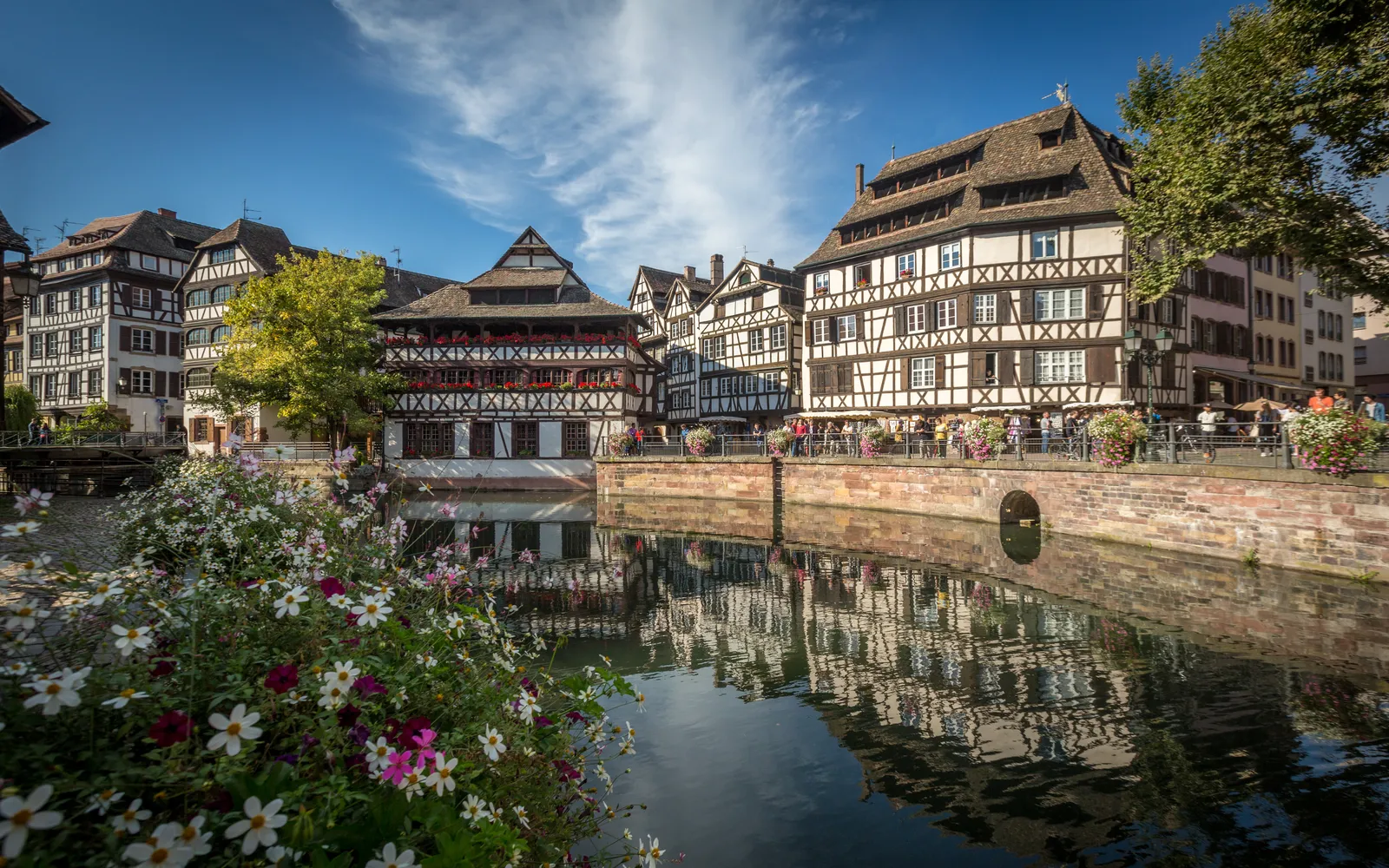
#2 Petite France
The most photogenic quarter in Strasbourg — and the image most travelers carry away with them. Centuries-old colombages (half-timbered houses) stand in rows along a network of canals, every window dressed in hanging flowers. The name Petite France sounds romantic, but it traces back to a medieval syphilis hospital. Today it is a lively neighborhood of restaurants, cafes, and gift shops you can wander all day.
- Arrive before 8:00 to photograph the canal-side houses without crowds — morning light here is at its softest.
- Rent a rowing boat or join a canal tour to see the houses from the water; expect to pay around 10–15 euros per person.
- Avoid the obvious tourist-trap restaurants on the water's edge. Step into a side alley to find a winstub — the traditional Alsatian tavern that locals actually use.
 #3
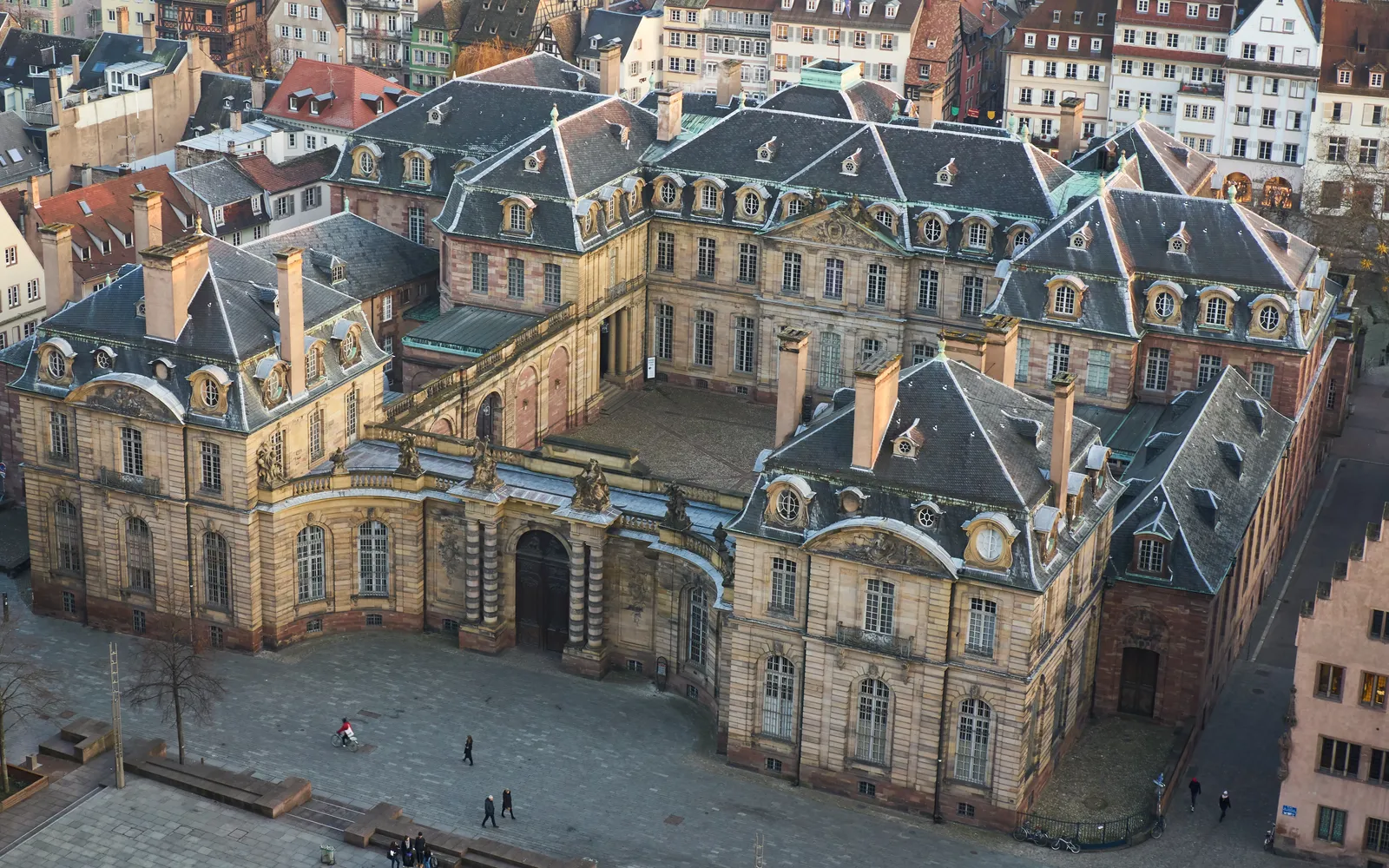
#3 Palais Rohan
This archbishop's palace was built between 1732 and 1742 in grand French Baroque style, sitting right beside the cathedral on the banks of the Ill. It now houses three separate museums under one roof: the Archaeological Museum, the Museum of Decorative Arts, and the Fine Arts Museum — which holds works by Rubens and Monet. The palace apartments have been meticulously restored and are open to visitors.
- A combined ticket for all three museums costs 7.50 euros — good value if you have an interest in both archaeology and fine art.
- The Cardinals' Apartments are furnished in complete 18th-century style and should not be missed.
- Closed Tuesdays; open 10:00–18:00 on other days. Always check French public holidays before you go.
 #4
#4 Ponts Couverts
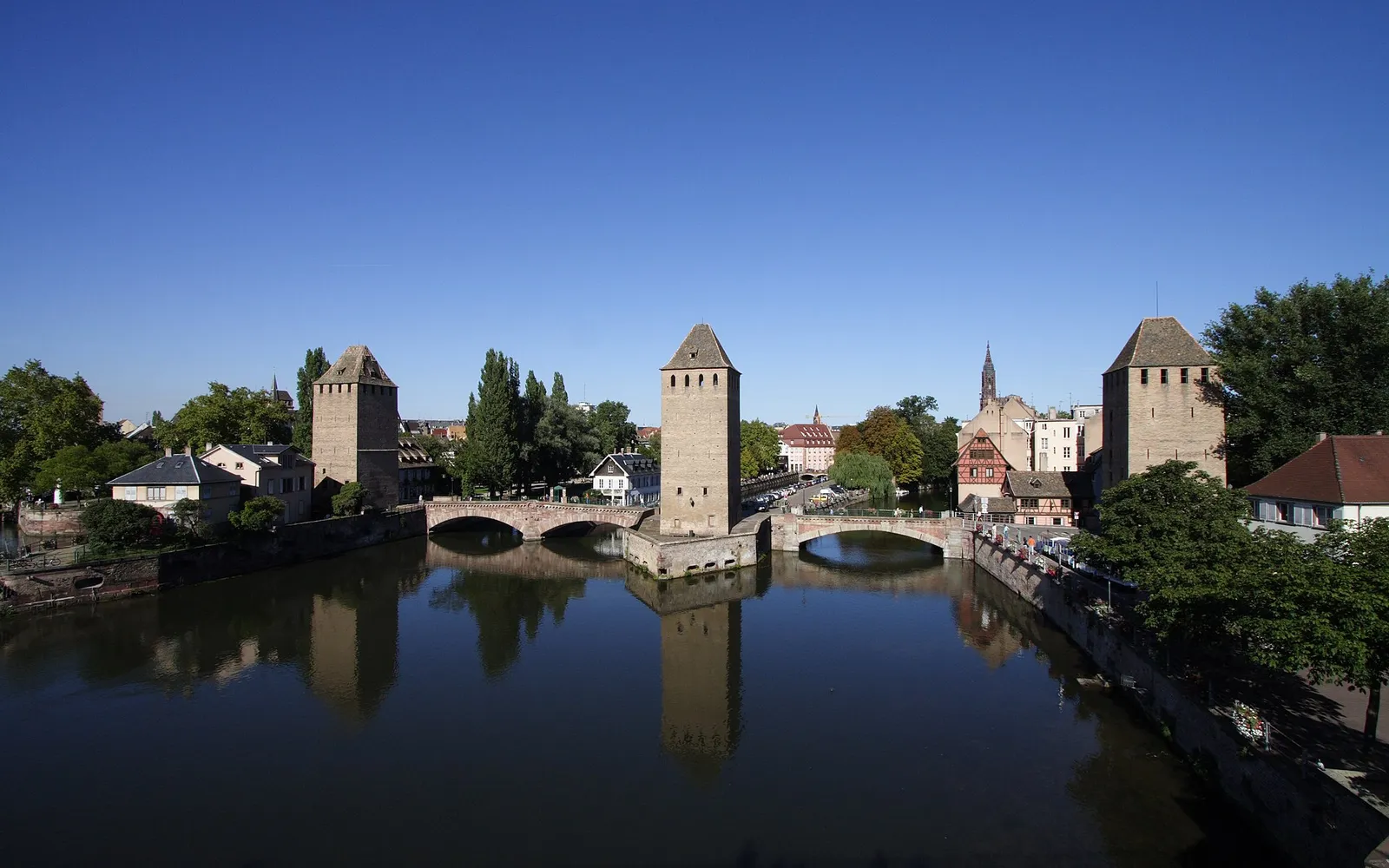
One of Strasbourg's defining historic landmarks, built in the 13th century. Three bridges span branches of the Ill River, flanked by four square medieval towers that once formed part of the city's fortifications. The bridges no longer carry roofs — those were removed in the 18th century — but the original name stuck. The terrace of the Barrage Vauban directly above offers the finest elevated view of Petite France.
- The terrace of Barrage Vauban (the Vauban Dam) is free to access and gives a panoramic view of the Ponts Couverts and Petite France from above.
- Between 19:00 and 20:00 at dusk, orange light falls across the towers and half-timbered houses — the best light of the day.
- The area around the bridges is a local evening meeting spot, with a relaxed atmosphere that feels far removed from the tourist quarter.
 #5
#5 Neustadt
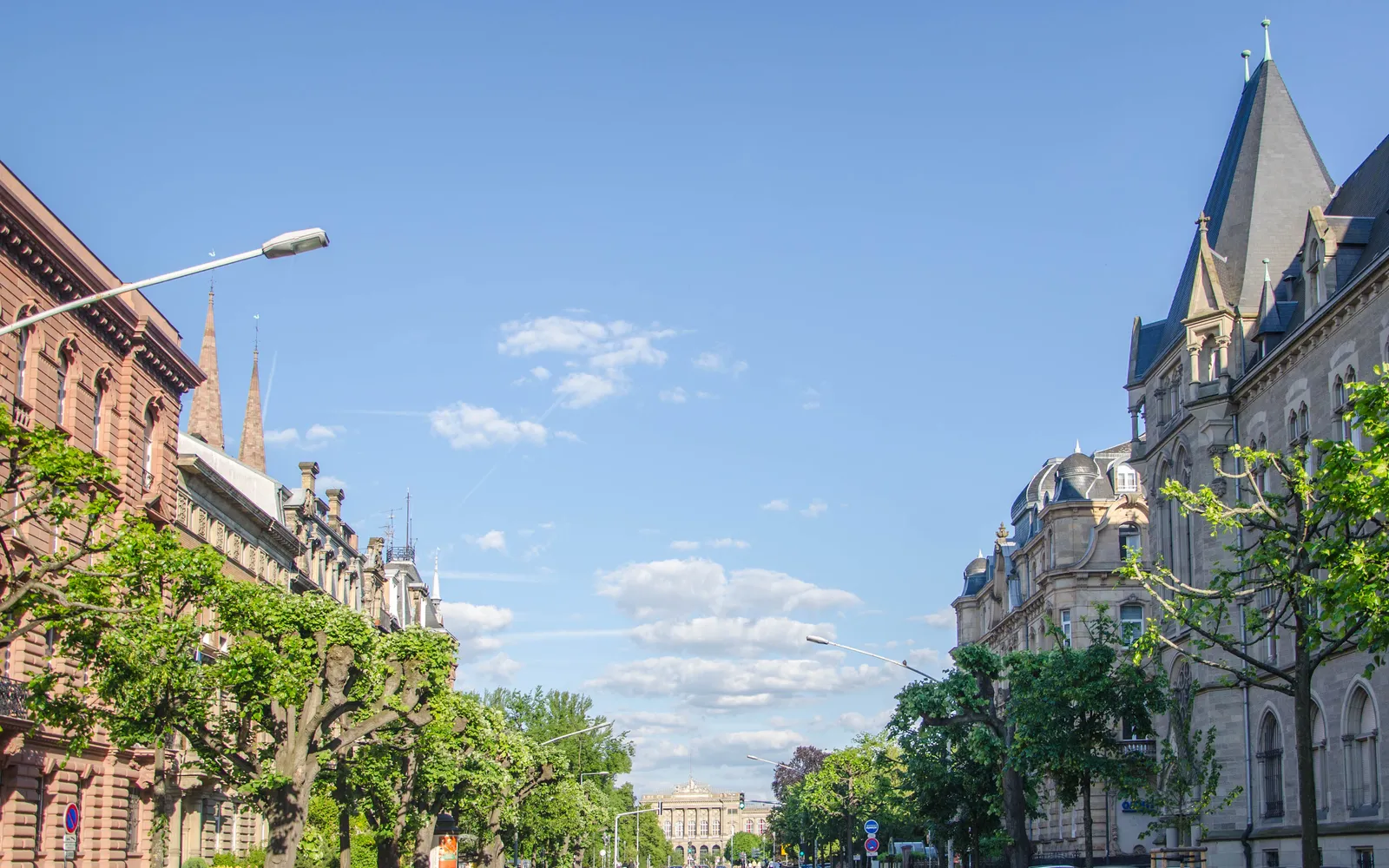
This quarter was built after Prussia annexed Alsace in 1871, designed to project the power of the German Empire. Its architecture is monumental and completely unlike the old town — government buildings, a theatre, a university, and grey Wilhelminian stone villas line wide boulevards. Neustadt was added to the UNESCO World Heritage List alongside the old town in 2017.
- Walk through Place de la République, the heart of the district, which has a handsome public garden and the Alsatian Parliament building.
- Most visitors skip Neustadt entirely because they don't know it exists — which means you'll have it largely to yourself, and it feels entirely different from the old town.
- Restaurants and cafes here are cheaper and more local than anything in the old town.
 #6
#6 Alsatian Museum
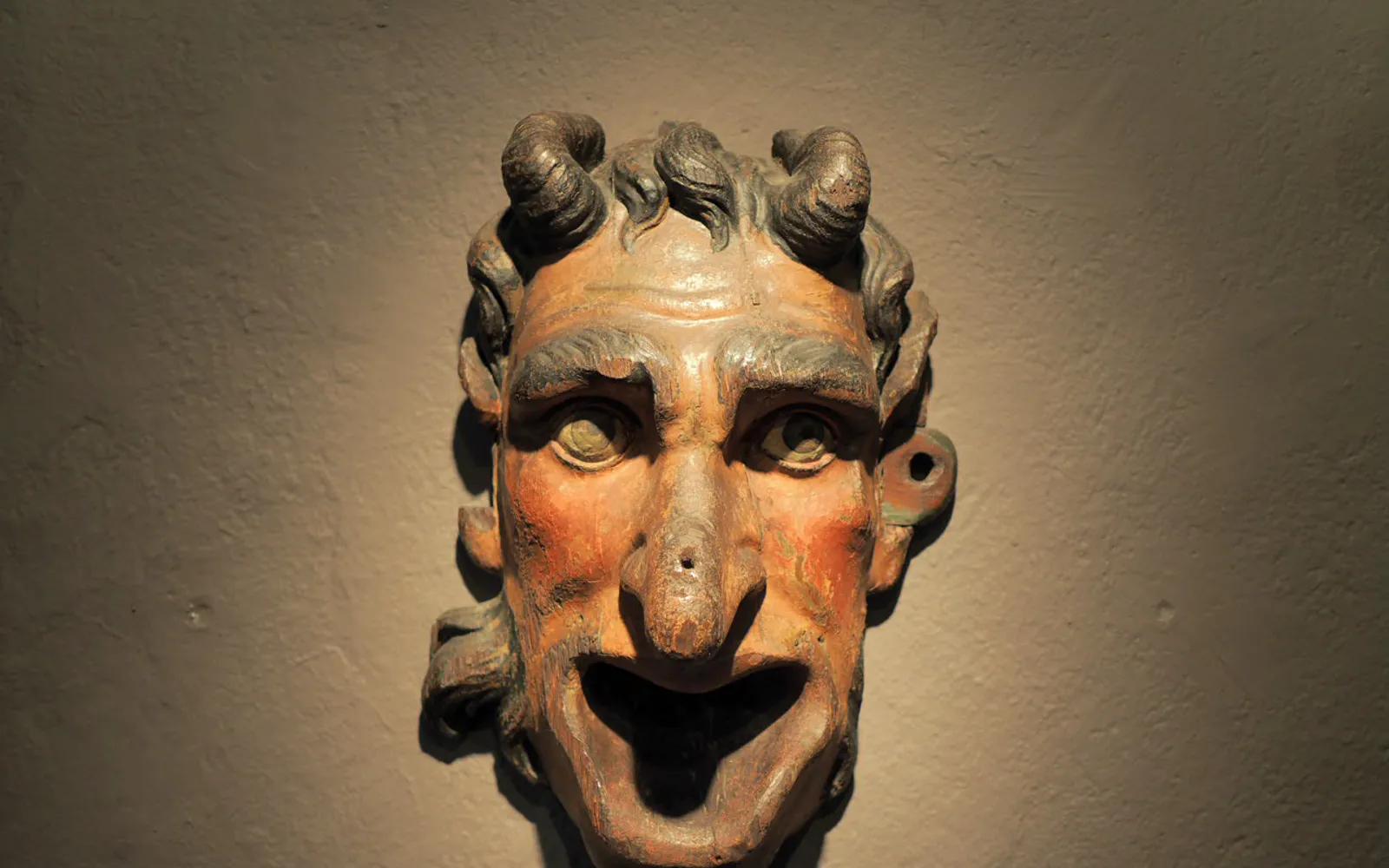
A museum of everyday Alsatian life, housed in three connected half-timbered buildings on the banks of the Ill. It opens a window onto traditional Alsatian domestic life — bedrooms, kitchens, workrooms, folk costumes, agricultural tools, and even a tiny private chapel — all displayed so completely it feels as if the owners just stepped out. The best place to understand Alsatian cultural roots before exploring the rest of the city.
- Admission is 7.50 euros; open every day except Tuesday, 10:00–18:00.
- Staff in traditional dress lead guided tours (in French) on weekend afternoons — worth wandering through on your own first.
- Check the museum's website before you go, as it periodically closes for renovation periods.
Where to stay in Strasbourg for this trip
A well-located hotel means less commuting and more sightseeing. Here are real, top-rated stays in Strasbourg — compare Agoda · Booking · Trip.com in one click.
Hôtel Cour du Corbeau Strasbourg - MGallery
Affiliate links — we may earn a commission at no extra cost to you. Details
Hôtel & Spa Le Bouclier d'Or
Affiliate links — we may earn a commission at no extra cost to you. Details
Hôtel & Spa Régent Petite France
Affiliate links — we may earn a commission at no extra cost to you. Details
Maison Rouge Strasbourg Hotel & Spa, Autograph Collection
Affiliate links — we may earn a commission at no extra cost to you. Details
Tours, tickets & activities in Strasbourg
Day tours, attraction tickets and travel essentials for Strasbourg — book ahead on Klook with mobile e-tickets.
Affiliate links — we may earn a commission at no extra cost to you.
Before You Pack
Strasbourg is beautiful in every season, but the Christmas market — running from late November through December — is when the city truly shines. Plan at least 2 full days to walk the old town without rushing, with time set aside for sunset at the Ponts Couverts and a proper dinner in a traditional winstub.