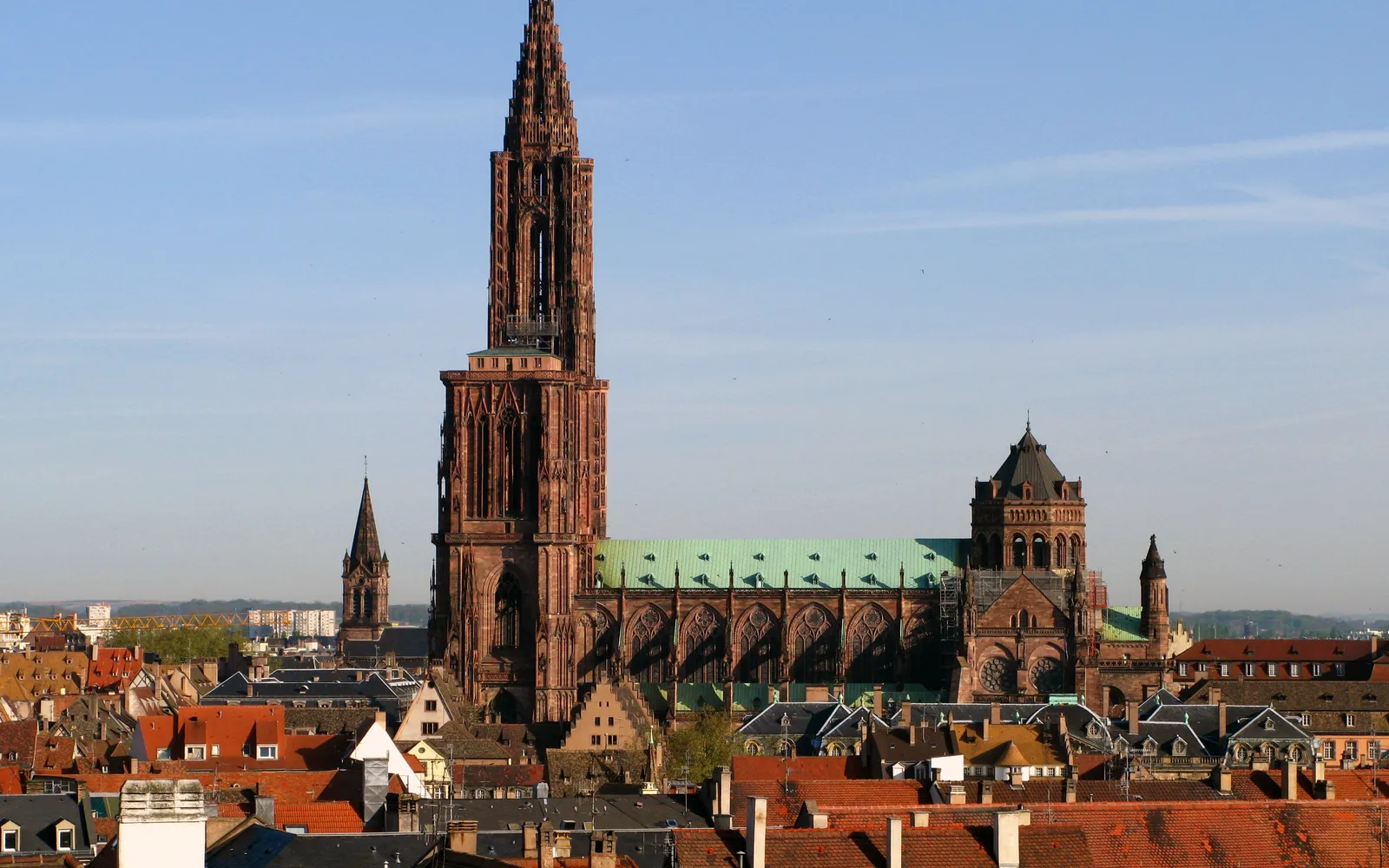
Alsatian food is one of Europe's quietly kept secrets — less famous than what you'd eat in Paris, but more honest and more filling in the best possible way. Tarte flambée is a flatbread Alsatians were making long before Italians reinvented the modern pizza, and choucroute paired with an Alsatian beer is a combination that nothing else quite replaces. If you're in Strasbourg, eat through all six of these.
 #1
#1 Tarte Flambée
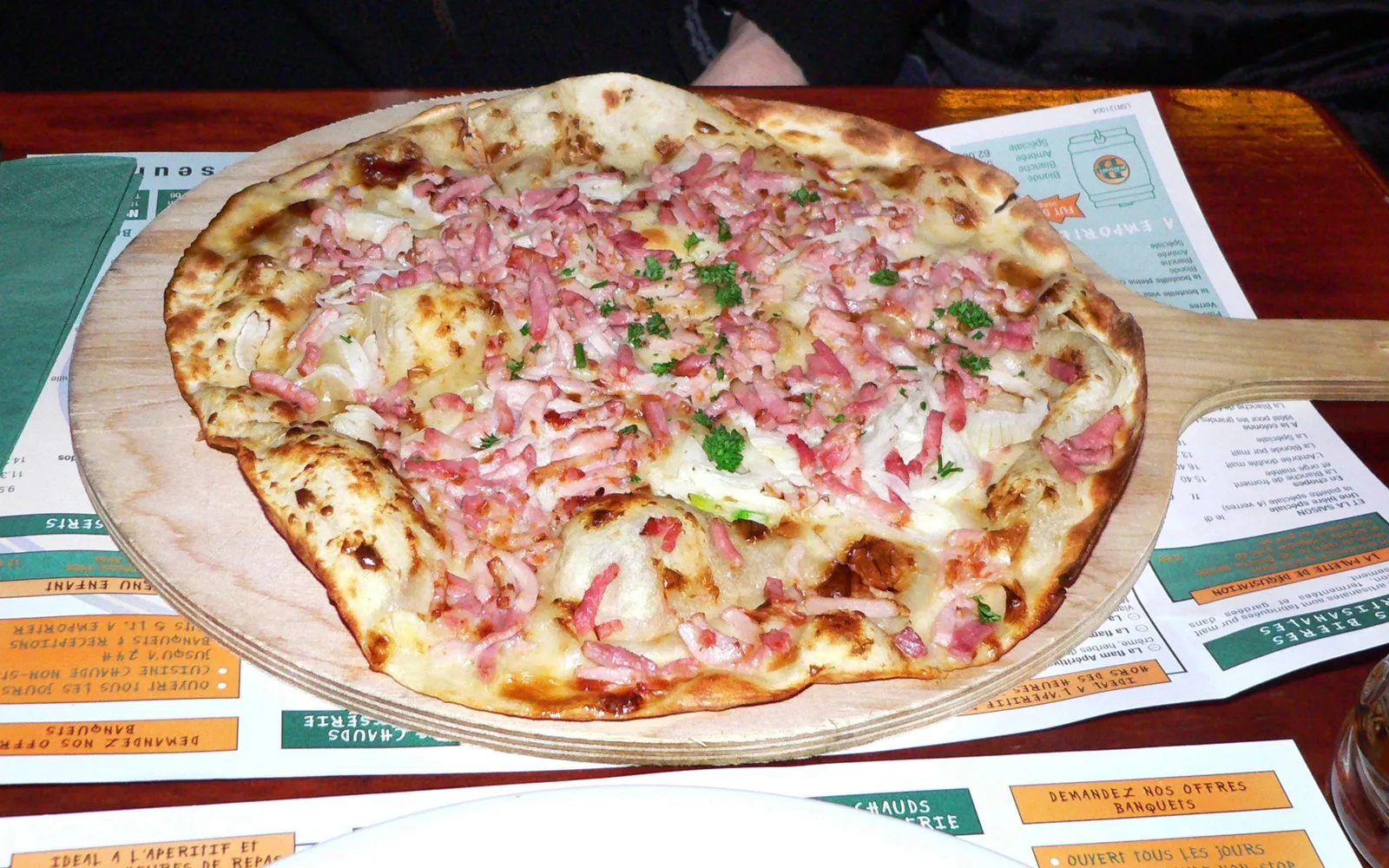
The most iconic Alsatian dish — and originally a practical one. Farmers used a thin sheet of leftover dough to test their wood-fired ovens before baking bread: spread crème fraîche on top, scatter onions and bacon, slide it in for 2 to 3 minutes at fierce heat. What comes out is a crust almost crackerlike in its thinness, fragrant cream, lightly sweet onion, and crisp salty bacon. Eat it with a cold Alsatian beer and there is genuinely nothing to improve.
- Always order the classique (original) first — not a version with unusual toppings — so you taste the dish as it was designed.
- One tarte feeds 1 to 2 people and costs roughly 10 to 14 euros. A good restaurant bakes them in a real wood-fired oven, which makes a noticeable difference.
- Pair it with Kronenbourg 1664 or Météor — both are genuine Alsatian beers and the natural match.
 #2
#2 Choucroute Garnie
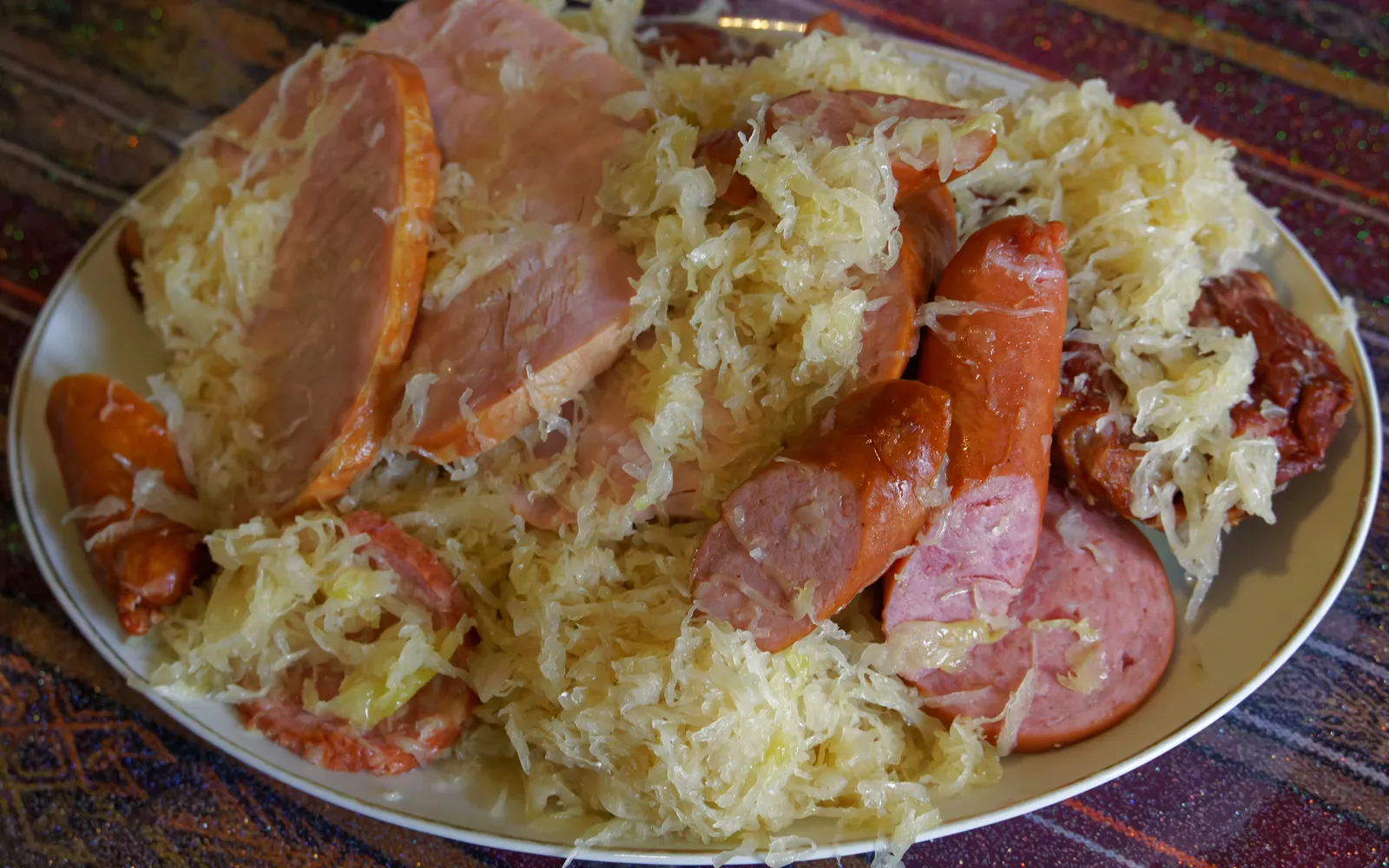
A dish that has defined Alsatian identity for centuries. White cabbage is shredded and fermented in brine until gently sour, then braised slowly with Riesling and spices, and served alongside multiple types of pork sausage, smoked ribs, cured pork, and boiled potatoes. The portion is substantial — easily shared between two people. Each forkful carries mild sourness, savoury salt, and a thread of smoke all at once.
- Look for choucroute made with Choucroute d'Alsace IGP (protected geographical indication) — the flavour is noticeably better than generic sauerkraut.
- The portion is large. If you have just arrived or are not very hungry, share it — any good restaurant will split it without complaint.
- Ask for Dijon mustard on the side; it cuts through the richness of the smoked pork.
 #3
#3 Baeckeoffe
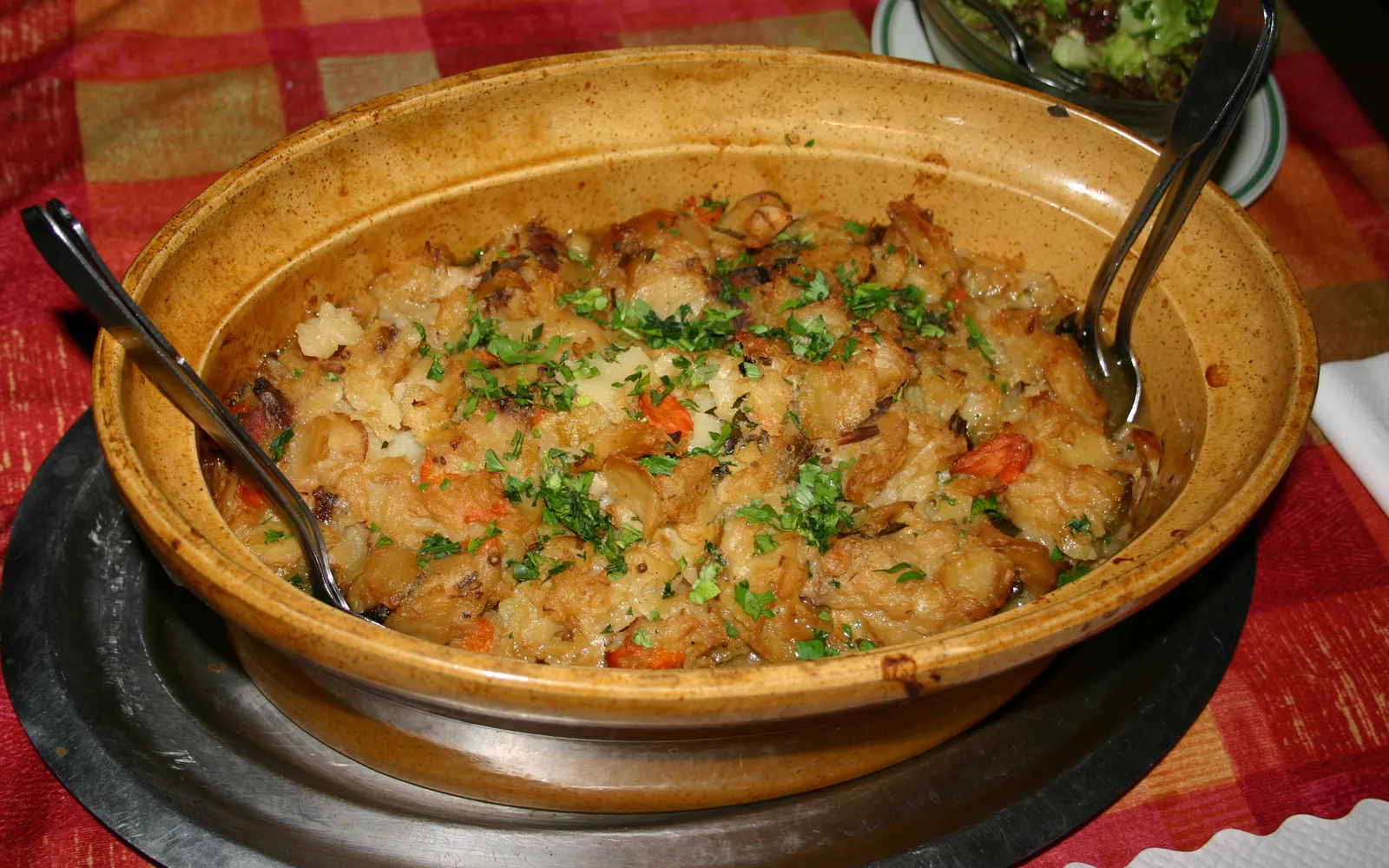
A genuinely old Alsatian recipe — Sunday evenings, households would prepare the pot and leave it overnight with the local baker (Baeckeoffe means 'baker's oven' in the Alsatian dialect). Pork, lamb, and beef are marinated in Riesling overnight, then slow-braised with potatoes, turnips, and onions in a sealed earthenware pot for several hours. The meat falls apart; the broth carries a quiet, wine-scented warmth.
- Some restaurants require advance notice to prepare this dish because of the long cooking time. Call ahead to check.
- The traditional pot is sealed with a strip of bread dough before going in the oven. The crack of that seal at the table is part of the ritual.
- Pair it with a white Riesling d'Alsace — the same wine used in the braise keeps the flavours balanced.
 #4
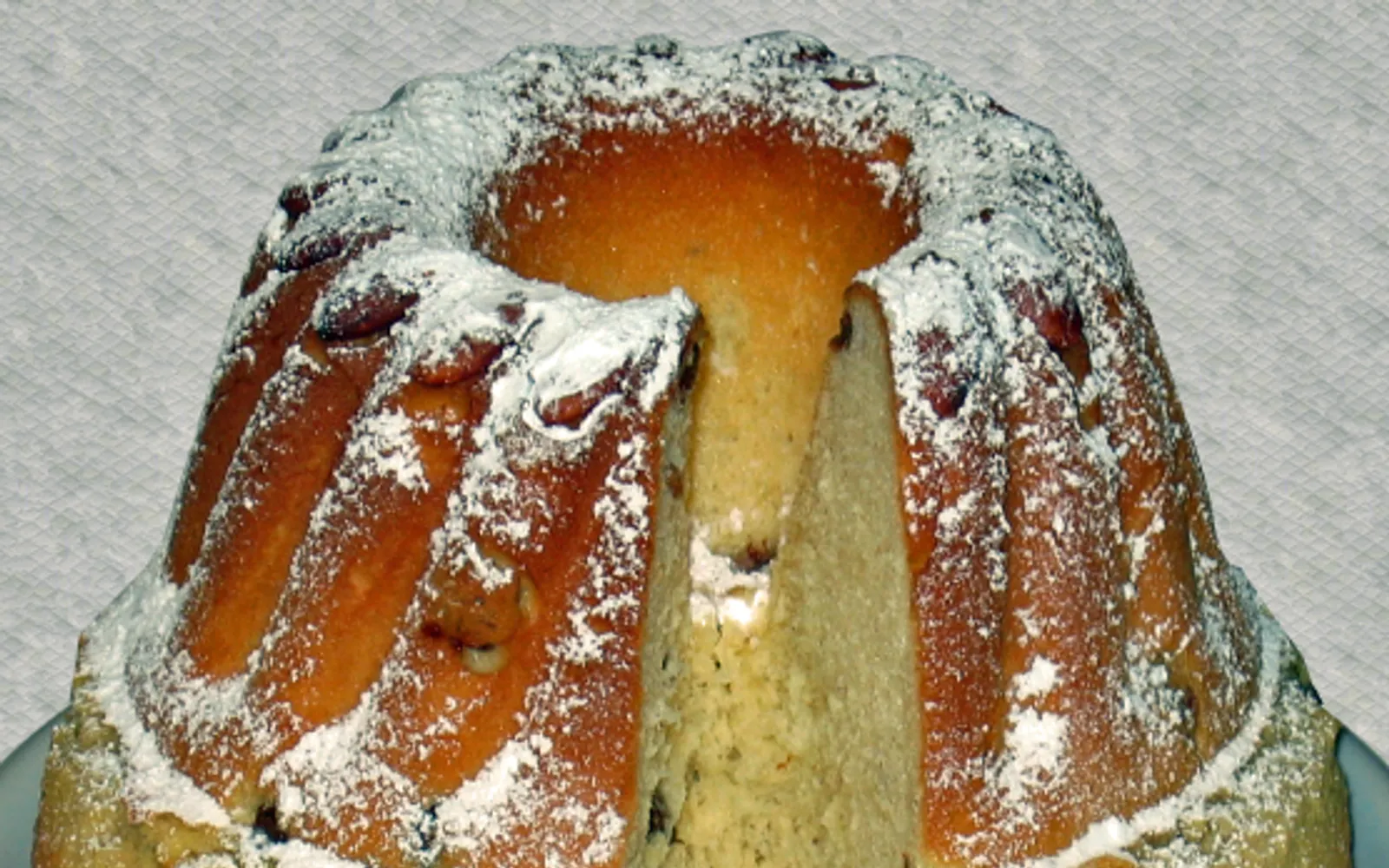
#4 Kougelhopf
The signature pastry of Alsace — recognisable instantly by its tall ring shape and the earthenware mould decorated with Alsatian motifs. The yeasted dough is enriched with raisins, almonds, and good butter; the smell drifts out of Alsatian bakeries every morning. The flavour is gently sweet without being cloying, and the crumb is denser than brioche. It works equally well as a mid-morning snack with coffee or as the most universally appreciated thing to bring home from Strasbourg.
- A good bakery bakes Kougelhopf fresh every morning. Buy before 10 am to get it still warm and fragrant.
- Prices run roughly 8 to 15 euros depending on size. A small one is easy to eat while walking.
- The earthenware moulds themselves make an excellent gift — available in kitchenware shops for around 15 to 30 euros, and they last for decades.
 #5
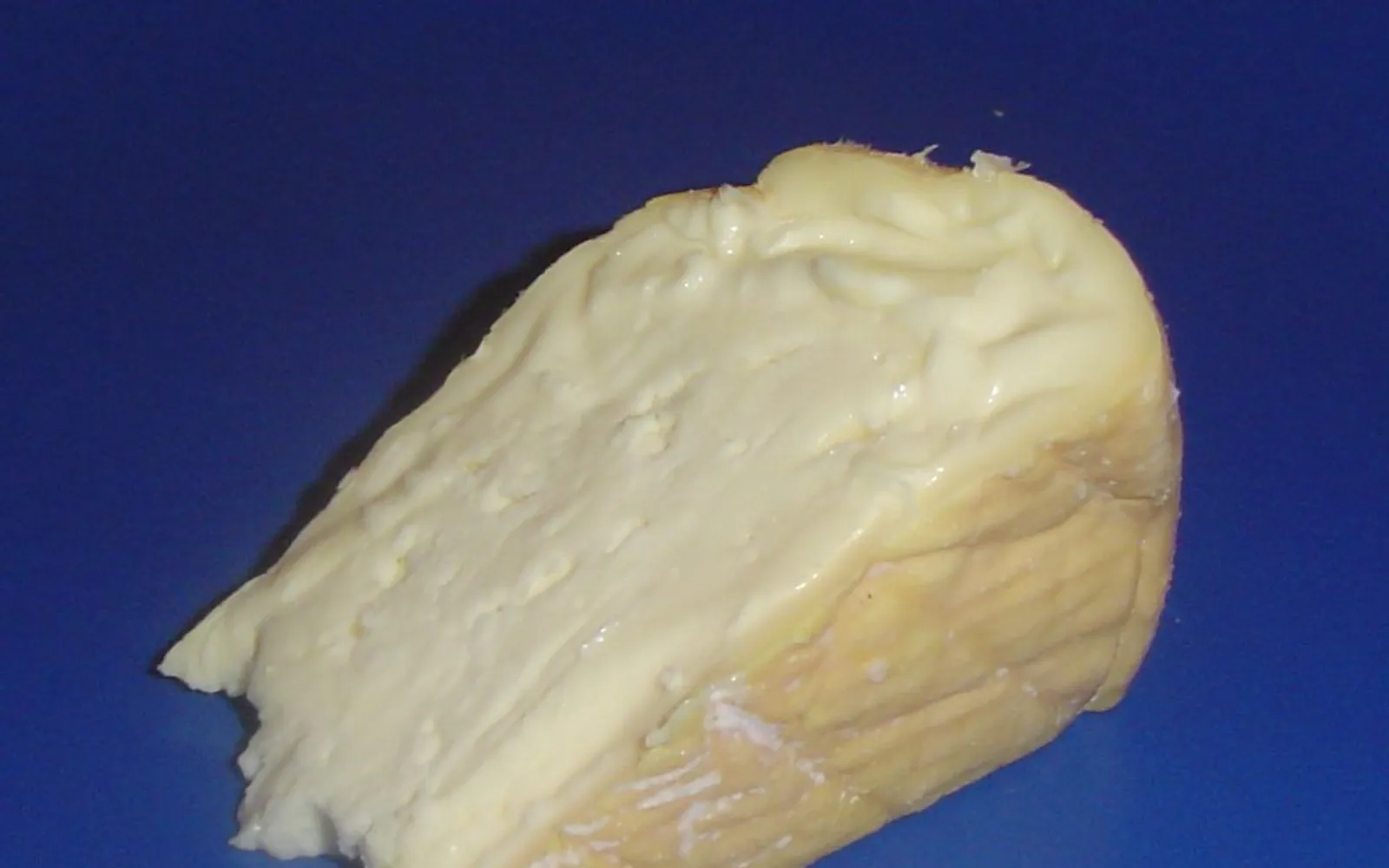
#5 Munster Cheese
The most pungent soft cheese in France, and a point of genuine Alsatian pride. The name comes from the town of Munster in the Vosges valley. The orange-red rind is washed with brine during ageing, which produces the strong smell — but the interior is creamy and deeply flavoured rather than harsh. Eat it with caraway seeds to balance the taste, and a glass of Alsatian Gewurztraminer, whose fruit cuts through the salt.
- The smell from outside is far stronger than the actual flavour. Try one bite before deciding — people who enjoy cheese tend to find it compelling.
- Buy from Marché de la Place Broglie on Saturday mornings to get cheese sold directly by the farmers who made it.
- Store Munster in an airtight container in the fridge and wrap it very well before any flight. The smell travels.
 #6
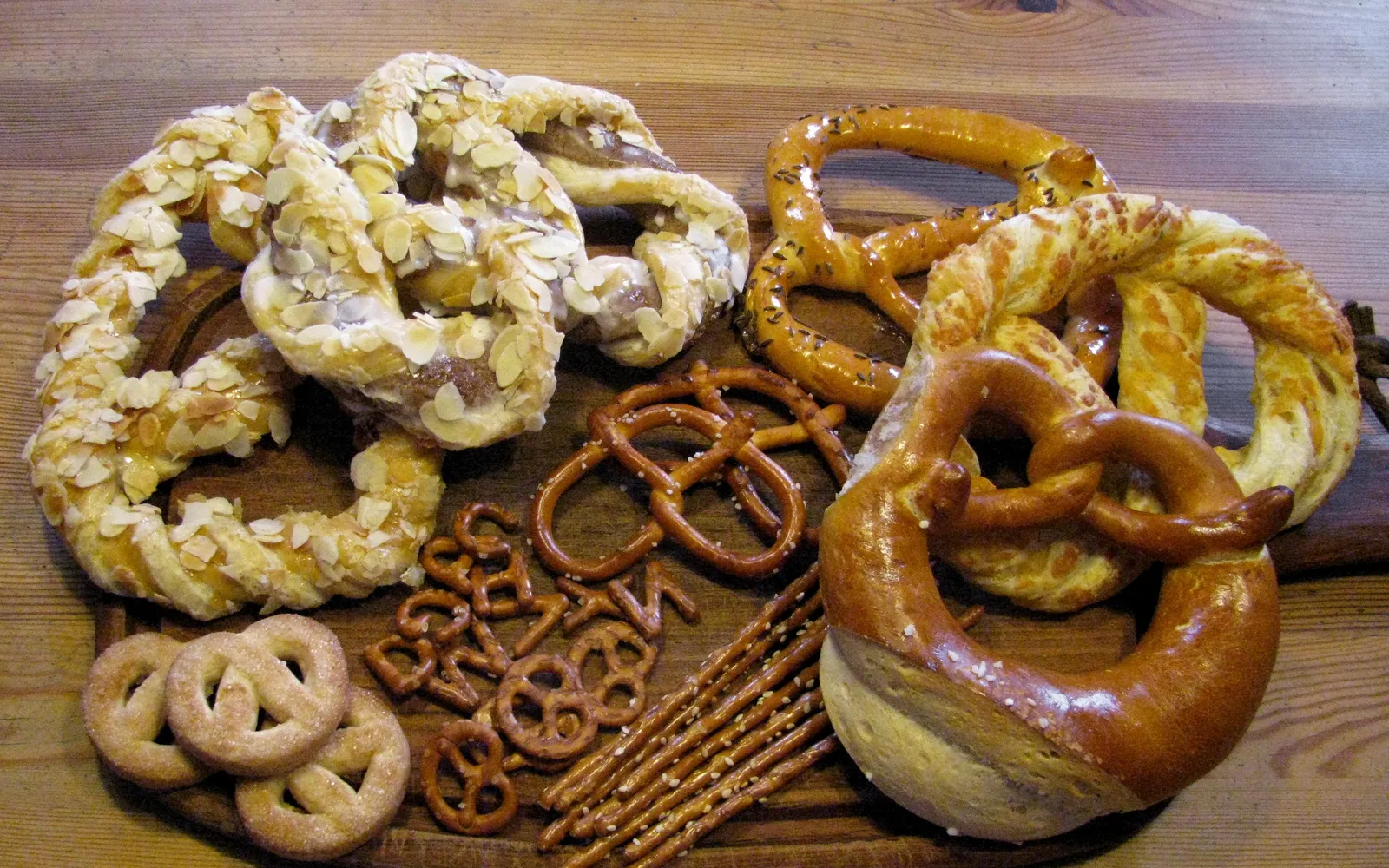
#6 Alsatian Bretzel
Alsace claims to be the true birthplace of the pretzel, and the Strasbourg bretzel differs from the German version in a few meaningful ways: the dough is softer inside, the crust thinner, and the salt level more restrained. The exterior bakes to a light brown gloss; the inside stays soft and warm. It is the best street food for walking the old town — eat it plain or with a smear of mild Alsatian mustard.
- A bretzel is best within 30 minutes of coming out of the oven. Buy from a stall where you can see they are still baking.
- Prices are around 1 to 1.50 euros each — very cheap and filling, and a perfectly respectable breakfast.
- A good bakery bakes several rounds through the day. Watch for colour and smell to judge how recently the batch came out.
Where to stay in Strasbourg for this trip
A well-located hotel means less commuting and more sightseeing. Here are real, top-rated stays in Strasbourg — compare Agoda · Booking · Trip.com in one click.
Hôtel Cour du Corbeau Strasbourg - MGallery
Affiliate links — we may earn a commission at no extra cost to you. Details
Hôtel & Spa Le Bouclier d'Or
Affiliate links — we may earn a commission at no extra cost to you. Details
Hôtel & Spa Régent Petite France
Affiliate links — we may earn a commission at no extra cost to you. Details
Maison Rouge Strasbourg Hotel & Spa, Autograph Collection
Affiliate links — we may earn a commission at no extra cost to you. Details
Tours, tickets & activities in Strasbourg
Day tours, attraction tickets and travel essentials for Strasbourg — book ahead on Klook with mobile e-tickets.
Affiliate links — we may earn a commission at no extra cost to you.
Before You Pack
Alsatian food is at its best in a traditional winstub — pronounced something like 'winschtub' by locals — with small windows, old wooden signs, food at reasonable prices, and a handwritten menu on a blackboard. If you spot one in a side street near Petite France, walk in without checking the reviews.