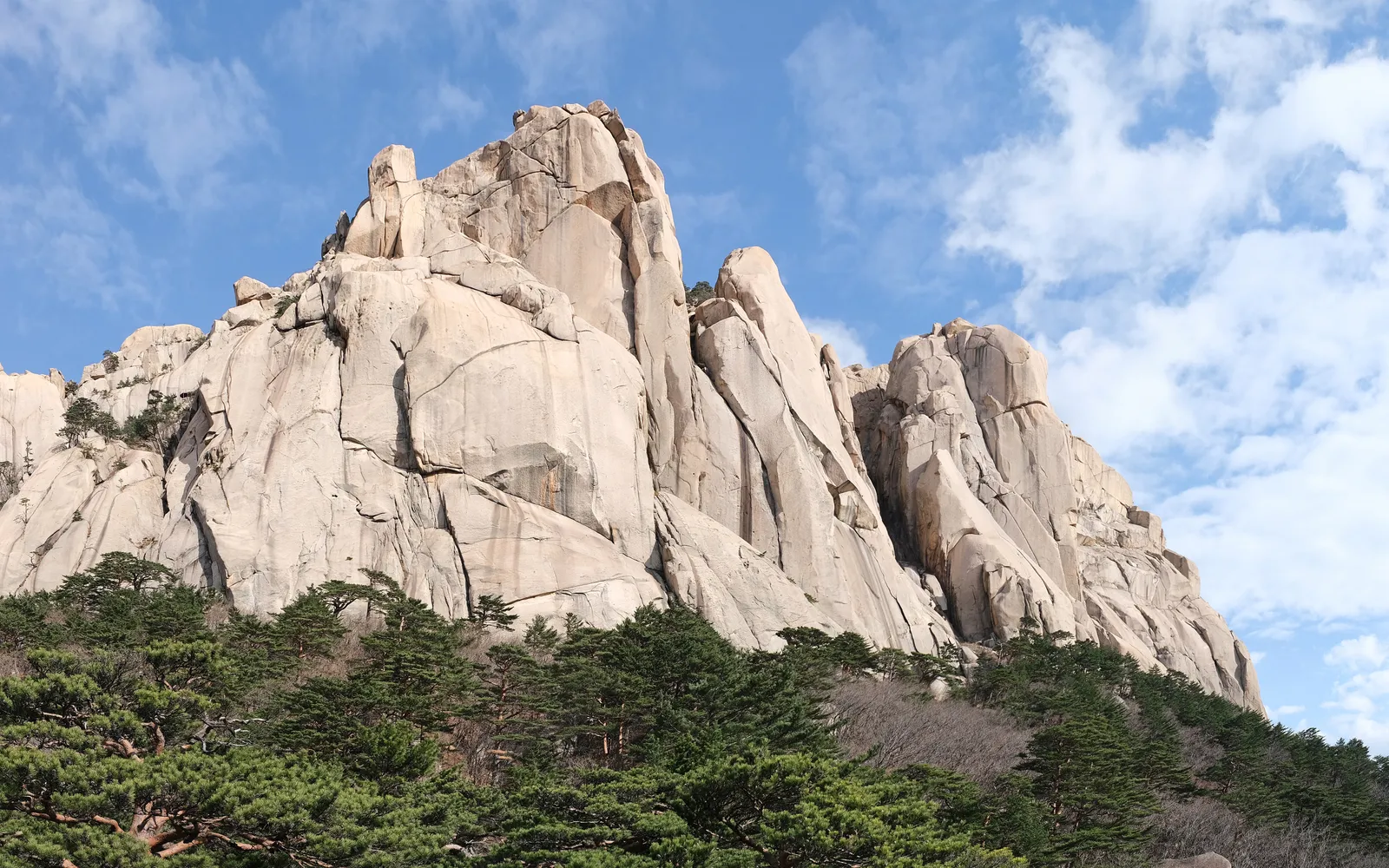
Sokcho sits just 3 hours from Seoul, yet the atmosphere could hardly be more different — behind it rises Seoraksan National Park, which shifts color with every season; ahead stretches the deep-blue East Sea. The city is also home to North Korean refugees who brought their own distinct food and culture when they settled here during the Korean War. Whether you're here to hike, eat seafood, or take photographs, Sokcho covers every angle.
 #1
#1 Seoraksan National Park
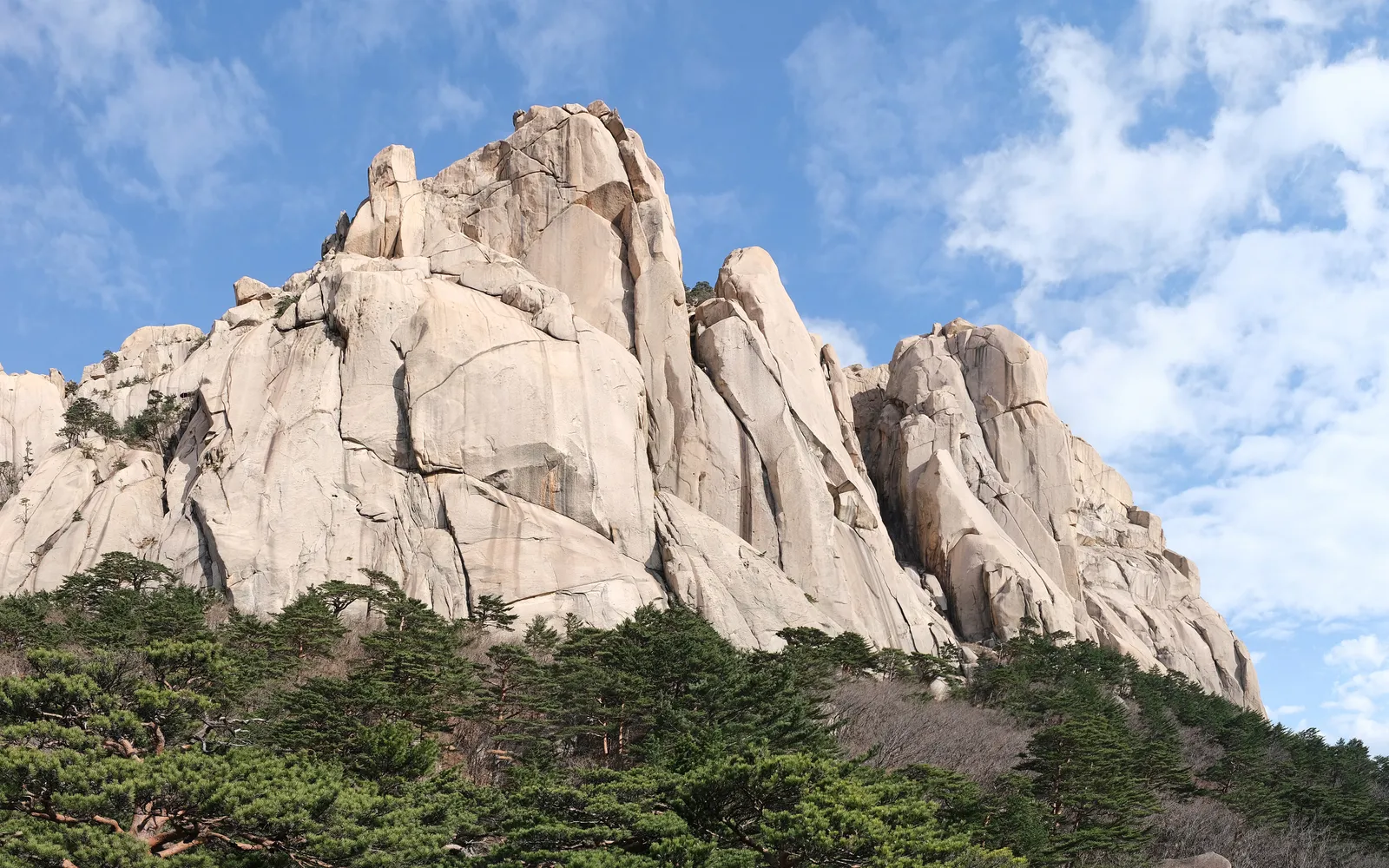
A UNESCO Biosphere Reserve covering more than 398 square kilometres, Seoraksan offers trails for every fitness level — from the cable car up to Gwongeumseong Fortress to the granite giant Ulsanbawi, which demands over 800 steel-rung steps in the final stretch. Every season has its own look, but October's autumn foliage is widely regarded as the finest in all of South Korea.
- Buy park entrance tickets online in advance during autumn — crowds are significant.
- The cable car to Gwongeumseong is ideal if long hikes aren't your thing.
- Wear proper hiking boots: the Ulsanbawi trail is steep with slippery rock sections.
 #2
#2 Sinheungsa Temple
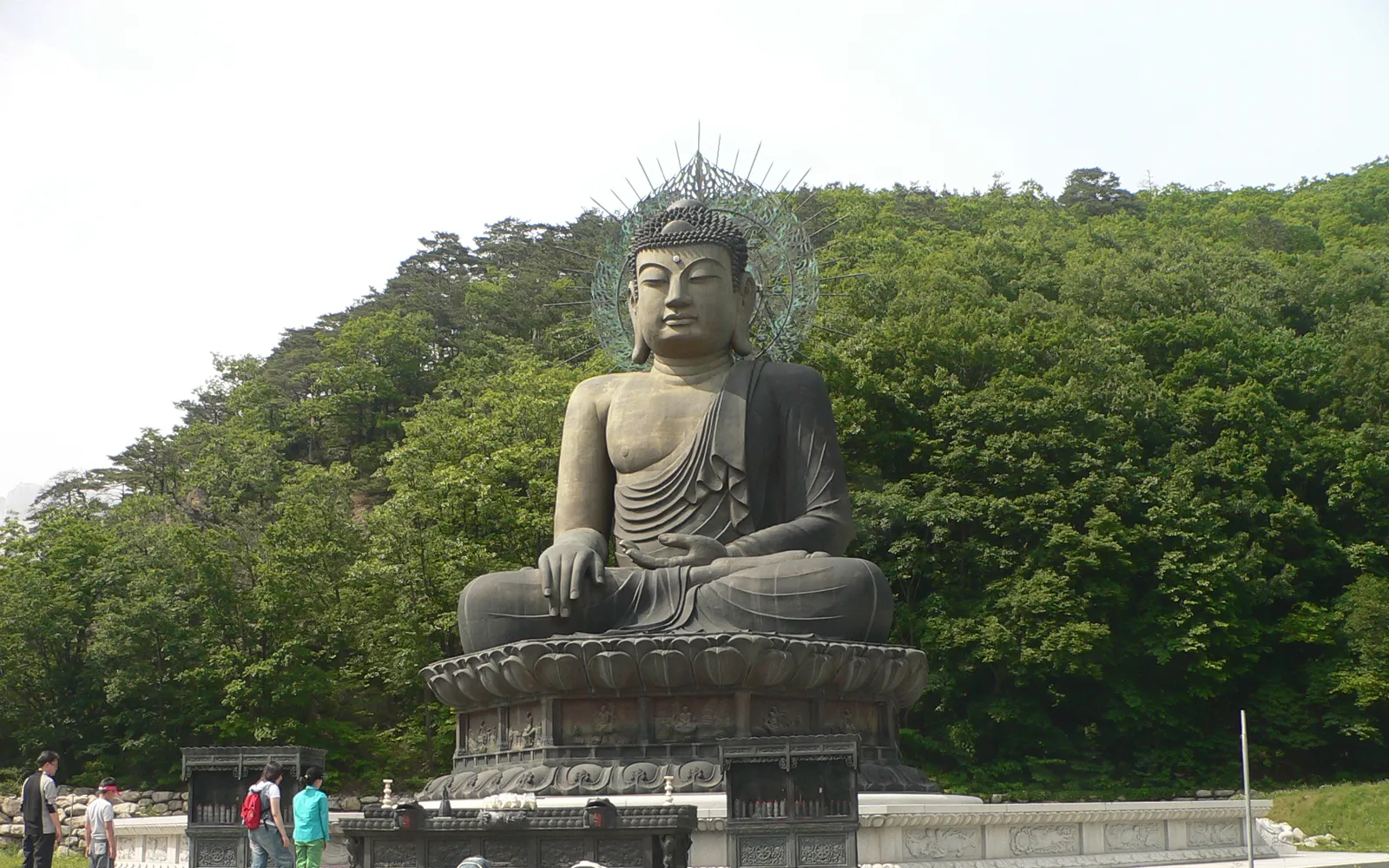
One of the oldest Buddhist temples in Korea, founded in the 7th century CE and the head temple of the Jogye Order. Its most striking feature is a giant bronze Buddha weighing 108 tonnes, built as a symbol of the hope for Korean reunification. The temple sits amid pine forest and a serene valley; the wooded path leading in sets a meditative tone long before you arrive.
- The temple is open daily with no separate entry fee — park admission covers it.
- Early morning is particularly quiet, ideal for meditation and photography.
- Temple Stay programs are available for those who want to spend a night inside.
 #3
#3 Ulsanbawi Rock
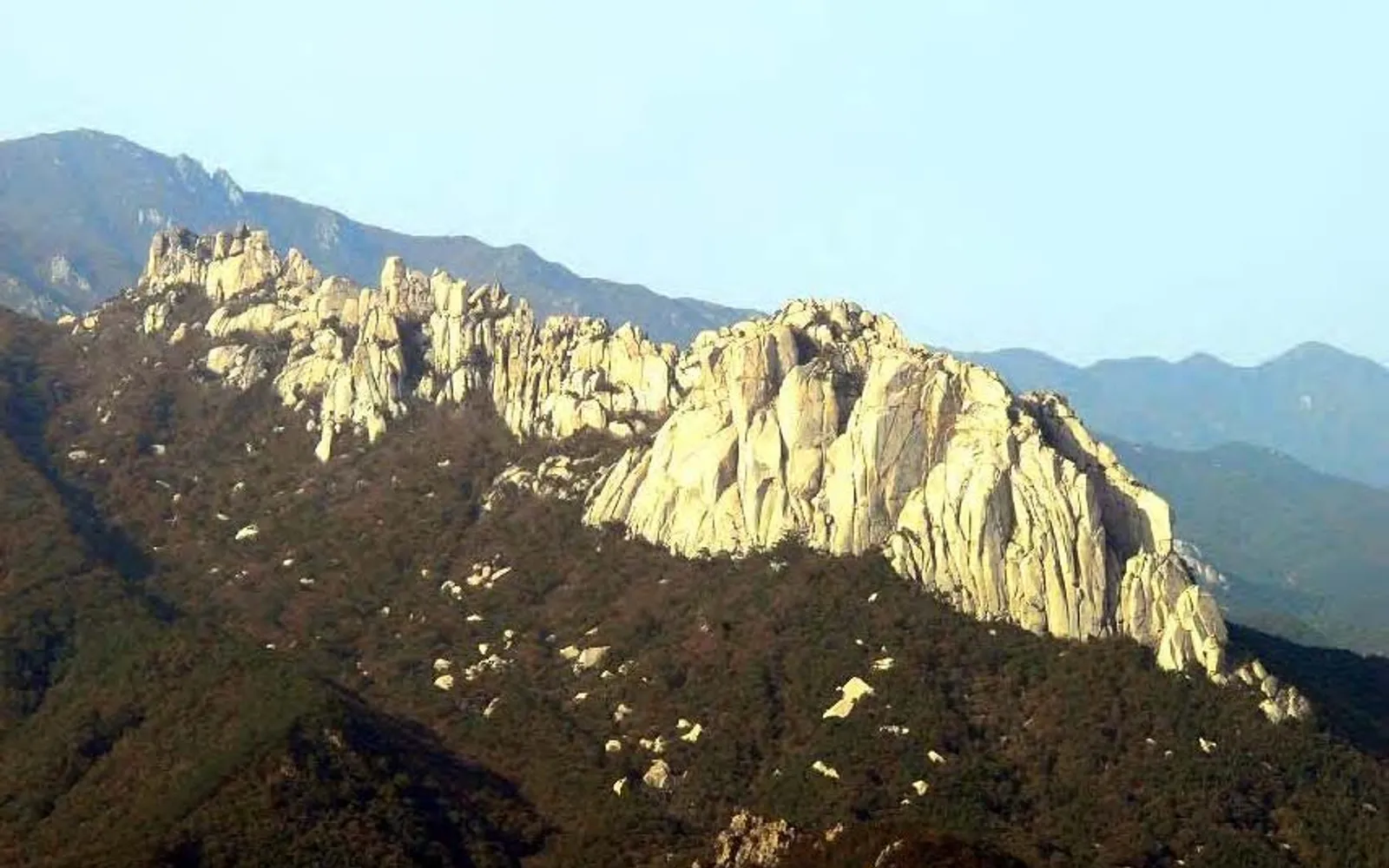
A cluster of six granite peaks topping out at 873 metres — the most recognizable silhouette in all of Seoraksan. The round-trip hike takes about 3–4 hours, with more than 800 metal-rung steps in the upper section. The payoff at the top is a clear-day view that takes in both the East Sea and the city of Sokcho below.
- Start early, especially during autumn, to beat the crowds.
- Wind at the summit can be strong — bring a jacket.
- The trail gets slippery in rainy weather or after snowfall; check conditions before heading out.
 #4
#4 Abai Village
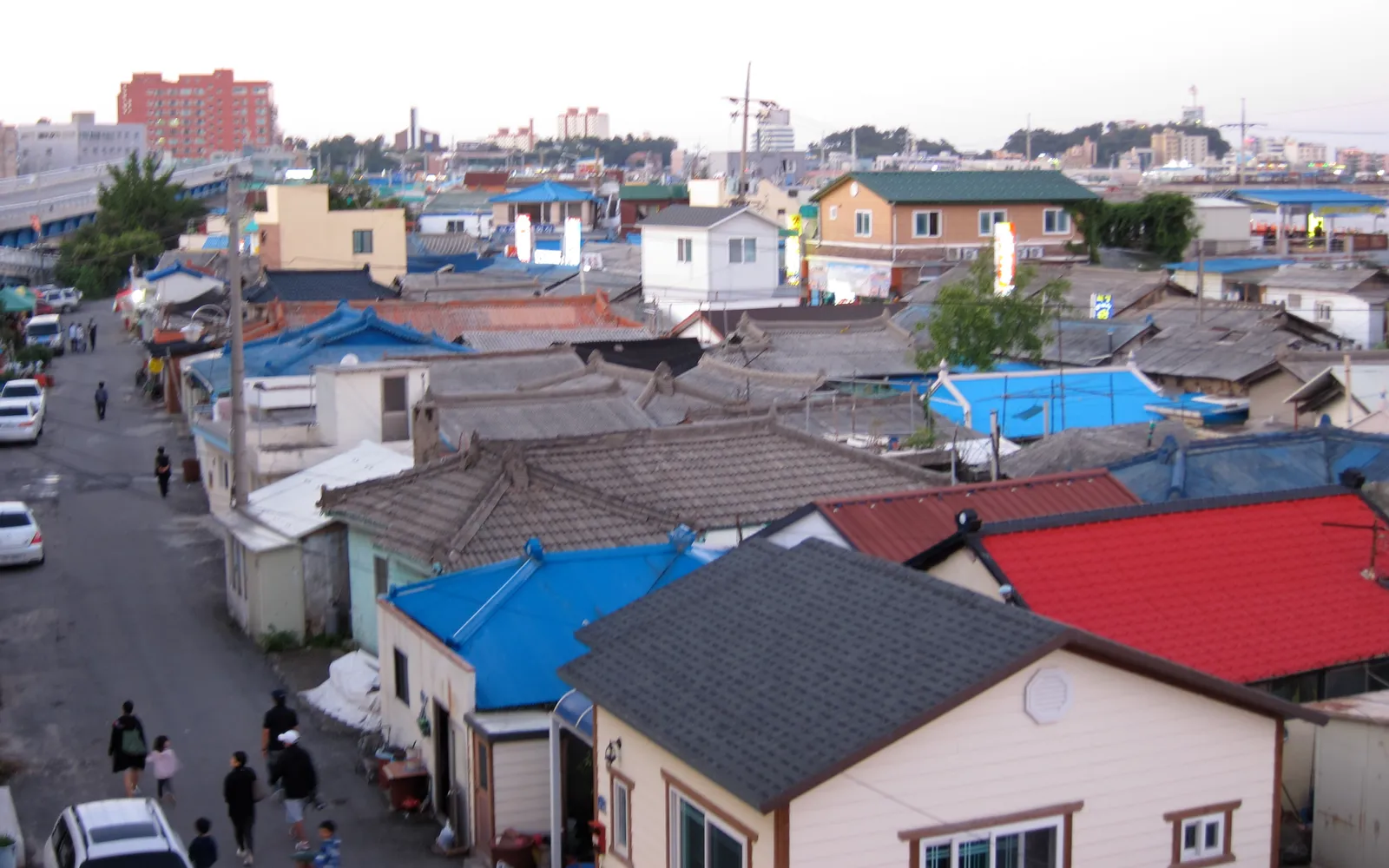
A community unlike any other in South Korea, founded by refugees from North Korea's Hamgyong Province during the Korean War. The neighborhood has held onto its retro atmosphere and North Korean home-style food remarkably well. The crossing to the village is itself part of the experience: the Gwarang Ferry — a tiny rope-pulled boat that residents haul across by hand — has become one of the most photographed moments in Sokcho.
- The Gwarang Ferry fare is extremely cheap — around 500–1,000 won per crossing.
- Village restaurants are well known for Abai sundae and ojingeo sundae.
- Morning or early evening gives the best atmosphere.
 #5
#5 Sokcho Beach
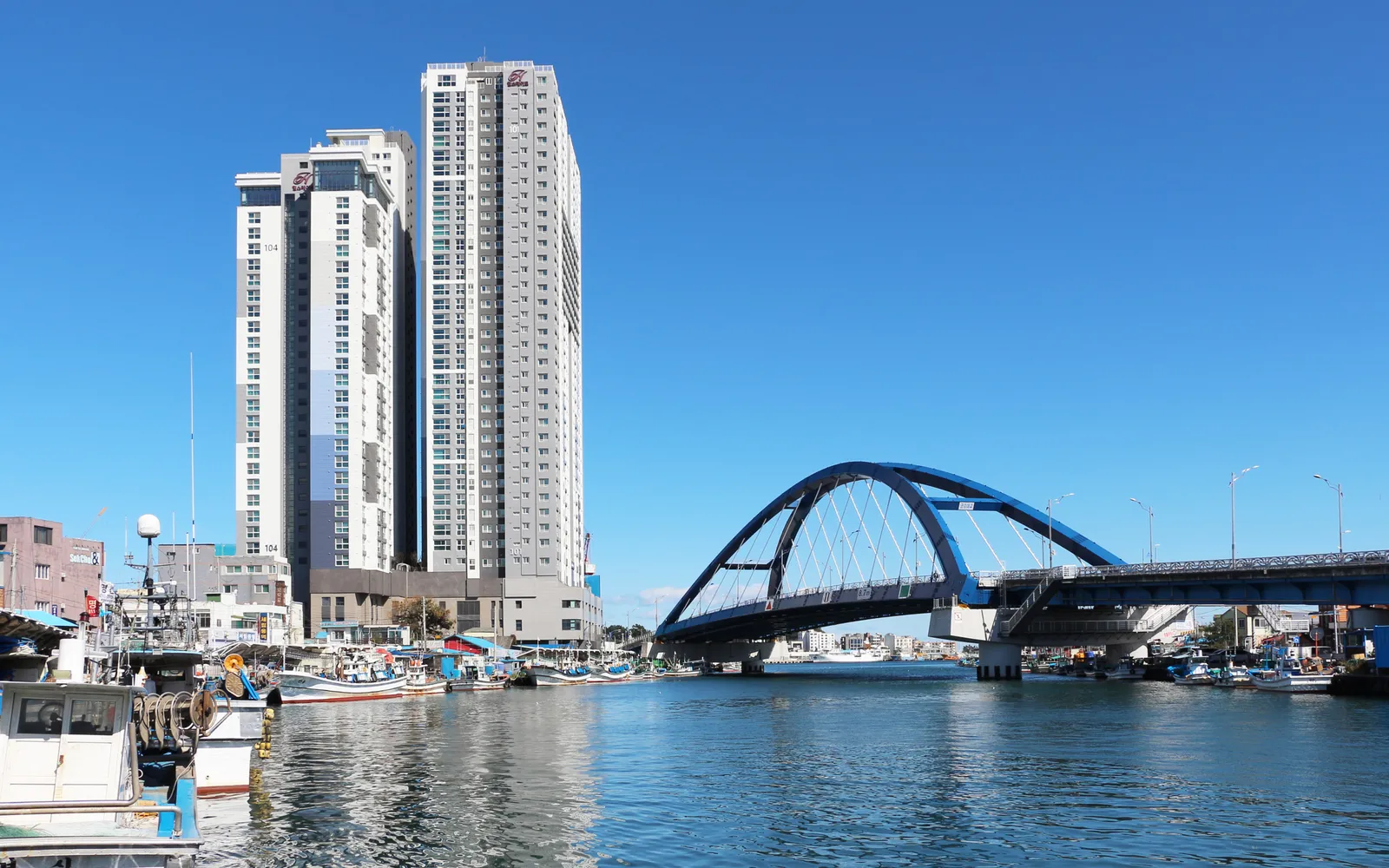
A 2-kilometre stretch of clean white sand that locals genuinely love. A flower-lined coastal walking path known as Flower Road has earned a following on social media. The water is clean enough for swimming in summer, and in winter the snowy Seoraksan peaks behind the shore make for striking photographs. Cafes and seafood restaurants line the entire beachfront.
- Summer (July–August) is peak season — go early morning or late afternoon to avoid the biggest crowds.
- Flower Road is at its best in May and June.
- Changing rooms and luggage lockers are available during the swimming season.
 #6
#6 Daepohang Fish Market
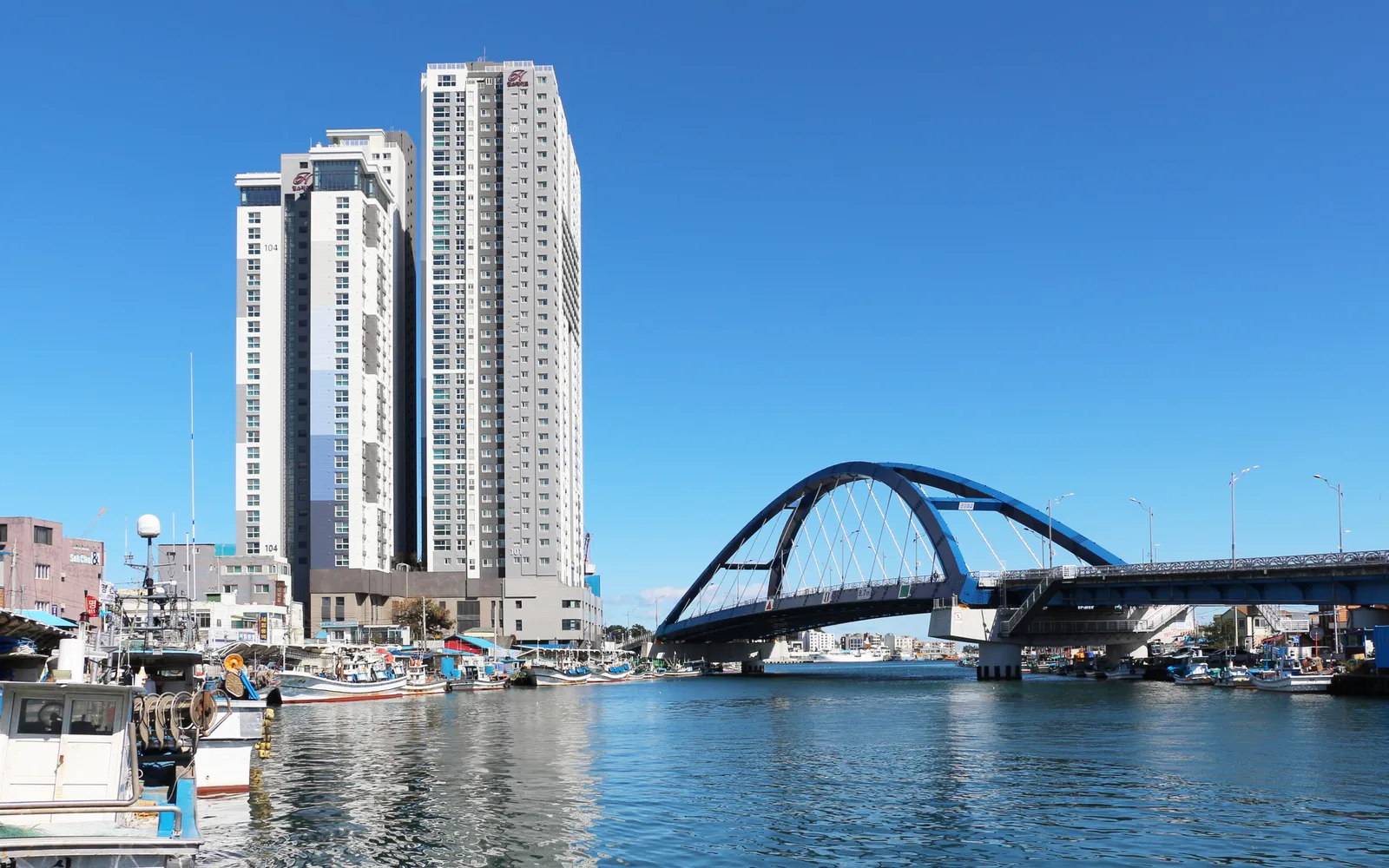
Sokcho's largest working fishing harbour, with a fresh seafood market known for lobster, king crab, and Korean fish varieties. Waterfront stalls let you pick live seafood to be cooked on the spot, or sit down to a plate of hoe — raw sliced fish, Korean-style. The atmosphere is genuine fishing-port bustle rather than anything packaged for visitors.
- Prices are noticeably lower than markets in the city centre, but bargaining is expected.
- The freshest catch arrives between 7 and 9 in the morning.
- Try the king crab tempura — deep-fried and crispy — it's the market's signature dish.
 #7
#7 Yeonggeumjeong Pavilion
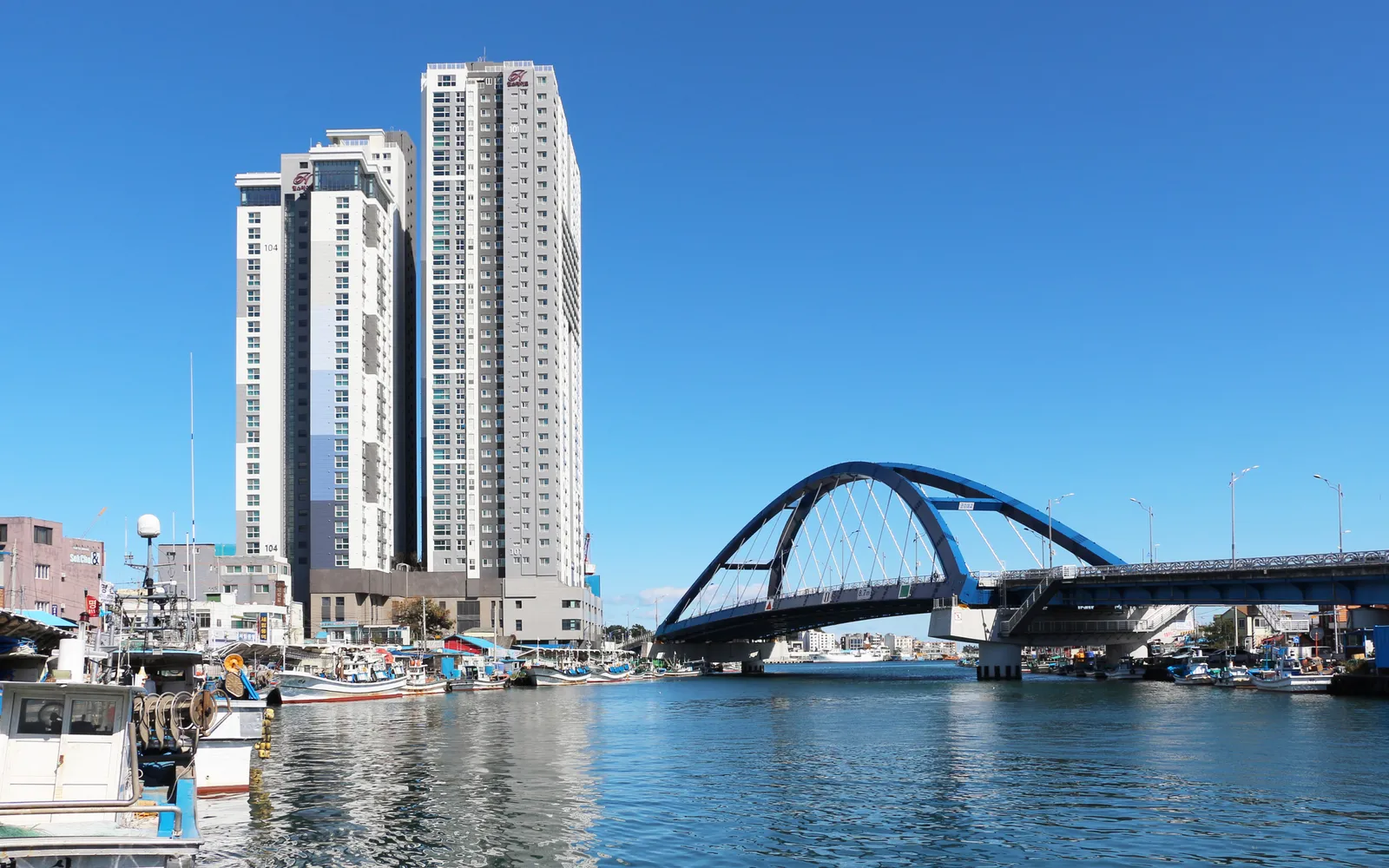
A traditional Korean pavilion standing on a rocky headland in the East Sea, reached by a 50-metre bridge above the waves. The name Yeonggeumjeong comes from geomungo, the Korean zither, because the sound of waves breaking on the rocks below is said to resemble the instrument's strings. This is the finest sunrise spot in Sokcho — the dawn light through the pavilion's structure makes for remarkable photographs.
- The best window for sunrise is roughly 5:30–6:00 a.m.
- The bridge deck can be slippery when swells are high — watch your step.
- Benches around the area make it a pleasant spot to simply sit and watch the sea.
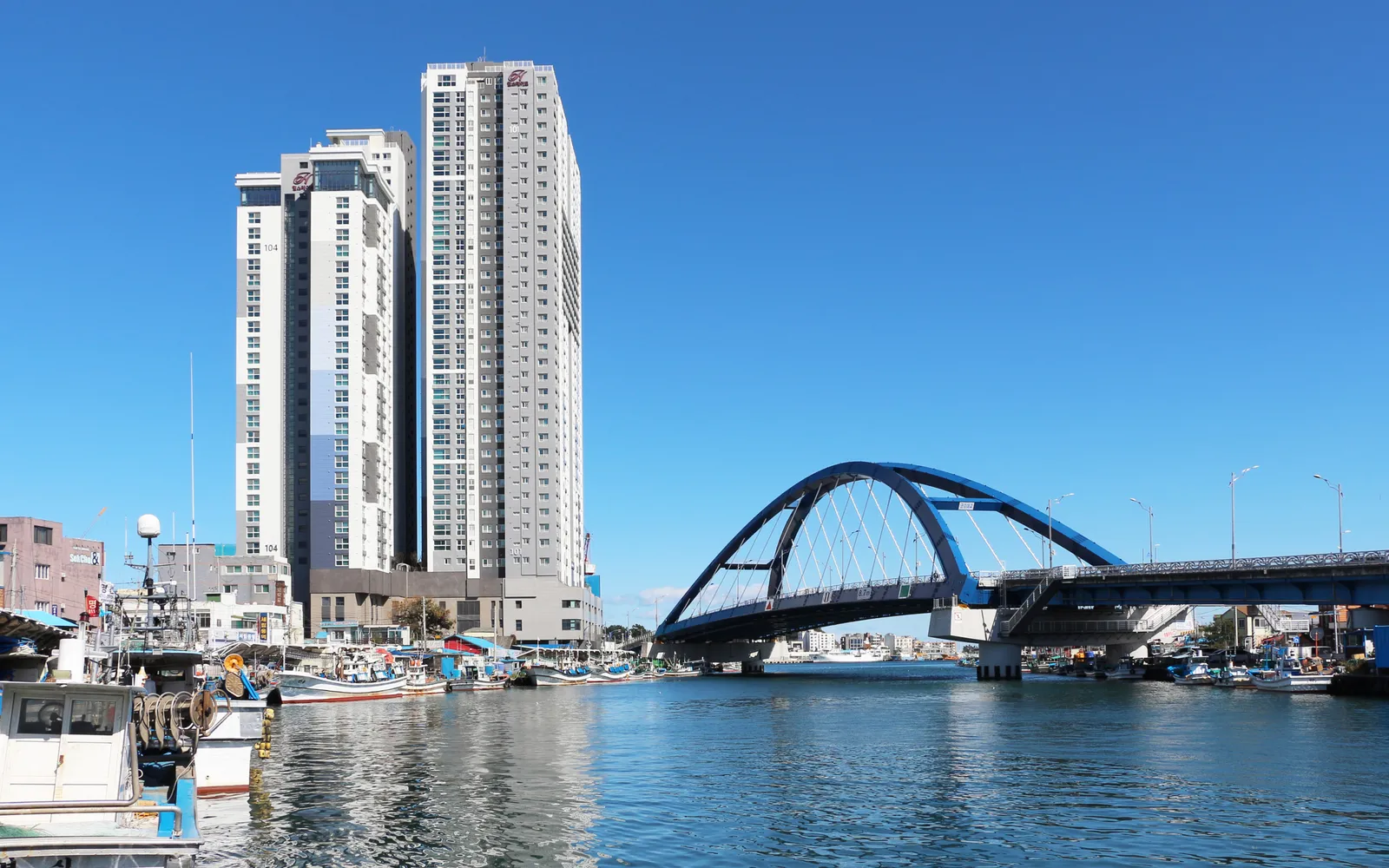 #8
#8 Cheongcho Lake
A large natural saltwater lagoon right in the heart of Sokcho. The path circling the lake stretches more than 4 kilometres — easy terrain for a morning cycle or jog. In the evening, fishing boats move in and out of the harbour, and the sun sets behind Seoraksan's peaks — one of the most romantic vantage points in the city.
- Bikes are available to rent around the lake at low cost.
- Lakeside cafes are plentiful; an evening coffee with the mountain view is worth the stop.
- Abai Village is a short walk away — easy to combine both in one afternoon.
Where to stay in Sokcho for this trip
A well-located hotel means less commuting and more sightseeing. Here are real, top-rated stays in Sokcho — compare Agoda · Booking · Trip.com in one click.
Lotte Resort Sokcho
Affiliate links — we may earn a commission at no extra cost to you. Details
Kensington Hotel Seorak
Affiliate links — we may earn a commission at no extra cost to you. Details
Hotel The Class 300 Sokcho
Affiliate links — we may earn a commission at no extra cost to you. Details
Hanwha Resort Sorak Sorano
Affiliate links — we may earn a commission at no extra cost to you. Details
Tours, tickets & activities in Sokcho
Day tours, attraction tickets and travel essentials for Sokcho — book ahead on Klook with mobile e-tickets.
Affiliate links — we may earn a commission at no extra cost to you.
Before You Pack
Sokcho works in every season. The golden autumn foliage of Seoraksan and the summer sea draw the biggest crowds — book accommodation at least 2 weeks ahead during peak periods.