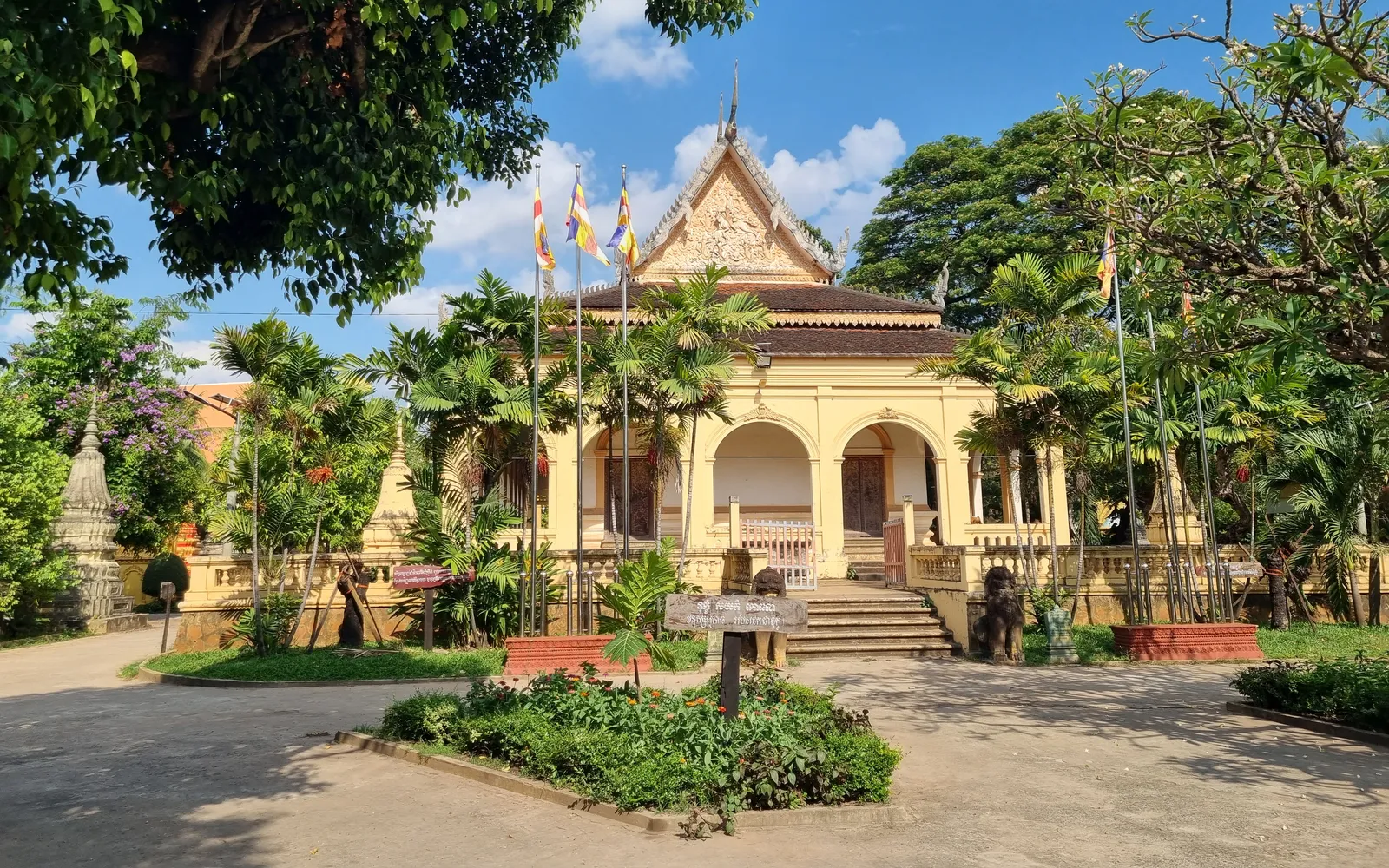
Siem Reap is far more than Angkor Wat — the whole Angkor region is one of the greatest World Heritage sites in Southeast Asia. More than 1,000 sandstone temples are scattered through the forest, some still clutched tight by tree roots, others beautifully restored. Whether you come for three days or a week, every single day turns up something new that stops you in your tracks.
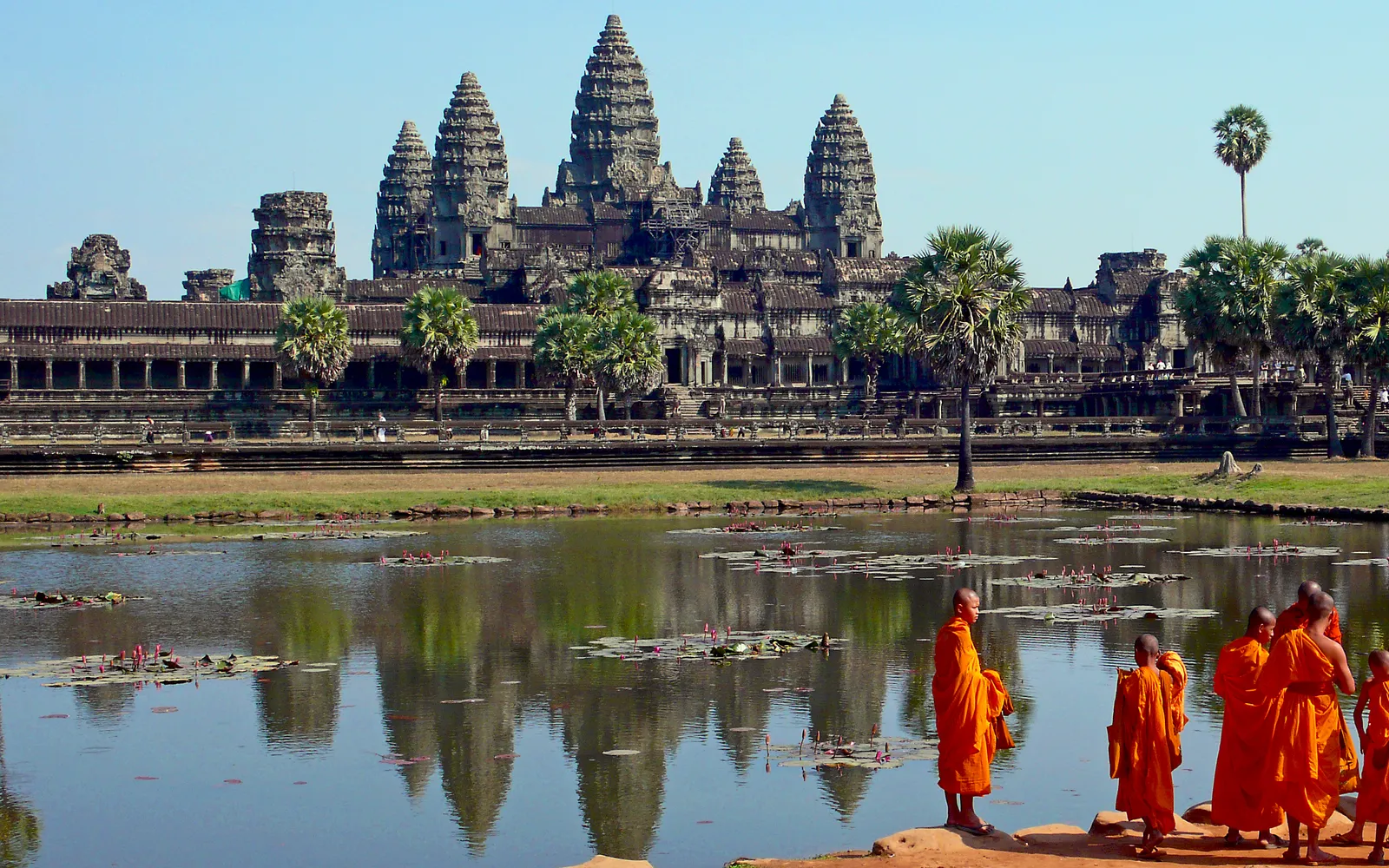 #1
#1 Angkor Wat
The largest religious monument in the world, built in the 12th century by King Suryavarman II and ringed by a moat 190 metres wide. The bas-relief carvings stretch more than 800 metres along the lower gallery, telling the Mahabharata and Ramayana in some of the finest stonework anywhere on earth. The central tower rises 65 metres, and standing beneath it you feel a spiritual weight that's hard to put into words. This is a once-in-a-lifetime visit — you could spend a whole day here and still feel it wasn't enough.
- Arrive before 5:30 a.m. to watch the sunrise reflected in the pool in front of the temple, but brace yourself for the hundreds of other travelers who all show up at the same time.
- The 3-day Angkor Pass costs 62 USD and works for every temple in the park. Buy it at the Official Ticket Center before your first day.
- Wear clothing that covers your shoulders and knees — staff will turn you away if you're dressed inappropriately.
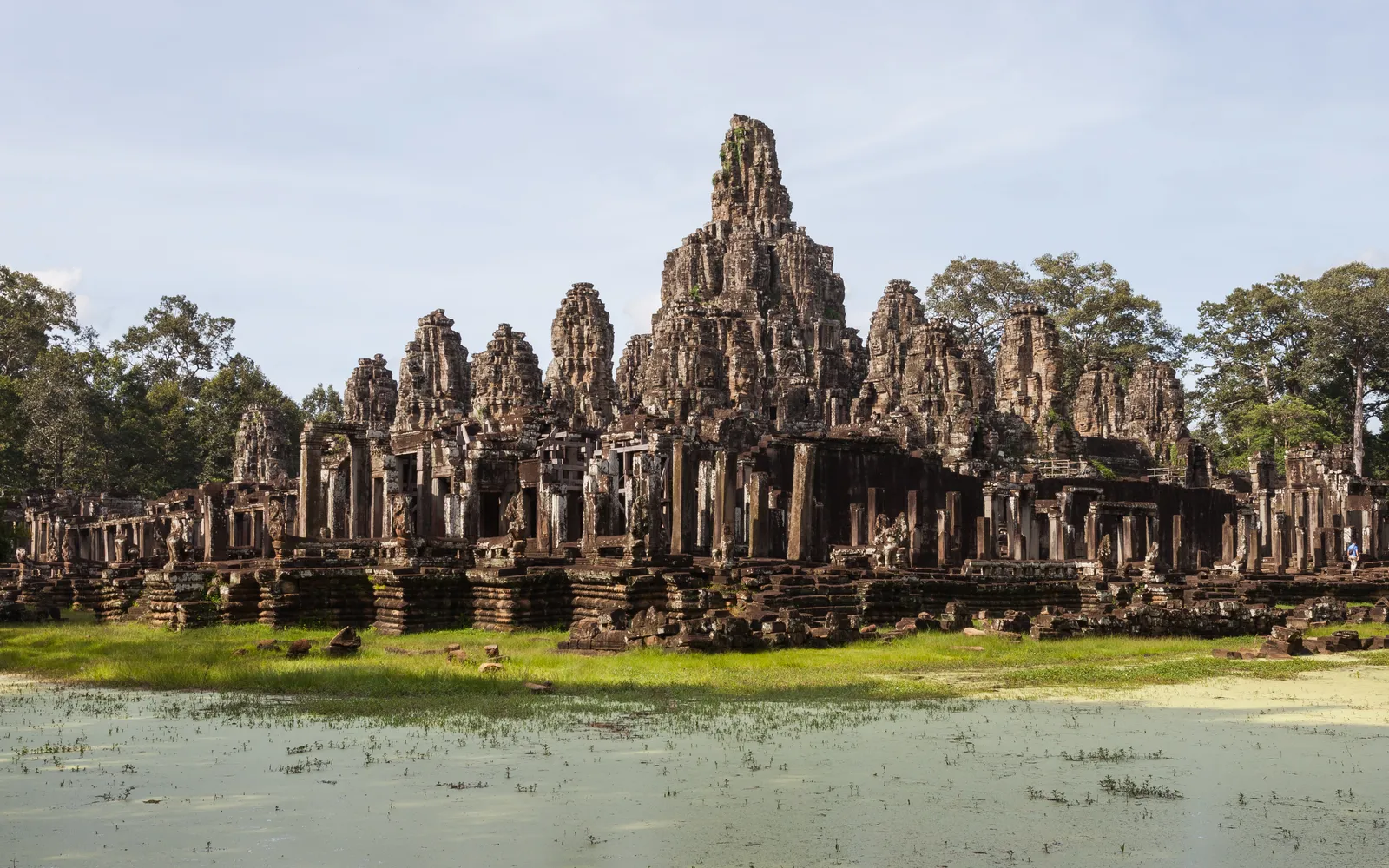 #2
#2 Bayon
The strangest and most mysterious temple in Angkor, built by King Jayavarman VII in the 12th-13th century. It has 54 towers, each carved with a face smiling in four directions as the bodhisattva Avalokiteshvara — more than 216 stone faces in all, gazing down from every angle. The atmosphere is heavy, as if you're being watched from every corner. In the morning light, slanting across the old sandstone, the effect is eerie and astonishing at once.
- Climb to the very top level to photograph the stone faces up close, but some sections are damaged and closed — check the route before you go up.
- The bas-reliefs around the outer gallery run more than 1.2 km, telling the daily life of the ancient Khmer in remarkable detail.
- Arrive before 8:00 a.m. to beat the tour groups that start pouring in by mid-morning.
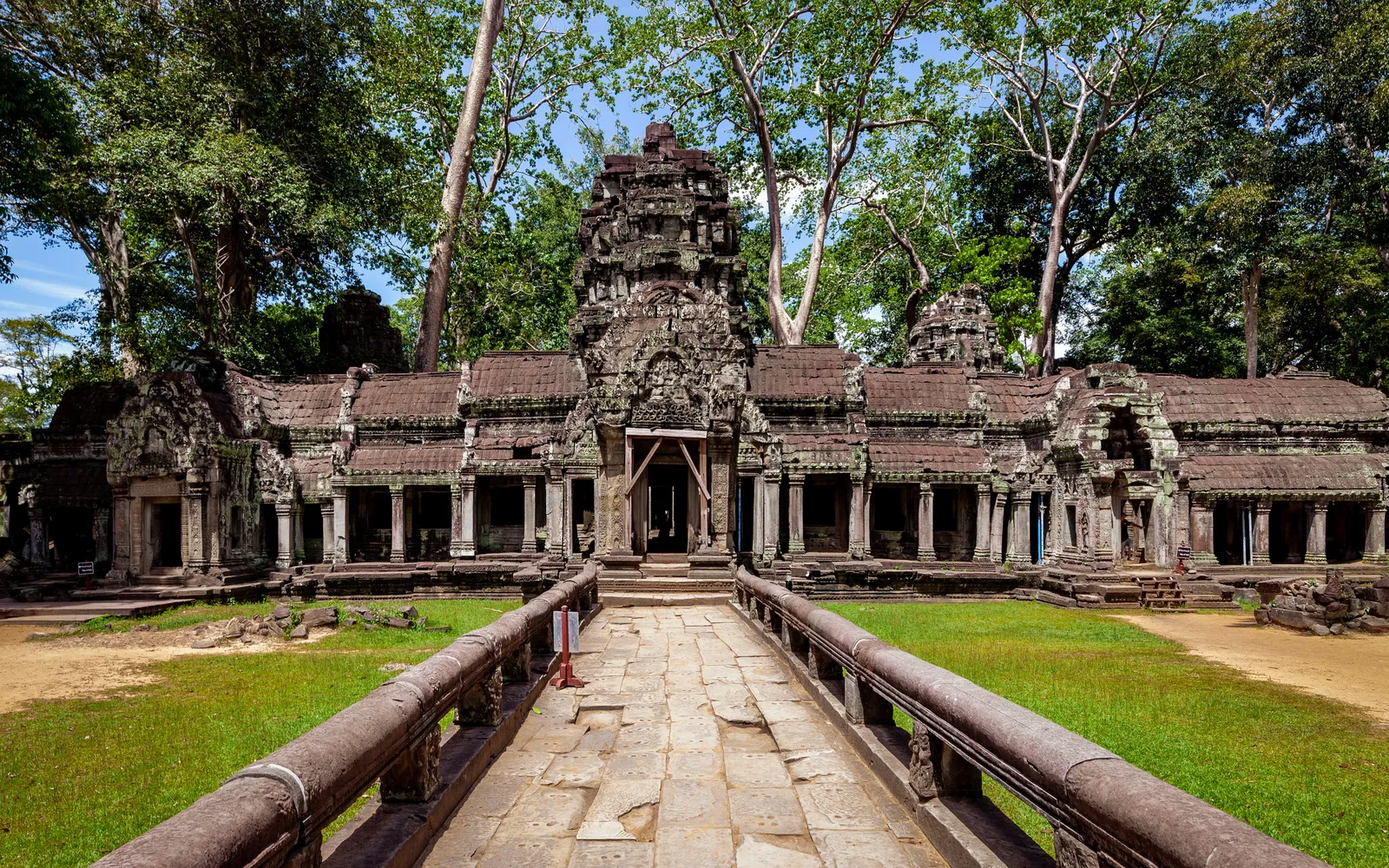 #3
#3 Ta Prohm
A temple deliberately left for nature to partly reclaim. Giant spung and strangler-fig trees sink their roots into the roofs, wrap around the walls and grow through the sandstone, creating a scene found nowhere else on earth. Built by King Jayavarman VII in 1186, it was a large Buddhist monastery that once housed more than 12,000 monks and officials. Many travelers say the place feels more mysterious, more touched by the passage of time, than any other temple in Angkor.
- The path through the temple twists and turns and is narrow in places — wear closed-toe shoes and watch for roots jutting across the way.
- Between 9:00 and 11:00 a.m. it gets very crowded as the tour groups converge. Try the afternoon, 2:00-4:00 p.m., when there are far fewer people.
- This was a filming location for Tomb Raider in 2001, which made it widely known among Western travelers.
 #4
#4 Banteay Srei
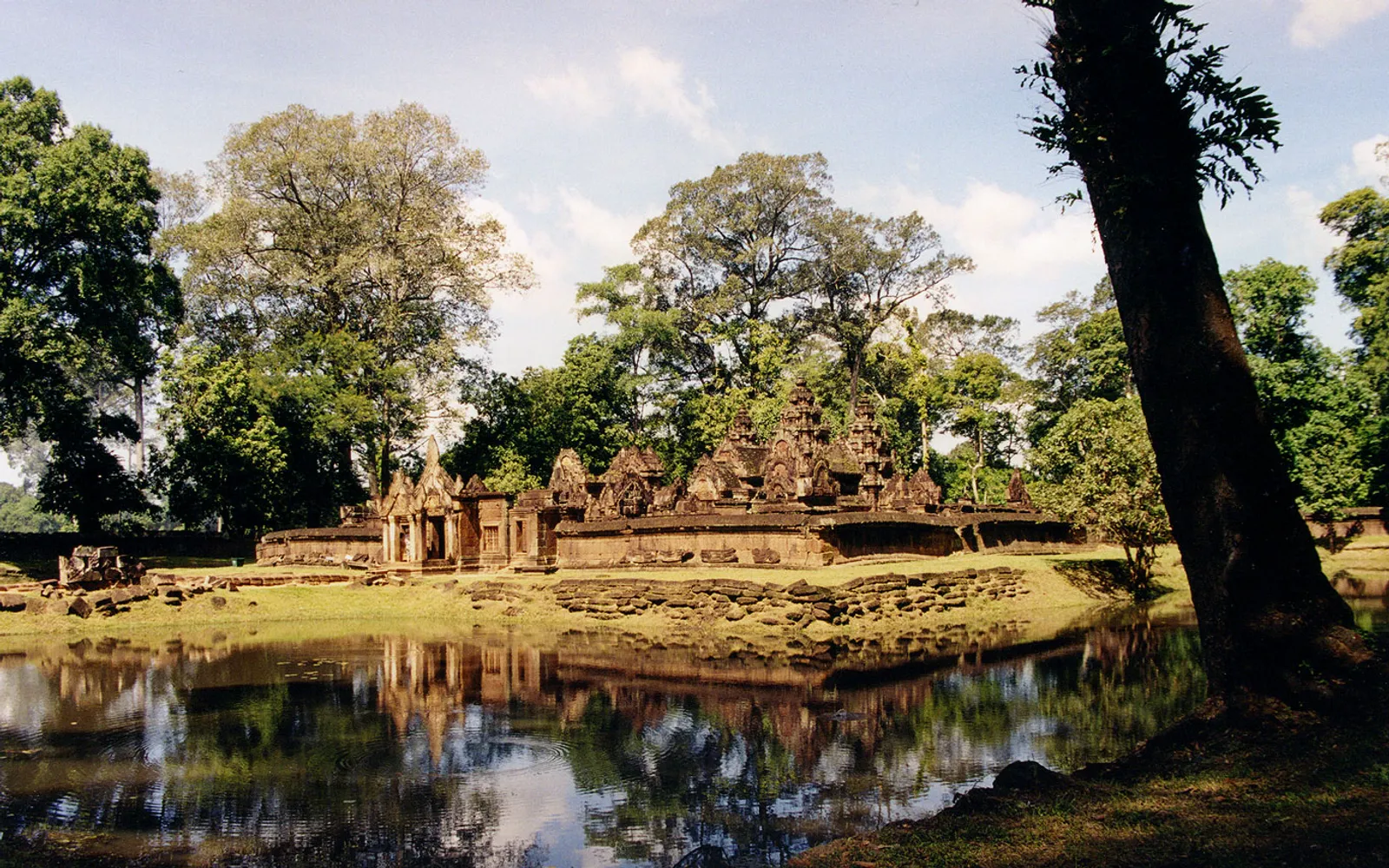
A small temple that many call the most beautiful in Angkor. Built in 967 from a pink sandstone harder than the usual stone, it keeps the detail of its carvings so crisp they look freshly cut. Every surface is covered with flowers, gods, demons and scenes from the Hindu epics, worked so finely that it's been called the jewel of Khmer art. The name Banteay Srei means citadel of the women, a nod to the delicate grace of the place.
- Don't touch the sandstone walls directly — oil and moisture from hands wear the carvings down very quickly.
- Go early, 7:00-9:00 a.m., before the sun gets harsh, because it's all out in the open with no shade.
- It isn't included in some cheap tour packages — check that your Angkor Pass covers entry here. It currently does.
 #5
#5 Angkor Thom South Gate
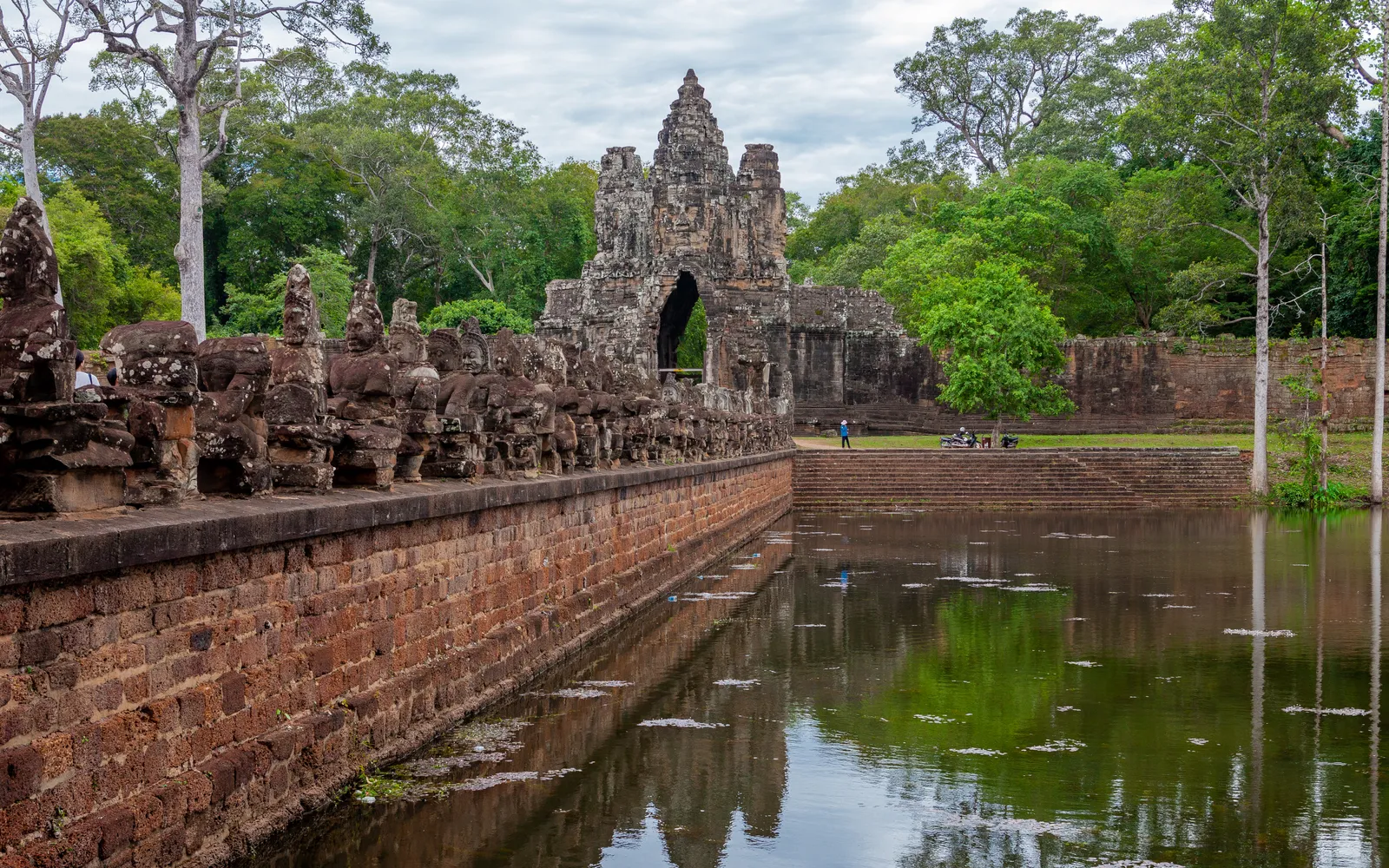
The grandest and best-preserved entrance gate into the city of Angkor Thom. A stone bridge crosses a moat 100 metres wide, with statues of gods and demons holding a naga along each side — 54 to a side, 108 figures in all, echoing the legend of the churning of the ocean of milk. The gate rises 23 metres, topped with bodhisattva faces looking in four directions, just like Bayon. Riding a tuk-tuk or bicycle through this gate feels like stepping a thousand years back in time.
- The best photo spot is on the bridge just before the gate — early morning has lovely light and few people.
- You can ride a tuk-tuk or cycle right through the gate, unlike Angkor Wat, where you have to walk in on foot.
- Angkor Thom has five entrance gates. The South Gate is the most popular and the most beautiful, but the Victory Gate on the east is worth exploring too.
 #6
#6 Preah Khan
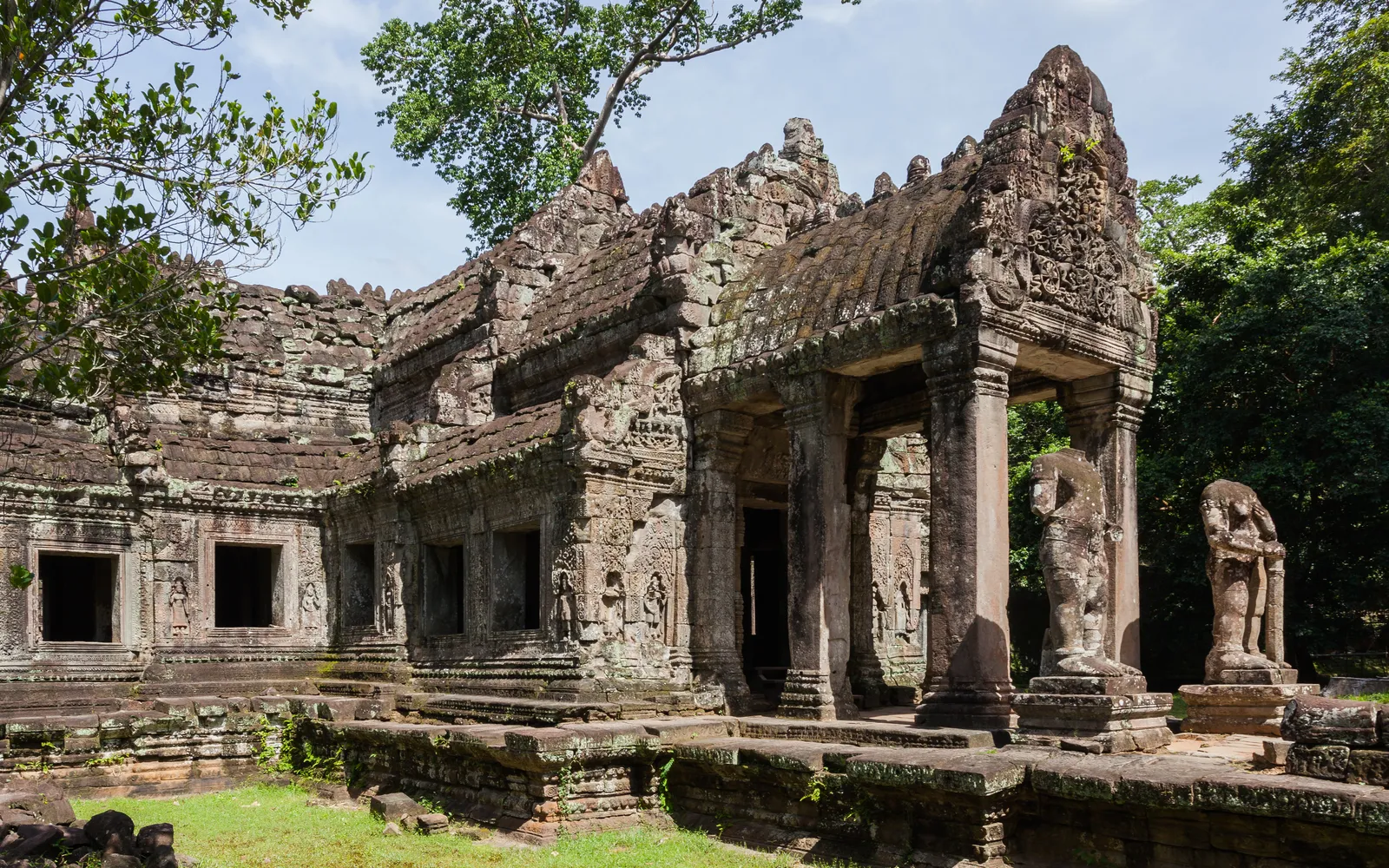
A large temple that often gets overlooked but has a wonderful atmosphere. Built by King Jayavarman VII in 1191 to honour his father, it once served as a temporary city and temple home to more than 97,000 people. It's less of a maze than Ta Prohm, but its long stone corridors, running hundreds of metres, feel more meditative and quiet. Large tree roots drape over the stone columns to striking effect. Far fewer travelers come here than to the major temples, so you can still feel the lonely calm of the forest.
- Tour groups rarely come here, making it ideal for travelers who want to take it in undisturbed.
- The path through the temple is very long — bring drinking water and wear shoes you can walk in for a while, as the only drink stall is at the entrance.
- Combine it with Bayon, Ta Prohm and Angkor Thom in the same day to get the most out of your daily tuk-tuk fare.
Where to stay in Siem Reap for this trip
A well-located hotel means less commuting and more sightseeing. Here are real, top-rated stays in Siem Reap — compare Agoda · Booking · Trip.com in one click.
Primefold Hotel
Affiliate links — we may earn a commission at no extra cost to you. Details
Central Suite Residence
Affiliate links — we may earn a commission at no extra cost to you. Details
Jaya House River Park
Affiliate links — we may earn a commission at no extra cost to you. Details
Raffles Grand Hotel d'Angkor
Affiliate links — we may earn a commission at no extra cost to you. Details
Tours, tickets & activities in Siem Reap
Day tours, attraction tickets and travel essentials for Siem Reap — book ahead on Klook with mobile e-tickets.
Affiliate links — we may earn a commission at no extra cost to you.
Before You Pack
The best time to go is the dry season, November-April, when there's no drizzle and the paths into the temples aren't muddy. A 3-day Angkor Pass (62 USD) or a 7-day pass (72 USD) is far better value than the 40 USD single-day ticket. Plan to see Angkor Wat at sunrise, Ta Prohm in the morning and Bayon in the late morning, and steer clear of midday, when the heat climbs to 40 degrees.