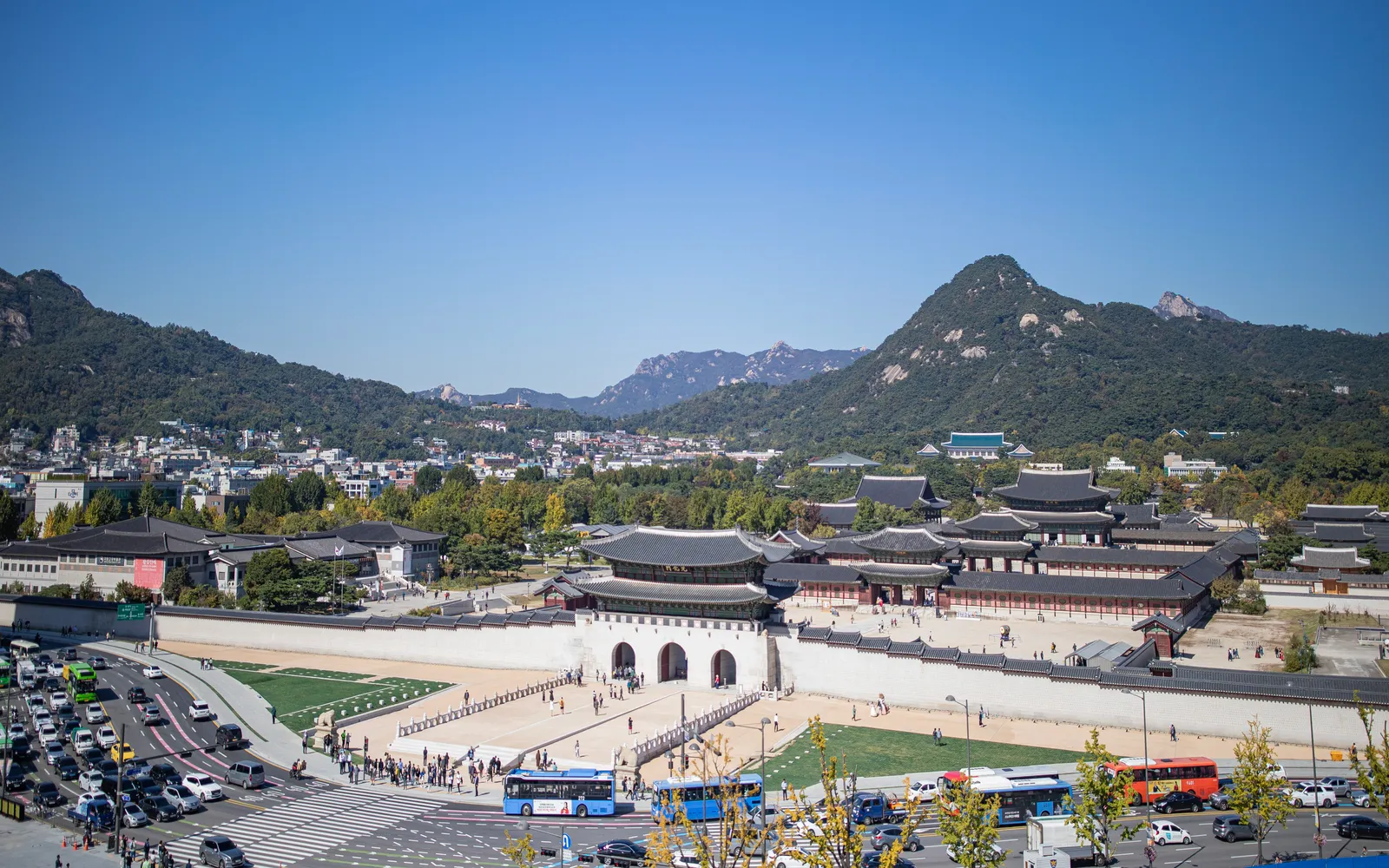
Seoul is the city that pulls off old-meets-new better than anywhere else in Asia. Ancient palaces stand directly next to glass towers, hanok village lanes feed into cutting-edge cafés, and traditional markets sit a short walk from the continent's most polished shopping districts. The city holds 5 Joseon royal palaces, multiple UNESCO World Heritage sites, entire neighborhoods of preserved hanok architecture, and 360-degree skyline views from both mountains and landmark towers. Whether you are drawn to history, K-pop culture, fashion, or food — Seoul has a version of it that will genuinely surprise you.
 #1
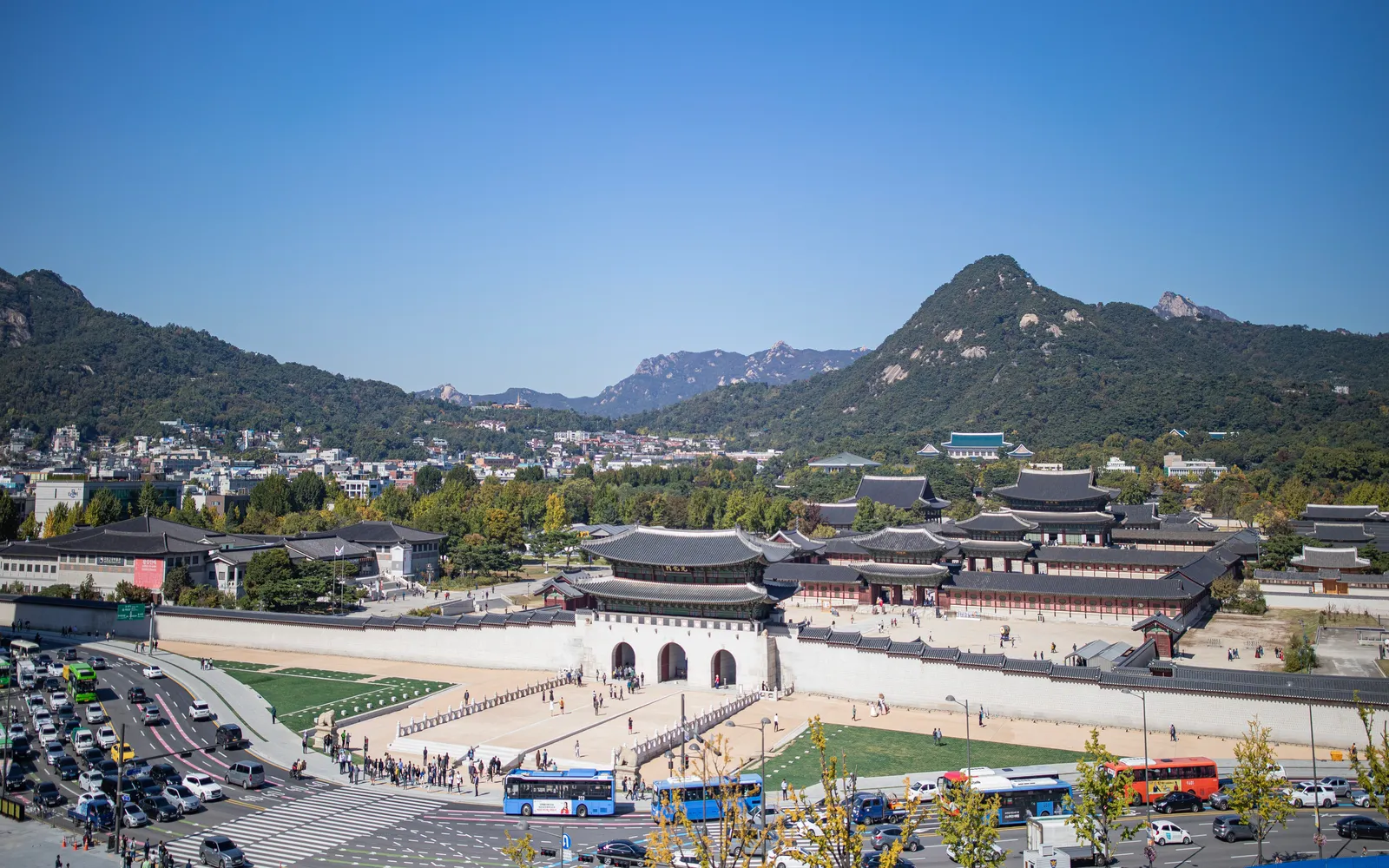
#1 Gyeongbokgung Palace
The grandest and most complete palace of the Joseon dynasty, built in <strong>1395</strong> with more than <strong>330 buildings</strong> across the complex. The Gyeonghoeru Pavilion — a two-storey stone hall floating on a lotus pond — is one of South Korea's most photographed landmarks. A full changing-of-the-guard ceremony takes place daily, and inside the palace grounds you will find both the National Palace Museum and the National Folk Museum of Korea.
- Admission is 3,000 won. Wear a hanbok and you enter free — rental shops are a short walk from the main gate.
- The changing-of-the-guard ceremony runs every day except Tuesday at 10:00 and 14:00 at Gwanghwamun Gate.
- Come on a weekday morning or late afternoon to avoid the heaviest crowds.
 #2
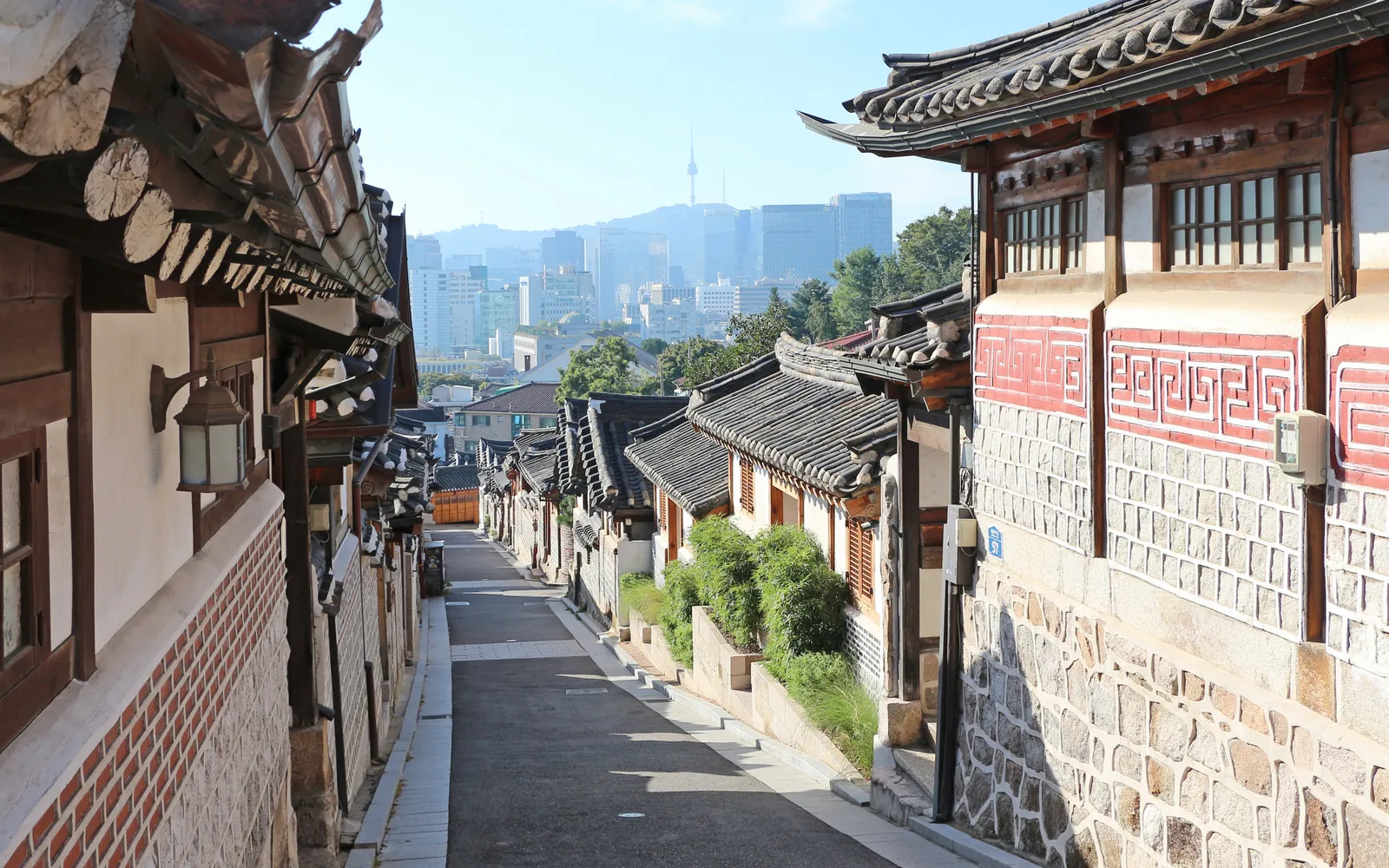
#2 Bukchon Hanok Village
A living historic neighborhood that has preserved more than <strong>900 hanok</strong> — traditional Korean timber houses — across its hillside lanes. During the Joseon era this area was home to nobles and high-ranking commoners; today many of the same buildings operate as galleries, cafés, and guesthouses. The view from the highest point of the village takes in both the city skyline and the surrounding mountain ridges.
- The best photography angle is on Bukchon-ro 11-gil — arrive early in the morning when the light is soft and the lanes are quiet.
- This is still a residential neighborhood. Keep voices low and do not enter private properties.
- Traditional tea houses in the smaller alleys are worth seeking out — try Korean mulberry leaf tea.
 #3
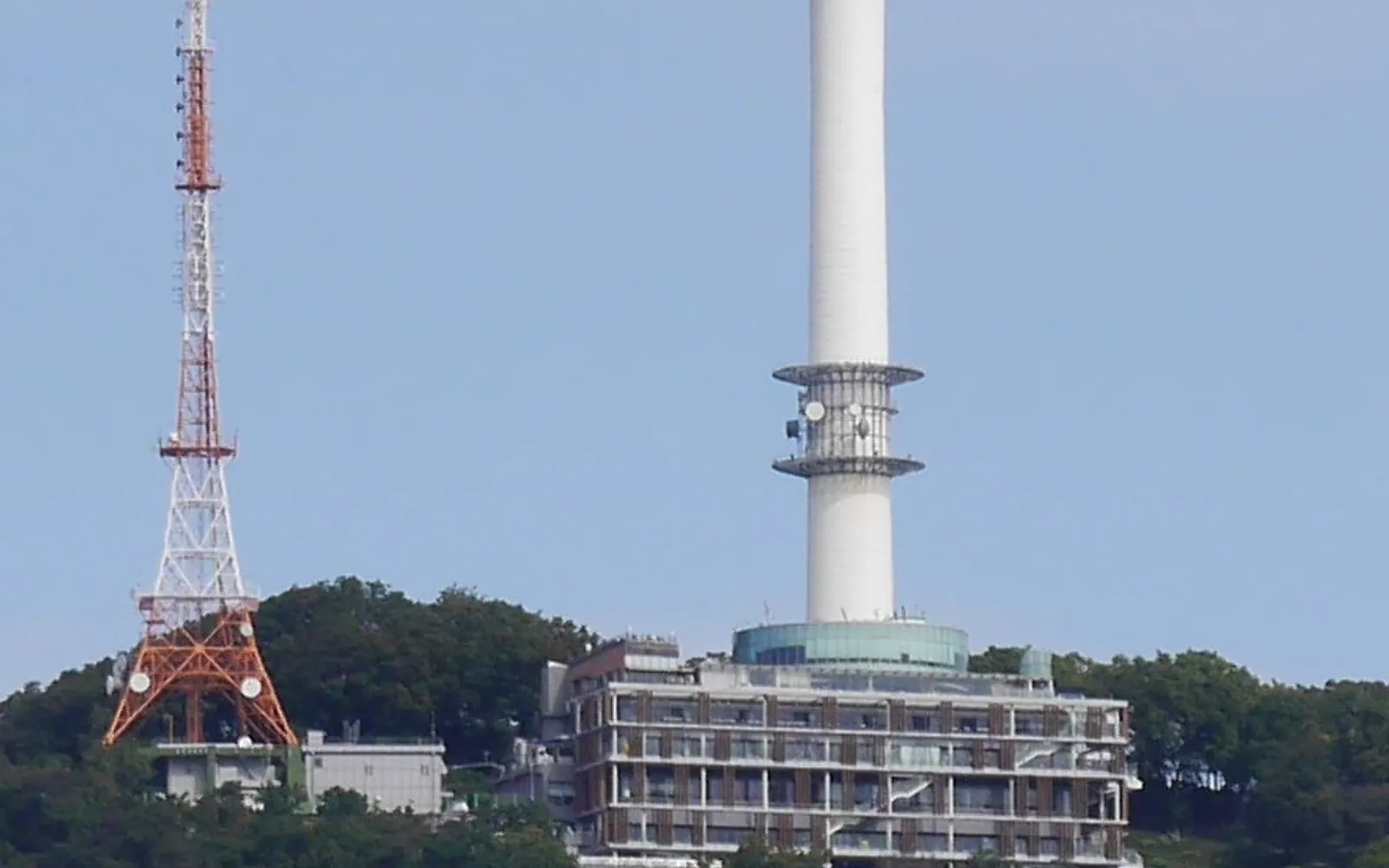
#3 N Seoul Tower (Namsan Tower)
Seoul's most recognisable romantic landmark, perched on <strong>Namsan Mountain at 479 metres</strong> above sea level. The tower itself stands <strong>236 metres</strong> tall and was constructed in <strong>1969</strong>. The observation deck delivers a full 360-degree panorama of the capital. The railings alongside the tower carry millions of padlocks left by couples over the years. You can reach the top by cable car from Myeongdong or by shuttle bus.
- Take the cable car up from Myeongdong station and come down at night — the city light view on the descent is hard to beat.
- The rotating N Grill restaurant on the tower's first floor turns a full circle; book a table in advance.
- The padlock wall at the base of the tower is free to visit — no ticket needed if you just want to walk around it.
 #4
#4 Myeongdong
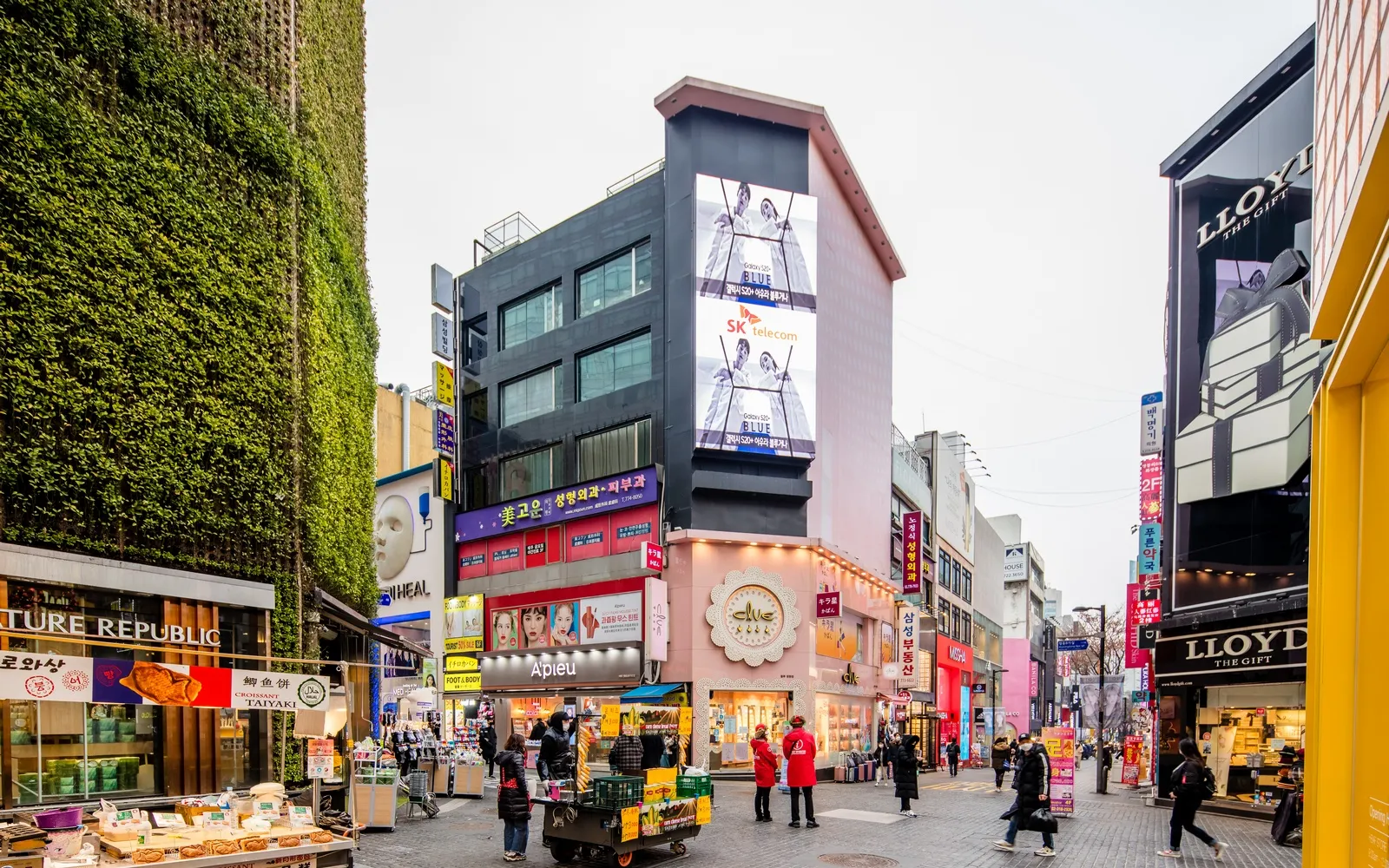
South Korea's busiest shopping district, with more than <strong>200,000 people</strong> passing through on a typical day. The streets are stacked with flagship stores from Korea's leading skincare and cosmetics brands, fashion shops, department stores, and — after dark — a dense run of street food stalls. Evenings bring grilled pork skewers, cheese lobster, egg-and-cheese creations, and a full range of fried snacks lining the pedestrian road.
- Avoid weekend evenings when the crowds are at their thickest — weekday visits are noticeably calmer.
- The same cosmetics chain often runs multiple branches within a few blocks of each other with different prices and promotions; compare before you buy.
- Myeongdong's signature street snack is tteokbokki in a paper cup — cheap, spicy, and best eaten while walking.
 #5
#5 Hongdae
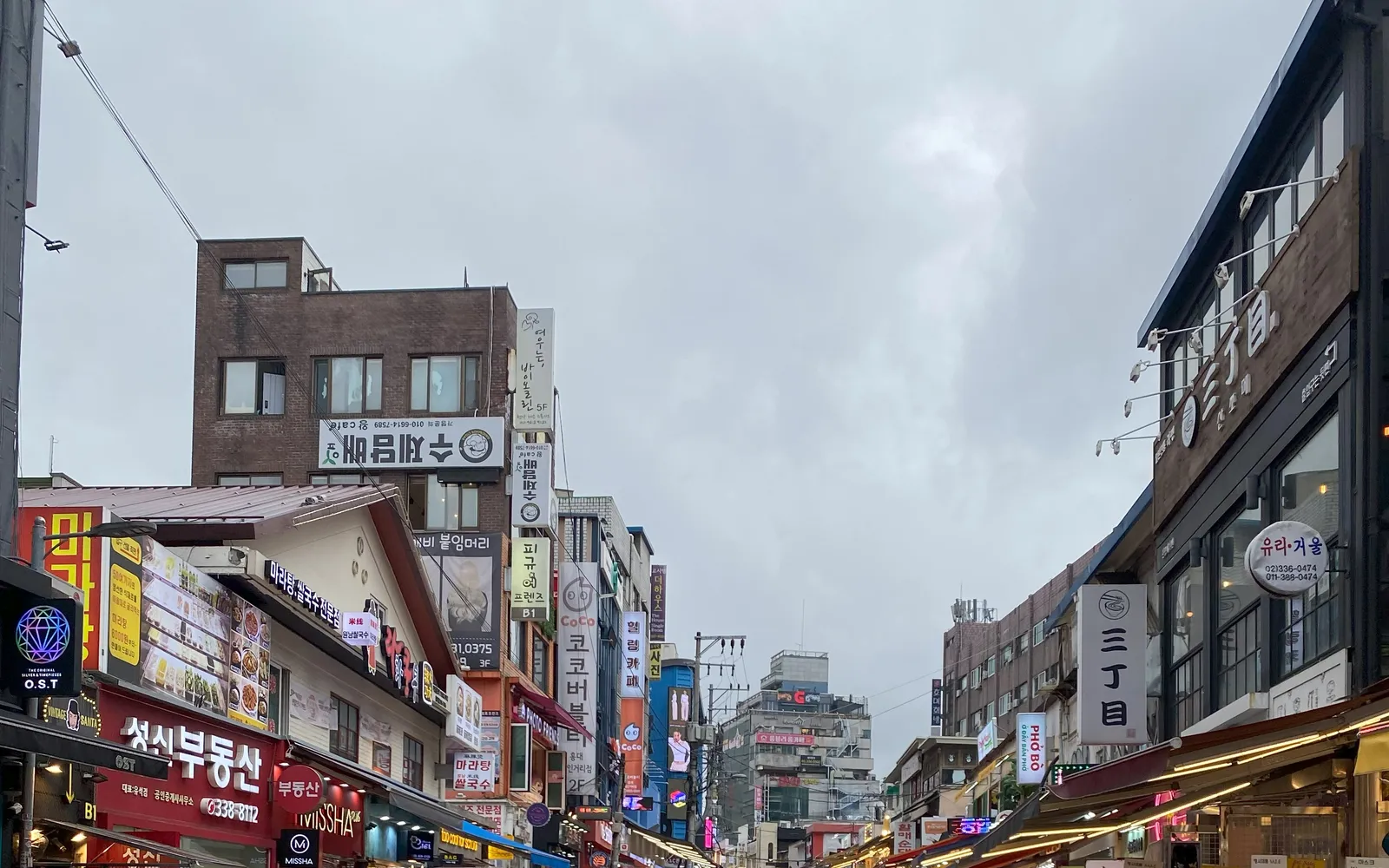
Seoul's most energetic arts and culture district, shaped by its proximity to <strong>Hongik University</strong> and a long tradition of independent music and street performance. The area runs thick with creative cafés, independent boutiques, art studios, clubs, bars, and street food. Buskers perform live every night. Hongdae is also the ground zero of contemporary K-pop culture and Korean street fashion.
- The free market in the nearby park runs every Saturday and Sunday afternoon — handmade goods worth browsing.
- The adjacent Sinchon neighborhood has cheaper bars and restaurants if you are watching your budget.
- Theme cafés — cat cafés, dog cafés, dessert cafés — are concentrated throughout Hongdae and easy to find by simply walking the side streets.
 #6
#6 Insadong
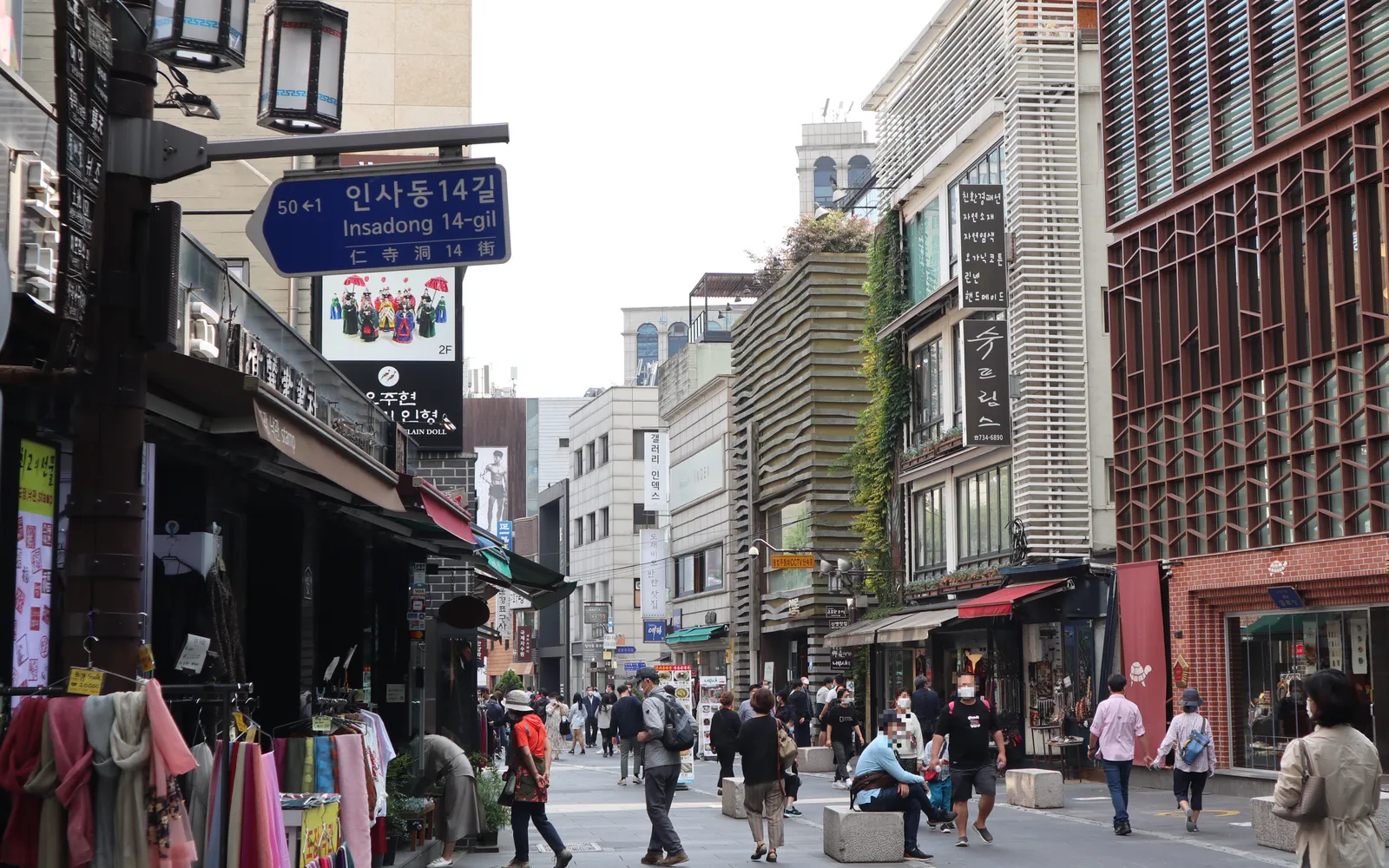
A cultural district that has held onto traditional Korean character in the middle of a modern city. The streets are full of art galleries, craft shops, souvenir stores, centuries-old tea houses, and Korean restaurants serving food rooted in old recipes. Hidden inside the neighbourhood is <strong>Ssamziegil</strong>, an outdoor courtyard complex built around independent Korean designers — one of the more rewarding spots to browse for something genuinely made in Seoul rather than mass-produced.
- Ssamziegil (쌈지길) is the courtyard shopping complex with independent designers and cafés — easy to walk past and miss from the main street.
- Try Korean ginseng tea (<em>insam-cha</em>, 인삼차) or Korean plum tea at one of the traditional tea houses in the district.
- Weekday afternoons are noticeably quieter and all the shops are open — a better experience than weekend crowds.
 #7
#7 Changdeokgung Palace and Secret Garden
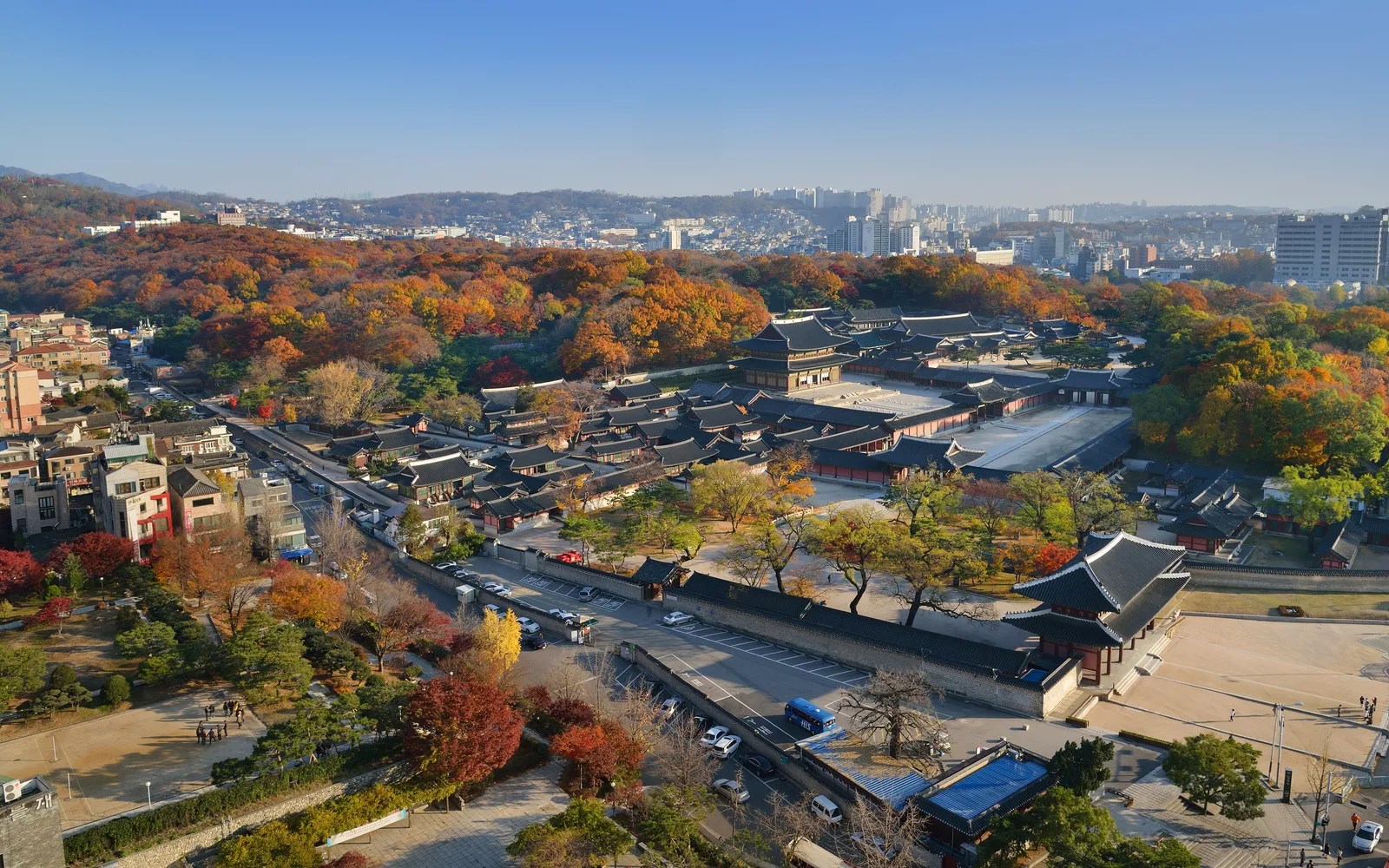
A <strong>UNESCO World Heritage</strong> palace widely considered the most beautiful in Seoul, built in <strong>1405</strong> and praised for its design that works with the natural terrain rather than against it. The highlight is <strong>Huwon</strong> — the Secret Garden behind the palace — a <strong>31-hectare</strong> private royal garden that was off-limits to anyone but the royal family for centuries. It contains lotus ponds, traditional pavilions, and hundreds of mature trees. Autumn is the peak season for colour.
- Huwon can only be visited on a timed guided tour — book in advance at changdeokgung.go.kr.
- English-language tours run every day except Monday at 10:30 and 14:30.
- Autumn (October–November) for the leaf colour is the most popular season — bookings fill up fast, so reserve well ahead.
 #8
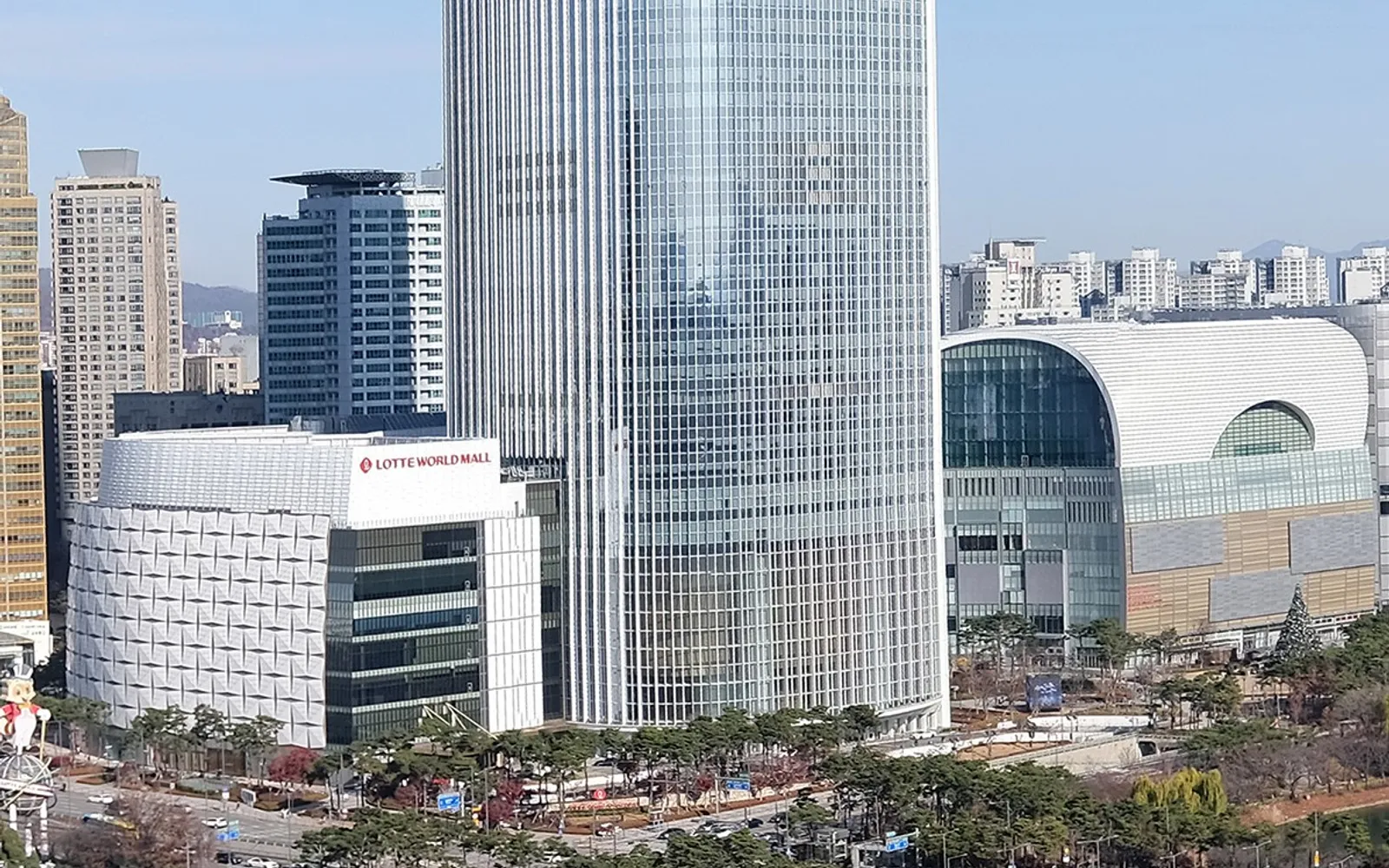
#8 Lotte World Tower and Han River Park
<strong>Lotte World Tower</strong> is South Korea's tallest building at <strong>555 metres and 123 floors</strong>. The <strong>Seoul Sky</strong> observation deck occupies floors 117–123, including a glass-floored section that set a world record for its height. A few kilometres away, <strong>Hangang Park</strong> runs along the Han River — the green lung where Seoul residents come to picnic, cycle, and watch the river at dusk. The Han River is as central to Seoul's identity as the city's skyline.
- Seoul Sky is open 09:30–22:00. Buy tickets online in advance to save time and get a discount.
- Yeouido Hangang Park on weekend evenings fills with locals who bring food and spread mats along the water — a genuine slice of Seoul daily life.
- Bike rental along the Han River (Seoul Bike / Ttareungi) is cheap and an easy way to cover a long stretch of riverside path.
Where to stay in Seoul for this trip
A well-located hotel means less commuting and more sightseeing. Here are real, top-rated stays in Seoul — compare Agoda · Booking · Trip.com in one click.
Lotte Hotel Seoul
Affiliate links — we may earn a commission at no extra cost to you. Details
Ewha Hostel
Affiliate links — we may earn a commission at no extra cost to you. Details
L7 Myeongdong by LOTTE
Affiliate links — we may earn a commission at no extra cost to you. Details
Nine Tree Hotel Myeongdong
Affiliate links — we may earn a commission at no extra cost to you. Details
Tours, tickets & activities in Seoul
Day tours, attraction tickets and travel essentials for Seoul — book ahead on Klook with mobile e-tickets.
Affiliate links — we may earn a commission at no extra cost to you.
Before You Pack
Seoul rewards return visits — these 8 places are a strong starting point for any trip to one of the most dynamic cities in the world, but the longer you explore, the more distinct corners you find.