
Russian food rarely gets its due as a destination in itself — but anyone who has eaten the real thing in Saint Petersburg will think differently. A pot of borscht simmered overnight, paper-thin crispy blini with roe, and tender pelmeni floating in clear broth tell you more about the country's history than most books will. Worth knowing before you order: most dishes are built around meat. Vegetarians should flag it with the restaurant before choosing.
 #1
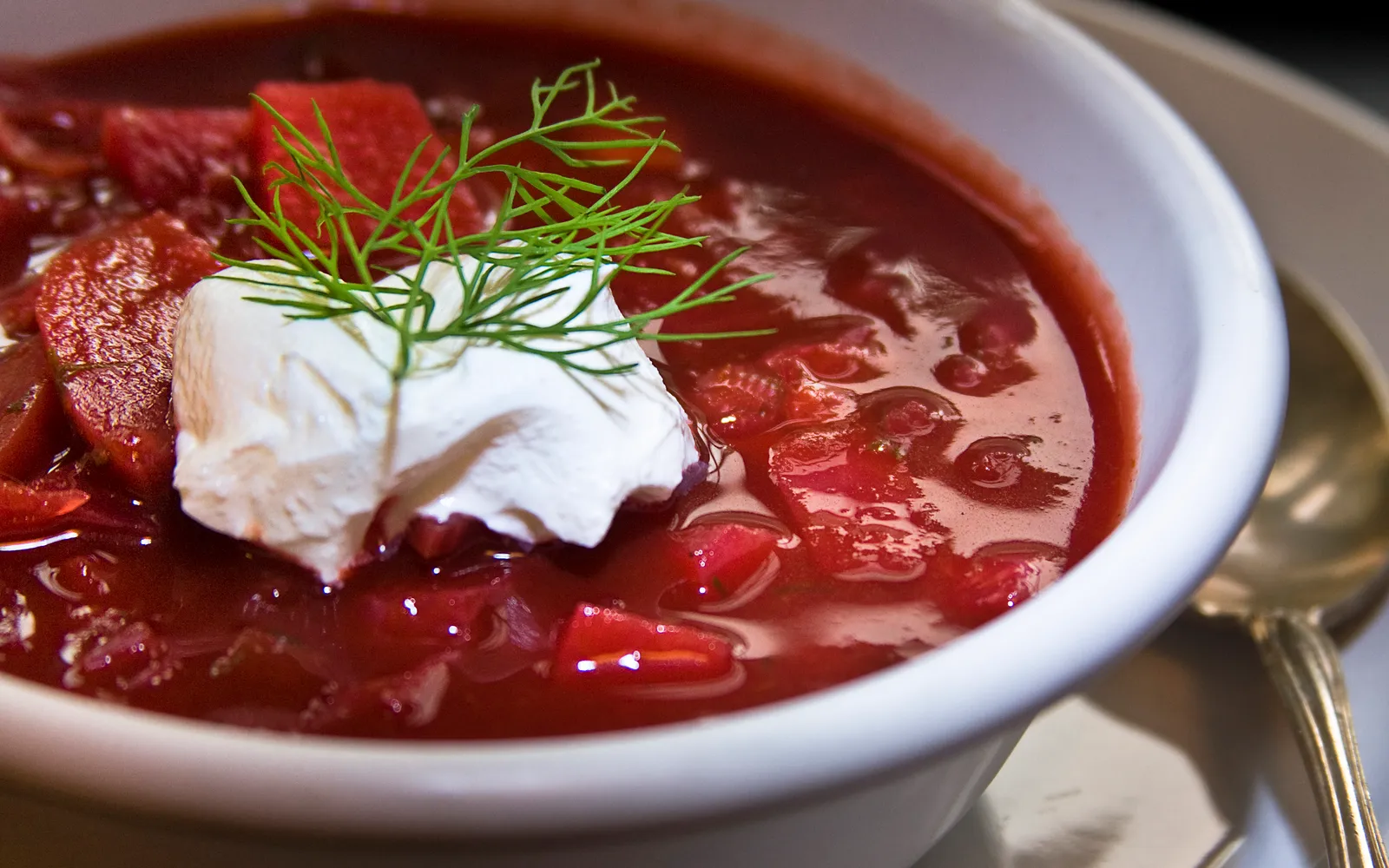
#1 Borscht
This beet soup has represented Slavic cooking for over a thousand years and was added to UNESCO's Intangible Cultural Heritage list in 2022. The Russian version simmers beetroot with cabbage, onion, carrot, potato, and beef or pork for several hours until the broth turns a deep, fragrant red. It arrives hot with sour cream and black bread, and the flavour is more layered than you'd expect — sour, a little sweet, and rounded all at once.
- Always order extra smetana (Russian sour cream) on the side. Stir it into the soup and it lifts the whole thing to another level of richness.
- Cold borscht (or okroshka) is a completely different summer version. Order both to compare.
- Prices run 200–400 roubles a bowl at a local place; tourist-facing restaurants often charge two to three times that.
 #2
#2 Blini
One of the oldest dishes in Slavic cooking, predating Christianity and tied closely to the Maslenitsa festival (Russia's carnival week). The batter — wheat or buckwheat — is made extremely thin and cooked in butter. Blini work equally well sweet (with jam or honey) or savoury (with smoked salmon, red caviar, or cream cheese), which makes them viable any time from breakfast through a late-night snack.
- Try blini with red caviar (ikra) — it costs a fraction of black caviar, tastes excellent, and is one of the most authentically Russian things you can eat here.
- Teremok is a Russian fast-food chain with reliably good, cheap blini, including inside metro stations across the city.
- Buckwheat blini have a nuttier, more complex flavour than wheat. Ask your server if they have the option.
 #3
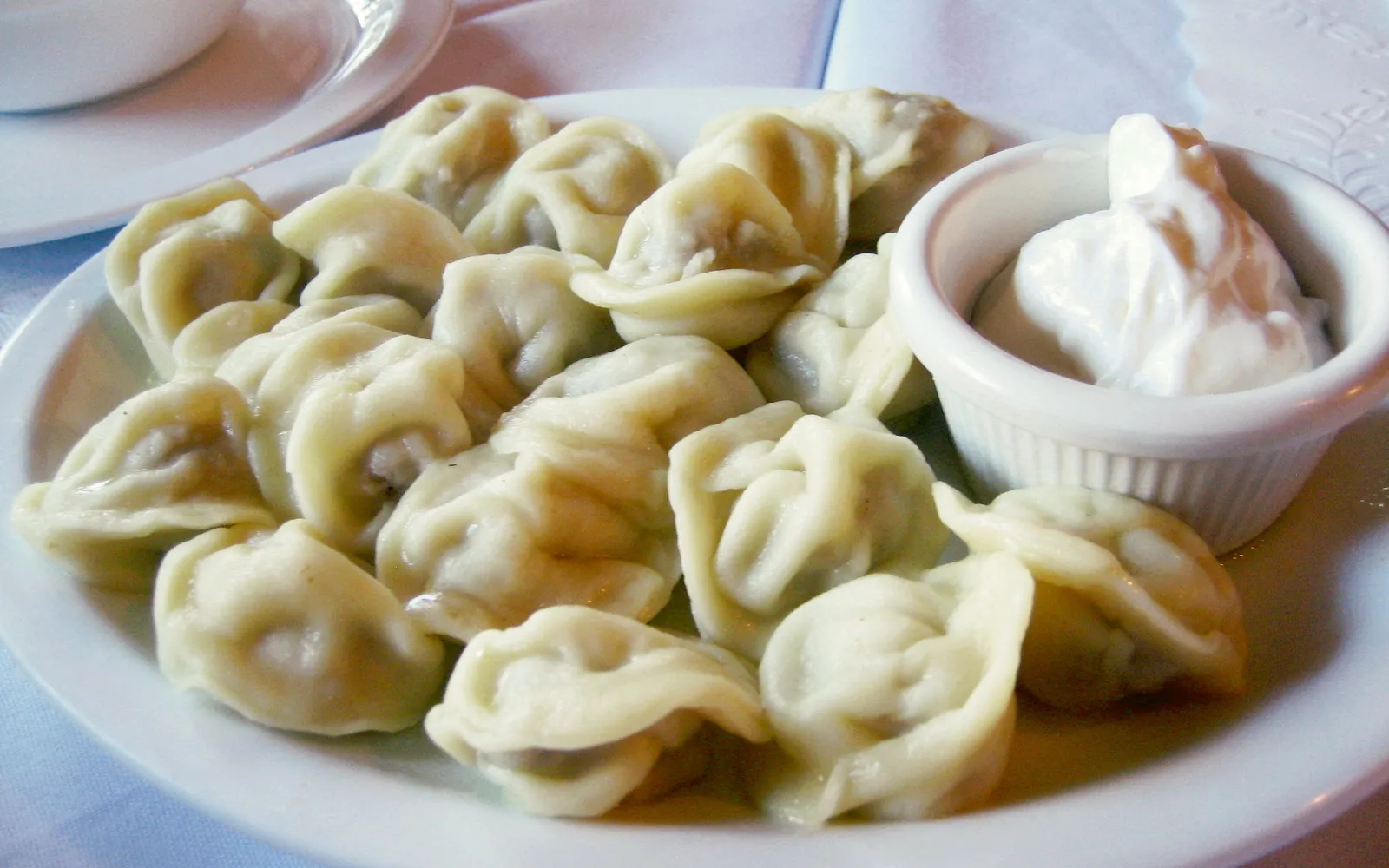
#3 Pelmeni
Russian dumplings filled with beef, pork, or a mix, wrapped in thin soft dough and boiled. The original recipe comes from Siberia, where families would make large batches and freeze them outdoors through the long winter. Pelmeni can be served boiled in broth, pan-fried, or baked — typically with sour cream, vinegar, or melted butter. Simple but filling, they're the kind of comfort food that makes sense in any season.
- Order s maslom (with butter) or so smetanoy (with sour cream) — both are excellent in different ways.
- A plate at a local place runs 300–600 roubles. Far better value than tourist-facing restaurants.
- If you're not sure where to go, ask your hotel to point you toward a nearby pelmennaya that locals actually use.
 #4
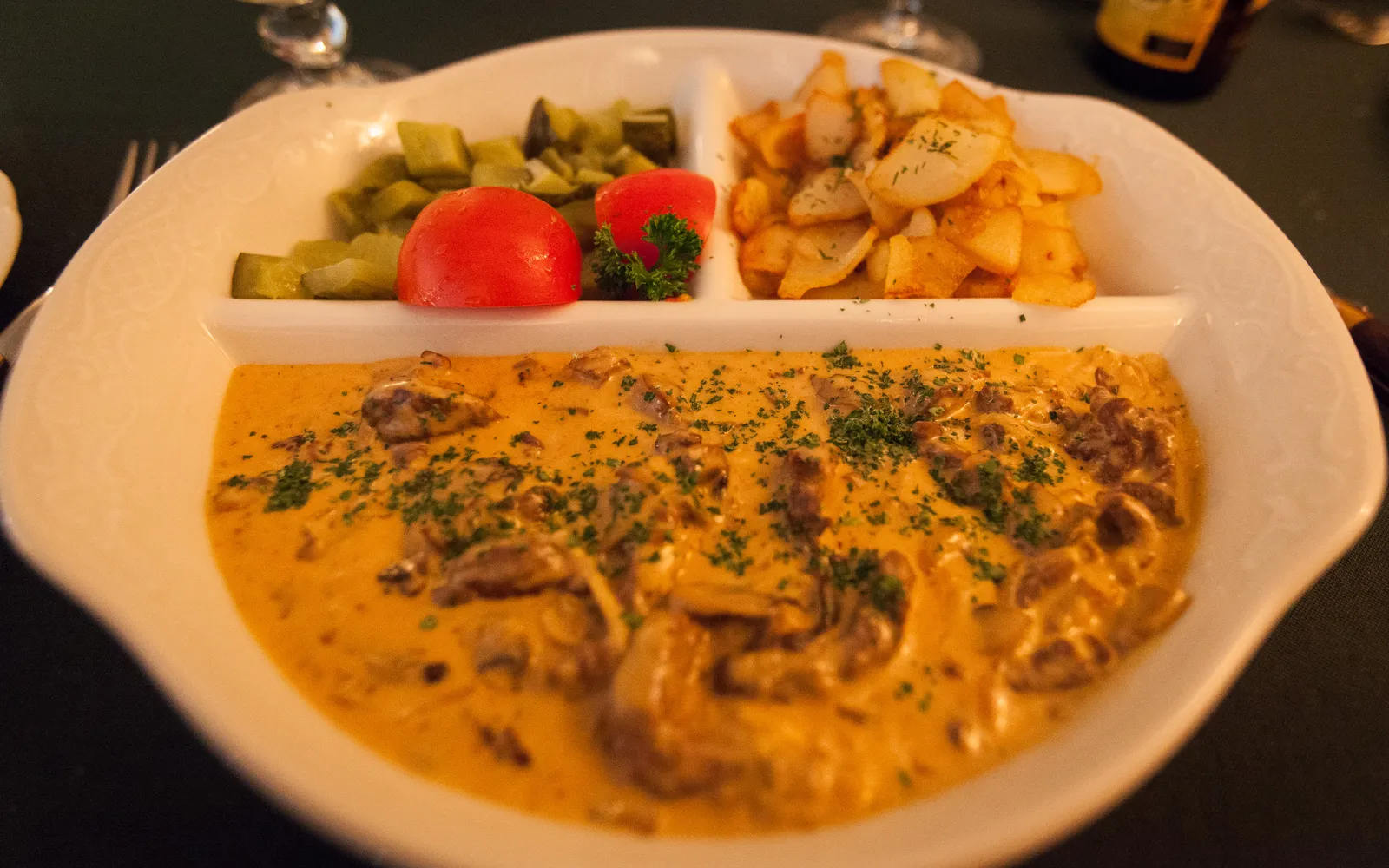
#4 Beef Stroganoff
Russia's most internationally known dish — and one that originated right here in Saint Petersburg in the 19th century, named after the aristocratic Stroganov family. The original recipe uses thin-cut beef sautéed with onion and mushrooms in a sour cream and mustard sauce. The result is rich and creamy with a depth of flavour that sets it apart from generic meat-in-sauce dishes. It comes with mashed potatoes or noodles, and eating it here, in its city of origin, is its own small piece of history.
- Choose a restaurant that cuts and sears fresh beef to order rather than using pre-frozen meat. The difference in quality is significant.
- Order it with kartofelnoe pyure (mashed potato) — the traditional pairing — rather than pasta, which is a modern variation.
- Expect to pay 600–1,200 roubles at a mid-range restaurant. If prices are much lower than that, the beef quality is worth questioning.
 #5
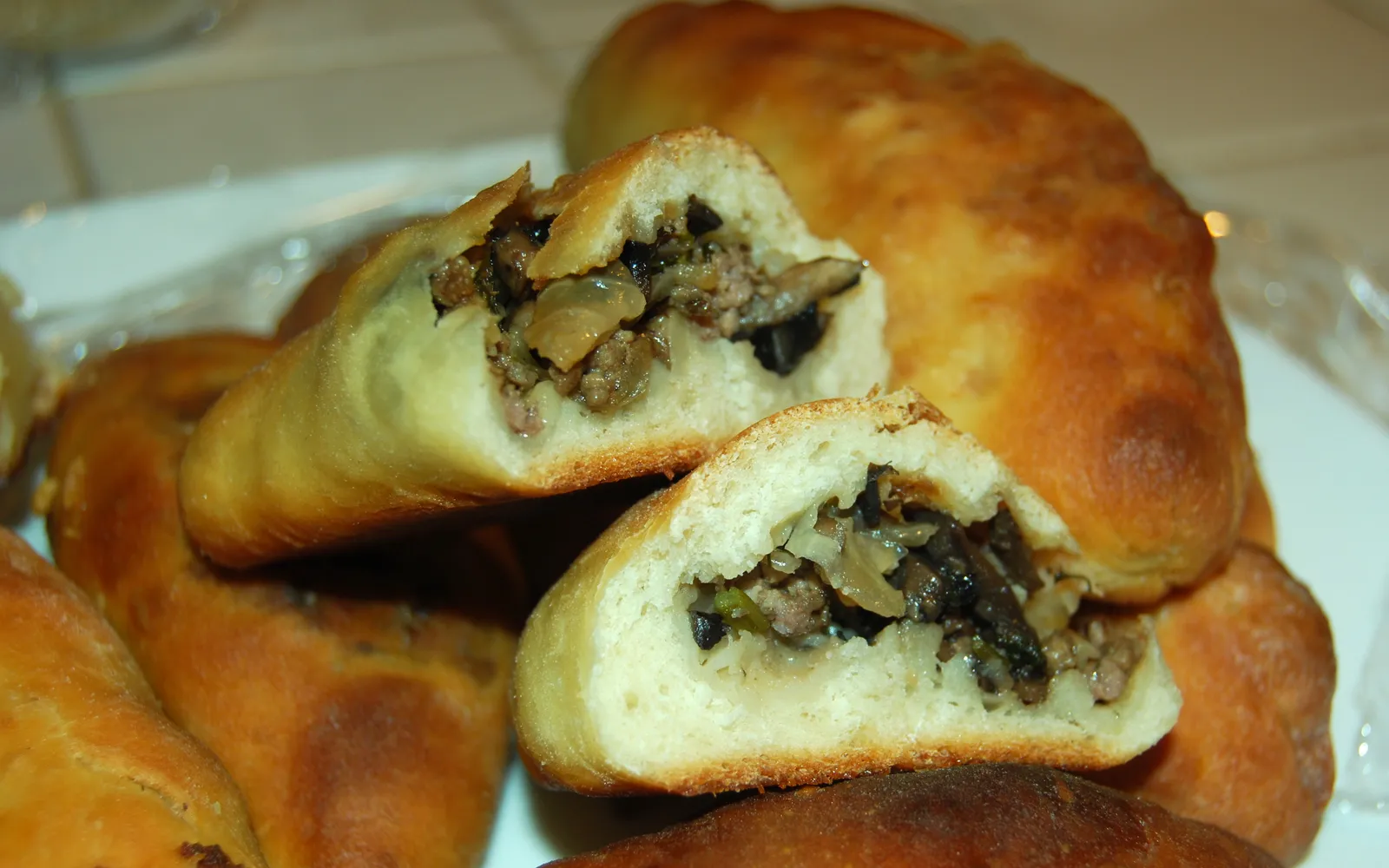
#5 Pirozhki
Baked or fried filled buns that have been a Russian street staple for centuries. Fillings span savory — cabbage with boiled egg, minced beef with onion, potato with mushroom, cheese — and sweet, with jam or apple. Each piece is hand-sized and easy to eat walking, and local bakeries turn out fresh batches throughout the day. The smell of them coming out of the oven is hard to walk past.
- Buy from street bakeries with Russian-only signage rather than shops in tourist areas — the price gap is significant.
- Prices run 50–150 roubles each. Pick up several fillings to compare. The cabbage-and-egg version is the most traditional.
- Eat immediately while still warm. The crust softens quickly once they cool.
 #6
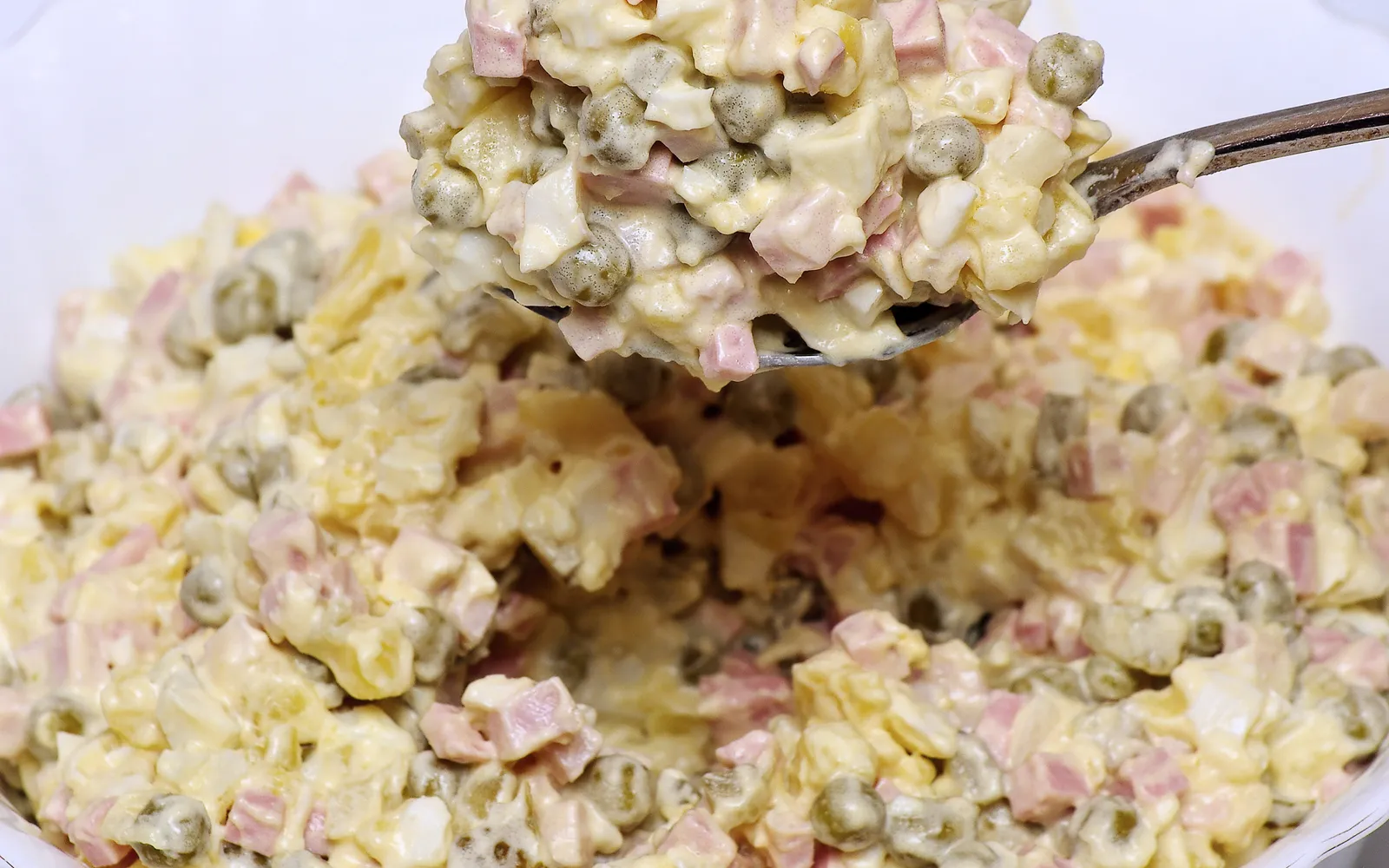
#6 Olivier Salad
The salad no Russian celebration is complete without. The original 19th-century recipe was created by chef Lucien Olivier at the Hermitage restaurant in Moscow — in that version, it included ox tongue and caviar. The everyday recipe now uses boiled potato, carrot, sausage, pickled cucumber, peas, and egg bound with mayonnaise. The result is creamy and slightly tart from the pickles — the kind of dish that earns its status as a national classic.
- Order it as a starter before the main course — it's served cold and cuts through the richness of the soup or meat that follows.
- Perekrestok and Lenta supermarkets sell it by weight at the deli counter, cheaper than restaurants and just as good.
- If the menu lists two versions, order domashny (home-style) for a more natural, less processed flavour.
Where to stay in Saint Petersburg for this trip
A well-located hotel means less commuting and more sightseeing. Here are real, top-rated stays in Saint Petersburg — compare Agoda · Booking · Trip.com in one click.
Kaleidoscop on Italyanskaya
Affiliate links — we may earn a commission at no extra cost to you. Details
Four Seasons Hotel Lion Palace St. Petersburg
Affiliate links — we may earn a commission at no extra cost to you. Details
Majestic Boutique Hotel Deluxe
Affiliate links — we may earn a commission at no extra cost to you. Details
Petr Hotel
Affiliate links — we may earn a commission at no extra cost to you. Details
Tours, tickets & activities in Saint Petersburg
Day tours, attraction tickets and travel essentials for Saint Petersburg — book ahead on Klook with mobile e-tickets.
Affiliate links — we may earn a commission at no extra cost to you.
Before You Pack
The best Russian food in Saint Petersburg is in places that are not targeting tourists. Look for restaurants with Russian-only signage and local diners at the tables. Google Translate's camera mode handles menus well — useful since many places have no English version.