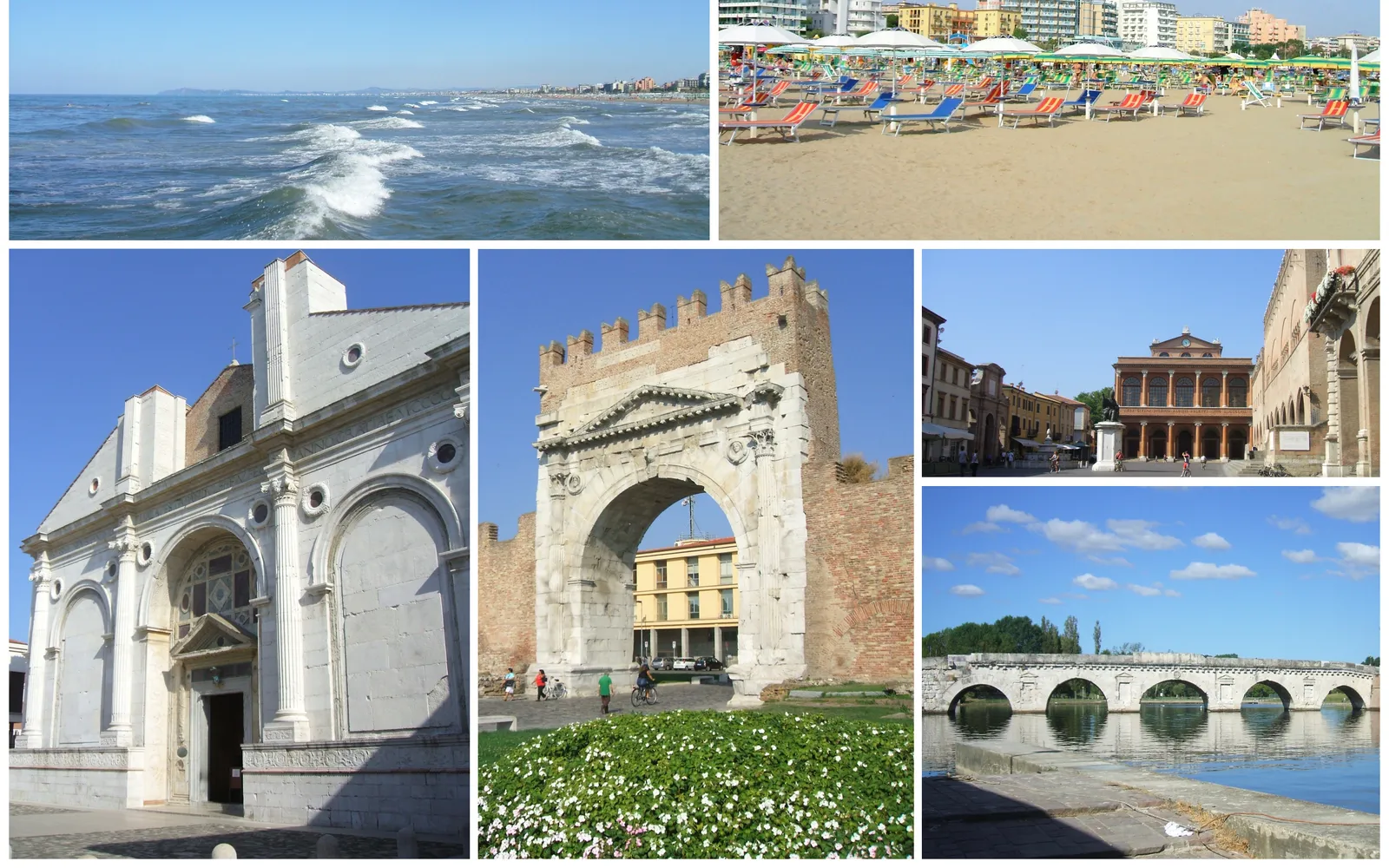
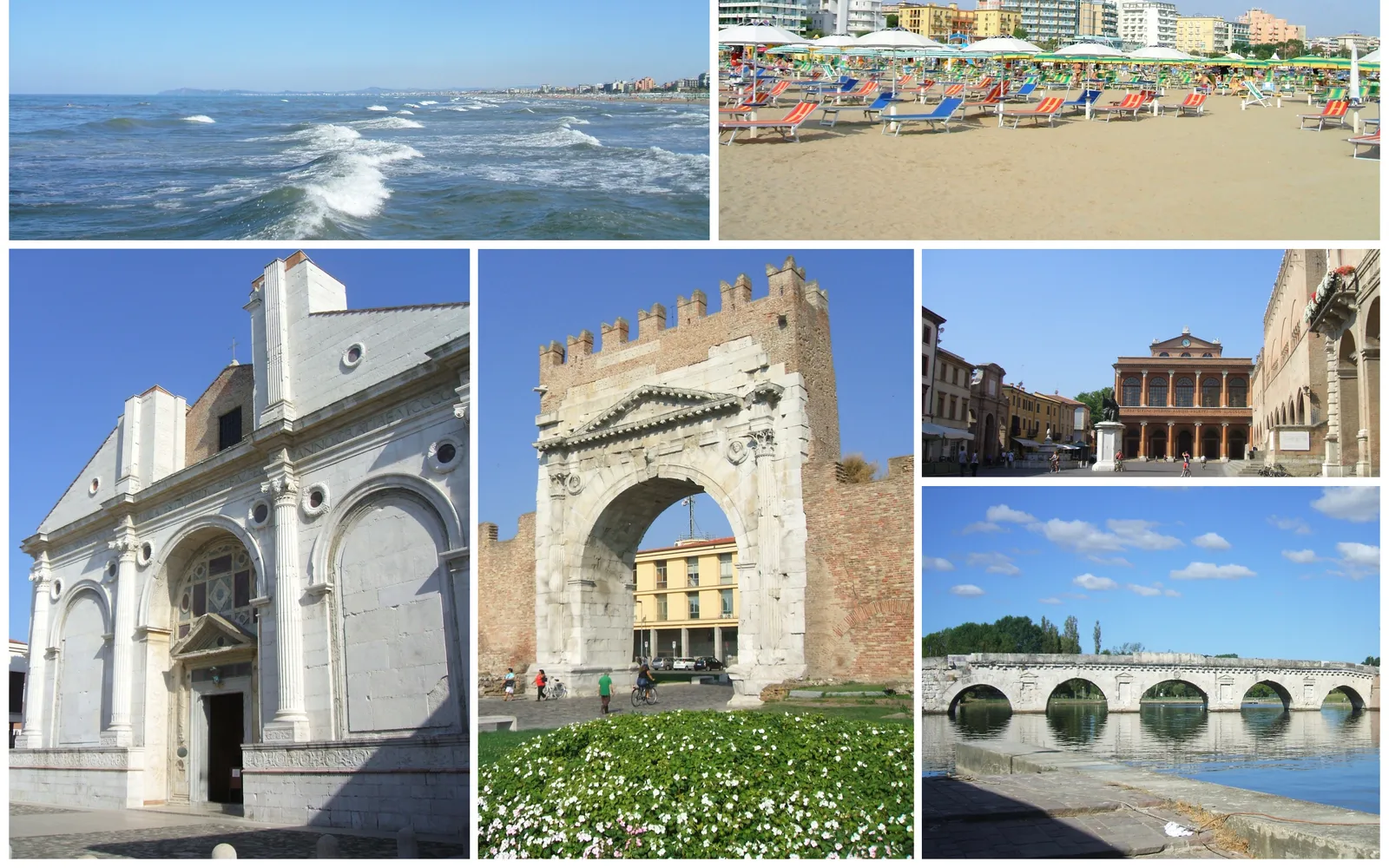
Rimini is one of Italy's oldest cities, settled as a Roman colony in 268 BC. Roman monuments in the city centre are still standing and in active use, while more than 15 kilometres of Adriatic beach make it one of Europe's most visited summer destinations. And within a one-hour drive, you can step into the Republic of San Marino — the world's smallest and oldest republic.
 #1
#1 Tiberius Bridge
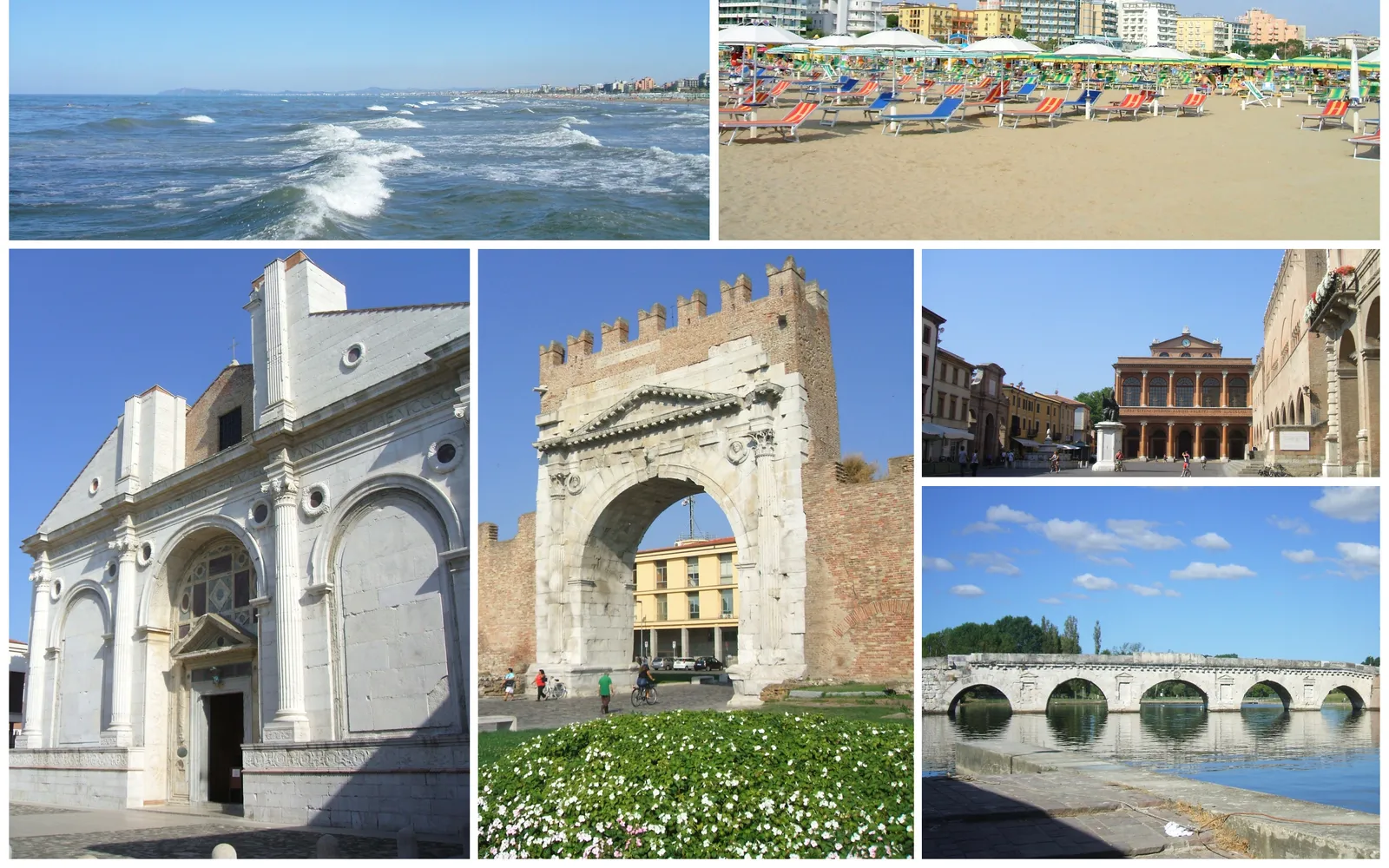
One of the oldest stone bridges in the world still in daily use, completed under Emperor Tiberius around <strong>AD 21</strong>. Five arches of Ponto stone, perfectly symmetrical, now function as the city's defining landmark and most photographed spot. In the evening the golden light plays off the white stone while locals settle in along the railings to watch the day end.
- Come between 5 pm and 6:30 pm — the low evening sun brings out the best in the pale stone and gives you the cleanest photos.
- The bridge is open to pedestrians around the clock, free of charge. Walk across it slowly: you're standing on two thousand years of history.
- Coffee shops and gelato stalls cluster around both ends — sitting with a coffee by the water looking at the bridge is one of Rimini's best low-key pleasures.
 #2
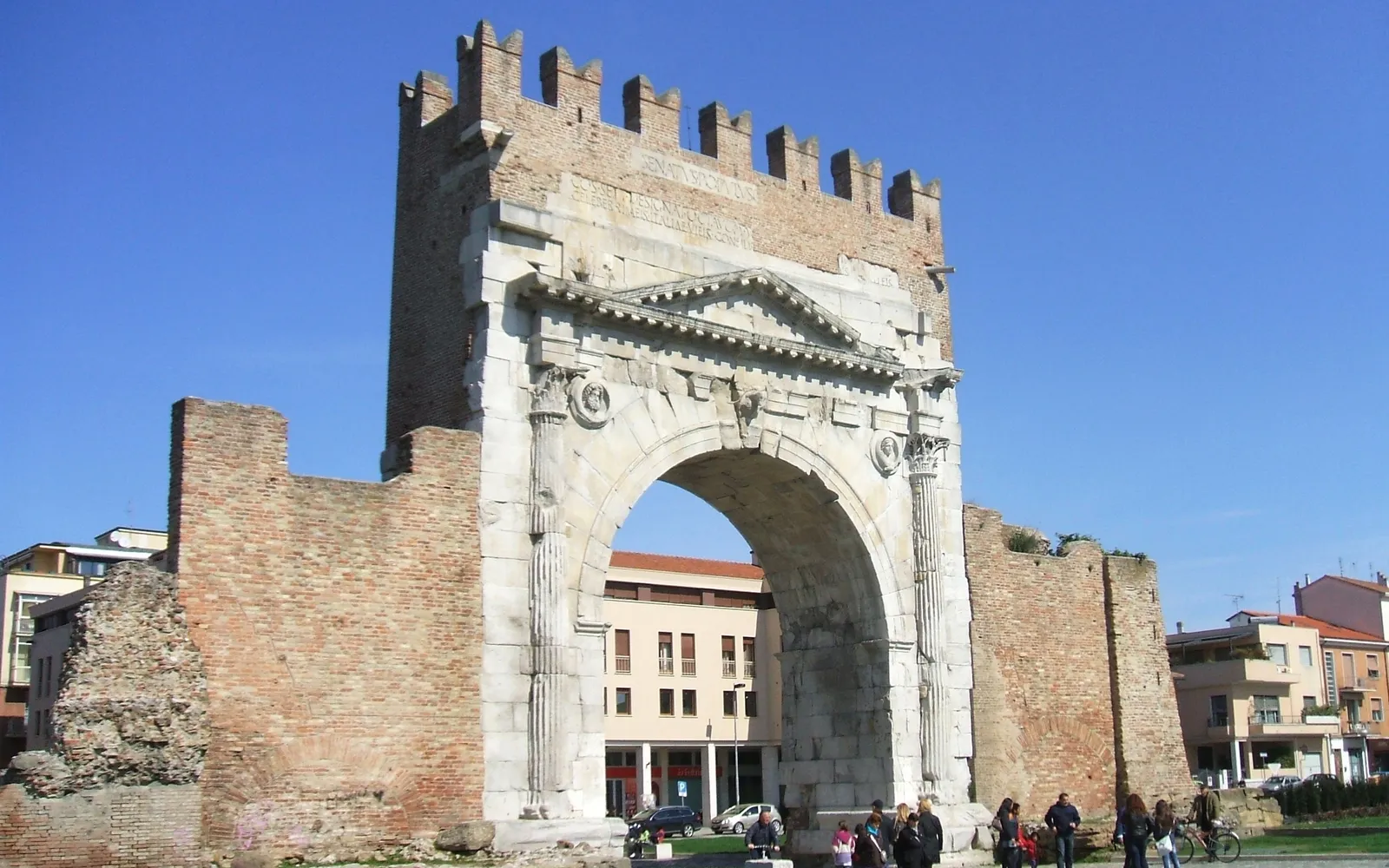
#2 Arch of Augustus
The oldest surviving Roman triumphal arch in Italy, built in <strong>27 BC</strong> to mark Emperor Augustus's victory and the start of the ancient <em>Via Flaminia</em> — the road that ran all the way to Rome. At <strong>17 metres</strong> tall it still anchors the city square with real authority, and the Latin inscription naming Augustus remains legible after more than two thousand years.
- The arch stands in the middle of Piazza Giulio Cesare and can be walked around freely at any hour — no entrance fee.
- Look for the Latin inscription on the facade; it records the emperor's name and titles clearly enough to read without a guide.
- Pair the Arch of Augustus with Tiberius Bridge in the same morning — they're a 10-minute walk apart and together cover Rimini's two greatest Roman monuments.
 #3
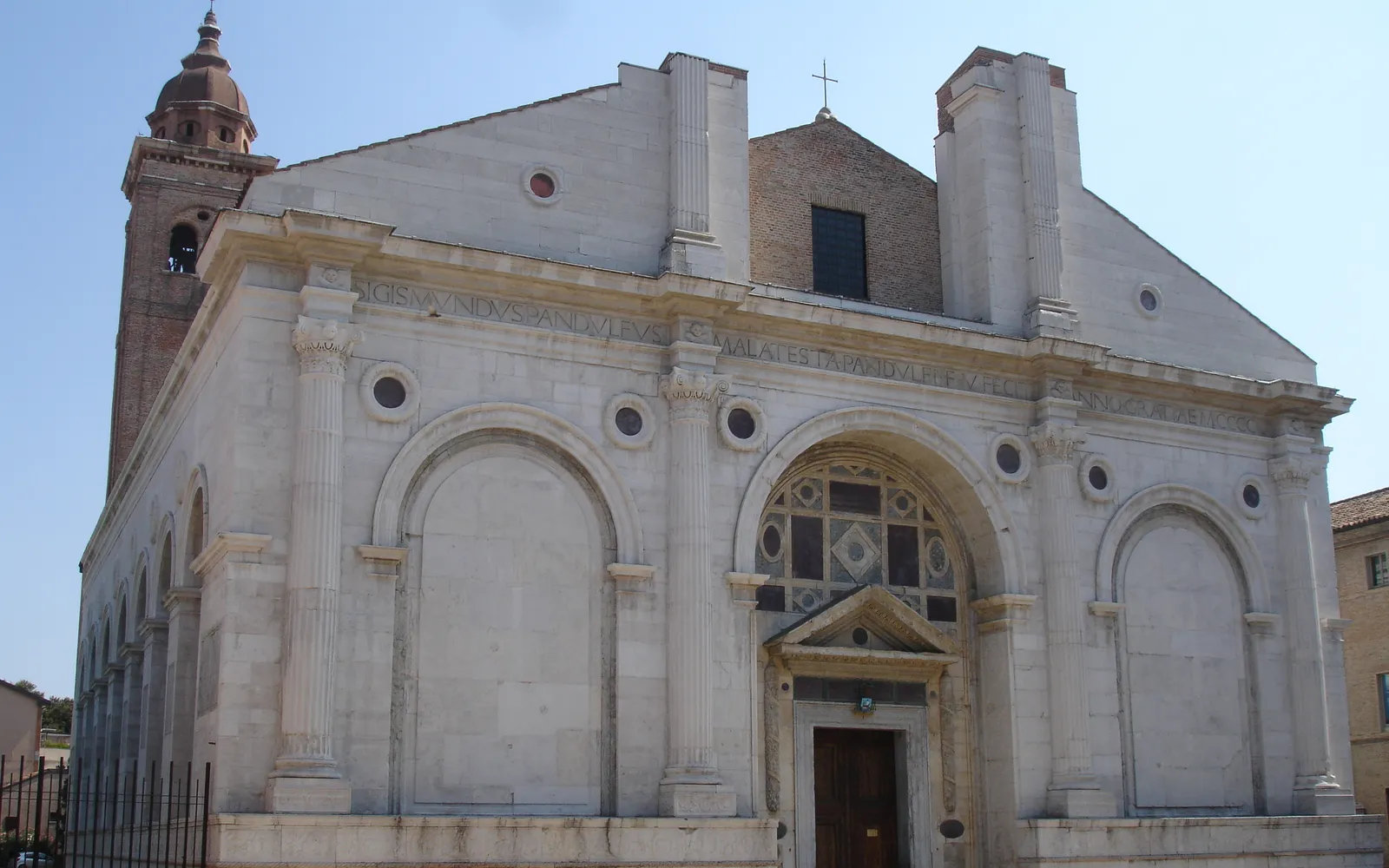
#3 Tempio Malatestiano
A masterpiece of early Renaissance architecture designed by <strong>Leon Battista Alberti</strong> for the Malatesta family, rulers of Rimini in the <strong>15th century</strong>. The exterior is Roman white marble with elegant arched niches; inside are some of the finest Renaissance sculpture and fresco work in the Emilia-Romagna region. The building served simultaneously as a Christian church and the Malatesta family mausoleum.
- Entry is free. Opening hours run morning to evening but the building typically closes midday from noon to 3 pm in Italian fashion — plan accordingly.
- Ask for an English brochure at the entrance; it explains the artwork inside in useful detail.
- Dress modestly — no shorts or bare shoulders. A scarf or light wrap to cover up is worth carrying.
 #4
#4 Rimini Beach
The most famous beach in northern Italy: more than <strong>15 kilometres</strong> of Adriatic shoreline divided into hundreds of private beach clubs (<em>stabilimenti balneari</em>). The water is shallow enough for families and safe for swimming. The beach strip is lined with restaurants, beach bars, and nightclubs — Rimini essentially invented the European beach-party scene in the <strong>1970s and 1980s</strong>.
- In summer, book a beach club slot in advance or arrive before 9 am. A standard pitch with two sun loungers costs <strong>€15–25 per day</strong>.
- Free public beach sections (<em>spiaggia libera</em>) exist between the paid clubs — no facilities, but no charge either.
- Rent a bike or walk the dedicated coastal cycle path to cover the full length of the beach at your own pace.
 #5
#5 San Marino
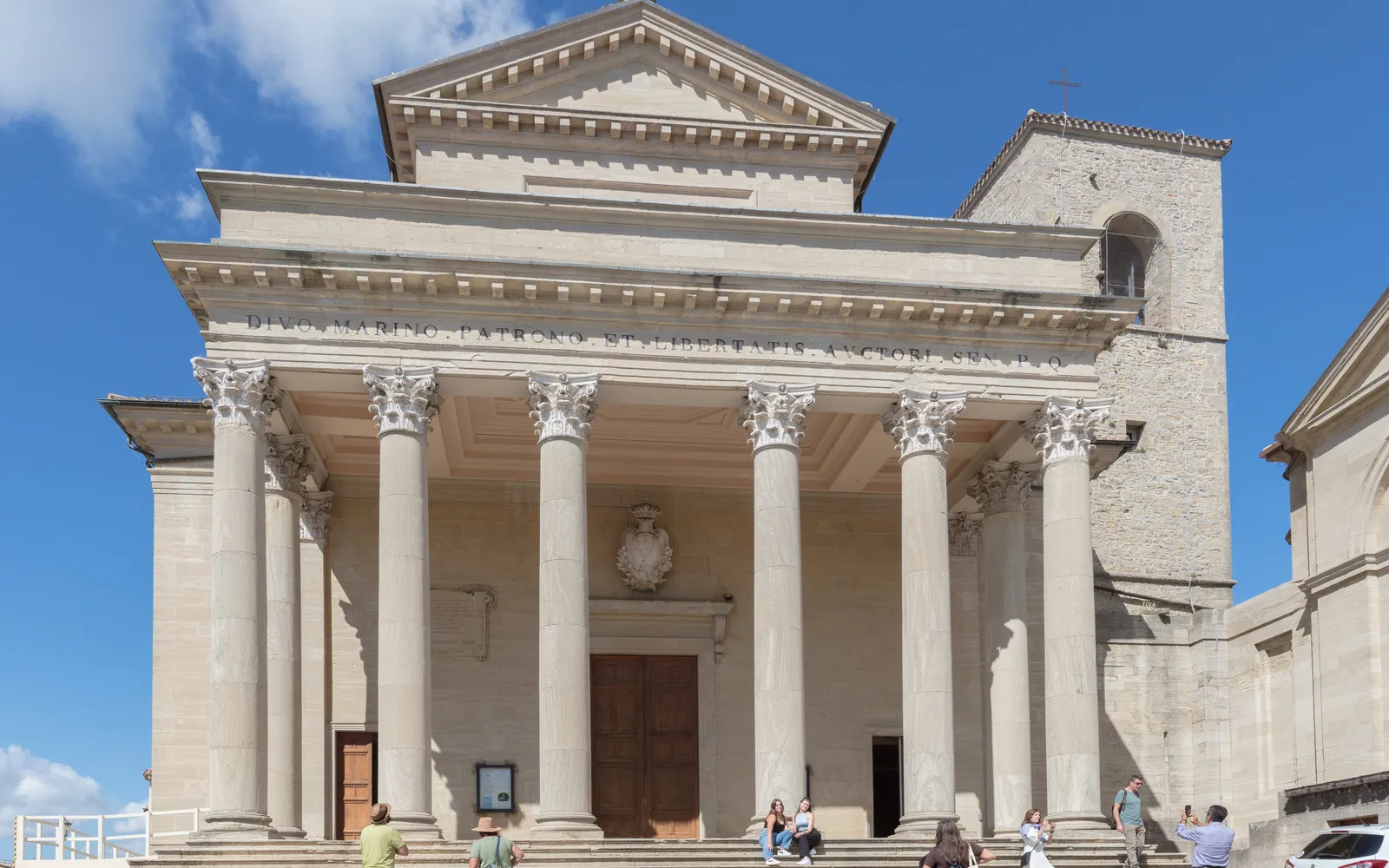
The world's smallest and oldest republic, founded in <strong>AD 301</strong> and perched on the summit of <strong>Mount Titano at 749 metres</strong>. On a clear day you can see the Adriatic and the entire Emilia-Romagna plain. The three fortresses — <strong>Guaita, Cesta, and Montale</strong> — are the country's symbols. The UNESCO-listed old city is walkable in half a day, but the views from the top justify the trip on their own.
- Take the cable car (<em>funivia</em>) up from Borgo Maggiore — <strong>€3.50 per person</strong> — rather than climbing the hill on foot.
- San Marino stamps and coins make distinctive souvenirs; they're legal tender only within the republic.
- Get a free passport stamp at the tourist centre — a genuinely unusual keepsake.
 #6
#6 Rimini Old Town and Piazza Cavour
The living heart of Rimini's old town, connecting the Roman monuments to everyday city life. Piazza Cavour is framed by medieval and Renaissance buildings; the <em>Fontana della Pigna</em> dolphin fountain dates from the <strong>16th century</strong>. A fresh-produce market runs here every morning, and several of the coffee bars have been operating since the Fascist era. The street network between the square and the monuments covers everything worth seeing in a single loop.
- The covered market, <em>Mercato Coperto</em>, opens every morning until noon — local vegetables, fruit, cheese, and meat. A good stop before a long day of sightseeing.
- The coffee and gelato around Piazza Cavour is better quality and cheaper than the beach strip, because locals use it every day.
- Via Roma and Corso d'Augusto link every major monument in the old town — the full walking circuit takes 30–40 minutes.
Where to stay in Rimini for this trip
A well-located hotel means less commuting and more sightseeing. Here are real, top-rated stays in Rimini — compare Agoda · Booking · Trip.com in one click.
Titano Suites
Affiliate links — we may earn a commission at no extra cost to you. Details
Grand Hotel Rimini
Affiliate links — we may earn a commission at no extra cost to you. Details
Hotel Rosa
Affiliate links — we may earn a commission at no extra cost to you. Details
Hotel Continental Rimini
Affiliate links — we may earn a commission at no extra cost to you. Details
Tours, tickets & activities in Rimini
Day tours, attraction tickets and travel essentials for Rimini — book ahead on Klook with mobile e-tickets.
Affiliate links — we may earn a commission at no extra cost to you.
Before You Pack
Rimini works year-round, but summer (June–August) is when the beach is at full energy. Spring (April–May) and autumn (September–October) are better for the Roman monuments — cooler temperatures and noticeably fewer crowds. Budget at least 3–4 days to do justice to both the old city and the San Marino day trip.