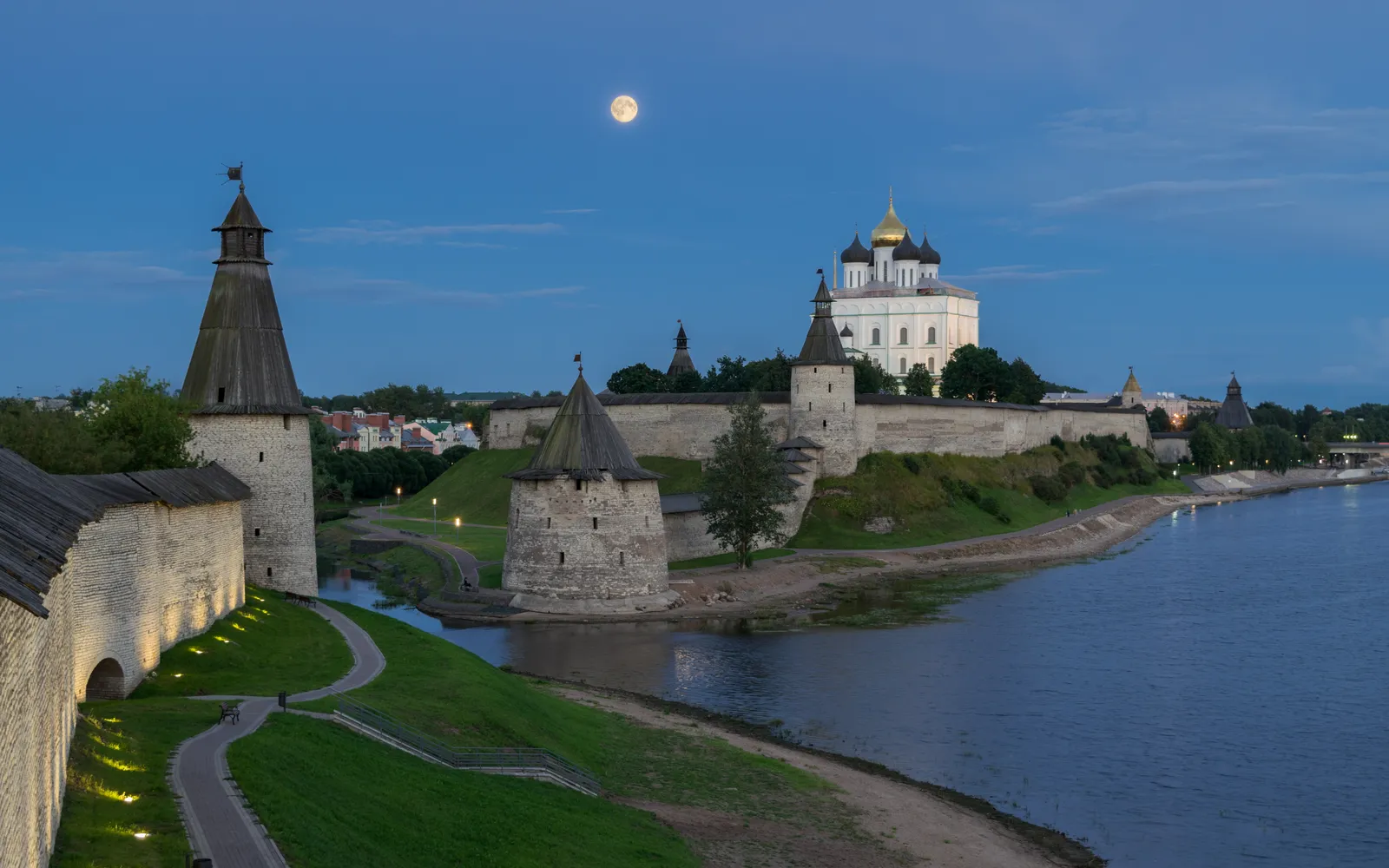
Pskov doesn't appear on the standard Russia tour circuit — and that's exactly what makes it worth going. The Krom fortress has stood for over a thousand years with nearly every stone still intact. Medieval white-stone churches dot every corner of the city, and within less than two hours' drive you'll reach both Izborsk — Russia's oldest surviving stone fort — and Pskov-Caves Monastery, which has welcomed pilgrims continuously for more than 500 years without ever closing, even through the Soviet era. This is Russia before the crowds arrived.
 #1
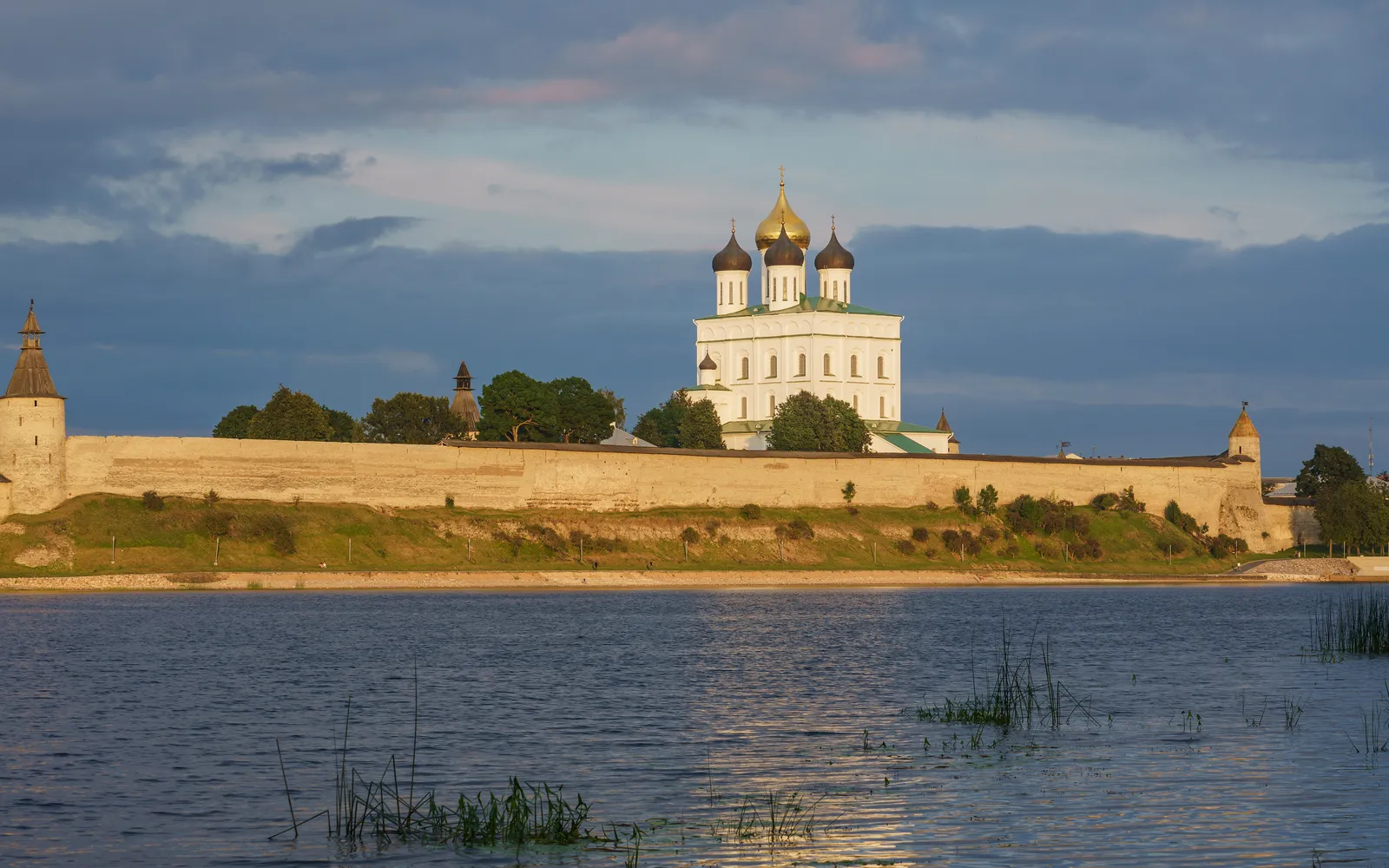
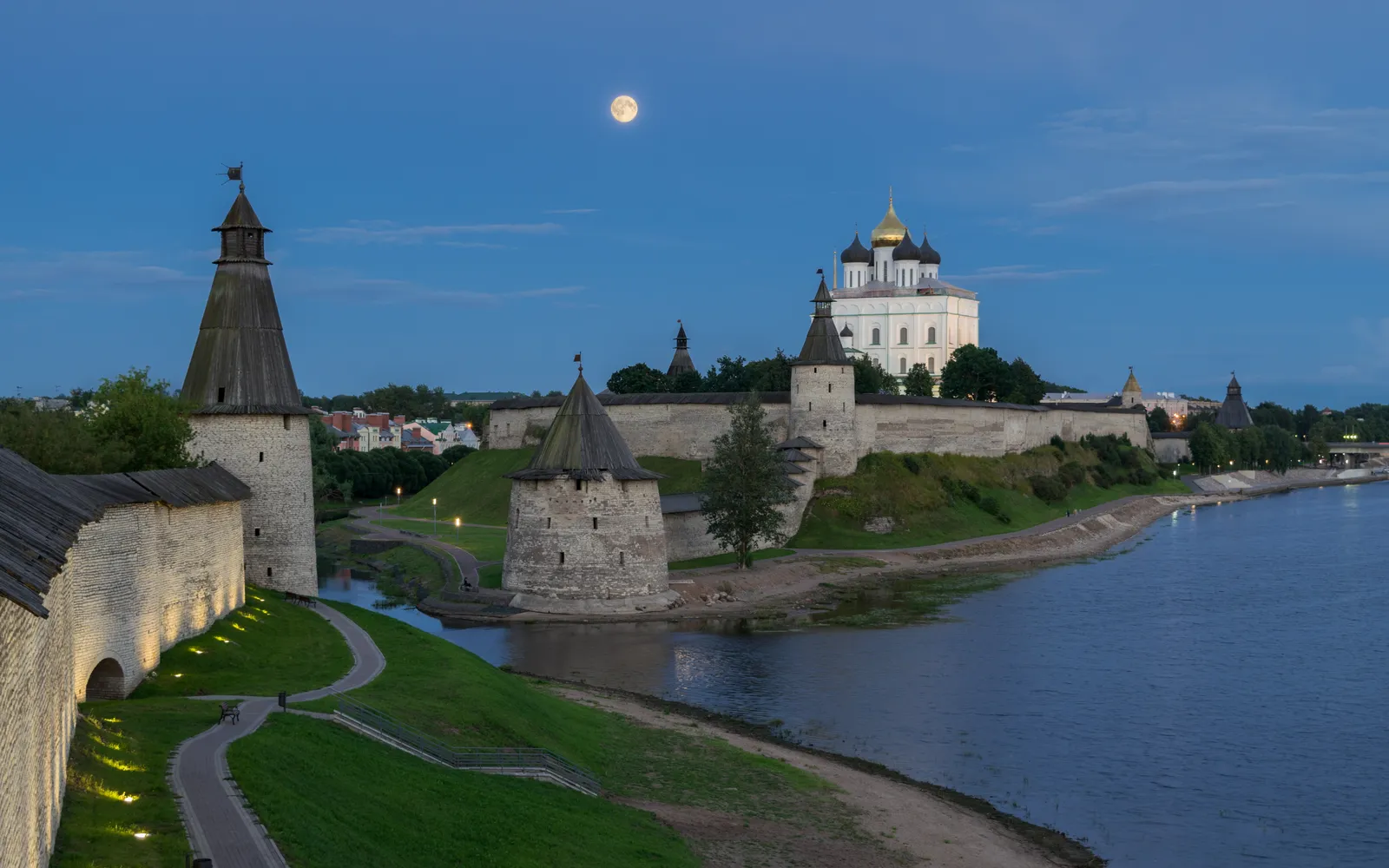
#1 Pskov Krom
The heart of Pskov and one of the most complete medieval fortresses in Eastern Europe. More than 9 kilometres of stone walls, 37 towers and ancient gateways survive in remarkable condition. The Krom held off Lithuanian, German and Polish attacks across centuries of border warfare. The outer walls are free to walk; inside, Trinity Cathedral dominates the enclosed citadel.
- Entry to the Krom grounds is free at all times; museum spaces inside and tower access cost around 200-300 roubles
- The sections of wall open for walking offer views over the city and the Velikaya River — best light in summer evenings
- A local guide or audio guide is strongly recommended; most information panels are in Russian only
 #2
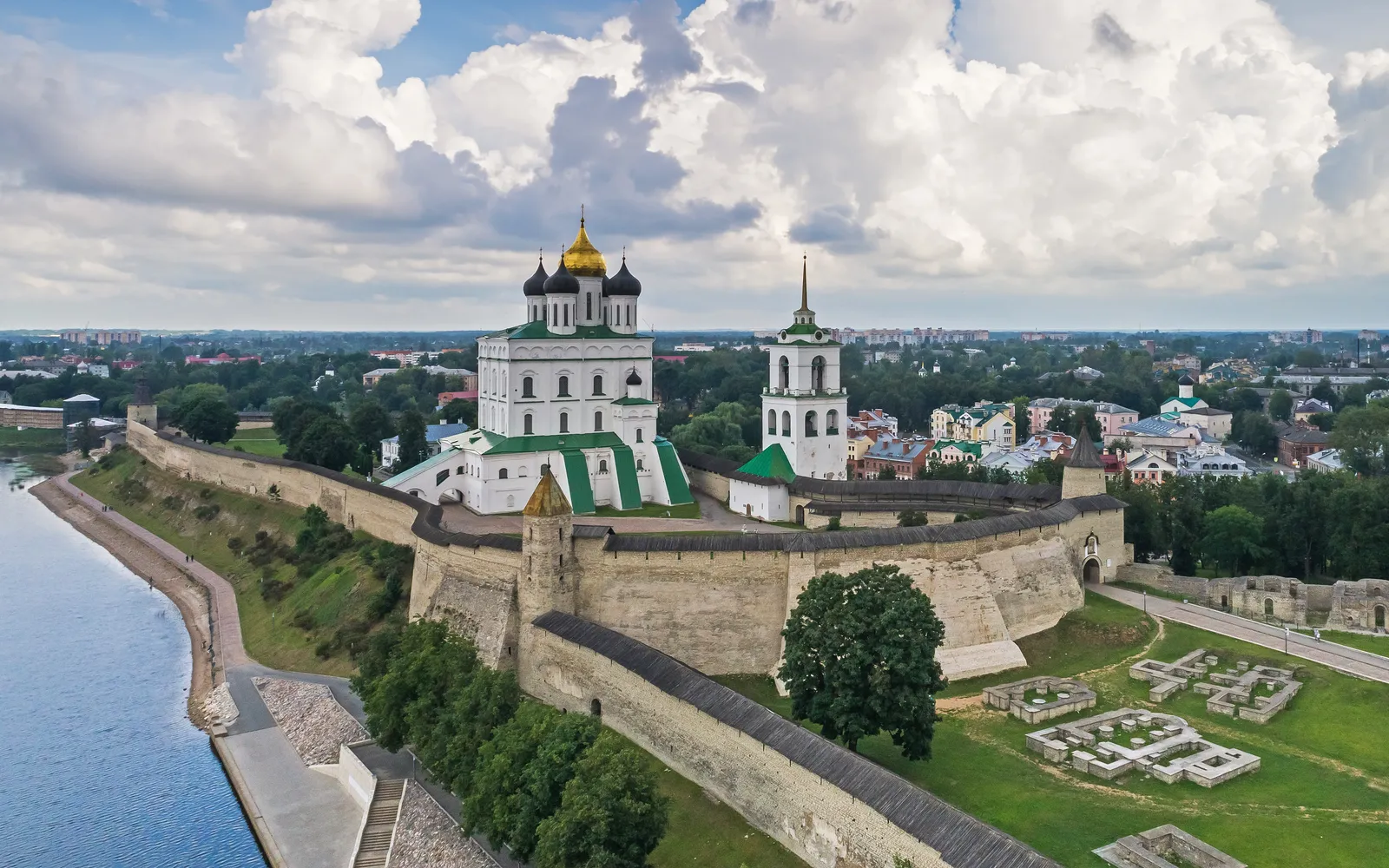
#2 Trinity Cathedral, Pskov
The spiritual landmark of Pskov, occupying the highest point of the Krom for more than a thousand years. The current building dates from the 17th century, raised on much older foundations. Inside: ancient icons, an enormous chandelier, and gilded frescoes. A carved wooden throne made for Russian tsars remains in place, alongside the burial vaults of several Pskov princes.
- Women must cover their hair and shoulders before entering — scarves are available at the door; men must remove hats
- Admission is around 150-200 roubles; open 10:00-18:00, closed Wednesdays
- Visitors may enter during religious services (morning and evening) but should stay quiet and avoid photographing during the liturgy
 #3
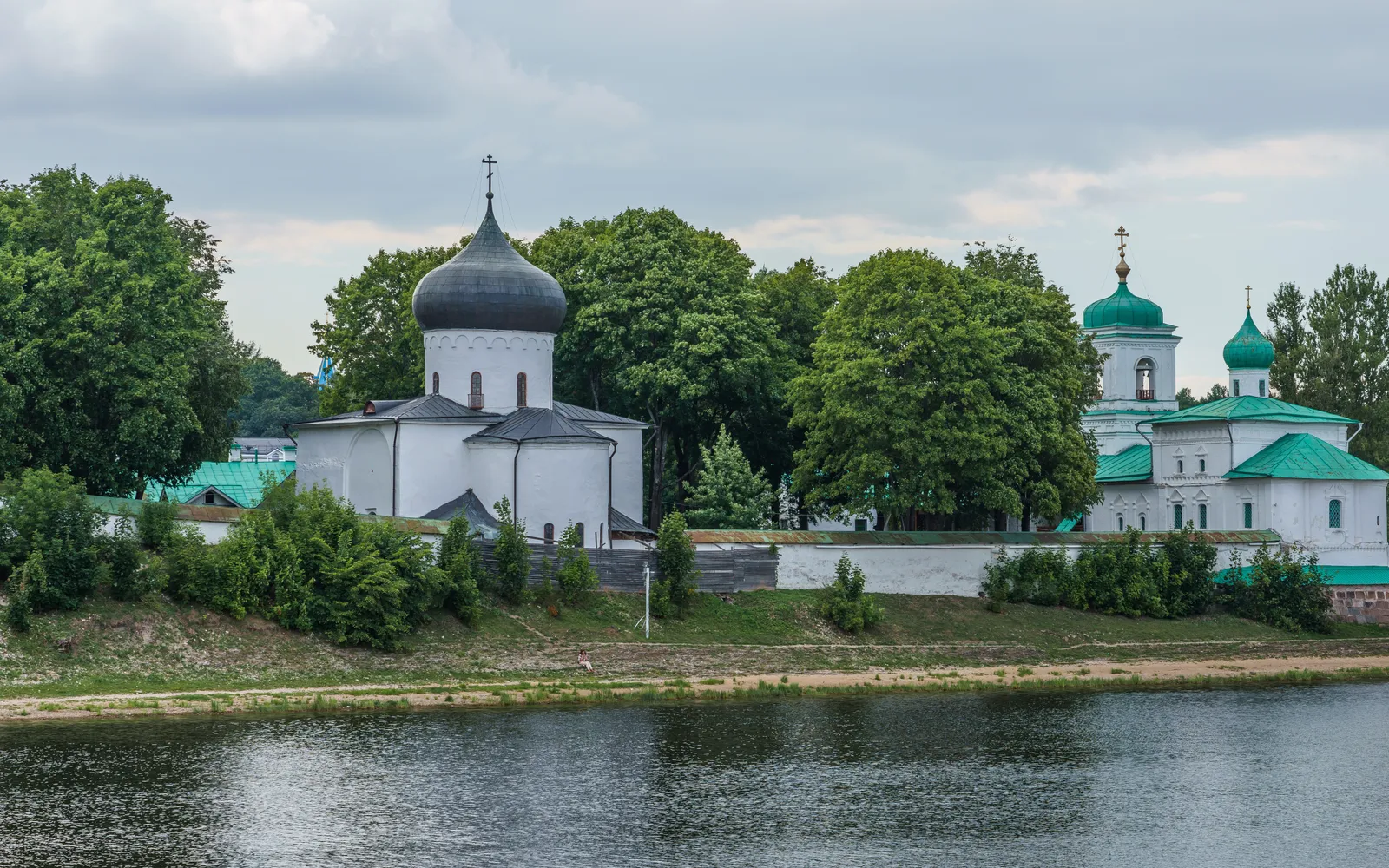
#3 Mirozhsky Monastery
An Orthodox monastery over 900 years old, housing one of the most complete surviving sets of original Byzantine frescoes in Russia. The paintings inside the Transfiguration Cathedral cover more than 1,000 square metres and were executed around the 12th century by masters from Greece. Along with nine other white-stone Pskov churches, the site was inscribed as a UNESCO World Heritage site in 2019.
- The frescoes are inside the Transfiguration Cathedral; fresco admission is separate from general monastery entry — around 250-300 roubles
- The interior is quite dim; give your eyes a minute to adjust before expecting to read the fresco detail
- Cross the riverside footbridge to reach the monastery — looking back from this side gives one of the finest views of the Krom and the Pskov skyline
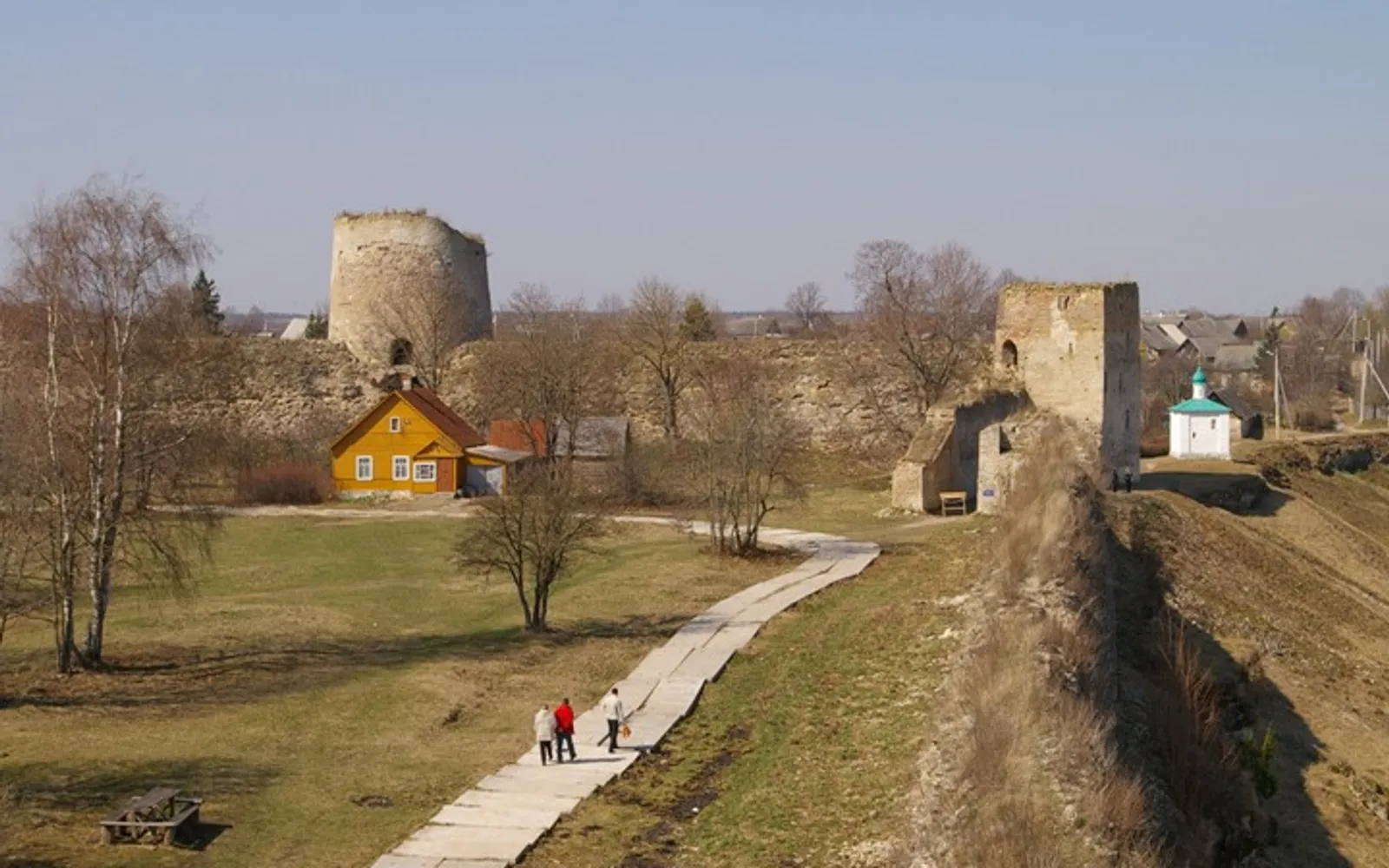 #4
#4 Izborsk
One of the oldest medieval fortresses in Russia, set on a rocky hill above the scenic Lake Skovorodka. Izborsk served as Pskov's forward defensive outpost against invasion from the west throughout its history. Walls standing 10 metres high and 6 towers survive in excellent condition. The surrounding landscape is striking — a sacred spring and a lake that mirrors the fortress walls on still mornings.
- Combine with Pskov-Caves Monastery in a single day trip; both are west of Pskov and only 15 km apart
- Walk down the slope to the Slovesnky Klyuchi sacred springs (about 20 minutes each way) for the best lake views
- Fortress entry is around 200-250 roubles and includes access to a tower with 360-degree views
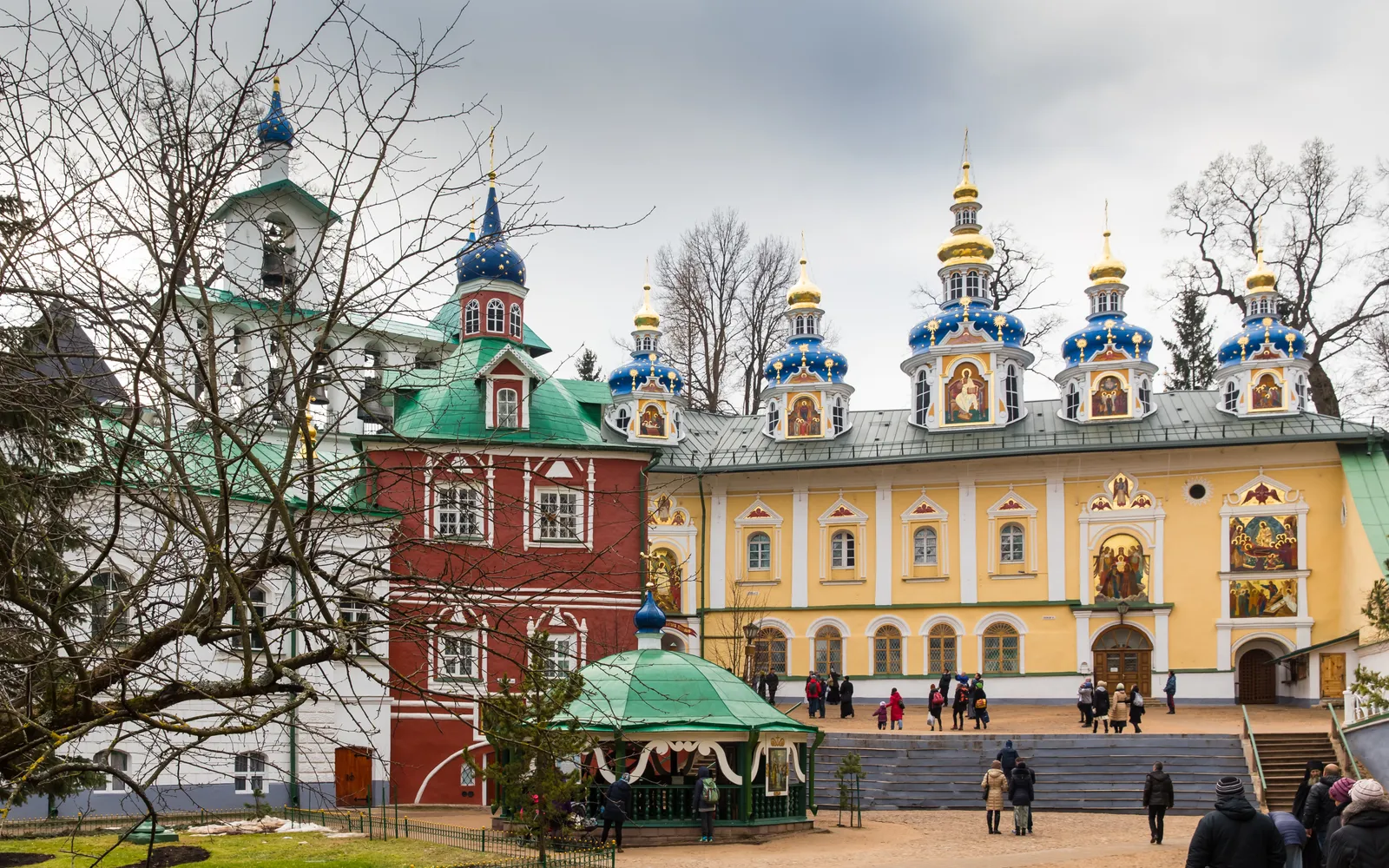 #5
#5 Pskov-Caves Monastery
One of the oldest and most significant Orthodox monasteries in Russia, founded in the 15th century inside a deep sandstone ravine and its network of natural caves. The monks here have used the caves as both living quarters and a burial site for over 500 years without interruption — and it is the only monastery in Russia that never closed, even during the Soviet period. The caves hold the remains of more than 10,000 clergy. The multi-coloured architecture set inside a deep hollow makes for one of the most memorable sights in north-western Russia.
- Cave tours must be booked in advance or joined as part of a guided group — the caves are completely dark and a guide is mandatory
- Dress code is strictly enforced: women must cover their hair and wear a long skirt; visitors not dressed appropriately will be turned away at the gate
- During Orthodox festivals (Easter and Russian Christmas) the monastery holds special services — impressive to witness, but expect large crowds
 #6
#6 Pskov State United Museum-Reserve
Pskov's main museum, tracing the city's history from prehistory through to World War II. The collection's standout holdings are medieval icons from the Pskov School of painting — a style distinct from Moscow's tradition — alongside ancient silver coins, weaponry and archaeological finds from city excavations. A useful first stop before heading out to explore.
- There is a dedicated World War II exhibition: Pskov was under Nazi German occupation for 3 years, and the accounts from that period are sobering
- Admission is around 300-400 roubles; open 10:00-18:00, closed Mondays
- The museum has several branch sites around the city, including historic houses and fortress towers that open in summer only
Where to stay in Pskov for this trip
A well-located hotel means less commuting and more sightseeing. Here are real, top-rated stays in Pskov — compare Agoda · Booking · Trip.com in one click.
Guest House on Verkhne-Beregovaya
Affiliate links — we may earn a commission at no extra cost to you. Details
Dvor Podznoeva Glavniy Korpus
Affiliate links — we may earn a commission at no extra cost to you. Details
Hotel Pokrovsky
Affiliate links — we may earn a commission at no extra cost to you. Details
Dvor Podznoeva — Business Building
Affiliate links — we may earn a commission at no extra cost to you. Details
Tours, tickets & activities in Pskov
Day tours, attraction tickets and travel essentials for Pskov — book ahead on Klook with mobile e-tickets.
Affiliate links — we may earn a commission at no extra cost to you.
Before You Pack
Pskov is at its best in summer (June to August), when the days are warm and daylight stretches to almost midnight. The winter, with snow blanketing the fortress walls, has its own appeal. Plan at least 2-3 days to cover the city properly and fit in the Izborsk-Pechory day trip.