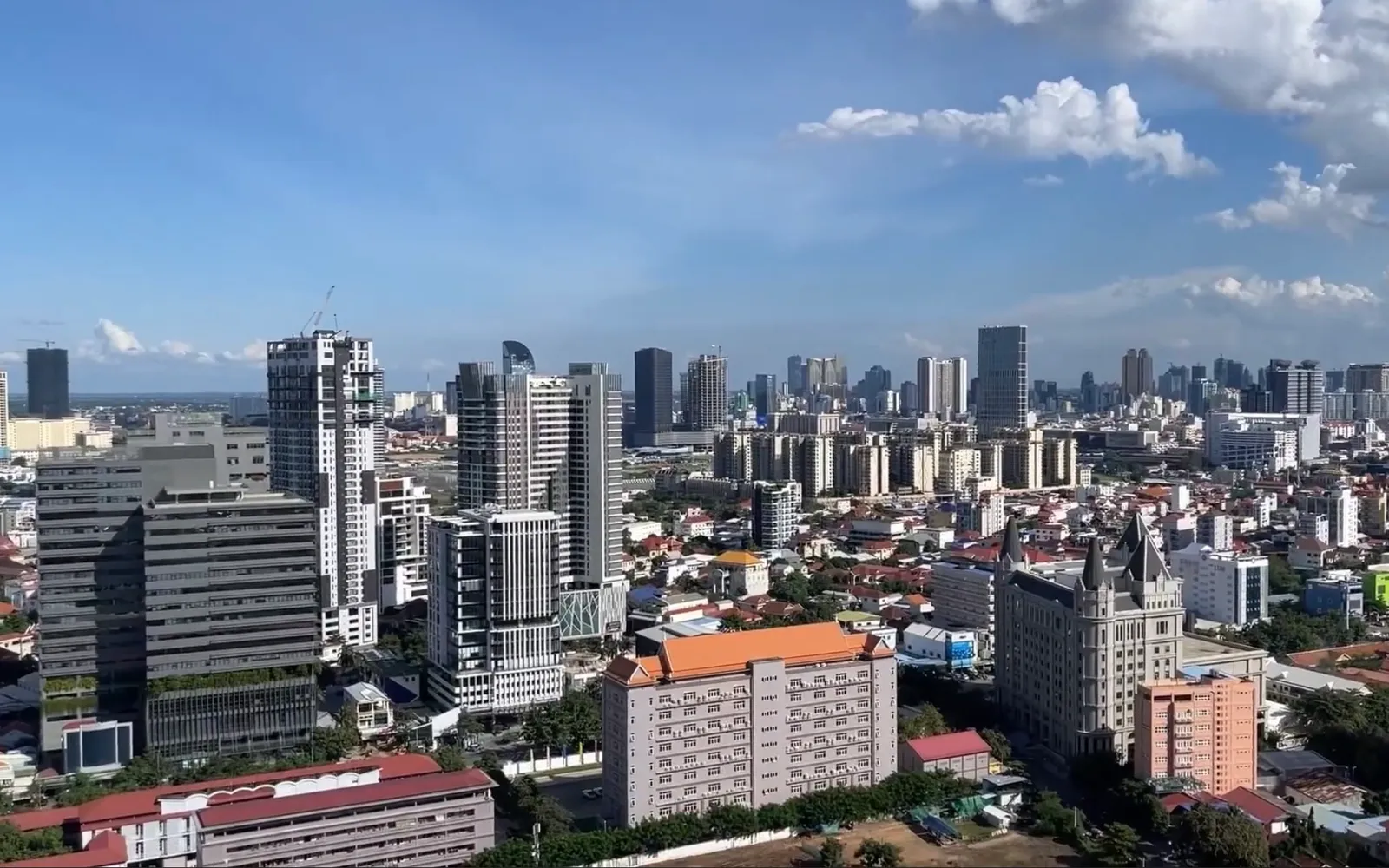
Phnom Penh breaks your heart and opens your eyes at the same time. Cambodia's capital sits right where the Mekong meets the Tonle Sap river, and within walking distance of each other you'll find the splendour of the golden Royal Palace, the calm of Wat Phnom, and the deep sorrow of the Tuol Sleng museum. Coming here isn't only sightseeing — it's understanding how a country recovers from its wounds.
 #1
#1 Royal Palace, Phnom Penh
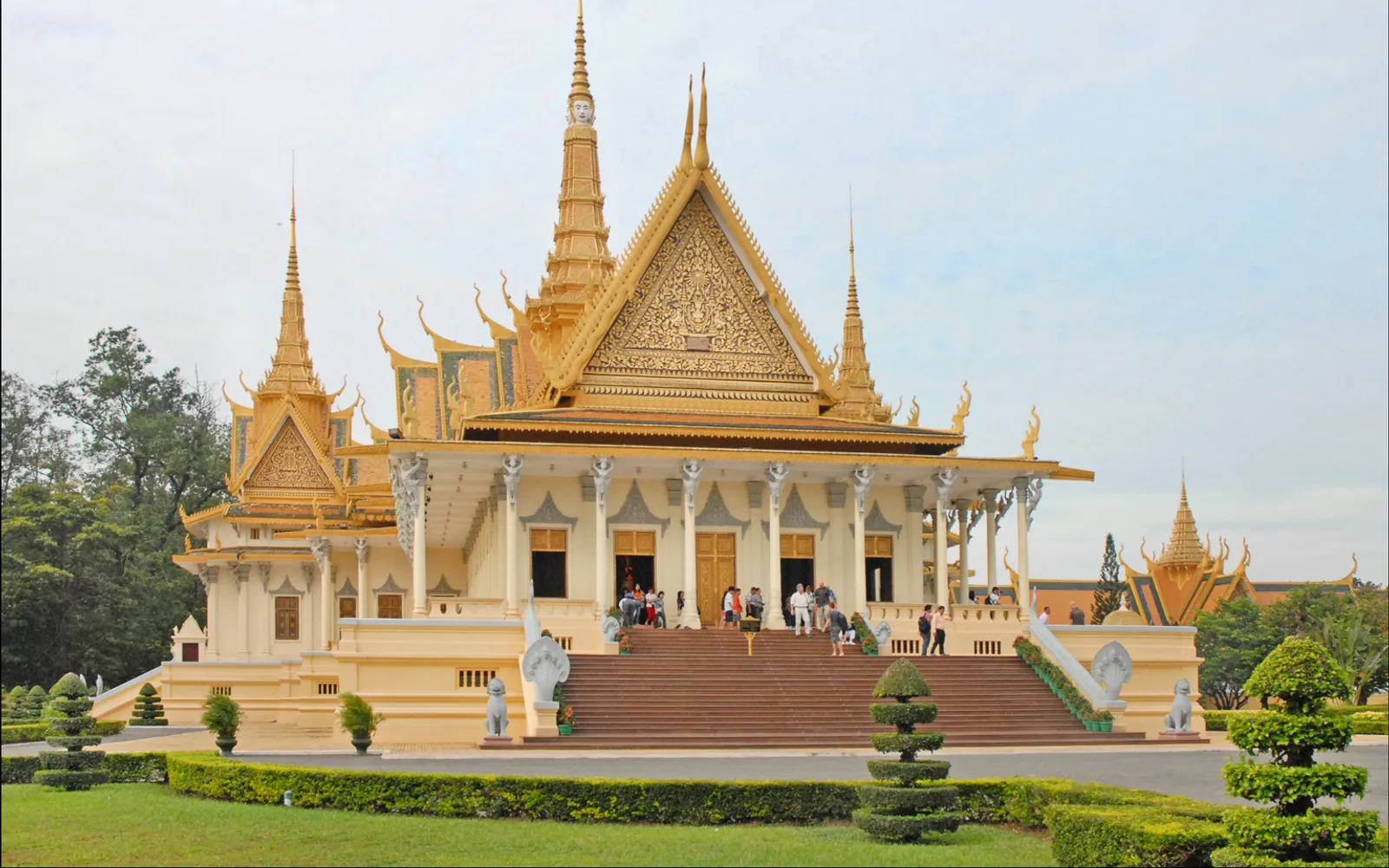
The seat of Cambodia's power and spirit, built in the 19th century in traditional Khmer style, with tiered roofs clad in yellow-gold and green tiles spread across more than 18 hectares. The highlight is the Silver Pagoda, its floor laid with 5,329 silver tiles weighing over 5 tonnes in total, home to a Khmer emerald Buddha and a gold Buddha set with diamonds. Part of the grounds is still a working royal residence, so some areas are closed to visitors.
- Visit with a guide or audio guide to understand the history of each building. Admission is 10 USD, which includes the Silver Pagoda.
- Dress modestly — shoulders and knees must be covered. Cover-ups are available to rent at the entrance if you forget.
- Come in the morning between 8 and 10, when it's not yet too hot and there are fewer visitors than in the afternoon.
 #2
#2 Tuol Sleng Genocide Museum
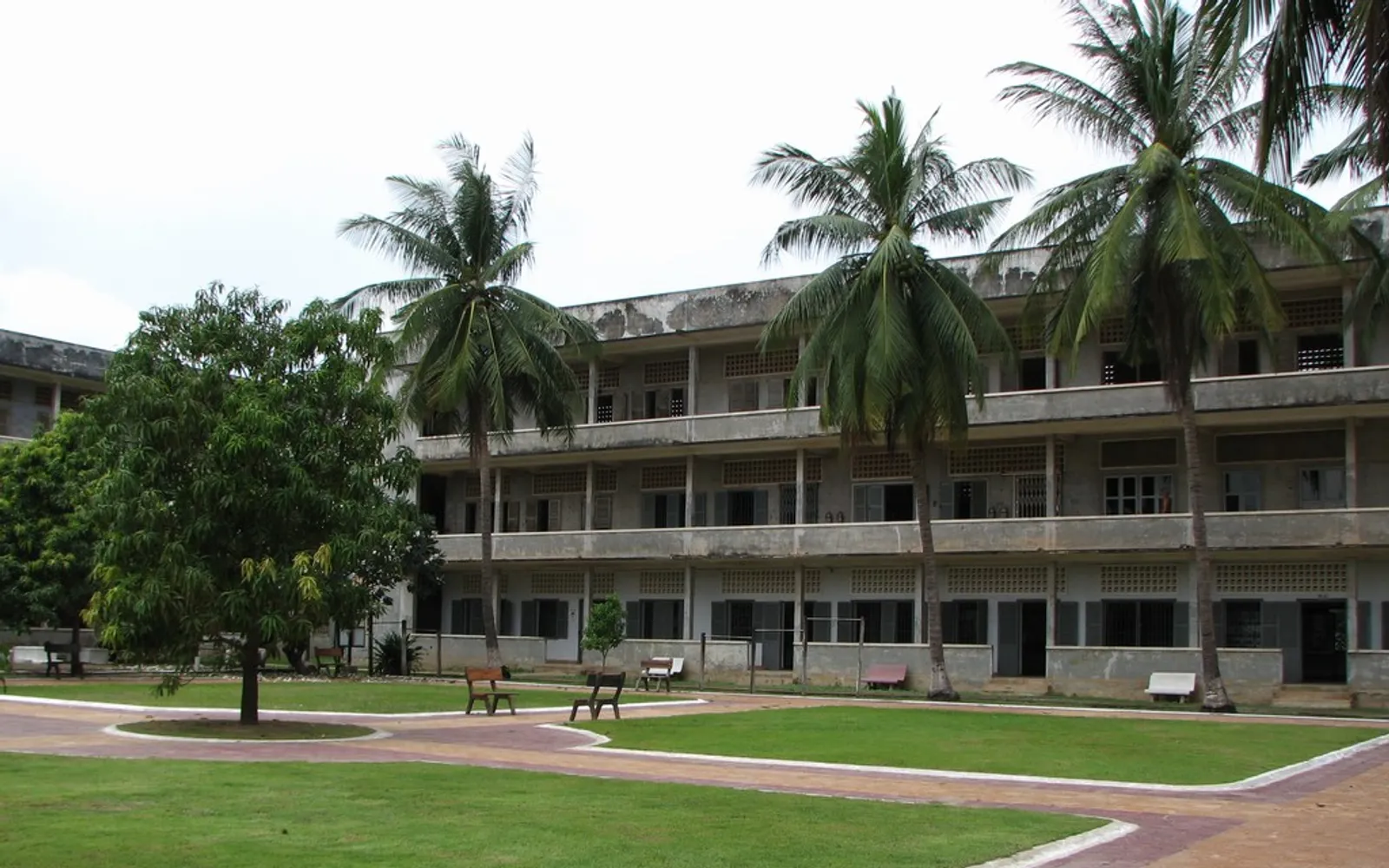
A former high school that the Khmer Rouge converted into the cruellest interrogation and torture centre of 1975-1979, where more than 17,000 people died. Today it is a museum that remembers the victims, displaying photographs of the prisoners, confession documents, and cells left as they were. This is a place that takes time and emotional energy to take in — don't rush it, and don't skip it.
- Rent the audio guide (3 USD), narrated by survivors themselves, which gives a far deeper perspective than reading the signs alone.
- The emotional weight after a visit is heavy — plan to leave the afternoon afterwards free of any sightseeing.
- The museum bookshop has good-quality books on Khmer Rouge history in several languages, and part of the proceeds goes to the victims' families.
 #3
#3 Wat Phnom
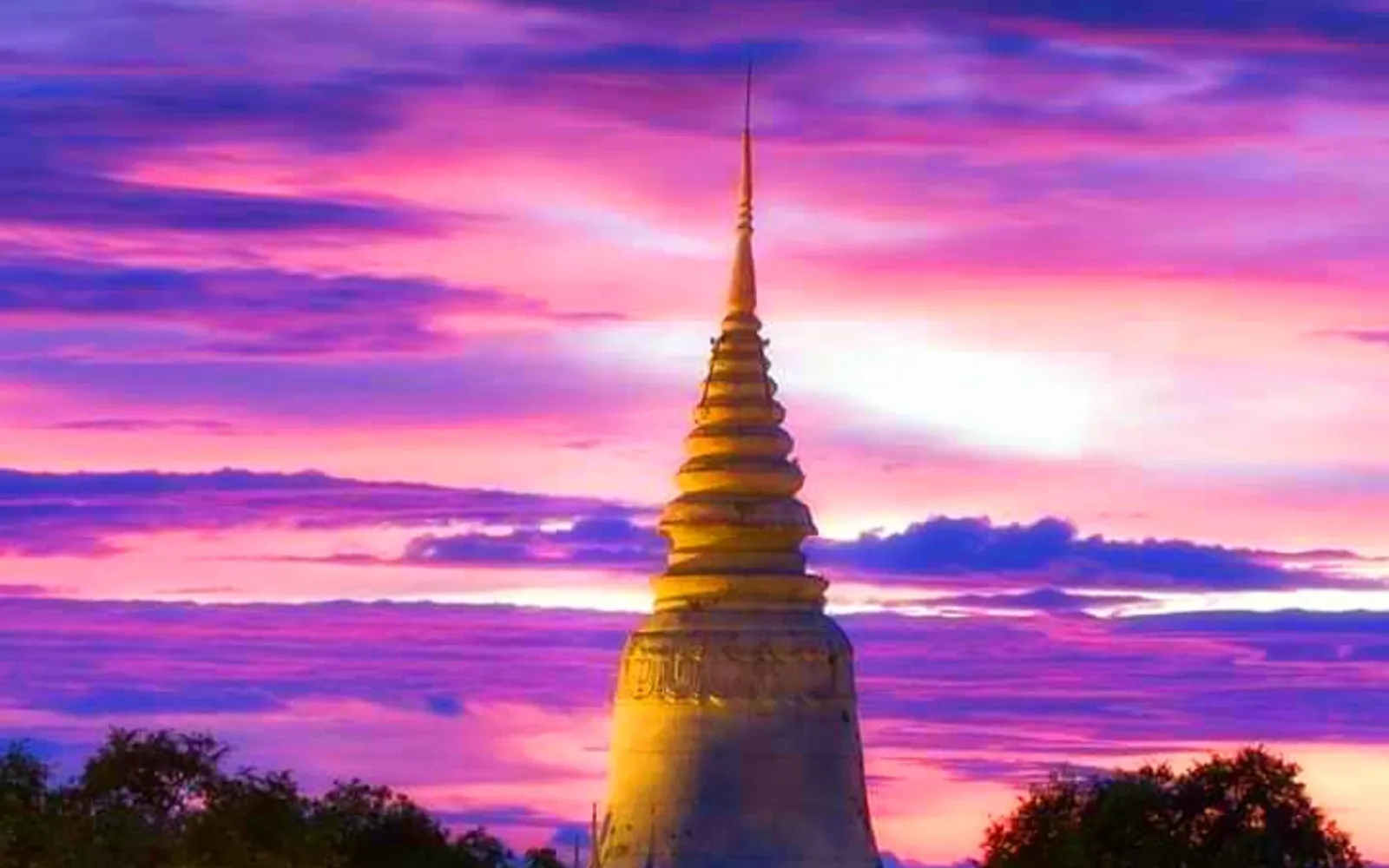
The most sacred temple in the city and the symbol of how Phnom Penh was born, set on a 27-metre hill that, by legend, was raised by Lady Penh after she found Buddha statues floating down the river in the 14th century. The ordination hall is decorated with beautiful murals of the Reamker and the Jataka tales. Dozens of monkeys live around the temple, and people from Phnom Penh come here regularly to make vows and ask for blessings — the spiritual atmosphere is genuine and very much alive.
- Watch out for the monkeys around the temple — don't carry plastic bags, food, or glasses out in the open, as they may snatch them.
- Admission is 1 USD, paid at the foot of the hill before you climb the stairs. Cambodians enter free.
- During Khmer New Year (April), Wat Phnom fills with people coming to pay their respects, with traditional music performances.
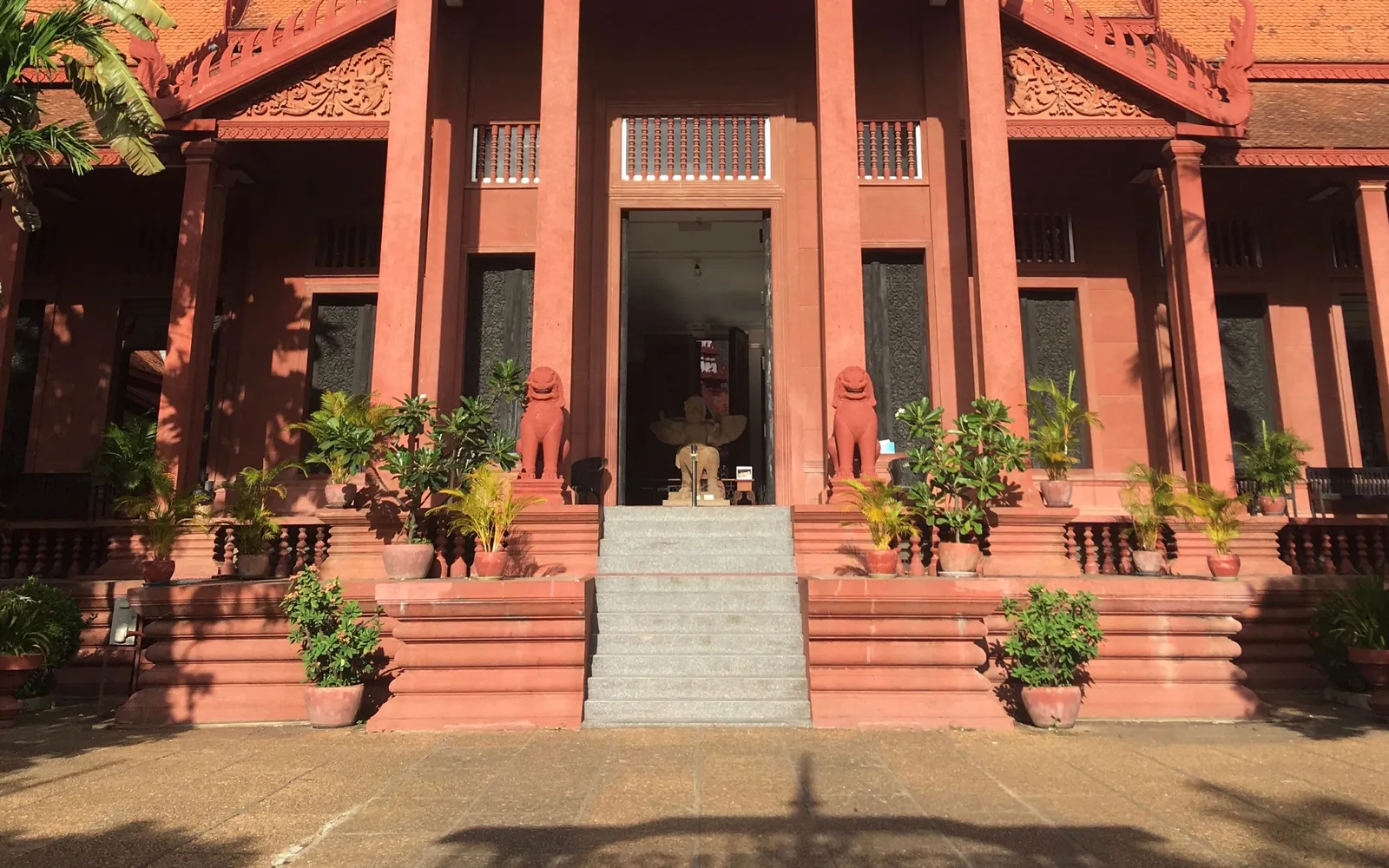 #4
#4 National Museum of Cambodia
The museum holds the largest collection of Khmer art in the world. The building itself was constructed in 1920 in ancient Khmer style, and inside it displays stone sculptures, sacred images, and more than 14,000 artefacts from the various eras of the Khmer empire. The highlights are a pre-Angkorian four-armed Vishnu (6th century) and a figure of the god Yama charged with an awe-inspiring power. The inner courtyard is shaded and quiet, a world away from outside the walls.
- Rent the audio guide (3 USD) or hire a guide to understand the historical context of each piece — the English signs are sparse on information.
- Photography is forbidden in some areas. Follow the staff's instructions, and never touch the artefacts under any circumstances.
- You can combine this with a visit to the Royal Palace in one day — the two are only a 2-3 minute walk apart.
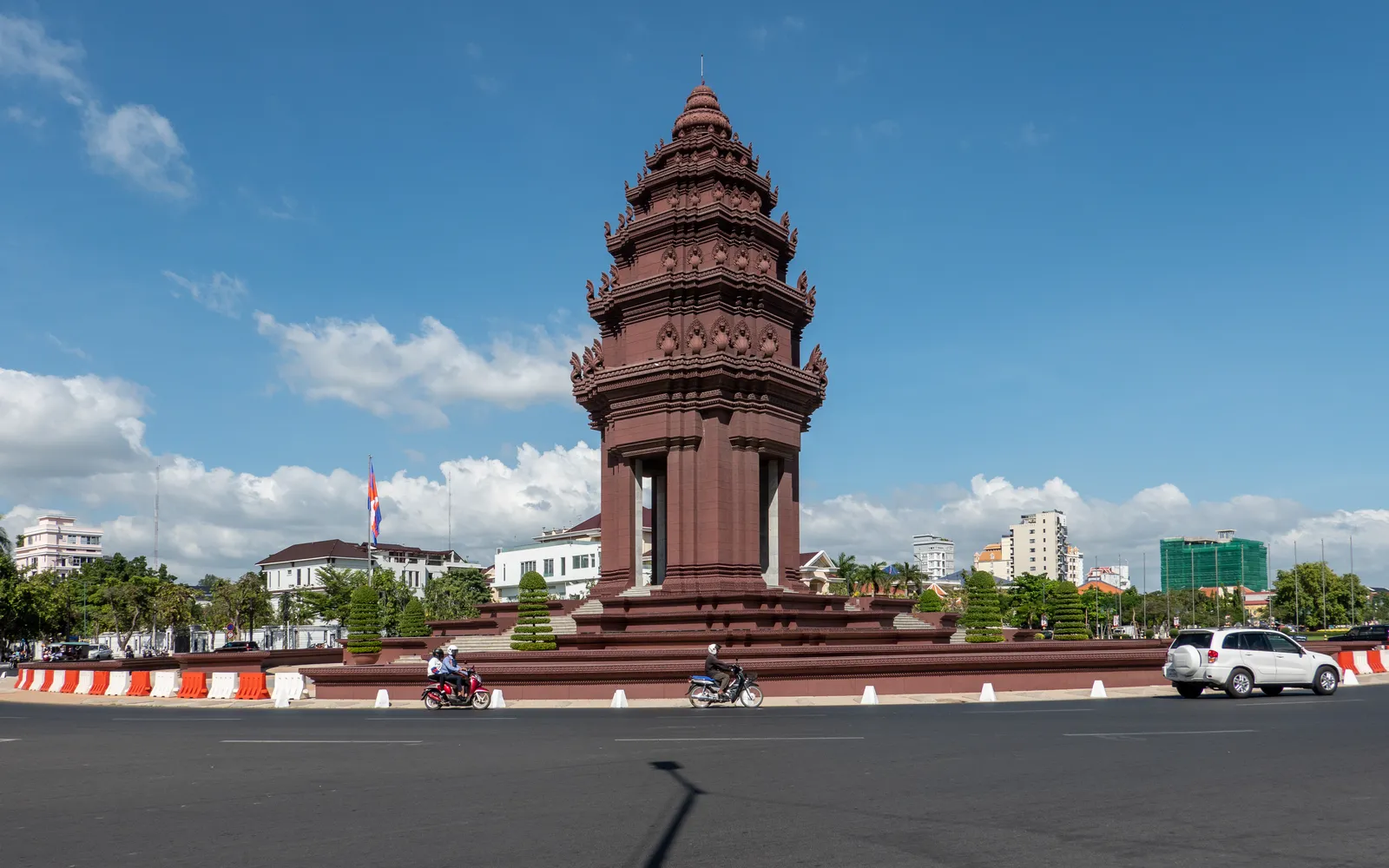 #5
#5 Independence Monument (Cambodia)
A symbol of independence from France in 1953, built in 1958 and designed by the architect Vann Molyvann in the form of a five-tiered Khmer spire in pinkish-red, blending ancient Khmer architecture with modern art beautifully. The roundabout is surrounded by a green public park where people from Phnom Penh come out to exercise and relax in the morning. In the evening it's lit up beautifully — far more alive than it is by day.
- Photograph it from a distance along Norodom Boulevard to capture the whole tower; shooting from too close, you lose the proportions.
- Evenings 17:30-19:00, when golden light spills across it and the fountains run, are the best — plenty of locals come out to stroll.
- Walking from the monument to Psar Thmei market takes about 15 minutes, making a good walking route together.
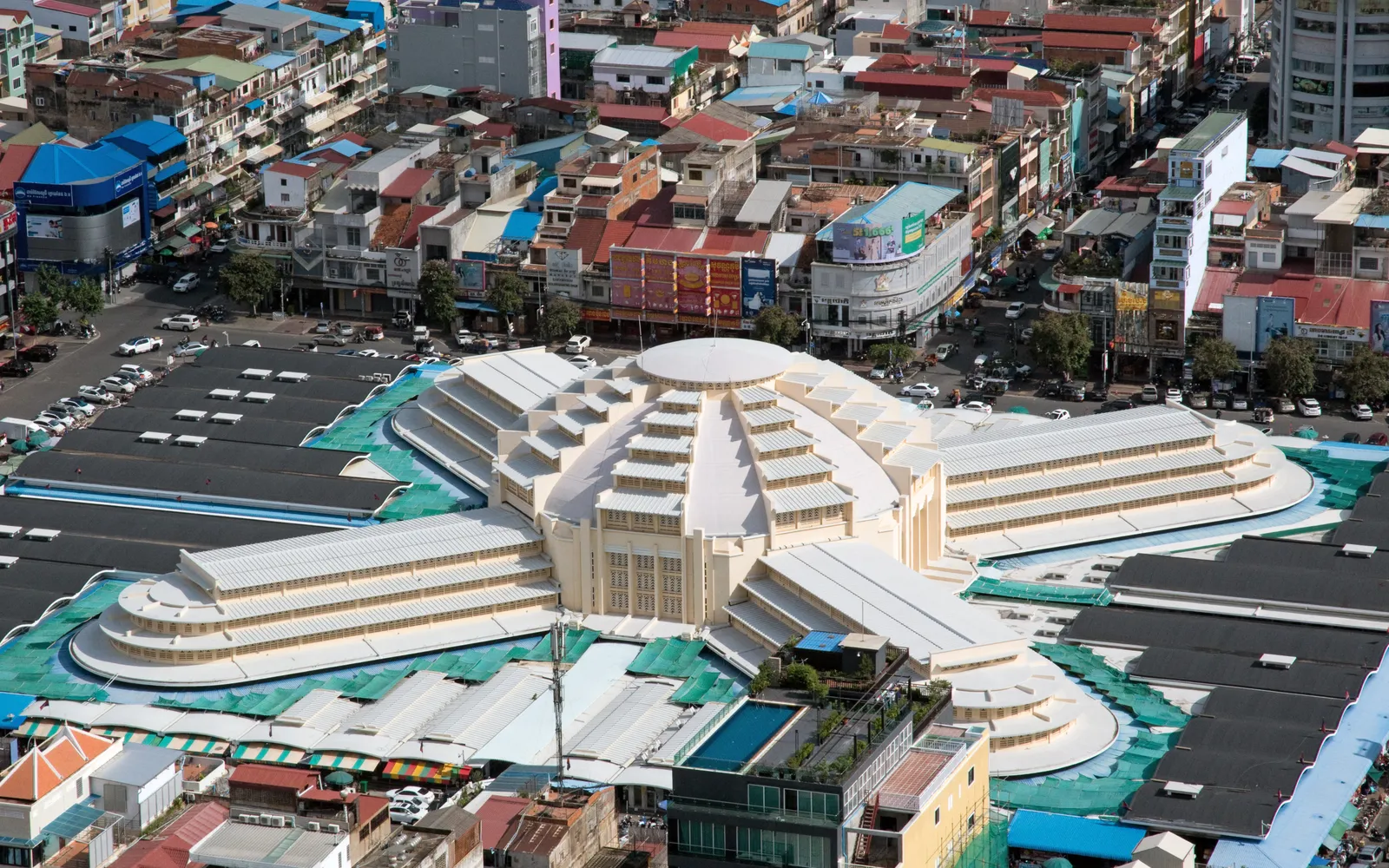 #6
#6 Central Market (Phnom Penh)
A market with the largest golden-yellow Art Deco dome in Southeast Asia, built in 1937 by a French architect. The dome is 26 metres in diameter with four wings reaching out in each direction, and inside it's divided into zones for gold, gemstones, watches, clothing, and souvenirs. The market is still in good condition and full of life — it isn't just decoration; people from Phnom Penh genuinely shop here every day.
- You can always haggle — the first price the vendor gives is usually 30-50% above the real price. Start at half and find the middle.
- The gold and gemstones in this market have a reputation for fair prices and the real thing. Buy from shops with clear signage and regular customers.
- Come in the morning between 7 and 10 to see the fresh-market atmosphere — the fruit, vegetables, and seafood that locals actually come to shop for.
Where to stay in Phnom Penh for this trip
A well-located hotel means less commuting and more sightseeing. Here are real, top-rated stays in Phnom Penh — compare Agoda · Booking · Trip.com in one click.
Rosewood Phnom Penh
Affiliate links — we may earn a commission at no extra cost to you. Details
Rosewood Phnom Penh
Affiliate links — we may earn a commission at no extra cost to you. Details
Raffles Hotel Le Royal
Affiliate links — we may earn a commission at no extra cost to you. Details
Raffles Hotel Le Royal
Affiliate links — we may earn a commission at no extra cost to you. Details
Tours, tickets & activities in Phnom Penh
Day tours, attraction tickets and travel essentials for Phnom Penh — book ahead on Klook with mobile e-tickets.
Affiliate links — we may earn a commission at no extra cost to you.
Before You Pack
Phnom Penh is good to visit year-round, but November to February is the most comfortable, with cooler weather; avoid April and May, when it's intensely hot. Plan at least two full days to cover all the highlights, especially Tuol Sleng, which needs both time and emotional space to take in.