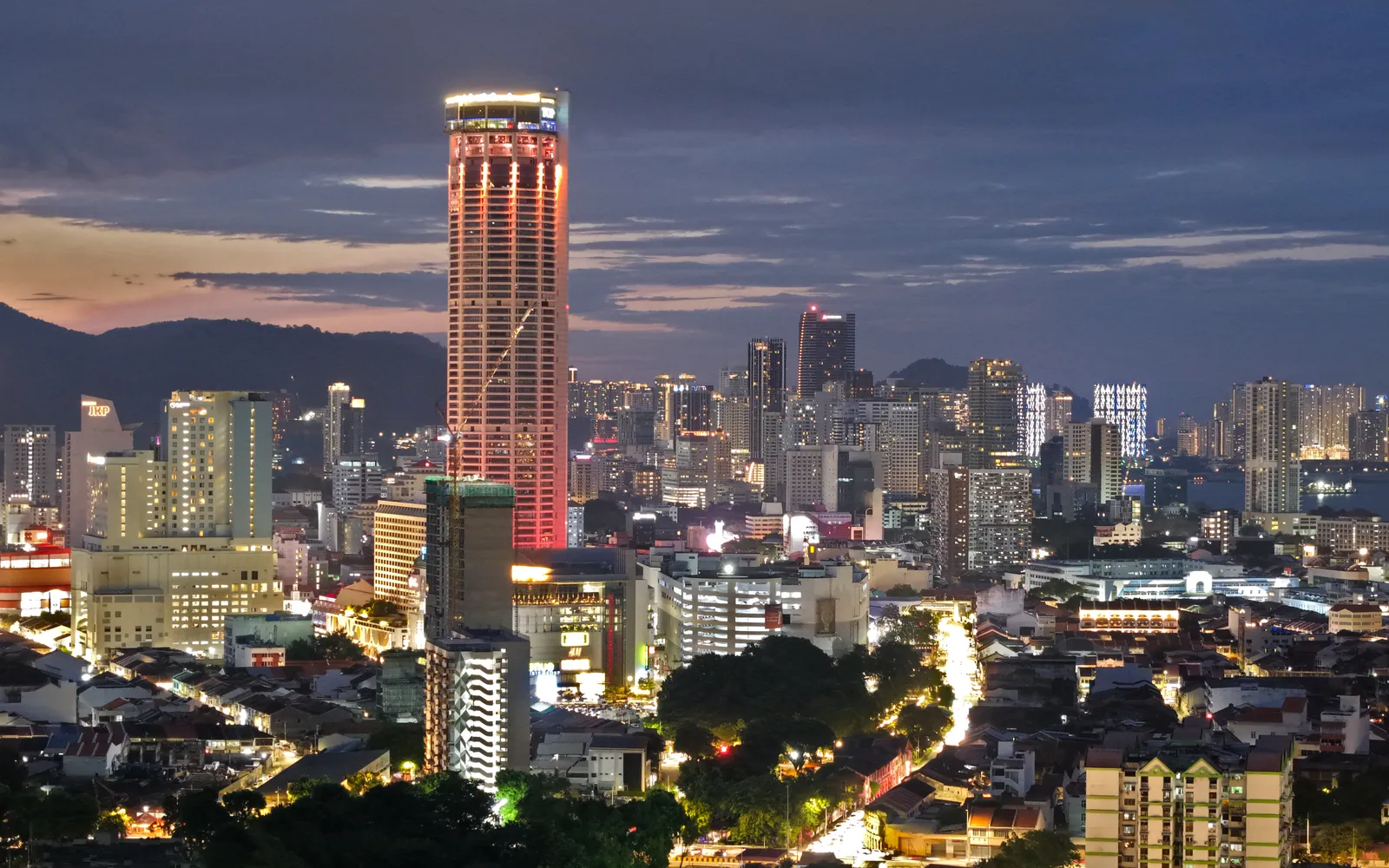
CNN Travel called Penang the Food Capital of Asia — and that is not an overstatement. The food here is the product of four cultures — Hokkien Chinese, Malay, Tamil Indian, and Peranakan — blending over several centuries into flavours that genuinely do not exist anywhere else. Many street stalls in George Town have operated across multiple generations, passing down original recipes with strict fidelity.
 #1
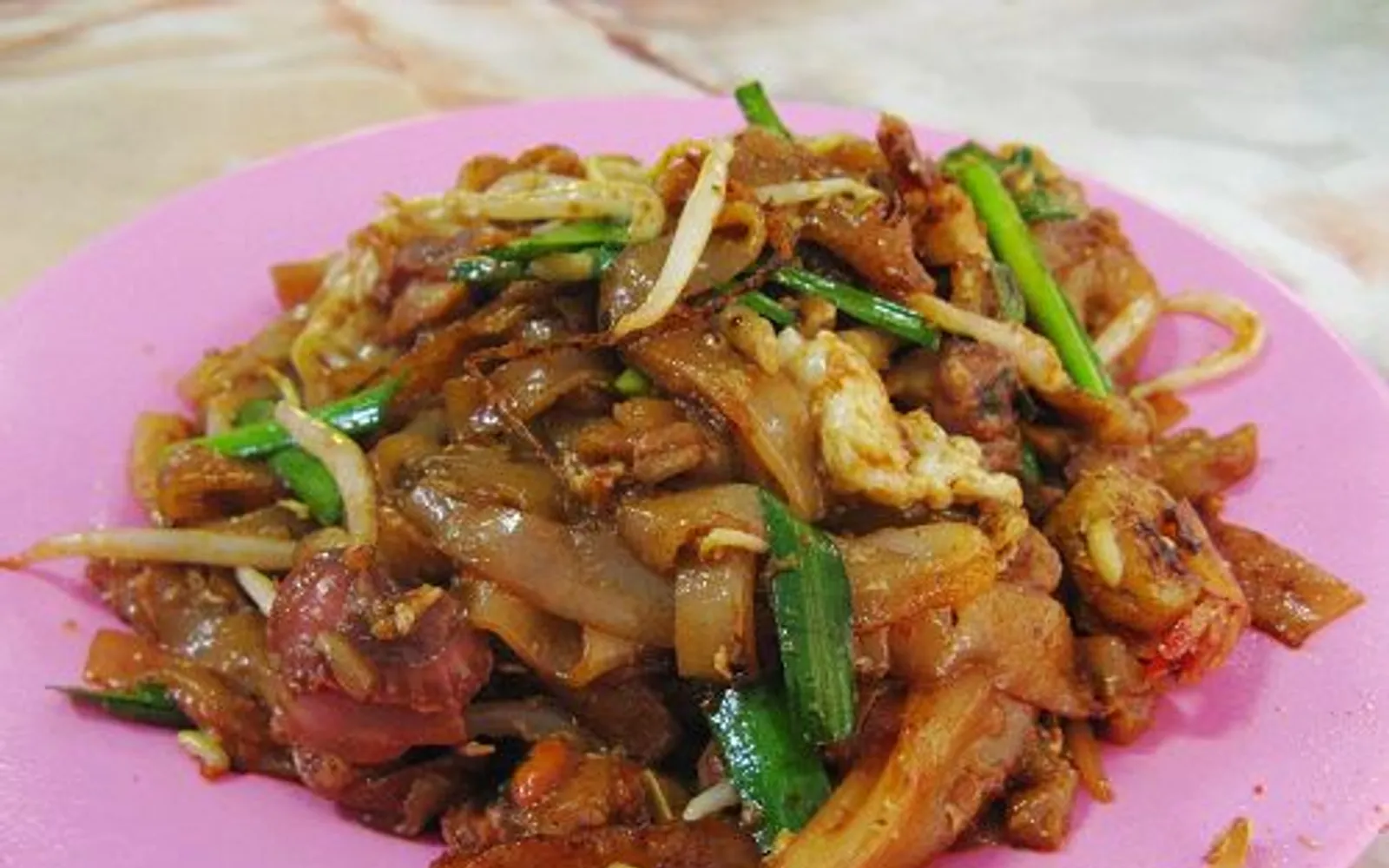
#1 Char Kway Teow
Char Kway Teow is the undisputed king of Southeast Asian stir-fried noodles. Flat rice noodles (kway teow) are tossed in a cast-iron wok over fierce heat to coax out the characteristic smoky wok hei. The core ingredients are fresh prawns, cockles, duck egg, bean sprouts, garlic chives, and dark soy sauce. What sets the Penang version apart is the use of lard and bamboo-charcoal fire — a combination that produces a depth of flavour no gas burner can replicate.
- Look for stalls that offer duck egg as an option — it gives a richer, more intense flavour than chicken egg.
- The best stalls draw a long queue. Siam Road Char Kway Teow is highly recommended; arrive before noon.
- Tell the cook your heat preference upfront — chilli paste is added to order.
 #2
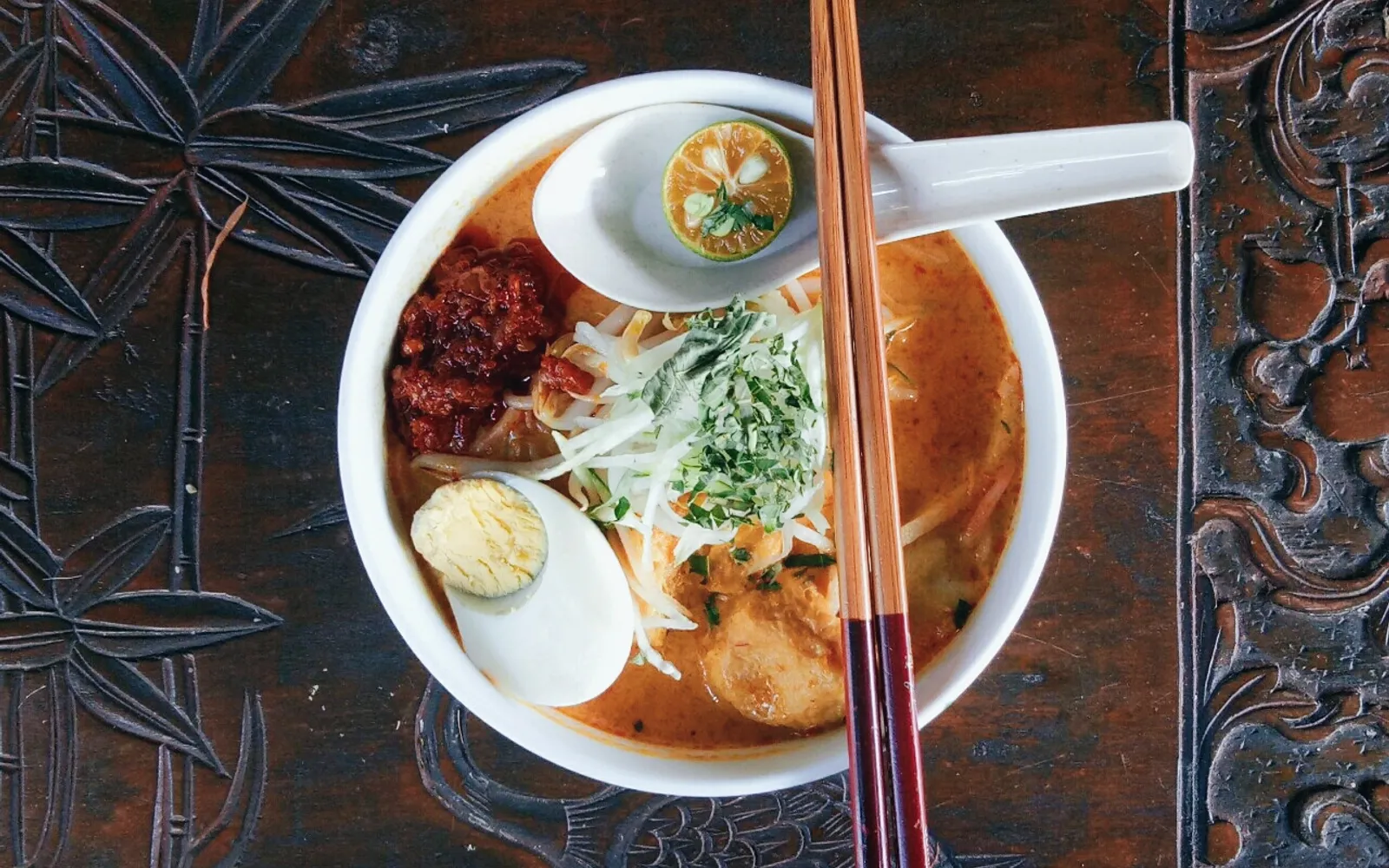
#2 Penang Assam Laksa
Penang Assam Laksa is a round-noodle soup built on a broth of smoked mackerel soured with tamarind and lime — no coconut milk anywhere. It is topped with fresh mint, onion, pineapple, cucumber, and chilli, then finished with a spoonful of thick prawn paste (hae ko) just before serving. CNN's World's 50 Best Foods ranked it number 7, making it a global pilgrimage dish.
- Air Itam Market is the most celebrated source; a bowl costs RM 6.
- Go on a weekday morning to avoid the weekend queues.
- The broth is intensely sour and salty — if you are not used to it, ask for less prawn paste.
 #3
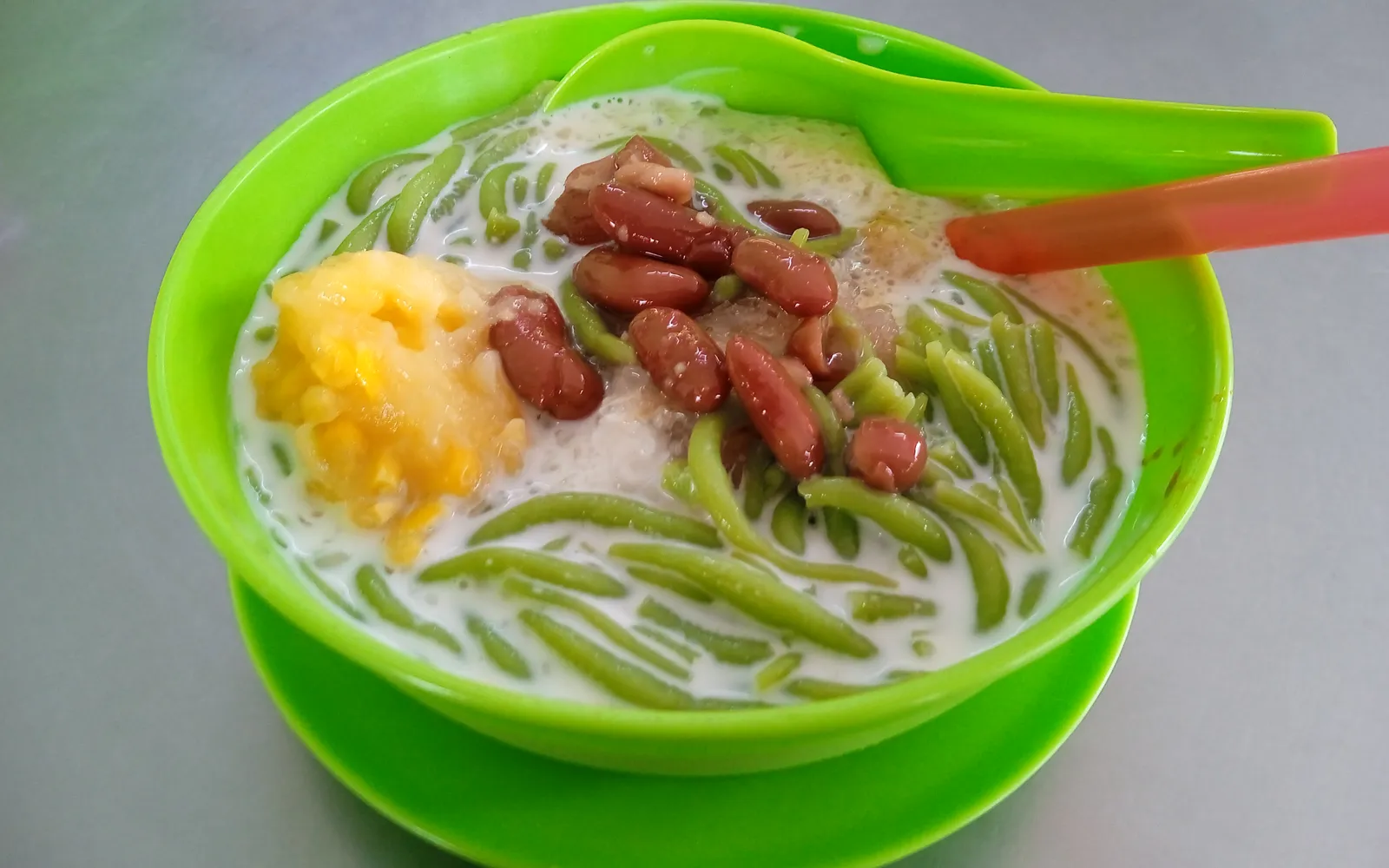
#3 Cendol
Cendol is Malaysia's most beloved shaved-ice dessert, and Penang has a particularly strong claim on it: the Penang Road Famous Teochew Chendul stall has been serving since 1936. The bowl layers shaved ice, thick coconut milk, gula melaka (coconut palm sugar), green pandan-and-rice-flour jelly strands, and cooked red beans. The interplay of sweet, creamy, and lightly salty coconut milk against the cold ice makes it the ideal reset after walking the city in the heat.
- Penang Road Famous Teochew Chendul has multiple locations — the original is on Lebuh Keng Kwee.
- Many stalls will add extra red beans or sweet corn at no charge if you ask.
- Eat immediately — the flavour peaks in the first five minutes before the ice melts.
 #4
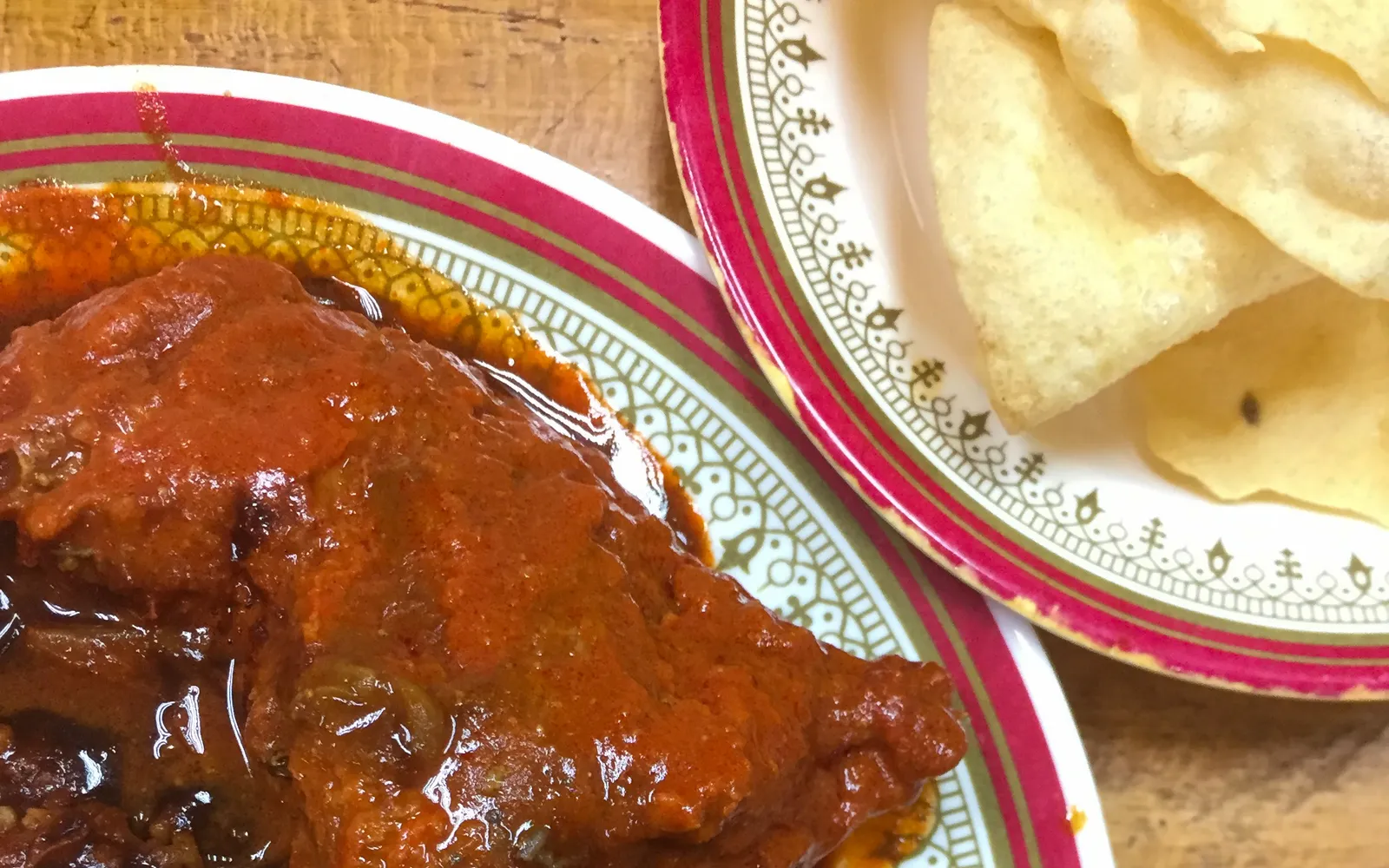
#4 Nasi Kandar
Nasi Kandar is an Indian-Muslim rice-and-curry dish that originated in Penang. The name comes from kandar — the wooden shoulder pole vendors used to carry rice and curry pots around the harbour in the 1900s. Plain or spiced rice is served with chicken curry, fish curry, prawn curry, and assorted vegetables, then finished with kuah banjir (a flood of mixed curry gravies poured over everything). Hameediyah, open since 1907, is the most widely recognised original.
- Point at the dishes you want — staff will scoop and ladle everything for you.
- Ask for kuah banjir by name if you want multiple curries mixed together over the rice.
- Hameediyah (1907) on Campbell Street is open all day with no long waits.
 #5
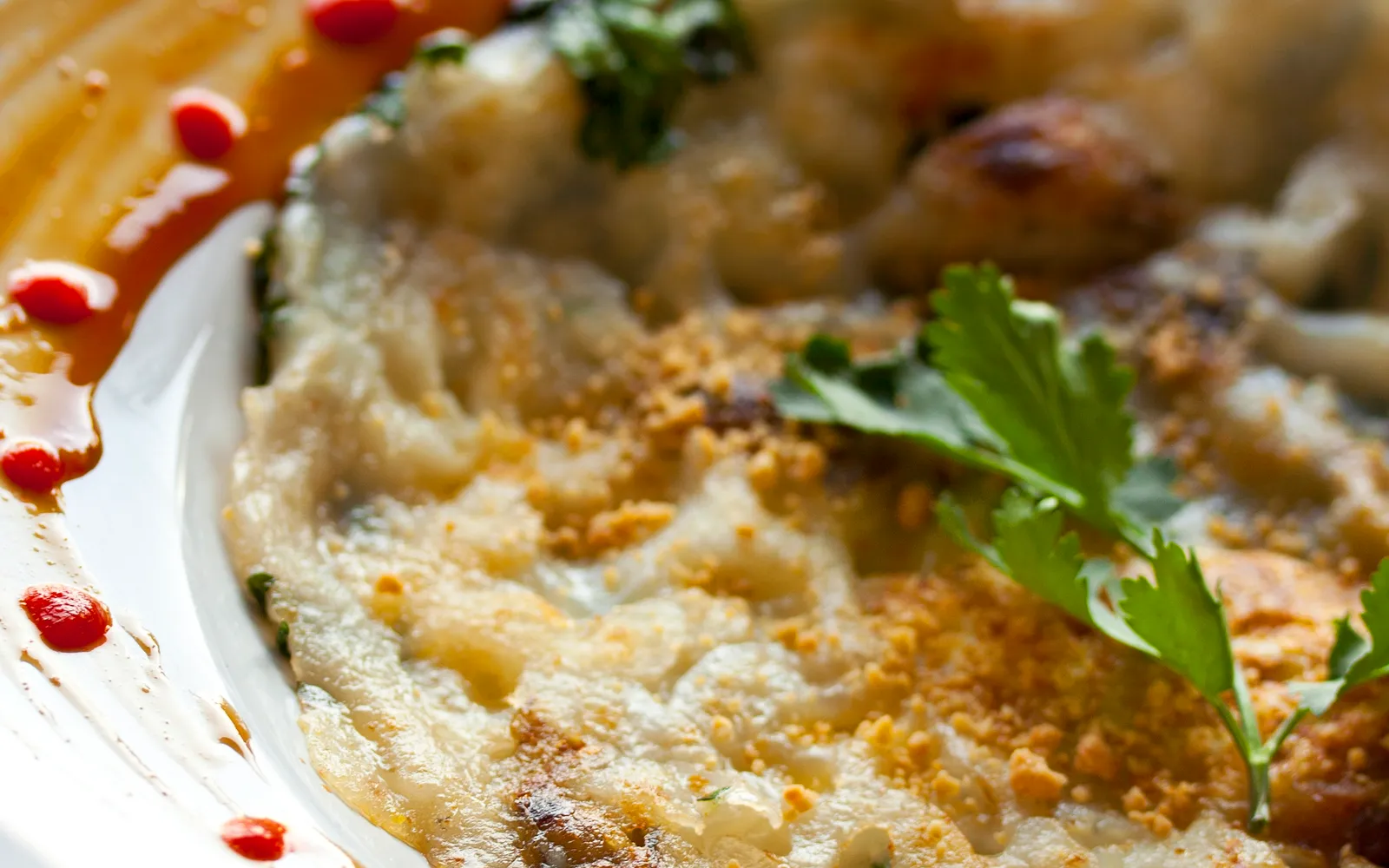
#5 Oyster Omelette (Oh Chien)
Oh Chien means oyster omelette in Hokkien, and Penang's version is distinct from every other take on it in Asia. Tapioca starch and rice flour are beaten with egg, then cooked on a screaming-hot wok with large fresh oysters, garlic chives, and bean sprouts. The result is crisp on the outside and soft-chewy within — different from the fully crisp Thai or Taiwanese styles. It is served with a sharp red chilli sauce and a sweet dipping sauce on the side.
- Choose a stall using large fresh oysters, not frozen ones — the flavour difference is significant.
- Ask for an extra egg if you prefer a richer taste; some stalls use duck egg for more depth.
- Eat it straight off the wok — once it cools, the batter turns chewy and loses its crunch.
 #6
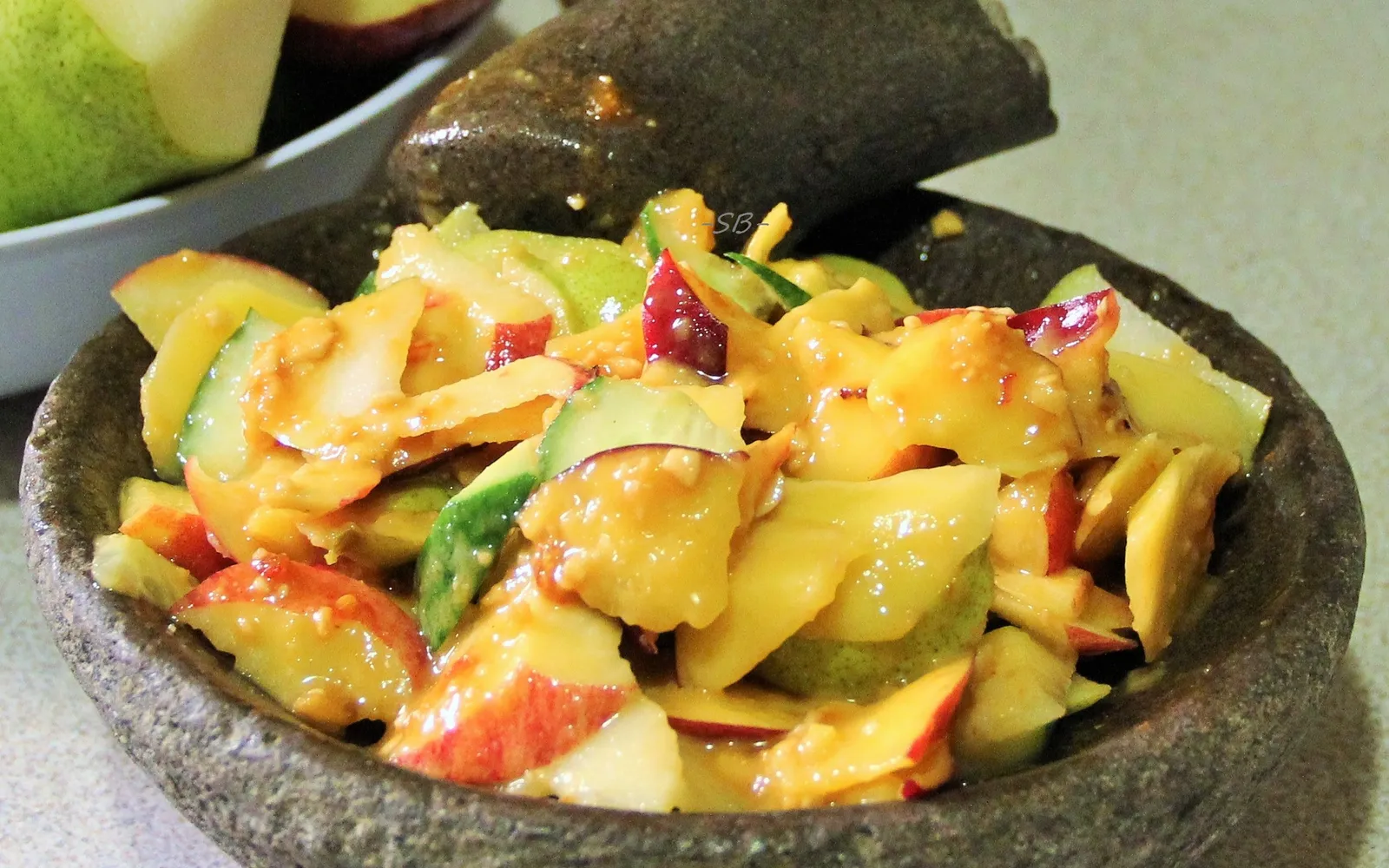
#6 Penang Rojak
Penang Rojak is a fruit-and-vegetable salad tossed in a dark, intensely aromatic dressing that balances sour, sweet, spicy, and salty in a single mouthful. The sauce is built from petis udang (black prawn paste), palm sugar, tamarind juice, chilli, and lime juice. Core ingredients include cucumber, pineapple, water apple, raw mango, fried tofu, and crunchy fried dough fritters, all finished with coarsely crushed peanuts for texture.
- Specify your heat level before ordering — the default is moderately spicy.
- Eat immediately after tossing; the fruit releases liquid quickly and dilutes the sauce.
- The Cendol stall on Penang Road often sells Rojak too — convenient to try both in one stop.
Where to stay in Penang for this trip
A well-located hotel means less commuting and more sightseeing. Here are real, top-rated stays in Penang — compare Agoda · Booking · Trip.com in one click.
The Edison George Town
Affiliate links — we may earn a commission at no extra cost to you. Details
Le Dream Boutique Hotel
Affiliate links — we may earn a commission at no extra cost to you. Details
Macalister Mansion
Affiliate links — we may earn a commission at no extra cost to you. Details
Seven Terraces
Affiliate links — we may earn a commission at no extra cost to you. Details
Tours, tickets & activities in Penang
Day tours, attraction tickets and travel essentials for Penang — book ahead on Klook with mobile e-tickets.
Affiliate links — we may earn a commission at no extra cost to you.
Before You Pack
Set aside at least half a day for a dedicated eating walk through George Town — particularly around Gurney Drive Hawker Centre and Chulia Street — to experience the flavours that earned Penang its reputation as Asia's food capital.