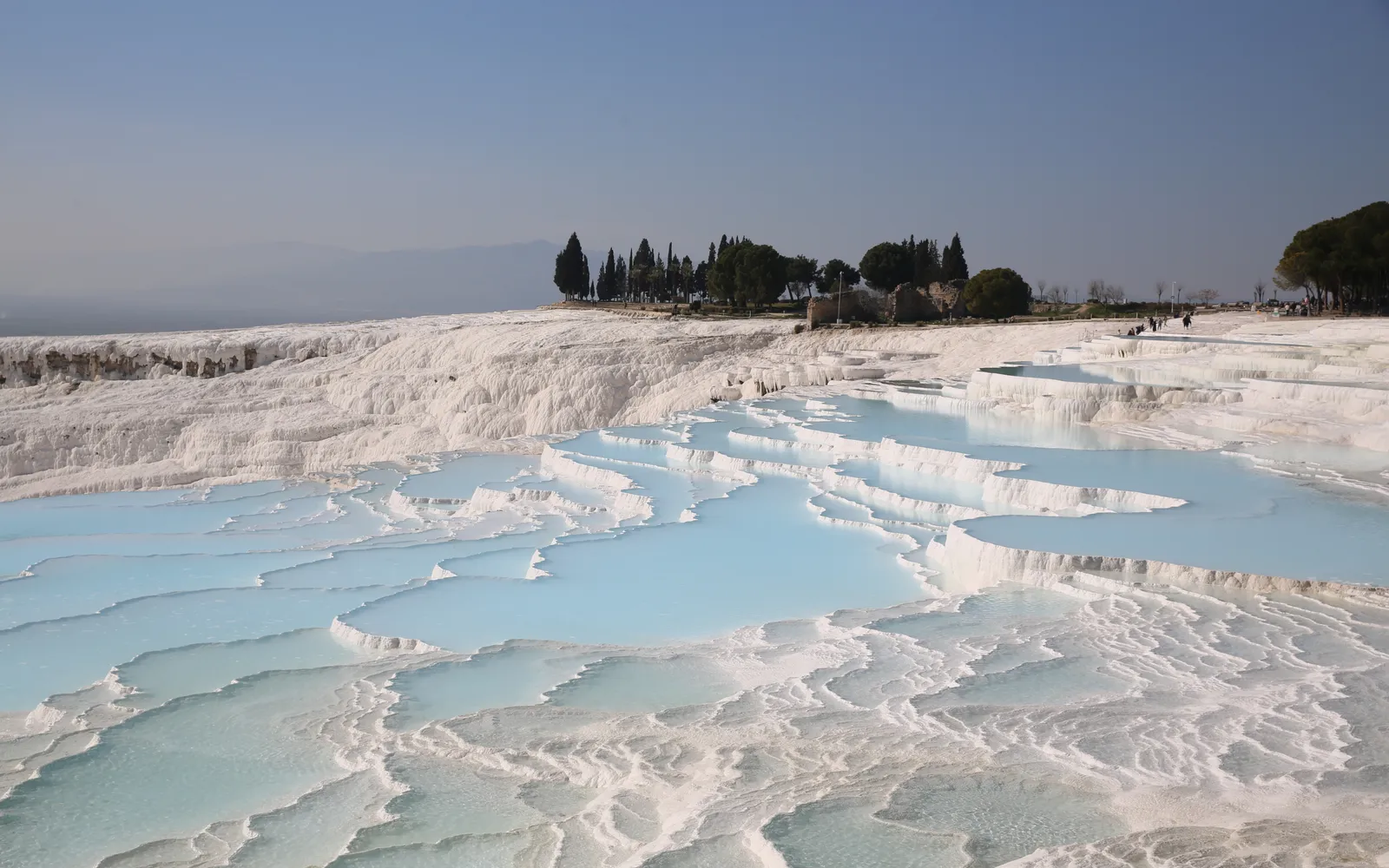
Pamukkale means Cotton Castle in Turkish, and the moment you see those blinding white travertine terraces cascading down the hillside with blue-green mineral water pooling on every ledge, the name makes complete sense. This is one of the most singular natural landscapes on earth — and at the top of the same hill sit the ruins of Roman Hierapolis, a mineral spring pool said to have been bathed in by Cleopatra, and an open-air theatre that has survived more than 1,800 years largely intact.
 #1
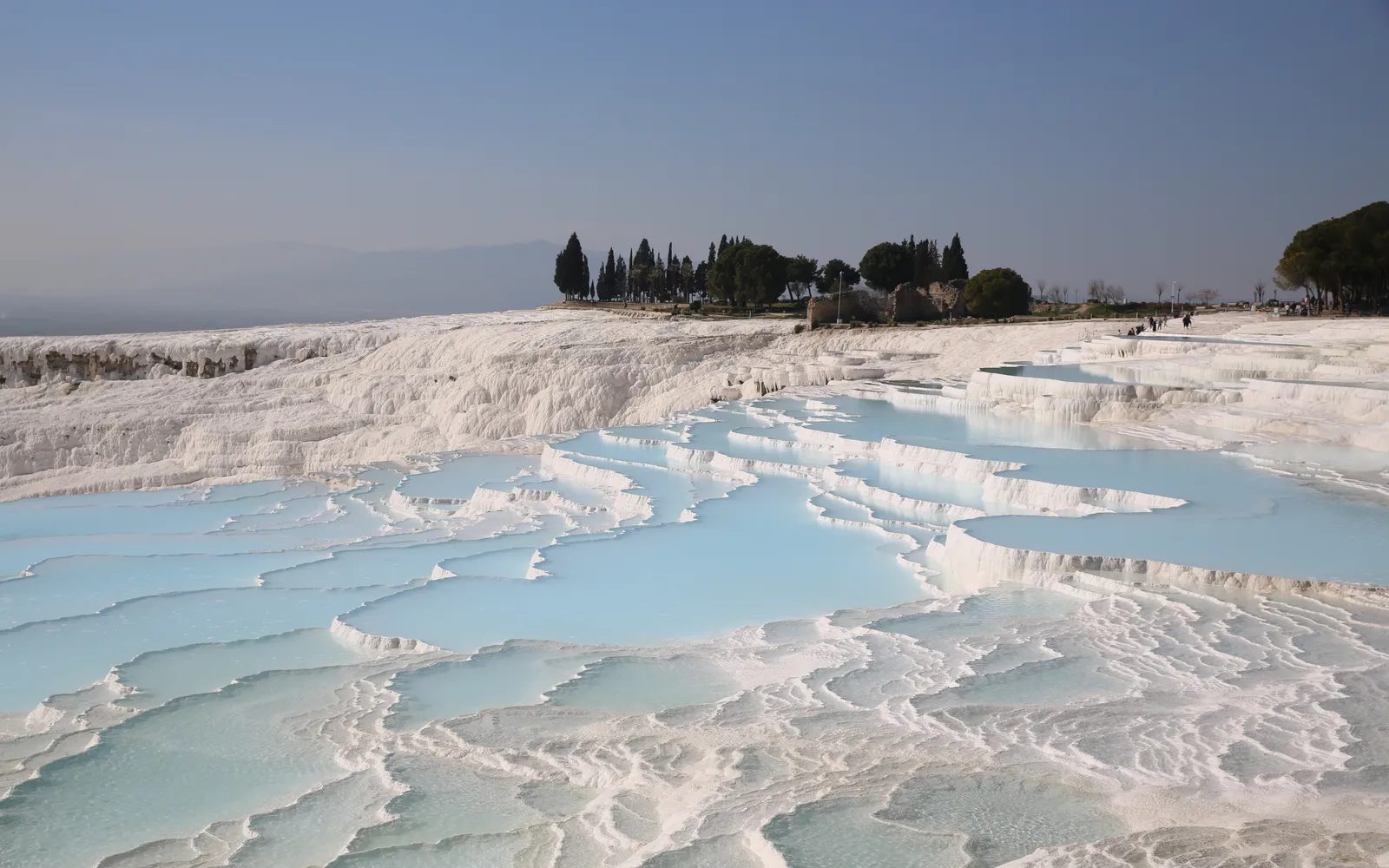
#1 Pamukkale Travertines
The headline attraction that earned Pamukkale its UNESCO World Heritage status. The brilliant-white terraces formed over thousands of years as hot springs (35-36°C) flowed from underground sources and crystallised into calcium carbonate — calcite — on the hillside. The water sitting in each terrace reflects the sky into shades of turquoise-blue. Worth knowing: not every pool holds water at all times; the park management rotates flow between sections, so some ledges may be dry on your visit.
- Shoes off before stepping onto the travertines — it's mandatory, and the wet terrace edges are genuinely slippery. Watch every step.
- Two entry points: the lower village entrance (walk up) or the upper Hierapolis gate (walk down). The upper entrance is significantly easier.
- Midday sun reflecting off white limestone can be blinding — bring quality sunglasses and sunscreen before you step out.
 #2
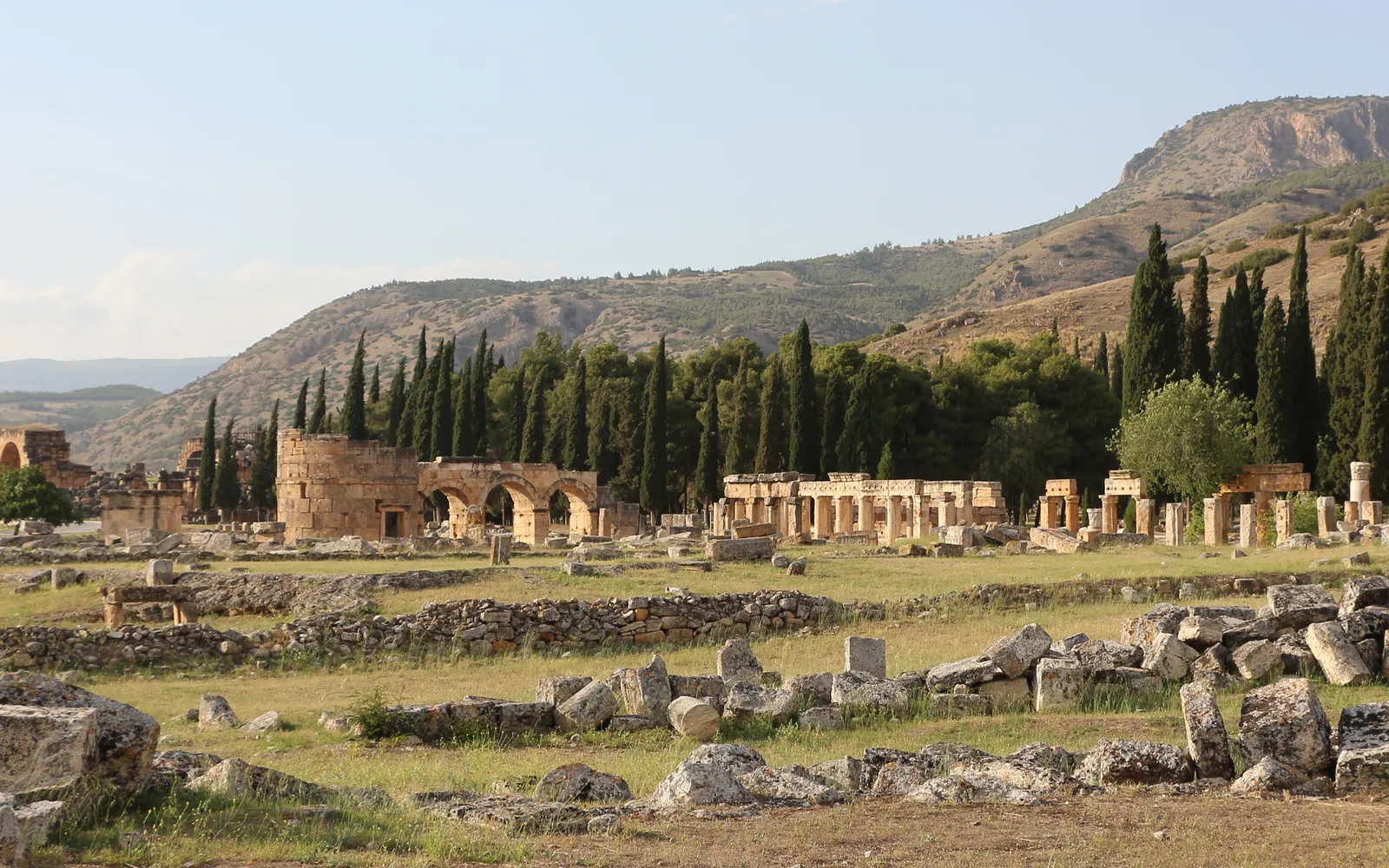
#2 Hierapolis Ancient City
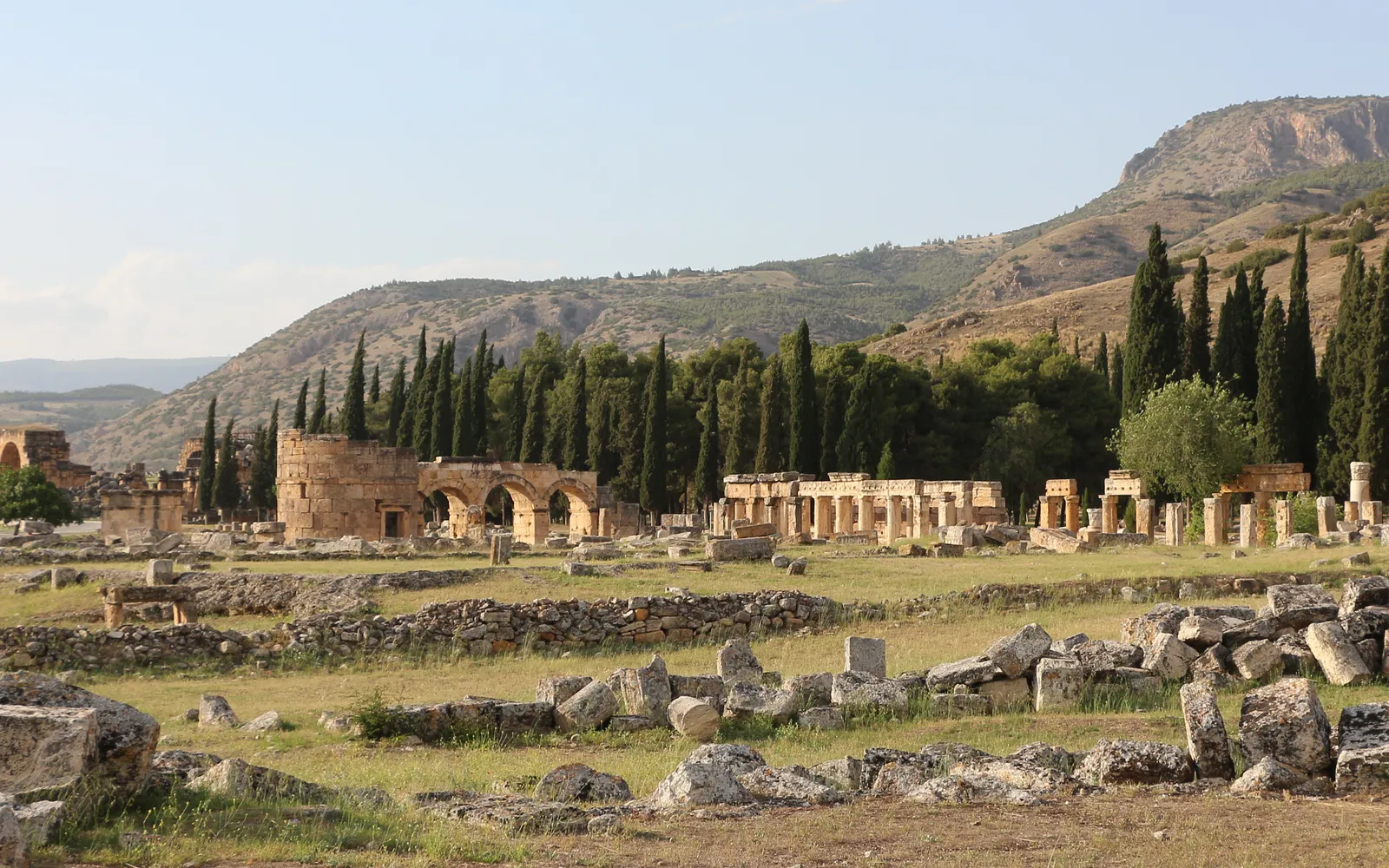
A Roman spa city founded over 2,200 years ago by the kings of Pergamon, built to exploit the hot mineral springs for healing. The best-preserved remains include the Frontinus Gate, marble columns lining the main colonnaded street, and what is considered the finest necropolis in all of Asia Minor. Allow at least 2-3 hours to cover Hierapolis properly — bring water and a hat, as shade is almost entirely absent.
- Entry covers both Hierapolis and the Pamukkale travertines on a single ticket — no separate fee. Buy at the main entrance gate.
- English-speaking local guides are available for hire at the gate if you want depth on the history — rates run roughly 200-300 lira per hour.
- The Hierapolis Archaeological Museum is inside the same complex and holds the finest marble sculptures recovered from excavations.
 #3
#3 Cleopatra Antique Pool
Quite possibly the strangest swimming pool in the world: beneath 36°C mineral water lie Roman marble columns and fragments of ancient architecture, toppled by past earthquakes. Legend holds that Cleopatra bathed here — historically unverifiable, but the mineral-rich water does leave skin noticeably smooth after a soak. The entry fee is higher than typical pools, but the experience of swimming through a sunken Roman ruin has no real equivalent.
- Pool entry is around 350-400 lira, separate from the Hierapolis ticket — buy at the pool counter.
- Bring your swimsuit from your accommodation; rental gear on site is expensive. Lockers are available to hire.
- Watch where you step: some of the submerged stones are genuine ancient artefacts. Do not remove anything.
 #4
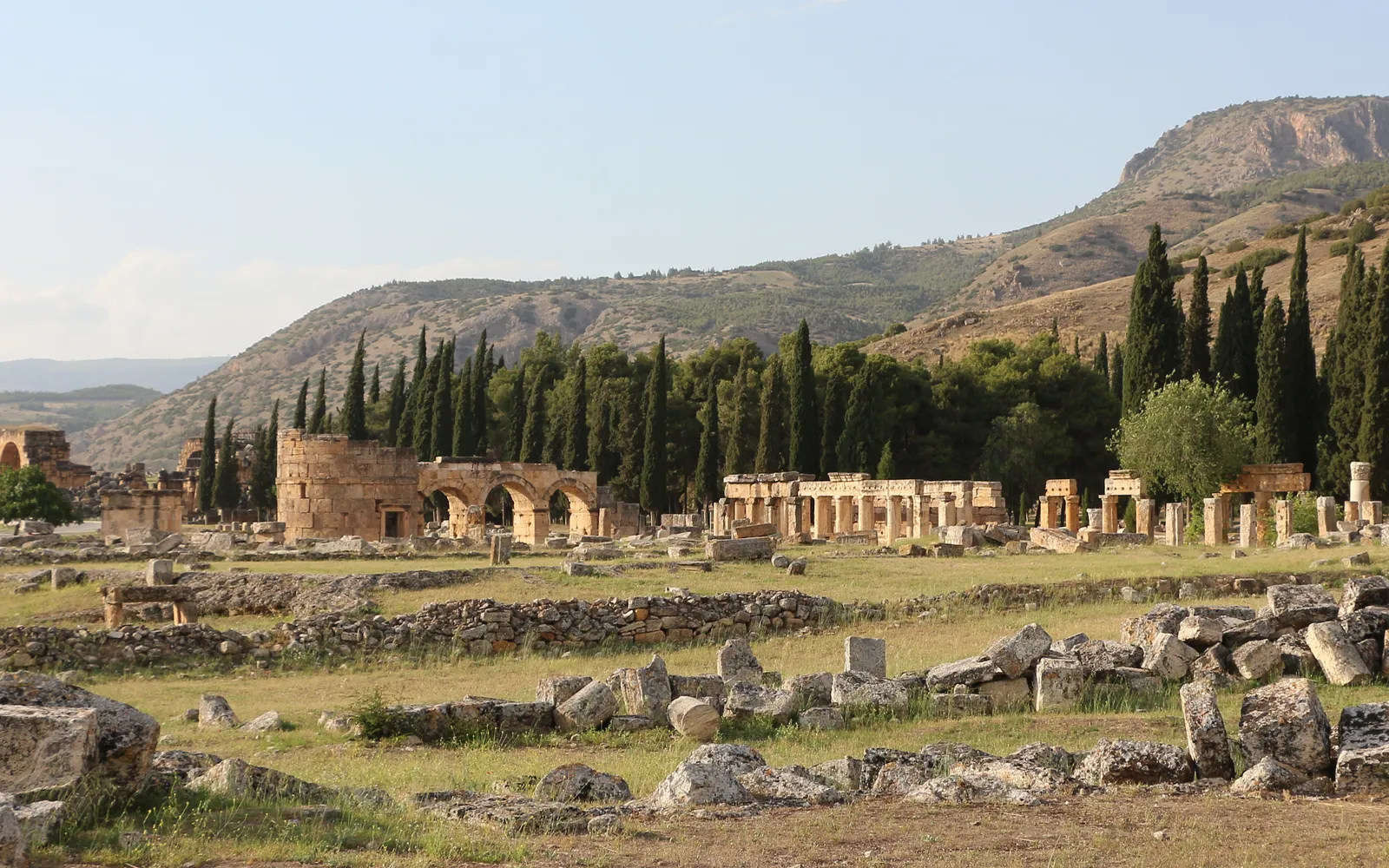
#4 Hierapolis Roman Theatre
An open-air Roman theatre built in the 2nd century AD under Emperor Hadrian, seating more than 12,000 — and now among the most completely restored theatres in Asia Minor. The stage wall carries detailed low-relief carvings of Greek and Roman mythology. Sit on the upper tiers and look out over the Denizli plain below; it takes almost no imagination to picture Roman actors and athletes performing here in front of thousands.
- Climb to the top rows for the best panoramic view of Pamukkale and the plain — the stone steps are slippery when wet.
- Included in the standard Hierapolis ticket at no extra charge.
- During the festival season (June-July), some years see live music performances in the theatre at night — check the official Hierapolis event calendar.
 #5
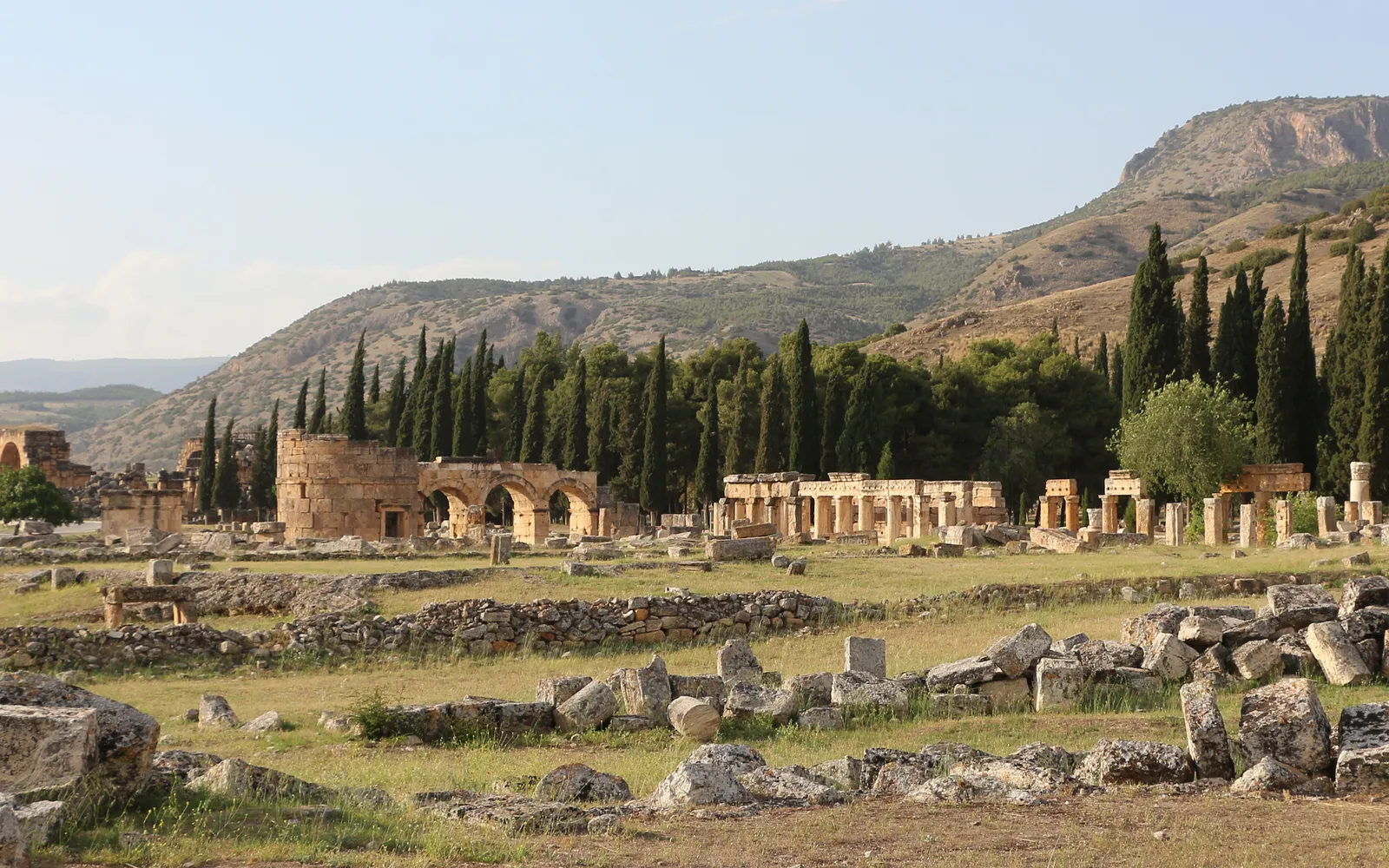
#5 Hierapolis Necropolis
The largest and best-preserved Roman-era necropolis in the ancient world, stretching over 2 kilometres along both sides of the road into Hierapolis. Thousands of marble sarcophagi, domed tomb chambers, and stone memorials from the Greek, Roman, and Byzantine periods line the route. Romans believed the hot mineral springs aided passage of souls to the afterlife — so the deceased were brought here from across the Roman Empire to be buried near these sacred waters.
- The necropolis grounds are extensive — wear comfortable walking shoes and carry water, as there are no vendors inside.
- Informational signage is in English. Reading up before you go (or hiring a guide) helps make sense of the sheer variety of tomb styles.
- Most general visitors skip this section entirely, making it the quietest, most contemplative part of the whole Hierapolis site.
 #6
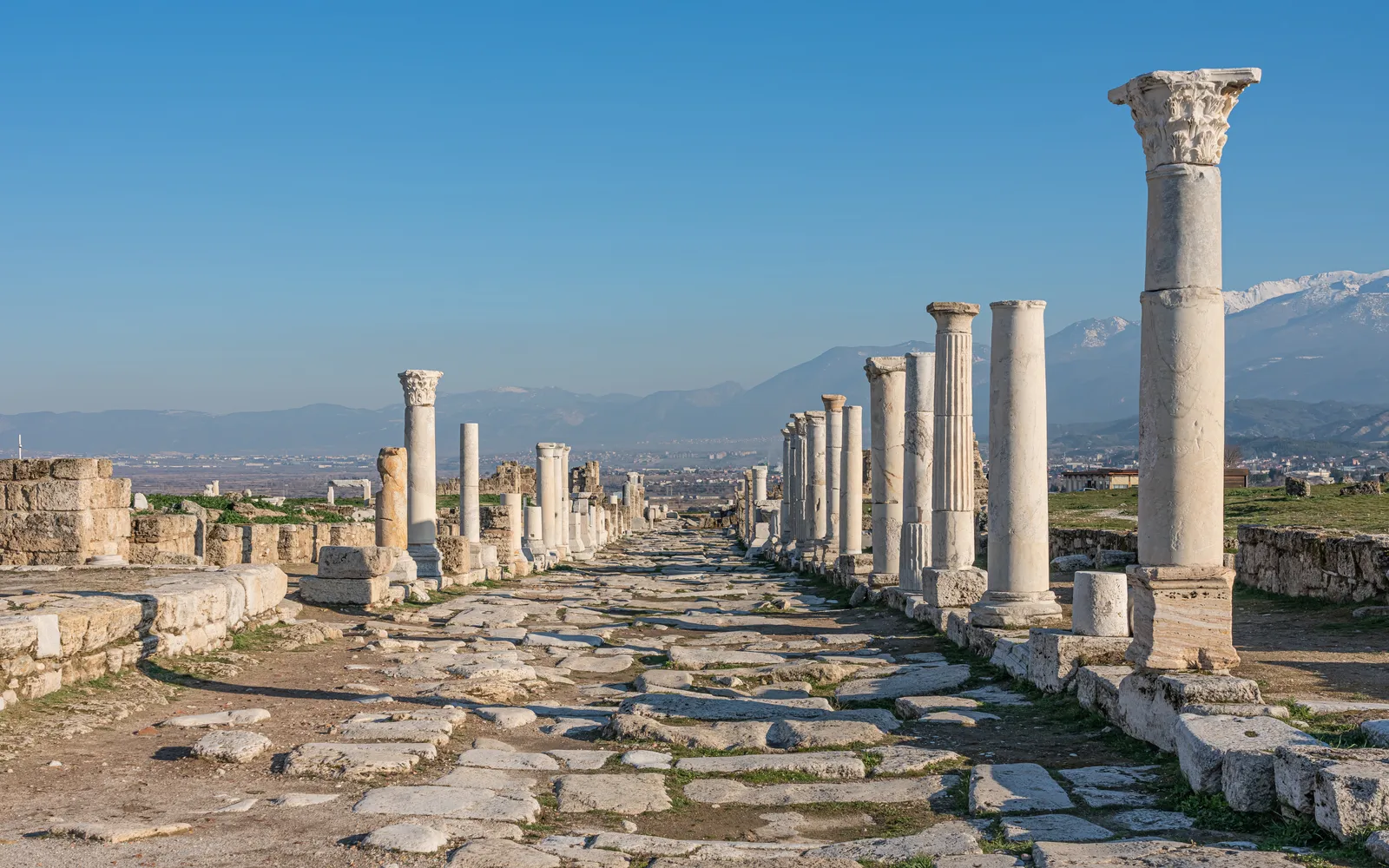
#6 Laodicea on the Lycus
A Hellenistic-Roman city cited in the Christian Bible (Revelation 3:14-22), once a major centre for trade and ancient banking. Turkish archaeologists are still actively excavating and restoring the site. Highlights include two theatres, a temple complex, and a main colonnaded street where chariot ruts are still visible in the stone. Because most visitors skip Laodicea entirely, the site is quiet and the sense of personal discovery is real.
- Separate entry fee from Hierapolis — around 100-150 lira, paid at the site gate.
- Active excavations mean some sections may be temporarily closed. Check before visiting if you have a specific area in mind.
- Easily combined with Pamukkale in a single day: 15 minutes by car or a short public bus ride from Pamukkale village.
Where to stay in Pamukkale for this trip
A well-located hotel means less commuting and more sightseeing. Here are real, top-rated stays in Pamukkale — compare Agoda · Booking · Trip.com in one click.
Bellamaritimo Hotel
Affiliate links — we may earn a commission at no extra cost to you. Details
Venus Suite Hotel
Affiliate links — we may earn a commission at no extra cost to you. Details
Alida Hotel Pamukkale
Affiliate links — we may earn a commission at no extra cost to you. Details
Hotel Sahin
Affiliate links — we may earn a commission at no extra cost to you. Details
Tours, tickets & activities in Pamukkale
Day tours, attraction tickets and travel essentials for Pamukkale — book ahead on Klook with mobile e-tickets.
Affiliate links — we may earn a commission at no extra cost to you.
Before You Pack
Pamukkale is open year-round, but spring (March-May) and early autumn (September-October) offer the most comfortable conditions. Avoid July-August when the sun on white limestone is intense. Plan at least one night in Pamukkale village so you can reach the terraces early morning before tour groups arrive in force.