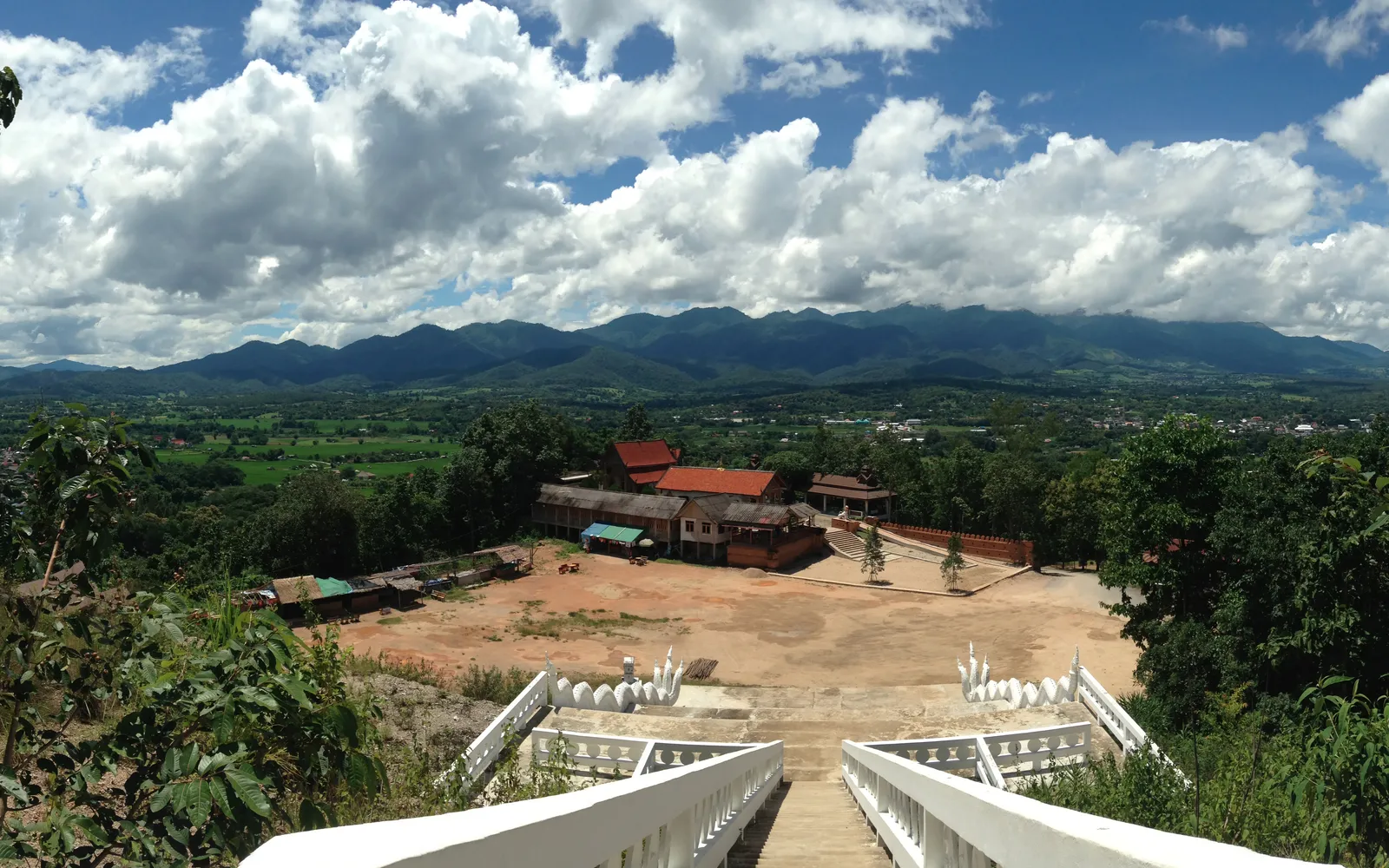
Pai is a small district of Mae Hong Son province (plenty of people still mistakenly think it's in Chiang Mai), tucked into a valley beside the Pai River at an altitude of roughly 600–1,200 metres above sea level. It sits at the end of Highways 1095 and the legendary road of 762 bends, about 130 km from Chiang Mai. Pai's charm is having everything in one place — watch the sea of mist in the early morning, splash under a waterfall mid-morning, walk the canyon ridges in the afternoon, catch the sunset in the evening, then close the night on the walking street. This guide picks 8 spots you can actually visit in 2026, checking entry fees, opening hours and the latest reviews for each one, and telling you straight which places suit which season — and when you shouldn't come to Pai at all.
 #1
#1 Kong Lan
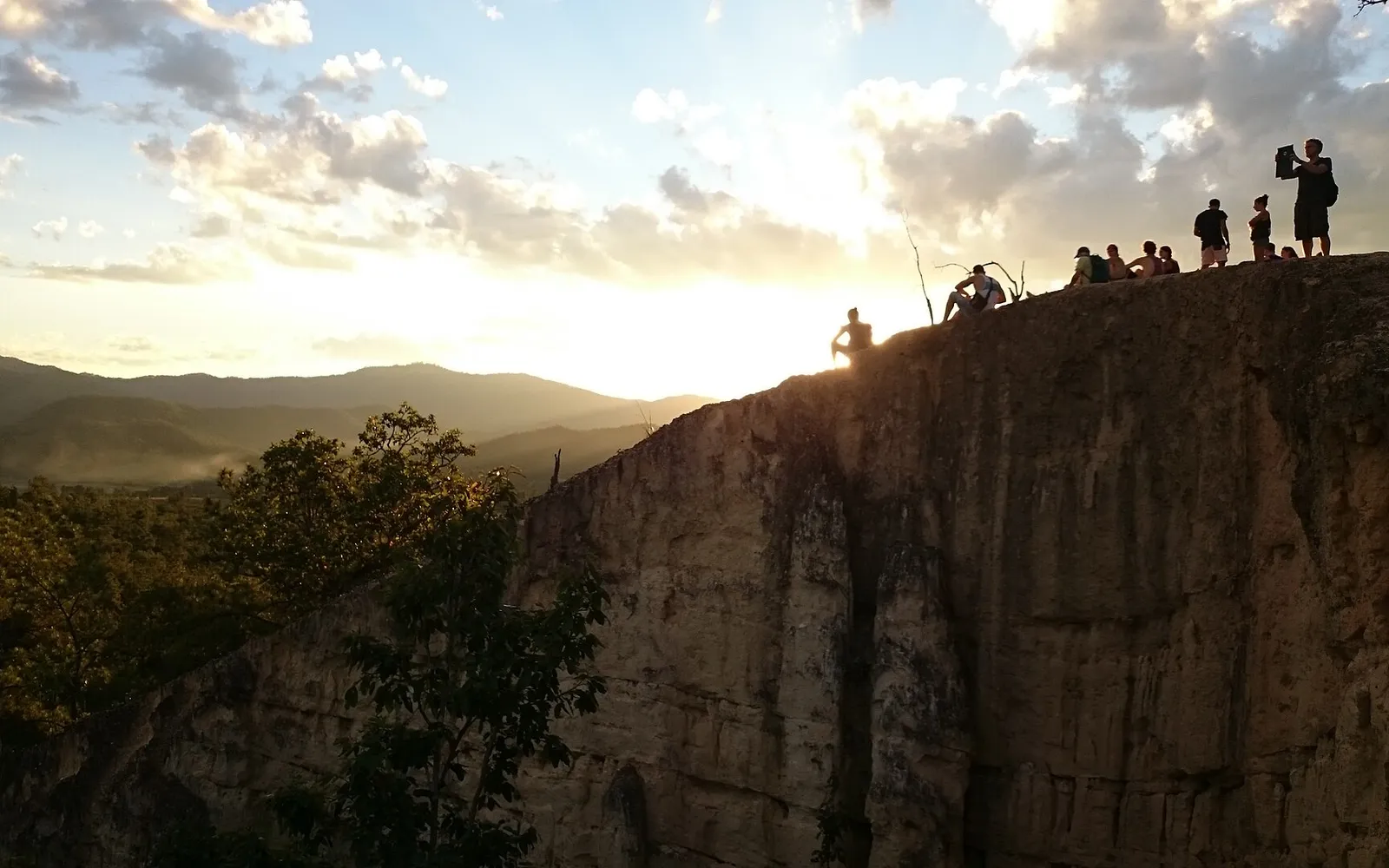
Pai's most famous sunset spot, known locally as "Kong Lan" — in the northern dialect "kong" means path and "lan" is the monitor lizard, so together it means a path so narrow only a lizard's width can pass. It formed as high ground collapsed and was then carved by water and wind over a very long time, leaving winding red earthen ridges alternating with ravines across roughly 5 rai in the middle of pine and dipterocarp forest. In some stretches the ridge is under a metre wide, while the cliffs on either side drop about 30 metres with no guardrails. From the car park it's about a 5-minute walk up the steps to the main viewpoint, with a 360-degree view of valleys and rice fields. Reviews on Google, around 4.5/5 from more than 8,000 ratings, agree that the sunset here is the defining image of Pai. The main complaints are that it gets very crowded in the evening during high season, the sandy soil is slippery and someone scrapes a knee just about every day, and anyone hoping for a real grand canyon may find it smaller than expected.
- Pai's most famous sunset spot, with a 360-degree valley view
- Unusual red-earth ridge terrain unlike anywhere else in Thailand
- Free entry, right off the main road, just a ~5-minute walk up from the car park
- Narrow ridges with ~30 m drops and no guardrails — not suitable for small children or anyone afraid of heights
- So crowded at sunset in high season there's barely anywhere to sit
- Anyone expecting a real grand canyon may find it smaller than they imagined
- Wear grippy trainers only, no flip-flops — the red sandy soil really is slippery and someone gets scraped almost every day. Bring a torch or a fully charged phone for walking down after dark.
- Arrive about an hour before sunset to grab a spot, and bring drinking water plus small change for the toilet — there are no shops on the ridge and almost no shade.
- On the way back, stop at the historic Tha Pai bridge just ~2 km away — the Nawarat steel bridge that was moved from Chiang Mai to replace the wooden World-War-II-era Japanese bridge that was washed away in the great flood of 1973. A free 10–20-minute photo stop is just right.
 #2
#2 Wat Phra That Mae Yen
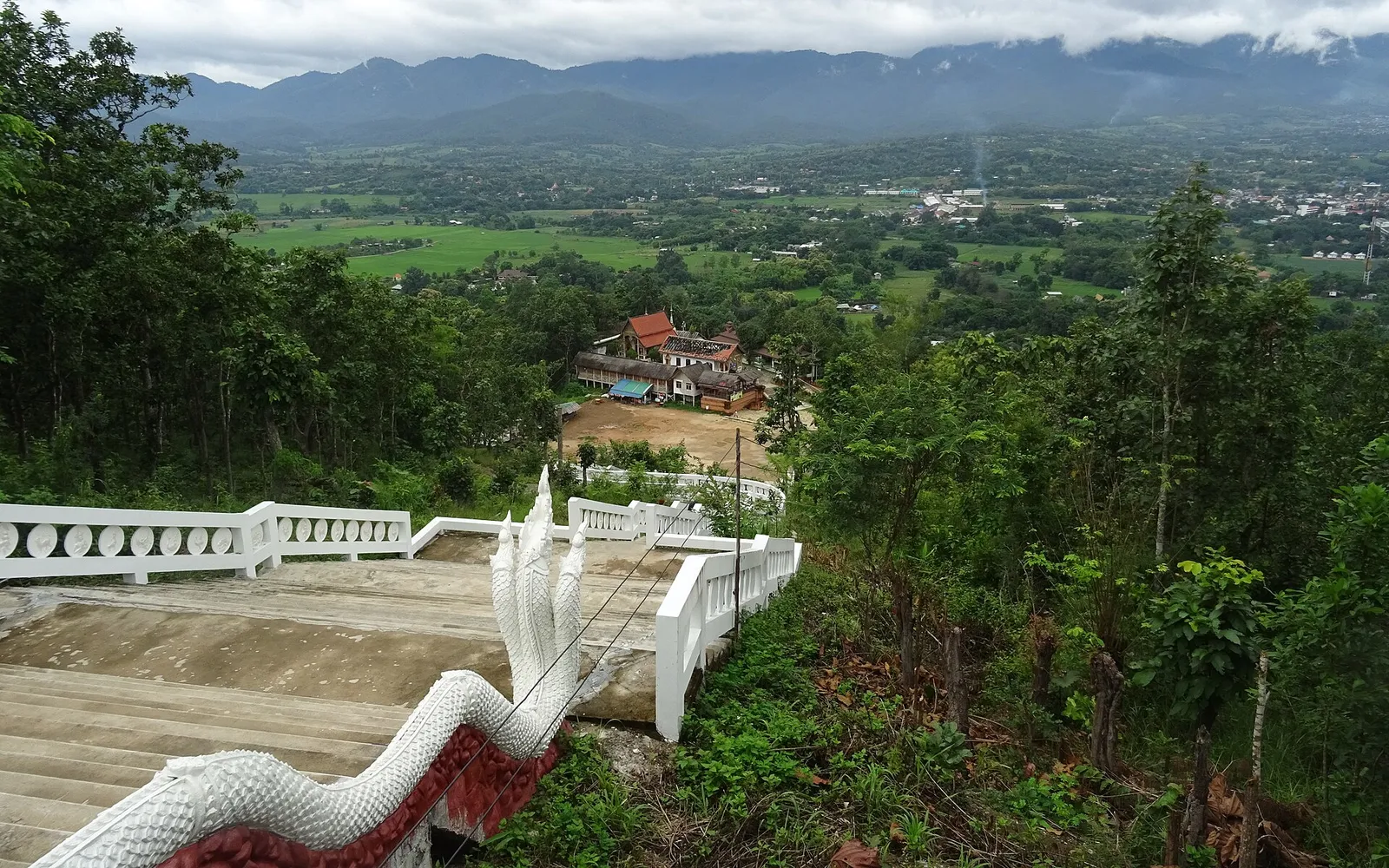
A landmark visible from nearly every corner of town — an old temple long tied to Pai, sitting on a hill to the east. Below is an ordination hall in mixed Lanna–Burmese style and a Burmese bell-shaped chedi, while at the top of the hill stands the "Phra Phuttha Lokuttara Maha Muni," a large white subduing-Mara Buddha image built in more recent years. There are two ways up: conquer the roughly 353-step naga staircase (an easy 7–10-minute walk) or drive up and park near the summit. The reward is a panoramic view of Pai town, the rice fields and the river. The image faces west, which makes it a fine sunset spot, and Google reviews around 4.4/5 from more than 1,600 ratings call the view "more than worth the effort." Good to know before you go: during 2024–2025 the image was under restoration, with bamboo scaffolding covering parts of it at times, so photos of the Buddha may include the scaffolding — but the town view from the upper terrace is still a full ten out of ten.
- An almost 360-degree panorama of Pai town — reviews agree it's more than worth the effort
- A fine sunset spot, and on winter mornings there's a chance to see the sea of mist
- The 353 steps aren't as brutal as feared — an easy 7–10-minute walk to the top
- During 2024–2025 the image had bamboo scaffolding during restoration, so photos may include it
- Crowded at sunset in high season, and some groups are noisy, spoiling the temple atmosphere
- Strong sun during the day, with almost no shade on the terrace
- Dress modestly to cover knees and shoulders (sarongs rent for around 20 THB) and take off your shoes before stepping onto the Buddha's terrace — the tiled floor gets very hot in the afternoon.
- For quiet plus a sea of mist in winter, go up early after opening rather than the crowded evening — older visitors or anyone with bad knees can drive up and park near the summit instead of forcing the stairs.
- The temple has a special registration status and the community has announced it does not accept informal solicitations — make merit only through the official donation boxes inside the temple. And on the way back after sunset, the road down the hill is very dark, so use your headlights and drive slowly.
 #3
#3 Kho Ku So
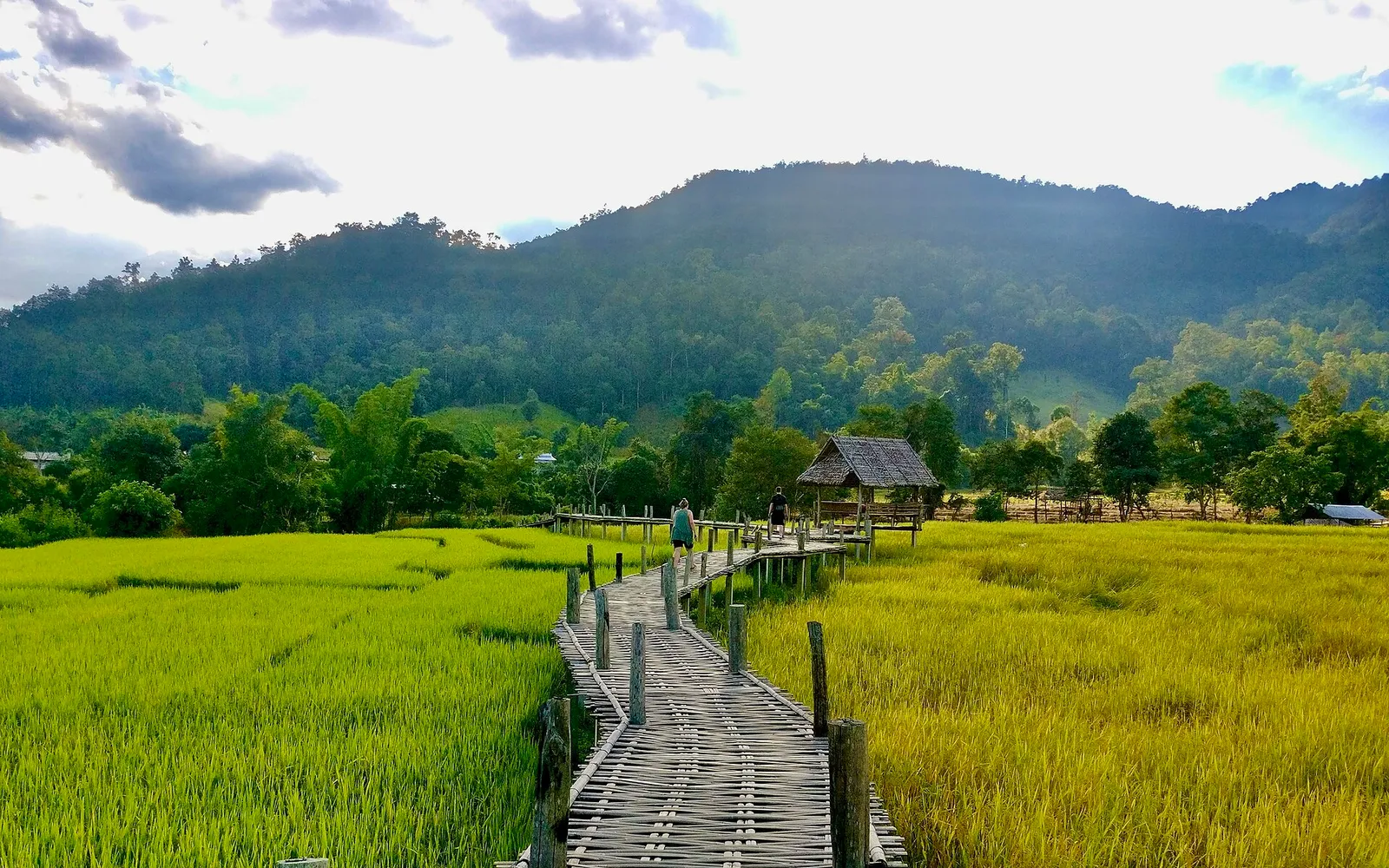
An 815-metre bamboo bridge winding across the rice fields of Ban Phaem Bok. The name "Kho Ku So" is Tai Yai (Shan) — "kho" means bridge and "ku so" means merit, so together it's the "bridge of merit." Villagers pitched in to start building it in late April 2016, taking about three months. It wasn't meant to be a tourist attraction, but to let monks from Wat Huai Khai Khiri on the hill walk into the village on their alms round without treading on the rice plants. Anyone up early enough to go between 6 and 7 a.m. will catch monks walking their alms round on the bridge through the mist — the signature image of this place. Along the way there are rest pavilions, cafés and a pad thai shop in the middle of the fields that reviewers rave about. Google gives it around 4.5/5 from more than 3,600 reviews, praising a calm that isn't as busy as the other spots. The most common gripe is that some of the bamboo planks are rotten and you have to tread carefully, and if you come in the dry season when the fields are brown, the reality looks very different from the review photos.
- The view of the 815 m bamboo bridge winding across rice fields ringed by mountains — stunning when the fields are green or the rice is golden
- Early mornings bring monks on their alms round through the mist, a signature scene you won't find elsewhere
- Quieter than Pai's other landmarks, with cafés and a pad thai shop out in the fields
- Some bamboo planks are rotten or sagging, so tread carefully, especially after the rainy season
- In the dry season (Feb–Jun) the fields turn brown and the reality looks very different from the review photos
- The last stretch of access road is rutted and potholed, not suitable for scooter beginners
- Allow 30–60 minutes for the round trip. There's no shade on the bridge at all — bring a hat, sunglasses and water, and watch your footing the whole time because the woven bamboo has gaps and some spots are rotten.
- Pick the right season: the fields are deep green Aug–Oct and the rice turns golden Oct–early Dec — but from Feb–Jun the fields are harvested and left dry and brown, so you might drop it from the plan entirely.
- The last 6–7 km of road is narrow, rough and steep, so scooter beginners should charter a ride instead — the same route lets you continue on to Phaem Bok Waterfall. (The Land Split that was once famous on this road closed to tourists back around 2022.)
 #4
#4 Chaisongkhram Road Night Market
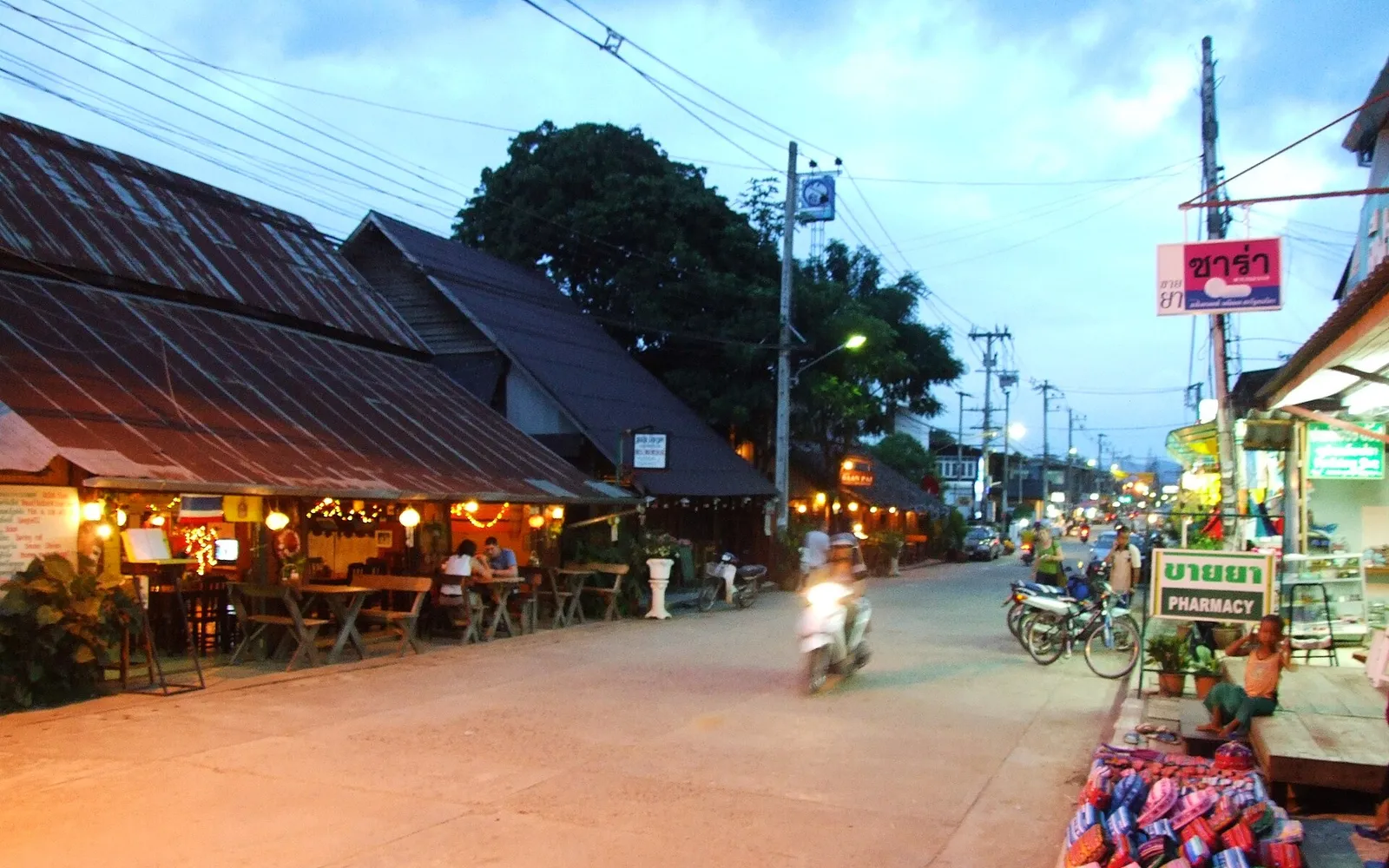
The evening heart of Pai that almost everyone comes to for a nightcap — the walking street grew up naturally from stalls run by hill tribes and locals selling to tourists, until the authorities closed Chaisongkhram Road to traffic, running from the district office all the way to the Pai River, roughly 500 metres to 1 km depending on the season. Food is the real star: khao soi, khanom jeen nam ngiao, sushi at 5 THB a piece, Pai strawberries in winter, all the way to Mexican, Indian and Middle Eastern dishes, interspersed with craft stalls, leather goods and live music from the bars on either side. Google gives it around 4.5/5 from more than 2,500 reviews, with the most praised points being cheap, varied food and a more relaxed vibe than Chiang Mai's walking street. The frank complaints: around 80–90% of the visitors are foreigners, so some feel it's "more like walking through a foreign country than the north of Thailand," and the market is smaller than many expect — you can walk it in 30 minutes if you don't stop to eat.
- Very cheap street food from many cuisines — sushi at 5 THB a piece, northern dishes, desserts, all in one place
- A chilled vibe with live music, easier to walk and less packed than Chiang Mai's walking street
- Right in the town centre, a few minutes' walk from most accommodation
- 80–90% of visitors are foreigners — some feel it's more like walking through a foreign country than the north of Thailand
- Smaller than many expect; you can walk it in 30 minutes if you don't stop to eat
- Very crowded over New Year and long weekends, and in-town accommodation gets pricier
- Bring small cash (most stalls take cash or PromptPay), come hungry and graze across several shops — arrive before 18:30 for pretty photos in the golden light before the crowds. Peak is 7–9 p.m.
- Winter nights in Pai really are cold, sometimes below 10°C, so bring a warm jacket for the market — craft stalls start closing around 22:00, leaving only the bar zone, so if you're set on shopping, don't go too late.
- In low season (roughly the rainy months) there are far fewer stalls, and the authorities note it only runs at full scale on Fridays and Saturdays — don't expect the winter scene, and if you drive, park at Wat Luang because the road is closed to traffic in the evening.
 #5
#5 Santichon Village
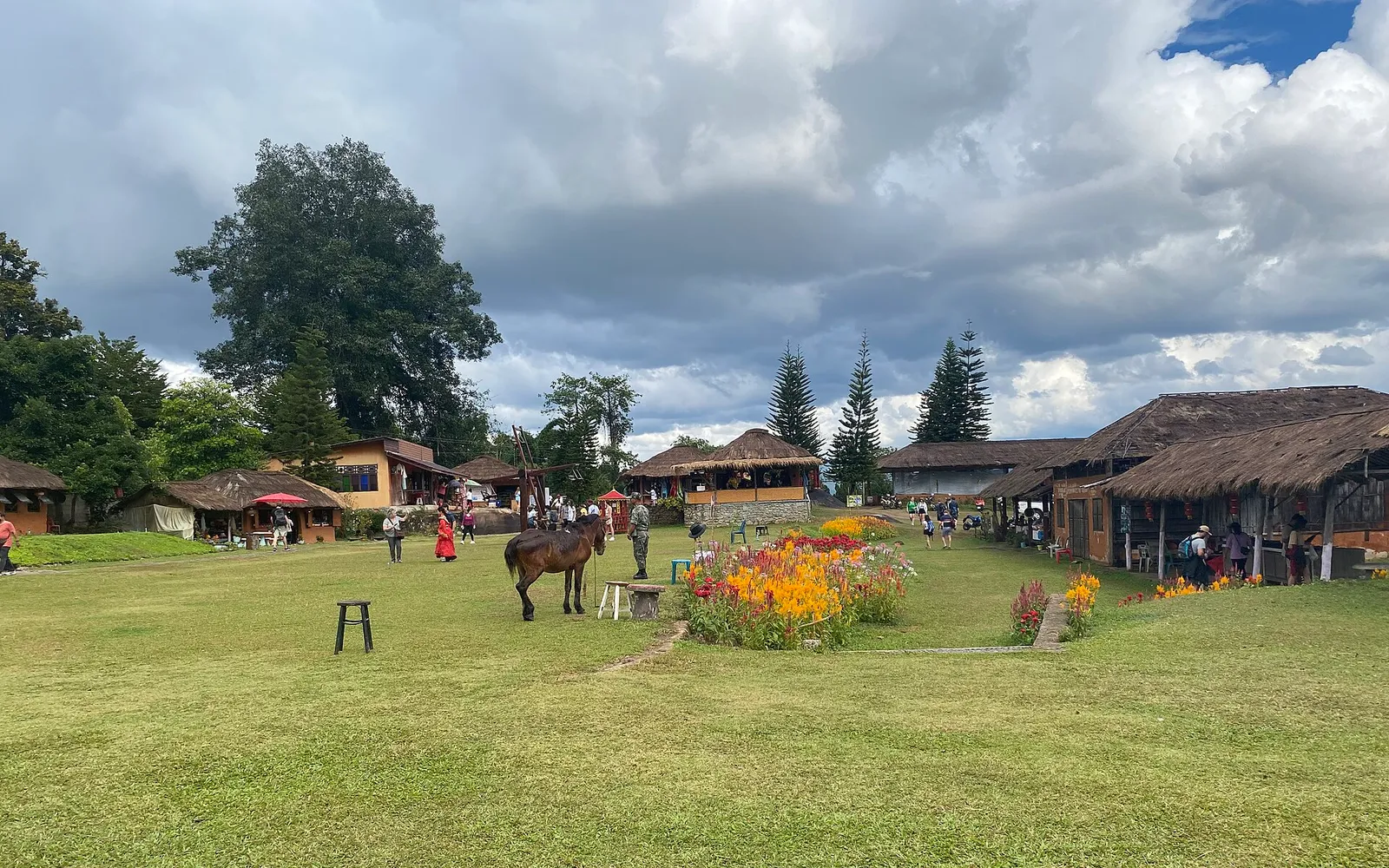
A Yunnanese Chinese village whose people fled the Chinese civil war through Burma after 1949–1950, before founding this village in 1975. Today around 90% of the population is Yunnanese Chinese and 10% Lisu. The community set up a "Yunnanese Chinese Cultural Centre" to tackle drug problems and create livelihoods through tourism the community runs itself. In the village there are orange Yunnanese-style earthen houses, a replica Great Wall of China with a view over Pai town, giant hill-tribe wooden swings, tea shops with free tastings and famous dishes like pork leg with mantou buns. Reviews here split clearly in two — Google 4.1/5 from more than 4,600 reviews, with Thai visitors calling it worth it, with plenty of activities and fun photos like stepping into China, while TripAdvisor gives just 3.5/5 because many Western tourists see it as "built for tourism." Set your expectations as a short 1–1.5-hour stop to eat and take photos, and it'll be just the right amount of fun.
- The atmosphere of a real Yunnanese Chinese village — earthen houses, tea, pork leg with mantou, photos like stepping into China
- Activities cost just tens of baht, great for families and groups of friends
- On the same route as Yun Lai, Wat Nam Hu and Mo Paeng Waterfall — makes a nice half-day
- Many Western tourists see it as staged for tourism (TripAdvisor gives it just 3.5/5)
- Best treated as a short 1–1.5-hour stop to eat and take photos, not an all-day highlight
- Crowded on long weekends in winter, with long waits at the restaurants
- Do it like a local: head up to Yun Lai Viewpoint before dawn for the sea of mist first, then come down for mantou and warm tea at the village around 8 a.m. — the cool air pairs perfectly.
- Activity prices aren't fixed, so check on the spot and bring small cash — the giant swing spins harder than you'd think, so hand your phone and glasses to a friend before getting on.
- Don't make it the sole highlight of the day — pair it with Wat Nam Hu and Mo Paeng Waterfall on the same route for a nice half-day on the west side.
 #6
#6 Yun Lai Viewpoint
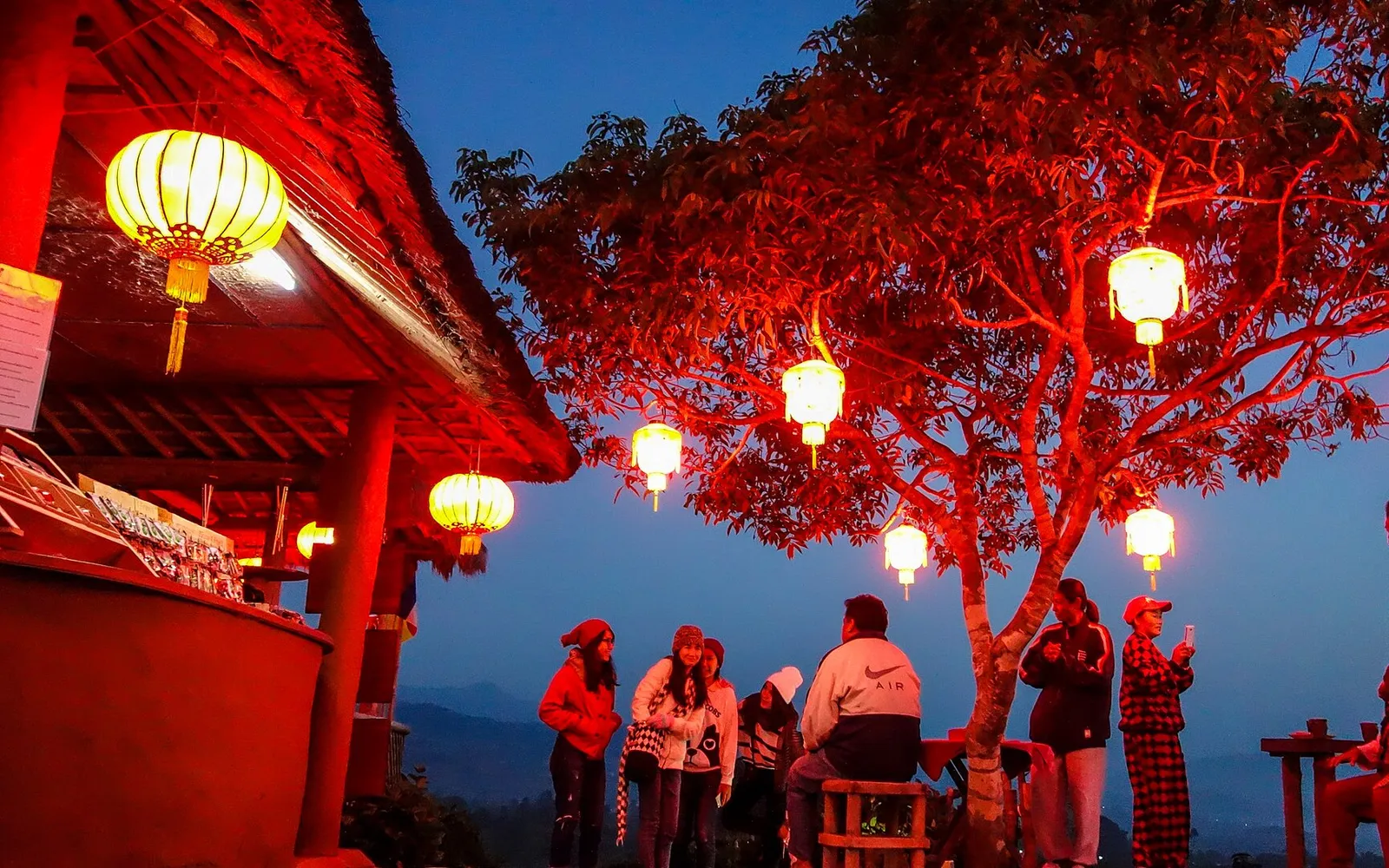
Pai's number-one spot for the sea of mist and sunrise. The name "Yun Lai" (云来) is Mandarin for "clouds coming together," which locals liken to the displaced Yunnanese people who came back to gather at Santichon Village below. On the ridge there's a bamboo deck jutting out over a view of the whole Pai basin, and on winter mornings the mist rolls in to fill the valley into a sea of cloud, with the first light breaking over the mountains to the east. What sets this apart from other viewpoints is the Yunnanese atmosphere — order a set of hot Chinese tea with steamed mantou and sit sipping amid the cold mist, with red lanterns, a love-lock point and a camping ground where you can sleep waiting for the mist until morning. Google reviews around 4.4/5 from nearly 5,000 ratings call it "like floating on the clouds." The frequent complaints: the climb up is very steep, it gets packed and elbow-to-elbow at sunrise on holidays, and the mist doesn't come every day — when the sky closes up it's "very ordinary, not worth waking up for."
- Pai's number-one spot for the sea of mist and first light — reviews say it's like floating on the clouds
- Yunnanese atmosphere: sip hot Chinese tea with mantou amid the cold mist
- Entry is just 20 THB, and you can pitch a tent and sleep waiting for the mist
- The mist doesn't come every day — when the sky closes up the view is very ordinary, so you may have to try again another morning
- The climb is very steep, dangerous for beginner motorbike riders in the dark
- Sunrise on holidays in high season is packed elbow-to-elbow along the deck
- Arrive 20–30 minutes before first light; the deck-side spots get booked fast, and the mist is prettiest around 6–7 a.m.
- The last 1.6 km up the hill is narrow and very steep — beginners shouldn't ride up in the dark. Use a villager's pickup from the front of Santichon Village, chartered round-trip for around 300 THB (seats about 6–10 people); it's much safer.
- Pre-dawn temperatures in winter are 5–10°C, so bring a warm jacket, a hat and small cash — the mist depends on the weather, so if the sky is closed and you miss the first day, try again another morning, or just pitch a tent and stay (around 100 THB per person).
 #7
#7 Tha Pai & Sai Ngam Hot Springs
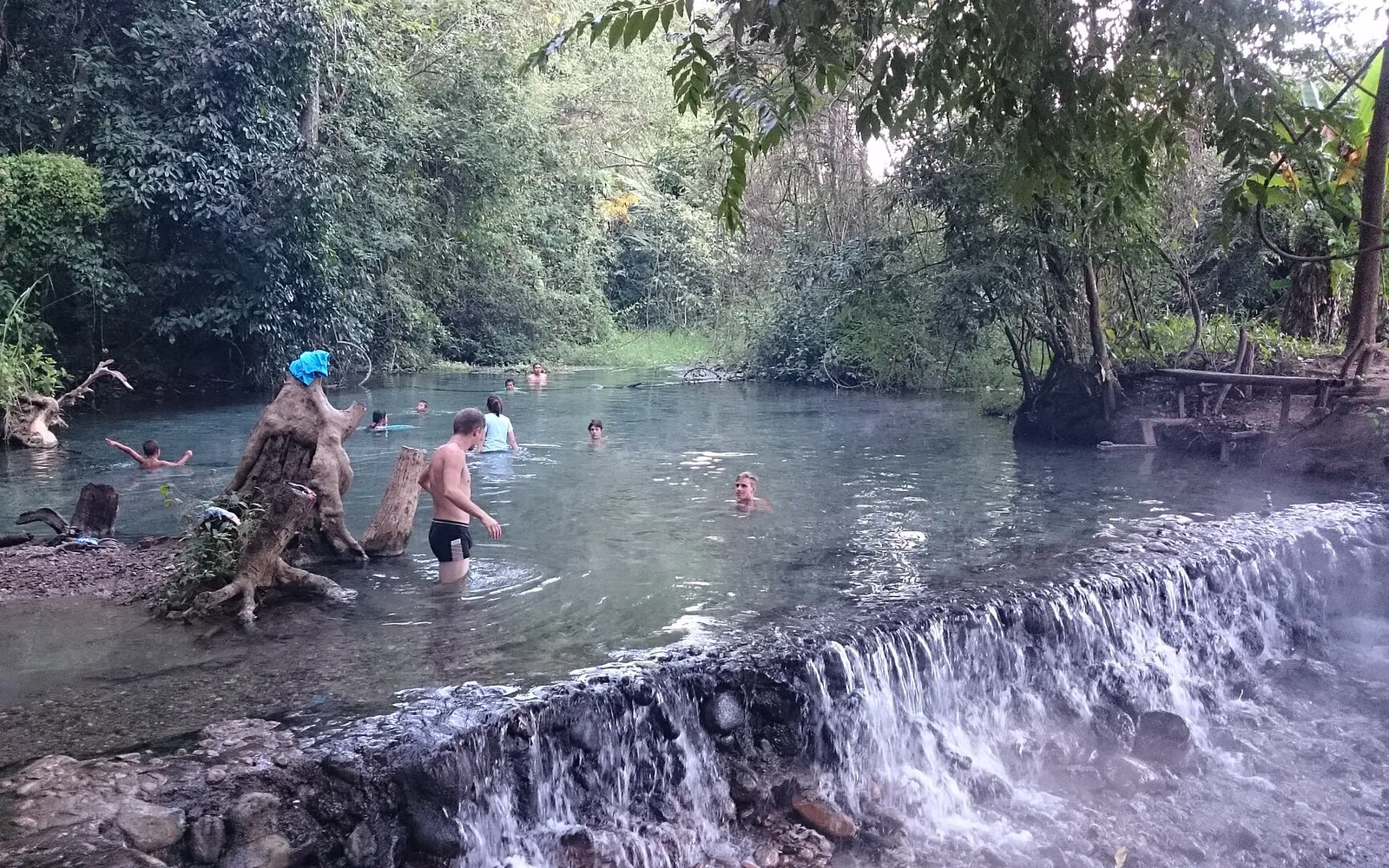
Pai has two famous natural hot springs on opposite sides of town, and they give distinctly different vibes — "Tha Pai Hot Spring" sits within Huai Nam Dang National Park (it was folded into the park in 1995, and this area was once a Japanese army camp in World War II). Hot water bubbles up in the middle of a teak forest, with source pools reaching 80–100°C and steam rising all day, then flowing down in tiers as a warm stream where you can pick your soaking temperature. "Sai Ngam Hot Spring," which foreigners call the Secret Hot Spring, is a stream of clear emerald-green mineral water under a big banyan tree, dammed into a pool only knee-deep, comfortably warm rather than scalding, and great for taking kids in. Both sit around 4.0–4.1/5 on Google — people praise the onsen-in-the-forest atmosphere on winter mornings when the steam drifts up, while the number-one shared complaint at both is that entry fees for foreigners are several times higher than for Thais, and Sai Ngam gets so many tour groups mid-morning to afternoon that you have to queue for the pool.
- Soak in natural mineral water in the forest, an onsen feel Thai-style, blissful on winter mornings when the steam drifts up
- Tha Pai has pools at several temperatures to choose from, great for families, with full toilets and showers
- Sai Ngam's clear emerald water flows constantly, only knee-deep, so kids can get in and play
- Foreigner entry fees are several times higher than for Thais — foreign reviews complain about this the most
- Tha Pai's pool conditions aren't consistent, sometimes low on water or with algae, not matching the promo photos
- Sai Ngam draws lots of tour groups mid-morning to afternoon, so you queue for the pool, and the water is only warm, not scalding
- Cash only at both, and Thais should carry ID to confirm the Thai price — a single Tha Pai ticket lets you visit 3 spots in the park in one day (including the Huai Nam Dang viewpoint), so ask the staff at the gate what the ticket covers.
- Go around 8–10 a.m. for fewer people and the prettiest steam. Bring swimwear and a towel, no soap in the pools, and soak just 10–15 minutes at a time — anyone with a health condition should consult a doctor first.
- The last 3 km into Sai Ngam is narrow, steep and very slippery in the rainy season, a spot where beginners often drop their bikes — if you're not confident, charter a ride or take a tour, and always check your brakes before setting off.
 #8
#8 Mo Paeng Waterfall
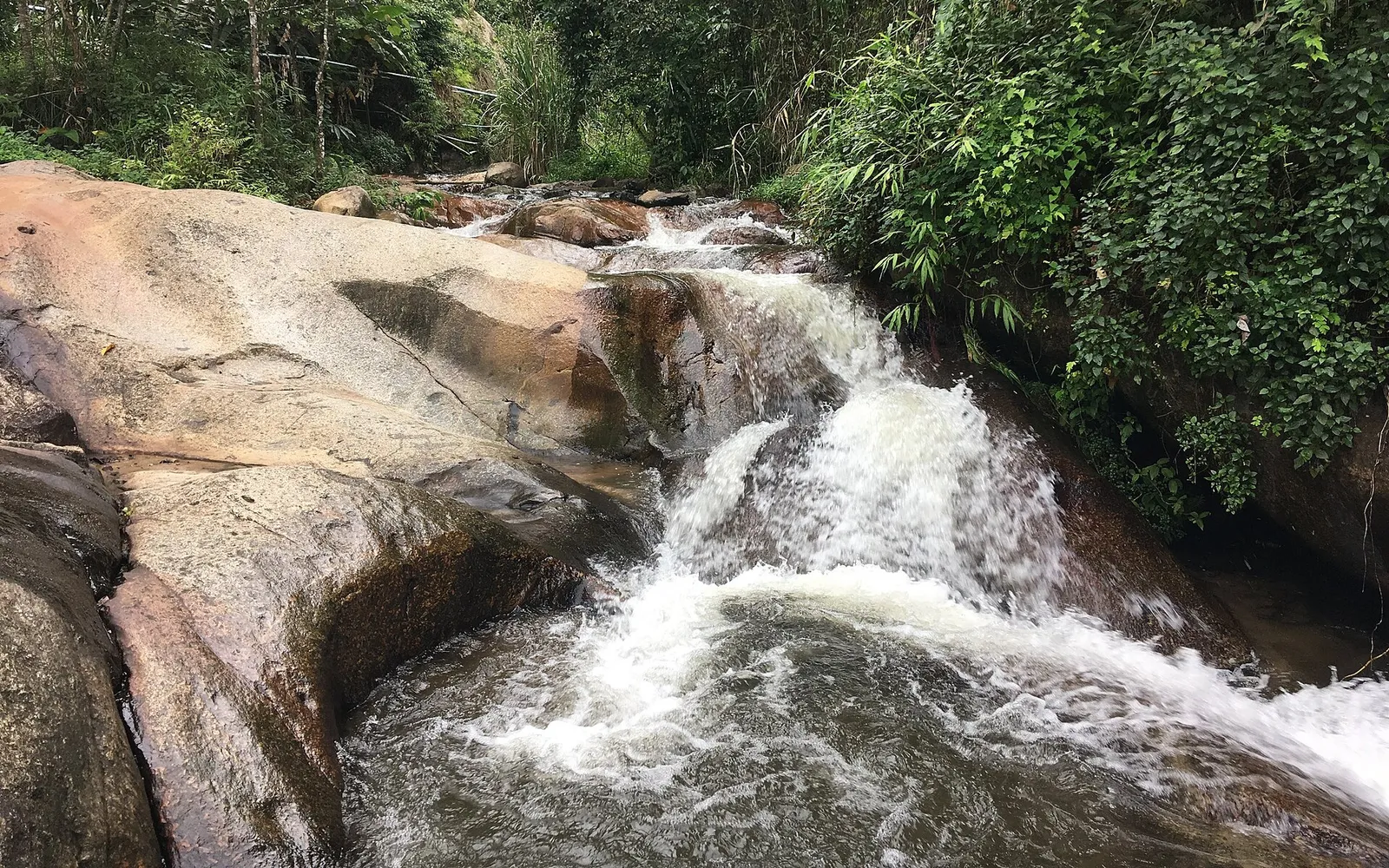
Pai's most famous waterfall, named after Mr. Paeng, the village's first leader — a Tai Yai (Shan) forest hunter and herbalist who migrated from Ban Keng Tong in Shan State. The waterfall has 3 tiers with water year-round, low and wide, flowing over smooth rock slabs in a shady forest — not a towering, dramatic waterfall, but what made it famous all over social media is the "natural rock slide": rock slabs polished smooth by the water that you really can slide down into the pool below. The 2nd and 3rd tiers are pools big enough to swim in, the water is icy cold year-round, and the community looks after the area with restaurants, toilets and changing rooms. Fans say the slide is "genuinely fun, only scary the first time" and the setting is great for a laid-back picnic. Critics agree the waterfall is far smaller than the social-media photos, the water comes out naturally cloudy (not dirty), and at the end of the dry season there's so little water that foreign reviews call it "almost nonexistent."
- A natural rock slide you really can ride — reviews say it's genuinely fun, only scary the first time
- Wide, shady rock slabs great for a picnic, with community-run restaurants and toilets
- Only 8–9 km from town — pair it with Santichon and Yun Lai for a half-day
- The waterfall is far smaller than the social-media photos — low and wide, not a dramatic cascade
- In Mar–May the water nearly dries up, with reviews calling it almost nonexistent — don't go at the end of the dry season
- The water comes out naturally cloudy, turning brown after rain — don't expect clear blue water
- Only use the slide where there are painted markers on the rock, wet the rock first using the buckets tied up there, and watch the locals go before you try — slippery rock is the number-one cause of injury, and water shoes with rubber soles help a lot.
- Wear your swimwear there and bring a towel and dry clothes — there are community changing rooms and toilets on site. The water is icy cold even in summer.
- Go early on a weekday, before 10 a.m., for a near-private waterfall — afternoons, holidays and the tourist season mean queuing for the slide.
Where to stay in Pai for this trip
A well-located hotel means less commuting and more sightseeing. Here are real, top-rated stays in Pai — compare Agoda · Booking · Trip.com in one click.
Pai Village Boutique Resort & Farm
Affiliate links — we may earn a commission at no extra cost to you. Details
Common Grounds Pai
Affiliate links — we may earn a commission at no extra cost to you. Details
Reverie Siam Resort
Affiliate links — we may earn a commission at no extra cost to you. Details
Family House Zen Boutique Resort
Affiliate links — we may earn a commission at no extra cost to you. Details
Tours, tickets & activities in Pai
Day tours, attraction tickets and travel essentials for Pai — book ahead on Klook with mobile e-tickets.
Affiliate links — we may earn a commission at no extra cost to you.
Before You Pack
Pai is an easy 3 days and 2 nights — try planning it like this: head up to Yun Lai before dawn for the sea of mist, come down for steamed mantou buns at Santichon, then carry on to Mo Paeng Waterfall. Another day, ride out to the Boon Ko Ku So bamboo bridge in the morning, soak at the Tha Pai hot springs, and wrap up the evening at Pai Canyon or the Big Buddha at Wat Phra That Mae Yen before hitting the walking street each night. One thing to remember: a rented motorbike requires a real driving licence and a helmet at all times (checkpoints have gotten a lot stricter, and riding without a helmet can land you a fine of up to 2,000 THB). If you're not a confident rider, take an around-town tour for around 600 THB per person instead — Pai Hospital treats thousands of injured motorbike tourists a year, so don't be one of them. And avoid March–April, when haze from forest fires blankets the whole town's views. Do that and Pai will reward you with a trip worth every bend of the road you sat through — plan the rest of it too: 10 great places to stay in Pai (riverside, rice-field views, in-town) and the best restaurants in Pai we've picked out for you.