
Oslob is a fishing town that has kept its traditional way of life largely intact. The morning market along the waterfront fills up with fish, squid, crab, and shellfish landed before sunrise. Most local restaurants open on sea-view terraces. The standout is Sutukil — a seafood-eating tradition born in Cebu more than 500 years ago, delivering bold, rounded flavors in the distinctly Cebuano style, at very reasonable prices.
 #1
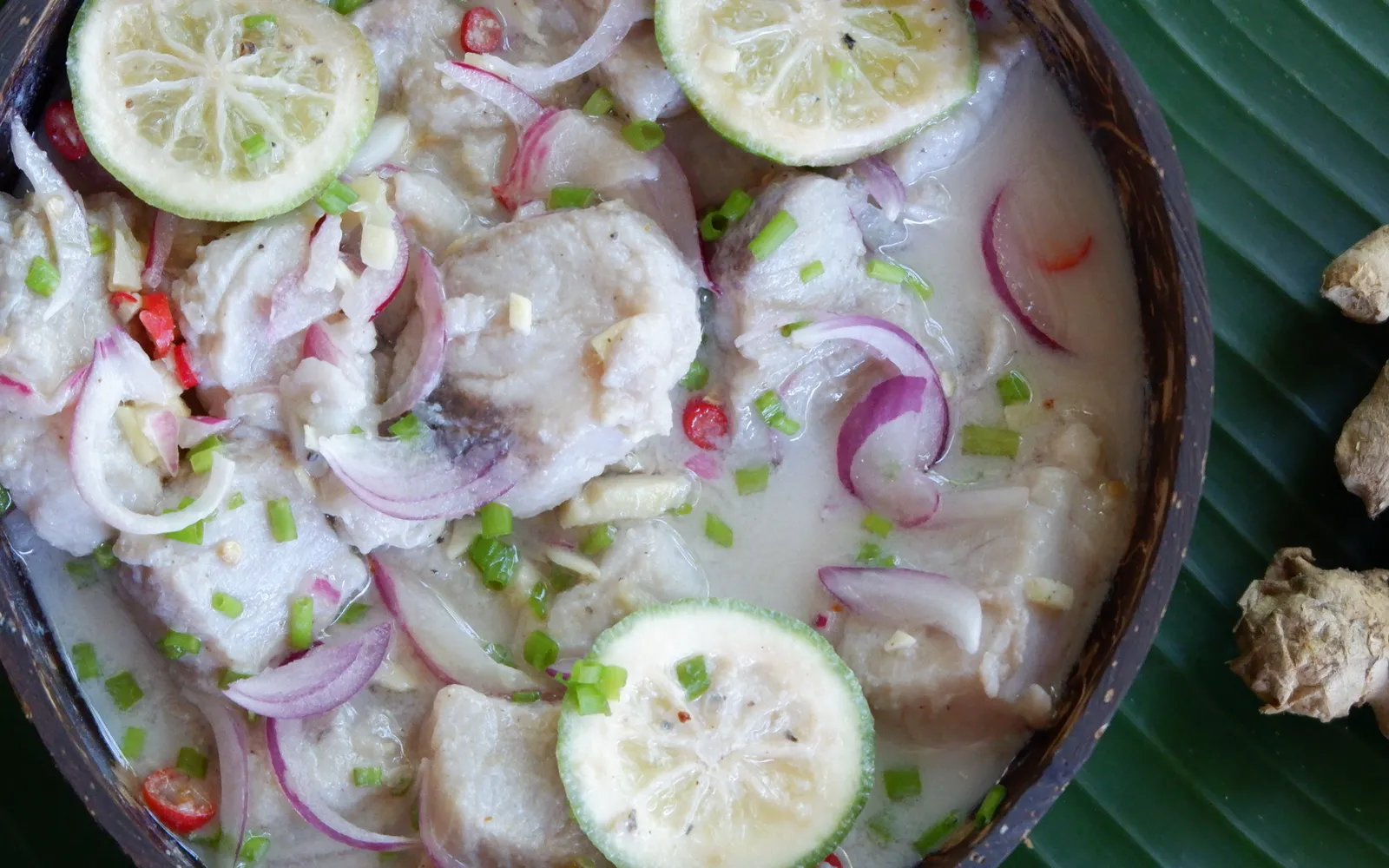
#1 Sutukil Seafood
Sutukil is an acronym from three cooking methods: <em>sugba</em> (grilled), <em>tuwa</em> (simmered in broth or coconut curry), and <em>kilaw</em> (acid-cured raw). It is a way of eating seafood that Cebuanos have passed down for more than 5 centuries. You pick live or iced fish from the display counter, tell the kitchen how you want it cooked — and all three styles can land on the same table at once. Every plate is freshly prepared and priced fairly by weight.
- Point to your fish from the ice basket and tell the server which cooking style you want.
- Order kilaw (raw fish cured in citrus) first while you wait for the grill.
- Lapu-lapu (grouper) and cuttlefish are the most popular choices.
 #2
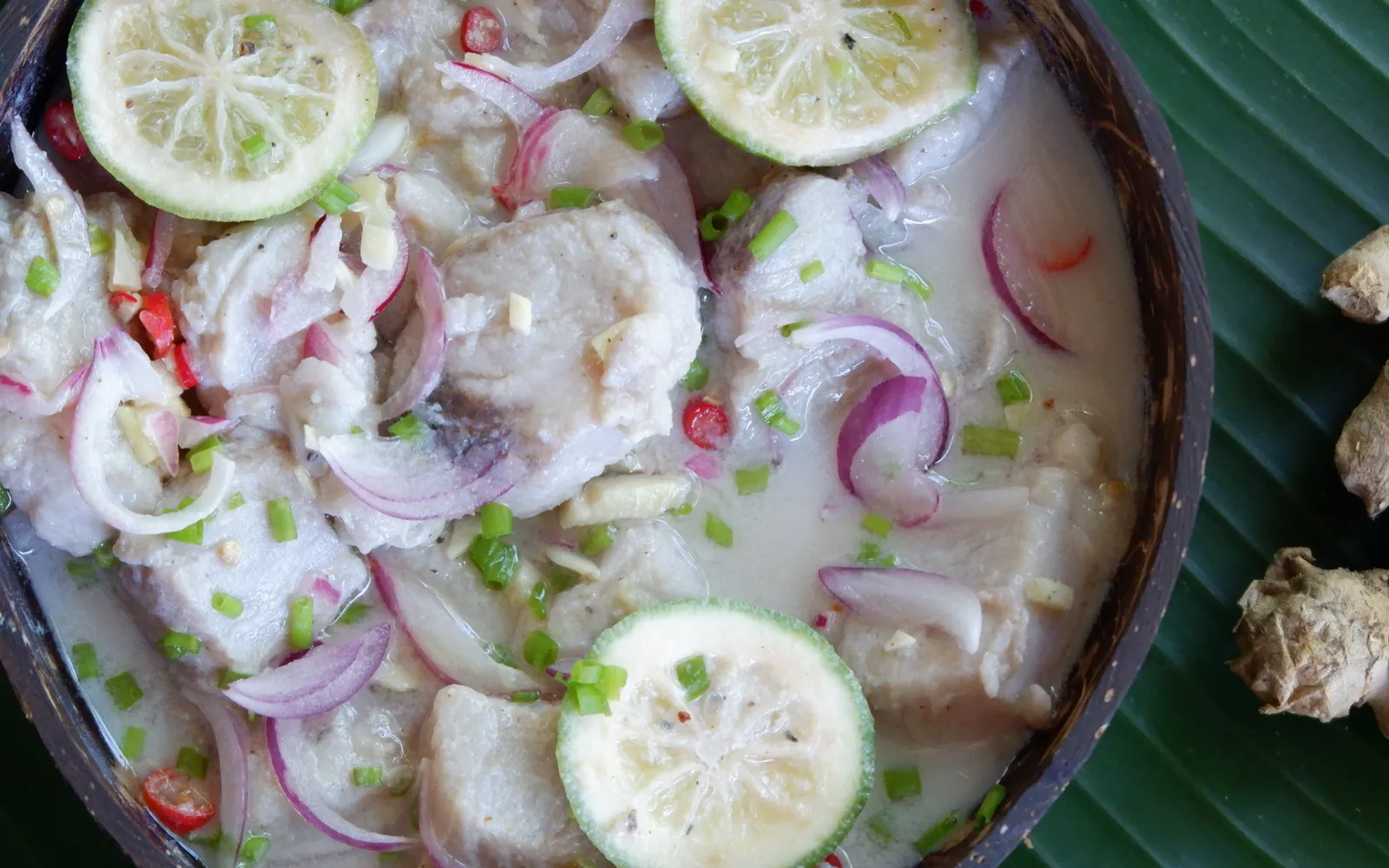
#2 Kinilaw (Filipino Ceviche)
Kinilaw is the Filipino answer to ceviche — raw fish cut into cubes and cured in coconut vinegar or local lime juice, mixed with ginger, shallots, chili, and salt. The acid cooks the fish without any heat, producing a bright, slightly sour, slightly spicy bite. It is typically served as a starter before the main course. In Oslob, kinilaw is made from fish caught the same day.
- Ask for tanigue (Spanish mackerel) or fresh tuna, the best cuts for kinilaw.
- If you prefer less rawness, request a short 5-to-10-minute cure — the flesh stays tender and flavorful.
- Serve alongside hot rice or puso (rice steamed in a woven coconut-leaf pouch).
 #3
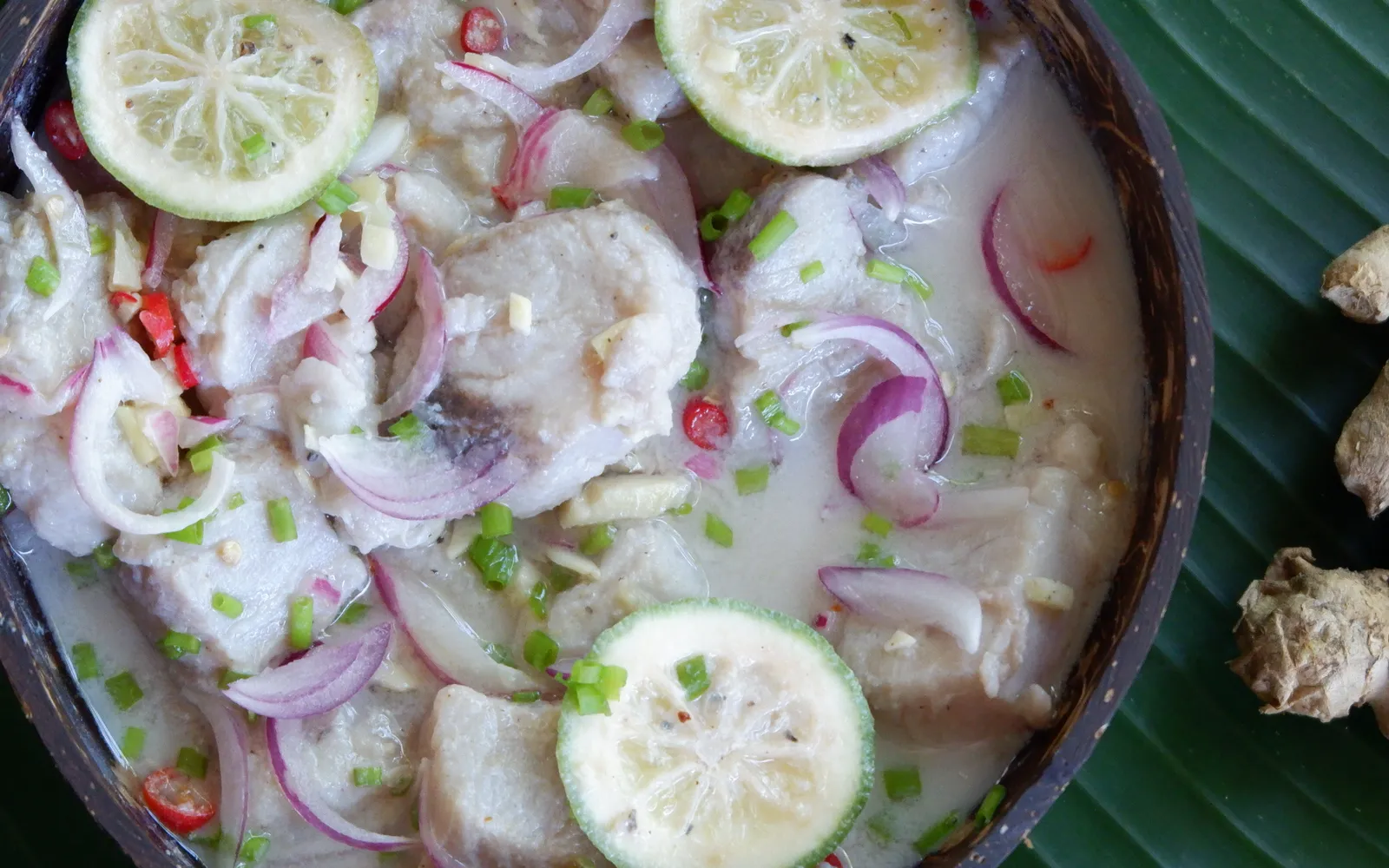
#3 Grilled Seafood by the Beach
Charcoal-grilled seafood is at the heart of Cebu's coastal food culture. Fishers bring in fish, squid, crab, shrimp, and oysters (<em>talaba</em>) from before dawn, and beachfront stalls grill them over wood charcoal until fragrant. Everything arrives with hot rice or <em>puso</em> (Cebuano woven-leaf rice) and a spiced fish-sauce-and-lime dipping sauce. A table with a view of Sumilon Island makes the whole thing hard to beat.
- Stuffed cuttlefish — filled with onion and tomato before grilling — is the recommended order.
- Ask for puso instead of plain rice for an authentic Cebuano experience.
- Most beachfront stalls stay open until sunset; the atmosphere is best in the late afternoon.
 #4
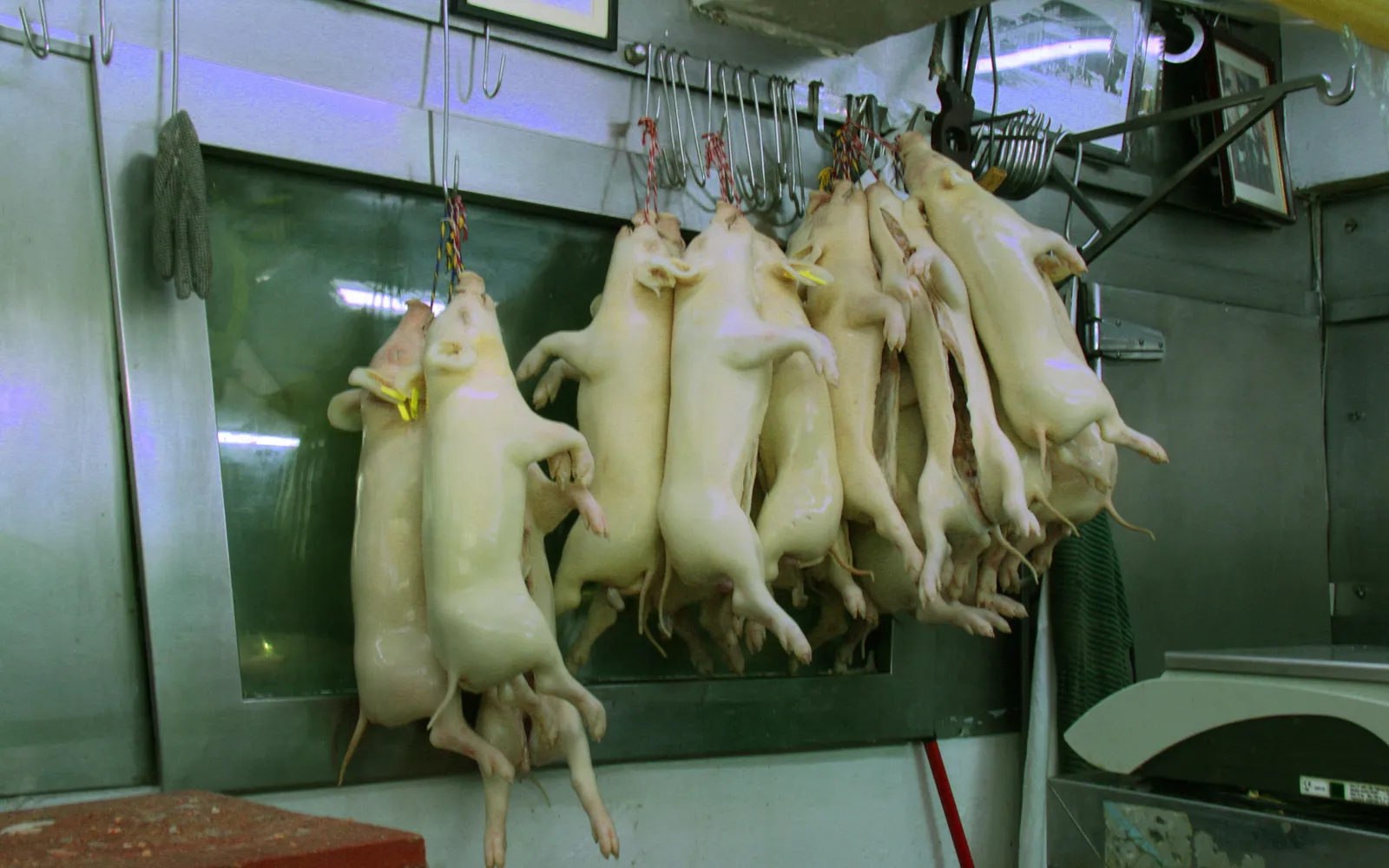
#4 Lechon Cebu
Cebu lechon is the most celebrated whole roast pig in the Philippines. The pig is stuffed with lemongrass, garlic, and spring onions, then slow-roasted over charcoal for several hours until the skin is shatteringly crisp and the meat stays juicy. Chef Anthony Bourdain once called Cebu lechon the best pig in the world. Shops in Oslob sell it by the kilo, so you do not need to order a whole animal.
- Order by the kilo to taste it without committing to an entire pig.
- The crispy skin and neck section are the most sought-after cuts — specify when you order.
- Eat it with hot rice and <em>sarsa</em> (Cebuano liver sauce) for the full local experience.
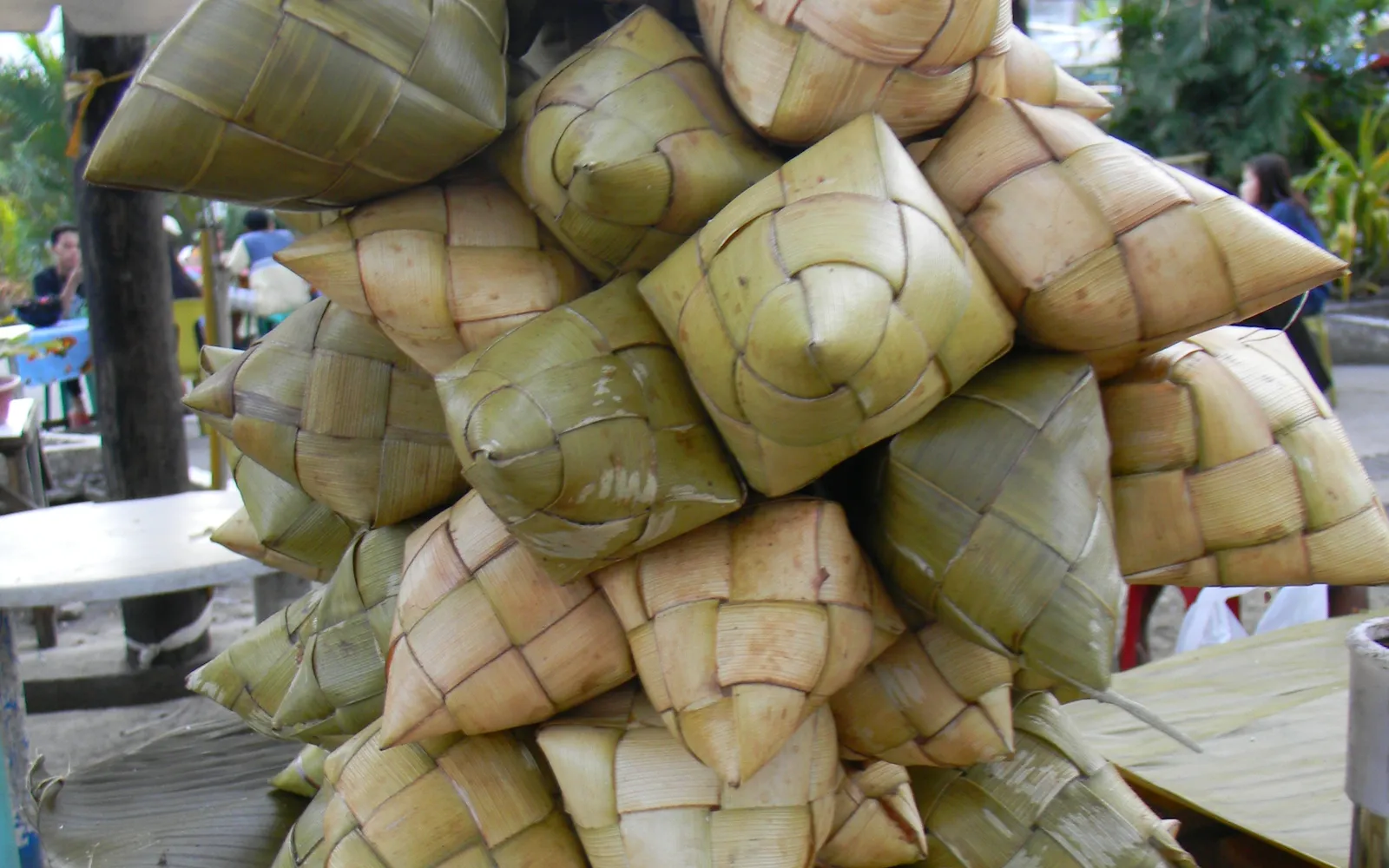 #5
#5 Puso (Hanging Rice)
<em>Pusô</em> is rice cooked inside a heart-shaped woven coconut-leaf pouch. Cebuanos have been eating it alongside every meal since long before Spanish colonization arrived in the Philippines. The coconut leaf lends a subtle fragrance, and the texture is firmer than ordinary steamed rice. It pairs with lechon, grilled chicken, or beach-side charcoal seafood — and trying it is a non-negotiable part of any visit to Oslob.
- Very affordable at around 5–10 pesos per piece; two or three pieces per meal is the norm.
- Unwrap the leaf and eat the rice by hand — that's the traditional way.
- Fresh puso should be eaten the day it is made; if it has cooled down, ask to have it warmed on the grill.
 #6
#6 Oslob Public Market
The Oslob municipal market is at its liveliest from first light. Fishers bring in fish, squid, large crabs, oysters (<em>talaba</em>), and all manner of sea catch at local prices. Beyond seafood there are tropical vegetables and fruit, ready-to-cook ingredients, and cheap congee stalls for breakfast. It is a great stop for travelers staying in Oslob who want a real taste of daily local life.
- Arrive before 07:00 to get first pick — the larger fish move fast.
- If you buy fresh fish, tell a market stall you plan to take it to a restaurant for cooking — many places will accept it.
- Prices are negotiable for bulk purchases, but do not push too hard with the local fishers.
Where to stay in Oslob for this trip
A well-located hotel means less commuting and more sightseeing. Here are real, top-rated stays in Oslob — compare Agoda · Booking · Trip.com in one click.
Sumilon Bluewater Island Resort
Affiliate links — we may earn a commission at no extra cost to you. Details
Eden Resort
Affiliate links — we may earn a commission at no extra cost to you. Details
Granada Beach Resort
Affiliate links — we may earn a commission at no extra cost to you. Details
Down South 118 Beach Resort
Affiliate links — we may earn a commission at no extra cost to you. Details
Tours, tickets & activities in Oslob
Day tours, attraction tickets and travel essentials for Oslob — book ahead on Klook with mobile e-tickets.
Affiliate links — we may earn a commission at no extra cost to you.
Before You Pack
Eating in Oslob is about more than good food — it puts you squarely inside the rhythms of a working fishing community. If you get the chance, stop at the morning market, pick out fresh fish, and hand it to a restaurant to cook. That meal will stick with you.