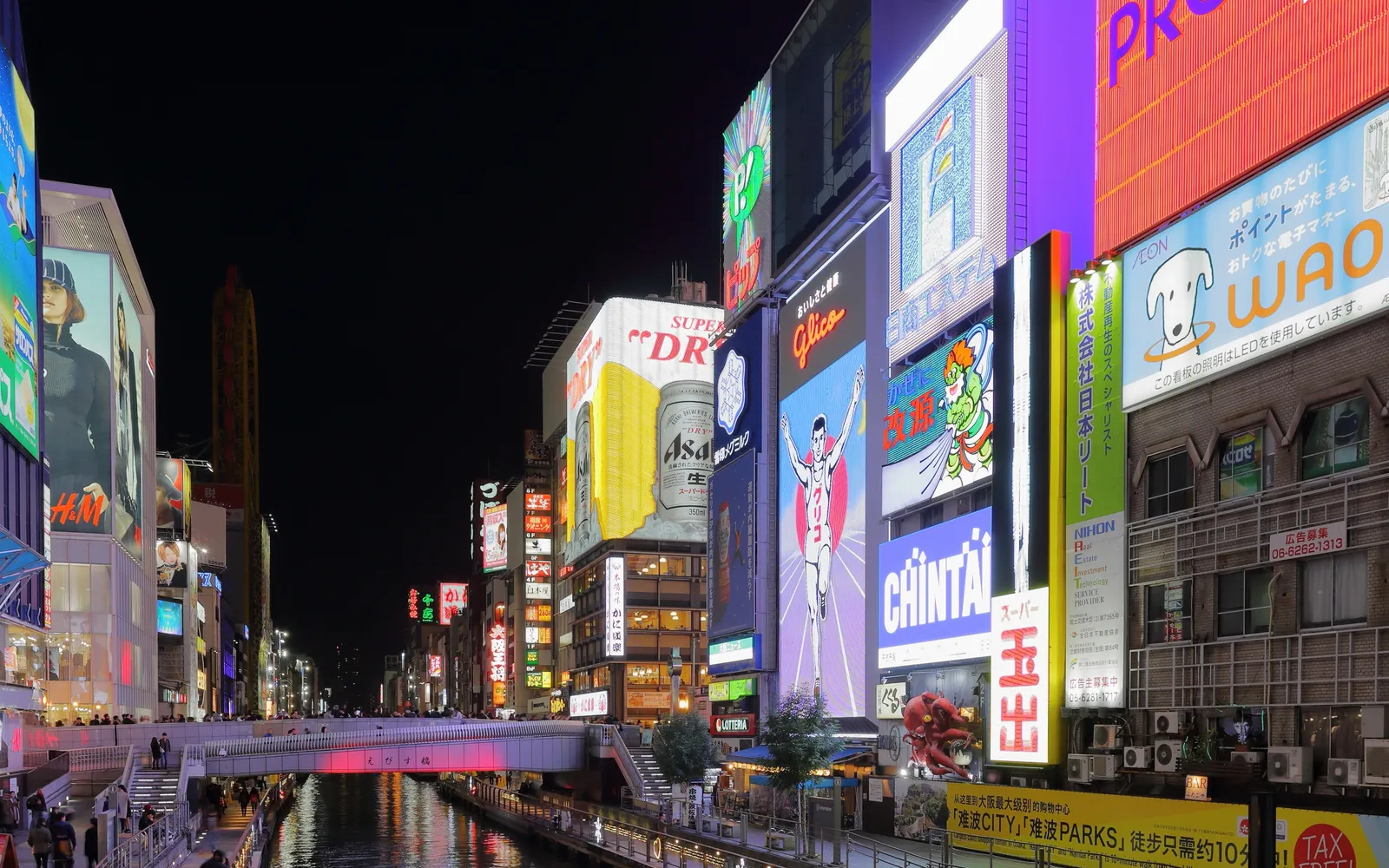
Osaka is Japan's most alive city — known as the country's "Kitchen", a place where great food and relentless fun are simply the baseline. From the blazing neon of Dotonbori to a castle surrounded by cherry blossoms, the city covers every angle a traveler could want: history, culture, and entertainment that punches well above any guidebook expectation.
 #1
#1 Osaka Castle
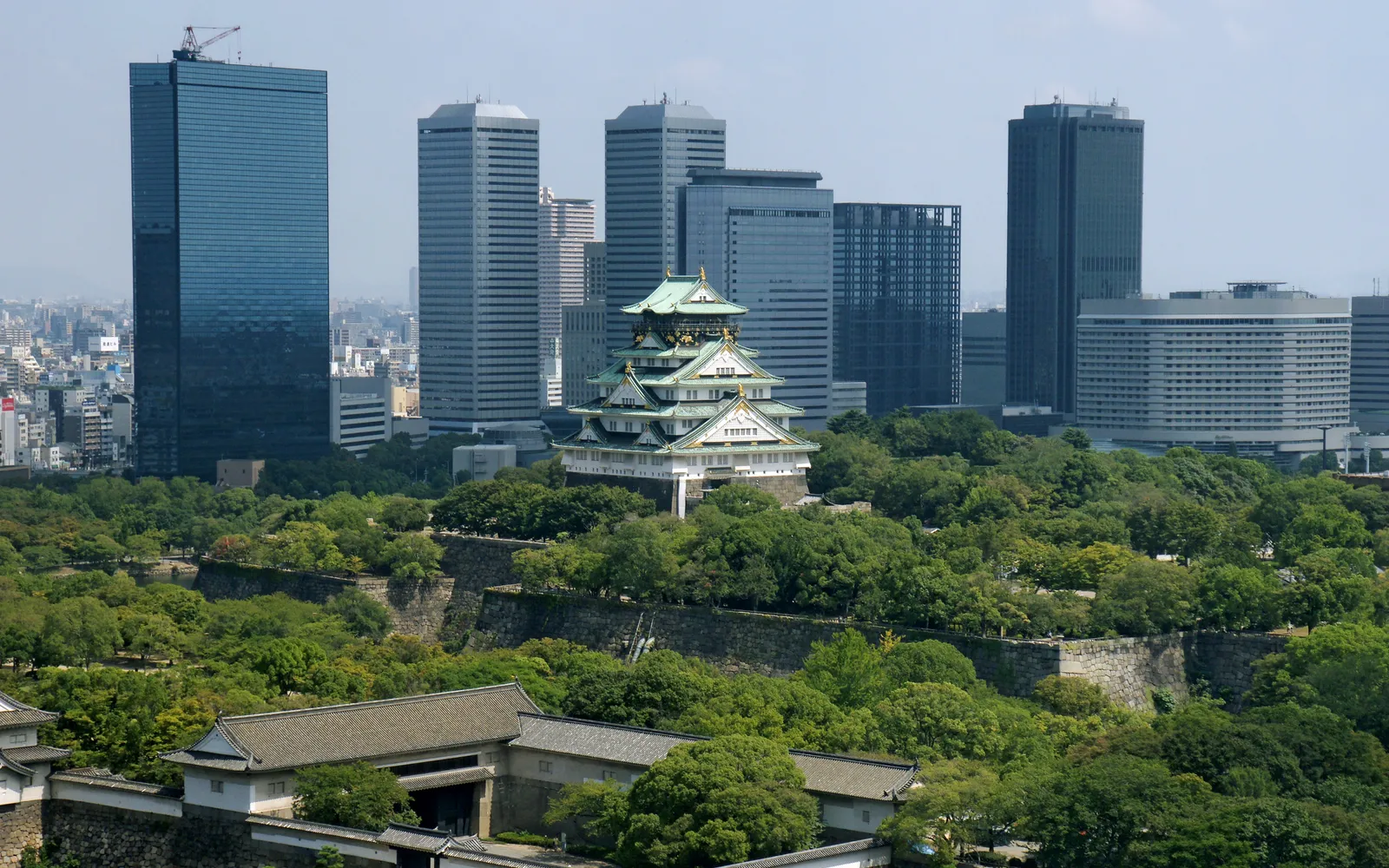
Built in 1583 by Toyotomi Hideyoshi — the warlord who unified Japan — Osaka Castle rises 8 floors and houses a history museum in its upper levels. The top floor observation deck opens up a wide panorama over the city. Two rings of moats and a large public park frame the grounds, which are especially striking when the cherry trees bloom in early April.
- Buy tickets online in advance to skip the long queues
- Early April is peak cherry-blossom season in the surrounding park
- Use an ICOCA or Suica card on the Tanimachi Line and alight at Tanimachi 4-chome
 #2
#2 Dotonbori
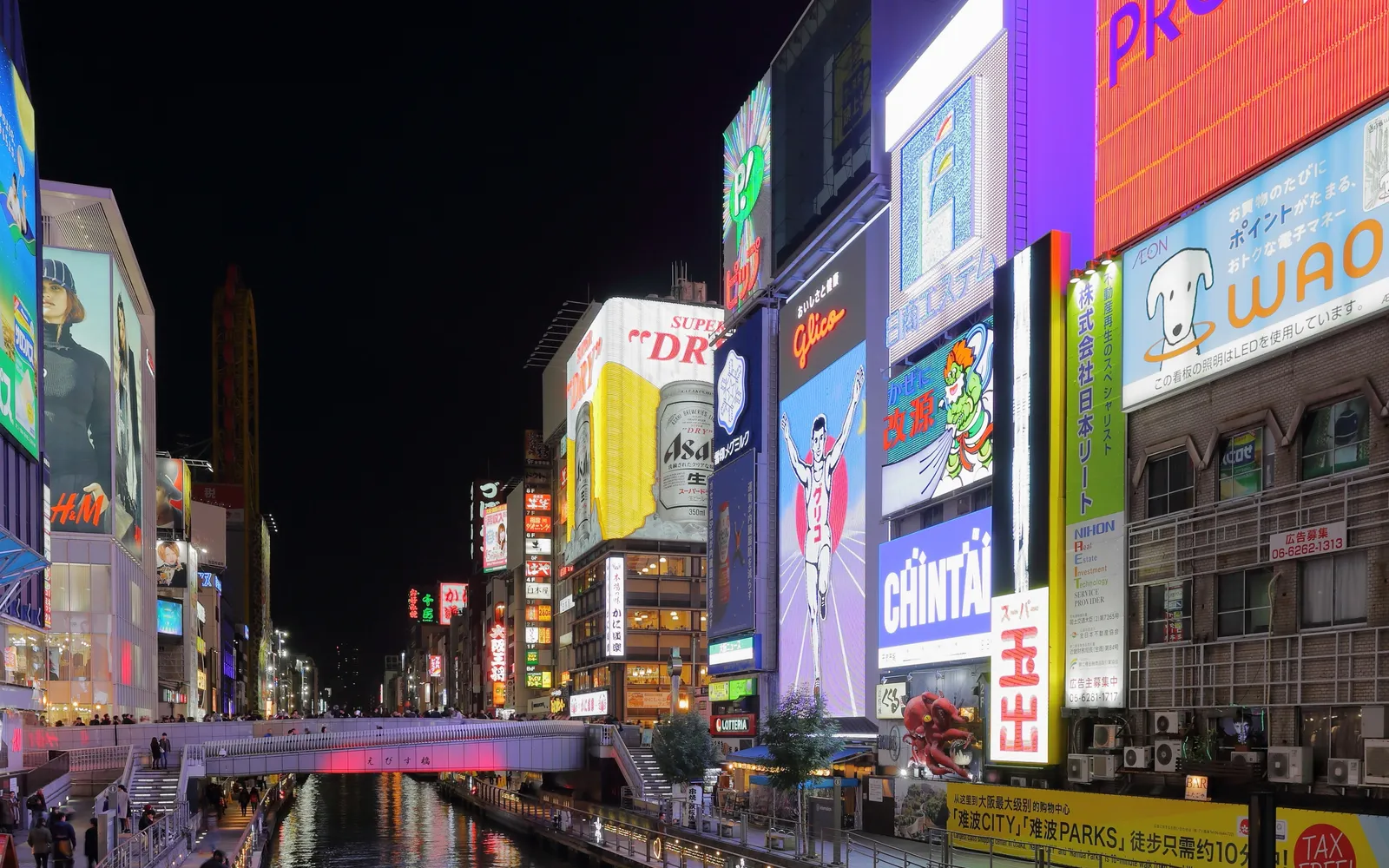
Dotonbori is the beating heart of Osaka — the city's most kinetic entertainment and food strip, running along its canal. Giant signs of a running crab, the Glico Man, and a waving blowfish greet every visitor. Lining both banks are takoyaki stalls, okonomiyaki joints, and ramen shops with queues that form before dark. After 6 p.m., the atmosphere turns electric.
- Walk Ebisu-bashi bridge for the classic shot of neon signs reflected in the water
- Early evening to late night (6 p.m.–11 p.m.) is when the energy peaks
- Watch your bag and valuables during the busiest evening hours
 #3
#3 Osaka Aquarium Kaiyukan
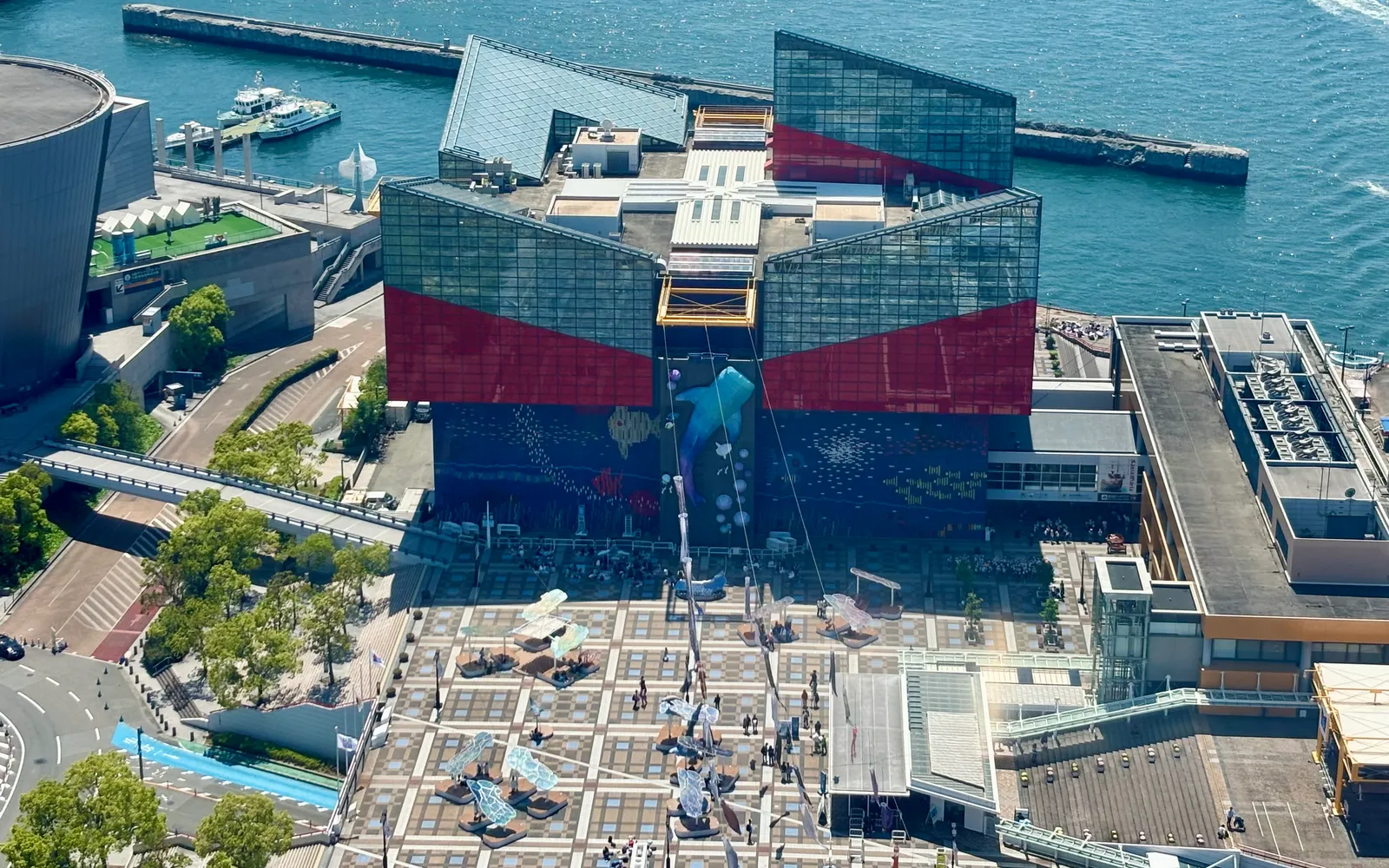
Kaiyukan ranks among the best aquariums in the world. Its centerpiece is a massive glass tank replicating 15 ecosystems around the Pacific Ocean — and the Pacific Ocean tank itself, where whale sharks drift overhead in a way that genuinely feels like an open-water dive. A great call for all ages, and especially for kids.
- Open 10 a.m.–8 p.m. (last entry 7 p.m.)
- Buying tickets online saves time and may get you a better price
- The Tempozan area also has a Ferris wheel and several restaurants for an easy follow-on
 #4
#4 Umeda Sky Building
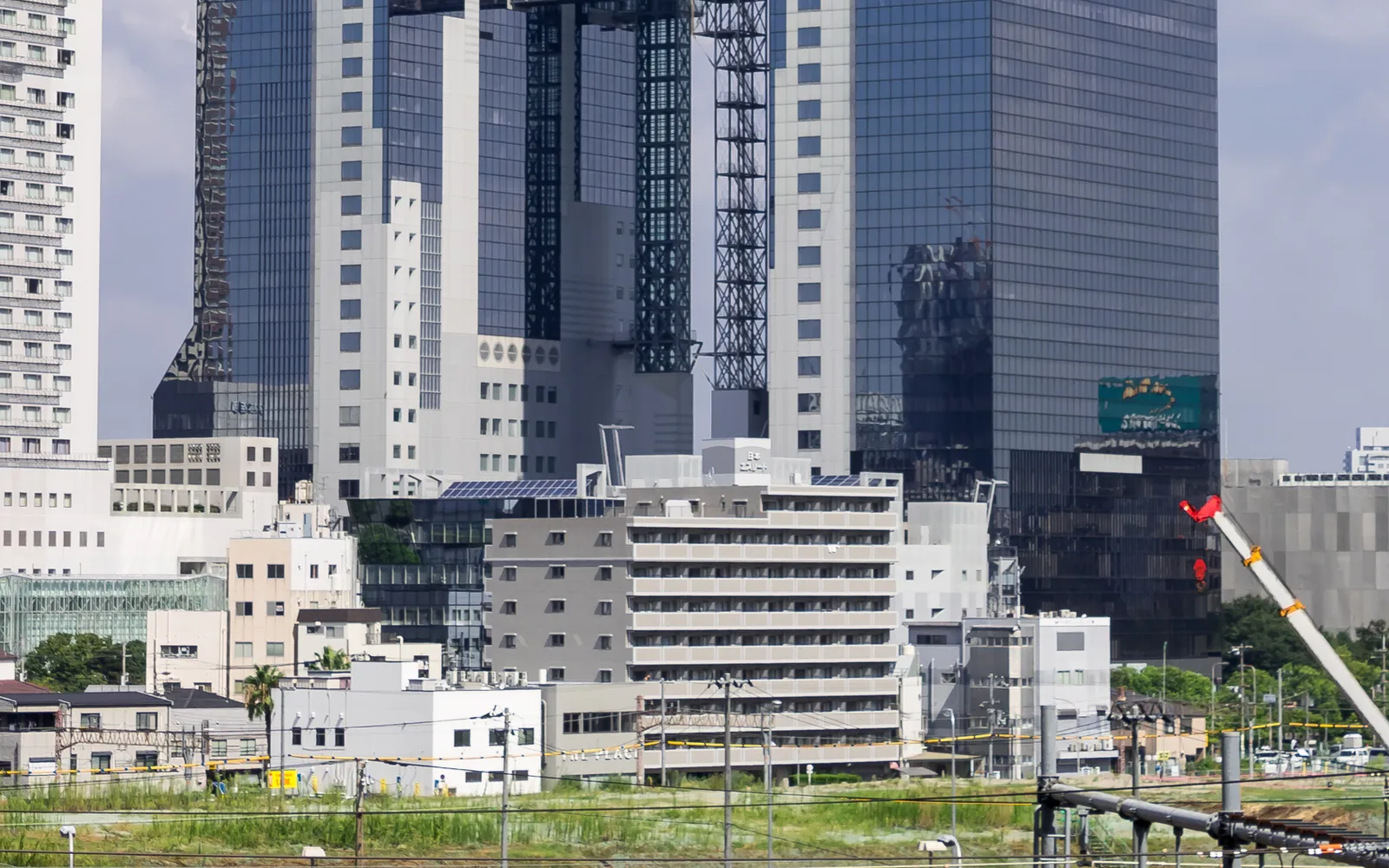
Two towers, each 173 metres tall, joined at the top by a mid-air observation deck — that is the Umeda Sky Building. The Floating Garden Observatory on floors 39–40 delivers a 360-degree panorama of Osaka in both daylight and at night. The basement level recreates a Meiji-era market street that is worth wandering before or after you go up.
- The city view after dark is especially striking — a popular spot for couples
- Admission is 1,500 yen; open until 10:30 p.m.
- The retro-styled restaurants on B1 are worth a stop
 #5
#5 Kuromon Ichiba Market
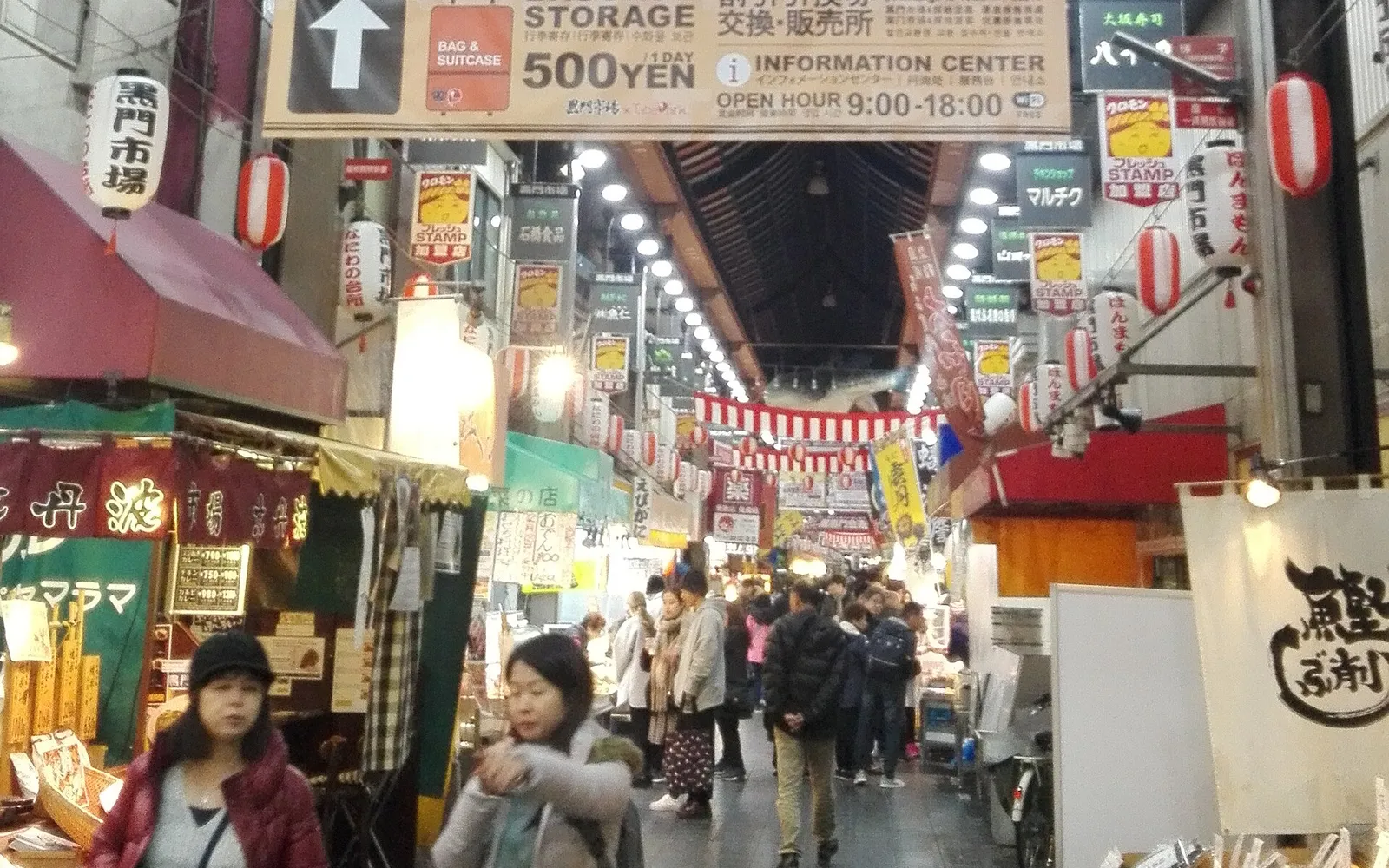
Kuromon Ichiba — dubbed "Osaka's Kitchen" — is a covered market over 200 years old, stretching 580 metres with more than 150 stalls. Fresh seafood you can eat right at the counter, premium wagyu, takoyaki, and hot taiyaki all share the same narrow lane. The atmosphere is friendly and local in the most unpretentious Japanese way.
- Hours are 9 a.m.–6 p.m., but mornings see the freshest and most complete selection
- Try the grilled squid and scallops sold at the stall fronts
- Some stalls close on Sundays — a weekday visit is more reliable
 #6
#6 Shinsekai
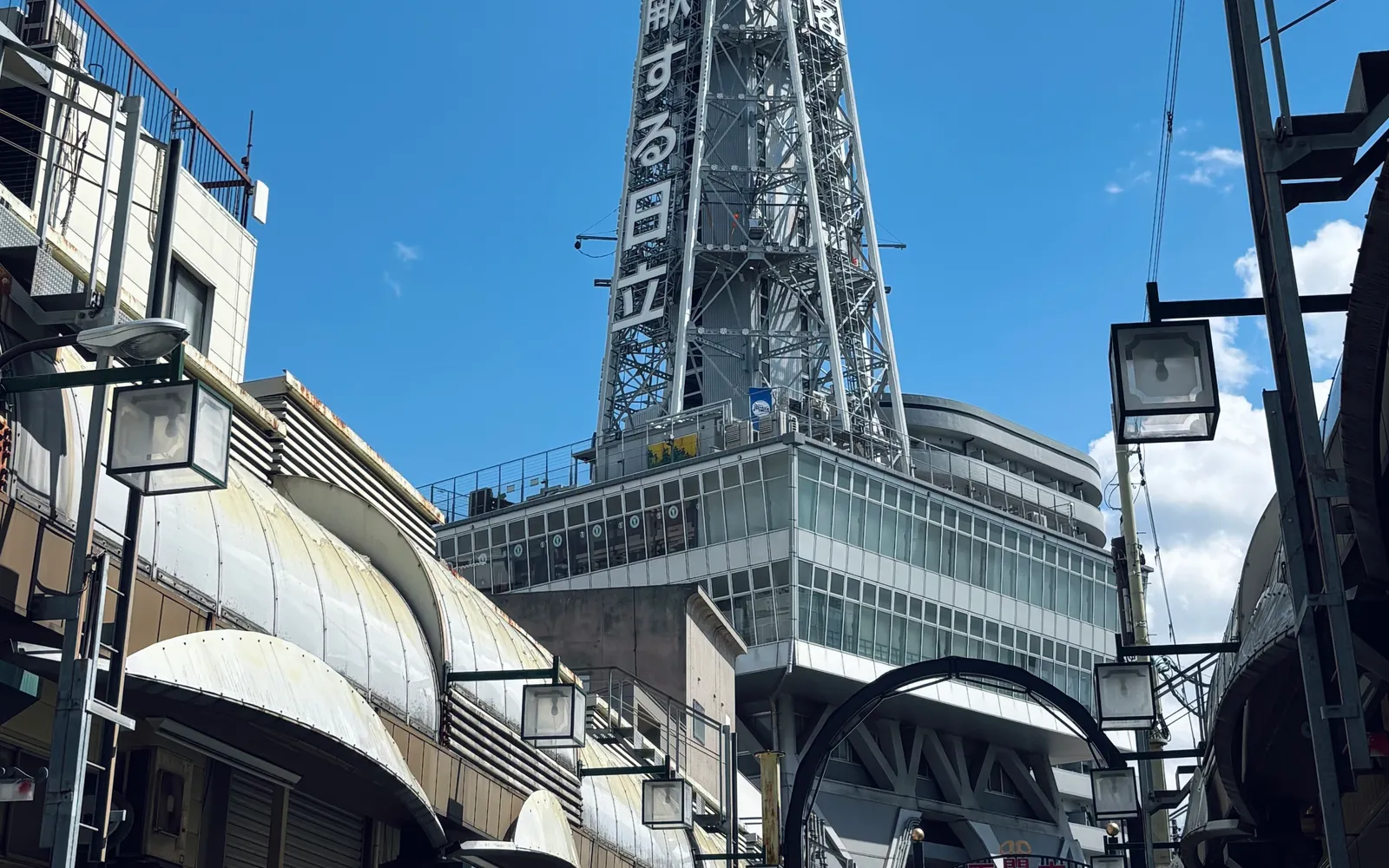
Shinsekai means "New World," yet it does more than any other district to preserve the Showa-era Osaka that the rest of the city has paved over. At its center is the 100-metre Tsutenkaku Tower. Narrow streets spill over with kushikatsu shops (deep-fried skewers), pachinko parlors, and small pubs that feel unchanged from 60 or 70 years ago.
- Ride the elevator to the floor-5 observation deck of Tsutenkaku Tower for a neighbourhood-level view
- Order kushikatsu and respect the cardinal rule: no double-dipping the sauce
- Prices here run noticeably lower than in the tourist-heavy districts — food and souvenirs both
 #7
#7 Sumiyoshi Taisha Shrine
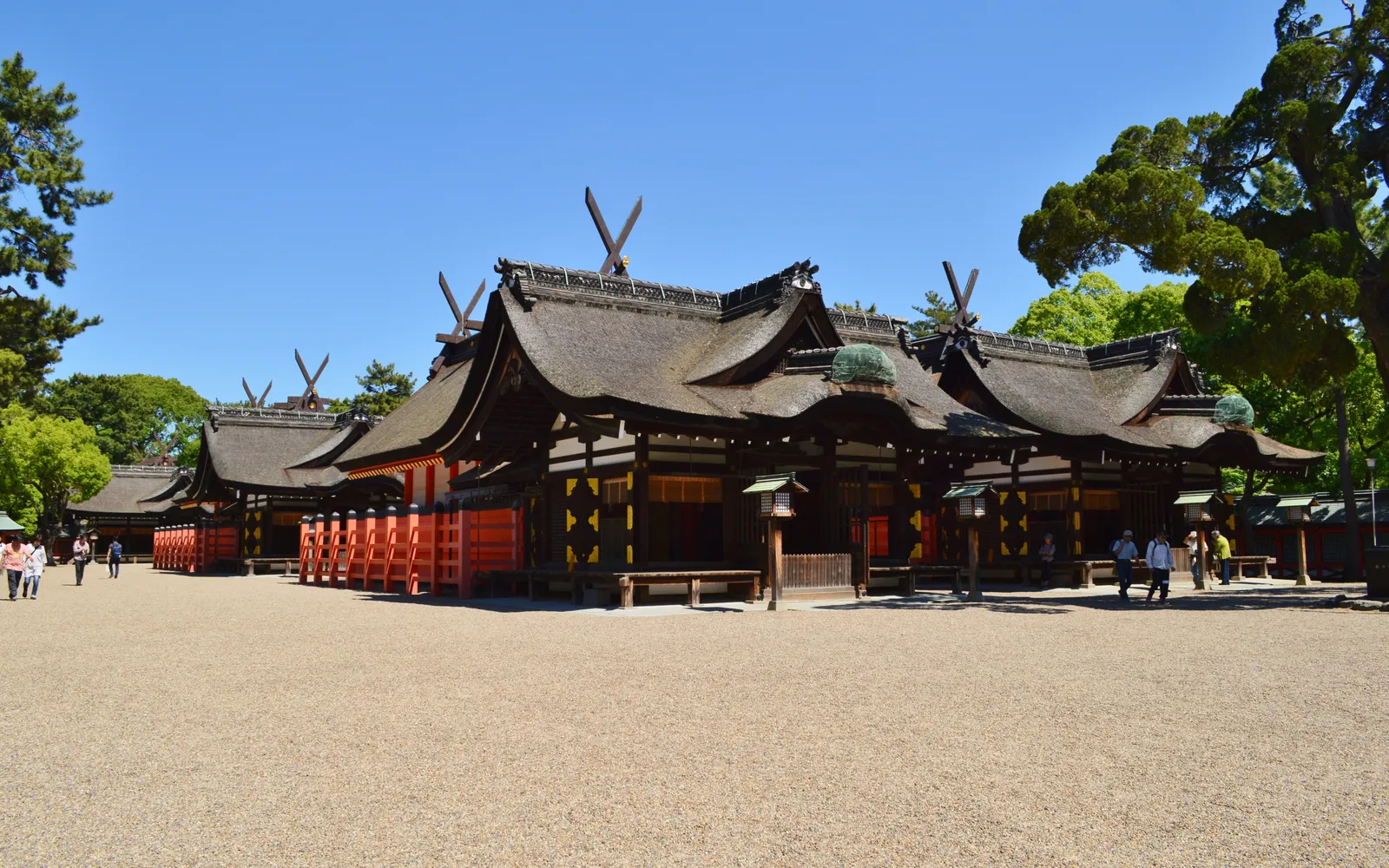
Sumiyoshi Taisha predates Buddhism's arrival in Japan — over 1,800 years old — and its architecture reflects that: the pure Sumiyoshi-zukuri style carries no Chinese influence, which separates it from nearly every other major shrine in the country. The red arched Sori-bashi bridge over the sacred pond is the photograph everyone takes, and it earns the attention.
- Free admission; open year-round
- The Suminoe Matsuri festival in early August is a lively event worth timing a visit around
- Pick up an omikuji (fortune slip) at the shrine as a take-home souvenir
 #8
#8 Shitennoji Temple
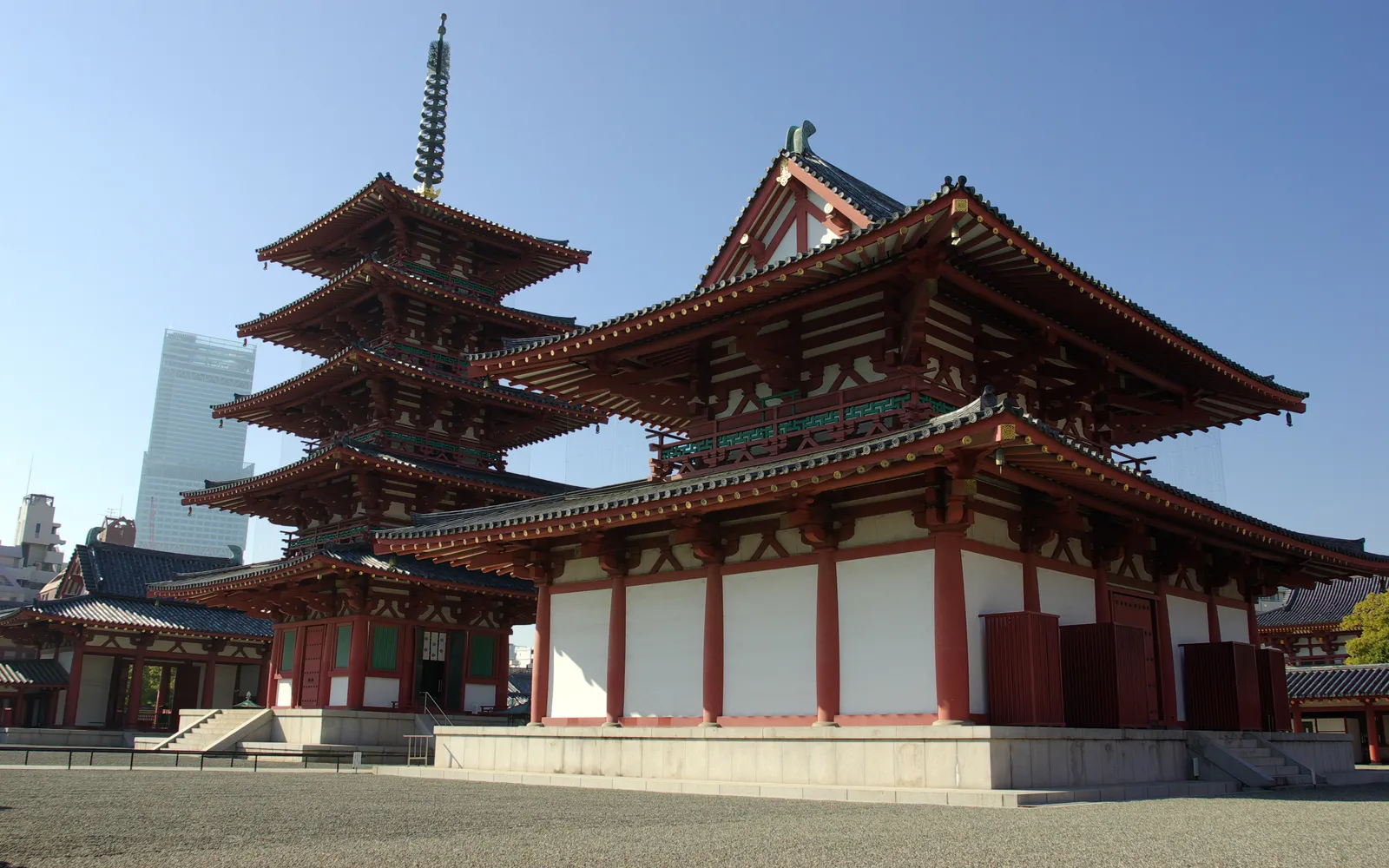
Founded in 593 by Prince Shotoku, Shitennoji is the oldest state-built Buddhist temple in Japan. The current buildings are reconstructions, but the layout follows the original Asuka-period plan faithfully — five-storey pagoda, golden hall, and the serene Gokuraku-jodo garden still in their intended positions.
- Admission to the main precinct is around 300 yen; the inner garden is an additional 300 yen
- On the 21st of each month a flea market fills the temple grounds — good hunting for antiques
- The Tennoji district next door has both a zoo and Tennoji Park if you want to extend the afternoon
Where to stay in Osaka for this trip
A well-located hotel means less commuting and more sightseeing. Here are real, top-rated stays in Osaka — compare Agoda · Booking · Trip.com in one click.
Courtyard by Marriott Shinosaka Station
Affiliate links — we may earn a commission at no extra cost to you. Details
Hotel Universal Port
Affiliate links — we may earn a commission at no extra cost to you. Details
Hiyori Hotel Osaka Namba Station
Affiliate links — we may earn a commission at no extra cost to you. Details
Sotetsu Fresa Inn Osaka Namba
Affiliate links — we may earn a commission at no extra cost to you. Details
Tours, tickets & activities in Osaka
Day tours, attraction tickets and travel essentials for Osaka — book ahead on Klook with mobile e-tickets.
Affiliate links — we may earn a commission at no extra cost to you.
Before You Pack
Osaka is one of those cities that delivers on every front at once: 1,800-year-old shrines a short walk from neon-lit food streets, a market that has been open for over 200 years right beside a 21st-century aquarium. Whether you have 3 days or 6, the city rewards every hour you put in — and almost everyone leaves planning a return trip.