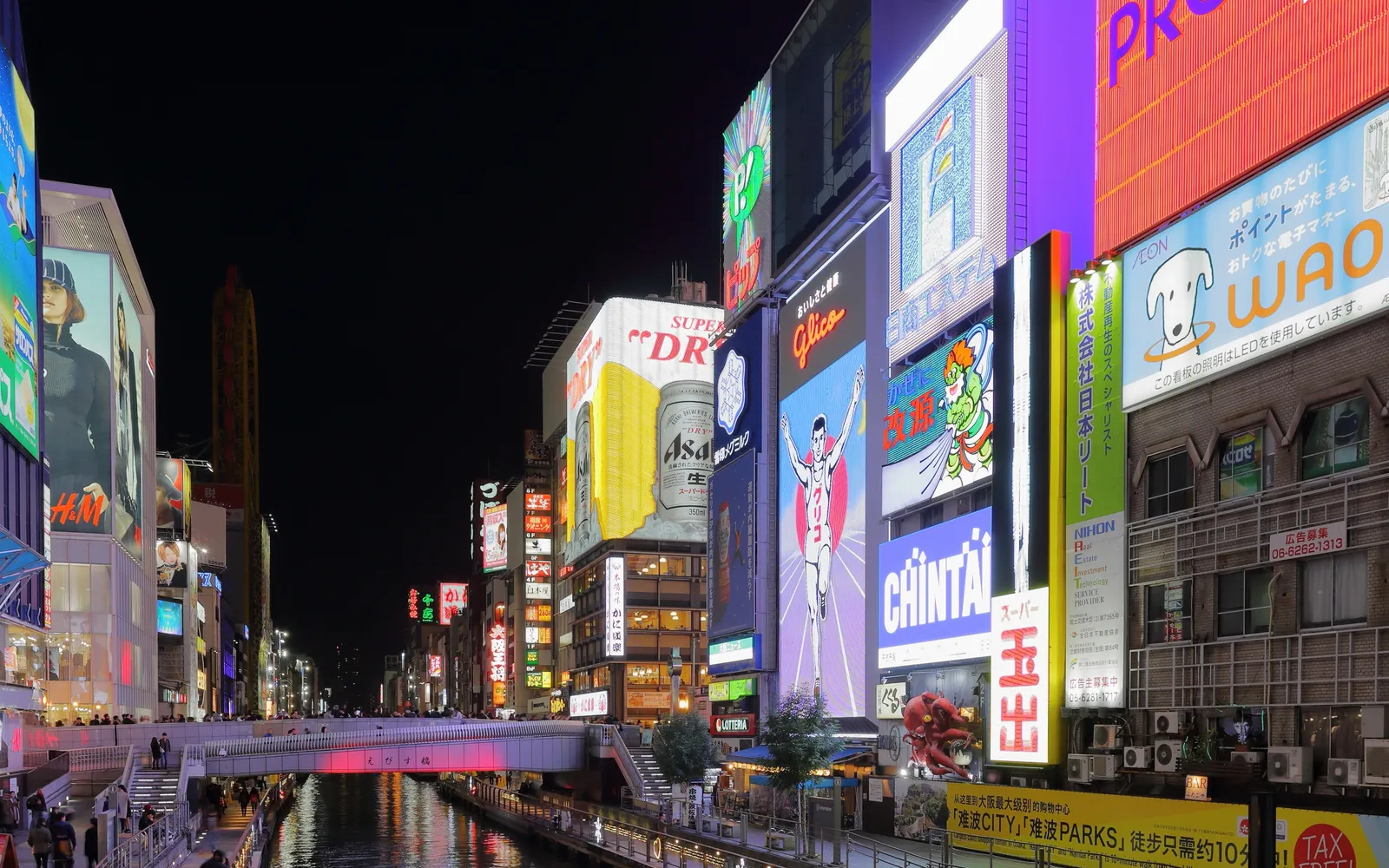
Osaka lives by the philosophy of "kuidaore" (食い倒れ) — "eat until you're broke." Locals take food seriously enough to cross the entire city for a single outstanding bowl, and the food here has a character all its own: bold flavors, a lively street-food culture, and a genuine working-class love of eating well rather than eating ceremonially. This is a city for people who actually care about what's on their plate.
 #1
#1 Takoyaki
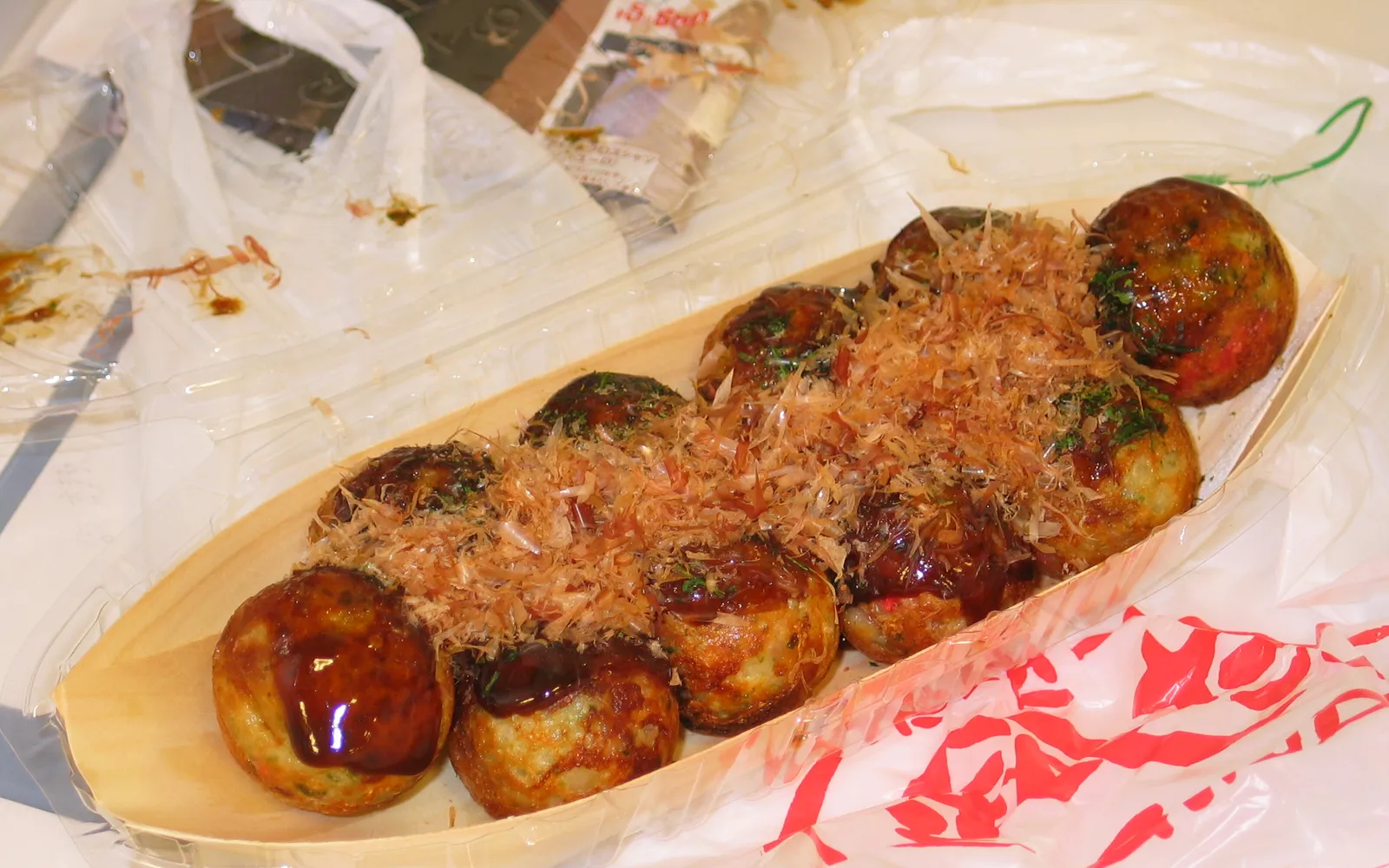
Takoyaki is the soul of Osaka. Wheat batter mixed with dashi stock is poured into a hot round mold, filled with octopus, pickled ginger, spring onion, and tenkasu (crunchy tempura bits), then rotated until the outside is crisp and the inside stays molten-soft. Finished with Bulldog sauce, mayonnaise, powdered aonori seaweed, and dried bonito flakes. Takoyaki was invented in Osaka in <strong>1935</strong> by Endo Tomekichi.
- Aizuya in Namba claims to be the original shop; Wanaka on Dotonbori is famous for its house sauce recipe.
- Eat them hot — the filling holds heat for a long time and can burn your mouth.
- Every stall has its own sauce formula; try a few and compare.
 #2
#2 Okonomiyaki
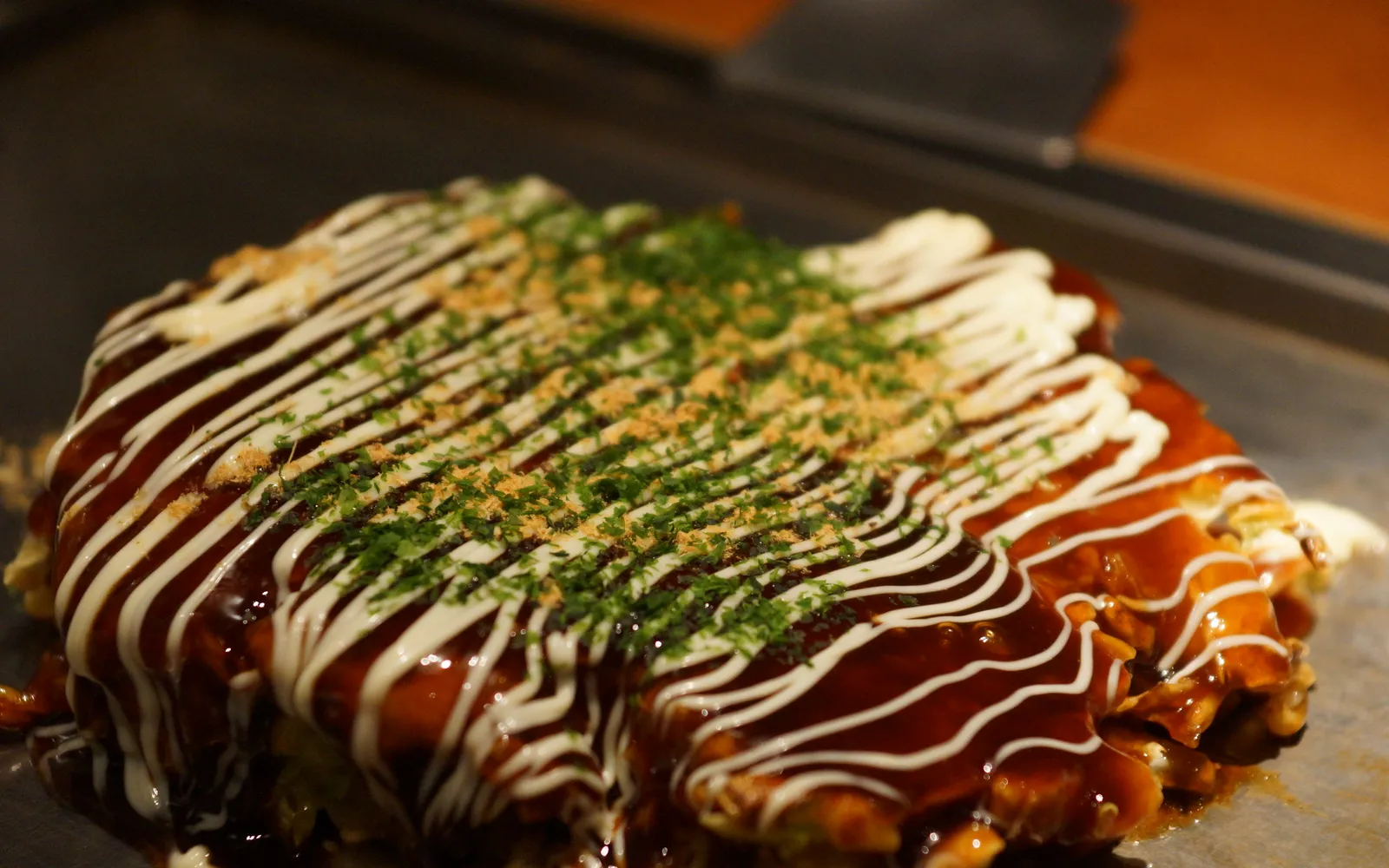
Osaka-style okonomiyaki (Kansai style) is a savory pancake where all the ingredients are mixed together before hitting the griddle — unlike Hiroshima style, which layers them. The batter combines shredded cabbage, egg, and your choice of pork or seafood, then gets finished with okonomiyaki sauce, mayonnaise, powdered seaweed, and bonito flakes that dance in the heat.
- Mizuno in Namba has been open for <strong>70 years</strong>; the queue is long but worth it.
- Many restaurants let you cook at the table yourself — fun and genuinely hot in every sense.
- Order the "mixed" (<em>mikkusu</em>) version to get pork, shrimp, and squid all at once.
 #3
#3 Kushikatsu
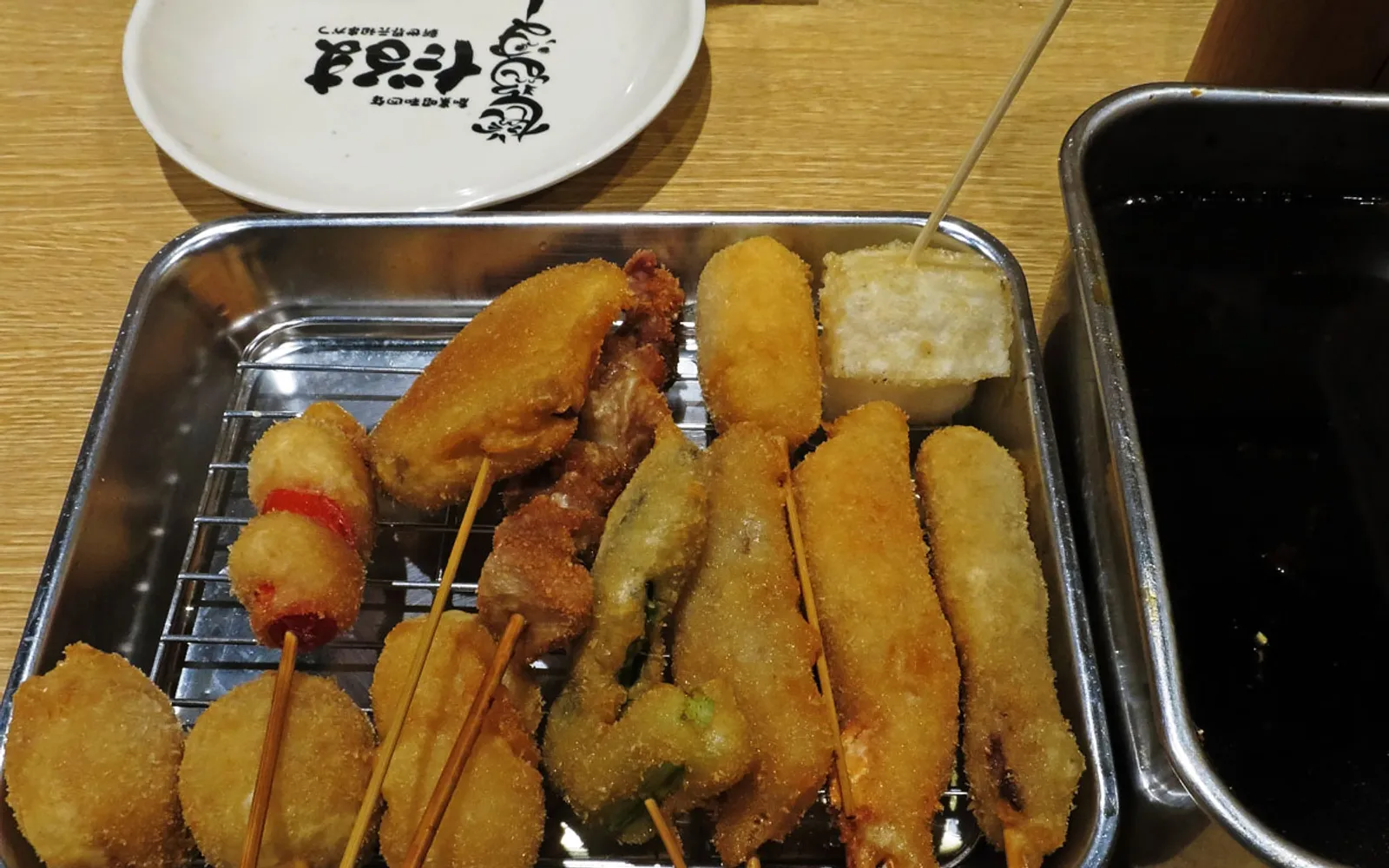
Kushikatsu — Osaka's deep-fried skewer dish — originated in the working-class Shinsekai neighborhood. Ingredients are coated in batter and panko breadcrumbs, then fried in hot oil until golden. There are <strong>more than 30 varieties</strong>, from beef and pork to shrimp, cheese, asparagus, and even chocolate. The ironclad rule: <strong>no double-dipping</strong> in the shared sauce.
- Daruma in Shinsekai is the most famous restaurant, with several branches.
- Order a set meal rather than individual skewers to get better value.
- The no-double-dipping rule is serious etiquette — use the raw cabbage leaves provided to scoop extra sauce instead.
 #4
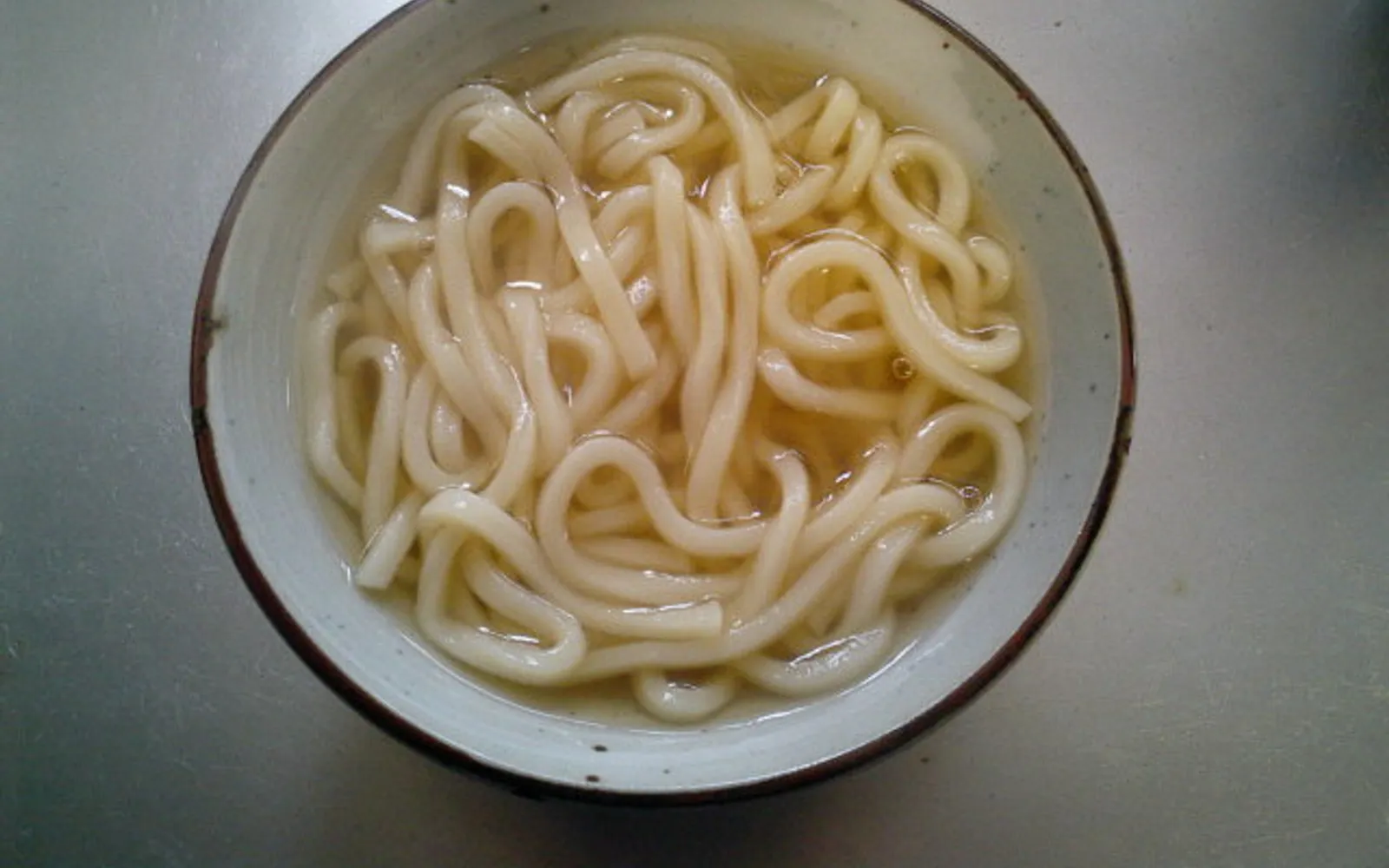
#4 Kitsune Udon
Kitsune udon was born in Osaka at a restaurant called Matsuba in the <strong>19th century</strong>. It's thick udon noodles in a light, clear dashi broth that's gently sweet — Kansai style, and noticeably different from the darker, saltier broths used in Tokyo. The topping is <em>aburaage</em> (thinly fried sweet tofu), cut into a large piece that soaks up the broth. <em>Kitsune</em> means "fox" — a nod to the folk belief that foxes are fond of aburaage.
- Imai Honten in Minami is the long-established original shop with a strong reputation.
- The Osaka broth is noticeably clearer and sweeter than Tokyo versions — that contrast is worth experiencing.
- Add a little pickled ginger on the side for aroma and a fresh finish.
 #5
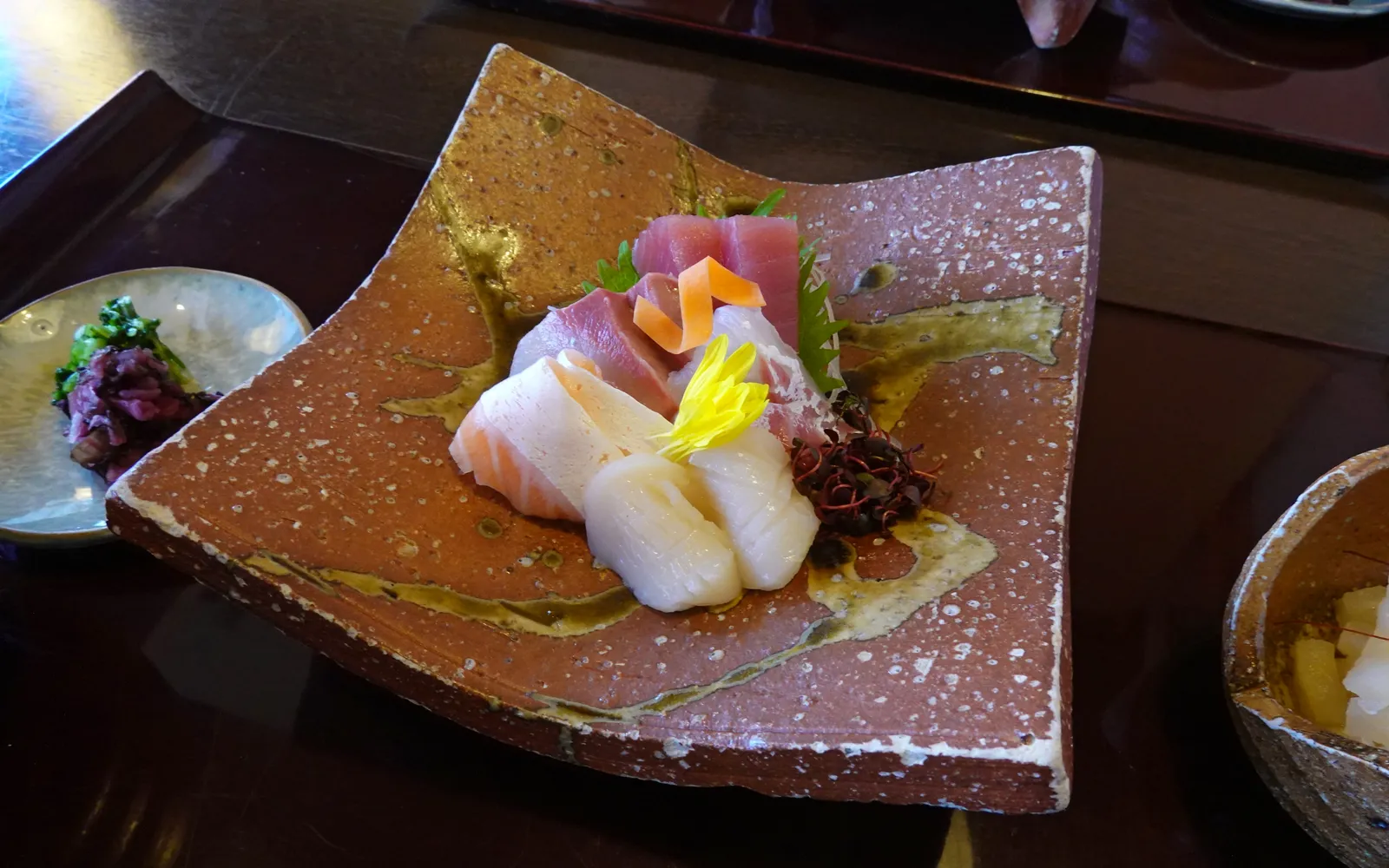
#5 Kuromon Market Seafood
Kuromon Market is where Osaka residents have come to buy fresh food every day for <strong>more than 200 years</strong>. Over <strong>150 stalls</strong> sell seafood you can eat on the spot: grilled scallops, iced fresh shrimp, snow crab, sashimi-cut tuna, and farm-fresh strawberries. Eating straight off the stall in the middle of a working market is an experience you'll find almost nowhere else.
- Come in the morning for the freshest selection — some stalls close in the afternoon.
- Prices are fixed and quality is high; bargaining is not really the culture here.
- Use the bins provided for rubbish — keep the market clean.
 #6
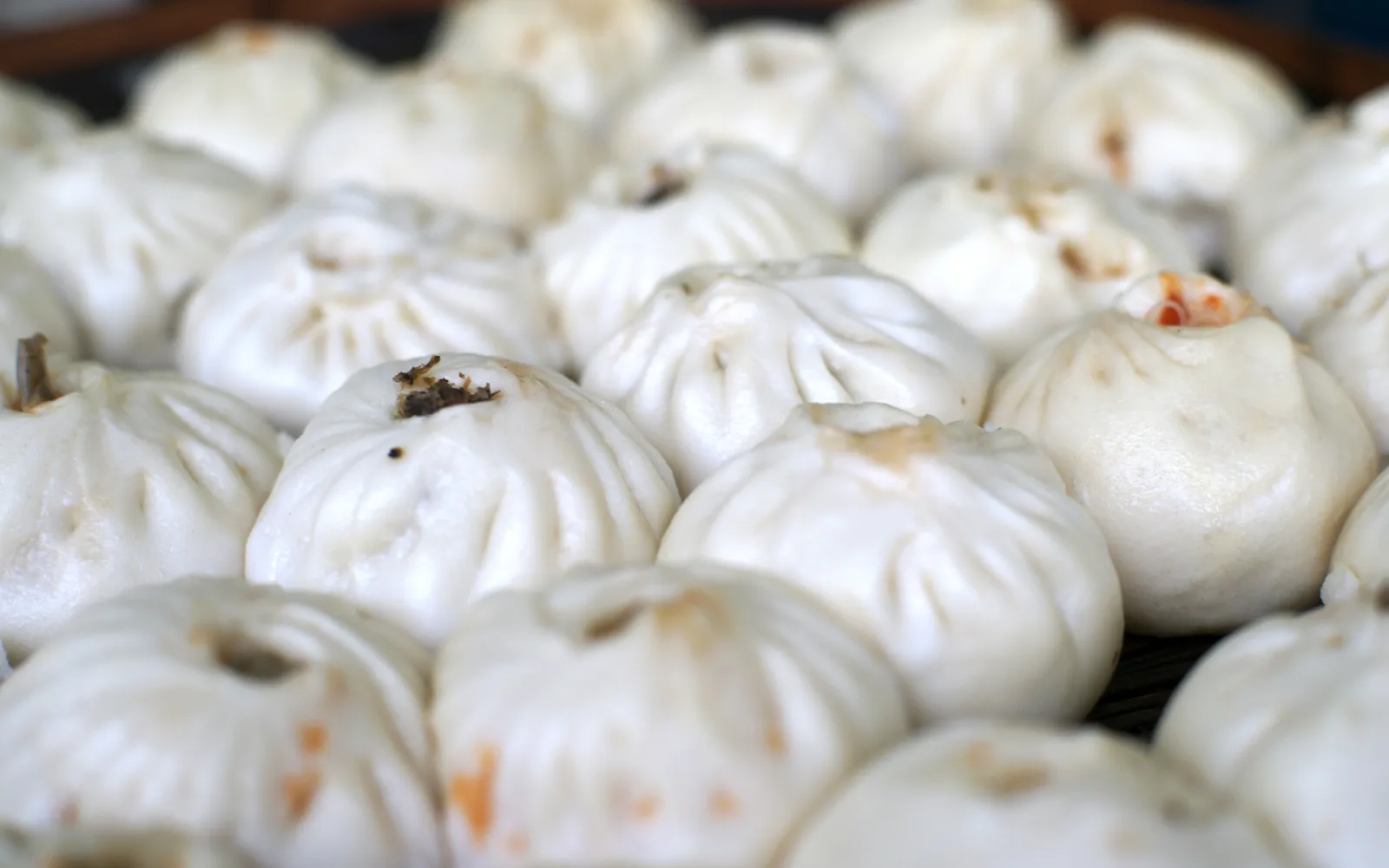
#6 Butaman
Butaman (also called nikuman) is Japan's take on the Chinese steamed pork bun. Soft, pillowy dough wraps a filling of minced pork mixed with onion, carrot, and shiitake mushroom, steamed hot enough to fill the air with the kind of smell that stops people mid-stride. <strong>551 Horai</strong>, the Osaka institution behind the city's most famous version, is so embedded in local life that Osaka residents consider their butaman the only real one — and regularly buy them as gifts.
- 551 Horai has branches all over Osaka; queues move fast.
- Eat them immediately while hot — taking them back to your hotel changes the texture noticeably.
- 551 Horai also does gyoza and green tea ice cream worth trying while you're there.
Where to stay in Osaka for this trip
A well-located hotel means less commuting and more sightseeing. Here are real, top-rated stays in Osaka — compare Agoda · Booking · Trip.com in one click.
Courtyard by Marriott Shinosaka Station
Affiliate links — we may earn a commission at no extra cost to you. Details
Hotel Universal Port
Affiliate links — we may earn a commission at no extra cost to you. Details
Hiyori Hotel Osaka Namba Station
Affiliate links — we may earn a commission at no extra cost to you. Details
Sotetsu Fresa Inn Osaka Namba
Affiliate links — we may earn a commission at no extra cost to you. Details
Tours, tickets & activities in Osaka
Day tours, attraction tickets and travel essentials for Osaka — book ahead on Klook with mobile e-tickets.
Affiliate links — we may earn a commission at no extra cost to you.
Before You Pack
In Osaka, every meal is an event in itself — whether it's a hot takoyaki from a street stall or a late-night bowl of ramen in a tiny shop. Spend a few days eating your way through the city and you'll understand exactly why Osaka earned the name Japan's Kitchen.