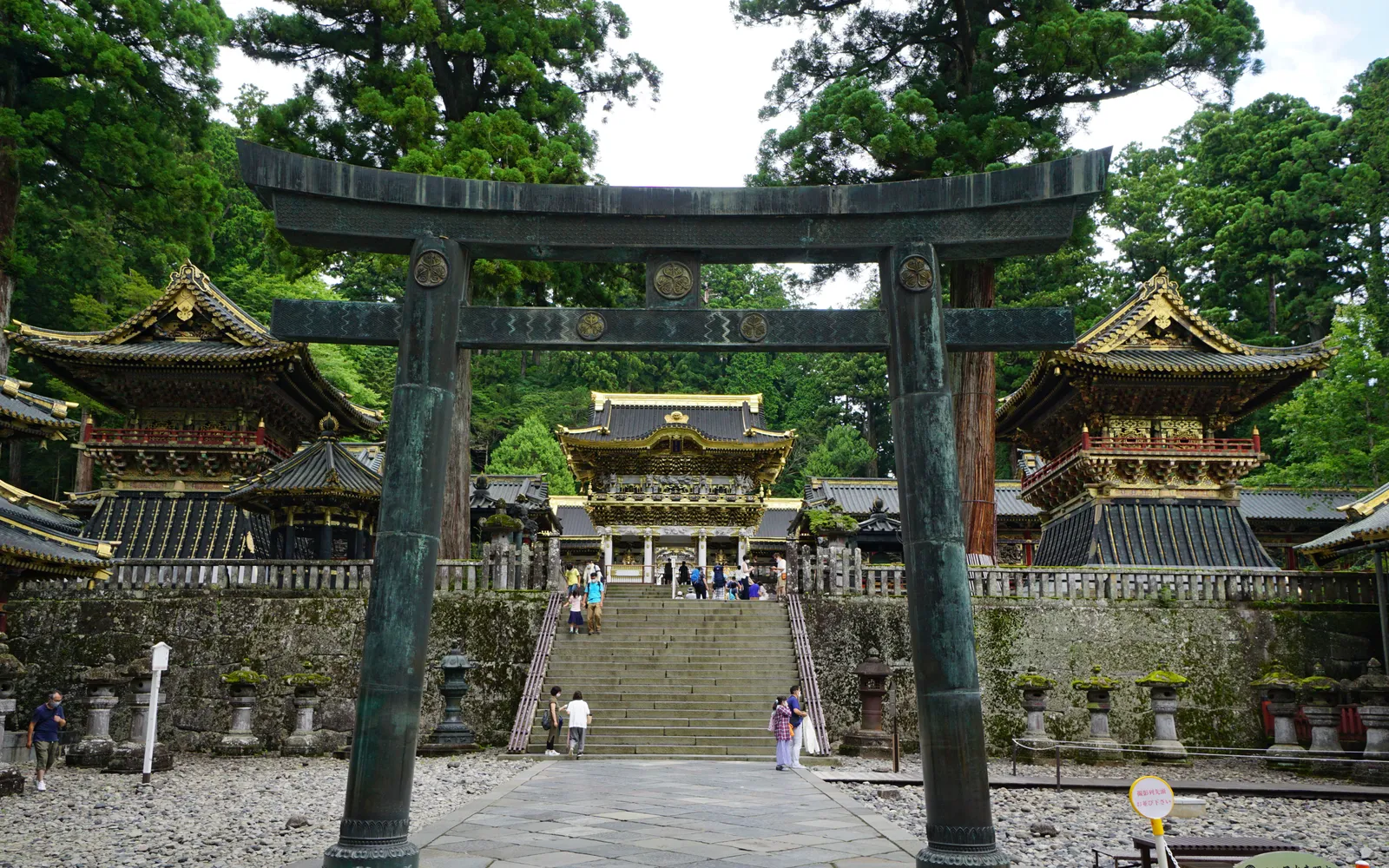
Nikko is a small city in Tochigi Prefecture that packs an unlikely density of cultural and natural highlights into one valley. The UNESCO World Heritage zone alone holds shrines and temples that have stood for centuries, and just beyond it sits a 97-metre waterfall, a volcanic mountain lake at 1,270 metres above sea level, and a highland marshland that stretches for over 400 hectares. Every season has its own pull — but autumn (October–November) is when the foliage and the atmosphere are at their absolute peak.
 #1
#1 Nikko Tosho-gu
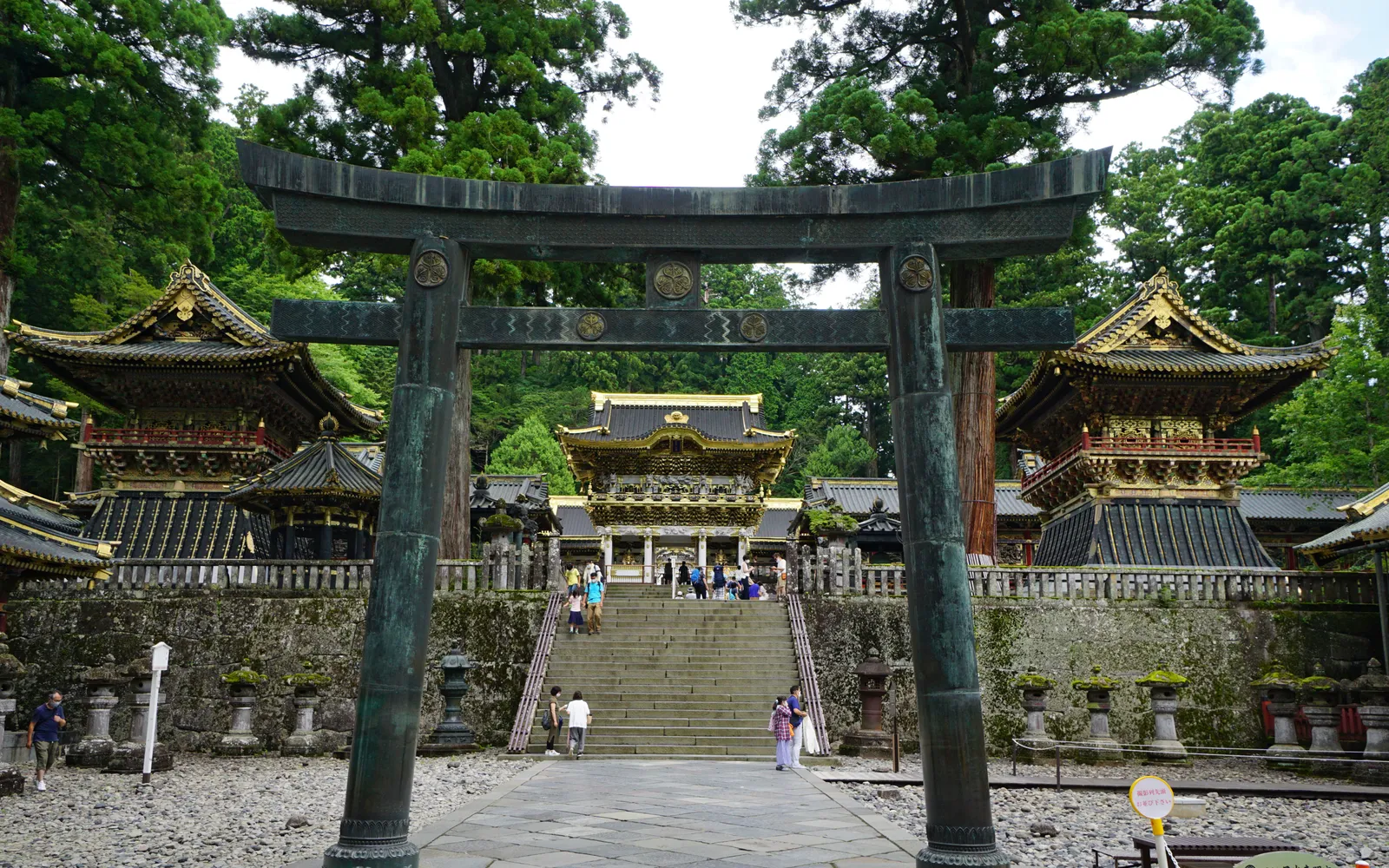
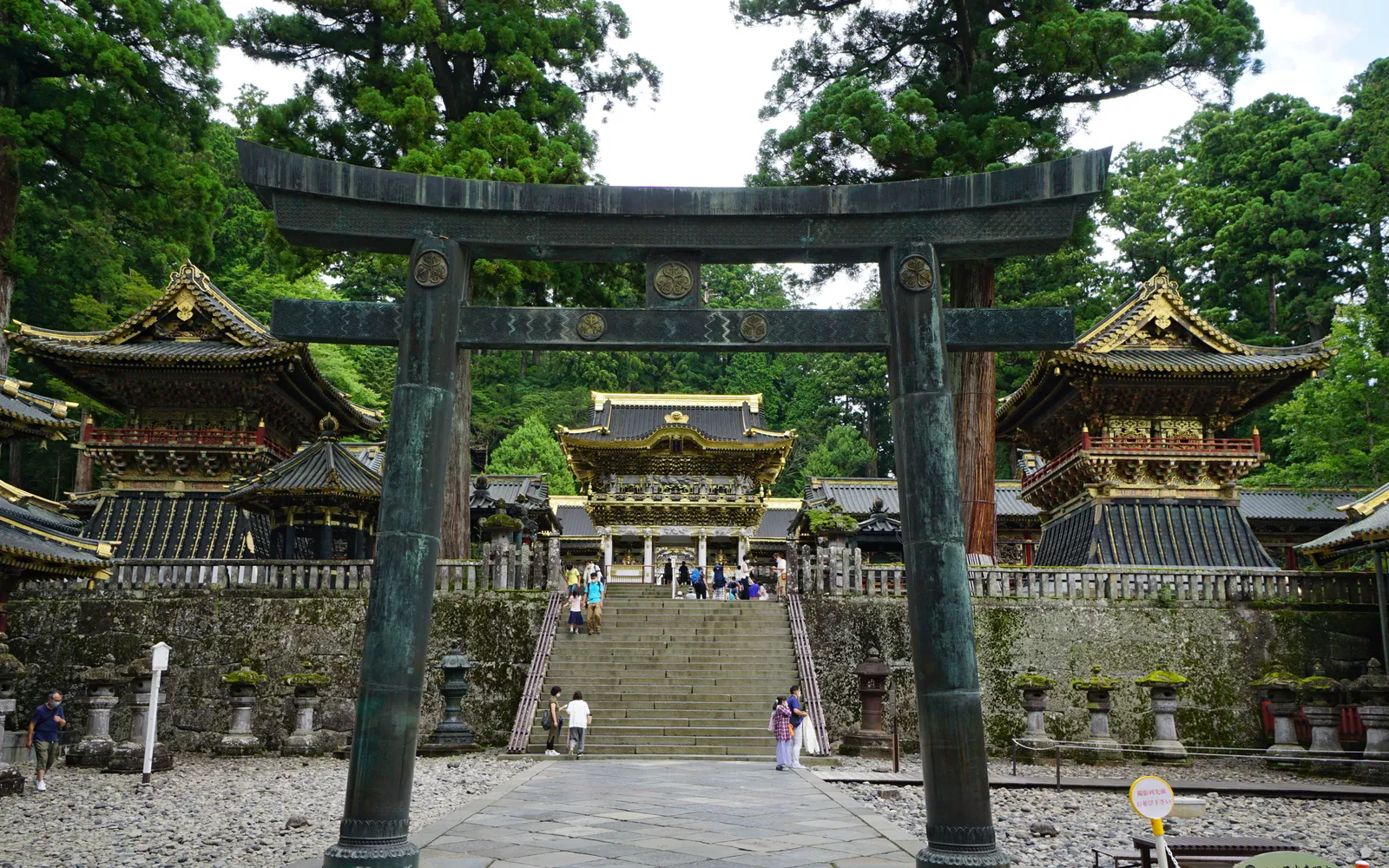
Tosho-gu is the mausoleum of Tokugawa Ieyasu, founder of the Tokugawa shogunate, and it is extraordinarily elaborate — more than <strong>5,000 carved and gilded panels</strong> cover the buildings. The centrepiece is the Yomeimon Gate, which took craftsmen over two years to complete. The famous Three Wise Monkeys carving here — see no evil, speak no evil, hear no evil — has become a globally recognised symbol. The entire complex was inscribed as a UNESCO World Heritage site in <strong>1999</strong>.
- Buy the Nikko World Heritage Area Pass — it costs less than buying each site separately.
- Arrive early (opens 8:00 a.m.) before tour groups arrive.
- Dress modestly; sandals are not permitted inside the main hall.
 #2
#2 Shinkyo Bridge
Shinkyo Bridge is Nikko's most recognisable landmark and the first thing most visitors encounter. The arched vermilion structure spans the Daiya River at a height of <strong>10 metres</strong> and stretches <strong>28 metres</strong> long. It dates to the <strong>8th century</strong> — legend holds that the deity Jinja Daiou conjured two giant serpents as a crossing for the monk Shodo Shonin. The bridge is a UNESCO-listed National Important Cultural Property, and its backdrop switches between deep cedar green and blazing autumn red depending on the season.
- The best photos come from the riverbank below or from the modern bridge alongside — not from the bridge itself.
- You can walk across the bridge for a small fee.
- Cherry blossom season (April) and autumn colour (November) are the two peak times.
 #3
#3 Kegon Falls
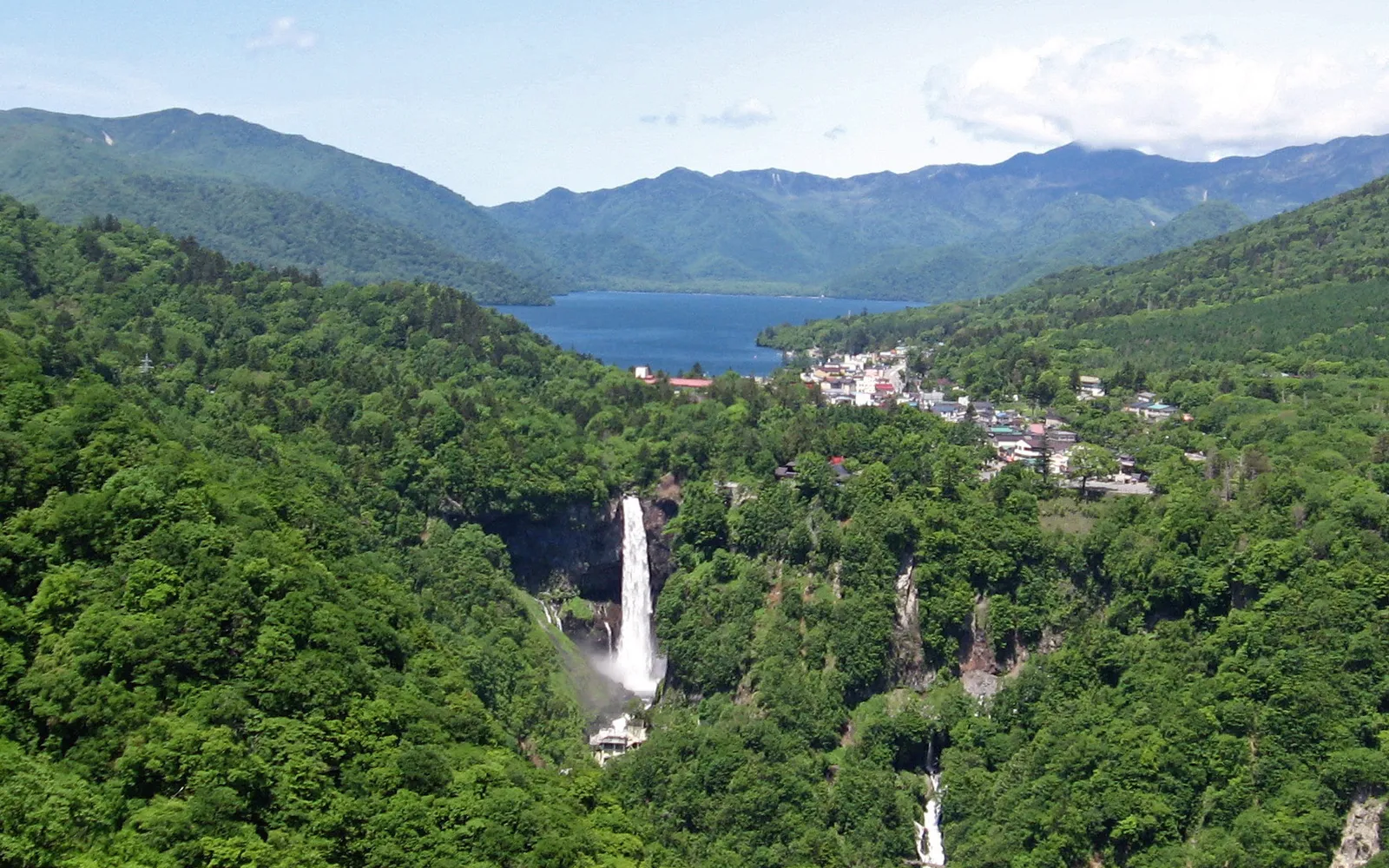
At <strong>97 metres</strong>, Kegon Falls ranks among Japan's three finest waterfalls. Water from Lake Chuzenji plunges into a blue-green pool with enough force that you feel the spray from the viewing platform. A paid elevator descends <strong>100 metres</strong> underground to an observation deck that puts you level with the base of the falls — far more dramatic than the top-level view. In winter (January–February) the outer edges freeze into columns of ice, while autumn frames the drop in orange and red.
- The elevator to the lower observation deck costs 570 yen and is worth it — the close-up view is incomparably better.
- The top-level viewpoint is free and gives you the full 97-metre height.
- Water volume drops in winter, but the ice formations are impressive.
 #4
#4 Lake Chuzenji
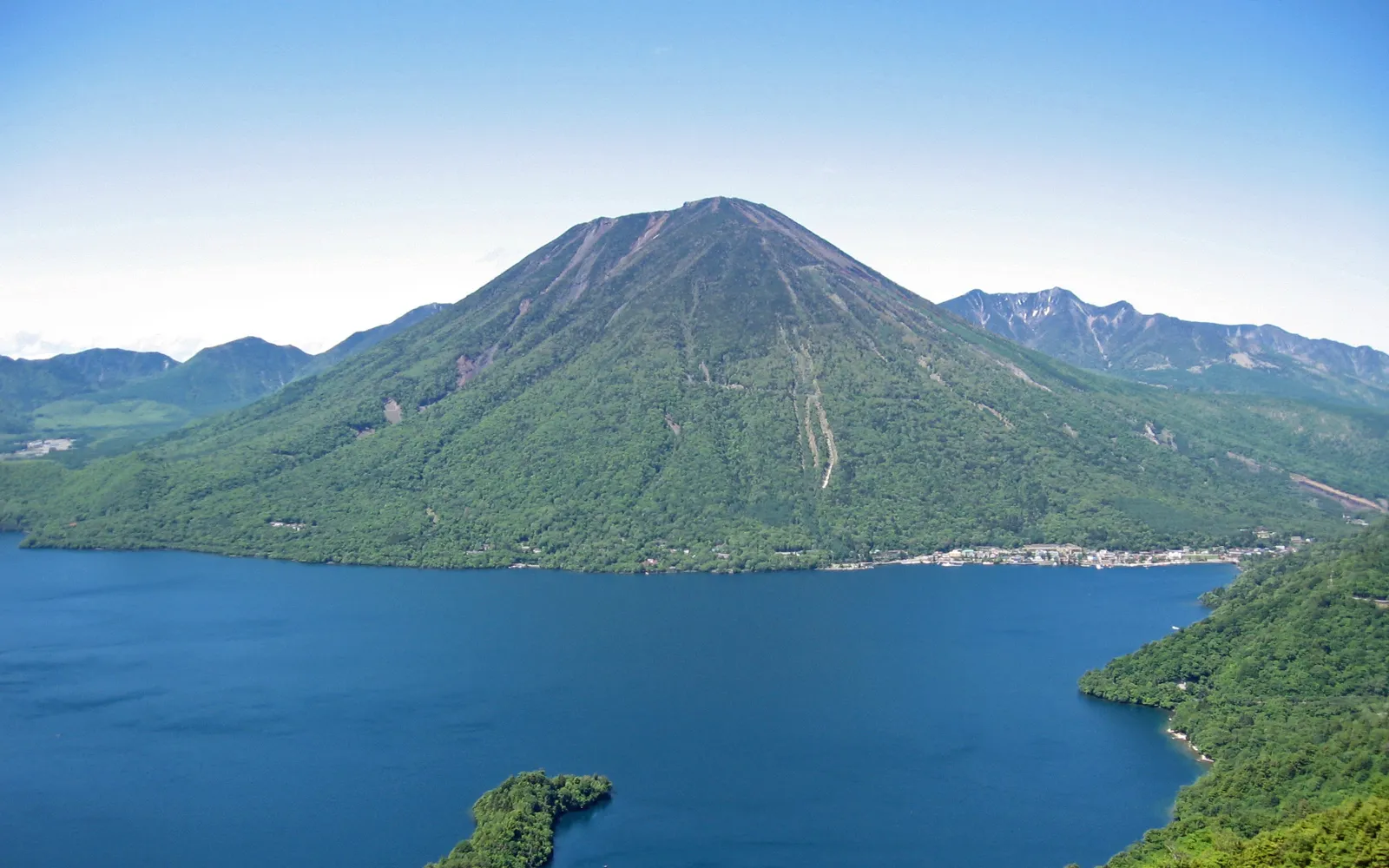
Lake Chuzenji was formed by an eruption of Mount Nantai roughly <strong>20,000 years ago</strong> and sits at <strong>1,270 metres</strong> — making it the highest natural lake in Japan. The shoreline runs <strong>25 kilometres</strong> and is pleasant on foot or by bicycle. The water is clear and a striking shade of green; you can hire rowing boats, pedal boats, or board a 60-minute sightseeing cruise. In autumn the surrounding forest turns red and orange in a way that reflects across the surface of the lake.
- The sightseeing cruise around the lake takes 60 minutes and costs 1,500 yen.
- Cafés and souvenir shops line the lakeside.
- Temperatures here run 5–10°C cooler than in town — bring a layer.
 #5
#5 Rinnoji Temple
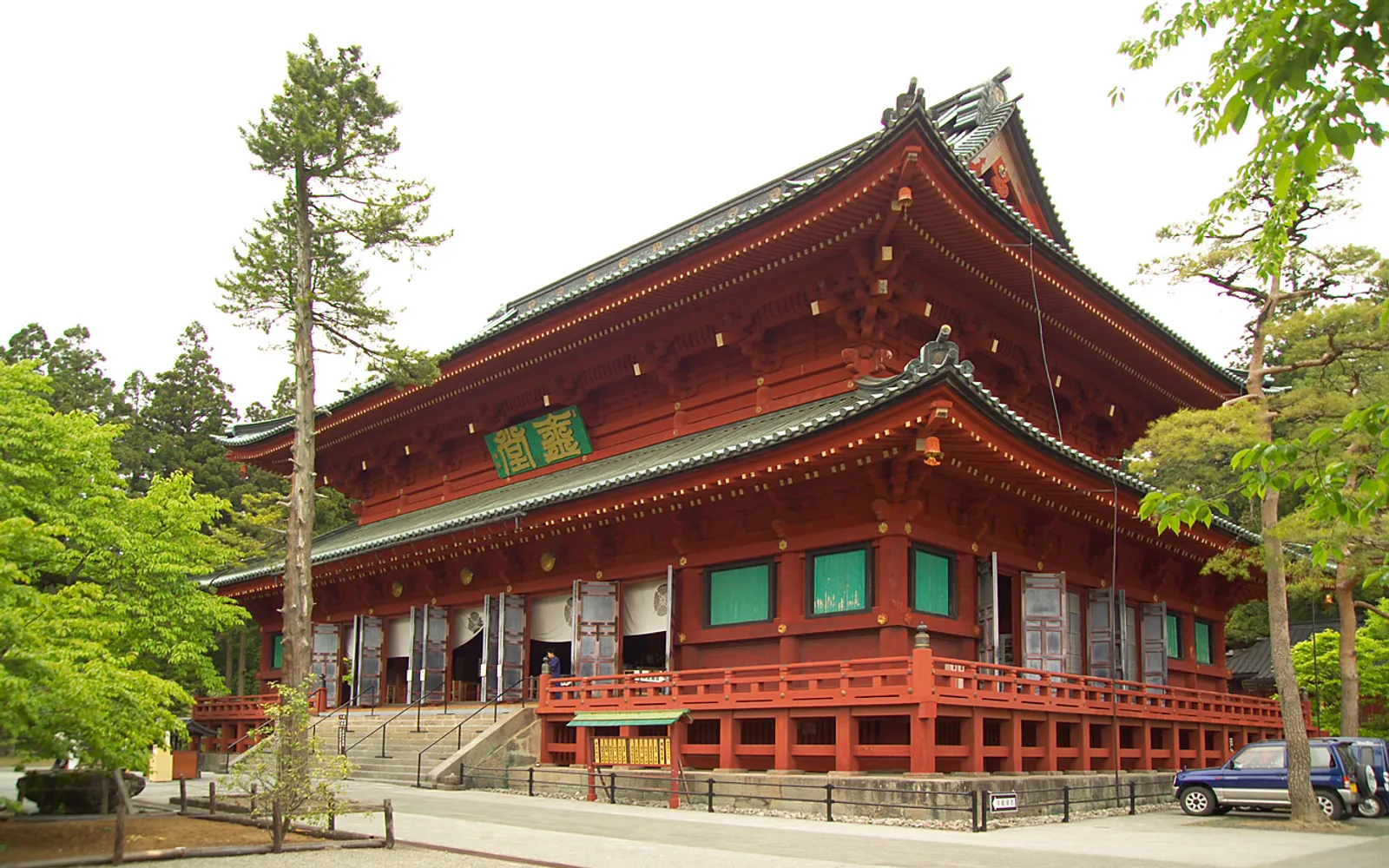
Rinnoji was founded in the <strong>8th century</strong> by the monk Shodo Shonin and is one of the UNESCO-listed sites in Nikko. The main draw is the Sanbutsudo hall, which houses three wooden Buddhist statues each standing <strong>7.5 metres</strong> tall — Amitabha, Brahma, and Mahavira — representing Nikko's three sacred mountains. The adjacent Shoyoen garden is elegant at any time of year, but especially during autumn colour and cherry blossom.
- Entry to the Sanbutsudo hall is 400 yen and includes tea in the Shoyoen garden.
- The Shoyoen garden is particularly rewarding in autumn and during cherry blossom.
- Rinnoji sits next to Tosho-gu — easy to combine in the same morning.
 #6
#6 Taiyuinbyo Mausoleum
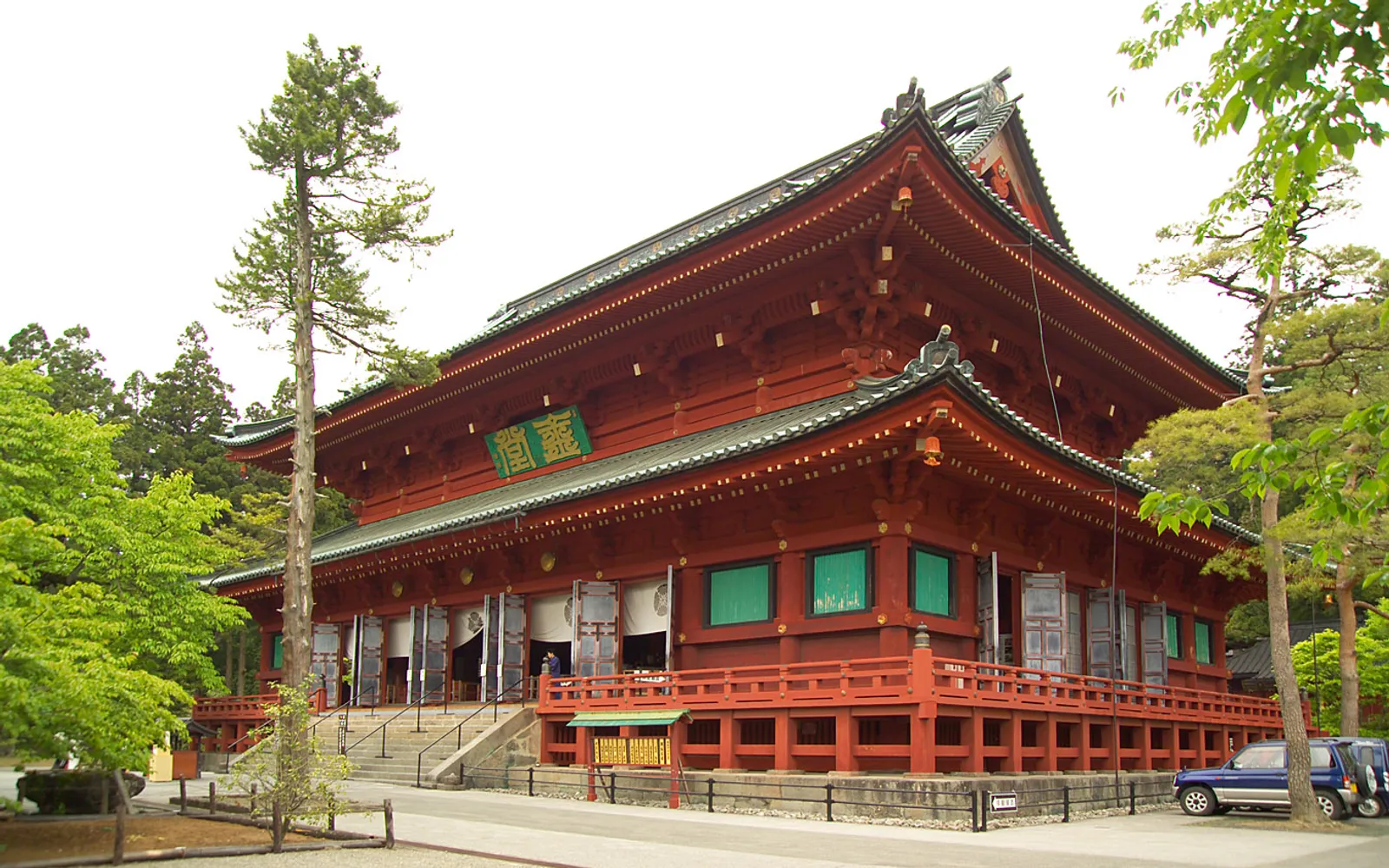
Taiyuinbyo is the mausoleum of Tokugawa Iemitsu, the third shogun — built deliberately to honour him without surpassing the grandeur of his grandfather's Tosho-gu. Four successive gates, each more ornate than the last, lead to the inner sanctuary. The highlight is the Kokamon Gate in Chinese Ming-dynasty style, all of it ringed by <strong>400-year-old cedar trees</strong>. The complex holds <strong>22 National Treasures</strong> and is noticeably quieter and more atmospheric than Tosho-gu next door.
- It's frequently overlooked because visitors are focused on Tosho-gu — but it's equally impressive.
- Covered by the World Heritage Pass, so no additional ticket needed.
- Cooler and quieter than Tosho-gu — good for a slow walk.
 #7
#7 Senjogahara Marshland
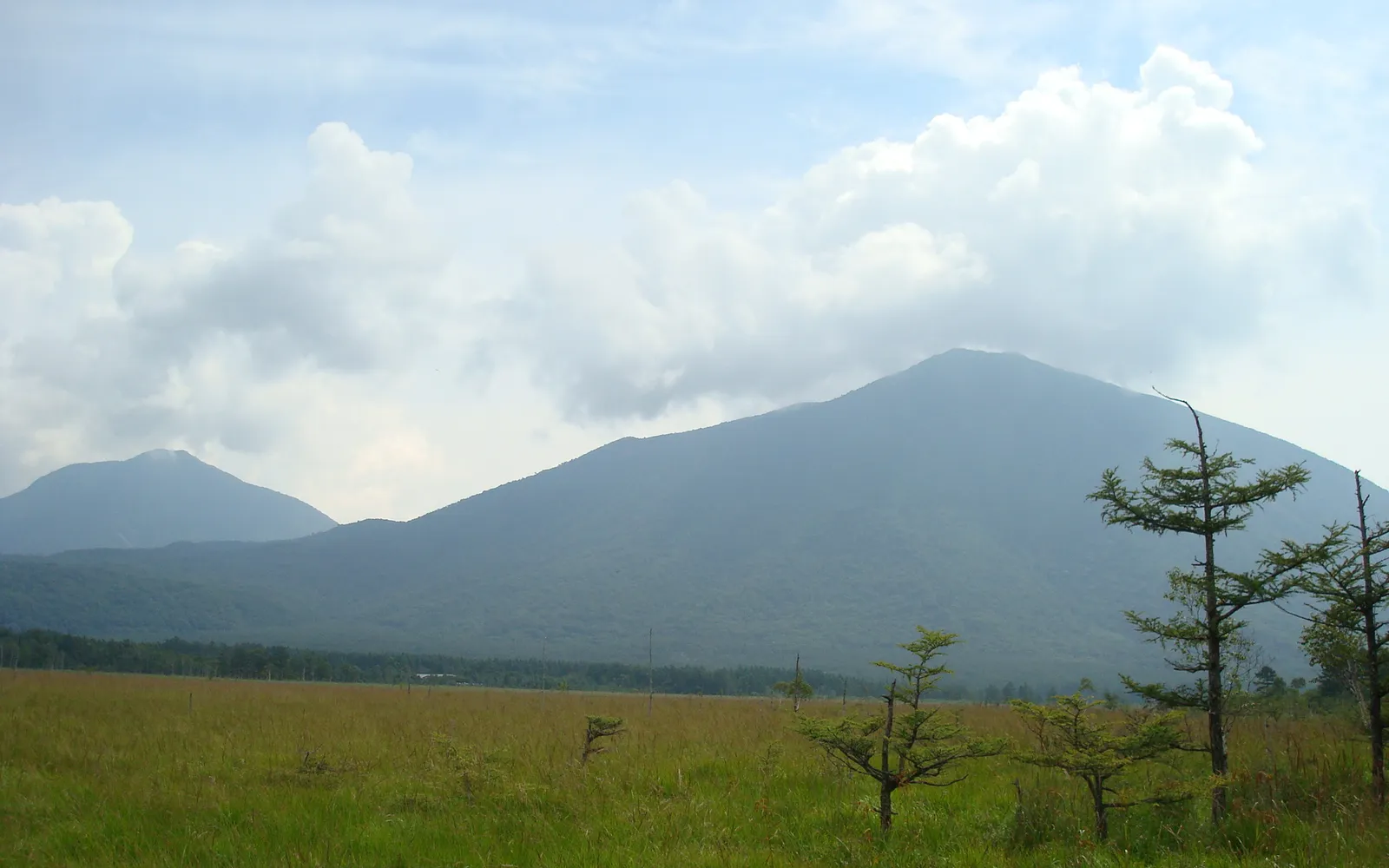
Senjogahara is a flat highland marsh covering more than <strong>400 hectares</strong> at an altitude of <strong>1,400 metres</strong>. A <strong>4-kilometre</strong> boardwalk trail winds through grassland, birch forest, and small streams, with Mount Nantai filling the horizon behind. In autumn the grasses shift to gold and burnt orange; in summer wildflowers cover the ground. It is the kind of place that rewards anyone willing to walk slowly and pay attention.
- The 4-kilometre trail takes about 1.5–2 hours at a comfortable pace — not demanding.
- Wear hiking shoes; the boardwalk can be slippery after rain.
- Excellent bird-watching in the early morning.
 #8
#8 Edo Wonderland Nikko Edomura
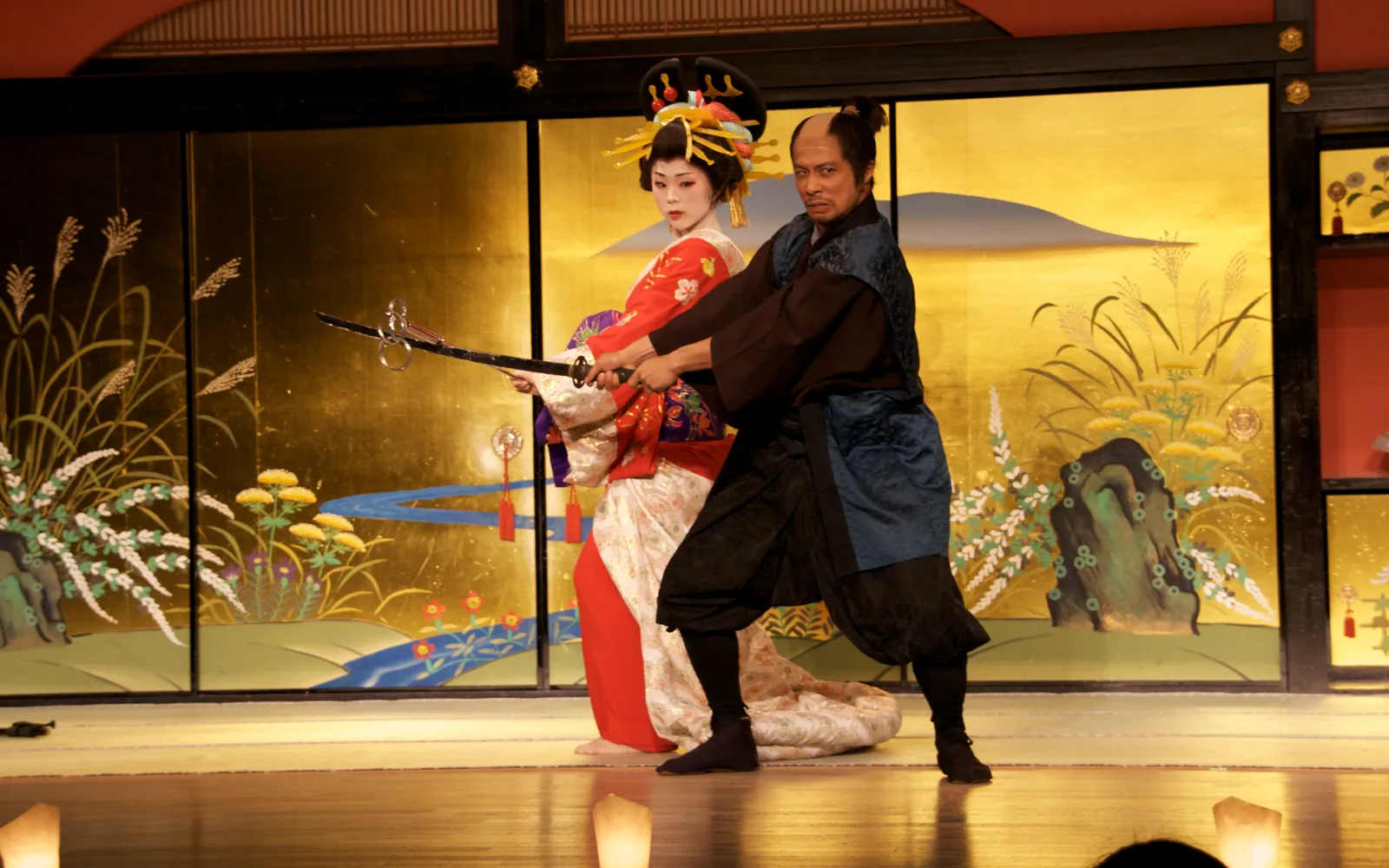
Edo Wonderland is a full-scale historical theme park recreating life in the Edo period (<strong>1603–1868</strong>). Samurai, ninja, and oiran (high-ranking courtesans) perform throughout the day, and visitors can dress up as samurai, princesses, or ninja. There are also hands-on sessions in swordsmanship and archery, plus lanes of meticulously built period timber architecture to explore. It works particularly well for families with children.
- Book tickets in advance online for a discount — standard adult entry is 5,800 yen.
- Samurai and ninja performances run 30–40 minutes; check the show schedule on arrival.
- Allow at least half a day to make the most of it.
Where to stay in Nikko for this trip
A well-located hotel means less commuting and more sightseeing. Here are real, top-rated stays in Nikko — compare Agoda · Booking · Trip.com in one click.
Stay Nikko Guesthouse
Affiliate links — we may earn a commission at no extra cost to you. Details
Sanga Nikko
Affiliate links — we may earn a commission at no extra cost to you. Details
Nikko Guesthouse Sumica
Affiliate links — we may earn a commission at no extra cost to you. Details
Nikko Station Hotel II
Affiliate links — we may earn a commission at no extra cost to you. Details
Tours, tickets & activities in Nikko
Day tours, attraction tickets and travel essentials for Nikko — book ahead on Klook with mobile e-tickets.
Affiliate links — we may earn a commission at no extra cost to you.
Before You Pack
Nikko is an easy day trip from Tokyo, but two days gives you the time to take in both the World Heritage shrine zone and the Lake Chuzenji area without rushing. Pick up a Nikko Pass at the station — it covers buses and includes discounts at the main sites.