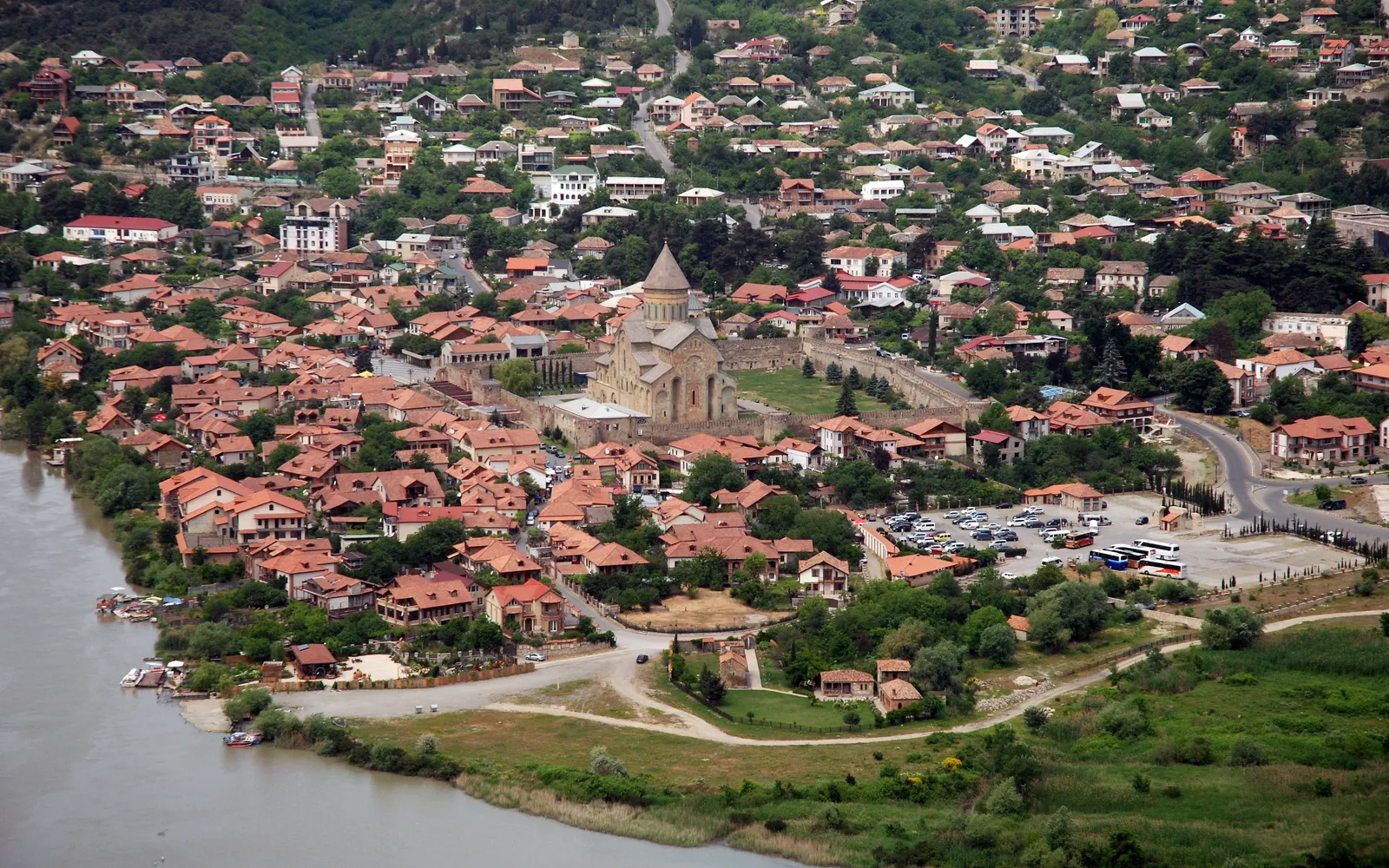
Georgians call Mtskheta the 'Jerusalem of the Caucasus' — and for good reason. This is where Georgia officially adopted Christianity in 327 AD, making it one of the earliest Christian nations on earth. It sits just 20 km from Tbilisi, so most visitors come on a day trip, but if you can stay overnight, the atmosphere after the tour groups head back is a completely different experience.
 #1
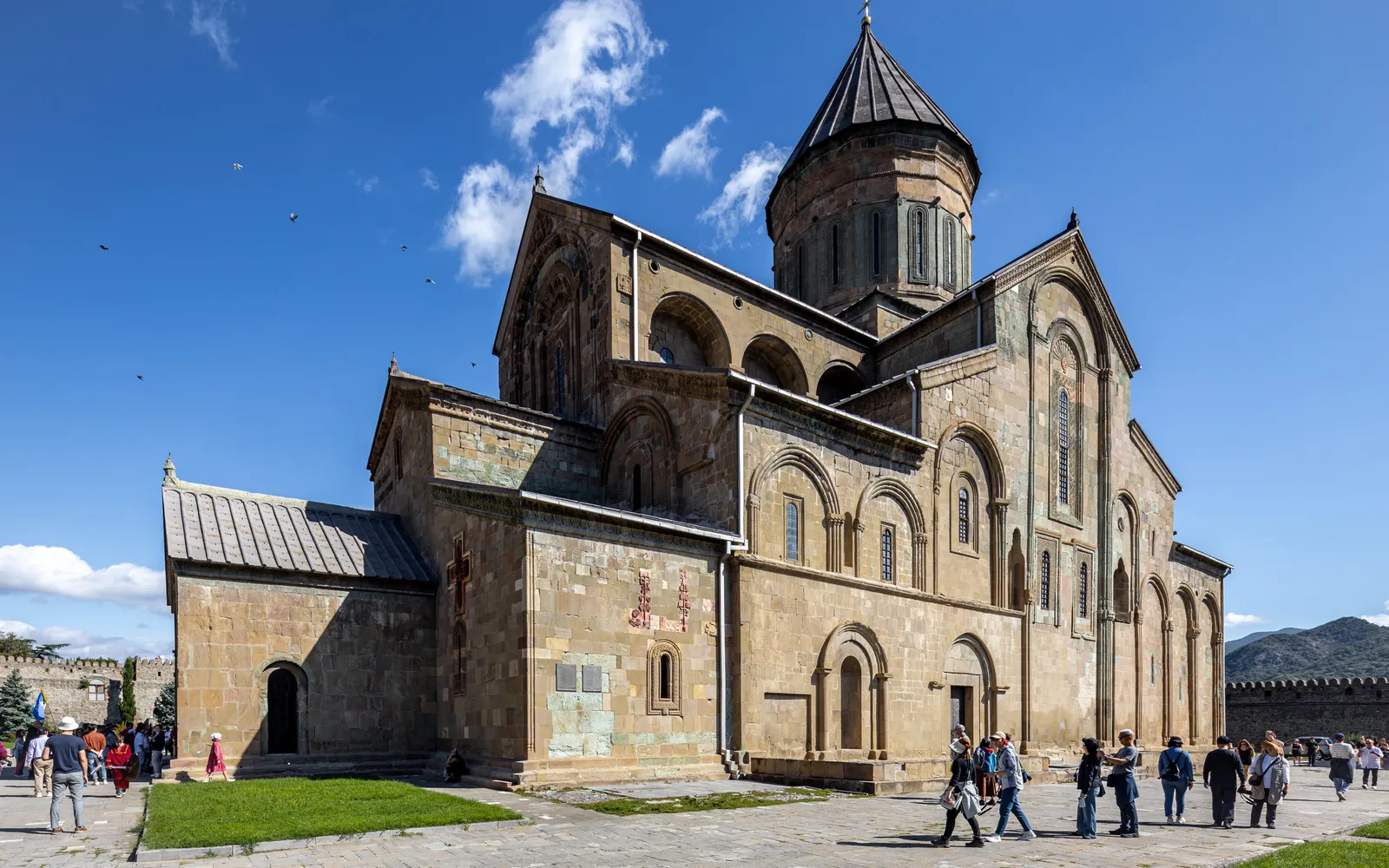
#1 Svetitskhoveli Cathedral
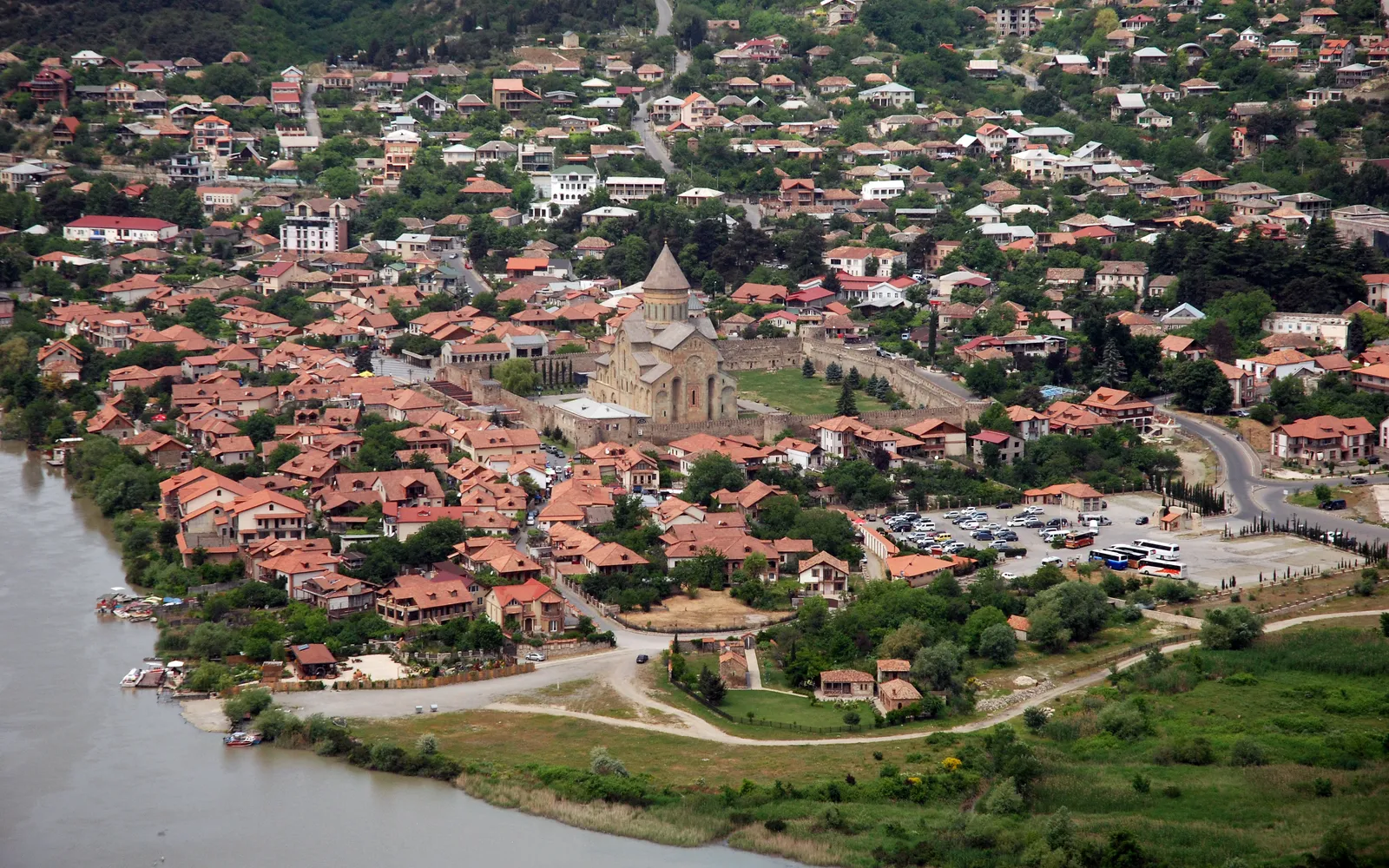
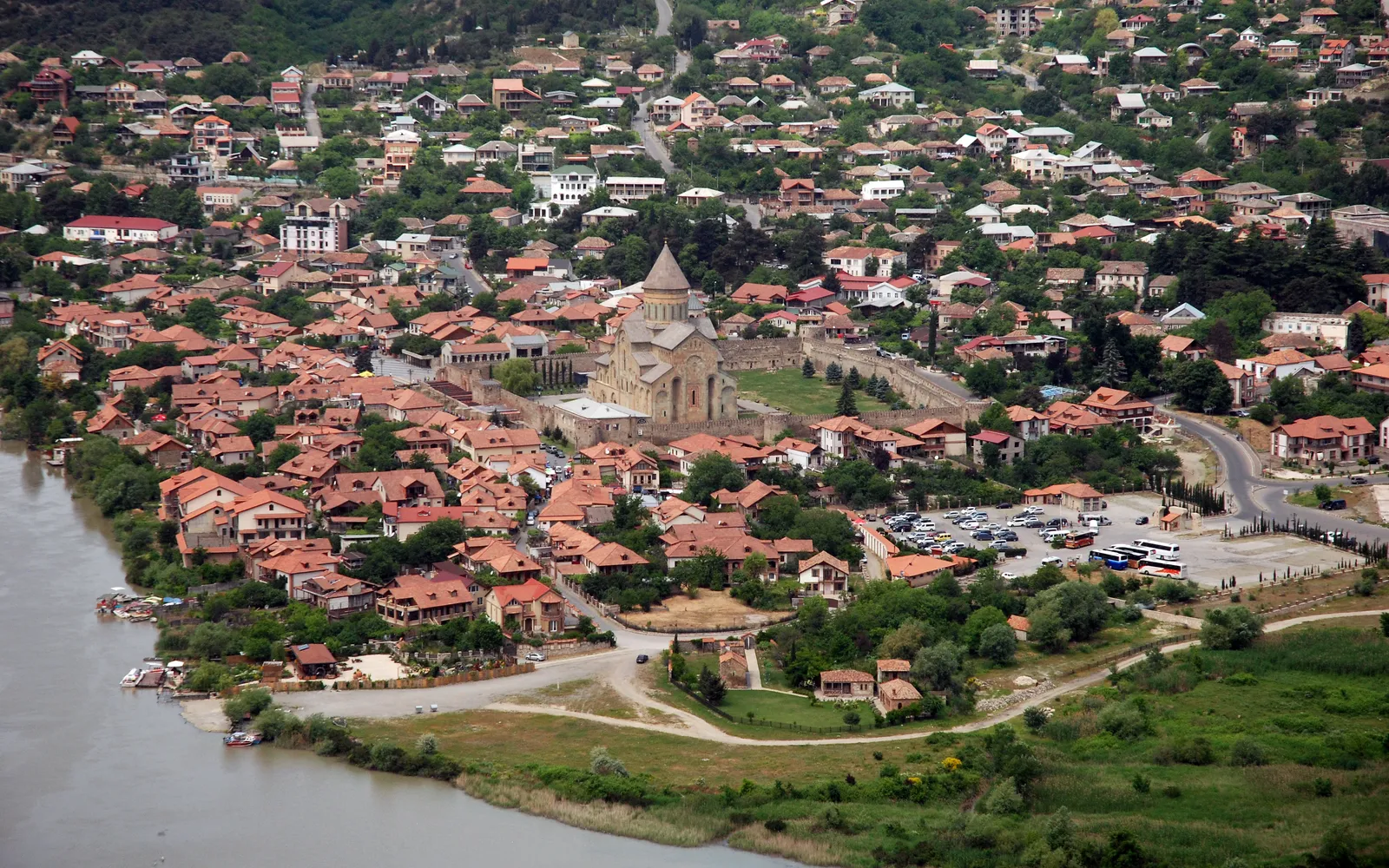
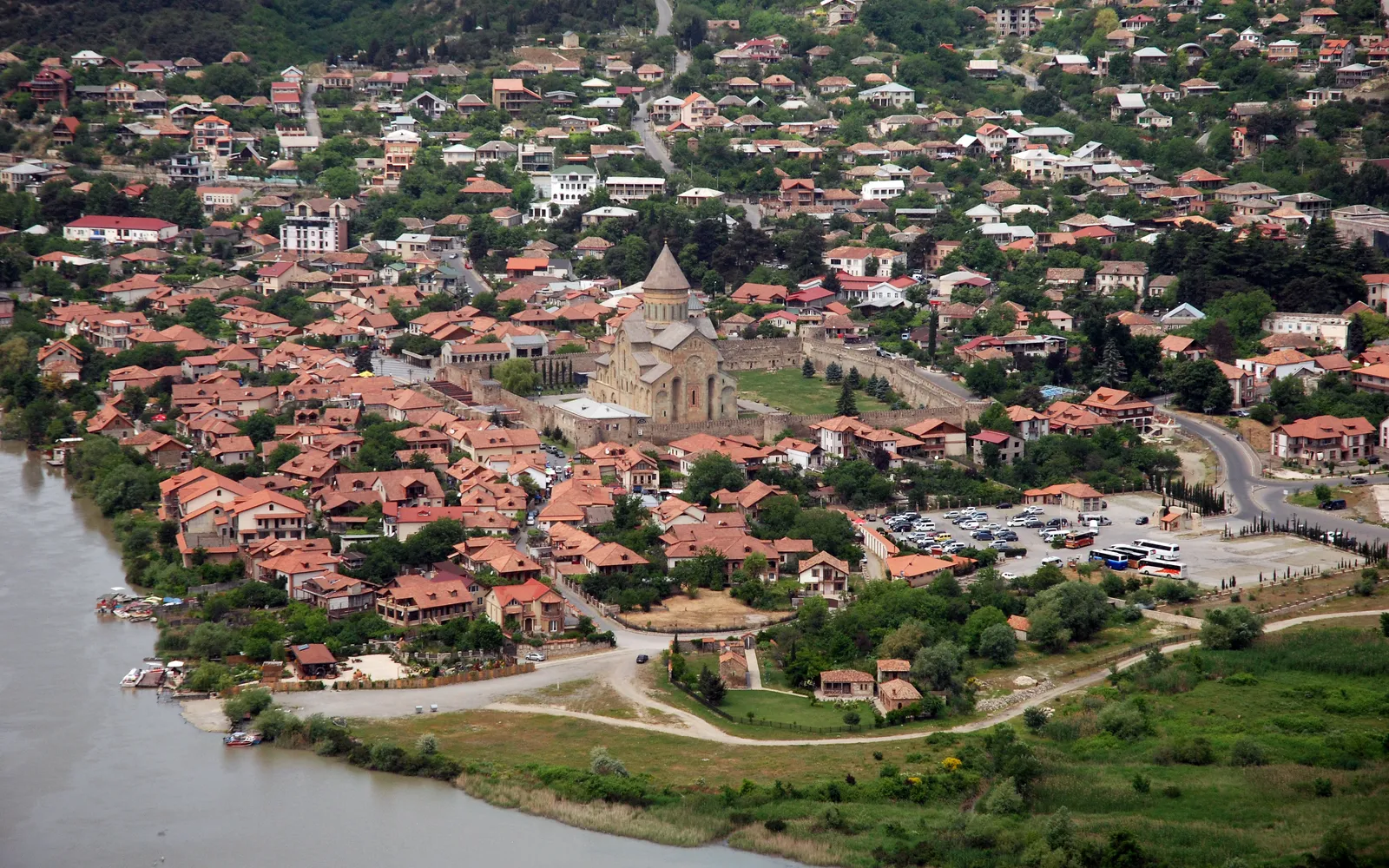
The spiritual heart of Georgia and the most iconic landmark in Mtskheta. This stone cathedral was built in the 11th century on the spot where, according to tradition, the robe of Christ is buried beneath the ground. Inside you'll find medieval frescoes that have kept much of their colour, along with the tombs of several Georgian kings. Visitors must dress modestly — women are required to cover their heads.
- Entry is free, but shoulders and knees must be covered. Scarves and wraps are available to borrow at the gate.
- Walk around the outer fortress walls before going inside — the view of the cathedral from this angle is excellent for photos.
- Between 9 and 10 in the morning the natural light through the church windows is at its most beautiful, and the crowds have not yet arrived.
 #2
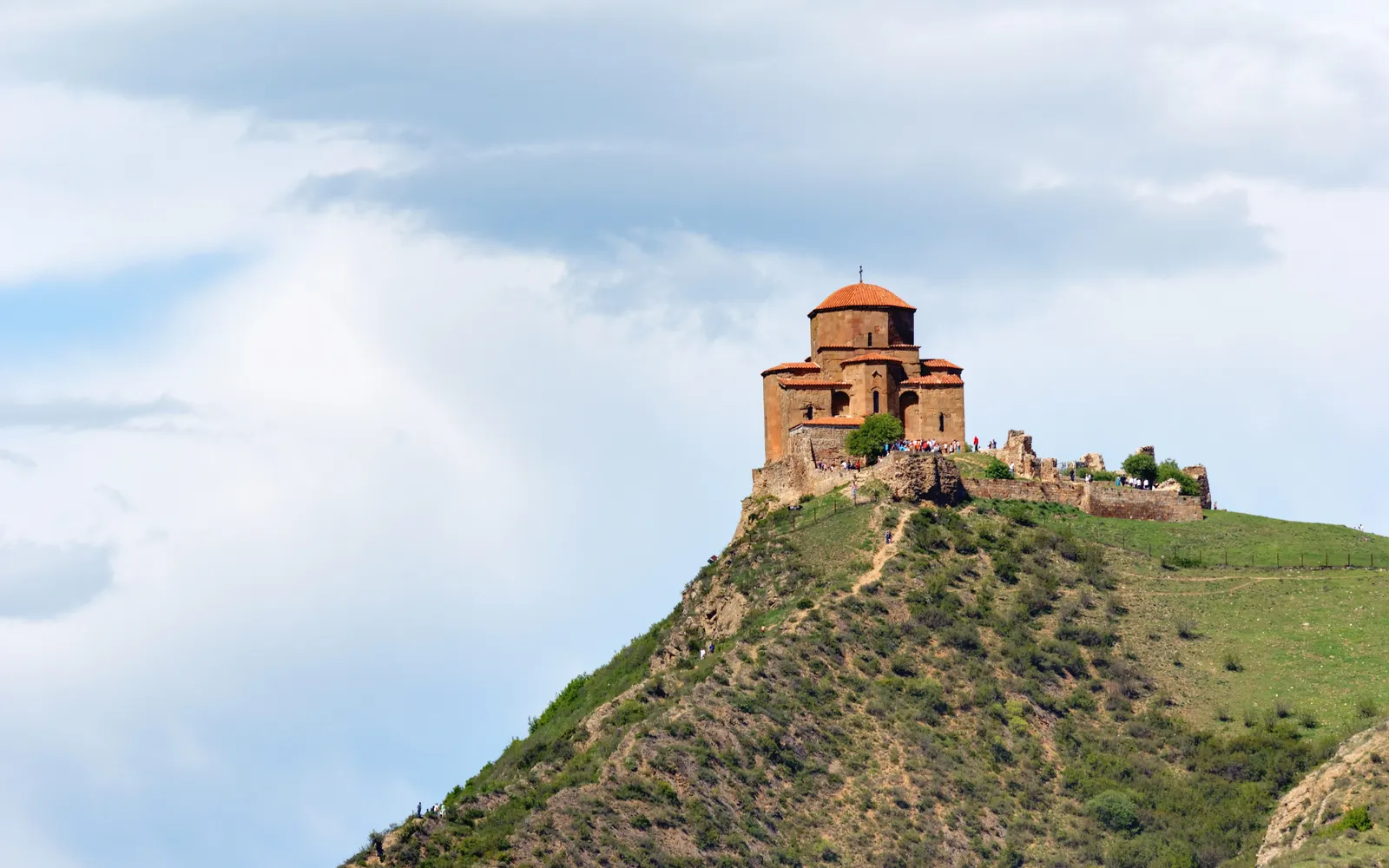
#2 Jvari Monastery
Georgia's most visually striking monastery and a national symbol that appears on the country's banknotes. Built in the 6th century on the cliff where Saint Nino planted a cross when she brought Christianity to Georgia, the site offers panoramic views across two rivers meeting far below — the same scene that Russian poet Lermontov described in his poem <em>Mtsyri</em>.
- A taxi from Mtskheta to the hilltop costs around 10–15 lari (negotiable). The road is steep and narrow — not practical to walk up.
- Early morning or after 4 pm, golden light pours into the valley and makes for the best photos.
- The monastery interior is very small. If a religious service is under way, wait outside and enjoy the view first.
 #3
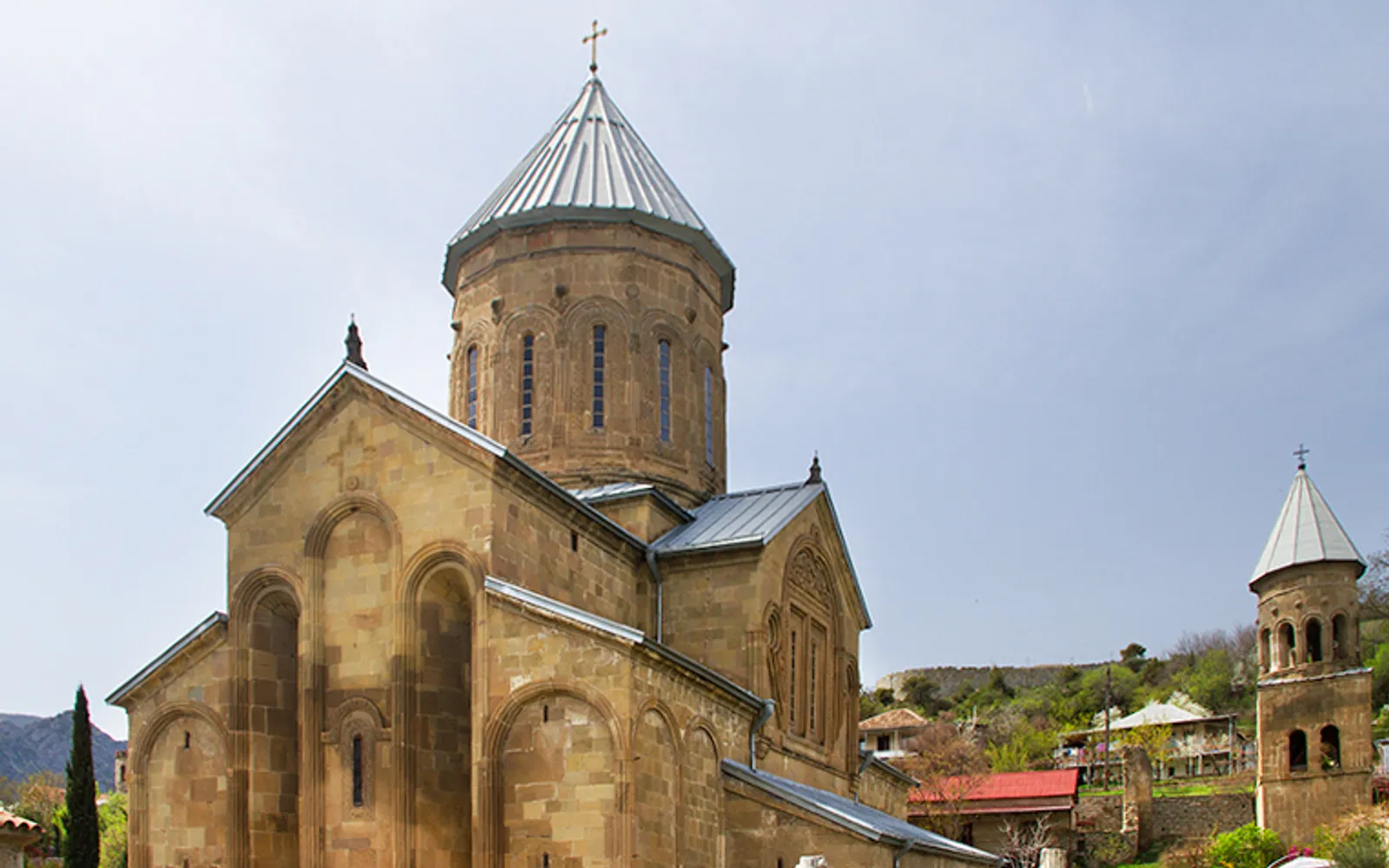
#3 Samtavro Monastery
A working nunnery built on the spot traditionally identified as the home of Saint Nino, who brought Christianity to Georgia in the 4th century. Inside are the tombs of King Mirian III and Queen Nana — the Georgian royals who made Christianity the national religion. The atmosphere here is noticeably quieter and more reverent than Svetitskhoveli. Georgian worshippers regularly come to pray and light candles.
- There is no entry fee, though a voluntary donation in the box by the church door is the respectful thing to do.
- The nuns here live and pray actively — photograph with care and avoid pointing a camera during services.
- The centuries-old sacred tree on the monastery grounds is deeply venerated by Georgians. Do not climb it or break off branches.
 #4
#4 Confluence of Mtkvari and Aragvi Rivers
A rare natural phenomenon: two rivers meet here and their waters — green Mtkvari and blue Aragvi — run side by side without mixing, leaving a visible colour boundary on the surface. Seen from Jvari Monastery above, this two-toned river is what makes Mtskheta look so striking in photographs. Along the riverbank there is a small park and, in summer, restaurants open with river views.
- The best view of this colour contrast is from Jvari Monastery on the hilltop — looking down is the clearest way to see both colours at once.
- If you walk down to the riverbank, late afternoon is pleasant and popular with locals.
- Swimming is not recommended — the current is strong, especially during the rainy season from April to June.
 #5
#5 Bebristsikhe Fortress
The ruins of a medieval fortress on the ridge above the town — once part of the defensive network protecting Georgia's ancient capital. Only sections of the stone walls remain, but the panoramic view from here across Mtskheta and the valley is wide and unobstructed. A good option for anyone who wants to escape the crowds around Svetitskhoveli and experience the site quietly.
- There are no trail signs leading up — ask a local or use Google Maps and search for Bebristsikhe.
- Wear shoes with good grip; the path up can be slippery when wet. Allow 20–25 minutes to climb.
- Very few visitors come here, so you can take in the view at your own pace without queuing.
 #6
#6 Mtskheta Old Town and Local Market
A compact old town you can cover completely in an hour. Small shops sell spices, Georgian wine, Churchkhela (walnut-stuffed grape candy), and local crafts. Several restaurants serve fresh Khachapuri, Mtsvadi (Georgian barbecue), and Khinkali (Georgian dumplings) at prices noticeably cheaper than Tbilisi. The general atmosphere is relaxed and genuinely welcoming.
- Fresh same-day Churchkhela is far better than the dried version — ask the vendor when it was made. Prices run about 3–5 lari per piece.
- Georgian amphora wine (Amber Wine or Qvevri Wine) is cheaper here than in Tbilisi. Most shops will let you taste before you buy.
- The market is at its liveliest on Saturday and Sunday mornings when locals bring in produce and home-made goods.
Where to stay in Mtskheta for this trip
A well-located hotel means less commuting and more sightseeing. Here are real, top-rated stays in Mtskheta — compare Agoda · Booking · Trip.com in one click.
Hameau Mukhrani
Affiliate links — we may earn a commission at no extra cost to you. Details
Mtskheta Wellpoint Arsukidze 48
Affiliate links — we may earn a commission at no extra cost to you. Details
Oasis Mtskheta
Affiliate links — we may earn a commission at no extra cost to you. Details
Villa Mosavali
Affiliate links — we may earn a commission at no extra cost to you. Details
Tours, tickets & activities in Mtskheta
Day tours, attraction tickets and travel essentials for Mtskheta — book ahead on Klook with mobile e-tickets.
Affiliate links — we may earn a commission at no extra cost to you.
Before You Pack
Mtskheta is worth visiting any time of year, but autumn (September–November) is a highlight — the leaves turn, the air cools, and the valley light is exceptional. A light dusting of snow in winter gives the site a completely different character. Budget at least 4–5 hours to cover all the main sights, including the climb to Jvari for the view and time for a Georgian meal in the old town on the way back.