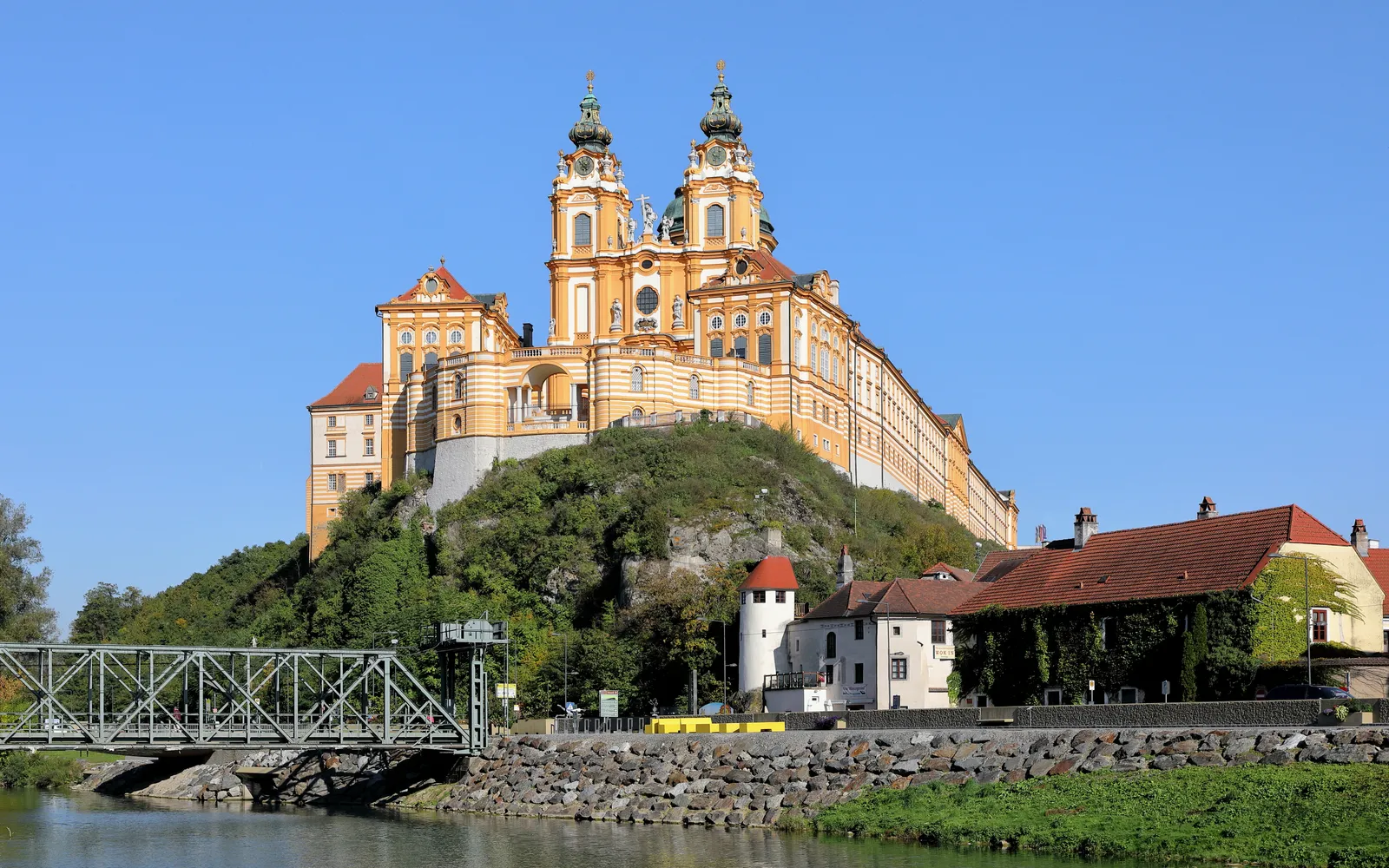
Melk is a small town that hides something huge beneath the golden roof of Melk Abbey. This Benedictine monastery, standing on a rocky cliff above the Danube, is one of the most beautiful pieces of Baroque architecture in the world. The Wachau Valley, which runs from Melk to Krems, is full of vineyards, old castles and compact villages where time stands still. Melk makes a superb day trip from Vienna, but if you stay a night you'll get a much quieter, more natural feel for the place.
 #1
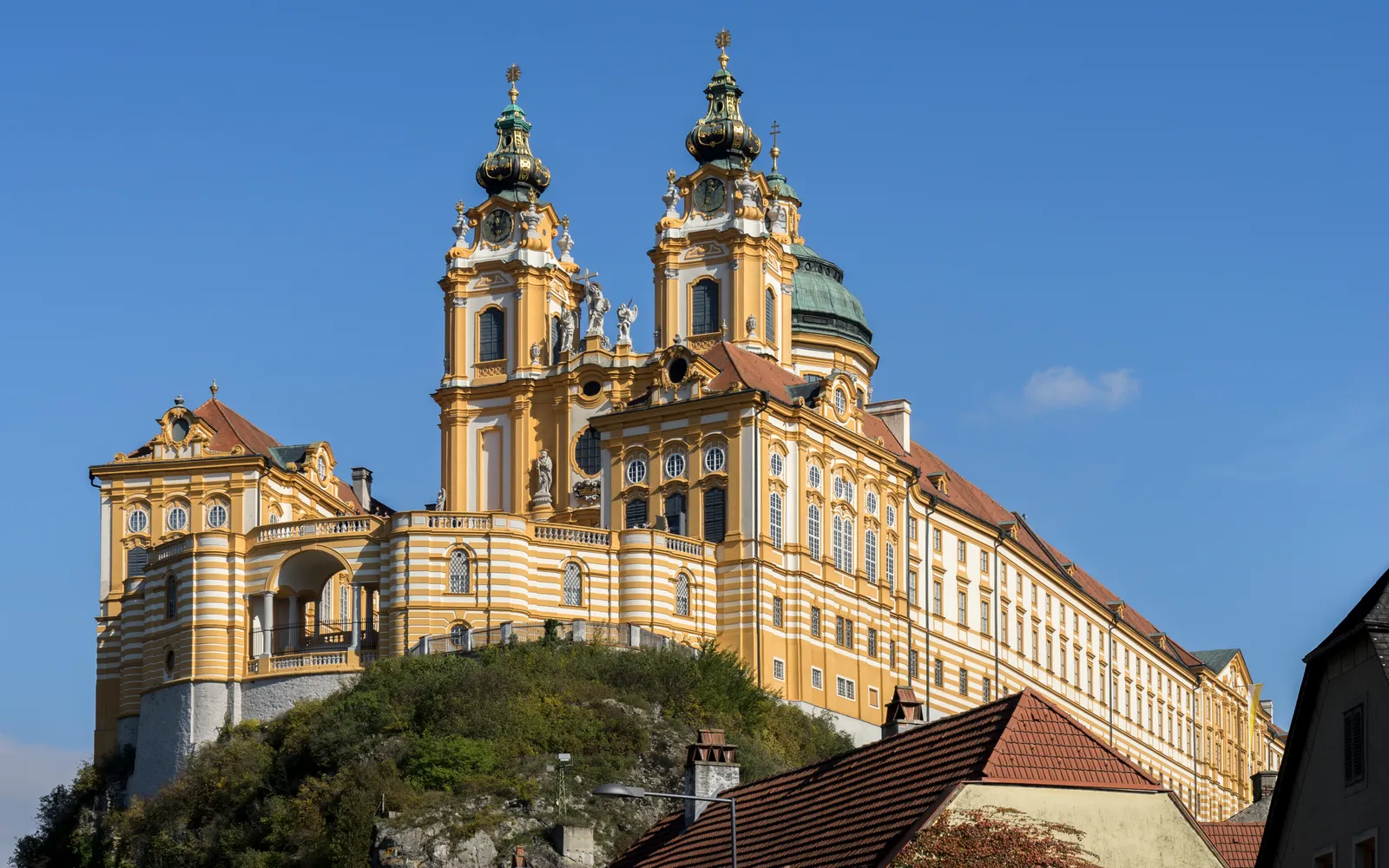
#1 Melk Abbey
The heart of Melk and one of the longest continuously living Benedictine abbeys in the world. Founded in 1089 and rebuilt in grand Baroque style in the 18th century, its library holds more than 100,000 ancient manuscripts, the gleaming gold Marble Hall has a ceiling painted by one of the leading artists of the era, and the Belvedere terrace gives you the finest Danube view in Austria. Millions of travelers come every year and nobody walks away disappointed.
- Open 9:00 a.m.-5:30 p.m. (March-November); entry is 16 euros for adults, including a guided tour.
- Go early, 9:00-10:00 a.m., before the group tours from Vienna pour in mid-morning — the library and Marble Hall are far calmer then.
- The Belvedere terrace outside the abbey is free to visit, and the Danube view is gorgeous even without a ticket inside.
 #2
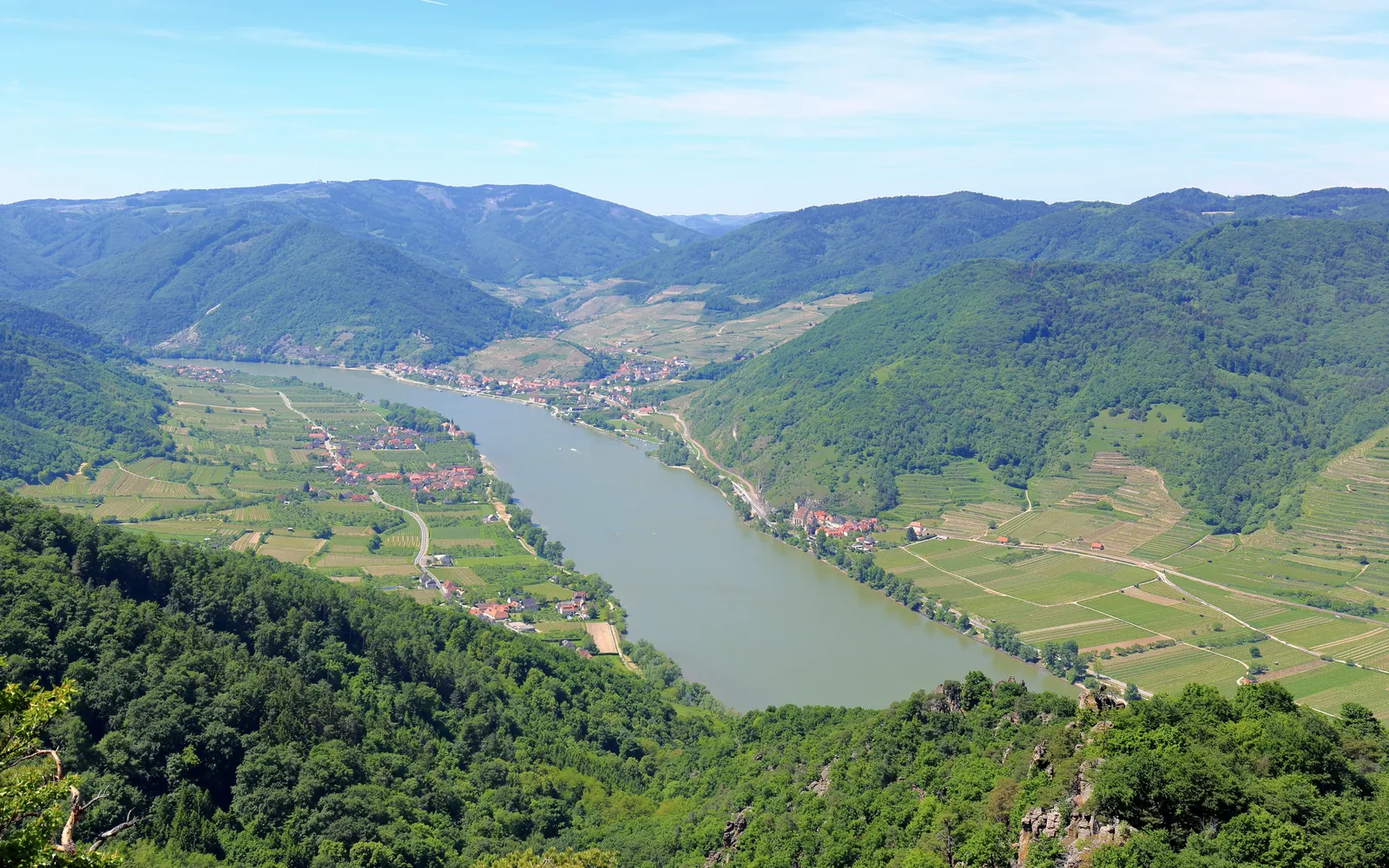
#2 Wachau Valley
A UNESCO World Heritage site more beautiful than you'd expect. The Wachau Valley is the stretch where the Danube flows between medieval terraced vineyards, hilltop castles and compact stone villages that look like they stepped out of a fairy tale. The DDSG river cruise from Melk to Krems takes 1.5-3 hours through scenery that keeps changing; in autumn the vineyards turn red and gold so beautifully it's almost hard to breathe.
- DDSG boat tickets are 26-32 euros one way for Melk-Krems; book online ahead in summer.
- Sit on the upper deck (if the weather's good) for a fuller view of the valley, and bring a windbreaker — it gets breezy.
- Cruising one way and returning by the Krems-Vienna train is the route most travelers favour.
 #3
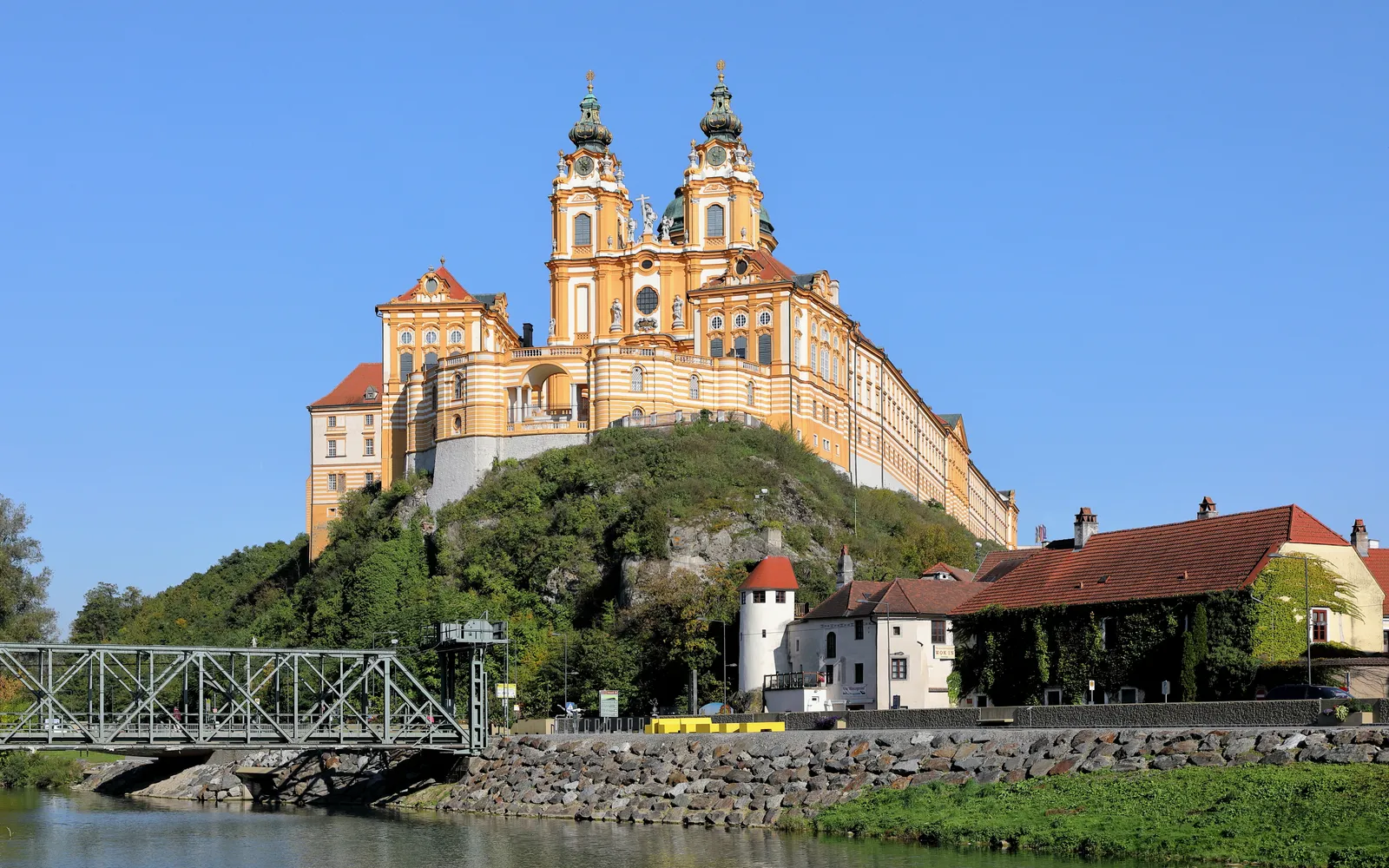
#3 Melk Old Town
The town of Melk itself has the kind of charm Austria's small tourist towns always manage to offer. Pastel old buildings line narrow streets, bakeries fire up apricot pastries from early morning, and there are pharmacies and shops selling local Grüner Veltliner wine. At Rathausplatz there's a fountain in the middle of the crossroads and benches where you can sit and watch daily life. The town church just below the abbey has frescoes worth a look, even if you don't buy a ticket into the abbey.
- You can walk all of Melk in 30-40 minutes — no need to rush; head down from the abbey and stop at the pastry shops along the way.
- Most Wachau wine shops in town offer a free tasting before you buy — Grüner Veltliner and Riesling are the region's signature wines.
- Melk is only busy during the day, 10:00 a.m.-4:00 p.m.; evenings are so quiet that some shops close early.
 #4
#4 Dürnstein Castle and Village
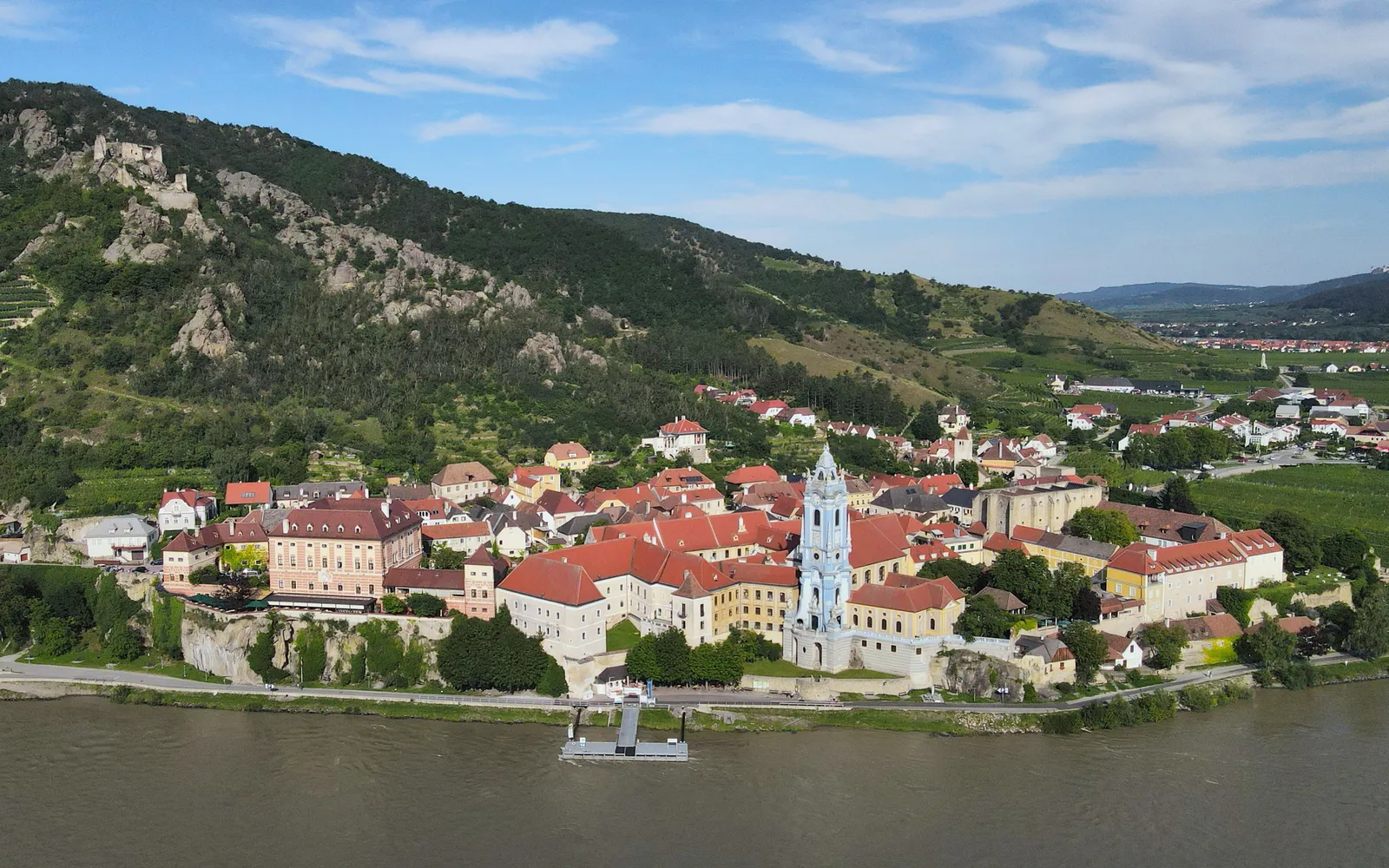
The prettiest village in the Wachau and one of the most beautiful riverside villages in Europe. It's famous as the place where Richard the Lionheart, the English king captured in 1192, was held prisoner. The castle ruins on the hilltop take 20-30 minutes to climb and reward you with a 360-degree view of the Danube and the Wachau Valley that's beyond words. The village below has a striking blue-towered church and several good wine shops.
- Wear sturdy shoes to climb to the castle — some sections are steep and rocky; the round trip up and down takes 50-60 minutes.
- Stop for a Riesling at a Heuriger (a farm wine tavern) in the village before you leave — it's cheaper than in town.
- Dürnstein makes a good stop during the Wachau cruise; DDSG boats halt here for about 30-45 minutes before moving on.
 #5
#5 Wachau Vineyards and Heuriger Wine Taverns
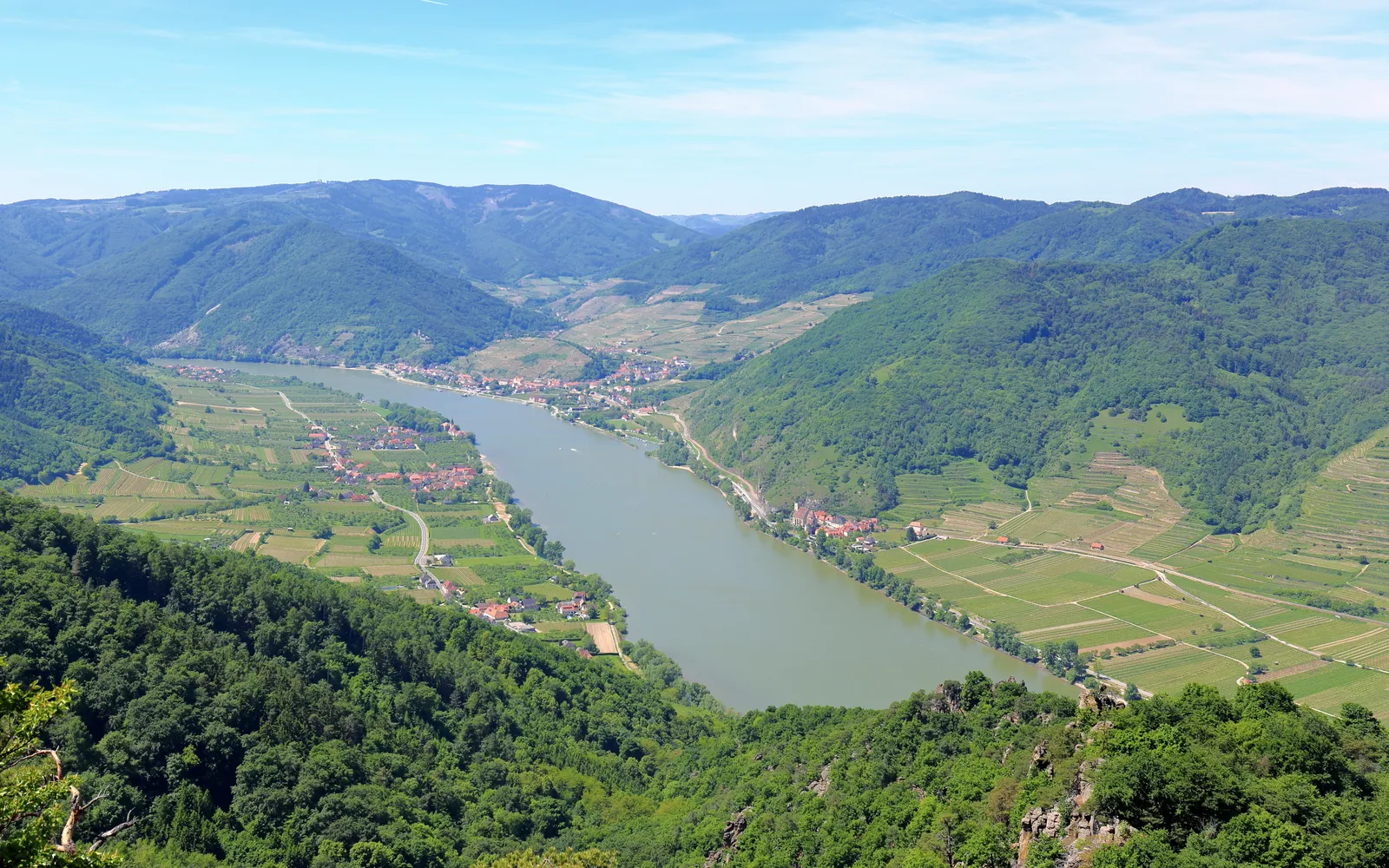
The Wachau Valley produces the best white wine in Austria, especially Grüner Veltliner and Riesling grown on rocky soil and very steep cliffs. A Heuriger is a farm-style wine tavern that serves fresh wine straight from the barrel alongside simple food in a homey setting; a pine-branch sign hung out front means it's open today. It's a traditional Austrian custom the locals still keep alive fiercely, and nothing quite matches sitting with a glass of local wine looking out over the vineyards in the evening.
- Look for the Buschen pine-branch sign hung in front of a house — it means that tavern is open; no sign means closed.
- Wachau wine comes in three levels — Steinfeder (light), Federspiel (medium) and Smaragd (full-bodied, the best) — tell the staff which level you want.
- The villages of Weissenkirchen and Spitz have several good Heuriger and fewer crowds than Dürnstein.
 #6
#6 Melk Abbey Garden and Danube Viewpoint
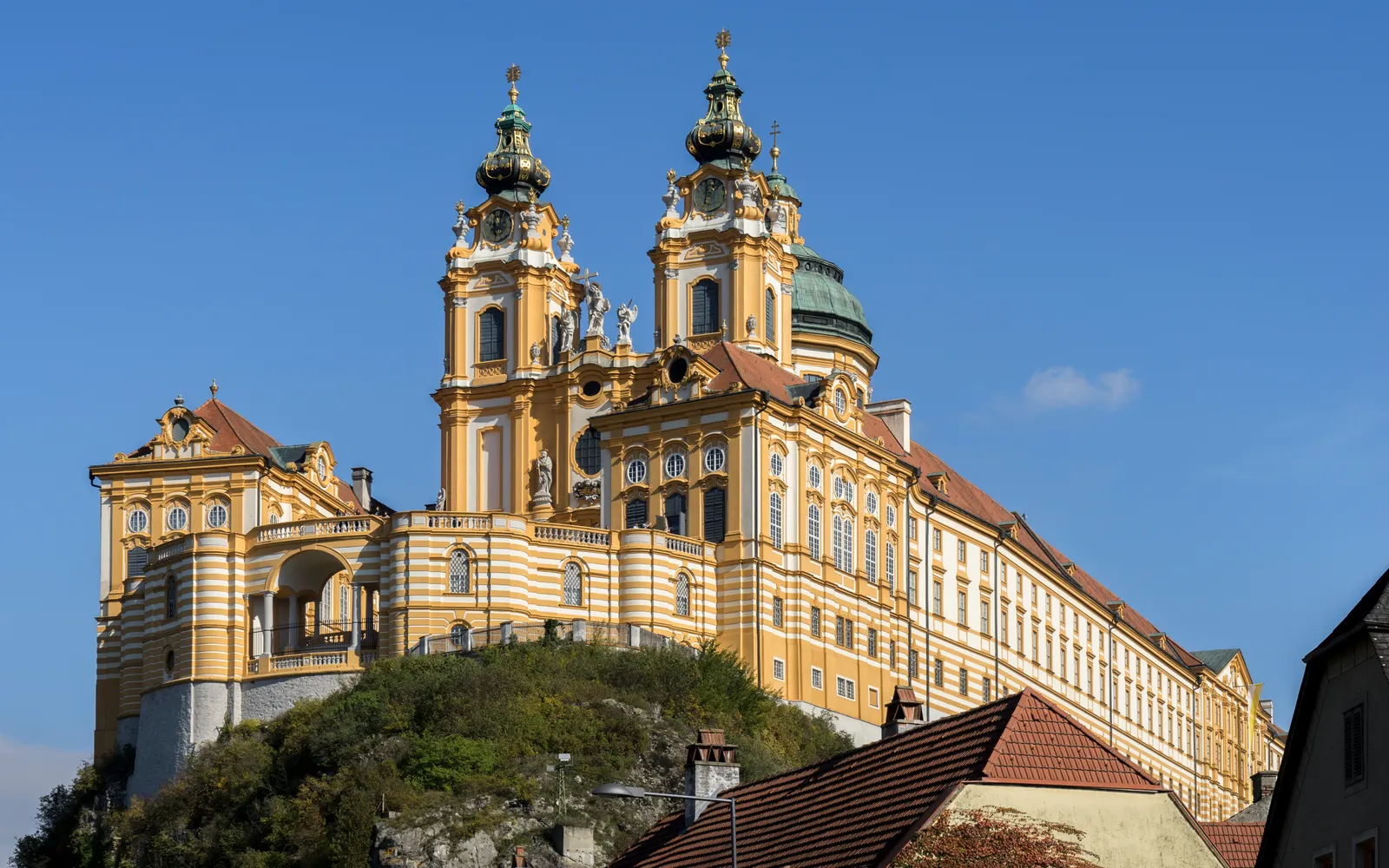
The Baroque garden behind Melk Abbey is the part travelers tend to skip, but it's actually very beautiful and noticeably quieter than inside. The garden is laid out in symmetrical 18th-century French style, with a pond, statues, clipped trees and a small wooden pavilion to sit and rest in. The terrace corner looks down on the Danube and the wide Wachau Valley — a photo spot different from the front of the abbey that everyone shoots.
- The garden is included in the 16-euro abbey ticket, or you can buy a garden-only ticket for 6 euros (no entry to the buildings).
- From May to June the garden flowers are in full bloom — the prettiest of the year.
- Rest on a garden bench after touring the abbey, before heading down into town — it's the quietest, best moment of the trip.
Where to stay in Melk for this trip
A well-located hotel means less commuting and more sightseeing. Here are real, top-rated stays in Melk — compare Agoda · Booking · Trip.com in one click.
Hotel Restaurant zur Post
Affiliate links — we may earn a commission at no extra cost to you. Details
Pension l'Etage
Affiliate links — we may earn a commission at no extra cost to you. Details
Hotel Wachau
Affiliate links — we may earn a commission at no extra cost to you. Details
Wachauerhof Melk
Affiliate links — we may earn a commission at no extra cost to you. Details
Tours, tickets & activities in Melk
Day tours, attraction tickets and travel essentials for Melk — book ahead on Klook with mobile e-tickets.
Affiliate links — we may earn a commission at no extra cost to you.
Before You Pack
Melk is at its most beautiful in spring (April-June), when the Wachau vineyards are lush and the apricot blossoms are out, and in autumn (September-October), the grape harvest with the warmest atmosphere of all. Plan to arrive early to see the abbey before the group tours come, then carry on with a Wachau cruise in the afternoon.