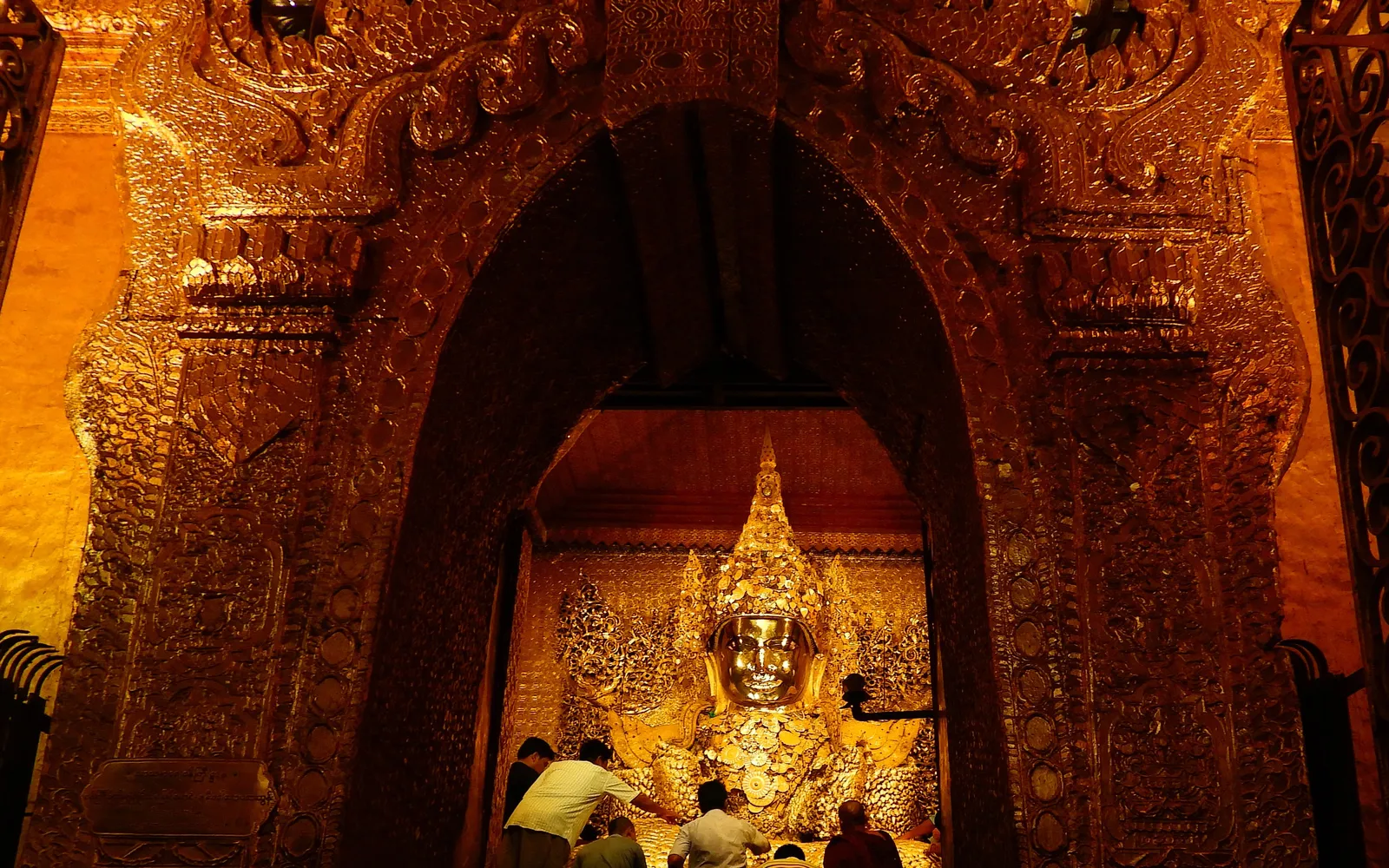
Mandalay food has a character entirely its own — distinct from Yangon and every other city in Myanmar. Mont Di is the breakfast Mandalay residents have eaten since the era of the Burmese kingdom, and tea shops that have been open for decades are the soul of this city. Burmese flavors lean on vegetable oil, crispy fried garlic, and gentle spices — less fiery than Thai food, but with a depth and roundness that catches you off guard.
 #1
#1 Mandalay Mont Di (Mohinga Noodles)
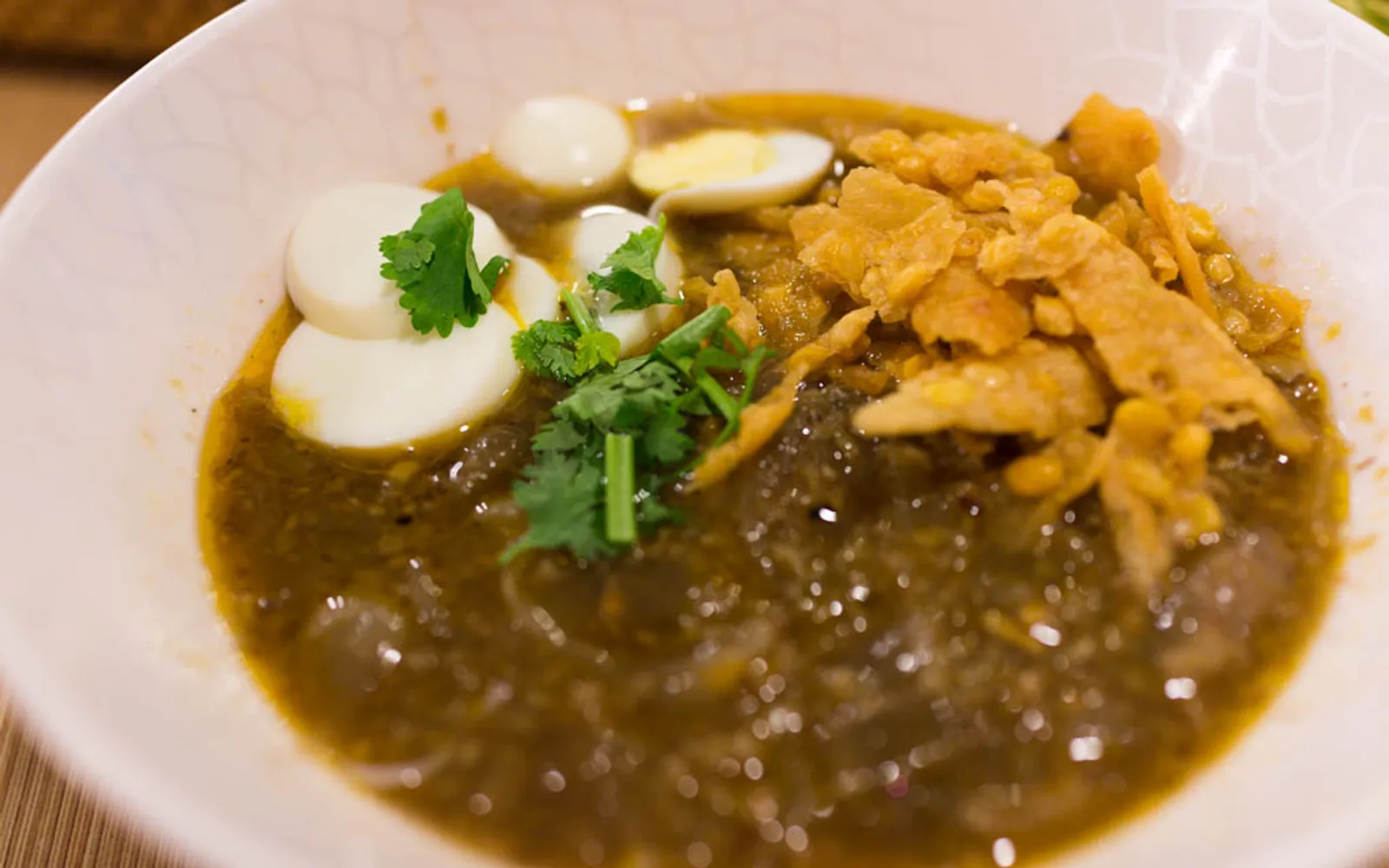
Mandalay-style Mont Di has a personality distinct from Yangon Mohinga. The freshwater fish broth is lighter, with thinly sliced banana stem, pickled bamboo shoots, and banana blossom folded in — giving it a mild sweetness and real roundness. The thin rice noodles are silky and soft, finished with fish sauce chili, crispy fried shallots, and a squeeze of lime to taste. This is a breakfast Mandalay people have eaten for hundreds of years, and its popularity has not shifted. It is cheap and found on every corner.
- Order Tamin Pyaw (rice porridge) alongside your Mont Di at the same shop — together they make a complete Burmese breakfast
- Add lime juice and dried chili flakes yourself to taste; every table keeps a full set of condiments ready
- Shops open for more than 20 years often have a house fish broth simmered with root vegetables through the night — the flavor is noticeably deeper than newer spots
 #2
#2 Tea Leaf Salad (Lahpet Thoke)
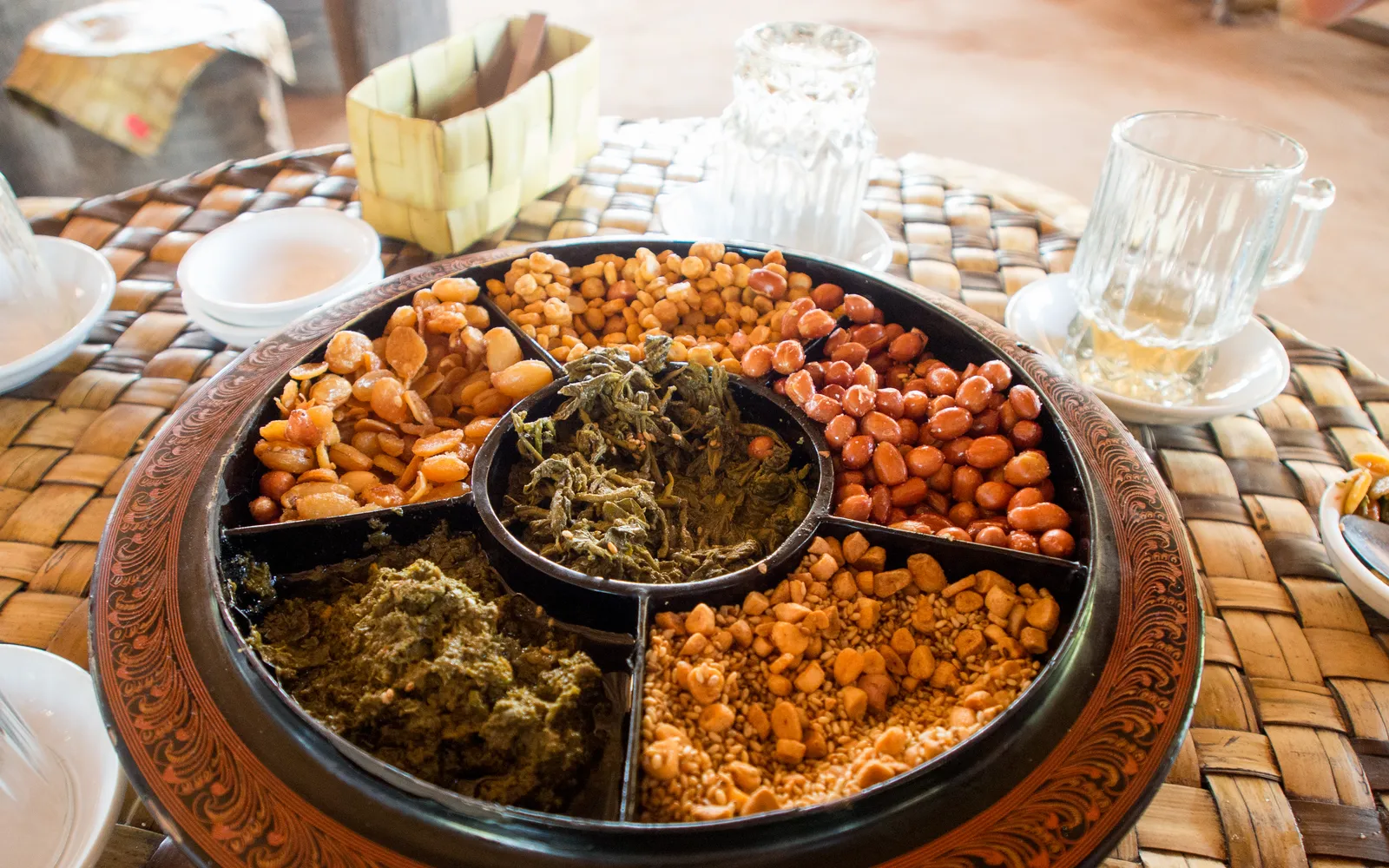
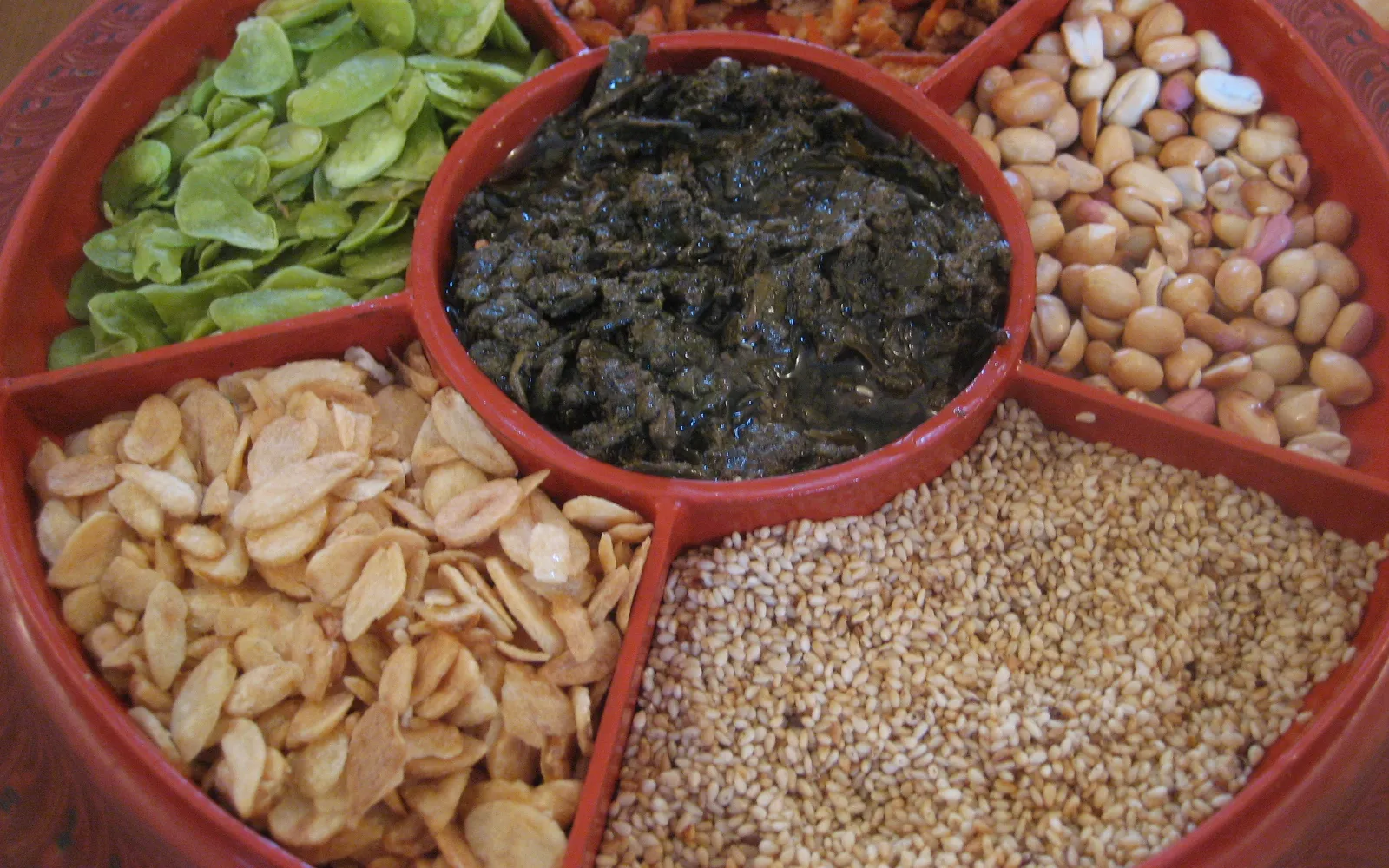
There is nothing quite like this dish anywhere else on earth. Fermented tea leaves grown on Shan highland farms are eaten as a salad, tossed with fried peanuts, fried soybeans, white sesame, crispy garlic, shredded cabbage, tomato, and lime juice. The flavor hits sour, gently bitter, faintly salty, and carries several textures in every bite. Burmese people regard Lahpet Thoke as one of Myanmar's three great treasures — alongside rice and gold. It is also one of the most popular things to bring home.
- Good shops bring the salad tray unmixed to the table — combine all the ingredients yourself before eating for the most balanced flavor
- Vacuum-packed fermented tea leaves are sold at Zegyo Market to take home; prices are far lower than in tourist-facing shops
- If you are not used to the bitterness of tea leaves, ask for a milder portion first — most shops will adjust the ratio
 #3
#3 Burmese Coconut Chicken Curry
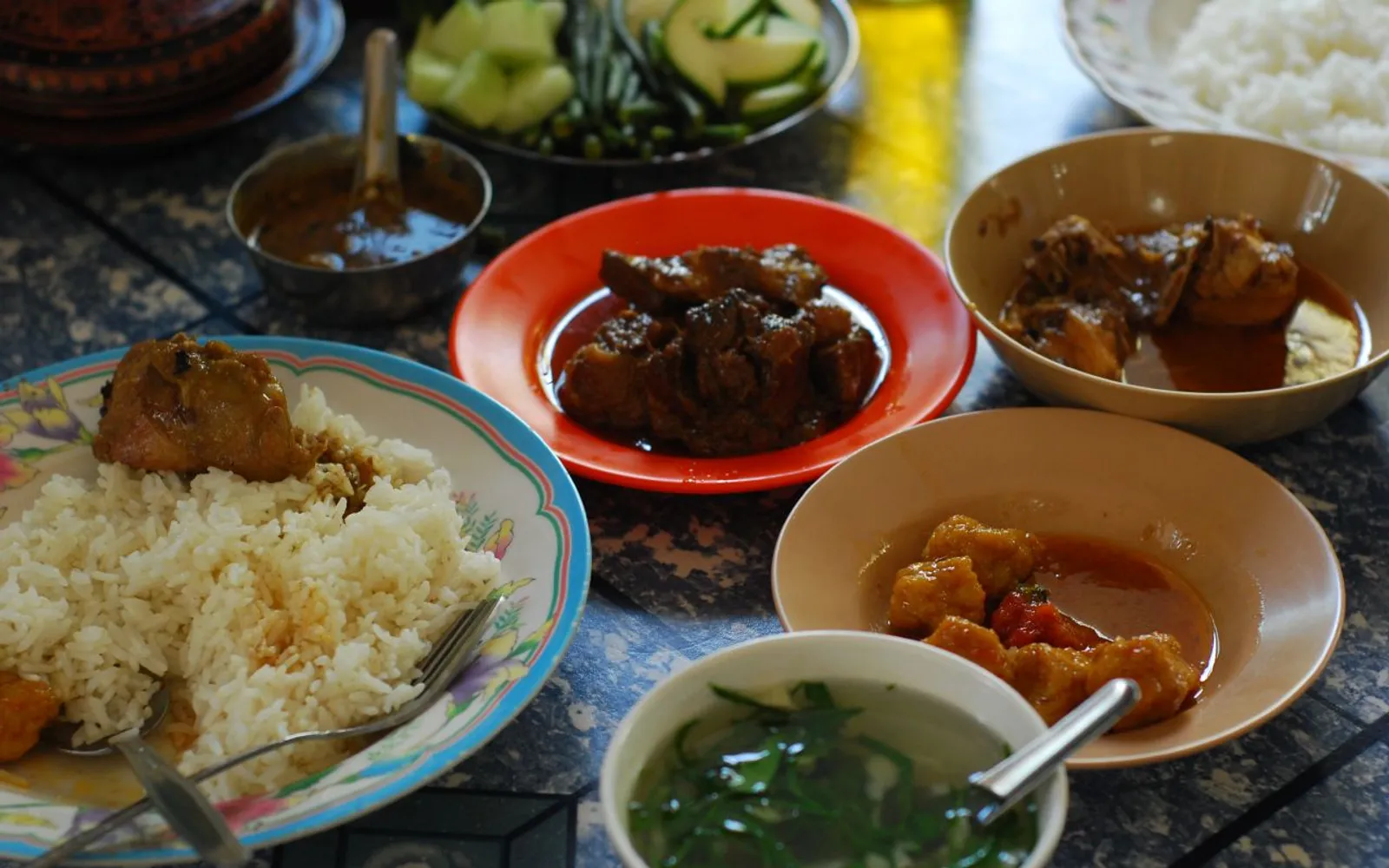
Burmese curry is clearly different from Thai curry. It uses far less coconut milk and builds its base from onion, garlic, ginger, and sesame oil — lighter and rounder as a result. The Mandalay version of coconut chicken curry has a gentle sweetness from young coconut, minimal heat, and a fragrance of turmeric and galangal. It comes with a clear vegetable soup, pickled vegetables, and white rice — a complete, affordable meal. Good curry rice shops line up large pots in front so you can see and choose.
- Burmese curry shops serve buffet-style — choose from several pots lined up at the front. Arrive early for the freshest selection.
- Burmese curries often carry more oil than Thai ones. If you prefer less, tell the shop: Si-tha na-an (less oil, please).
- Try ordering the pork curry or fried fish curry alongside to compare — each pot uses a noticeably different spice profile
 #4
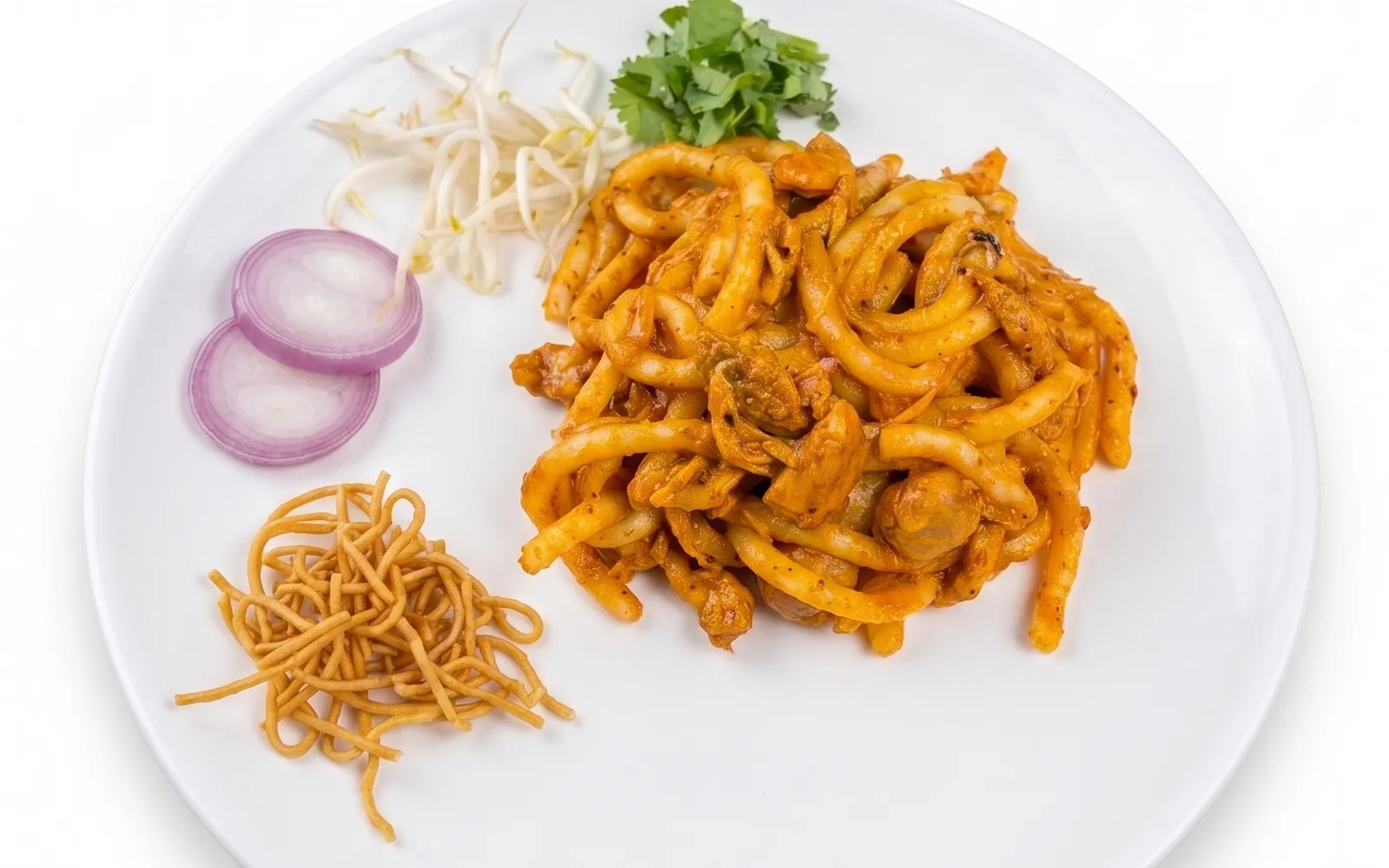
#4 Shan Noodles
The noodles of the Shan (Tai Yai) people, now a staple across Mandalay. These are round, plump, slightly swollen rice noodles eaten either dry — tossed in sesame oil, soy sauce, and fried minced pork — or in a clear, mellow broth with yellow tofu and fresh vegetables. The flavor is light and nutty, with no heat, and suits almost everyone. Mandalay Shan noodles have a different texture from the Yangon version because they are made fresh from local rice flour each day. Extremely cheap and available every morning.
- Order dry (Da-ta) — the flavor is more concentrated than the soup version and closer to how Shan people traditionally eat it
- Ask for extra La-phet (fermented tea leaves) as a topping; the mild sourness cuts through the richness of the sesame
- Shops that make their own noodles fresh each morning produce noticeably softer noodles — look for strands that are bright white and not dry
 #5
#5 Burmese Milk Tea (Laphet Yay)
The tea shop culture is at the heart of Burmese social life. Laphet Yay is brewed from strong red tea, blended with sweetened condensed milk and fresh milk — richer and sweeter than Thai milk tea, with a more pronounced tea aroma. Locals drink it in tea shops where they sit, rest, and talk throughout the day. Some long-running Mandalay shops have been open for decades, passing down their tea recipes from generation to generation. Sitting in one of these shops is the clearest window into everyday Burmese life.
- Order Chin Yay (iced tea) or Pan Yay (hot tea) depending on the weather — Pan Yay is better on a cool morning
- Pair it with Pa-la-ta (crispy pan-fried flatbread) or fried samosas — the classic Burmese breakfast combination
- Price: 200–500 kyat per glass. You can sit as long as you like; Burmese tea shops never rush their customers.
 #6
#6 Mohinga
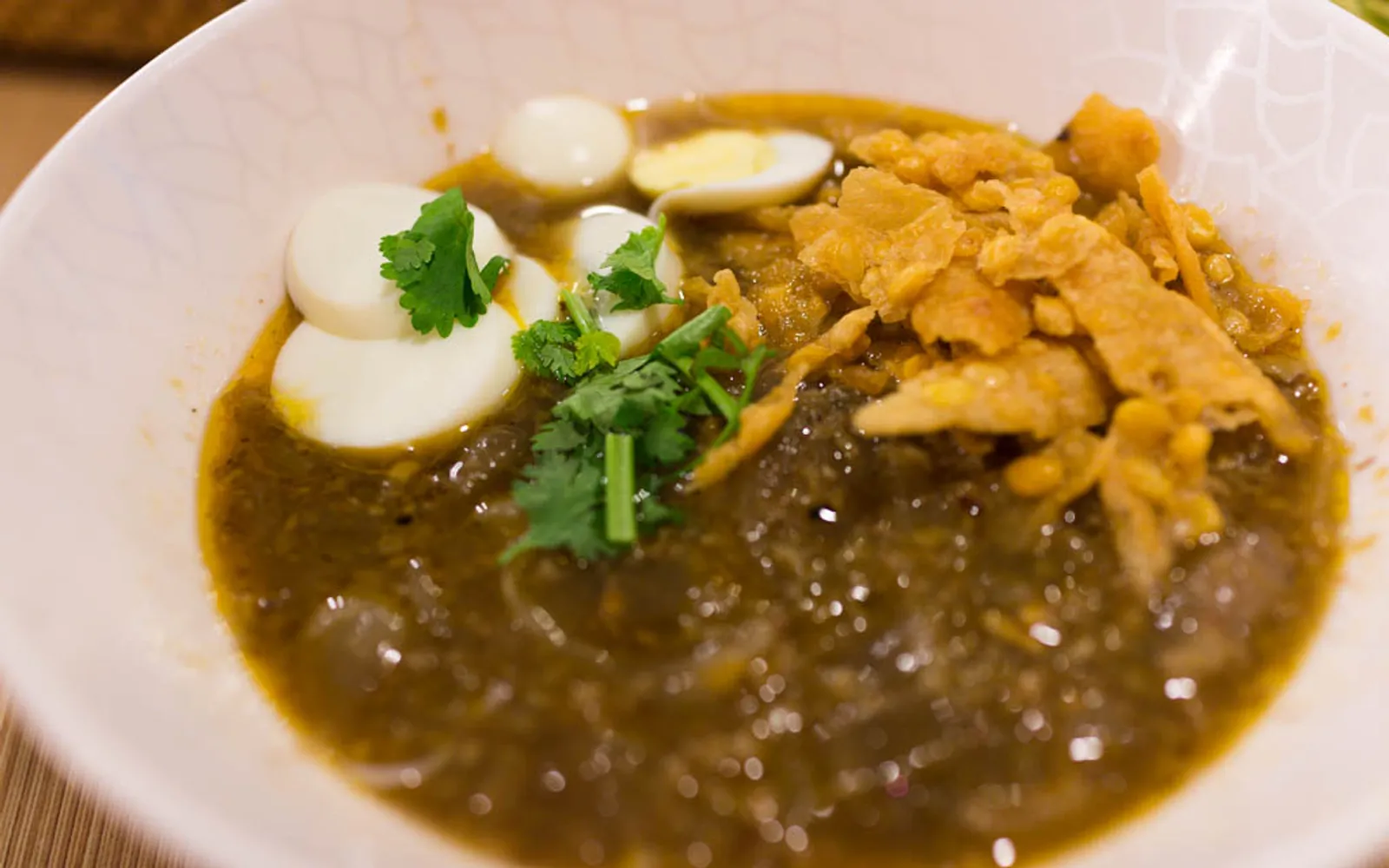
Myanmar's national dish — the one every Burmese person has grown up eating. Fresh fish is simmered with lemongrass, ginger, onion, and young coconut water, then thickened with bean flour or rice flour into a silky broth. It is served with thin rice noodles, a boiled egg, sliced banana stem, crispy fried fritters, and dried chili flakes. Mandalay's version uses freshwater fish from the Irrawaddy River — sweeter than sea fish — and the broth is denser than the Yangon style that most visitors know.
- Add Burmese fish sauce (Ngapi Yay) and dried chili flakes before tasting — they shift the flavor noticeably
- The crispy fritters floating on top need to be eaten quickly before they go soft; the crunch is the best part
- Street stalls selling Mohinga in the morning charge 300–500 kyat and are just as good as sit-down restaurants; vendors typically start their broth at 4 a.m.
Tours, tickets & activities in Mandalay
Day tours, attraction tickets and travel essentials for Mandalay — book ahead on Klook with mobile e-tickets.
Affiliate links — we may earn a commission at no extra cost to you.
Before You Pack
The best eating in Mandalay is almost always in the tea shops and morning markets packed with locals. If you see small plastic tables filling up from 6 a.m., with the smell of garlic frying and steam rising — that is exactly where to stop. Cheap, genuinely good, and the closest thing to everyday Burmese life you will find.