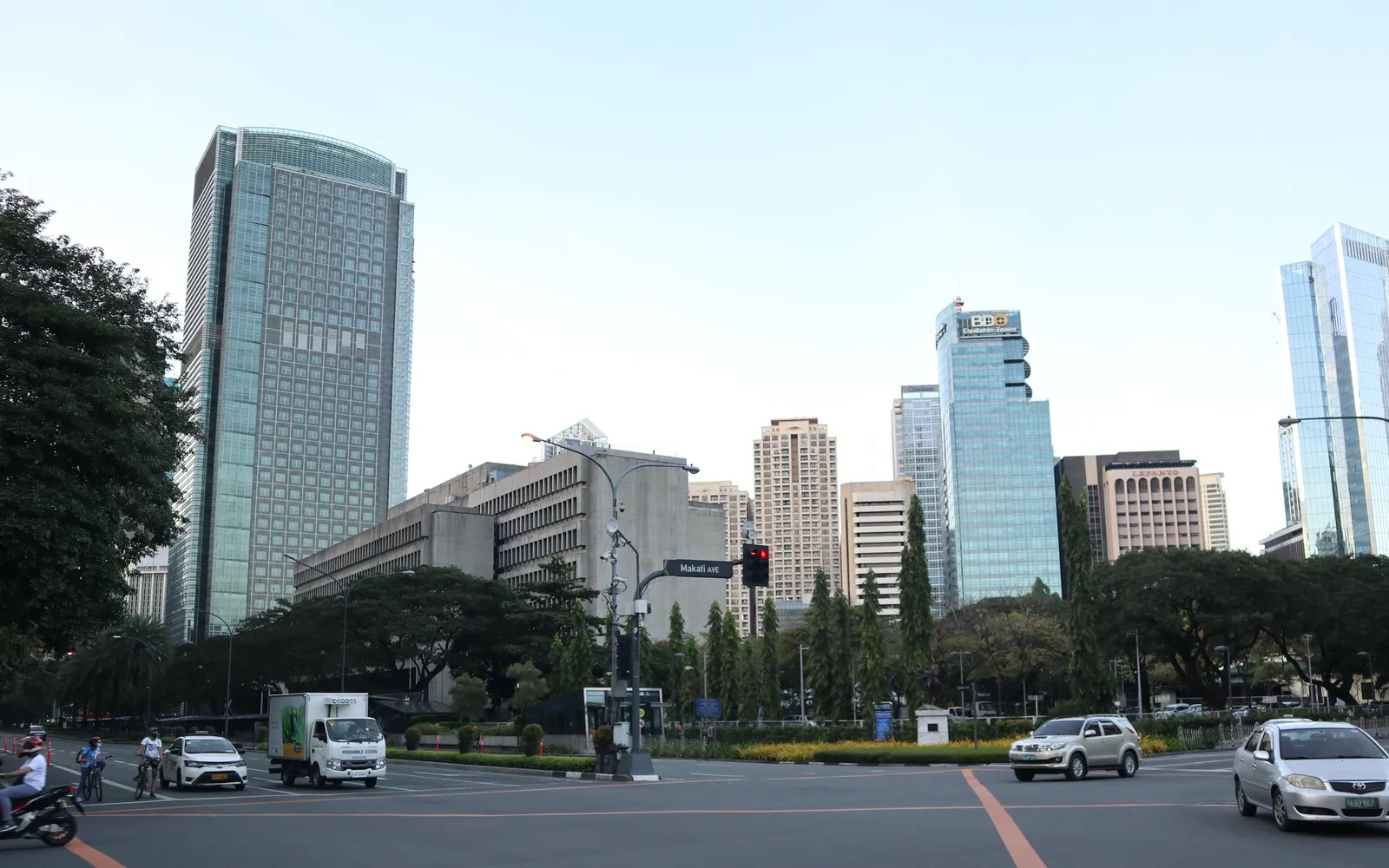
Makati is the easiest place in the Philippines to fall in love with Filipino food. From Toyo Eatery — a Michelin Star fine-dining room — to the open-air sisig stalls on Poblacion sizzling on cast-iron pans, the range here is hard to match. Filipino food shares some flavor logic with other Southeast Asian kitchens but has a character entirely its own. Start with these 6 dishes and you will understand why Filipinos are so proud of what they cook.
 #1
#1 Philippine Adobo
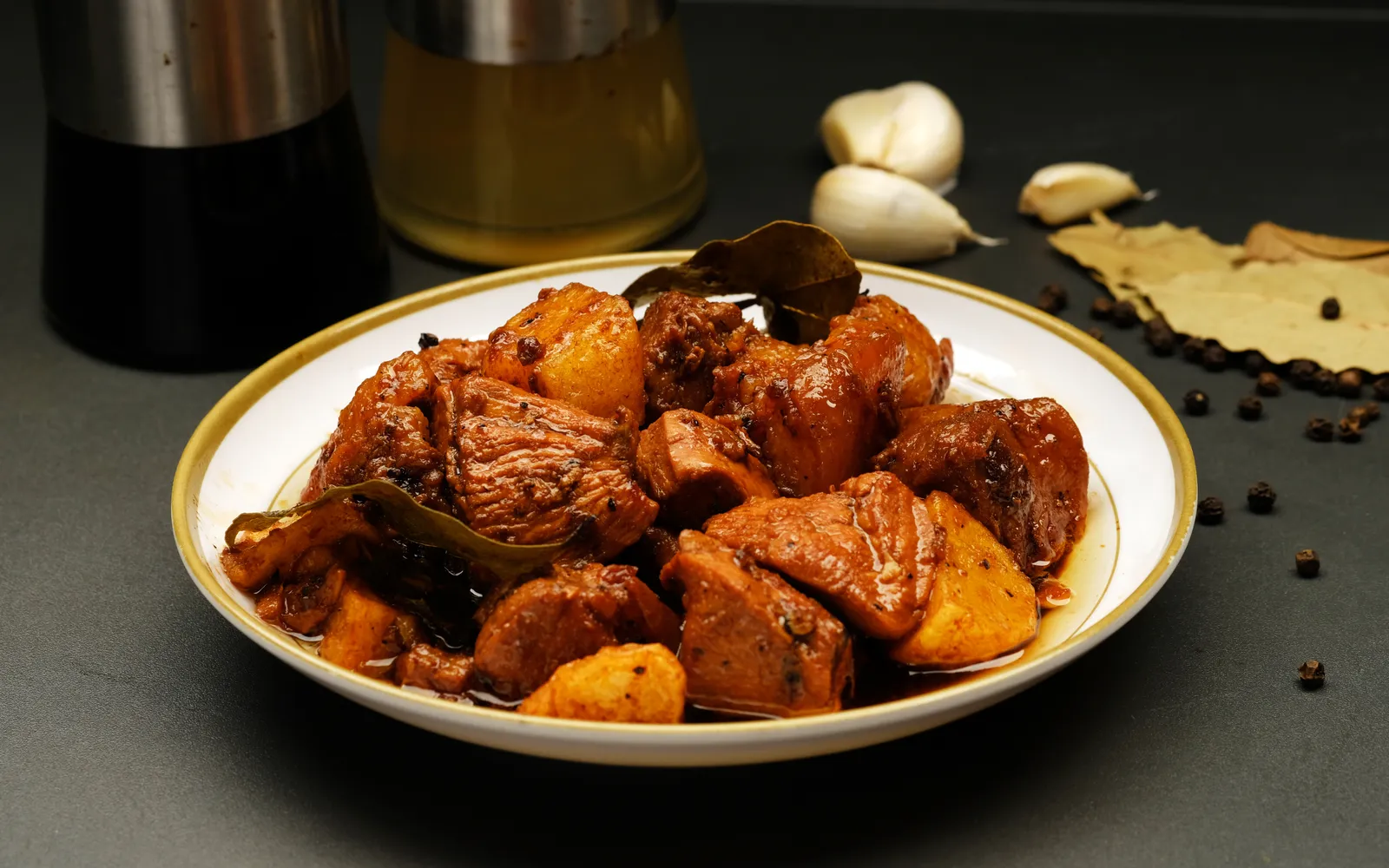
Adobo is the dish Filipinos love most — the country's unofficial national dish. Chicken or pork is marinated and slow-braised in a sauce of vinegar, garlic, bay leaf, black pepper, and soy sauce, producing a sour-salty-aromatic combination in a single bowl. The cooking method was borrowed from Spain, but the ingredients and the smell are distinctly Filipino. In Makati, try Sentro 1771 inside Greenbelt 5 or Aristocrat near the Ayala district, which has been making traditional adobo for decades.
- Adobong puti (white adobo, no soy sauce) is the oldest version — sharper and more pungent. Order it if you spot it on the menu.
- Plain white rice that soaks up the adobo sauce is the best pairing. Do not skip it.
- Adobo kept in the fridge overnight is actually better — the sauce penetrates the meat more deeply as it sits.
 #2
#2 Sinigang
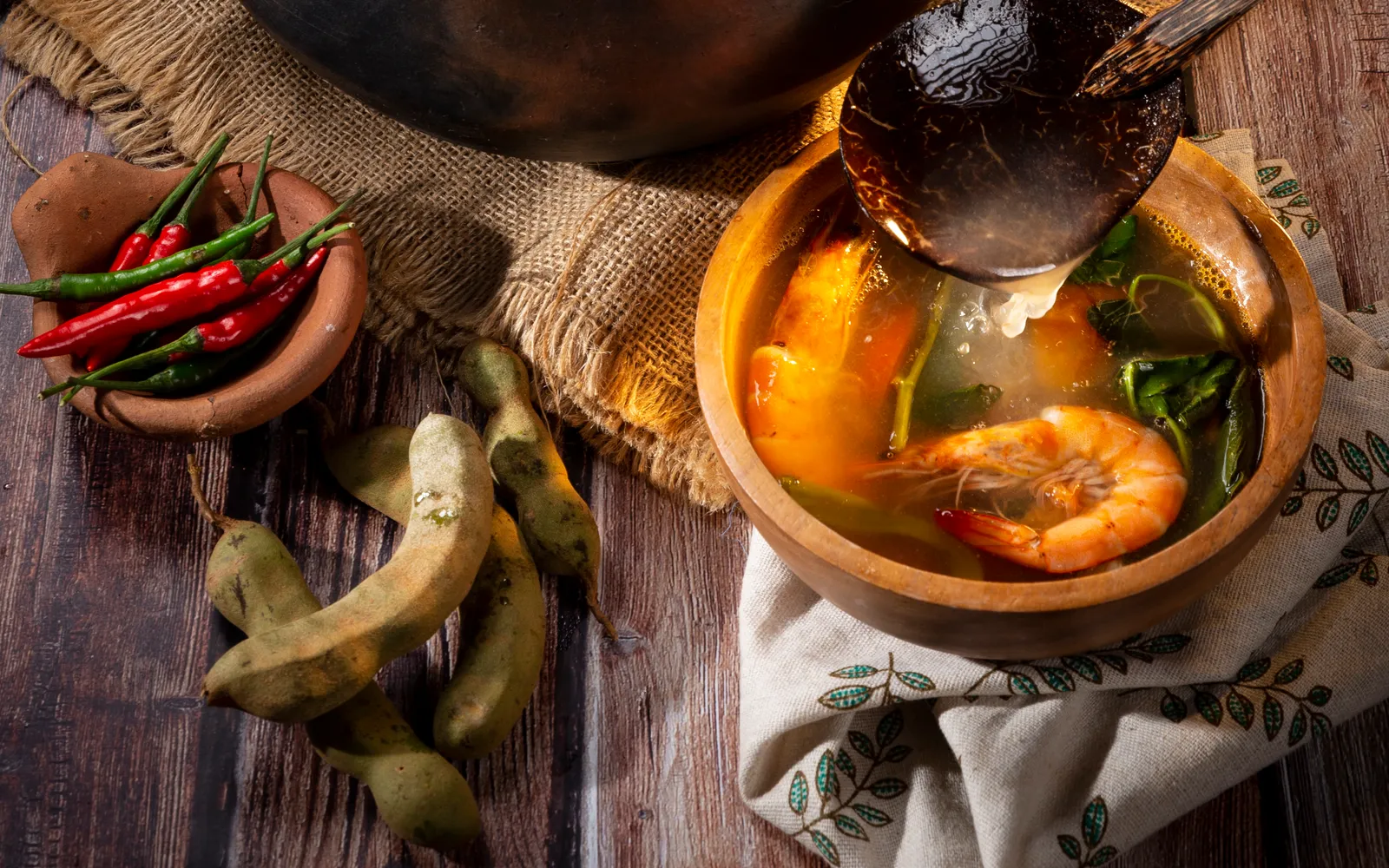
Sinigang is a sour soup built around tamarind (sampalok) or another sour fruit as the base, cooked with pork, shrimp, or fish and a generous load of vegetables. The flavor is sour and salty — warming and sharp — a little like tom yum in spirit but clearer and more vegetable-forward. Sinigang appears in every Filipino restaurant menu and is widely considered the country's national soup. In Makati, Mesa in Greenbelt 5 is known for its sinigang sa miso (sinigang with fermented soybean paste), which adds another layer of depth to the broth.
- Order a separate bowl of rice and use it to absorb the sinigang broth — this is how Filipinos always eat it.
- Sinigang na hipon (shrimp sinigang) usually has a cleaner, brighter sourness and is a good option if you prefer lighter flavors.
- If you want more tartness, ask for extra tamarind. Most restaurants will adjust on request.
 #3
#3 Lechon
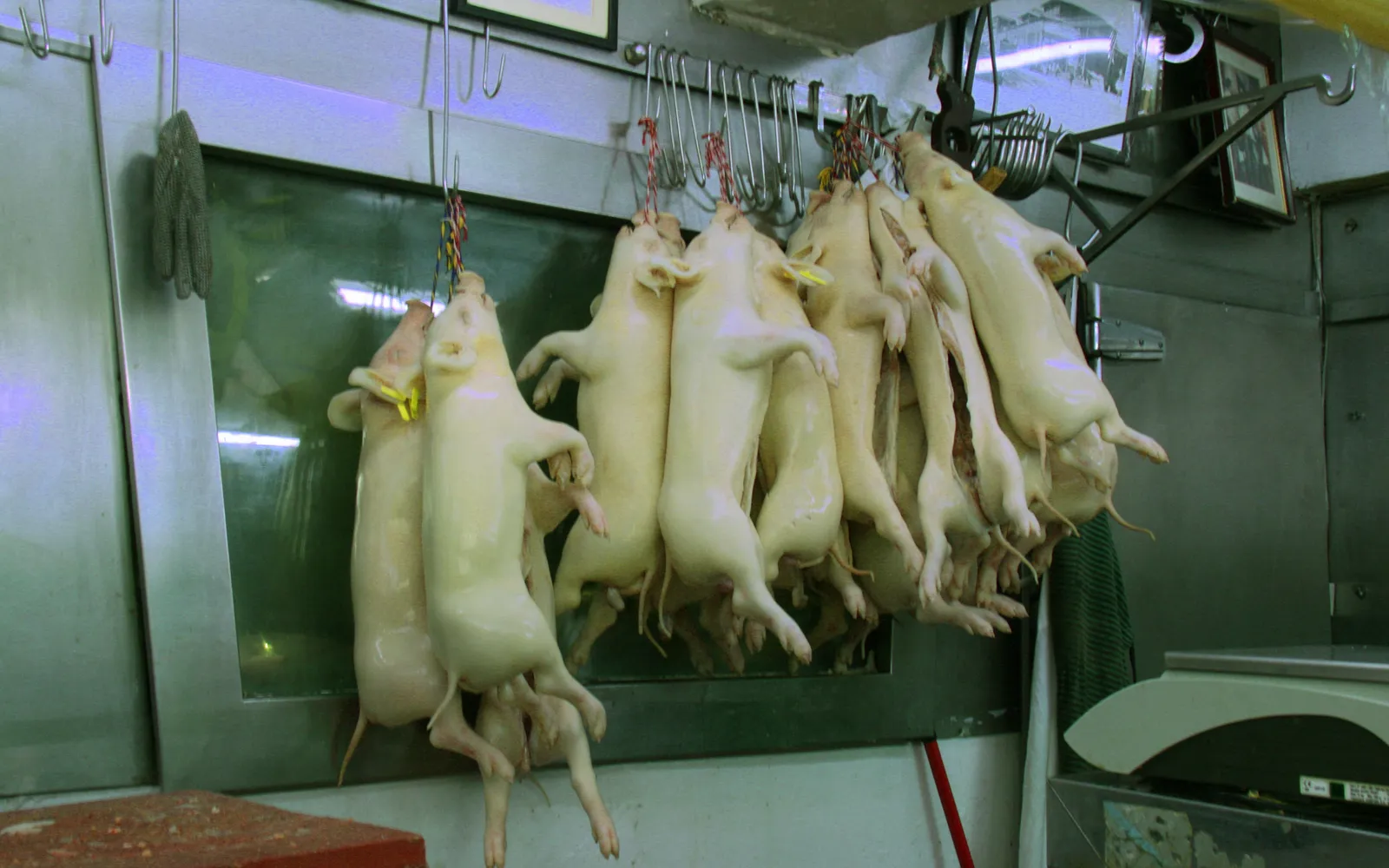
Lechon is a whole pig roasted over charcoal and wood for several hours until the skin is shatteringly crisp and the meat stays juicy. It is the centerpiece of Filipino celebrations — weddings, fiestas, and family gatherings all revolve around it. Anthony Bourdain once called Cebu's lechon the best pig he had ever eaten anywhere. In Makati, Mesa is known for its Crispchon — a modern-style crispy pork roast served two ways. Lydia's Lechon and Sr. Pedro are popular choices for the traditional whole-roast version.
- The most prized part is the balat — the crispy skin. Eat it first before it softens.
- The traditional dipping sauce is sarsa, made with tamarind pulp and liver. It is thick and lightly sweet. Try at least one bite with it.
- A whole lechon requires advance ordering and is expensive, but restaurants sell it by the portion at an accessible price.
 #4
#4 Sisig
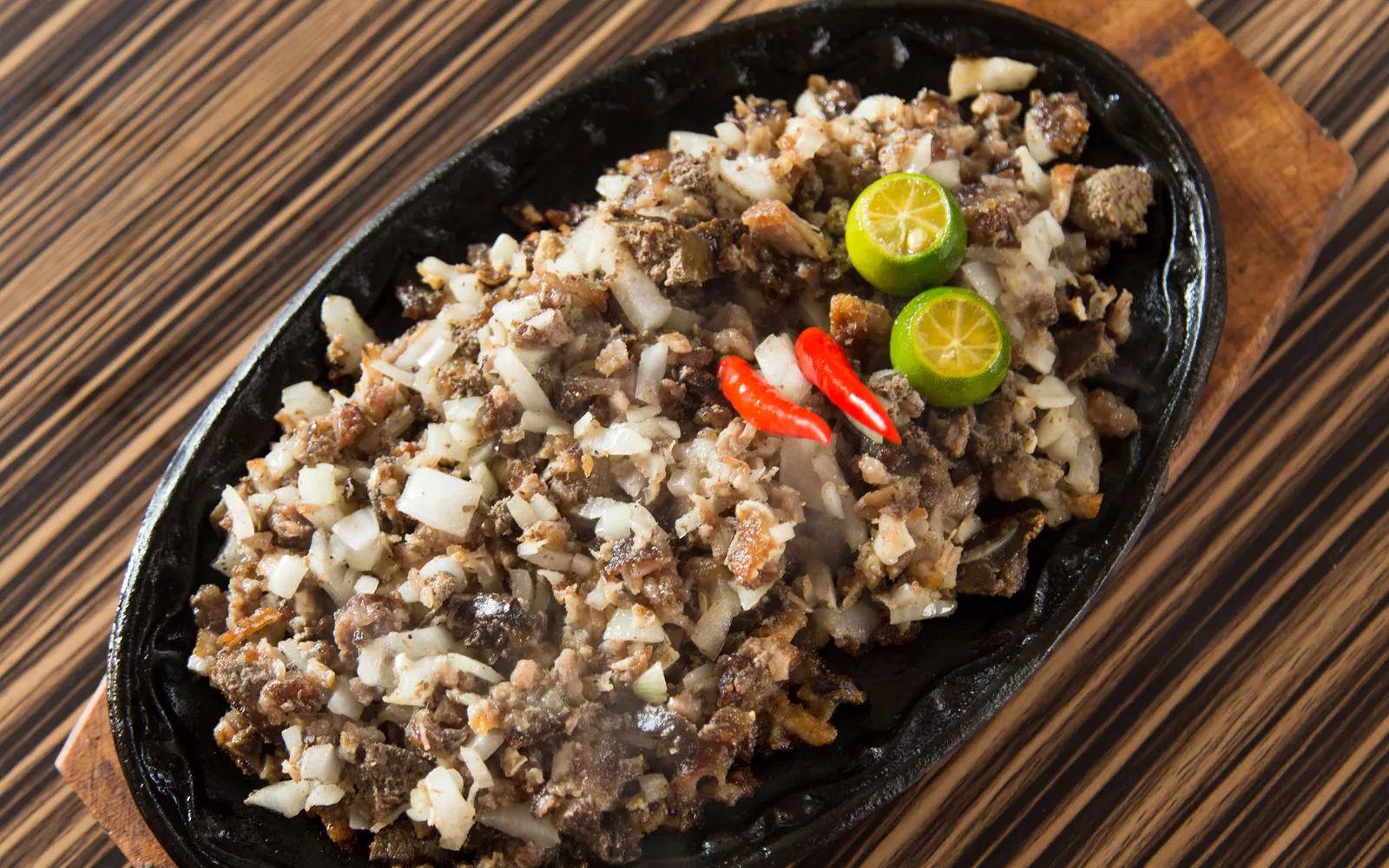
Sisig originates from Pampanga and has since gone global. It is made from pork face, ears, and cheeks — boiled, then grilled over charcoal, then chopped fine — and seasoned with vinegar, calamansi (Philippine lime), onion, chili, and sometimes mayonnaise, served on a screaming-hot cast-iron plate. Anthony Bourdain once said sisig would win over the world, and it is the most popular pulutan (food eaten alongside drinks) in the Philippines. In Poblacion, nearly every bar has sisig on the menu.
- Squeeze fresh calamansi all over before eating — the acidity cuts through the fat perfectly.
- Order with white rice, or follow the Filipino standard and pair it with an ice-cold San Miguel beer.
- Squid sisig is available at some Makati restaurants for those who do not eat pork.
 #5
#5 Kare-Kare
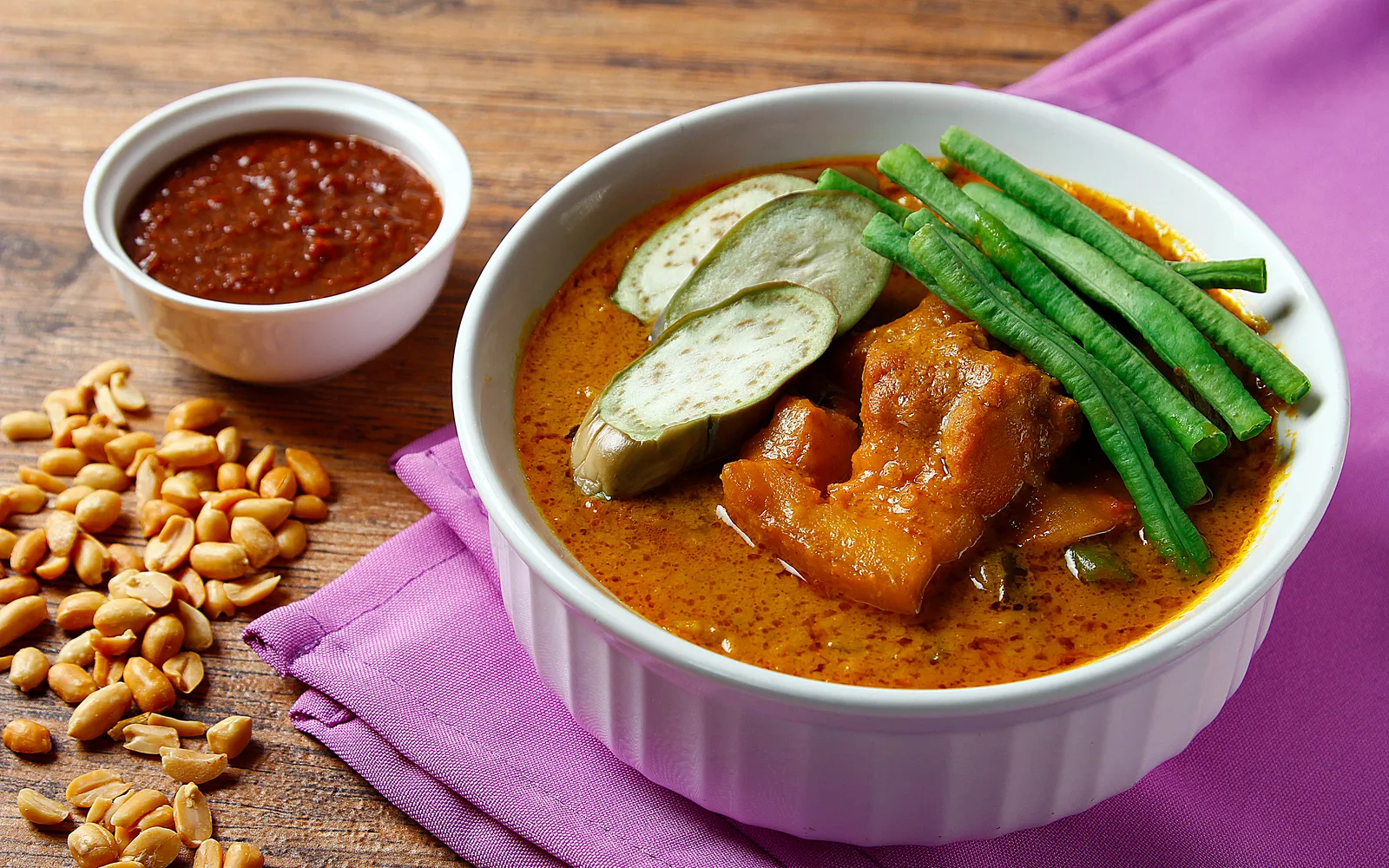
Kare-kare is a rich stew of oxtail, pork knuckle, or beef simmered in a sauce of roasted ground peanuts and toasted rice powder, seasoned with onion and garlic, with vegetables such as eggplant, long beans, and napa cabbage. It is always served alongside bagoong — a sautéed shrimp paste that is salty, spicy, and slightly sweet — and the two together are inseparable. The name traces back to the curry brought by Indian soldiers during the British occupation of Manila. Kare-kare is a ceremonial dish, a regular at banquets and family celebrations.
- Always eat it with bagoong — the salty, spicy paste cuts through the rich sweetness of the peanut sauce perfectly.
- Scoop white rice together with the kare-kare sauce and a little bagoong — the three-layer combination is the point.
- Crisostomo in Greenbelt 5 is one of the Makati restaurants known for a traditional-style kare-kare worth trying.
 #6
#6 Halo-Halo
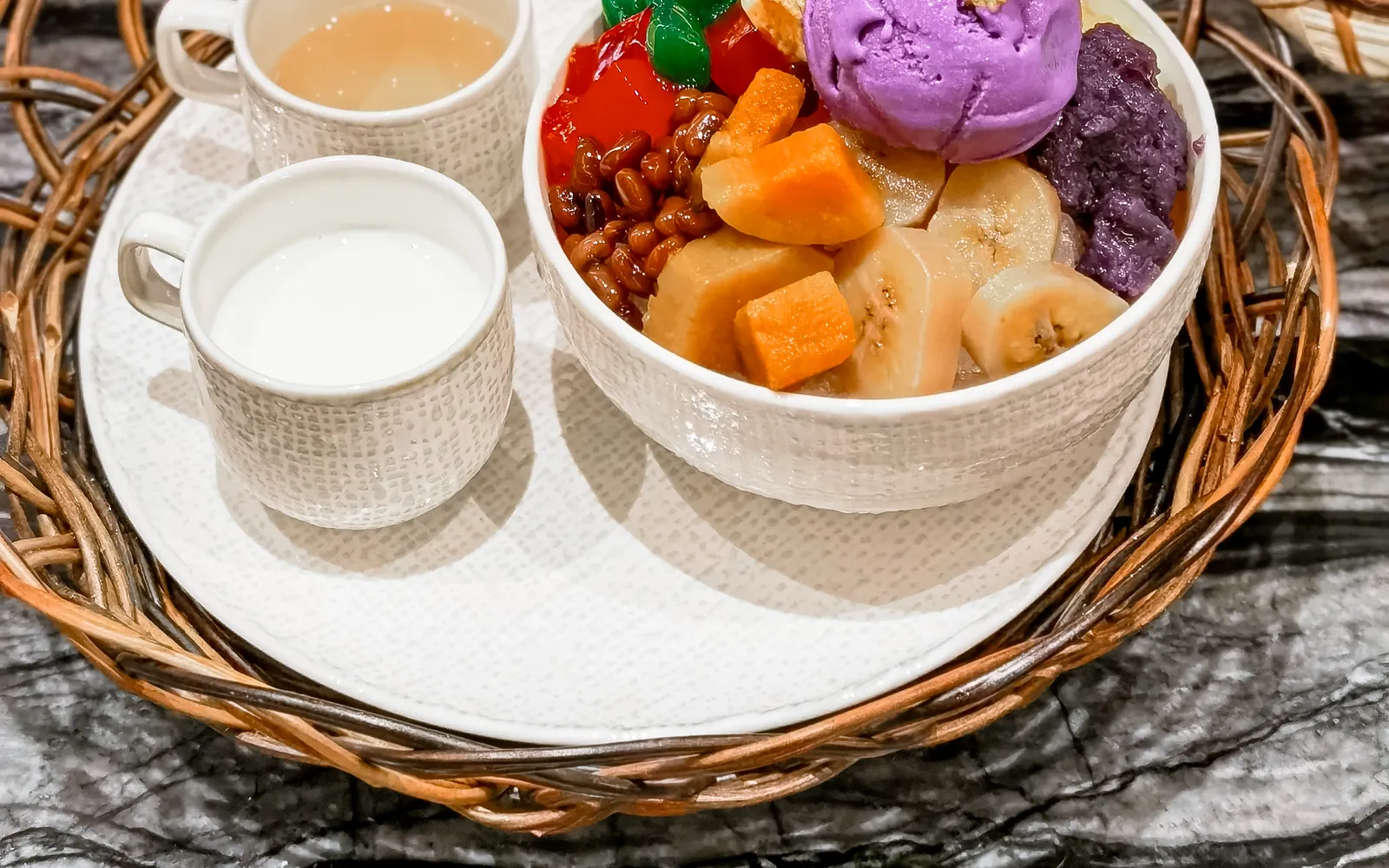
Halo-halo translates literally as mix it all together. It is a cold dessert served in a tall glass packed with ingredients: sweetened beans, nata de coco, young coconut, tapioca, gulaman (agar jelly), sago, caramelized banana, taro, pinipig (toasted rice crisps), leche flan, and shaved ice soaked in condensed milk — all topped with a scoop of vivid purple ube (Philippine purple yam) ice cream. Its origins trace to the Japanese-Filipino community before World War II, and today it is widely regarded as the country's unofficial national dessert.
- Mix everything together before eating — the name halo-halo literally means to stir and combine before each spoonful.
- Try the halo-halo at Razon's or Chowking for the classic sweet-and-cold version kept deliberately simple.
- The purple ube ice cream on top is the most photogenic part. Eat quickly before it melts.
Where to stay in Makati for this trip
A well-located hotel means less commuting and more sightseeing. Here are real, top-rated stays in Makati — compare Agoda · Booking · Trip.com in one click.
Discovery Primea
Affiliate links — we may earn a commission at no extra cost to you. Details
The Peninsula Manila
Affiliate links — we may earn a commission at no extra cost to you. Details
The Picasso Boutique Serviced Residences
Affiliate links — we may earn a commission at no extra cost to you. Details
Dusit Thani Manila
Affiliate links — we may earn a commission at no extra cost to you. Details
Tours, tickets & activities in Makati
Day tours, attraction tickets and travel essentials for Makati, Manila — book ahead on Klook with mobile e-tickets.
Affiliate links — we may earn a commission at no extra cost to you.
Before You Pack
The best Filipino restaurants in Makati are concentrated in Greenbelt Zone 5 around the Ayala district and along the side streets of Poblacion. Aim to cover both the sit-down mid-range experience — Mesa and Sentro 1771 are reliable anchors — and the street-food side at Salcedo Market and Legazpi Market, to get the full range of what Filipino food can do.