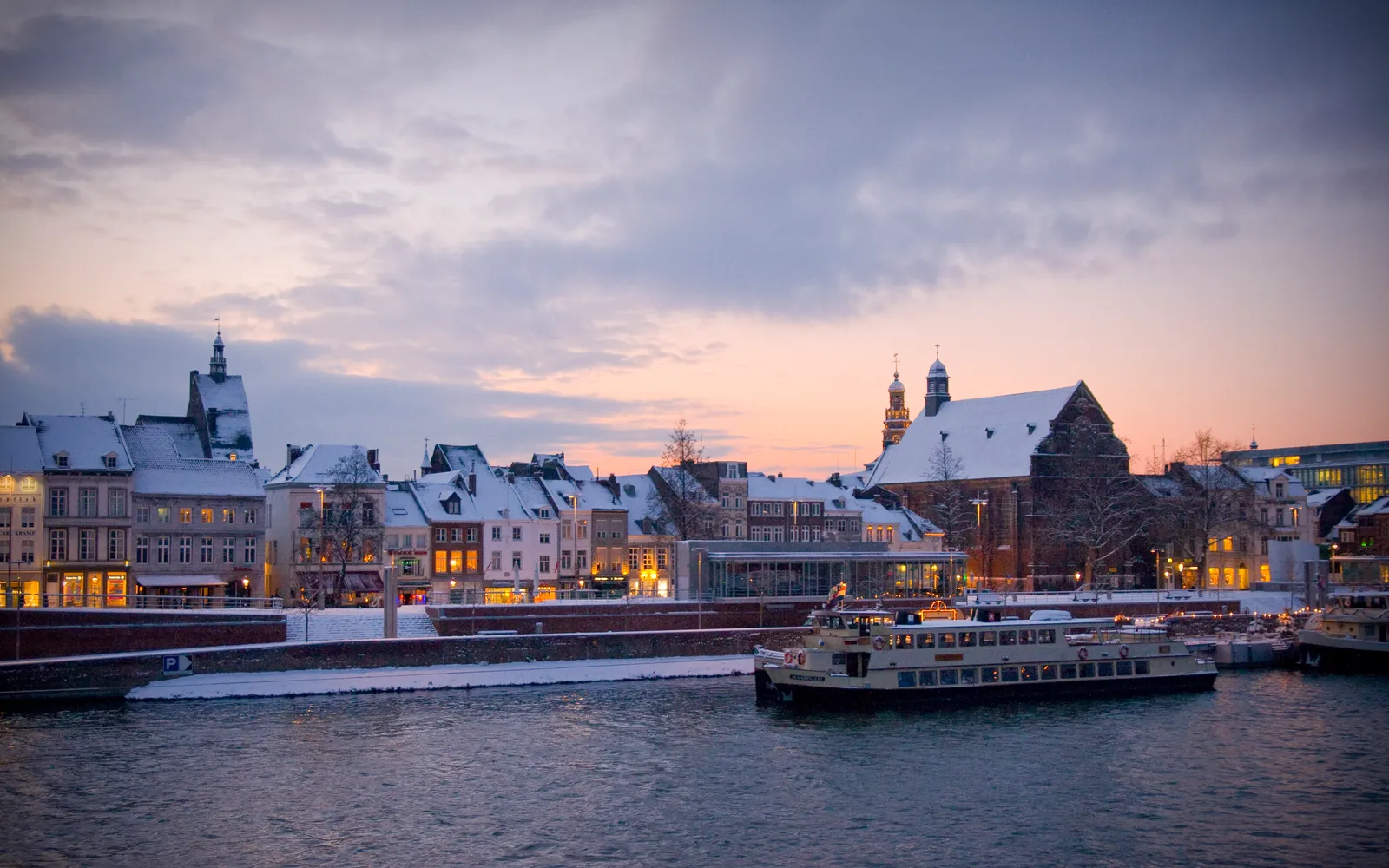
Limburg food in Maastricht is nothing like the Dutch dishes most people picture — because this province sits wedged between Belgium and Germany, and the cultural influences have blended in genuinely interesting ways. Vlaai and zuurvlees are the two things you need to eat before you leave. Neither exists in Amsterdam, and both tell you more about Limburg's identity than almost anything else.
 #1
#1 Limburg Vlaai
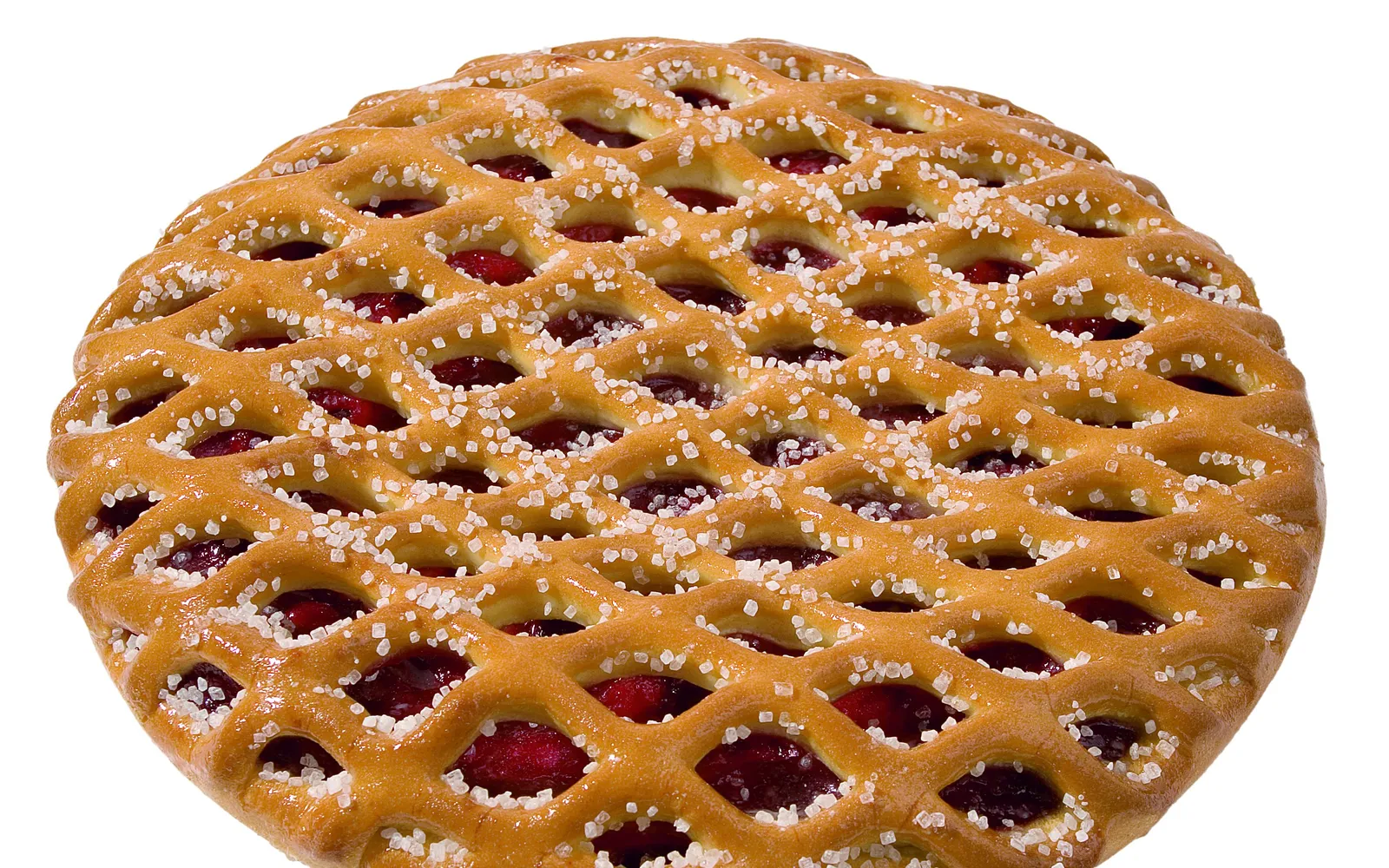
The most emblematic baked good of the Limburg province. The crust is thin and soft — a yeast dough closer to focaccia than shortcrust, but sweeter — baked in a wide shallow tin and loaded with seasonal fruit. The most popular fillings are sour cherry (zure kers), apricot, prune, and strawberry. Eating vlaai with afternoon coffee is a custom Limburgers have kept for several hundred years. Every family gathering and village fair in the province has vlaai at the centre.
- Good local bakeries sell fresh vlaai every morning — ask for 'verse vlaai' to make sure you're not getting yesterday's.
- Many shops sell individual slices so you can try multiple fillings; expect to pay around €2–3 per slice.
- Vlaai keeps for only 1–2 days, so it doesn't travel well — eat it fresh on the spot and it's at its best.
 #2
#2 Zuurvlees
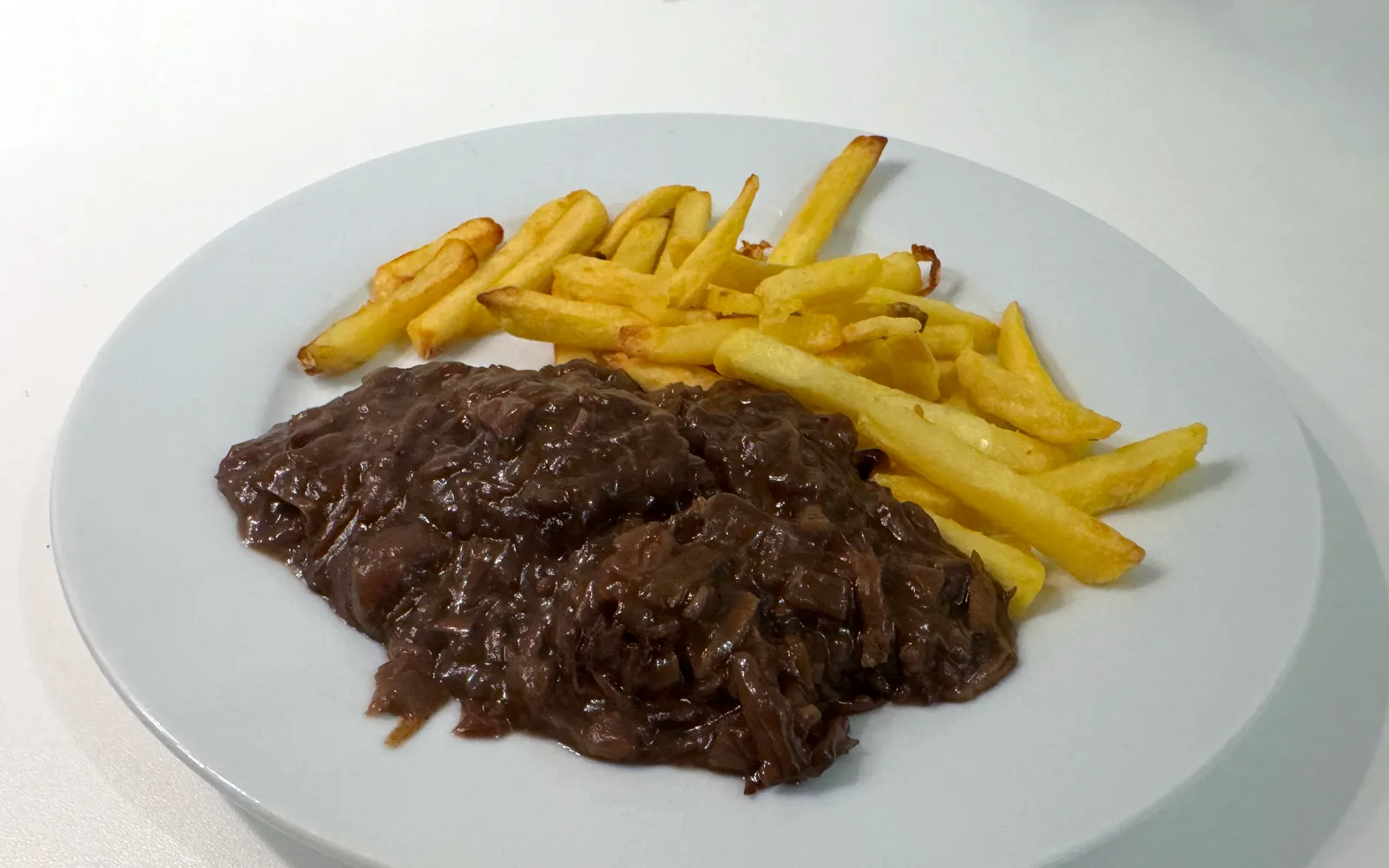
A beef stew that defines Limburg and the neighbouring parts of Belgium. The beef is marinated for a long time in wine vinegar, bay leaf, juniper berries, and spices, then slow-braised with onions and a brown sauce until it falls apart. The flavour is unmistakable — a sweet-sour tang with layers of warm spice. Served with mashed potato or chips and either apple sauce or a cherry marinade. The longer it braises, the better it gets.
- If the menu spells it 'zoervleisj', that's the authentic Limburg dialect — it usually means a traditional house recipe.
- Eat it with frieten (chips) and Dutch-style mayonnaise, not ketchup — that's how locals order it.
- The sour note can be sharp if you're not used to it; ask the staff to recommend a milder version before ordering.
 #3
#3 Limburger Cheese
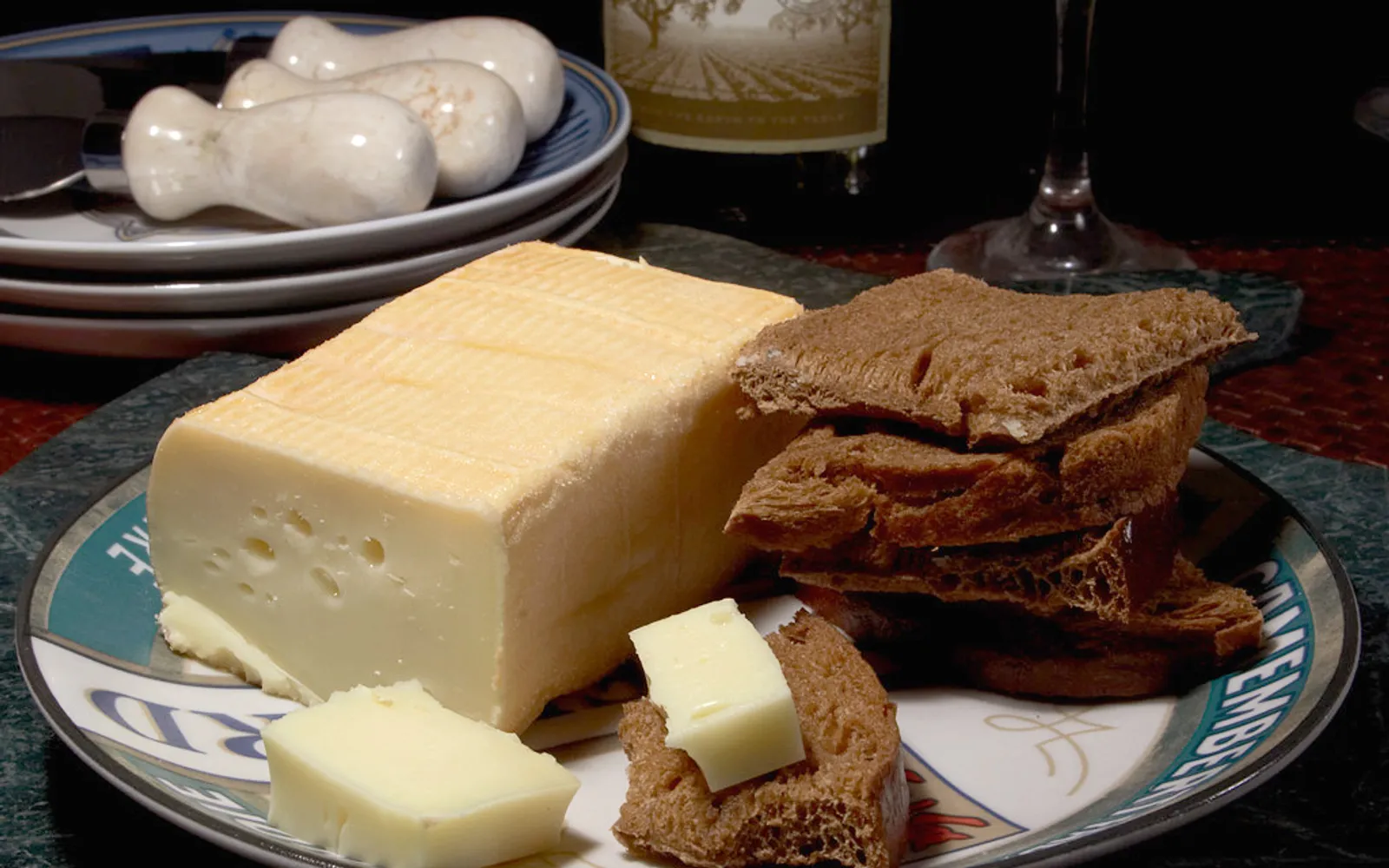
The most famous — or infamous — cheese of the Limburg region. The intense smell is the whole point: the rind is fermented using Brevibacterium linens bacteria, which gives it that distinctive orange surface and a sharp aroma that can fill a room. But the interior is soft, creamy, and mild, with a clean milky richness. Eat it on dense rye bread with onion and mustard. True Limburger must be produced within the Limburg region.
- Ask for a taste before you buy — the smell is stronger than the flavour, and many people find they like it far more than expected.
- An aged Limburger is much more intense; ask for 'mild' or 'young' if you're new to it.
- If you're buying to take home, get it vacuum-sealed in multiple layers — the smell penetrates fabric, bags, and everything around it.
 #4
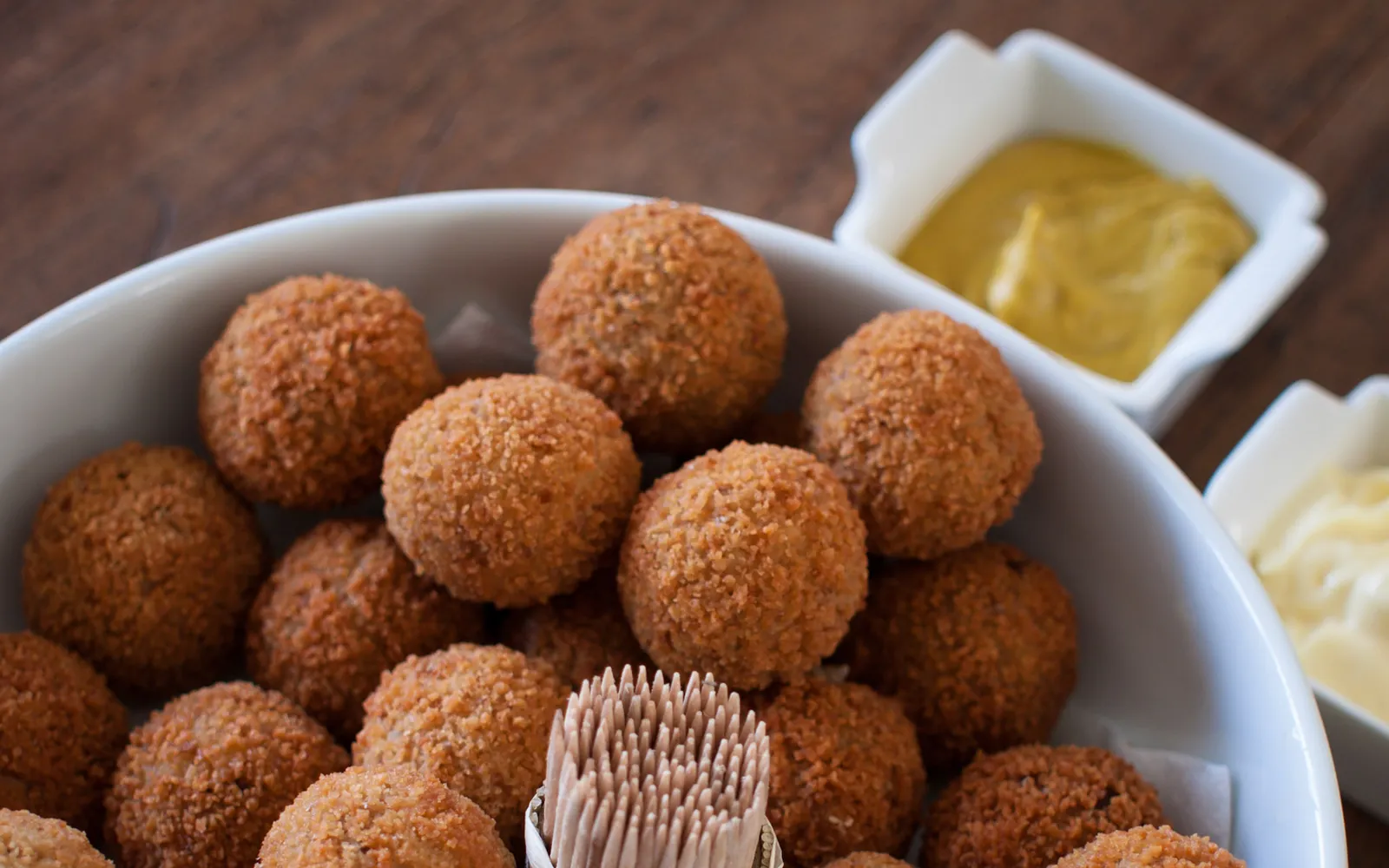
#4 Bitterballen
A classic Dutch snack eaten with beer across the Netherlands, but in Maastricht it has a particular appeal — here they're paired with local brews like Gulpener or Lindeboom, both brewed in Limburg province. Bitterballen are made from a thick beef or chicken béchamel filling, rolled into balls, coated in breadcrumbs, and deep-fried until the outside is crisp and the inside is molten. Eat them hot, dipped in mild Dutch mustard.
- They're always hotter inside than they look — cut one in half first to let the heat out before taking a full bite.
- Gulpener Ur-Pilsner from Limburg paired with bitterballen is the local's combination of choice.
- Cafés around Vrijthof often run happy-hour deals on bitterballen between 16:00 and 18:00 — better value than the evening price.
 #5
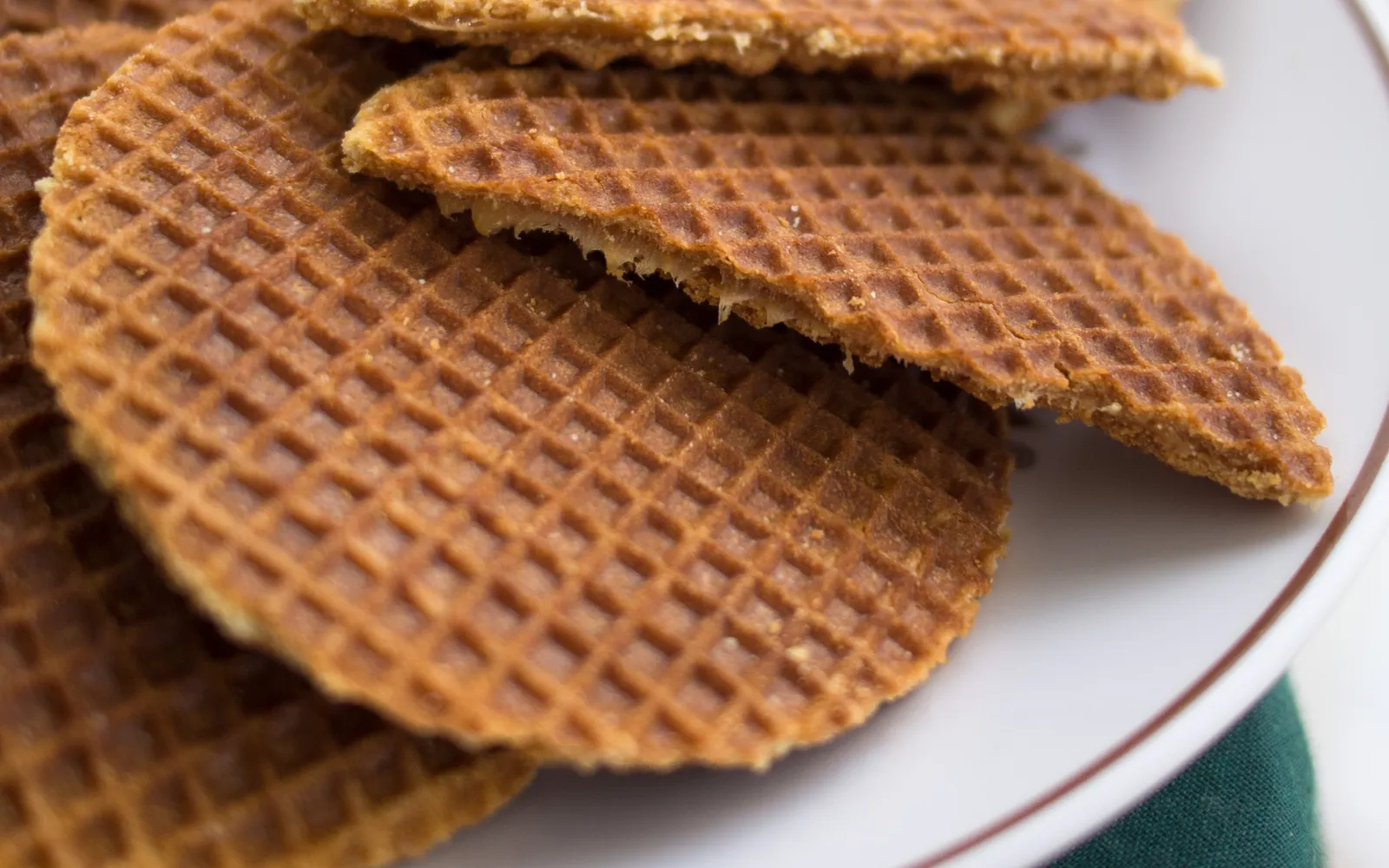
#5 Stroopwafel
The most popular Dutch sweet — two thin waffle rounds sandwiched with a caramel syrup filling. The classic Dutch way to eat one is to rest it on the rim of a hot coffee or tea for a minute or two until the caramel warms and softens. In Maastricht you'll find freshly made versions at the market that are noticeably larger and thicker than the supermarket packet variety. The difference in taste is not subtle.
- Buy a fresh stroopwafel from one of the Saturday market stalls at Markt — bigger than the bagged kind and far better.
- Set it on the rim of your hot tea or coffee for 2–3 minutes before eating; the filling softens to exactly what it should be.
- Packaged stroopwafels from the supermarket are cheap, travel well, and make a good gift to bring home.
 #6
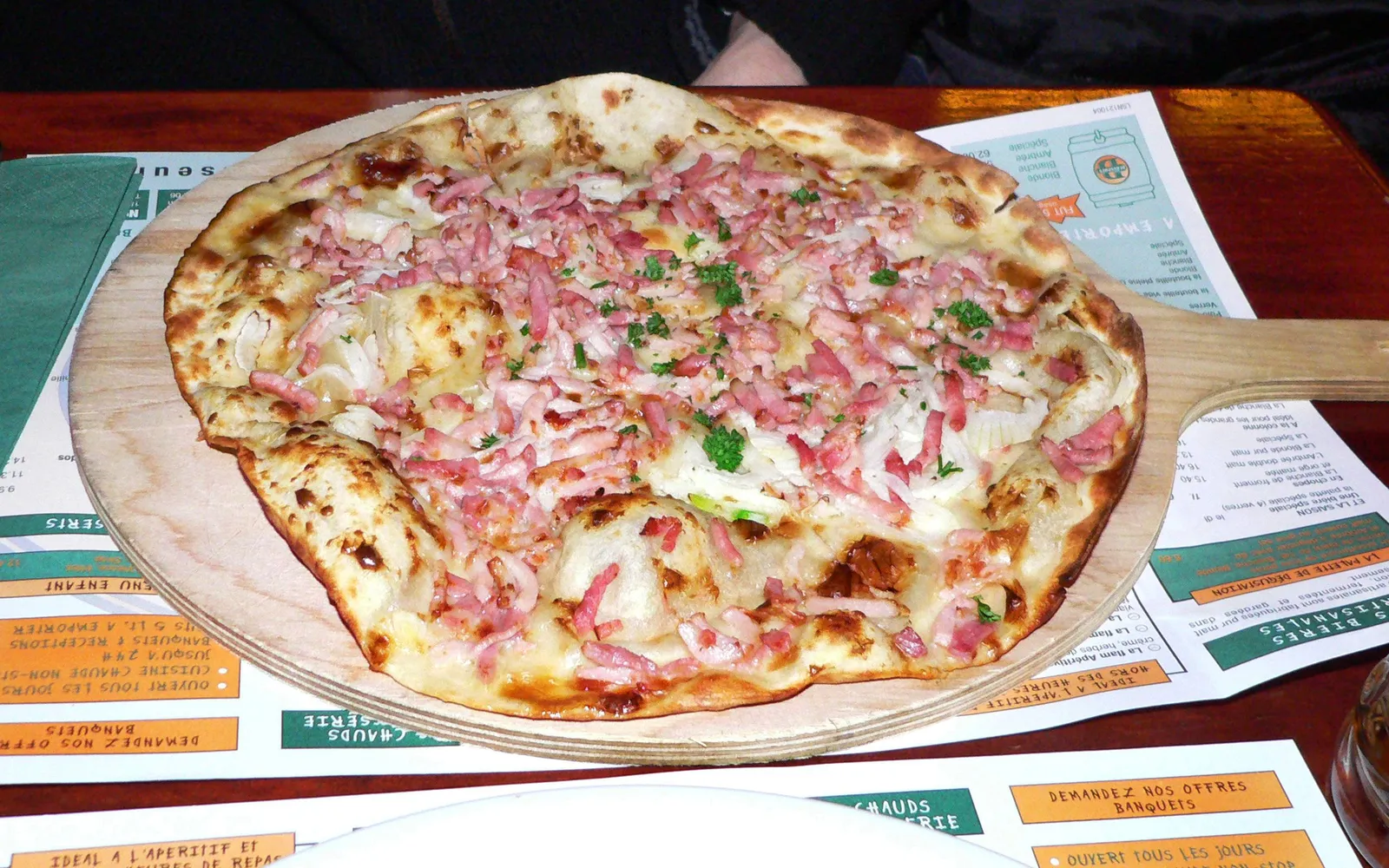
#6 Flammkuchen
An Alsatian-German style thin-crust flatbread that has become genuinely popular in Maastricht, largely because the city sits close to both the German and Belgian borders. The dough is rolled paper-thin, spread with crème fraîche, layered with thin onion slices and lardons, then fired in a very hot oven until the edges char slightly. Each bite delivers umami, smoke, and cream. The Maastricht version often adds toppings like mushroom or Limburger cheese in a local riff on the original.
- Pick a place with a real wood-fired oven — the crust gets a smokiness and char that a regular oven simply cannot replicate.
- Order the Limburgs version with Limburger cheese if you want an unusual combination of local flavours.
- One flammkuchen splits well between two people as a starter before a main course.
Where to stay in Maastricht for this trip
A well-located hotel means less commuting and more sightseeing. Here are real, top-rated stays in Maastricht — compare Agoda · Booking · Trip.com in one click.
Maison Haas Hustinx & Spa
Affiliate links — we may earn a commission at no extra cost to you. Details
The Social Hub Maastricht
Affiliate links — we may earn a commission at no extra cost to you. Details
Boutique Hotel Beaumont Maastricht
Affiliate links — we may earn a commission at no extra cost to you. Details
Kruisherenhotel Maastricht
Affiliate links — we may earn a commission at no extra cost to you. Details
Tours, tickets & activities in Maastricht
Day tours, attraction tickets and travel essentials for Maastricht — book ahead on Klook with mobile e-tickets.
Affiliate links — we may earn a commission at no extra cost to you.
Before You Pack
The best Limburg restaurants tend to hide in the small lanes near Vrijthof and in the Wyck district to the east. If you see zuurvlees or vlaai chalked on a blackboard outside, that's a reliable sign the kitchen is serious about local flavour. Ask the staff what filling the vlaai has today — the answer tells you whether you're in a real bakery or one that's just there for the foot traffic.