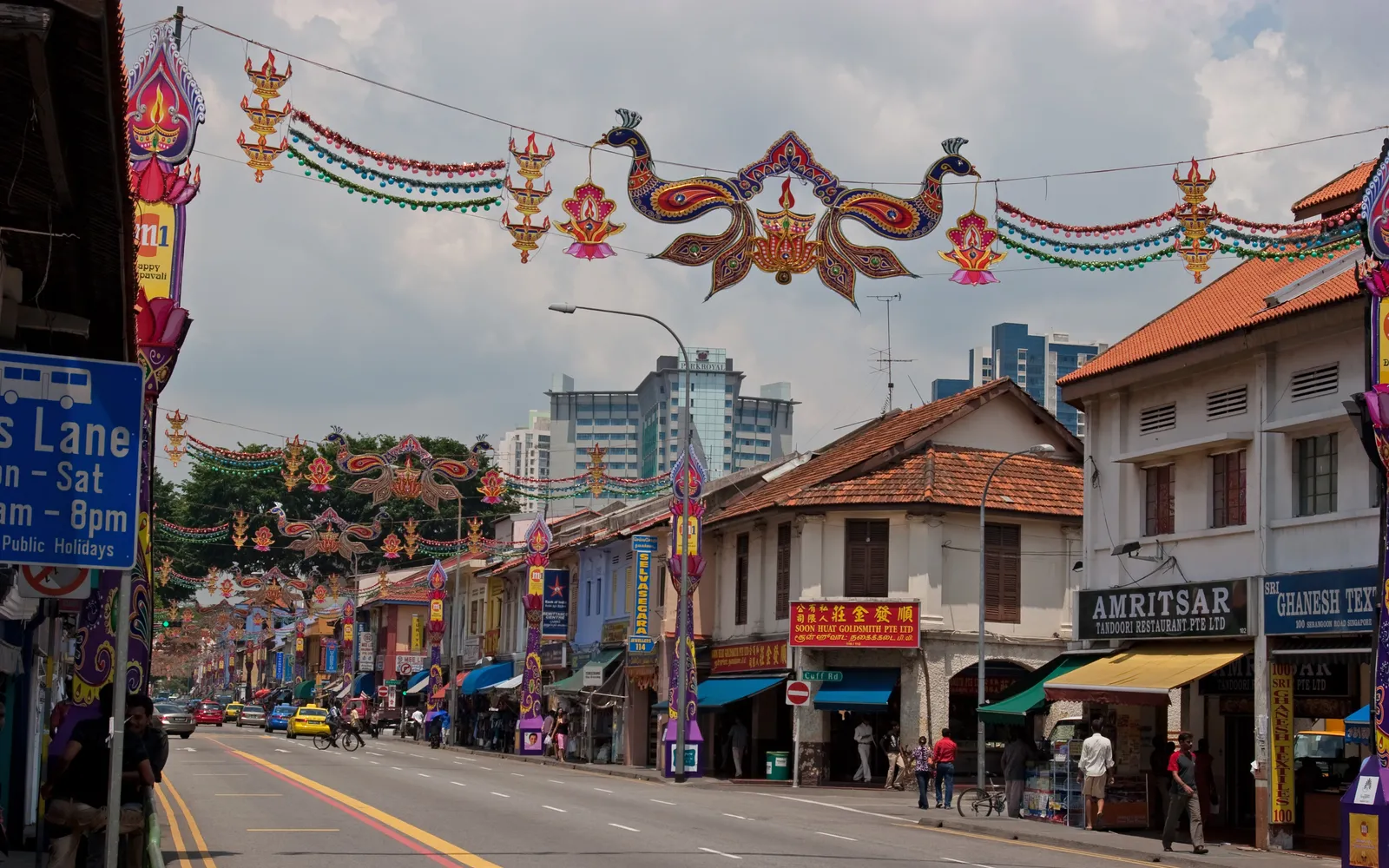
Little India ranks among Singapore's most charged neighbourhoods — jasmine garlands, Bollywood tracks and the flash of Sari fabric in every doorway. Unlike manufactured tourist precincts, this is a working community: thousands of Indian residents live and work here daily. The whole area is walkable from MRT Little India or Farrer Park, no taxi required.
 #1
#1 Sri Veeramakaliamman Temple
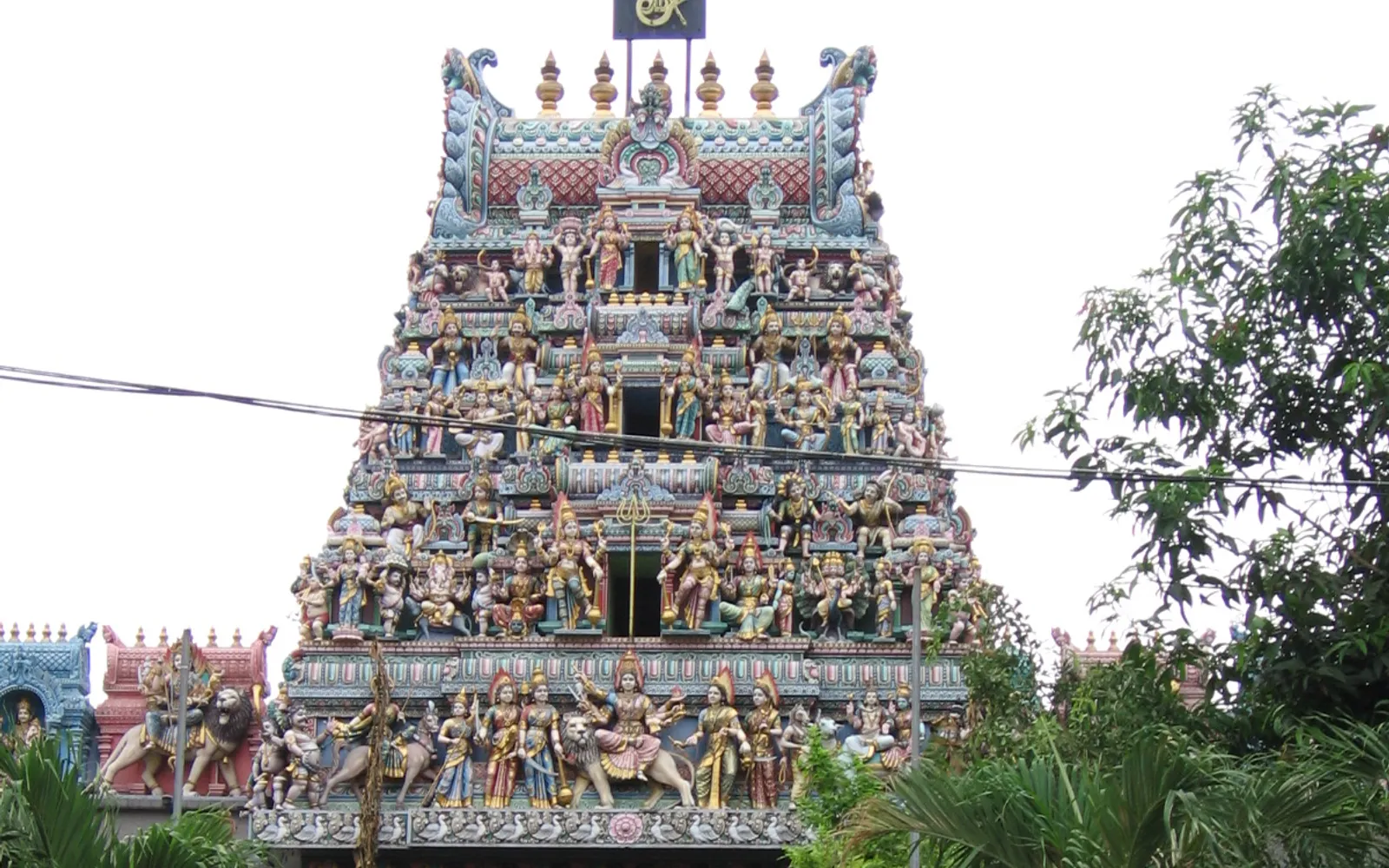
The oldest and most striking Hindu temple in Little India, built by Bengali labourers in 1881 and dedicated to the goddess Kali, destroyer of evil. The Gopuram tower is studded with hundreds of hand-painted deity sculptures in brilliant colour. The temple was gazetted as a National Monument in 1981 and has served every generation of Singapore's Hindu community since.
- Remove shoes before entering and dress modestly — bring a scarf or sarong if you're in short sleeves.
- During Deepavali (Oct–Nov) and Thaipusam the temple opens later and holds special ceremonies worth timing your visit around.
- Shoot the full Gopuram from the opposite pavement — you need the width of Serangoon Road to fit it in frame.
 #2
#2 Tekka Centre
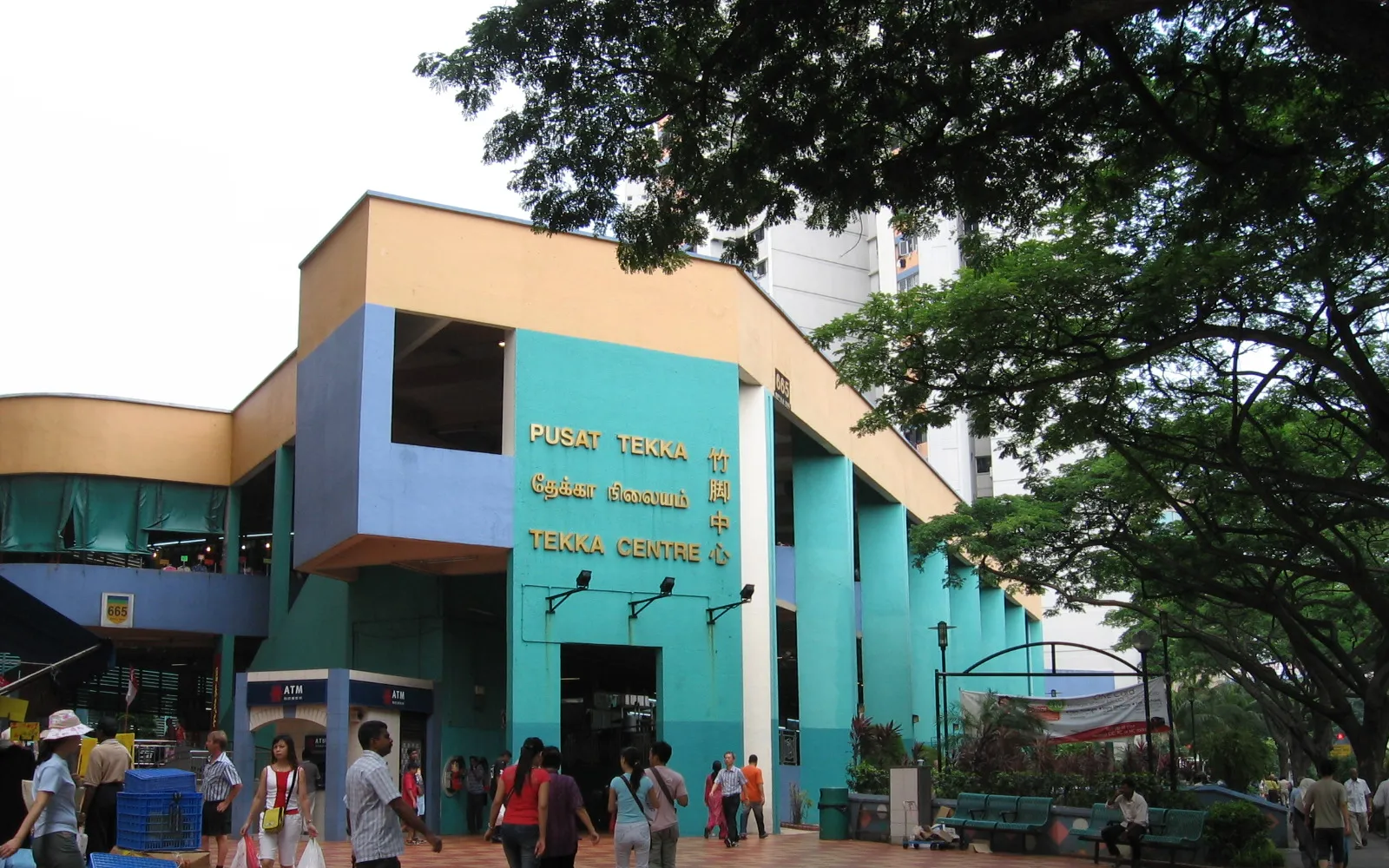
Singapore's largest market, with 284 stalls split across two zones: a wet market on the east side — fish, meat and fresh produce open from dawn — and a Hawker Centre on the west serving banana-leaf curry rice, roti prata, murtabak and teh tarik for under S$5 a plate. It's the unreconstructed daily life of Singapore's Indian community, and no tourist attraction comes close to replicating it.
- Arrive between 7:00 and 10:00 AM to catch the wet market at its most active.
- Head for the roti prata stall with the longest queue — it comes with a fragrant curry that justifies the wait.
- The upper floor has fabric shops, gold jewellery and everyday household goods from the community.
 #3
#3 Mustafa Centre
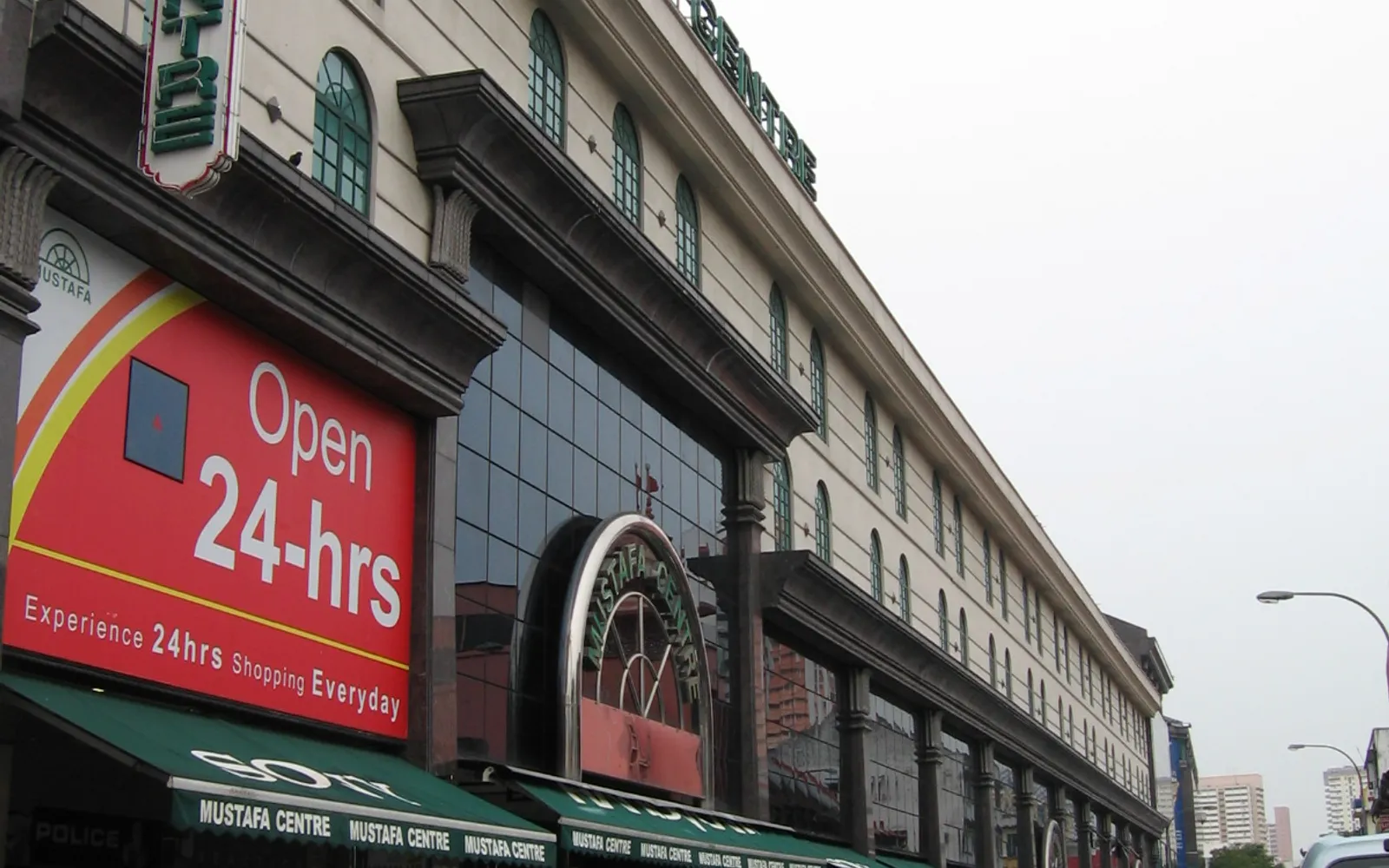
Singapore's most distinctive 24-hour department store: 37,000 square metres spread across two linked buildings, stocking over 300,000 product lines — gold jewellery, electronics, spices, souvenirs, saris, pharmaceuticals and more. Around 15,000 shoppers pass through daily. It is a genuinely intense shopping experience, and a remarkably good-value one.
- Come after 10:00 PM to avoid the densest crowds.
- The Gold Zone carries factory-rate gold — compare prices before buying.
- Ground-floor counters stock Indian sweets, spices and perfumes at competitive prices, good for gifts.
 #4
#4 House of Tan Teng Niah
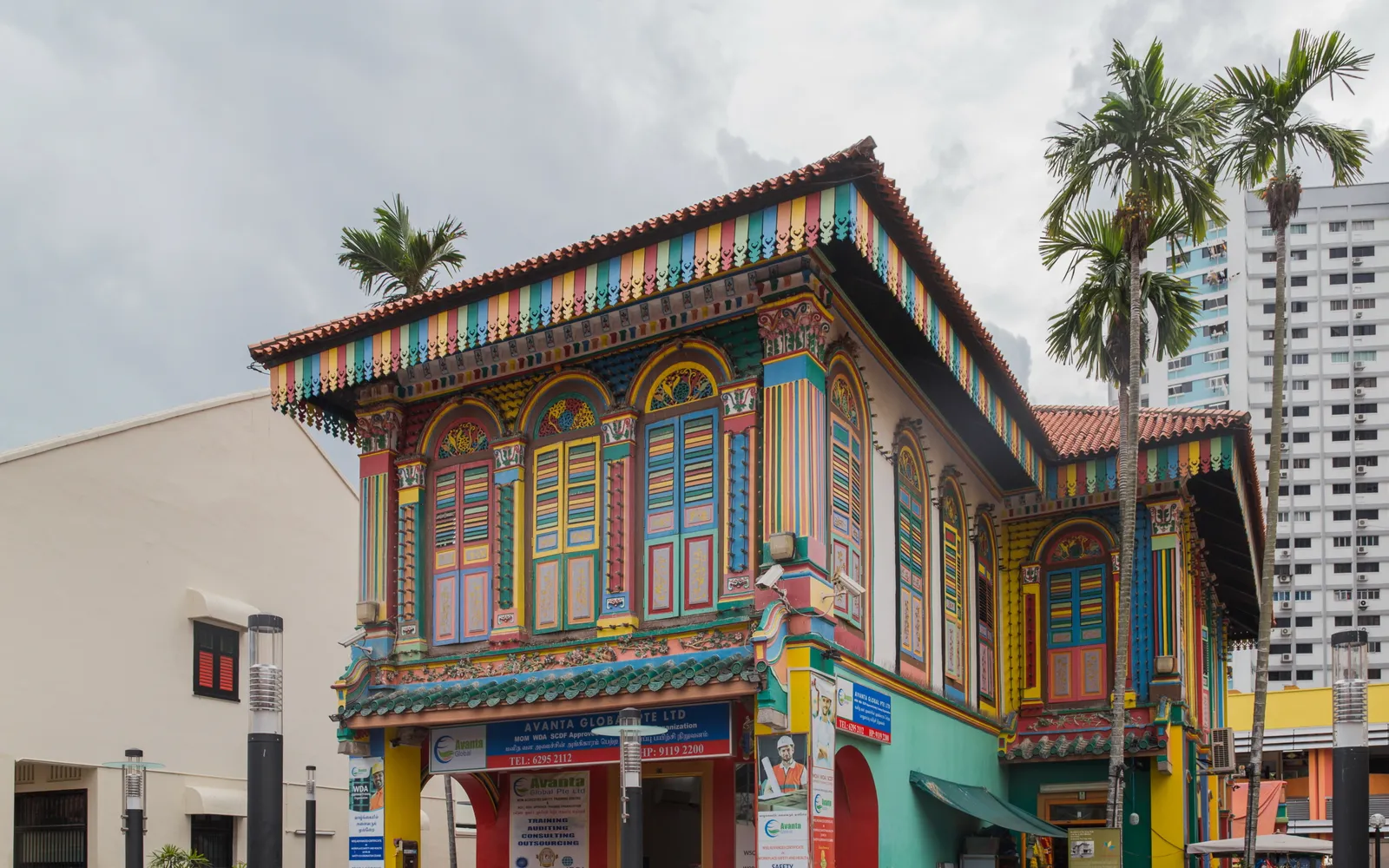
The last surviving Chinese villa in Little India, built in 1900 by Tan Teng Niah, who ran a confectionery factory on Serangoon Road. The eight-room house is painted in clashing pink, green, blue and orange, with gilded Chinese characters across the facade — a physical record of the Chinese and Indian communities that have shared this neighbourhood for over a century.
- This is Little India's single most-photographed spot — arrive before 9:00 AM to shoot without other visitors in frame.
- Step back to the Kerbau Road footpath to capture the full facade.
- The building is now private commercial premises; exterior viewing only.
 #5
#5 Indian Heritage Centre
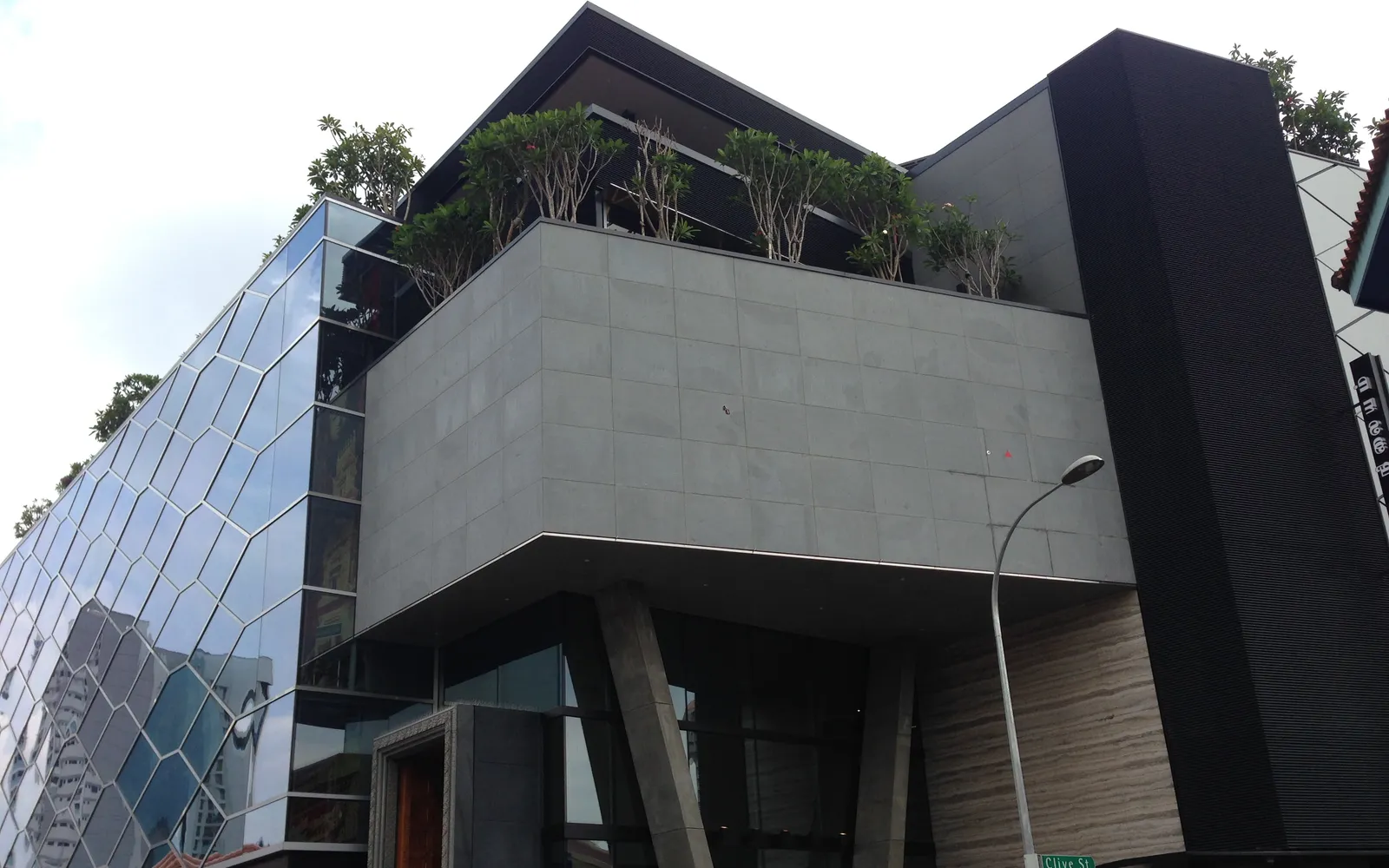
A four-storey museum built by the Singapore government to document the Indian community's history in Southeast Asia from antiquity to the present. The facade references Baoli architecture — the ancient Indian stepwell design. Inside: over 400 artefacts across 5 permanent galleries, plus a rotating programme of temporary exhibitions.
- Buy tickets online in advance to skip the queue — adult admission is S$8.
- Start at the fourth floor and work downward to follow the chronological timeline.
- Closed Mondays — check the website for current temporary exhibitions before you go.
 #6
#6 Sri Srinivasa Perumal Temple
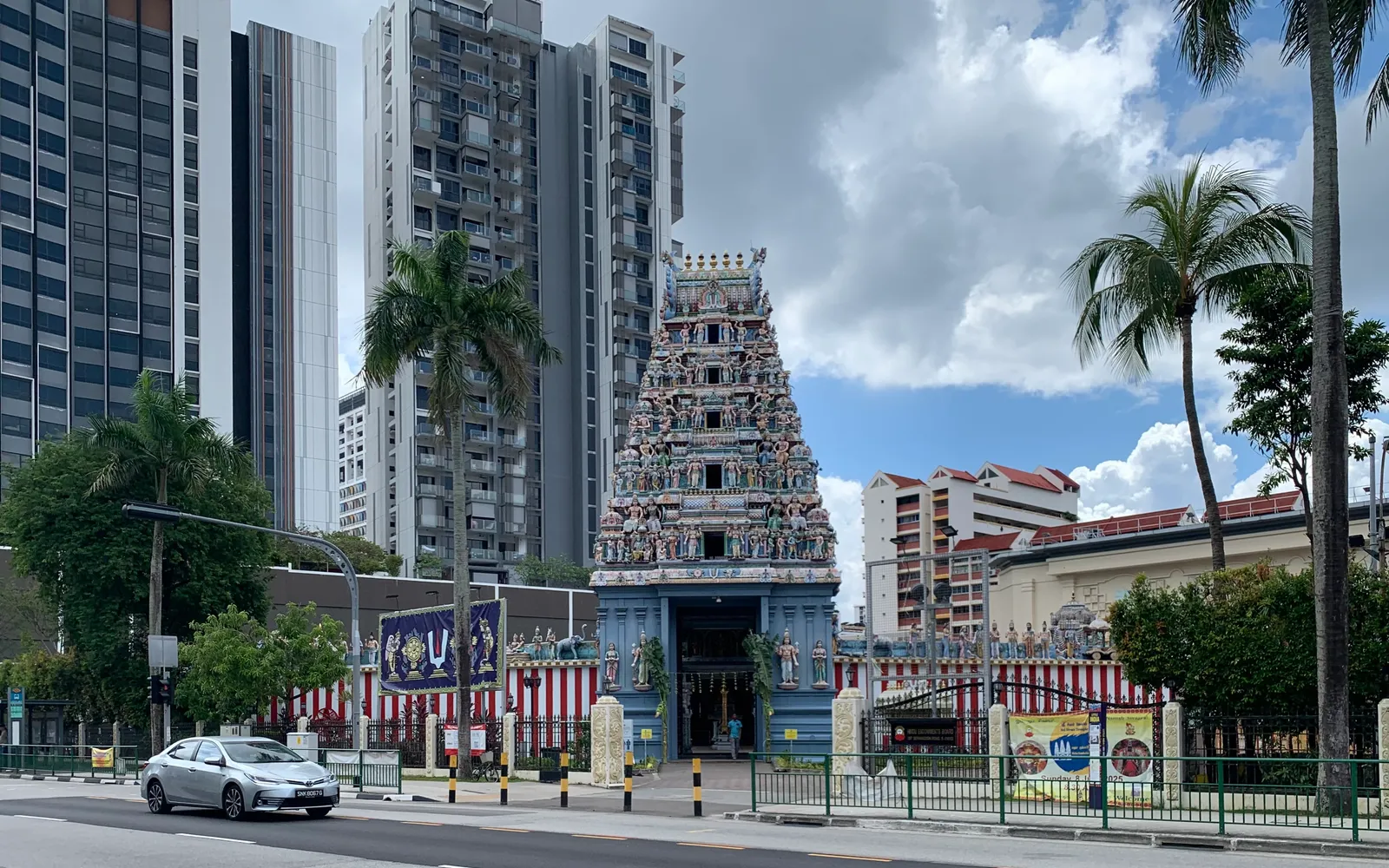
A Hindu temple dedicated to Lord Vishnu, established in 1855. The 20-metre Gopuram was completed in 1966 at a cost of S$300,000 and gazetted as a National Monument in 1978. This is the starting point of the Thaipusam procession — the festival in which devotees carry kavadis decorated with peacock feathers through the city streets each January or February.
- Visit during Thaipusam (Jan–Feb) to witness the procession at its most spectacular.
- The temple grounds are spacious, with free drinking water and seating — a genuine refuge from the heat.
- Dress modestly and remove shoes before entering.
 #7
#7 Little India Arcade
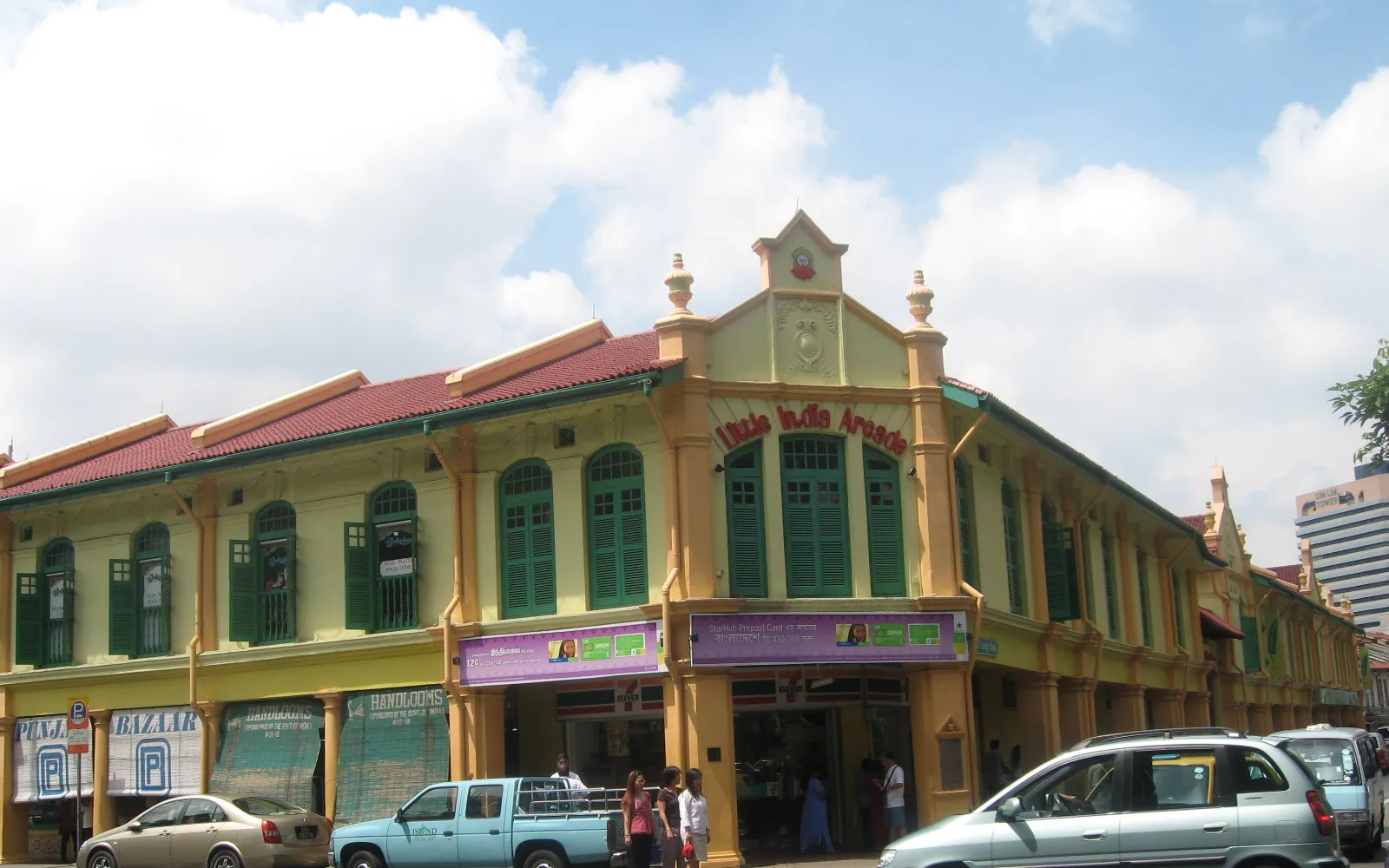
A row of conserved 1920s shophouses that gathers traditional Indian retail under one roof: spice merchants, jasmine garland stalls, Sari fabric, gold dealers, devotional items and Mehndi (henna) artists who will tattoo your hands and feet in Indian patterns. This is the densest concentration of old-school Indian commerce you'll find in Singapore.
- Prices on spices and souvenirs are negotiable — opening prices tend to run 20–30% above what you'll actually pay.
- Mehndi artists mostly operate 10:00 AM–8:00 PM; service starts from S$10.
- Flower stalls sell fresh jasmine garlands throughout the day — an inexpensive and fragrant gift.
Where to stay in Little India for this trip
A well-located hotel means less commuting and more sightseeing. Here are real, top-rated stays in Little India — compare Agoda · Booking · Trip.com in one click.
One Farrer Hotel
Affiliate links — we may earn a commission at no extra cost to you. Details
Wanderlust, The Unlimited Collection by The Ascott
Affiliate links — we may earn a commission at no extra cost to you. Details
The Serangoon House Little India, Singapore, a Tribute Portfolio Hotel
Affiliate links — we may earn a commission at no extra cost to you. Details
Citadines Rochor Singapore
Affiliate links — we may earn a commission at no extra cost to you. Details
Tours, tickets & activities in Little India
Day tours, attraction tickets and travel essentials for Little India — book ahead on Klook with mobile e-tickets.
Affiliate links — we may earn a commission at no extra cost to you.
Before You Pack
Little India is not a photo stop — every lane carries the story of migrants who helped build Singapore. If you have half a day, walk from Sri Veeramakaliamman down Serangoon Road, stop at Tekka Centre, and finish at the Indian Heritage Centre for the historical context that ties it all together.