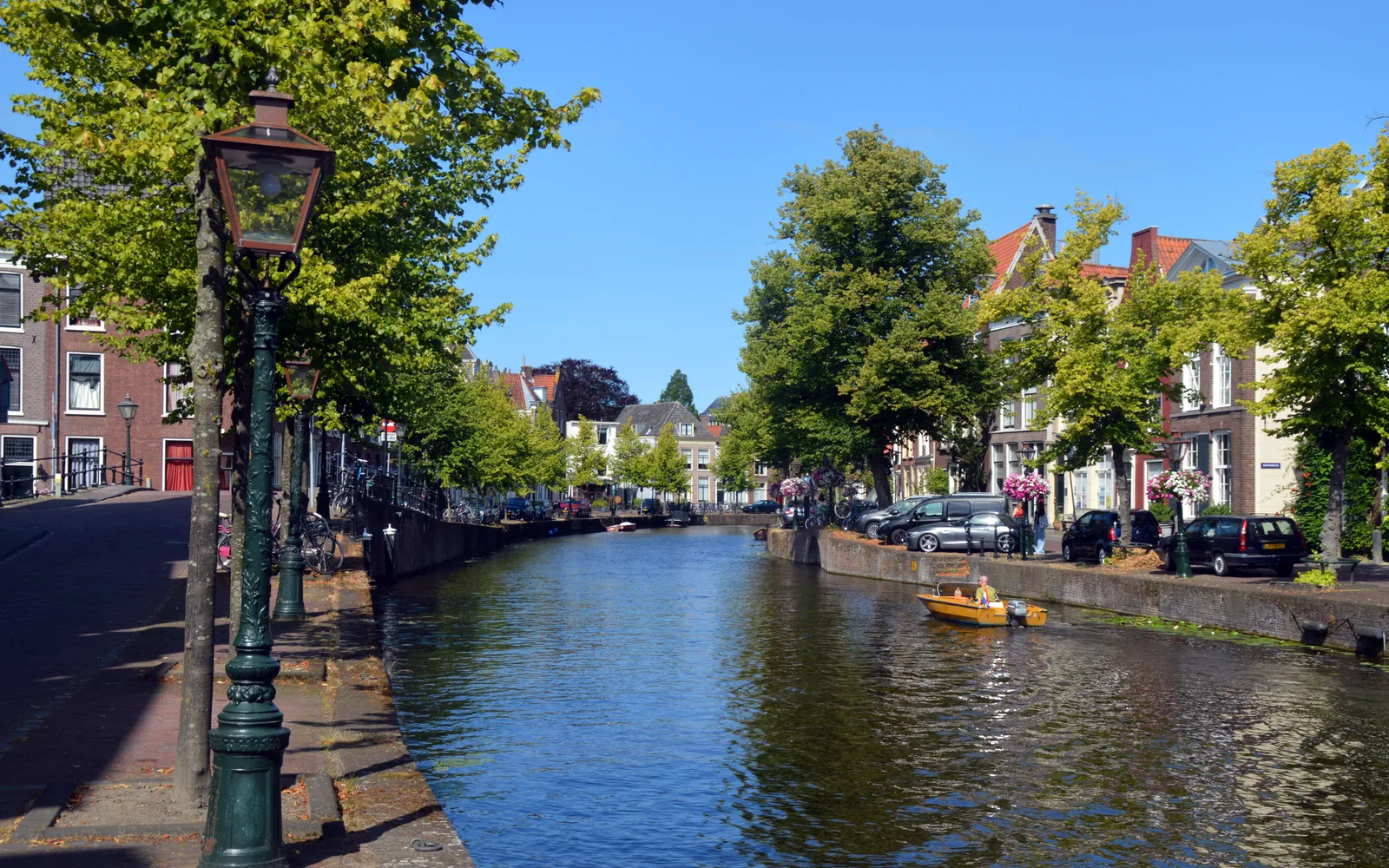
Dutch food has a reputation for being plain to the point of dull — but come to Leiden and you'll find several dishes with a historical weight that genuinely surprises. Hutspot, the potato-and-carrot mash that the townspeople ate on the day they drove out the Spanish army in 1574, is still served today as an act of remembrance as much as a meal. Dutch food is often at its best when eaten in context, not just for flavour — approach it with an open mind and you'll find something more rewarding than you bargained for.
 #1
#1 Hutspot
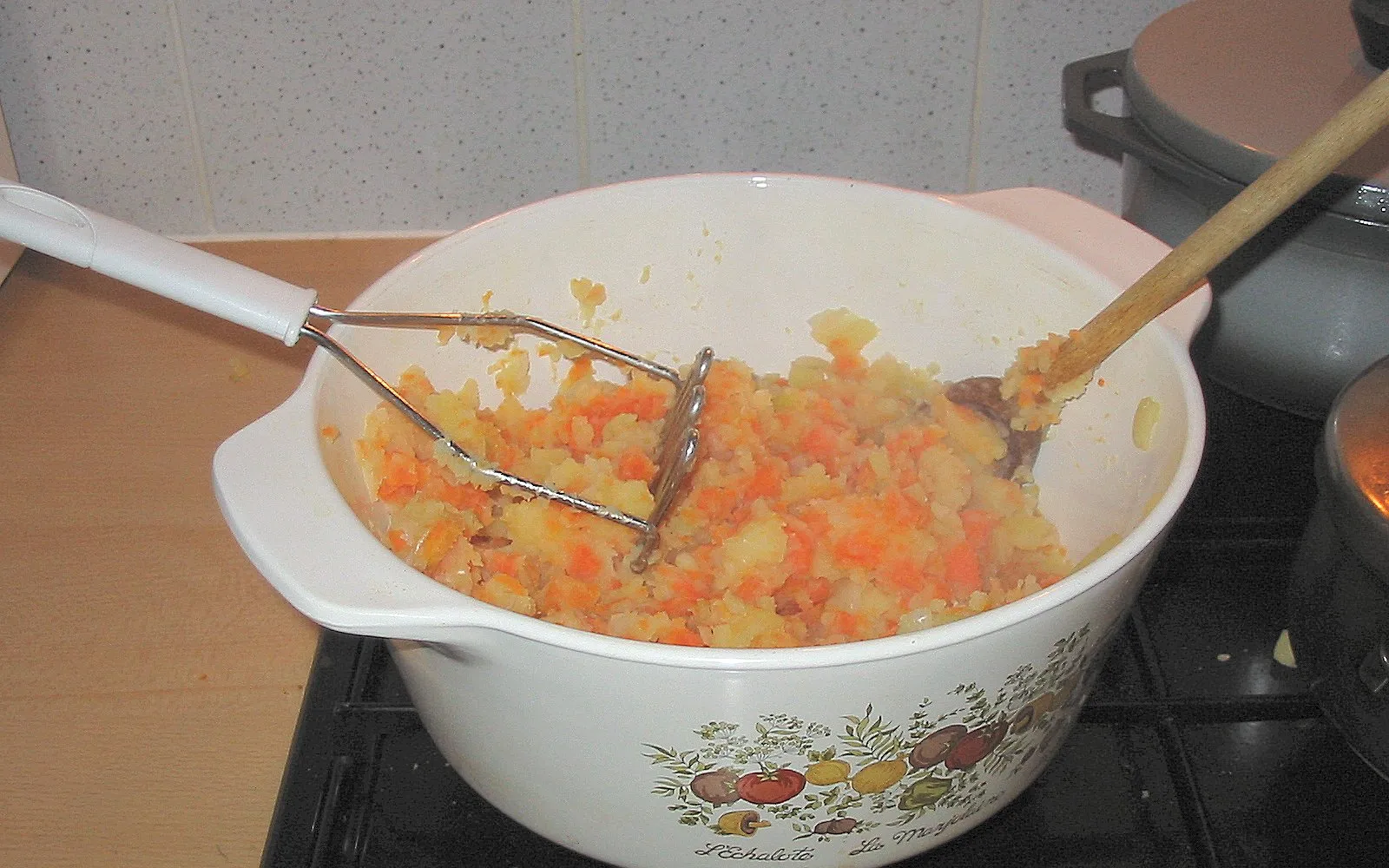
The dish with the most charged historical backstory in Leiden. According to legend, when the townspeople drove out the Spanish army in 1574 after a siege that lasted several months, the retreating soldiers left a pot of potato-and-carrot stew behind. The half-starved citizens ate it on the spot. Every 3 October, Leiden marks the anniversary — <strong>Leidens Ontzet</strong> — by distributing free hutspot and herring across the city. On ordinary days you can find it in traditional Dutch <em>eetcafe</em>-style restaurants at very reasonable prices.
- Order it with rookworst — smoked Dutch pork sausage — which is the traditional pairing. It is not just any sausage.
- If you're visiting on 3 October, join the Leidens Ontzet celebration and collect free hutspot distributed by the city. There is nowhere else on earth that does this.
- The flavour is intentionally understated. Dutch people eat it with sharp mustard and butter. Do not over-season; adding too many spices kills the authenticity.
 #2
#2 Soused Herring (Hollandse Nieuwe)
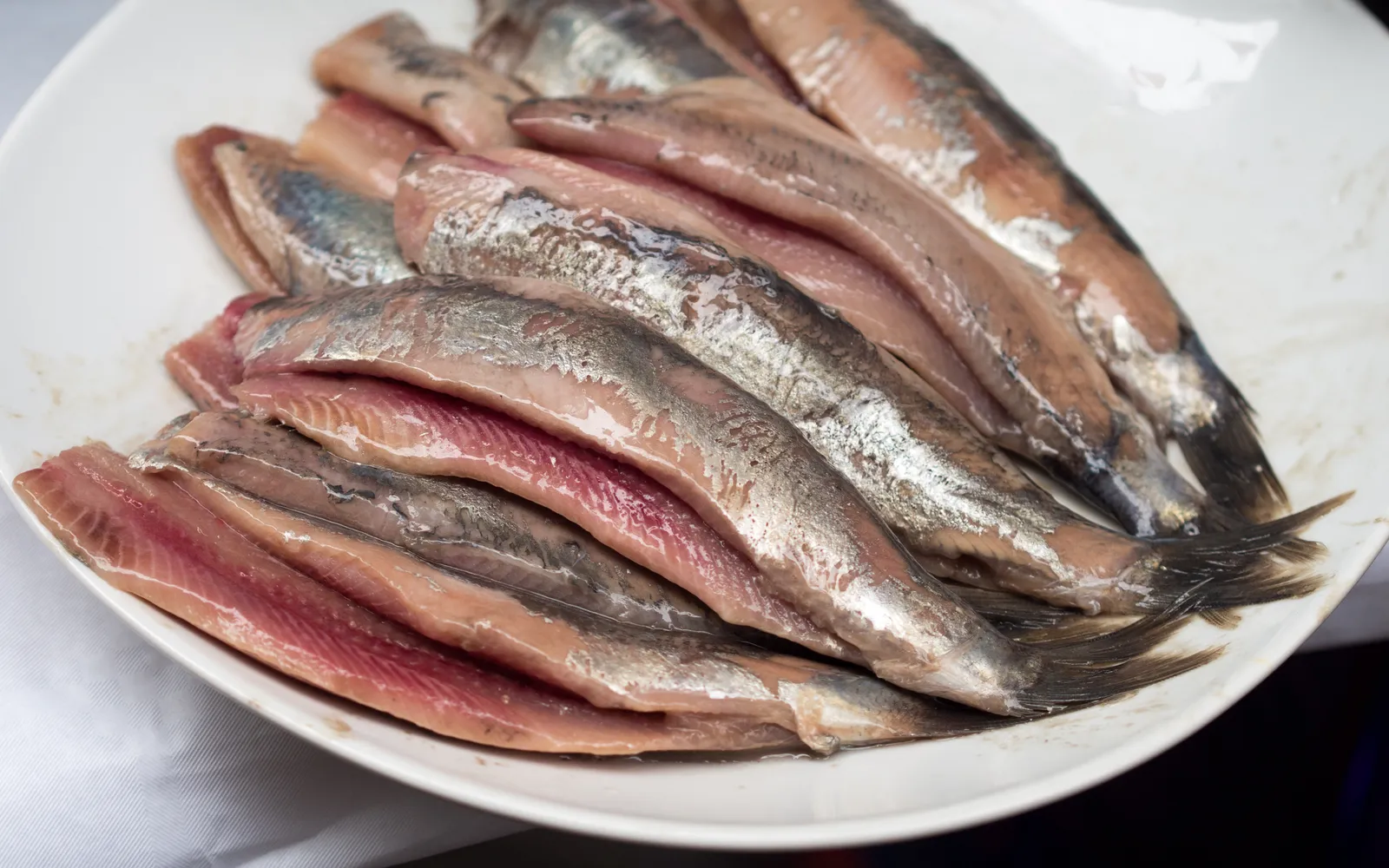
The most uncompromising Dutch food experience, and the one that most visitors hesitate over — but try it once and you will understand the national obsession. North Sea herring is cold-brined until it turns silky and mild, with a subtle sweetness and a fatty richness that bears no resemblance to tinned fish. The classic Dutch method is to hold the herring by the tail and take bites from the top downward, paired with chopped raw onion. Ask for it on bread if you prefer. The peak season is <strong>Hollandse Nieuwe</strong>, May to June, when the year's first catch arrives.
- Ask the stall whether the Hollandse Nieuwe has arrived yet. May and June deliver the freshest, most delicate fish of the year.
- The authentic Dutch way is to hold the tail and bite down, with raw onion. If you're not comfortable with that, ask to have it cut into pieces — nobody minds.
- A whole herring costs around €3–5 at a market stall, well below restaurant prices. The Wednesday and Saturday markets at Beestenmarkt have multiple vendors to compare.
 #3
#3 Stroopwafel
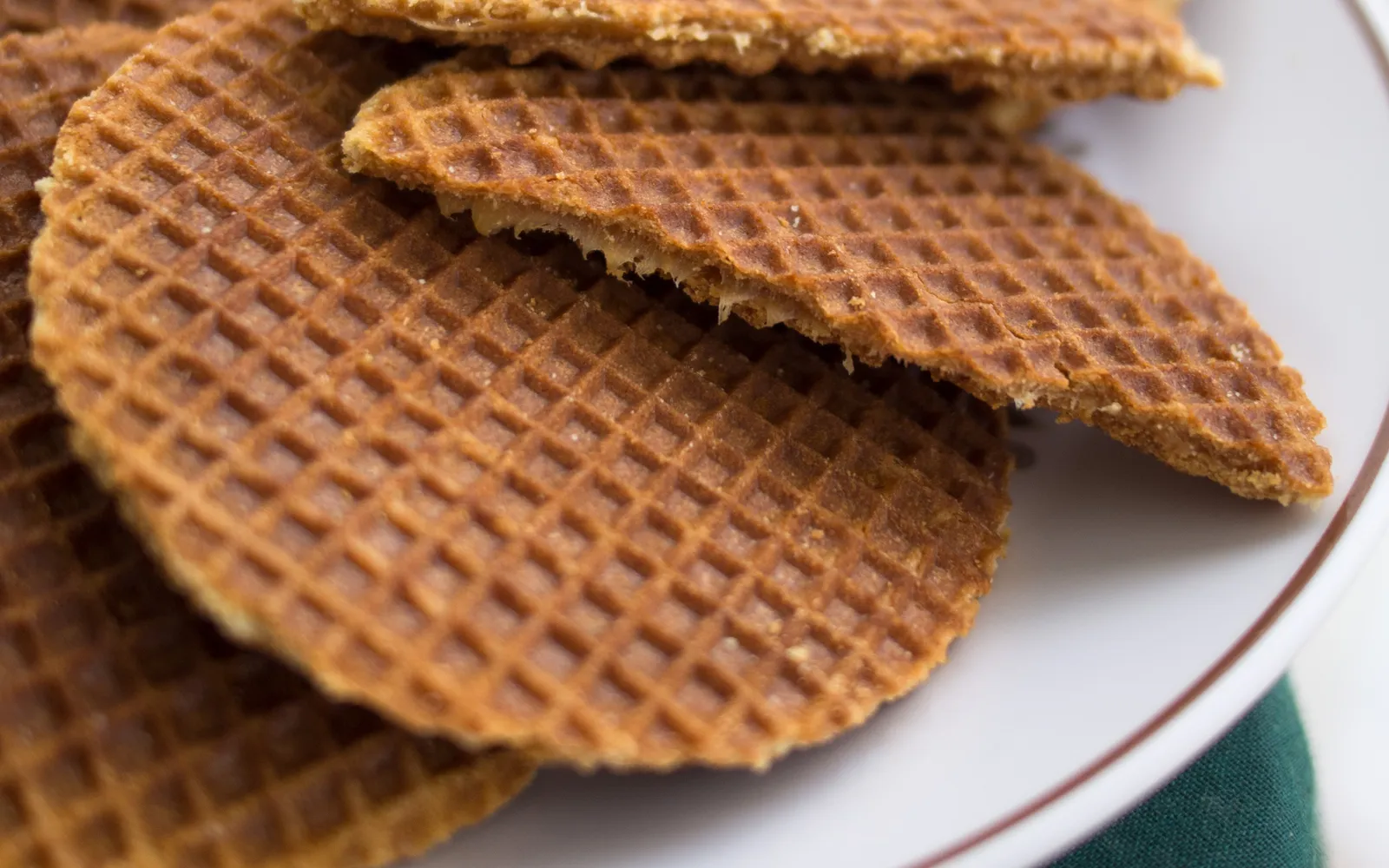
A Dutch classic that most travellers have encountered in a packet, but fresh from a Leiden stall it is in a different category entirely. A stroopwafel is two thin, crisp wafers pressed together with <em>stroopwafelsiroop</em> — a dense caramel syrup. The Dutch trick is to place it on top of a hot coffee or tea cup for a minute or two before eating, letting the steam soften the syrup in the centre until it turns warm and molten. The scent of fresh wafer and hot caramel is one of the most arresting smells in any Dutch market.
- Buy fresh from a market stall where they are baked to order that day. The difference from a packaged version is significant — fresh stalls usually have a queue of students.
- Rest it on your hot coffee or tea for 1–2 minutes before eating. That is the correct method, and the most rewarding one. Do not eat it cold straight from the bag.
- It makes an excellent gift. A box of fresh stroopwafels from a city bakery keeps for 1–2 weeks in a dry place.
 #4
#4 Bitterballen
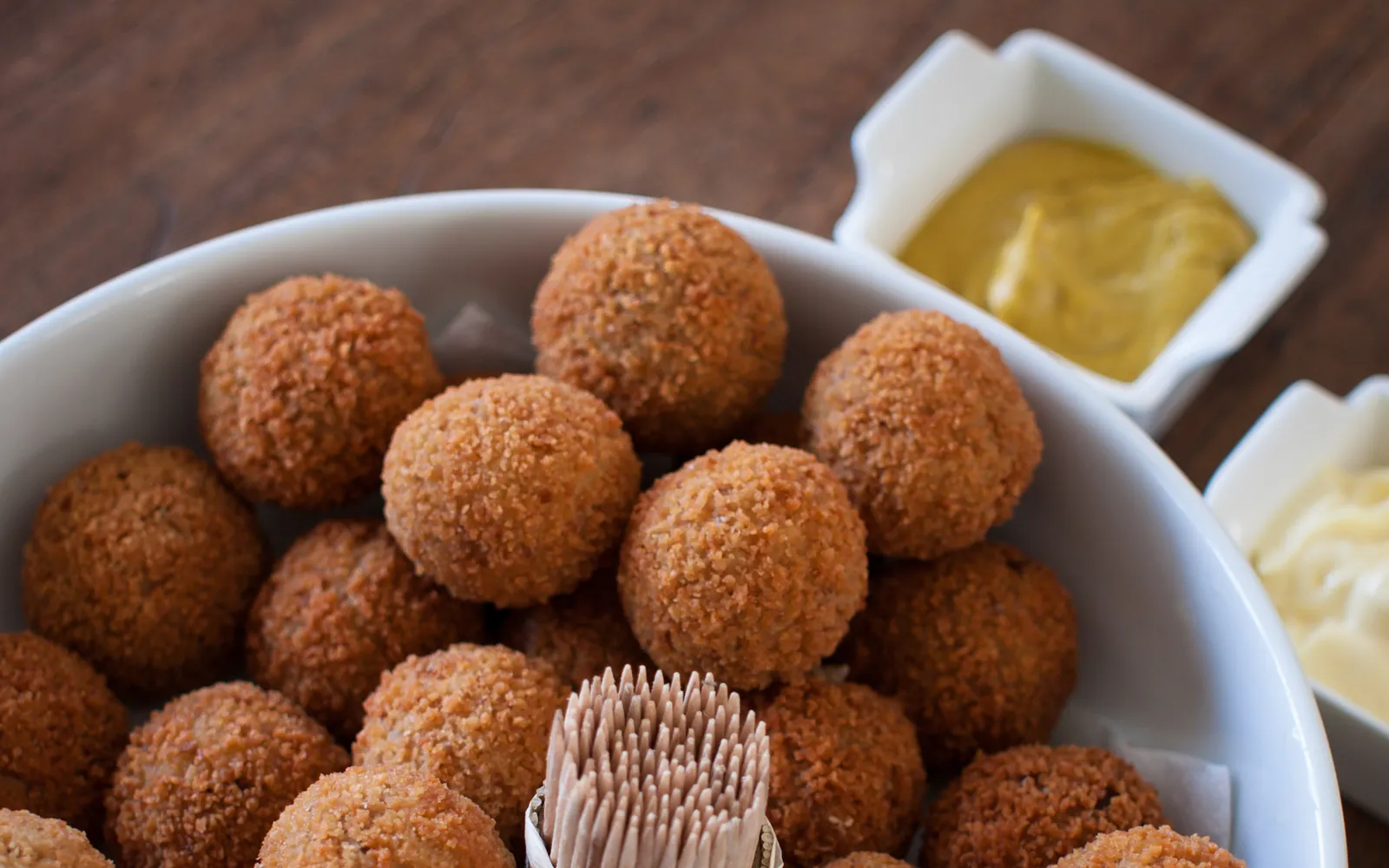
The indispensable Dutch bar snack, inseparable from a cold beer and a canal-side conversation. Bitterballen are ping-pong-sized spheres with a breadcrumb crust that shatters on the bite to reveal a thick, piping-hot beef or chicken ragout inside. They come straight from the fryer — dangerously hot in the middle — and are always eaten with sharp yellow Dutch mustard. The flavour is somewhere between a croquette and a pot of concentrated gravy, and they taste considerably better in the low-key atmosphere of a neighbourhood bar than any description suggests.
- Wait 2–3 minutes after they arrive before biting in. The filling stays scorching for longer than you expect; Dutch people know this from experience.
- Dip in mustard with every bite — do not skip this. Dutch mustard is sharper and smoother than many other varieties and it completes the dish.
- Order alongside a small cold Heineken or Amstel — known as a <em>borrelsnack</em>, the authentic Dutch drinking-snack ritual.
 #5
#5 Patat (Dutch Fries)
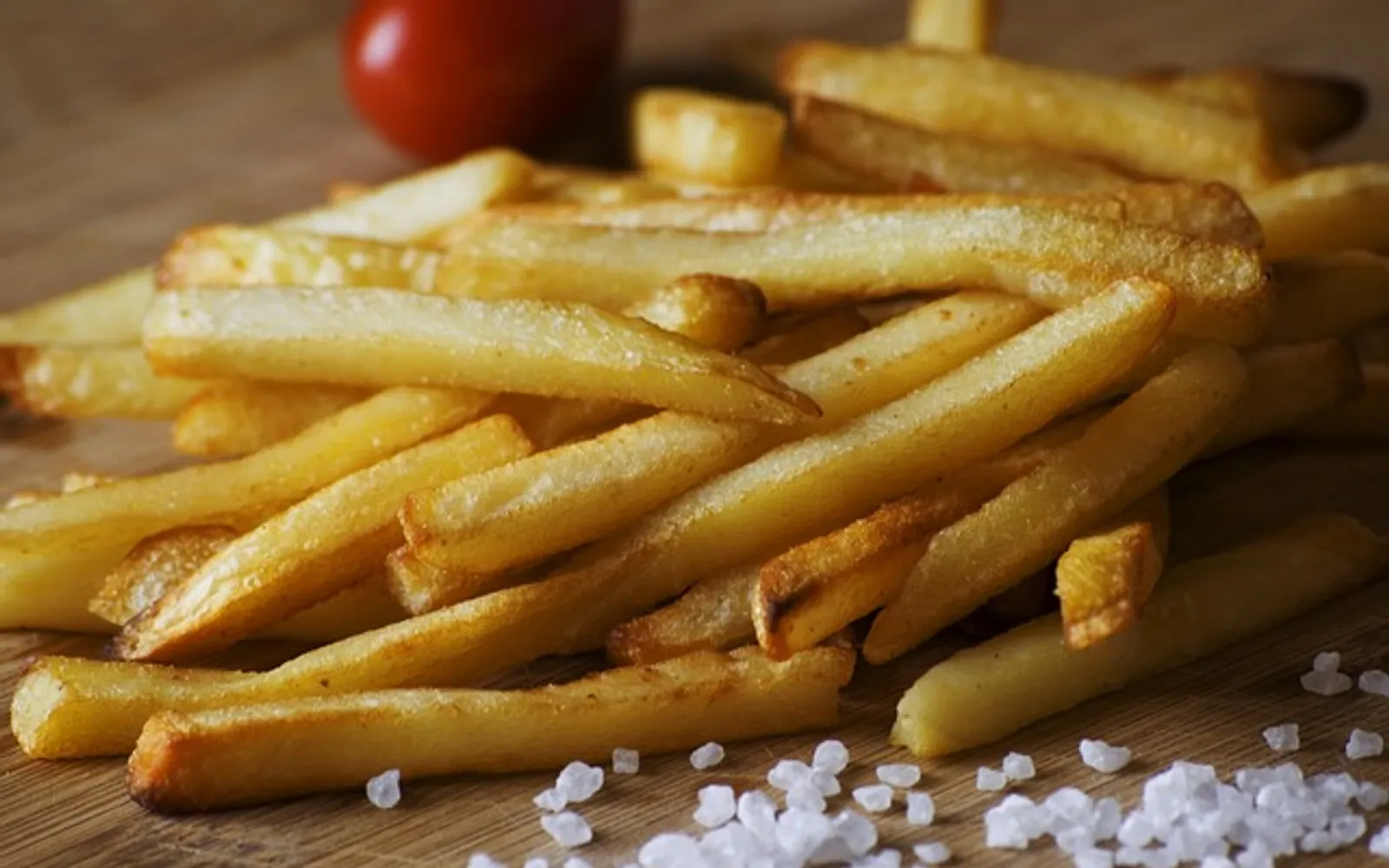
Dutch fries outperform most of the rest of Europe's, despite the fact that Dutch people call them <em>patat</em> rather than french fries. The difference is in the cut — thicker than the French standard — and the double-fry method, which produces a crisp shell around a fluffy interior. They come in a paper cone with <em>fritessaus</em>, a Dutch-style mayonnaise that is slightly thicker and mildly sweeter than the standard version. Other sauce options include satay (peanut sauce) and <em>speciaal</em> (chopped onion, mayonnaise, and ketchup combined), the most popular order among locals.
- Order <em>patat speciaal</em> to get all three Dutch sauces in one cone — it is the most popular local choice, not a tourist gimmick.
- A good frituur cuts its potatoes fresh rather than using frozen. Look for a bright yellow colour and a soft interior — signs of a real fresh cut.
- Eat them immediately while hot. The texture changes noticeably as they cool. They are best as a walking snack, consumed straight from the cone.
 #6
#6 Dutch Cheese (Edam and Gouda)
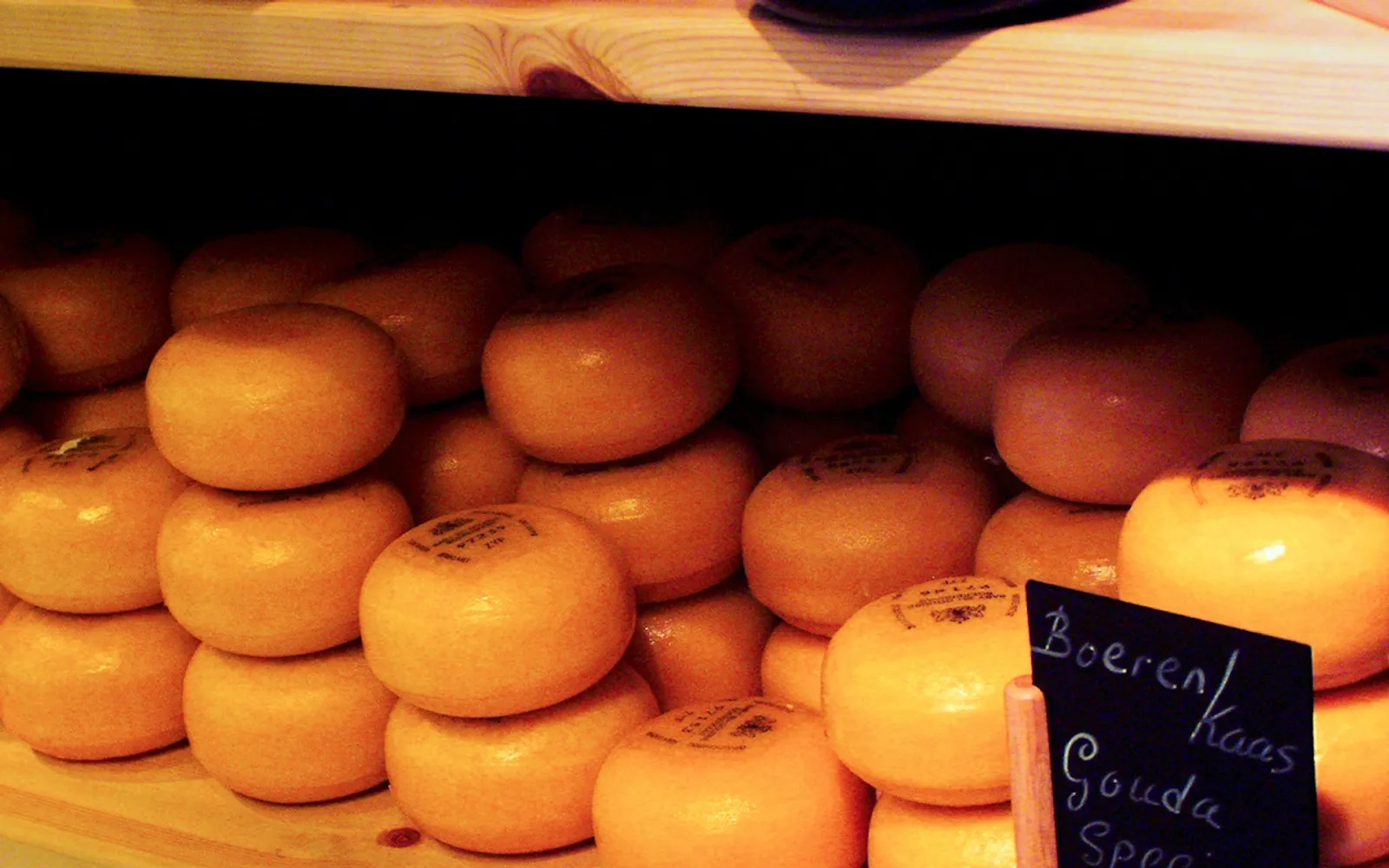
The Netherlands produces more cheese per capita than any other country in Europe, and fresh market cheese in Leiden is a different product from the export versions most visitors have already tried. Fresh Gouda is mild and gently sweet, nothing like the salty, hard-pressed version sold abroad. <strong>Leiden cheese</strong> — a local speciality produced in this city for more than 400 years — has cumin seeds (<em>komijn</em>) pressed into the body of the cheese, giving it a faintly spiced, nutty aroma unlike anything else. It is made specifically in Leiden and is difficult to find elsewhere.
- Always ask to taste before buying. Good Dutch cheese shops will have a knife and sample plate ready for customers — there is no obligation to purchase.
- Try Leiden cheese with its cumin seeds alongside a plain Gouda to compare. The difference is immediate, and Leiden cheese is genuinely hard to find outside this city.
- Vacuum-packed small pieces can be carried home and clear customs without issue. Keep it well-wrapped and cold; it keeps for 2–3 weeks after the seal is broken.
Where to stay in Leiden for this trip
A well-located hotel means less commuting and more sightseeing. Here are real, top-rated stays in Leiden — compare Agoda · Booking · Trip.com in one click.
Boutique Hotel Steenhof Suites
Affiliate links — we may earn a commission at no extra cost to you. Details
Boutique Hotel d'Oude Morsch
Affiliate links — we may earn a commission at no extra cost to you. Details
ExLibris Boutique Hotel
Affiliate links — we may earn a commission at no extra cost to you. Details
Huys van Leyden
Affiliate links — we may earn a commission at no extra cost to you. Details
Tours, tickets & activities in Leiden
Day tours, attraction tickets and travel essentials for Leiden — book ahead on Klook with mobile e-tickets.
Affiliate links — we may earn a commission at no extra cost to you.
Before You Pack
Dutch food is at its best eaten in local places that do not bother with an English menu board. Leiden's outdoor markets along the canals open every Wednesday and Saturday and are the single best spot to find raw herring, fresh Dutch cheese, and traditional pastries at prices well below what you pay in tourist-facing restaurants.