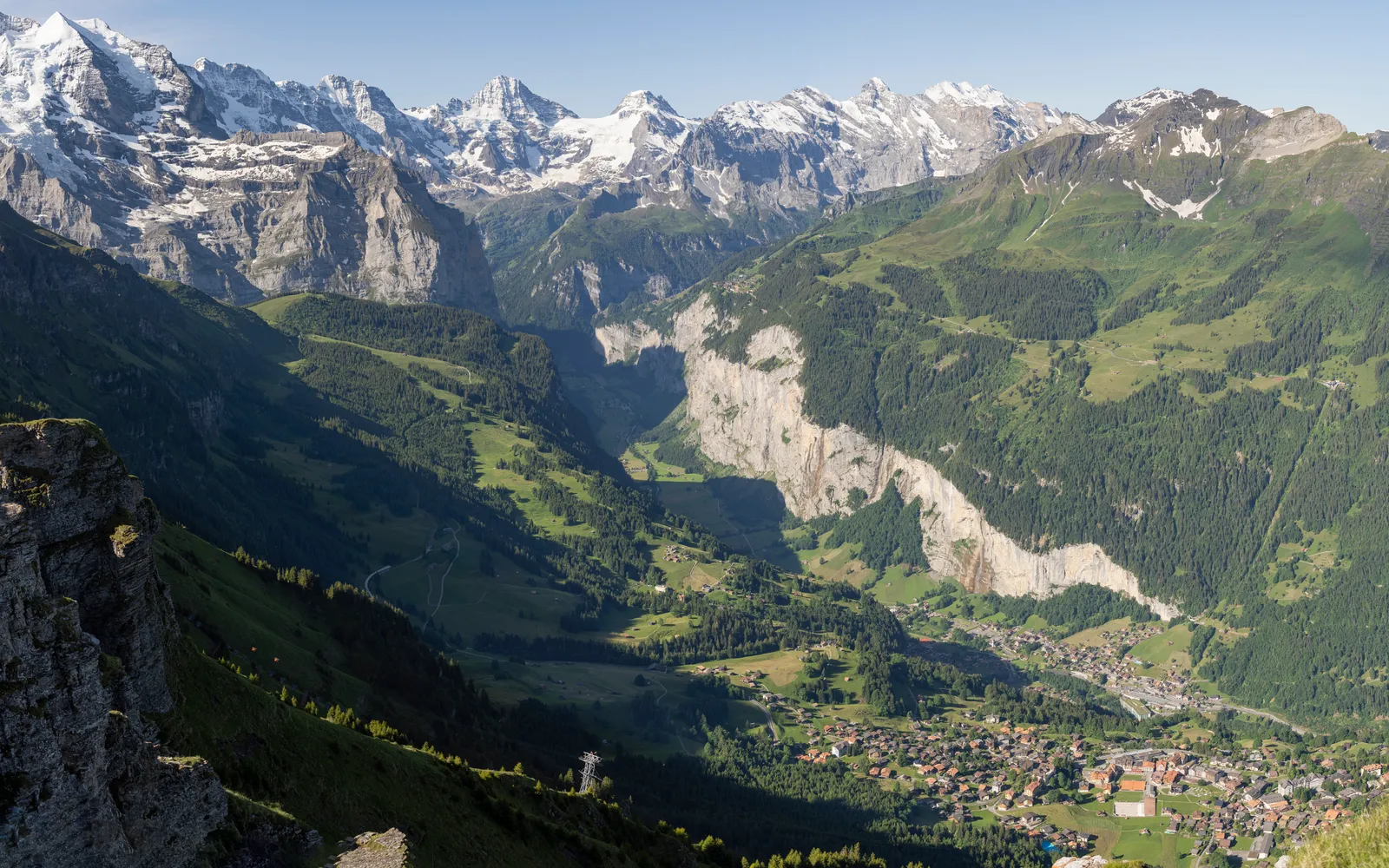
Swiss food in Lauterbrunnen is not fancy — it is deeply comforting. Cheese fondue and raclette are dishes the Bernese have eaten since medieval Alpine herders first melted their surplus cheese over a fire. Every ingredient here comes directly from cows grazing the valley's fresh Alpine pastures, and the cheese, milk, cream and butter carry a depth of flavour you simply do not get in the city. Make time for at least one meal with real Swiss cheese, ideally sitting with a view of the waterfalls.
 #1
#1 Cheese Fondue
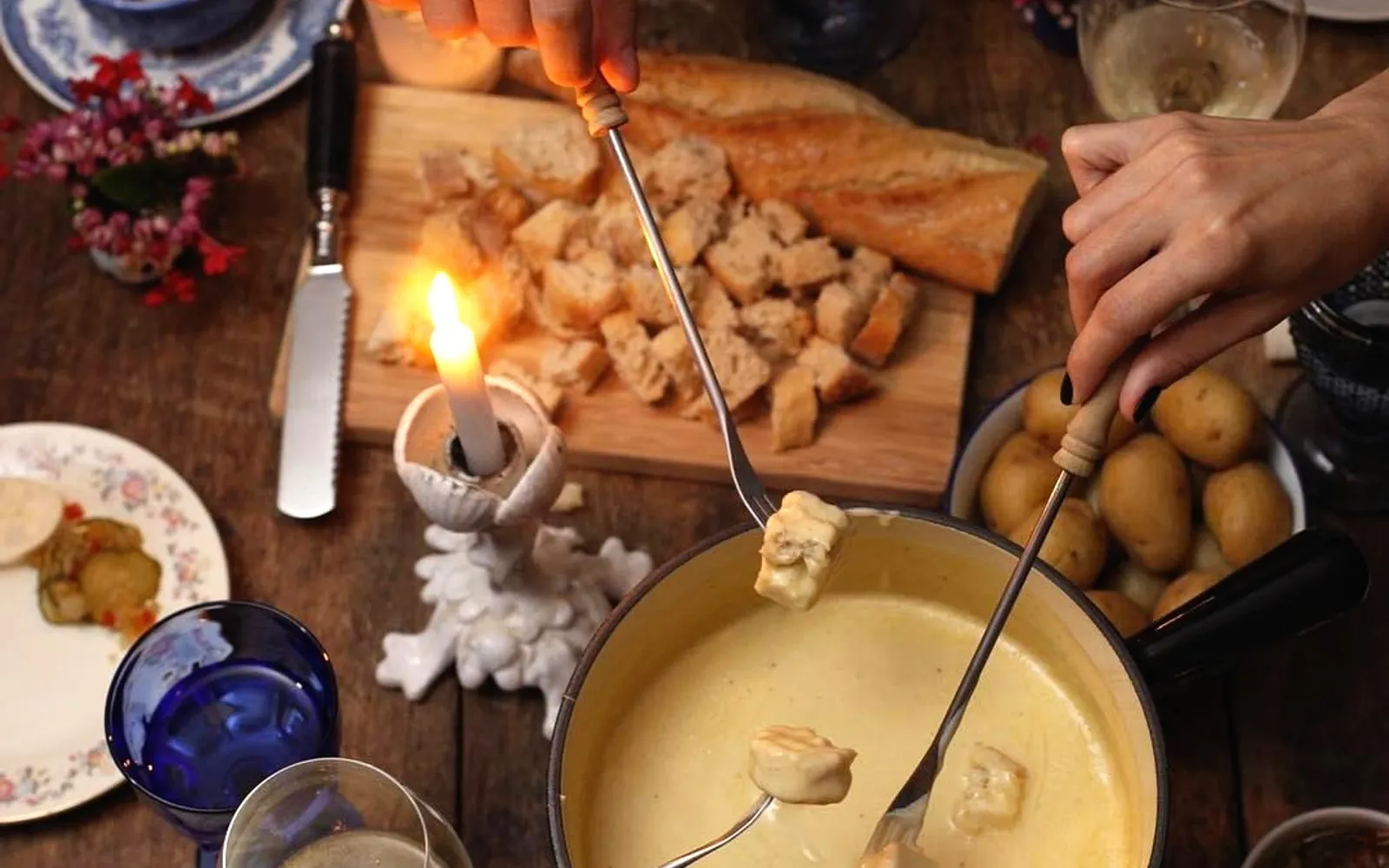
The most iconic Swiss dish — and one that genuinely tastes different when eaten in Switzerland itself. Fondue in the Bernese Oberland is made from Gruyère and Vacherin cheeses blended with Chasselas white wine and a touch of garlic. The local cheese, from cows that graze this valley's Alpine grass directly, has a richer and more complex flavour than any fondue you'll find in a city restaurant. Served with chunks of bread, boiled potatoes and pickles, this is the meal to book on a cold evening.
- Order moitié-moitié (half Gruyère, half Vacherin) — the classic formula and the most balanced starting point for first-timers, not too salty, not too sharp.
- If your bread falls off the fork into the pot, Swiss tradition requires you to buy a round of wine for the table — or sing a song in some places. Ask before you start.
- Drink warm tea or white wine alongside, not cold water. The Swiss believe cold water makes the cheese congeal in your stomach (science is uncertain, but cold water with hot cheese simply does not taste right either).
 #2
#2 Raclette
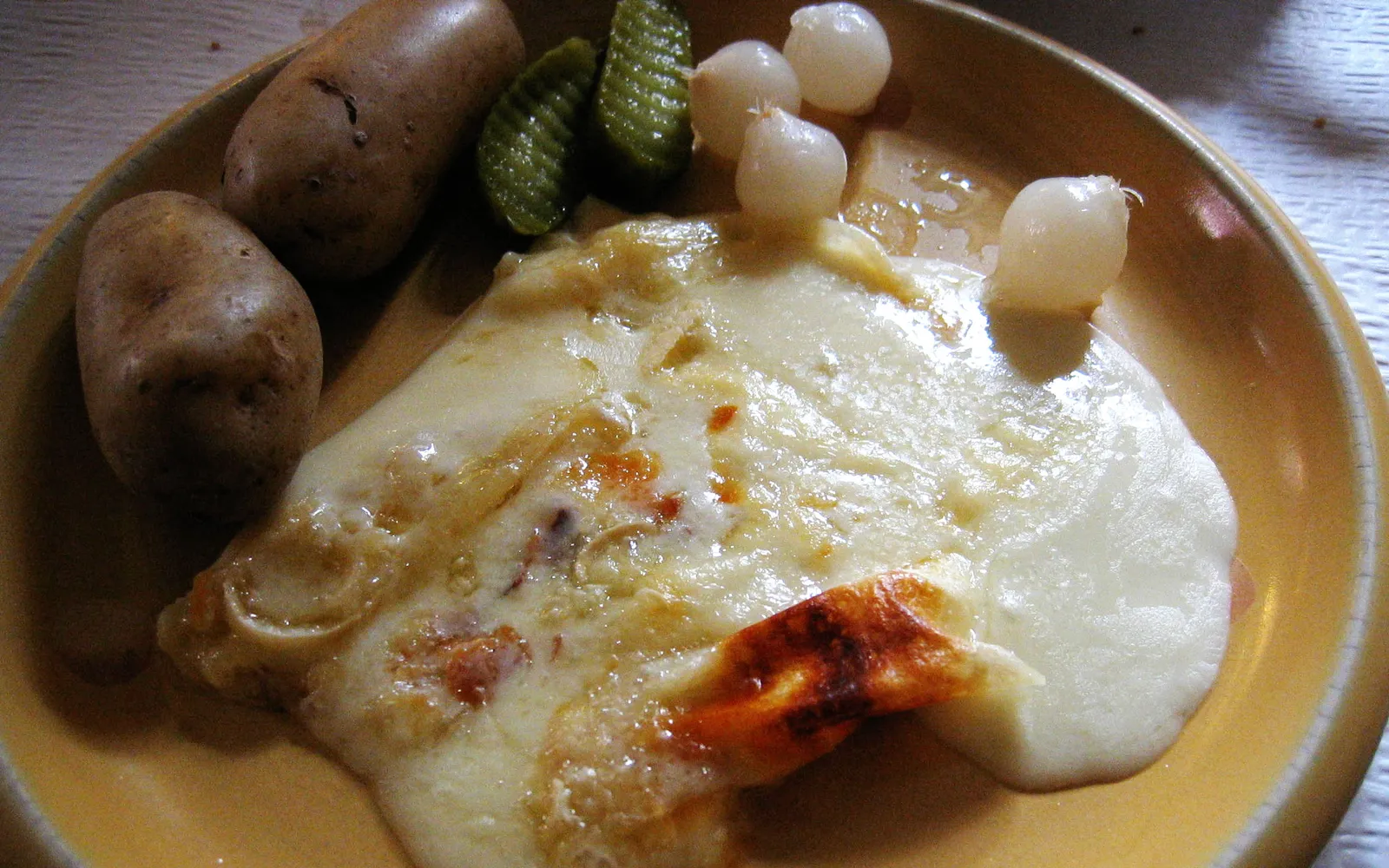
An Alpine dish with over 500 years of history — the meal that shepherds used to warm themselves through winter. A heavy half-wheel of raclette cheese is positioned beside a fire or heating element; as the face melts to golden, you scrape it directly over jacket potatoes. Served with cornichons, pickled onions and black pepper, the sharp saltiness of the cheese is cut by the soft potato and the acidity of the pickles. The Swiss comfortably eat 200–300 g of cheese in a single sitting.
- Tell the server how well you like your cheese melted. A longer heat gives a crispier edge and a more intense flavour — worth asking for.
- Most restaurants serve tabletop raclette using small pans under a grill element, not the traditional open-fire half-wheel. If you want the traditional version, look for a restaurant that uses a dedicated raclette machine.
- Expect to pay around 30–40 CHF per person before drinks — slightly more than fondue.
 #3
#3 Rösti
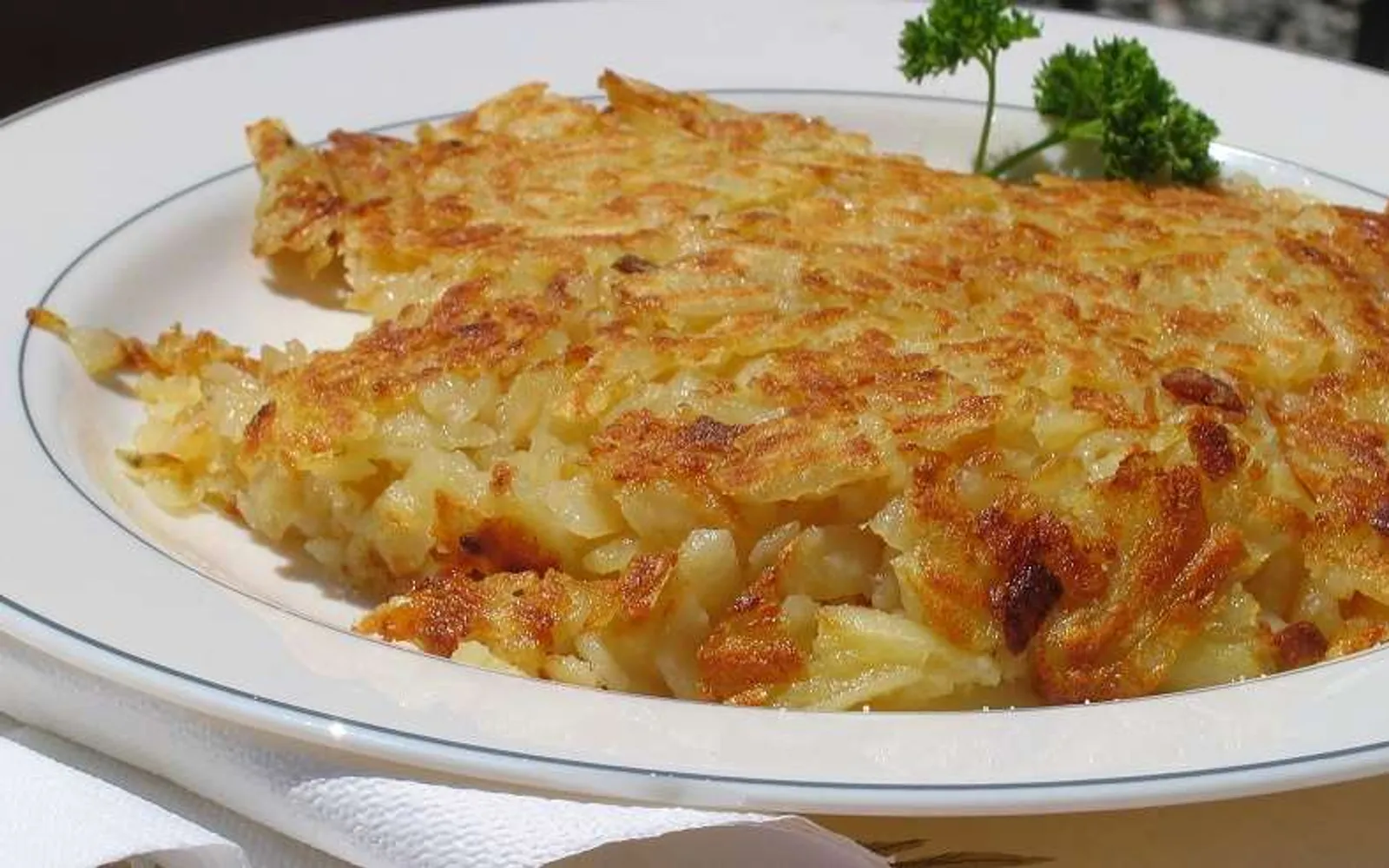
The national dish of German-speaking Switzerland — simple on paper, harder to execute well than it looks. Raw or par-boiled potatoes are coarsely grated and pressed into a butter pan until the outside is golden and crisp and the inside stays hot and soft. In the Bernese Oberland it often comes with onions, bacon or melted cheese mixed in. Rösti is the go-to for breakfast and lunch, and is the most affordable item on any Swiss menu. Add a fried or scrambled egg and you have a genuinely filling meal.
- Good Rösti uses freshly grated raw potatoes, not dried or pre-made potato mix. Worth asking the kitchen.
- Order Rösti mit Speck und Käse (with bacon and melted cheese on top) for the most substantial version — ideal fuel before a full day of hiking.
- Plain Rösti runs 12–18 CHF; toppings add another 5–10 CHF.
 #4
#4 Älplermagronen
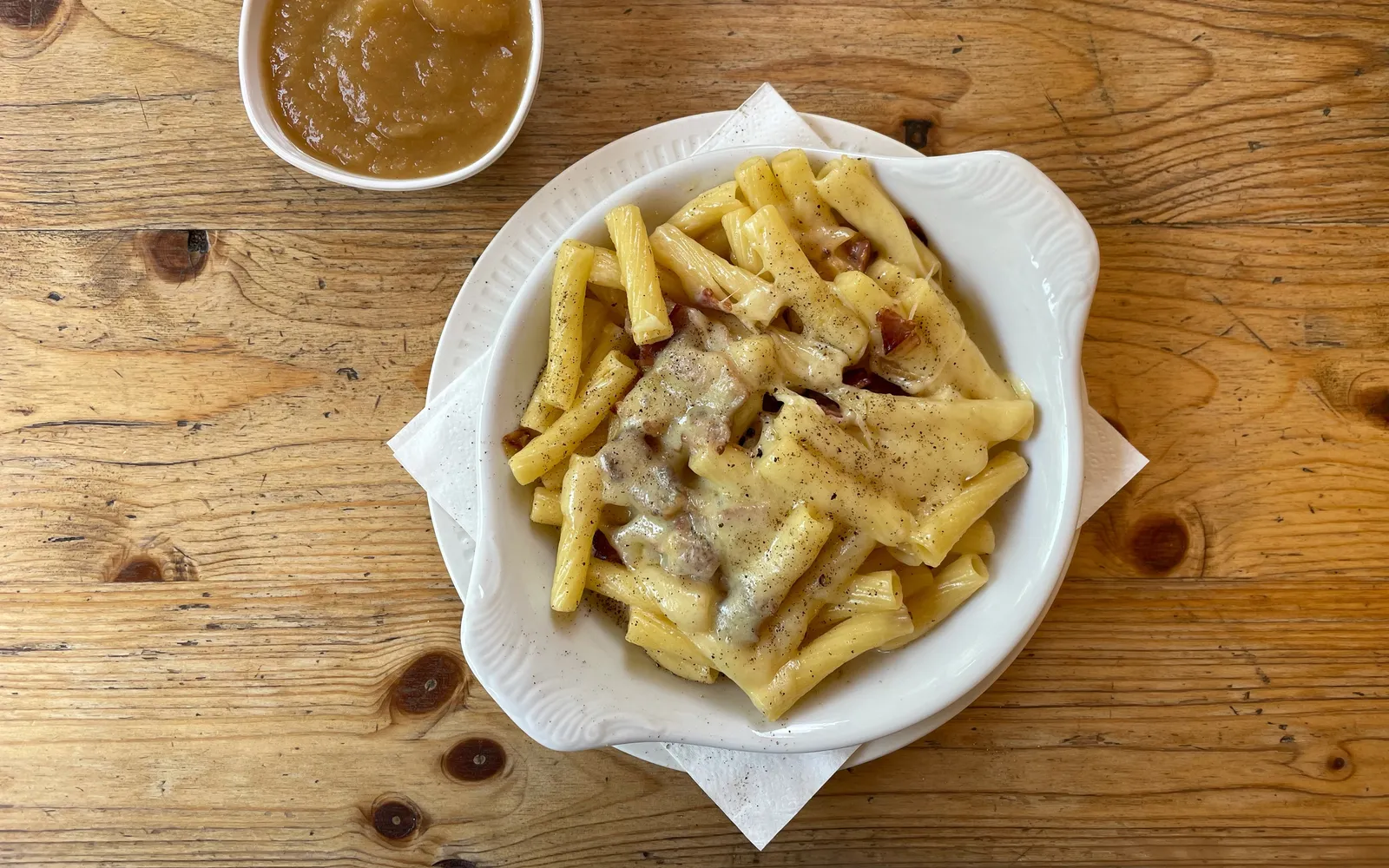
Alpine macaroni that sounds ordinary but consistently surprises people who try it. The pasta is boiled together with potatoes in a single pot, then folded through fresh cream, melting Alpine cheese and butter until everything binds into a soft, warm mass. Crispy golden fried onions go on top. It is served with apple sauce — yes, apple not tomato — and the sweet-tart fruit cuts the richness of the cheese in a way that makes complete sense after the first mouthful. Herdsmen in these mountains have been eating a version of this dish for generations.
- The apple sauce on the side is not a garnish. Eat a little with every forkful — the sweet acidity is what balances the fat from the cheese and cream.
- The name is pronounced <em>ALP-ler-ma-GRO-nen</em>. If you cannot manage it, pointing at the menu works perfectly — Swiss locals will not mind.
- Expect to pay 22–28 CHF. It is the best value on a traditional Swiss menu and will keep you full for several hours.
 #5
#5 Meringue with Double Cream
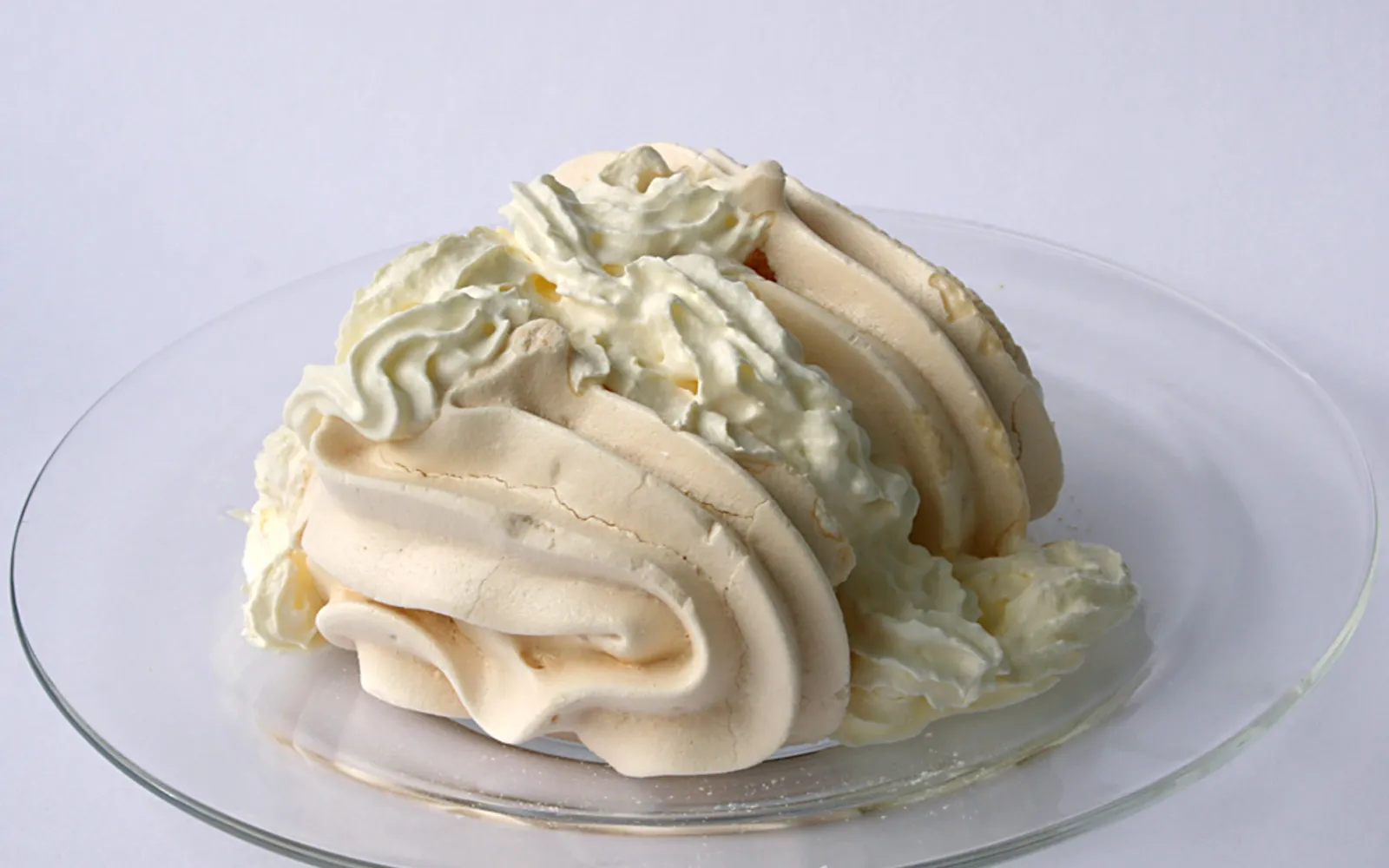
A Swiss dessert that most visitors walk past without ordering — and immediately regret. Swiss meringue is nothing like the French version: the pieces are larger, and the shell is dense and crisp all the way through, not just on the outside. It is served with <em>Greyerzer Doppelrahm</em> — double cream from the Gruyère valley — which is noticeably thicker and richer than standard whipped cream, sitting at 40–50% fat. You eat a spoonful of each together. Some places add fresh fruit or raspberry sauce alongside. It is the most reasonably priced dessert on any menu and finishes a meal cleanly.
- Swiss double cream is significantly richer than regular cream — 40–50% fat. If that is more than you want, ask for a smaller pour.
- Real Swiss meringue is made only from egg whites and sugar, no flour. It is worth checking that the restaurant makes it on-site rather than buying it pre-made.
- One serving with cream costs around 8–12 CHF — the best-value item on this list.
 #6
#6 Swiss Chocolate
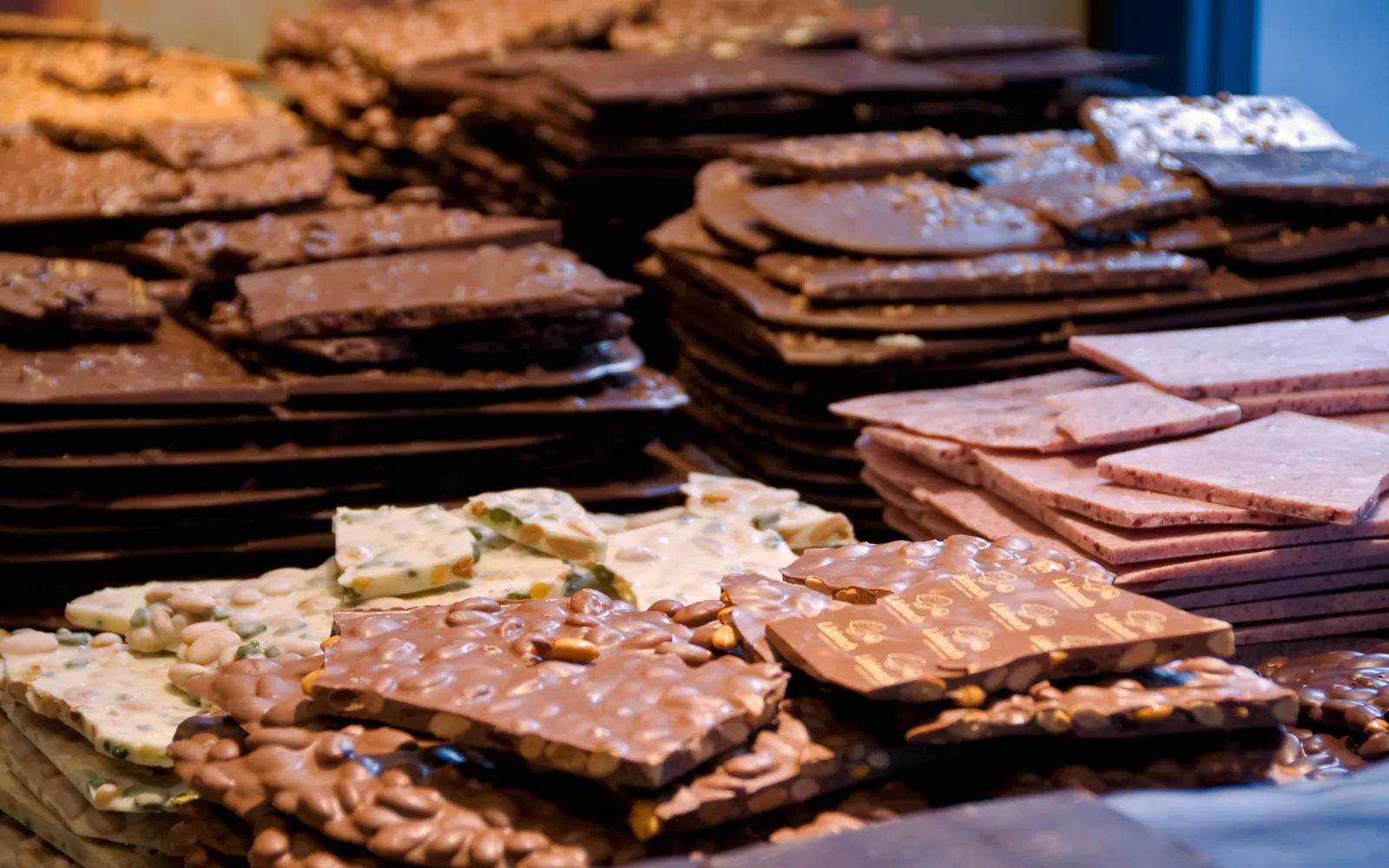
Switzerland has been making some of the world's finest chocolate since the 19th century, and Lauterbrunnen has small local brands you can only buy here. Swiss milk chocolate tastes different from other countries' because it uses fresh milk from Alpine-grazing cows — the result is a rounder sweetness and a more pronounced dairy note. <strong>Lindt</strong> and <strong>Cailler</strong> are genuinely Swiss brands, but if you want artisan chocolate, look for small shops in the village.
- Buy chocolate at the Coop or Migros supermarket in the village — the same brands cost roughly twice as much in souvenir shops.
- Good Swiss chocolate has a short ingredient list and no preservatives. If the label runs to ten or more ingredients, put it back.
- The valley stays cool, so chocolate does not melt easily — it travels well in a hiking pack as an energy snack on the trail.
Where to stay in Lauterbrunnen for this trip
A well-located hotel means less commuting and more sightseeing. Here are real, top-rated stays in Lauterbrunnen — compare Agoda · Booking · Trip.com in one click.
Camping Jungfrau Holiday Park
Affiliate links — we may earn a commission at no extra cost to you. Details
Hotel Silberhorn
Affiliate links — we may earn a commission at no extra cost to you. Details
Hotel Schützen
Affiliate links — we may earn a commission at no extra cost to you. Details
Hotel Stechelberg
Affiliate links — we may earn a commission at no extra cost to you. Details
Tours, tickets & activities in Lauterbrunnen
Day tours, attraction tickets and travel essentials for Lauterbrunnen — book ahead on Klook with mobile e-tickets.
Affiliate links — we may earn a commission at no extra cost to you.
Before You Pack
Most restaurants in Lauterbrunnen close after 9 pm, and some shut on Mondays. Book a table in advance during peak season (July–August), especially for fondue on a cold evening — tables fill up fast. If you want to save money, the Coop supermarket in the village sells Alpine cheese at a fraction of restaurant prices, and picking some up to eat back at your accommodation is a perfectly good option.