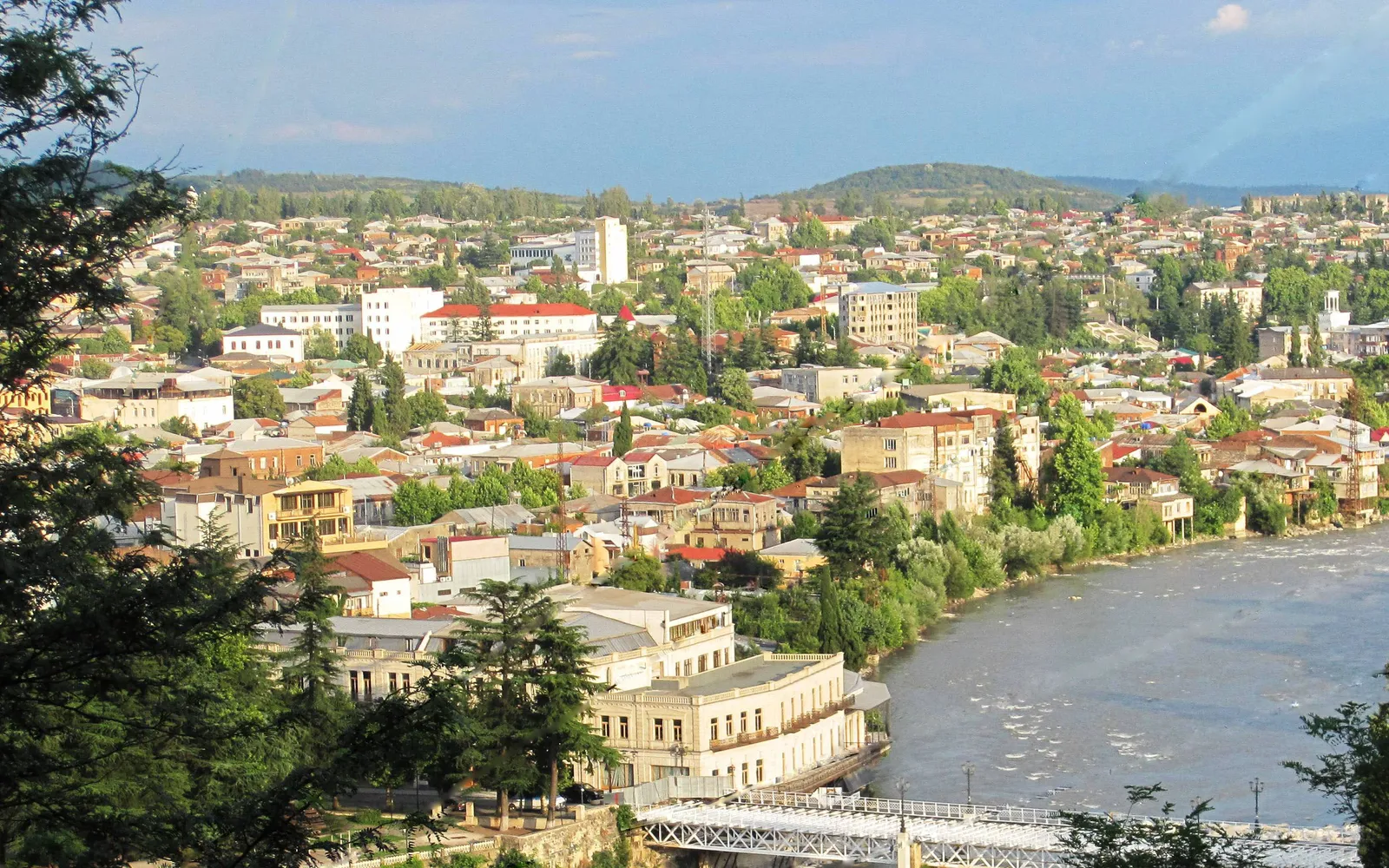
Kutaisi is Georgia's second city and one of the oldest continuously inhabited cities on Earth. Gelati Monastery and Bagrati Cathedral are both UNESCO World Heritage Sites, reflecting the glory of Georgia's 12th-century Golden Age. Beneath the city lies one of Europe's most beautiful stalactite caves, and Caucasian rainforest keeps the surrounding hills green year-round. It's unhurried, affordable, and still carries the authentic Georgian character that Tbilisi has largely left behind.
 #1
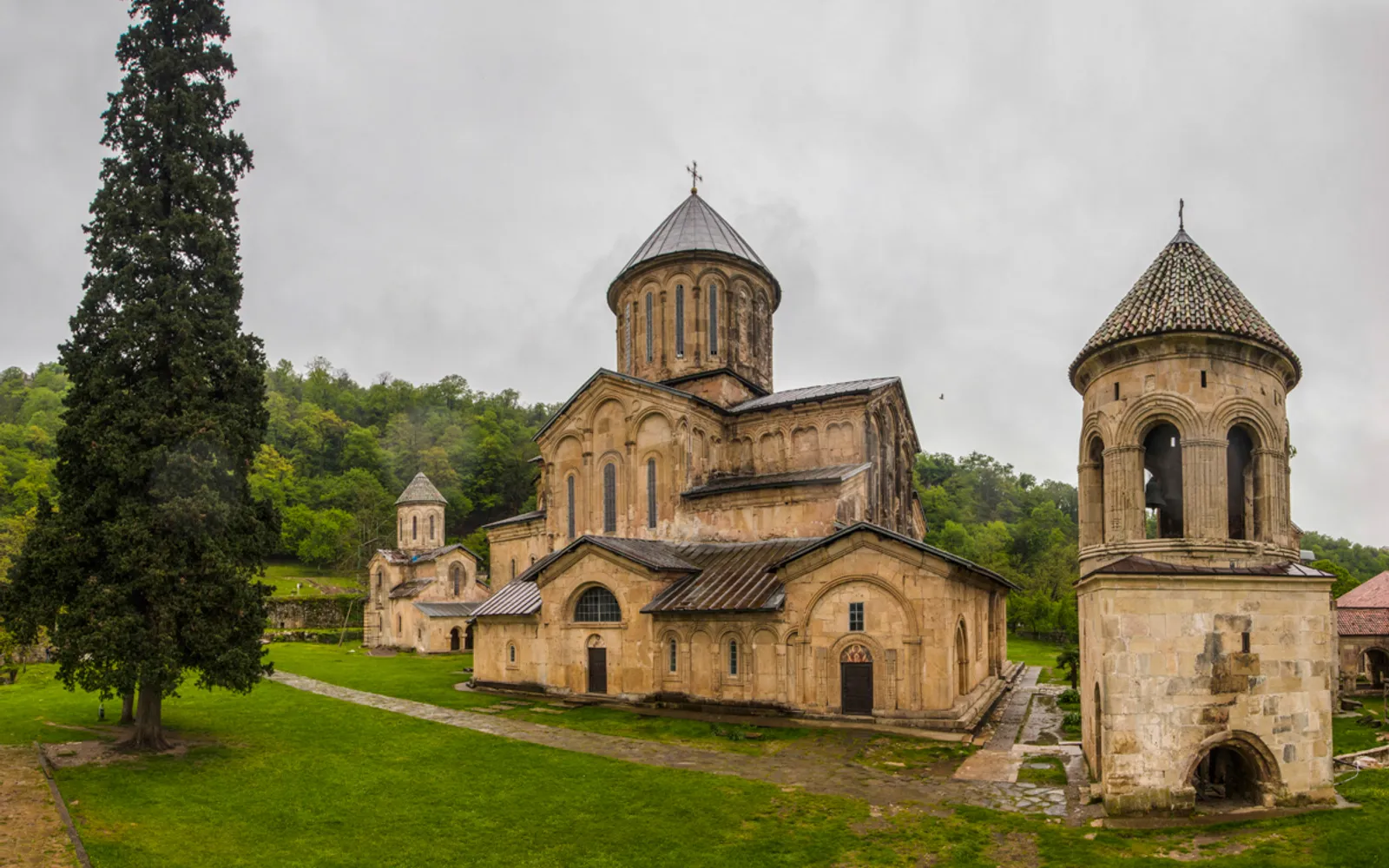
#1 Gelati Monastery
Georgia's greatest monastery, founded in 1106 by King David the Builder — the king who unified Georgia and whose remains are buried beneath the entrance gate. Inside the main church, golden Byzantine frescoes over 900 years old cover the walls. It is listed as a UNESCO World Heritage Site alongside Bagrati Cathedral. The setting is serenely quiet among forested hills, and despite growing visitor numbers it has not yet become crowded.
- Dress modestly — women must cover their heads and wear a wrap around the waist before entering. Wraps are available to borrow at the entrance.
- Open daily 10:00–18:00, free entry, though donations for candles inside the church are welcome.
- Combine the visit with nearby Motsameta Monastery, just 4 km away, to save on taxi fares.
 #2
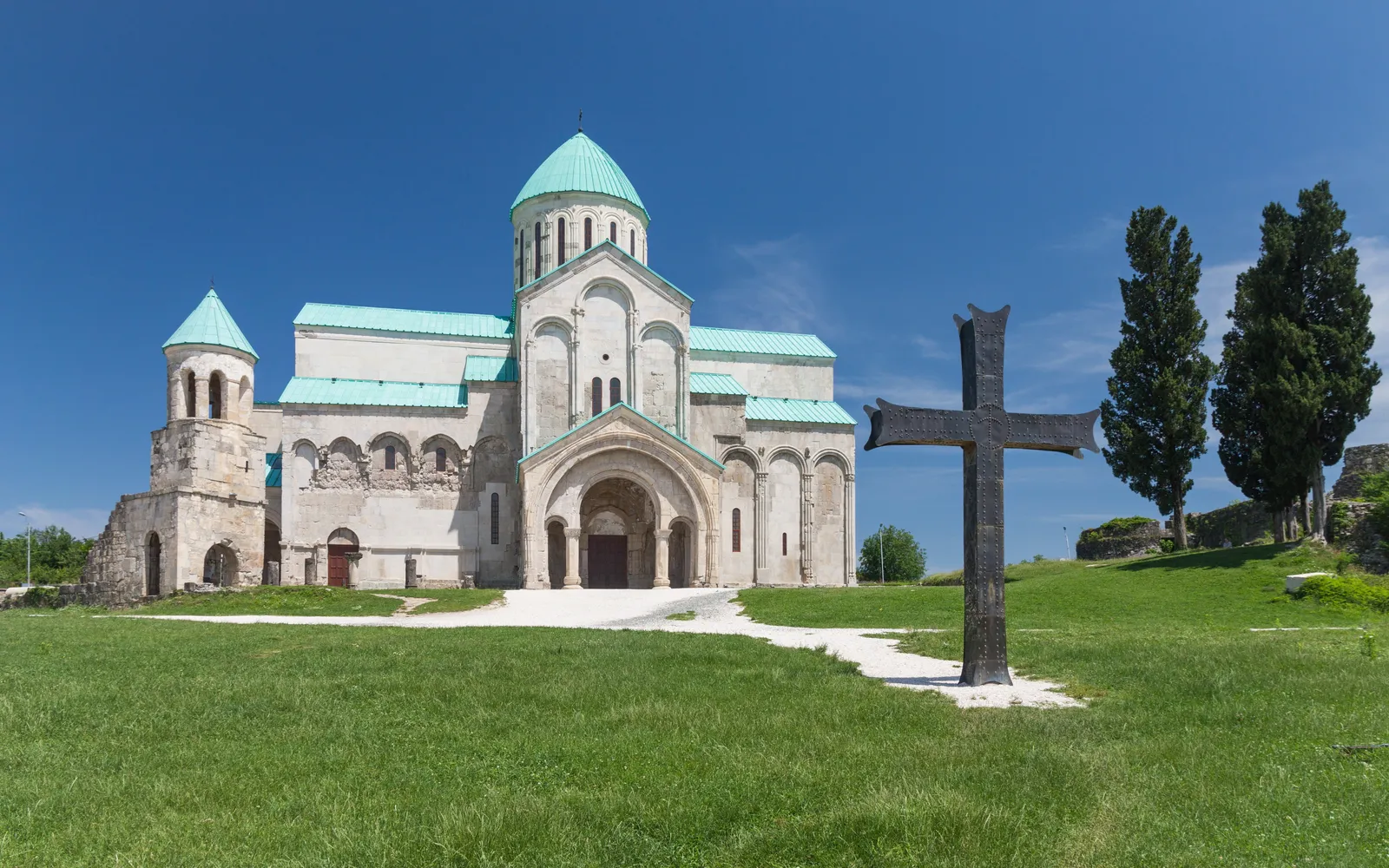
#2 Bagrati Cathedral
A medieval cathedral over 1,000 years old that rises on a hilltop at the heart of the city. Built in the 11th century and partially blown up by Ottoman forces in 1692, parts have since been restored while others remain as ruins — and that tension between decay and survival is precisely what makes it compelling. Its hilltop position gives the finest panoramic view of Kutaisi and the Rioni River in all of western Georgia.
- Walking up the hill from the city centre takes 20–30 minutes, or take a taxi to the upper approach.
- Open at all hours, no entry fee — locals come here to relax on evenings and weekends.
- UNESCO temporarily removed Bagrati Cathedral from its World Heritage list in 2010 due to a controversial restoration — an interesting piece of history worth raising with a local guide.
 #3
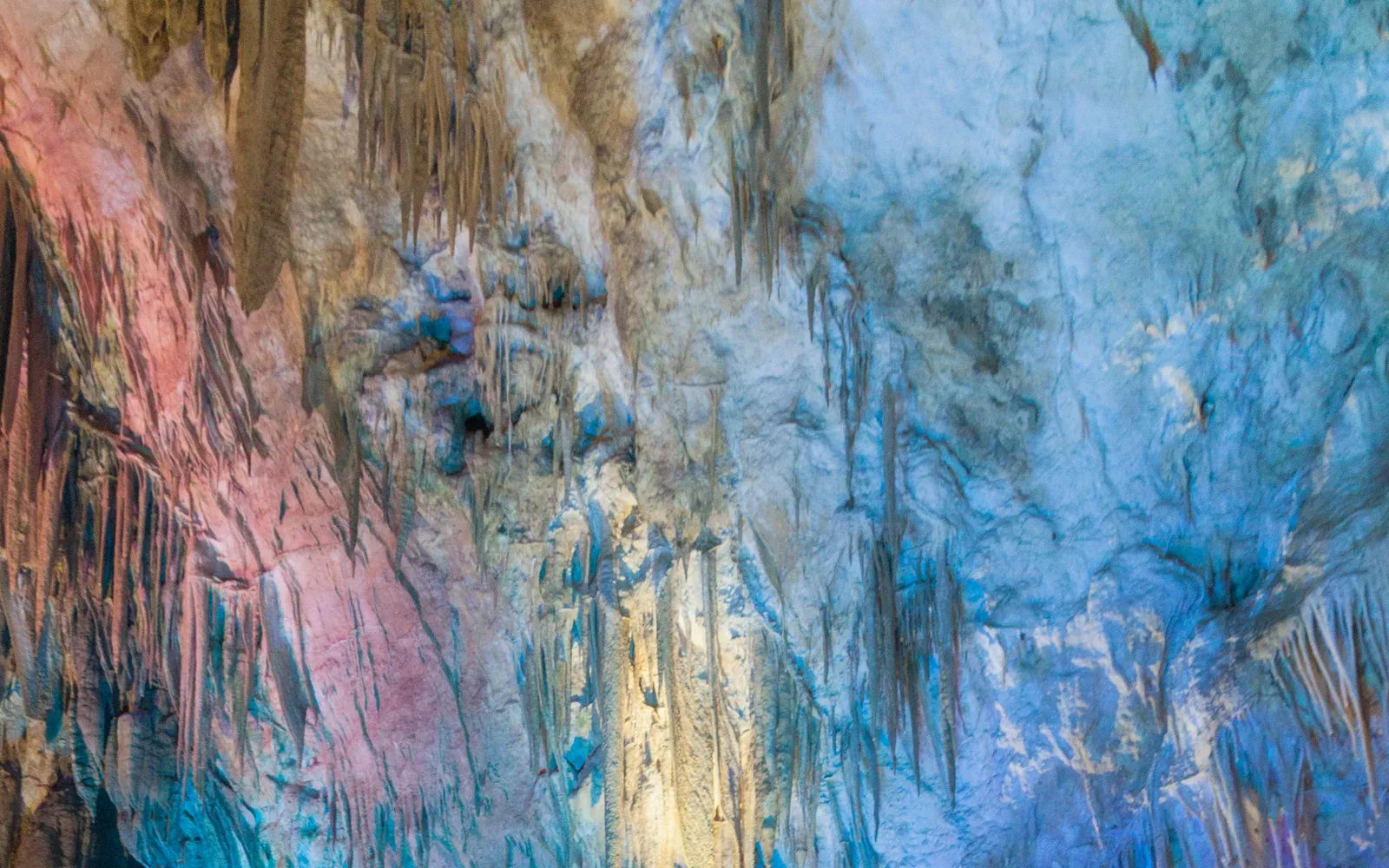
#3 Prometheus Cave
Georgia's longest and most visually striking limestone cave, discovered in 1984. The full system runs 11 kilometres; 1.4 kilometres are open to visitors, divided into 6 large natural chambers filled with unusually shaped stalactites, crystal-clear underground pools, and stone waterfalls. A boat ride through the final section is available as an optional add-on. The cave takes its name from the Titan Prometheus of Greek mythology, whose legend is closely tied to the Caucasus.
- Walking tour: 1.4 km in about 1.5 hours, 17 GEL. With the boat ride: 23 GEL — the extra cost is genuinely worth it.
- The cave stays at 14°C year-round — bring a light jacket regardless of the season.
- Book tickets online or arrive early, as summer crowds are heavy. Tours depart every 20 minutes.
 #4
#4 Motsameta Monastery
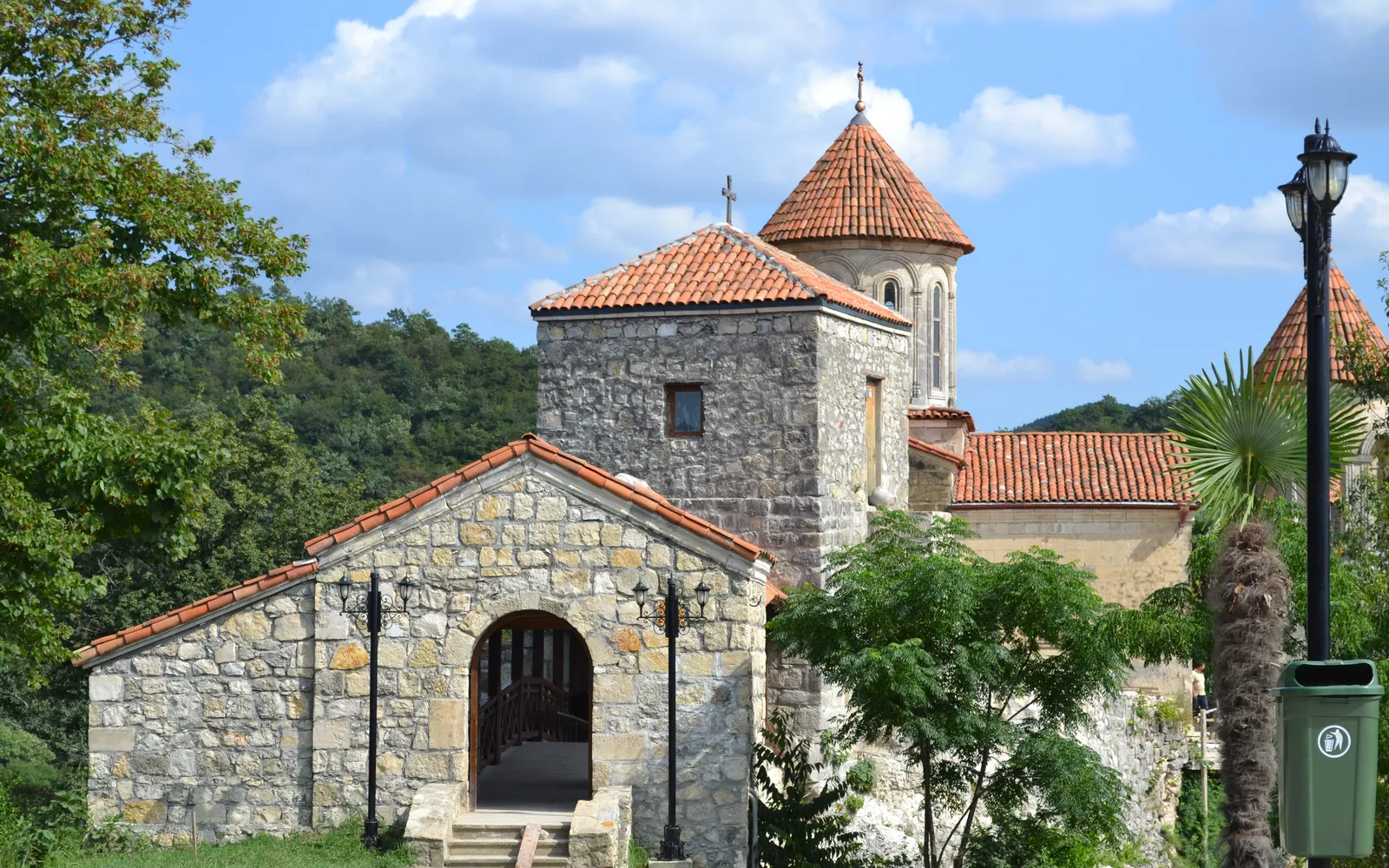
A small monastery set on a sheer rock cliff above a tributary of the Rioni River. Built in the 8th century to honour two princes executed for refusing to convert to Islam, it carries a layered history in a compact setting. The view from the narrow wooden suspension bridge that leads to the monastery is among the most striking — and slightly vertiginous — in Georgia. A short woodland trail leads up to it, making this a natural fit for anyone who wants landscape and history in a single stop.
- Easy to combine with Gelati Monastery in one day — the two are just 4 km apart.
- The path from the base of the hill to the monastery is steep and can be slippery mud — wear shoes with good grip.
- The church is not always open. If the door is closed, wait a moment or knock gently — the caretaker is usually nearby.
 #5
#5 Kutaisi Botanical Garden
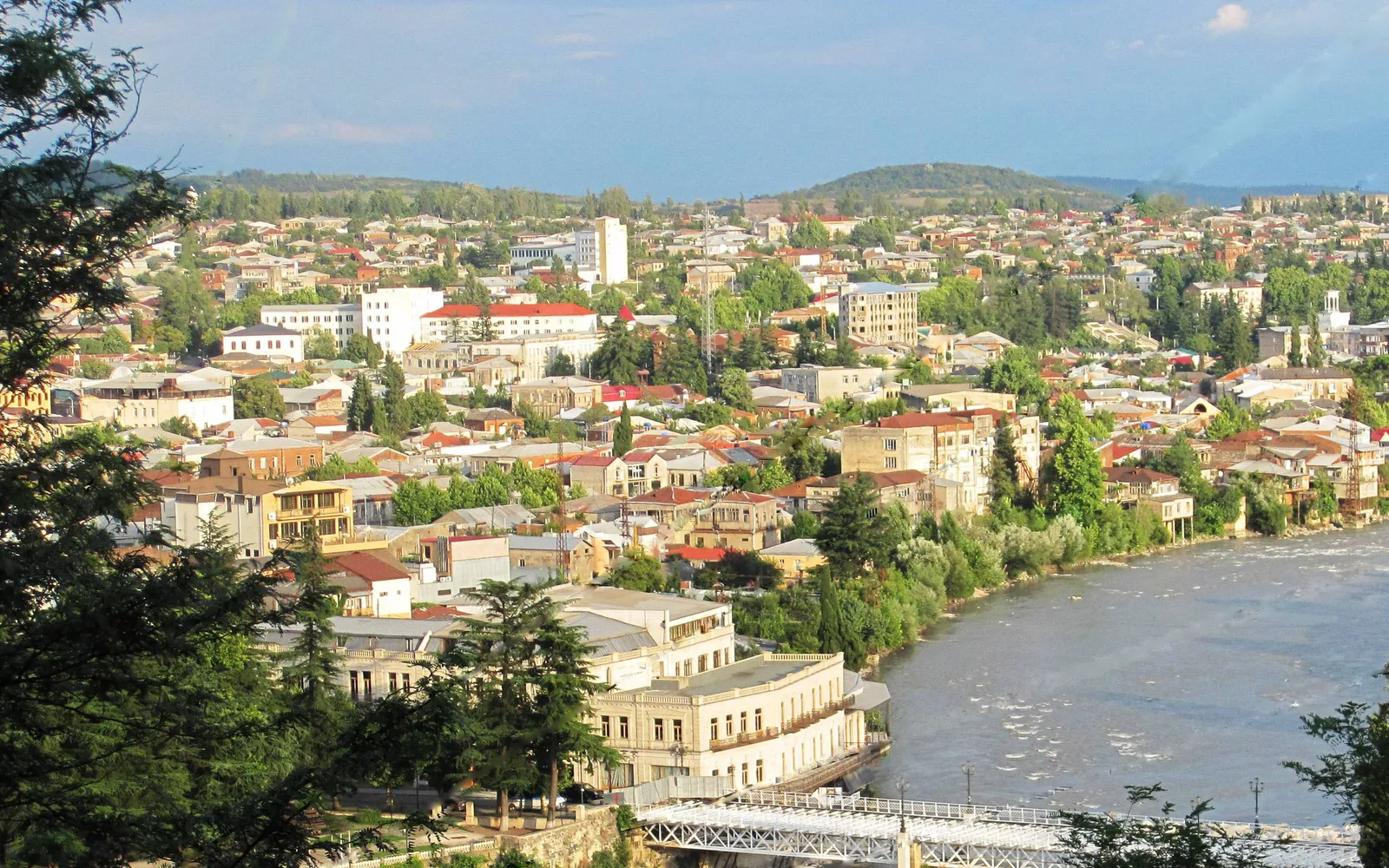
A botanical garden established in 1845, set on a hillside overlooking the Rioni River in the centre of the city. It holds over 2,000 plant species from the Caucasus region and beyond. Cliffside walking paths offer fine river views. Locals come here on evenings and weekends to unwind — the atmosphere is calm in a way that sets it apart from the city's main sights. Flowers come into full bloom in spring, making it particularly worth a visit from April through June.
- Entry 3 GEL, open daily 10:00–18:00 — very reasonable compared with botanical gardens across Europe.
- Descend via the river-side exit to arrive near the old bridge and the historic district, which is more convenient than retracing your steps.
- May–June is peak bloom for roses and a wide variety of flowering plants — the best time of year for a visit.
 #6
#6 Sataplia Nature Reserve
A compact nature reserve that packs two unusual draws into one site: genuine 100-million-year-old dinosaur footprints pressed into open-air limestone, and a small but beautiful stalactite cave. A 2 km nature trail through Caucasian rainforest leads out to a clifftop viewpoint with clear-day views over Kutaisi and the Imereti plain. Good for families and anyone who enjoys combining natural history with landscape — plan around two hours to cover both the trail and the cave.
- Entry 10 GEL, covering both the cave and the hiking trail. Allow about 2 hours for the full circuit.
- Sturdy shoes with good grip are essential — the forest trail can become slippery after rain.
- The reserve pairs well with Prometheus Cave in a single day, but get an early start as the two sites together take most of the day.
Where to stay in Kutaisi for this trip
A well-located hotel means less commuting and more sightseeing. Here are real, top-rated stays in Kutaisi — compare Agoda · Booking · Trip.com in one click.
A Rioni Guest House
Affiliate links — we may earn a commission at no extra cost to you. Details
Best Western Kutaisi
Affiliate links — we may earn a commission at no extra cost to you. Details
Boutique Hotel Argo
Affiliate links — we may earn a commission at no extra cost to you. Details
Hotel Harmony Kutaisi
Affiliate links — we may earn a commission at no extra cost to you. Details
Tours, tickets & activities in Kutaisi
Day tours, attraction tickets and travel essentials for Kutaisi — book ahead on Klook with mobile e-tickets.
Affiliate links — we may earn a commission at no extra cost to you.
Before You Pack
Kutaisi is at its best in spring (April–June), when the countryside is at its greenest and temperatures are comfortable. Autumn (September–October) is equally appealing as the leaves turn. Plan for at least 2–3 days to include Prometheus Cave and Motsameta Monastery alongside the UNESCO sites.