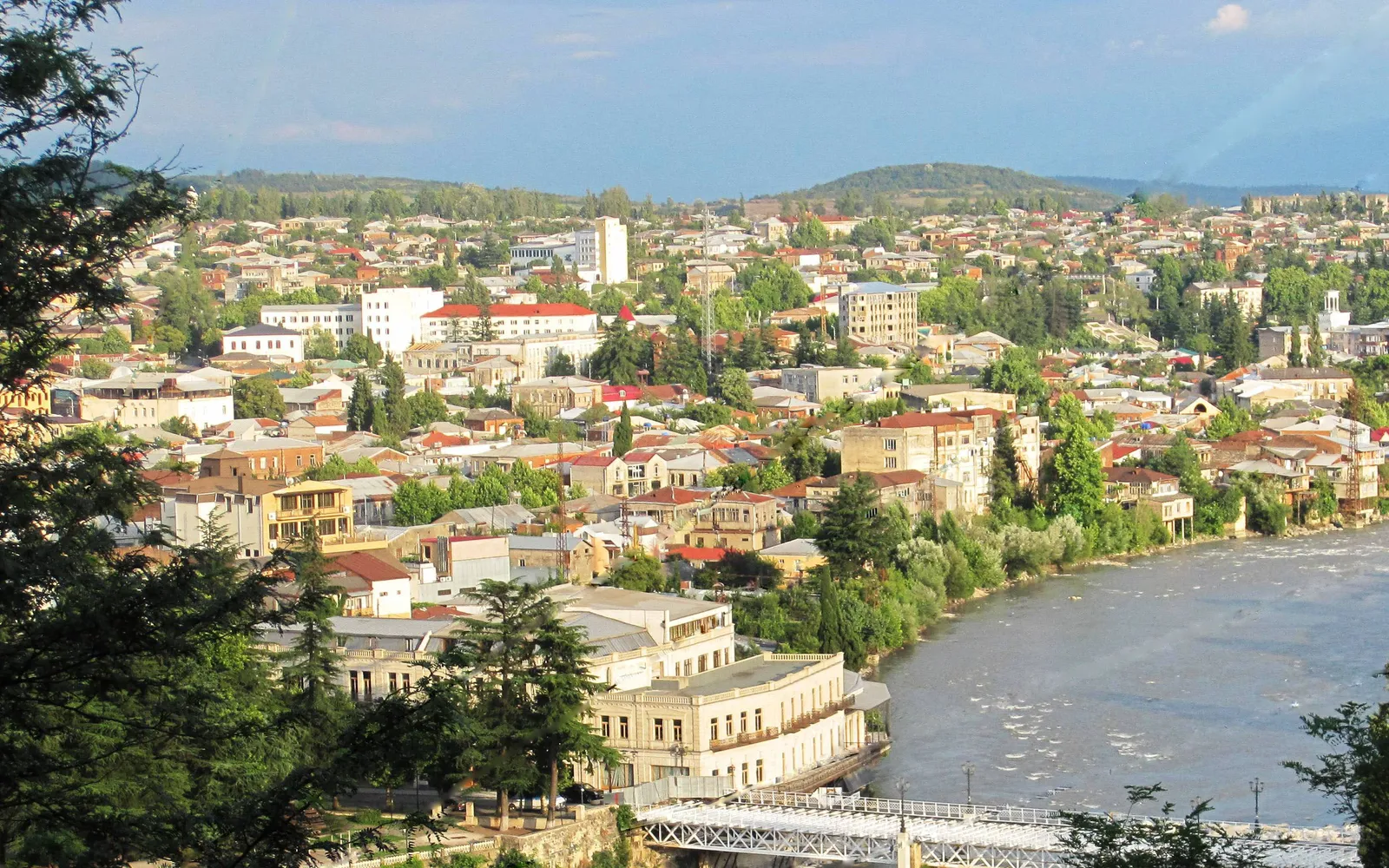
Georgian food in Kutaisi has a character distinctly its own — quite different from Tbilisi. Imeretian-style cooking leans on walnuts, local sulguni cheese, and flavors that are deep without being heavy. Georgian food in general is defined by Caucasian spice blends and techniques passed down over centuries. Come to Kutaisi and you can eat khachapuri in the very region that invented it.
 #1
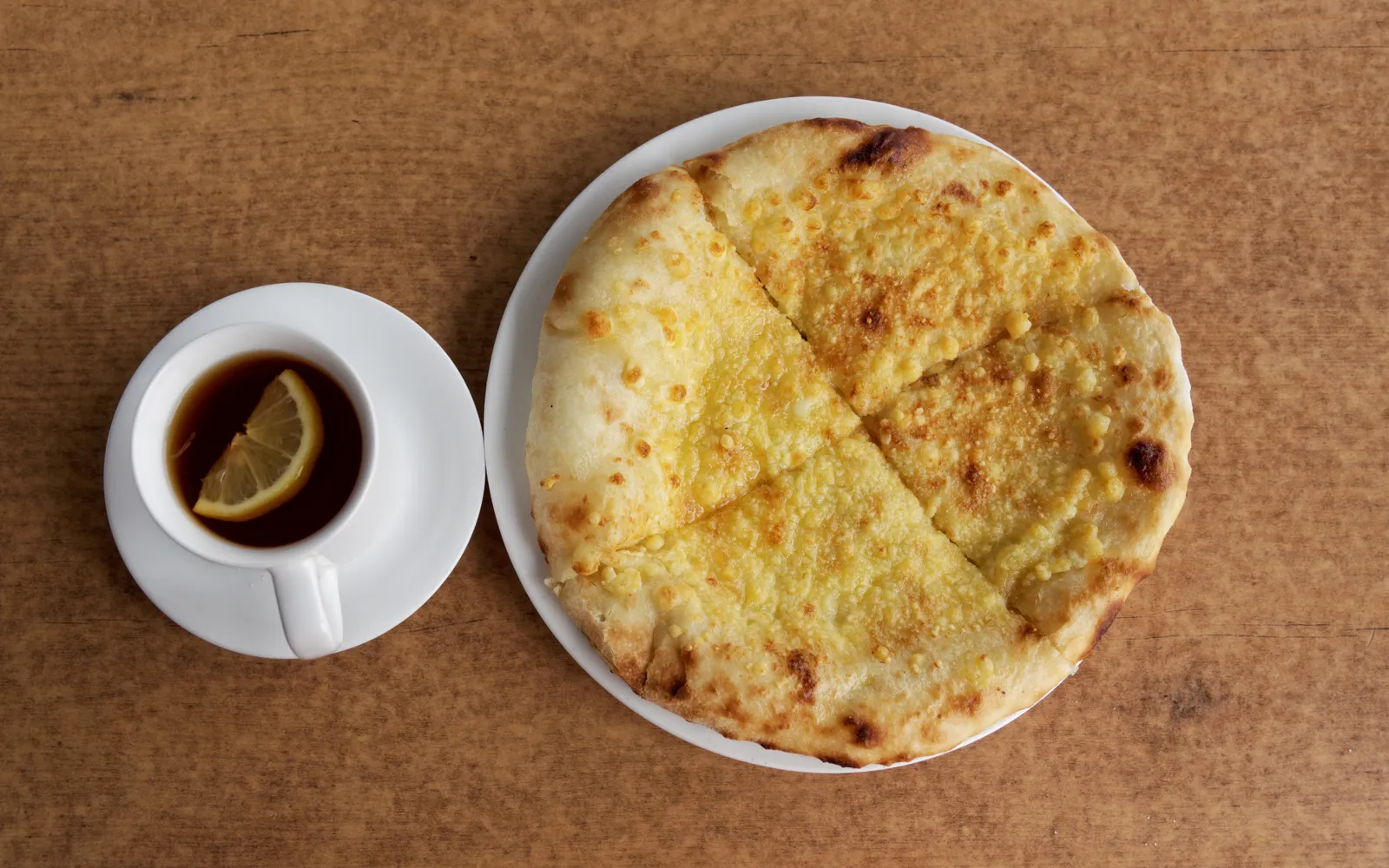
#1 Imereti Khachapuri
Khachapuri is Georgia's national cheese bread, with different recipes across different regions. The Imereti version from Kutaisi is the simplest and is considered the most original. The dough is thin and slightly crisp — it looks like a pizza, but the filling is mild, lightly salted sulguni cheese baked in a clay oven. Eat it hot, straight from the oven. Unlike the Adjarian version with its egg and butter, the appeal here is restraint. It's cheap, filling, and perfect.
- Ask for it 'taza' — fresh from the oven, not reheated. The difference in taste is significant.
- Authentic Imereti khachapuri uses a blend of fresh sulguni; shops using a different cheese will produce a noticeably different result.
- Pair it with Georgian tea or pomegranate juice in the morning — a popular local breakfast combination.
 #2
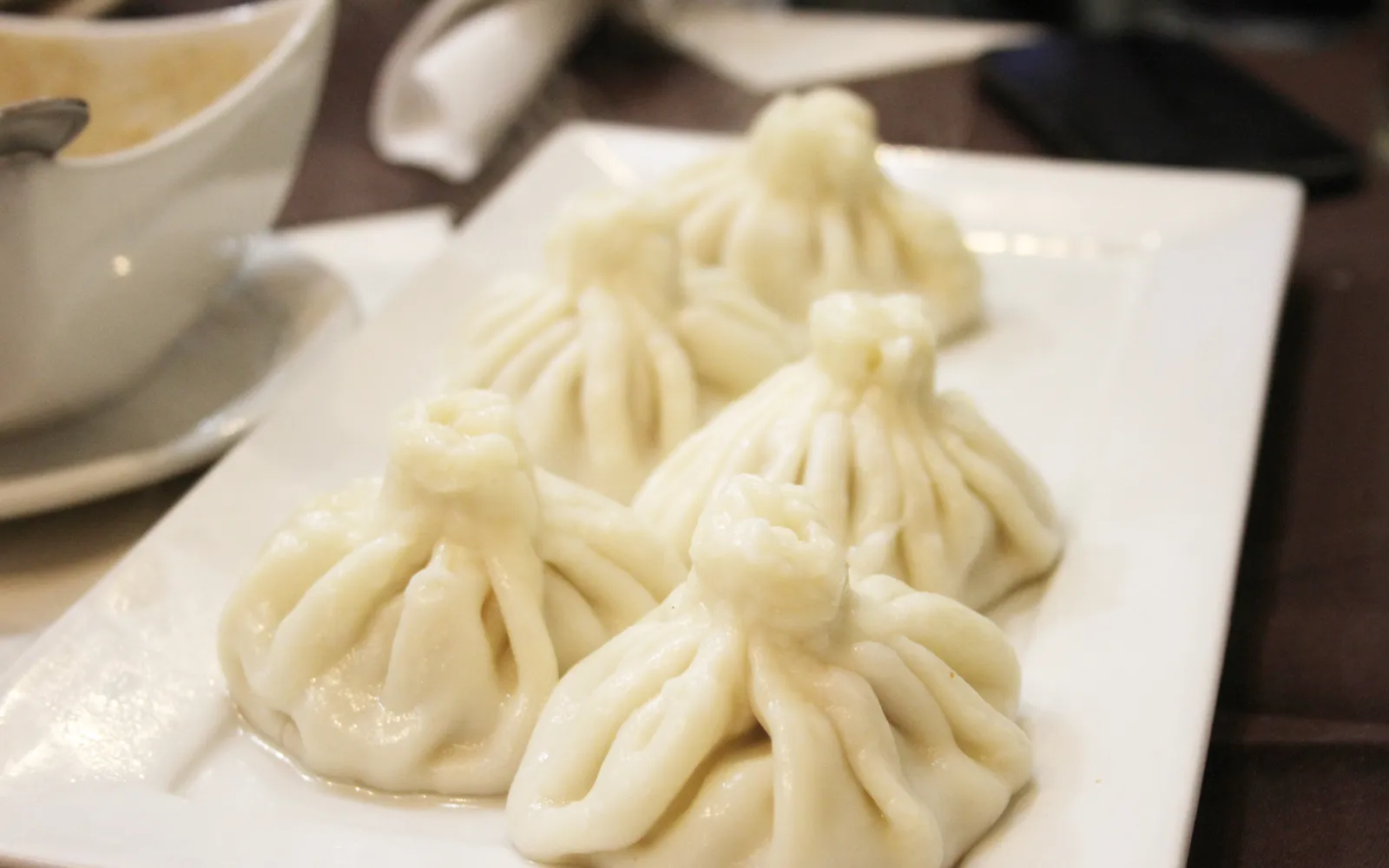
#2 Khinkali
Georgia's most famous dumpling: thick dough wrapping a concentrated broth and spiced minced meat. The technique matters — hold the pleated knob at the top, bite a small hole in the side, and drink the broth before eating the rest. Bite straight through and the hot soup goes everywhere, which is part of what makes the meal fun. Fillings vary: beef, pork, lamb, potato, or cheese. Good khinkali has dough that is just thick enough — not so thick it overwhelms the filling.
- Order 10-12 per person for a main meal. Each one runs about 1-1.5 lari — very affordable.
- The tight pleated knob at the top is thick and tough. Georgians leave it on the plate; you don't need to eat it.
- Ask for extra black pepper — authentic khinkali is eaten with black pepper, not a dipping sauce.
 #3
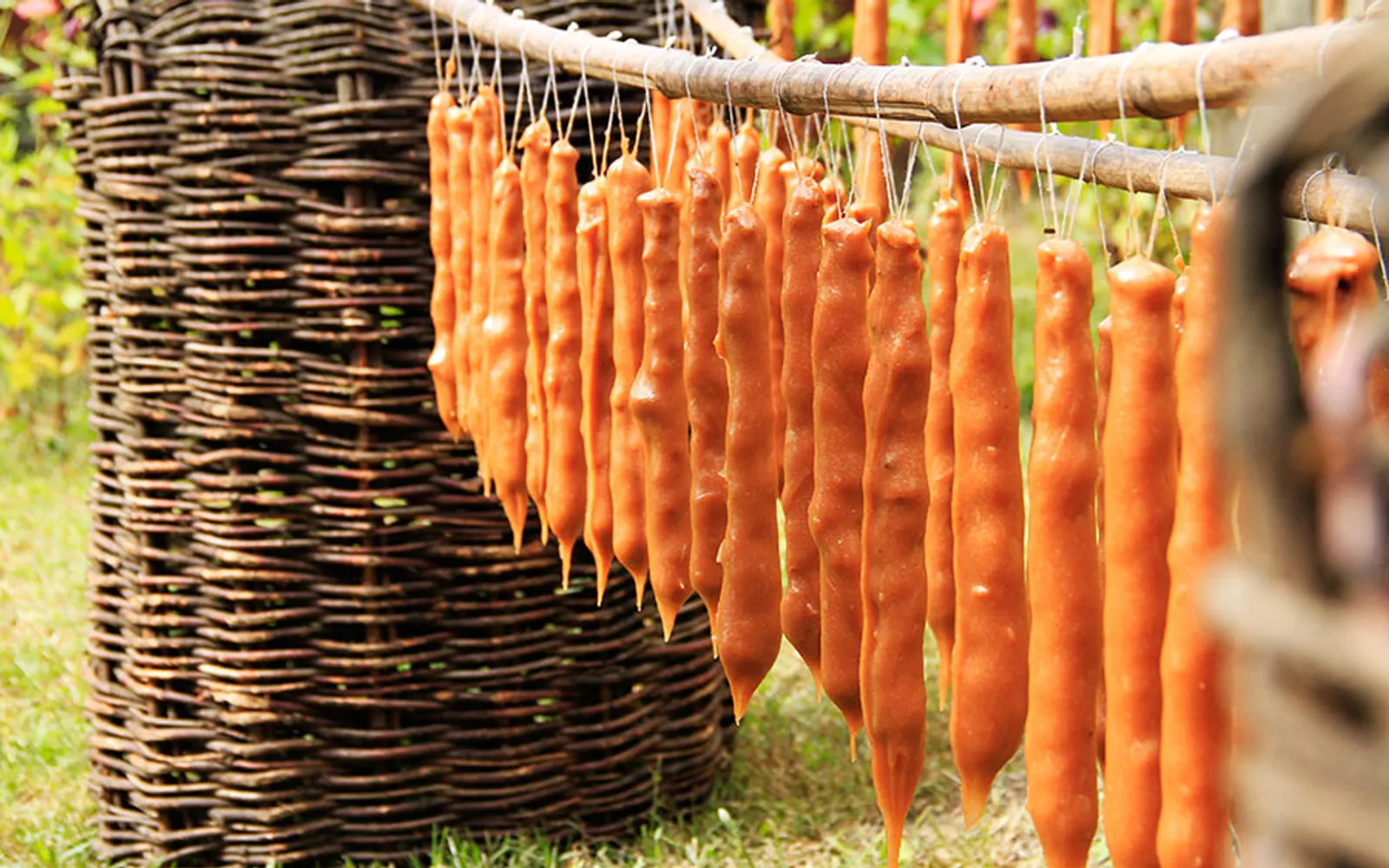
#3 Churchkhela
A traditional Georgian sweet that soldiers historically carried as an energy bar in the Middle Ages. Walnuts or other nuts are threaded on a string, dipped repeatedly in a thick reduction of grape juice and cornflour, and then dried. The result is chewy inside, slightly firm outside, with a mild sweetness from the grape and a toasty nut aroma. The color depends on the grape variety — red wine grapes give a deep color, white grapes a golden one. It's among the best edible souvenirs Georgia produces.
- Buy from the Central Market or producers who make their own — it will be fresher than airport stock. Check that it's soft enough, not rock-hard.
- Store in a cool, dry place. It keeps for weeks at room temperature, months if frozen.
- Try the Imeretian version made with walnuts, cinnamon, and black pepper — noticeably different from the Tbilisi style.
 #4
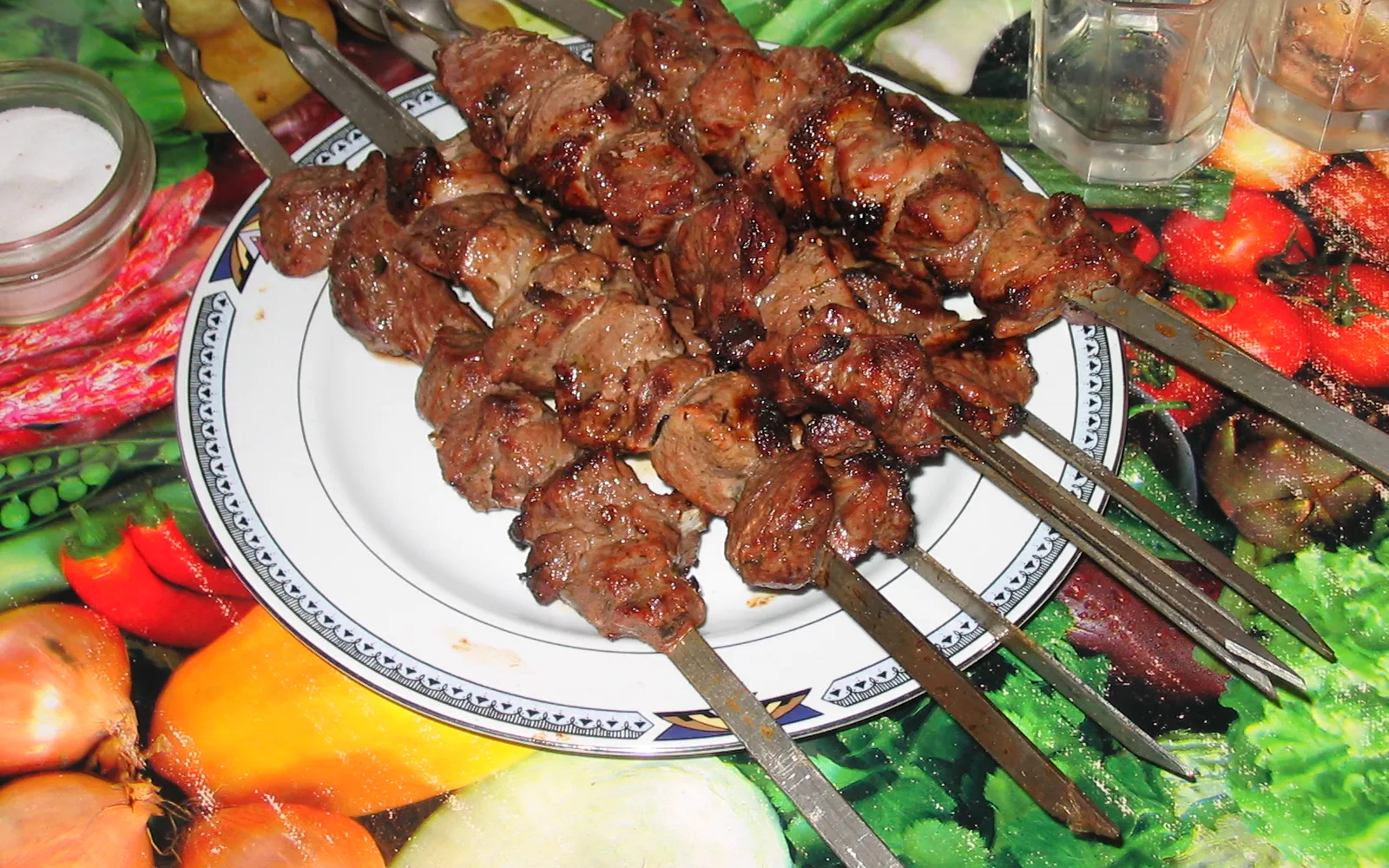
#4 Mtsvadi
Skewered grilled meat, Georgian-style — an outdoor gathering tradition for Georgian families. Typically pork or lamb, marinated in salt, black pepper, and pomegranate juice, then charcoal-grilled over wood until fragrant. Served with fresh sliced raw onion and lavash flatbread. In Kutaisi you'll see families sitting around tables in gardens eating mtsvadi on weekends — an everyday cultural experience that most travelers rarely get a look at.
- Suburban restaurants and riverside parks often serve mtsvadi specifically on weekends.
- Pair it with tkemali (herb walnut sauce) and hot lavash — the combination rounds out the flavors considerably.
- For juicy meat, go for the pomegranate-marinated style. For a cleaner meat flavor, choose the salt-only marinade.
 #5
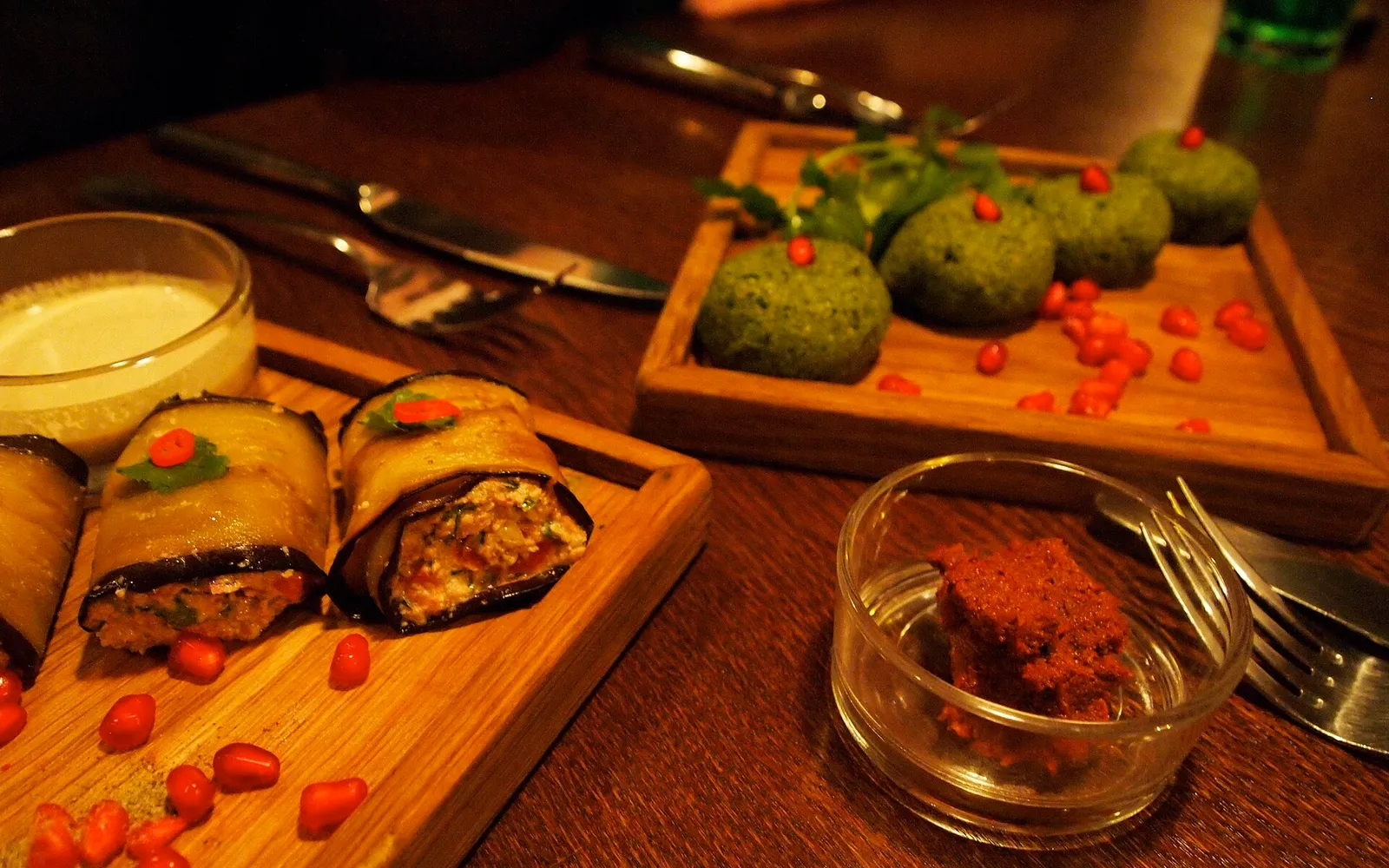
#5 Badrijani Nigvzit
Arguably the most beautiful starter in Georgian cooking and one of the finest vegetarian dishes in the Caucasus. Thin slices of aubergine fried in olive oil are rolled around a filling of ground walnuts blended with garlic, coriander, Caucasian spices, and vinegar, then topped with bright red pomegranate seeds. The flavor is rounded and rich — walnut warmth, a faint sourness, herbal depth. It captures what makes Georgian cooking distinctive. Vegetarian-friendly.
- The walnut filling is a version of 'satsivi' — every kitchen has its own ratios, and spice levels vary by region.
- Order it as a starter before the main course, or as a standalone vegetarian plate with lavash.
- Good restaurants use freshly ground walnuts, not pre-ground. You can tell by smell alone — the fresh version has a far more pronounced aroma.
 #6
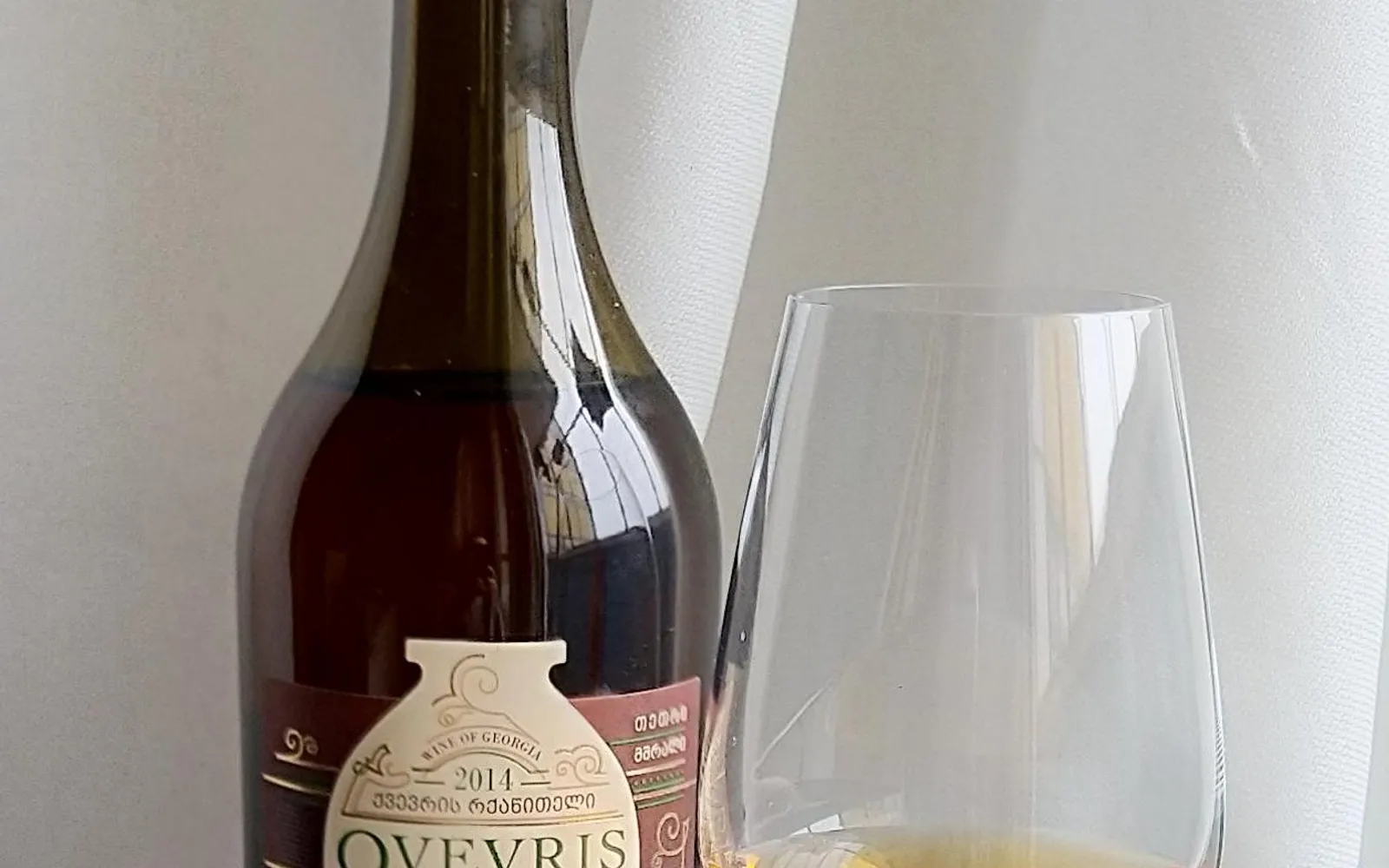
#6 Georgian Amber Wine
Georgia is the oldest wine-producing country in the world, with an 8,000-year tradition, and amber wine — also called orange wine — is its most distinctive style. Made from white grapes but fermented with the skins inside buried clay jars called qvevri for months or even years. The result is a deep golden-orange color and a complex flavor: dried fruit, nuts, and spice — nothing like conventional white wine. Kutaisi and the Imereti region produce high-quality examples of this style.
- Look for the Tsitska and Tsolikouri grape varieties — indigenous Imeretian grapes found nowhere else in the world.
- Small 187 ml bottles are available in convenience stores and markets for around 5-10 lari — a good way to sample before committing to a full bottle.
- Several wine farms around Kutaisi welcome visitors for winery tours and tastings, often free or very low-cost. Ask your accommodation to arrange a visit.
Where to stay in Kutaisi for this trip
A well-located hotel means less commuting and more sightseeing. Here are real, top-rated stays in Kutaisi — compare Agoda · Booking · Trip.com in one click.
A Rioni Guest House
Affiliate links — we may earn a commission at no extra cost to you. Details
Best Western Kutaisi
Affiliate links — we may earn a commission at no extra cost to you. Details
Boutique Hotel Argo
Affiliate links — we may earn a commission at no extra cost to you. Details
Hotel Harmony Kutaisi
Affiliate links — we may earn a commission at no extra cost to you. Details
Tours, tickets & activities in Kutaisi
Day tours, attraction tickets and travel essentials for Kutaisi — book ahead on Klook with mobile e-tickets.
Affiliate links — we may earn a commission at no extra cost to you.
Before You Pack
The best food in Kutaisi tends to hide inside family-run spots in the Central Market district and the narrow side streets locals lead you down. The prices are surprisingly low — a full khachapuri costs just 5-8 lari, and 10 khinkali won't set you back more than 15 lari. You can eat very well here for less than almost anywhere else in Europe.