
The food scene in Kuta-Seminyak runs much deeper than tourist fare. Babi guling — the sacred roast suckling pig originally made for Hindu rituals — and sate lilit, minced meat pressed around lemongrass sticks with Balinese spices, are both cultural heritage dishes you can only get in Bali. Add to that nasi goreng, Indonesia's national dish, and the beach-club dining culture that Seminyak has taken to a level unmatched anywhere in the world, and eating here becomes a genuine way into the soul of the island.
 #1
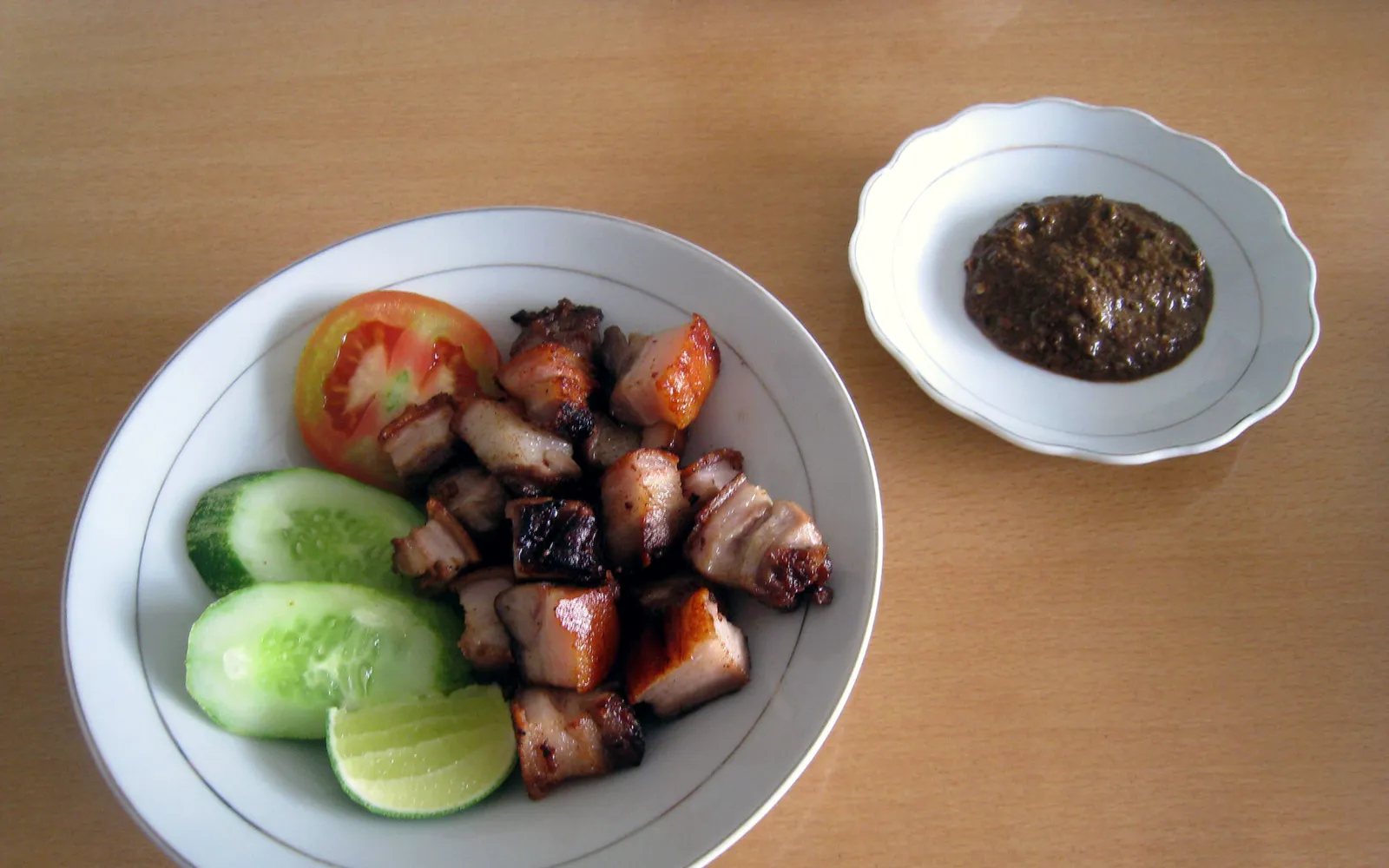
#1 Babi Guling (Balinese Roast Suckling Pig)
Babi guling is the dish that defines Bali. A whole suckling pig is stuffed with base gede — a spice paste of shallots, garlic, turmeric, ginger, galangal, chilli, and shrimp paste — then spit-roasted over charcoal for 6 hours until the skin crisps to a deep golden brown. Originally prepared only for Hindu ceremonies, it's now available all day at warungs across Kuta-Seminyak. Warung Pak Malen on Jl. Sunset Road is the most-cited in the area.
- Arrive before 11:00 — most warungs sell out by noon
- Order the mixed set (combo) to get the full spread: meat, crispy skin, pork satay, and lawar
- Bali is Hindu, so pork is widely eaten here — a significant difference from Muslim-majority parts of Indonesia
 #2
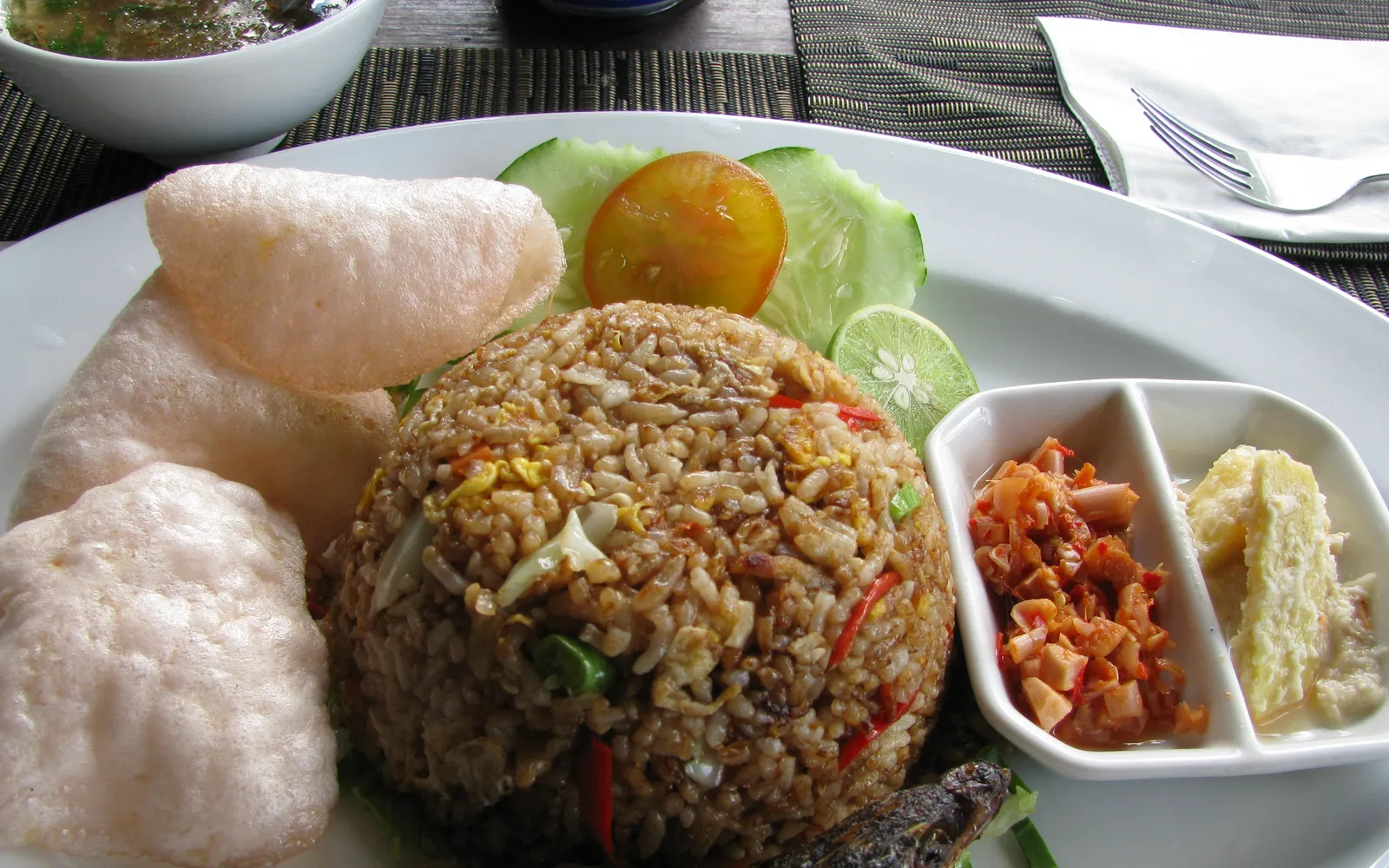
#2 Nasi Goreng (Indonesian Fried Rice)
Nasi goreng is Indonesia's national dish and a CNN Top 50 Food in the World. The rice is fried dark brown with kecap manis (sweet Indonesian soy sauce), mixed with prawns, chicken, or beef, and seasoned with trassi (Indonesian shrimp paste) and chilli. The result is a rich, smoky flavour that's nothing like Chinese fried rice. It comes topped with a fried egg and traditional sides.
- Ask for nasi goreng kampung (village-style) for a more traditional taste than the tourist versions
- Add kerupuk (prawn crackers) on the side for texture
- Prices at local warungs start at 25,000–40,000 IDR — three to four times cheaper than tourist-facing restaurants
 #3
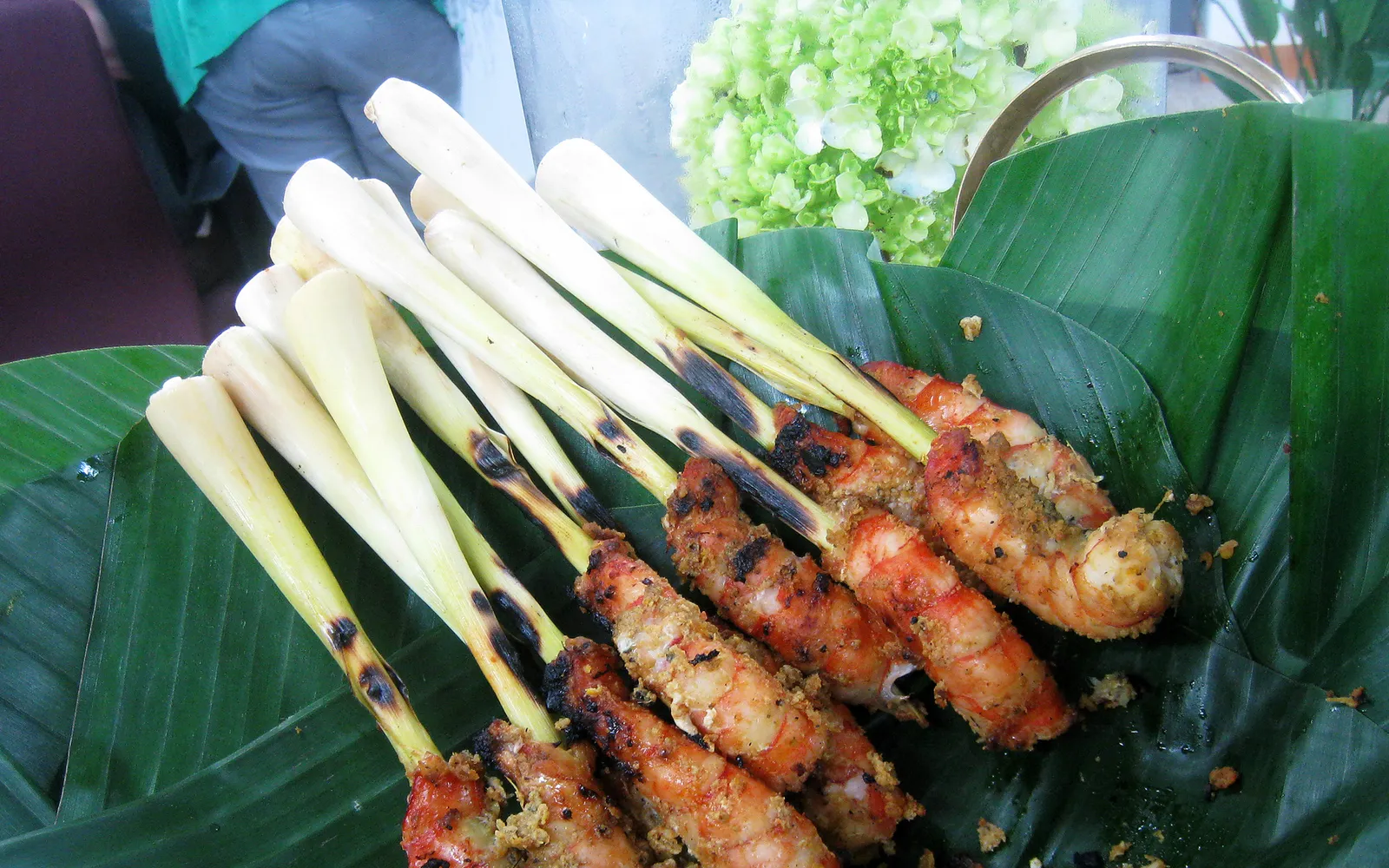
#3 Sate Lilit (Balinese Spiced Minced Satay)
Sate lilit is Bali's own version of satay, entirely different from anything else in Indonesia. Finely minced fish, chicken, or pork is mixed with grated coconut, palm sugar, and the Balinese base genep spice blend, then pressed around lemongrass or bamboo sticks and grilled over charcoal. The lemongrass infuses into the meat as it cooks. Served with fresh sambal matah, it's one of the clearest markers of genuine Balinese cooking.
- Fish sate lilit is generally better than the chicken version in Bali — worth trying first
- The sambal matah served alongside is made from raw shallots and is unlike any other sambal
- Warung Sulawesi in Seminyak is well regarded among those who know the dish
 #4
#4 Seminyak Beach Club Dining
Seminyak has built a beach-club dining culture that nothing else in the world quite matches. La Lucciola has been open since 1993, serving Italian and fresh seafood right on the sand next to Petitenget Temple. Ku De Ta is Bali's longest-running beach club — more than 20 years — with a menu of Western and modern Indonesian dishes and live music. Potato Head runs Kaum Restaurant, which focuses on authentic Indonesian cooking from across the archipelago.
- Reserve at least 1–2 days ahead for all three, especially for beachfront tables
- La Lucciola is at its best between 18:30 and 20:00 — just after sunset when the mood is right
- Budget around 500,000–1,500,000 IDR per person for dinner at the top beach clubs
 #5
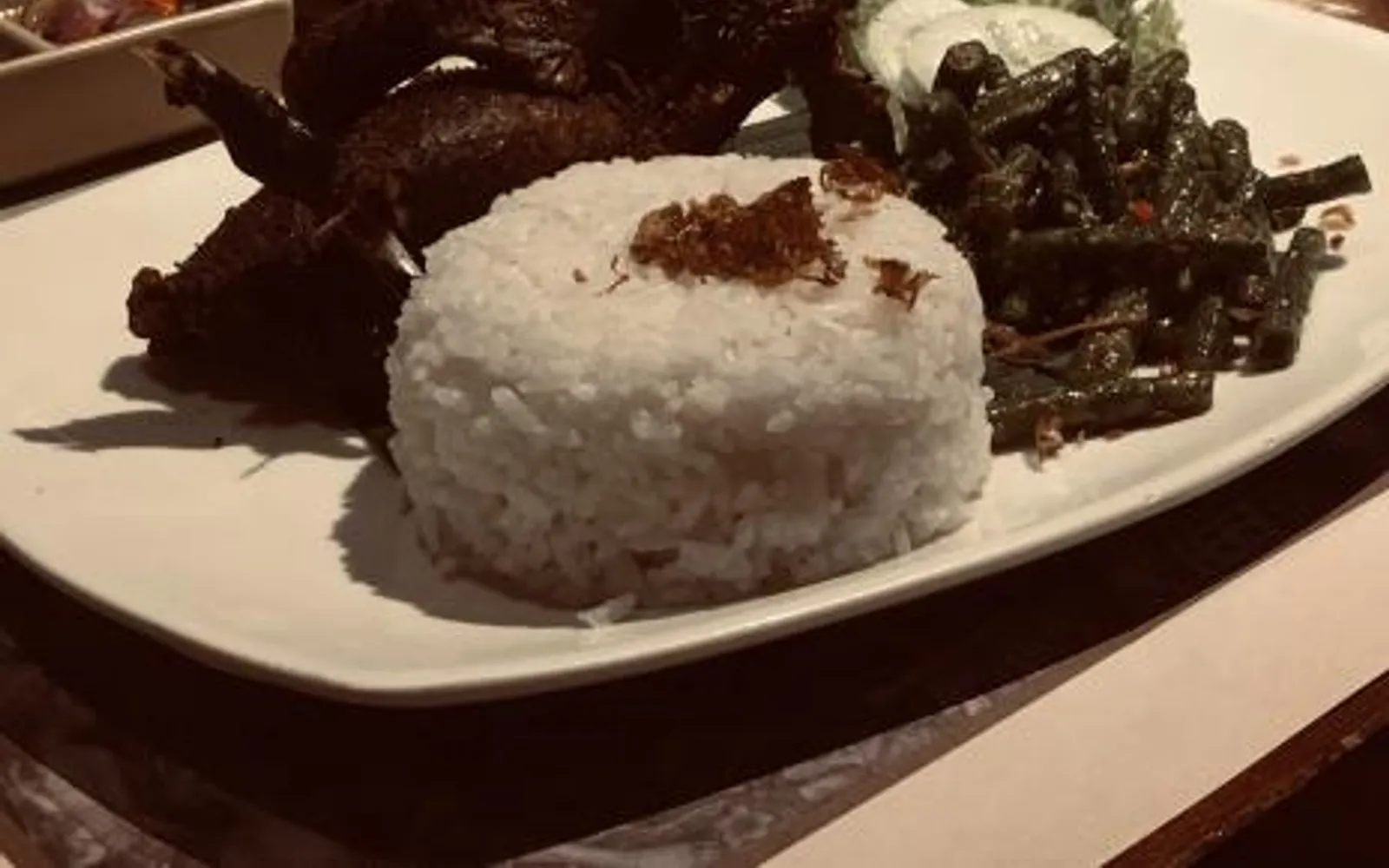
#5 Ayam Betutu (Balinese Smoked Spiced Chicken)
Ayam betutu is a whole chicken stuffed with bumbu betutu — a spice paste of shallots, garlic, turmeric, ginger, galangal, chilli, shrimp paste, and peanuts — then wrapped in banana leaf and steamed or clay-baked for 8 to 10 hours. The traditional method buries it under hot embers. The result is meat so tender it falls apart, saturated deep with spice. The dish originated in Gianyar but is found across Bali, including throughout Kuta-Seminyak.
- Good restaurants need 4–6 hours' notice because of the cooking time — order in advance
- Ayam betutu (chicken) is milder than bebek betutu (duck) — a better entry point for first-timers
- Eat it with nasi urab, Balinese coconut rice, for a complete plate
 #6
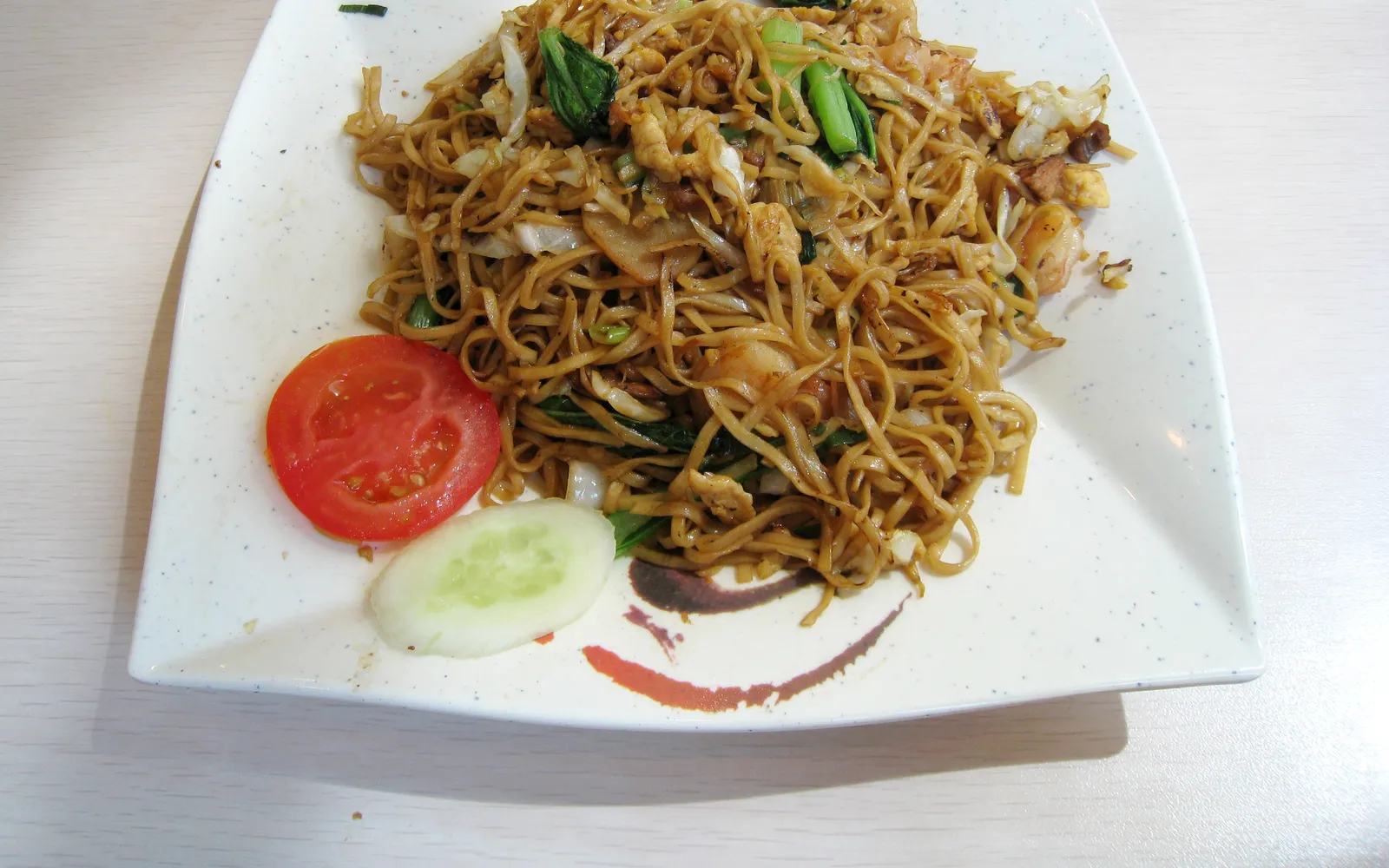
#6 Mie Goreng and Bakso (Fried Noodles and Meatball Soup)
Mie goreng is the noodle twin of nasi goreng — same technique, same kecap manis and shrimp paste base, same smoky wok fragrance, but with noodles instead of rice. Bakso is beef meatball soup: clear, clean broth with springy meatballs, priced at just 15,000–25,000 IDR a bowl. Both are everyday staples for locals rather than restaurant dishes, which is what makes them worth seeking out.
- Bakso carts in Kuta usually roll out from 18:00 to midnight — look for the orange lantern sign
- Ask for emping (melinjo nut crackers) and perkedel (potato patties) on the side
- A warung packed with locals eating is the clearest sign the food is good and the prices are honest
Where to stay in Kuta & Seminyak for this trip
A well-located hotel means less commuting and more sightseeing. Here are real, top-rated stays in Kuta & Seminyak — compare Agoda · Booking · Trip.com in one click.
A Rioni Guest House
Affiliate links — we may earn a commission at no extra cost to you. Details
Double-Six Luxury Hotel Seminyak
Affiliate links — we may earn a commission at no extra cost to you. Details
Grandmas Plus Hotel Legian
Affiliate links — we may earn a commission at no extra cost to you. Details
Hard Rock Hotel Bali
Affiliate links — we may earn a commission at no extra cost to you. Details
Tours, tickets & activities in Kuta & Seminyak
Day tours, attraction tickets and travel essentials for Kuta & Seminyak, Bali — book ahead on Klook with mobile e-tickets.
Affiliate links — we may earn a commission at no extra cost to you.
Before You Pack
Plan local food for lunch to try babi guling and nasi goreng at budget prices, then save the evening for a beach-club dinner or a beachfront restaurant in Seminyak — an experience that is genuinely hard to replicate anywhere else.