
Kunming, the capital of Yunnan Province, earned the nickname "City of Eternal Spring" for its mild weather all year round, thanks to an elevation of more than 1,900 metres. It holds a UNESCO World Heritage Site in the Stone Forest, Dianchi Lake (the largest in Yunnan), Buddhist temples over a thousand years old, and ethnic-minority villages from many different cultures. Kunming is also the gateway for exploring the whole of Yunnan, with a transport network that reaches across the province.
 #1
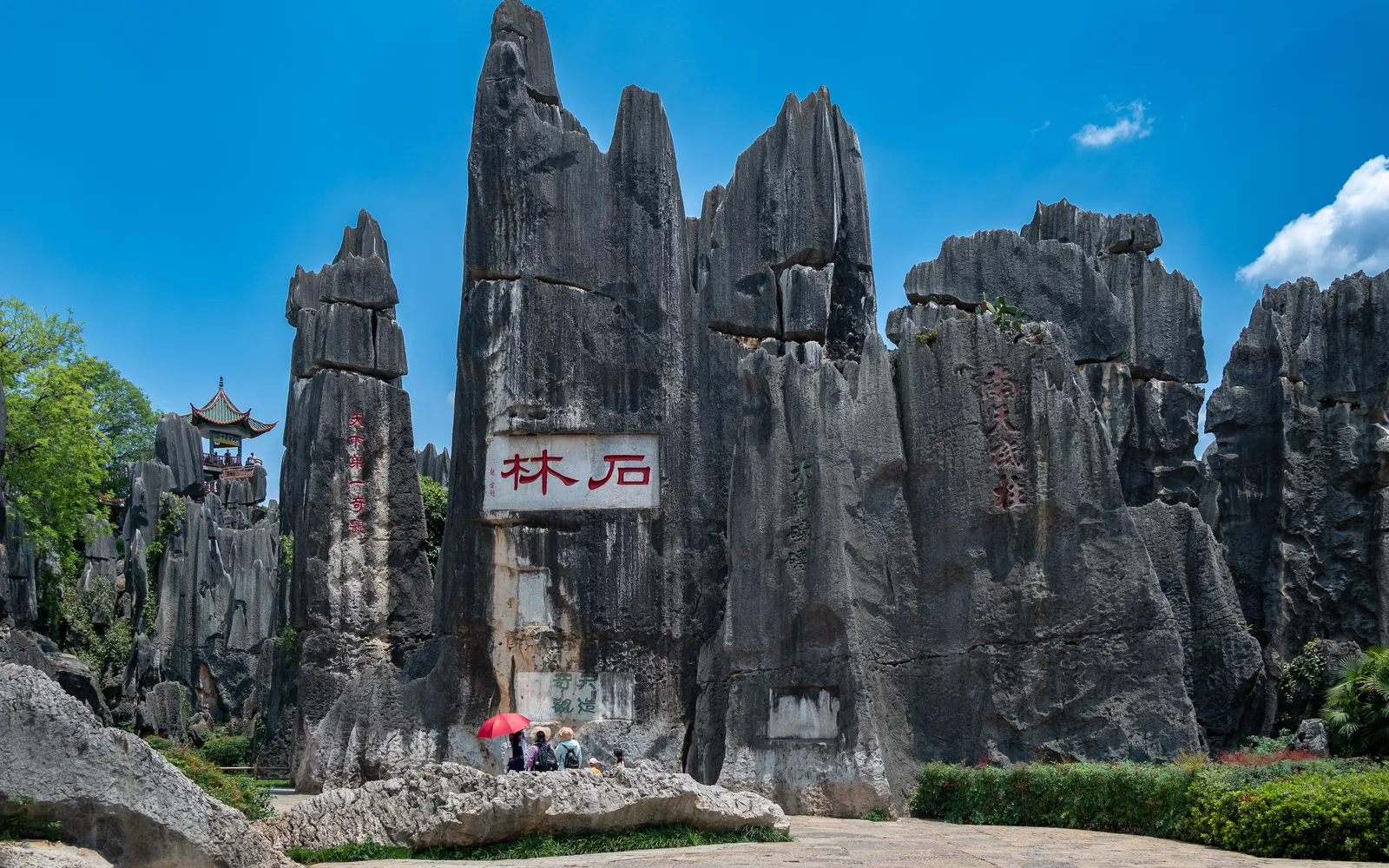
#1 Stone Forest (Shilin)
The Stone Forest is one of China's natural wonders — karst limestone that took shape over more than 270 million years into stone pillars several metres tall, lined up like a forest out of legend. It was inscribed as a UNESCO World Heritage Site in 2007 and splits into the Major Stone Forest and the Minor Stone Forest, each with its own walking routes. The area is also home to the Sani people, a branch of the Yi, who still wear their traditional dress and perform local dances for visitors.
- Start with the Major Stone Forest first — its routes are the clearest and the most beautiful
- Hire a local Sani guide to learn the legend behind each rock, especially the 'Ashima Stone'
- Wear thick-soled, non-slip shoes — some stretches of the path are steep and rough
 #2
#2 Dianchi Lake
Dianchi Lake, or 'Dianchi', is the largest freshwater lake in Yunnan Province, covering more than 300 square kilometres, ringed by mountains and serving as the backdrop to Kunming. In winter, between November and March, black-headed gulls migrate in from Siberia to live on the lake by the hundreds of thousands, making for one of the city's most beautiful and striking sights. Haigeng Park, on the northern shore, is the most popular spot for watching them.
- From November to March, get there in time for the gulls at Haigeng Park — locals sell bread to toss and feed them
- Take a boat around the lake or rent a bike to ride along the shore
- Watch the sunset from the western side by the Western Hills — the view is at its best
 #3
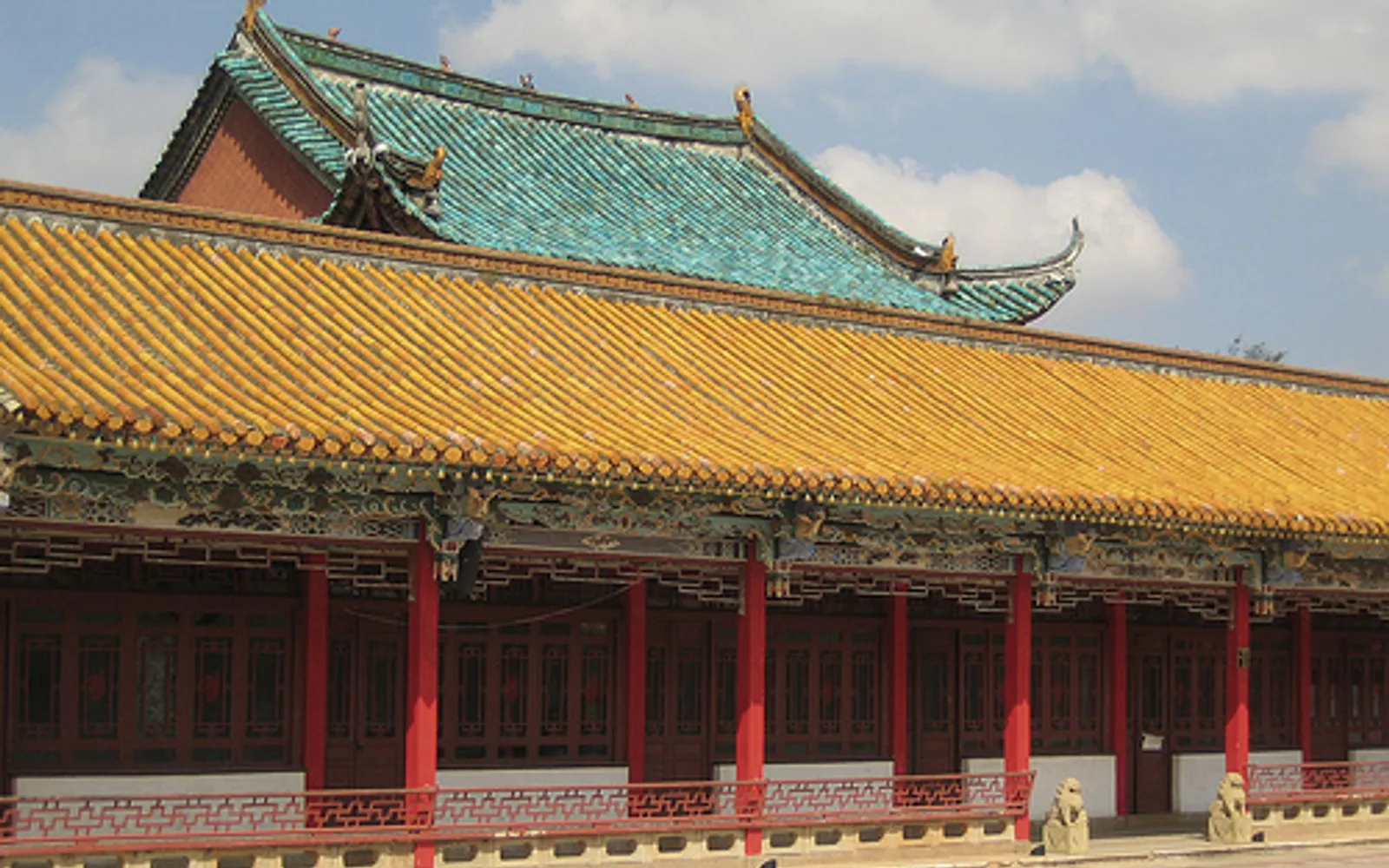
#3 Green Lake Park (Cuihu Park)
Cuihu Park, or 'Green Lake Park', is the green lung in the heart of Kunming that locals love most. The emerald-green lake is ringed by weeping willows and blooming lotus, with arched red bridges and traditional Chinese pavilions set against the bright water. The atmosphere of local life is fullest in the morning, when Kunming residents come to exercise, dance, play music, and practise tai chi. In winter, gulls fly in to play on the lake, close enough to watch up close.
- Come early, around 7:00–9:00 a.m., to feel local life at its most genuine
- In winter you can buy bread to feed the gulls from the stalls beside the park
- The restaurants and cafes around the park stay open late — good for a dinner with a nice setting
 #4
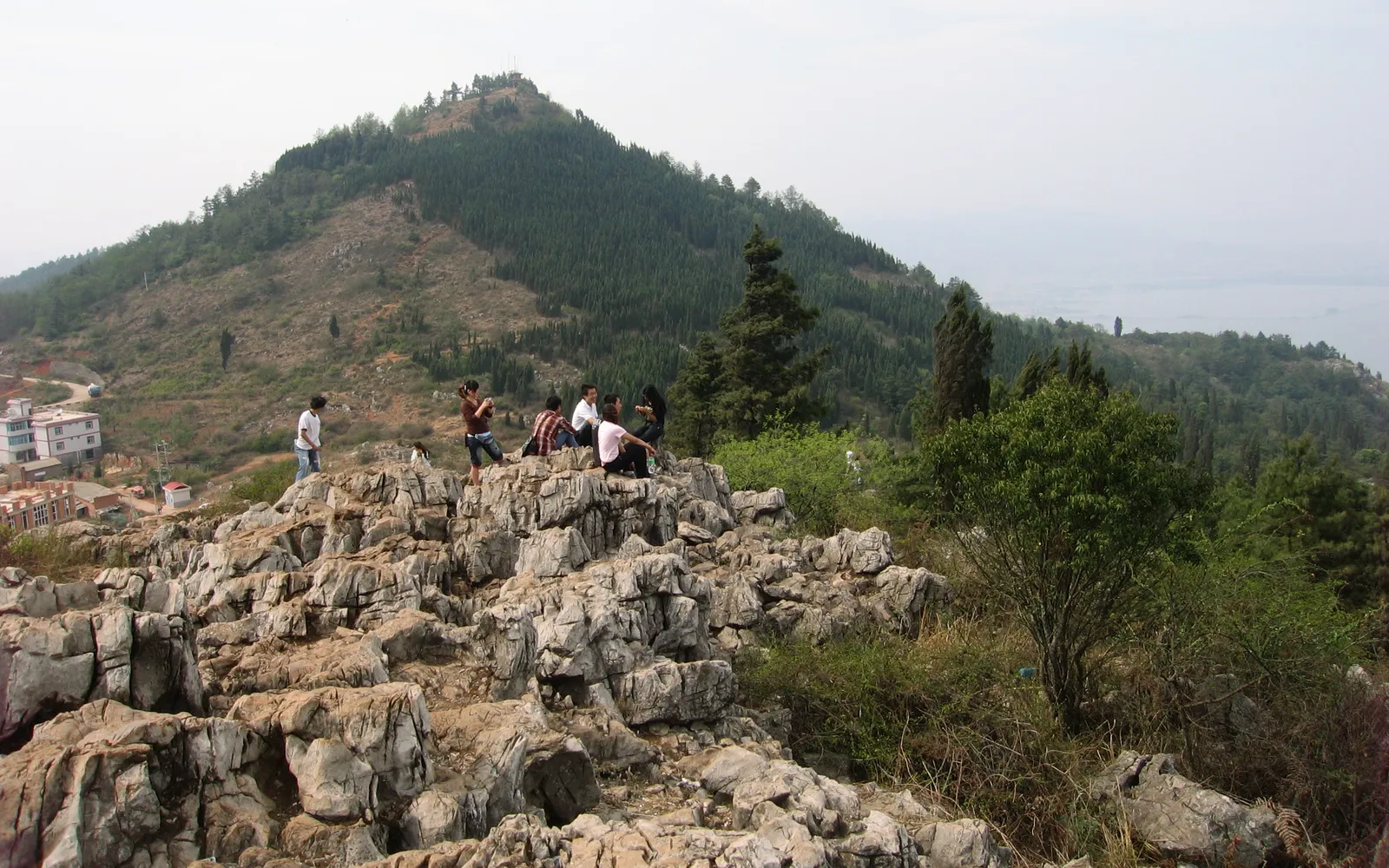
#4 Western Hills & Dragon Gate
The Western Hills are a range running parallel to Dianchi Lake, said to look like a sleeping woman reflected in the water. The top highlight is the 'Dragon Gate' (Longmen), set on a cliff more than 2,300 metres up, carved out of the rock by monks and locals over 72 years (1781–1853). It includes tunnels, stone pavilions, and beautiful sculptures. From the highest point you get a panoramic view of Dianchi Lake and the whole of Kunming.
- Take the cable car from Gaoyao Station to save time and energy, then walk down the route that passes the Dragon Gate
- From around 4:00 p.m. there are fewer people and lovely light, but be quick — it closes before dusk
- The path through the tunnels is very narrow; some stretches are single file only
 #5
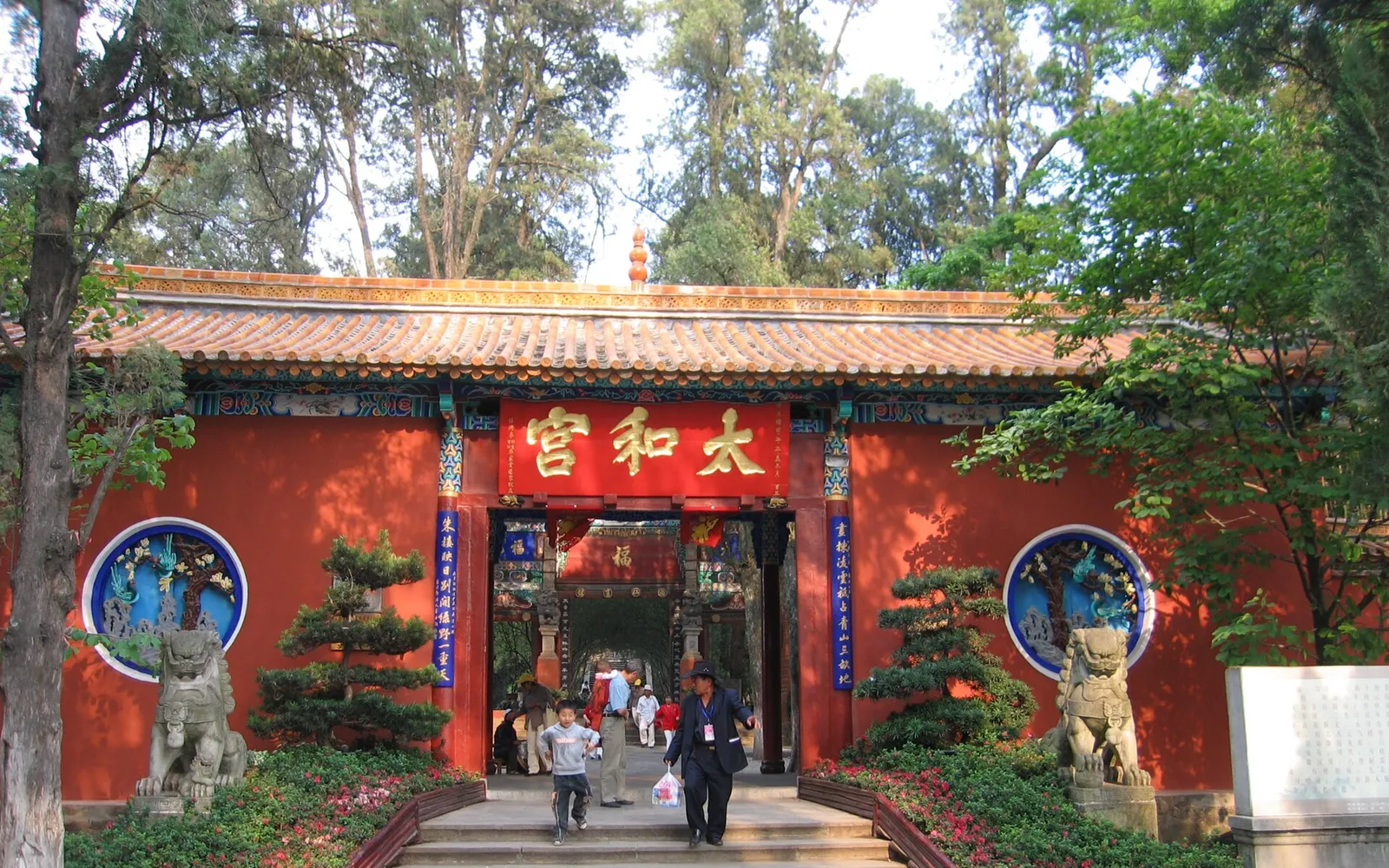
#5 Golden Temple (Jindian Temple)
The Golden Temple, or Jindian, is one of the most famous Taoist temples in southern China. It was built during the Ming dynasty and heavily restored by the general Wu Sangui during the Qing dynasty in 1671. The main hall is made entirely of bronze weighing more than 200 tonnes — including the columns, roof, walls, doors, and statues. The surrounding gardens hold peonies and many kinds of flowers, and there is a bell tower and an ancient bronze clock that strikes on the hour.
- Take the cable car from the bottom, or walk up the stairs in about 20 minutes — the cable car costs extra
- The garden flowers are at their best from February to April
- Combine the visit with the Kunming Botanical Garden, which is nearby
 #6
#6 Yuantong Temple
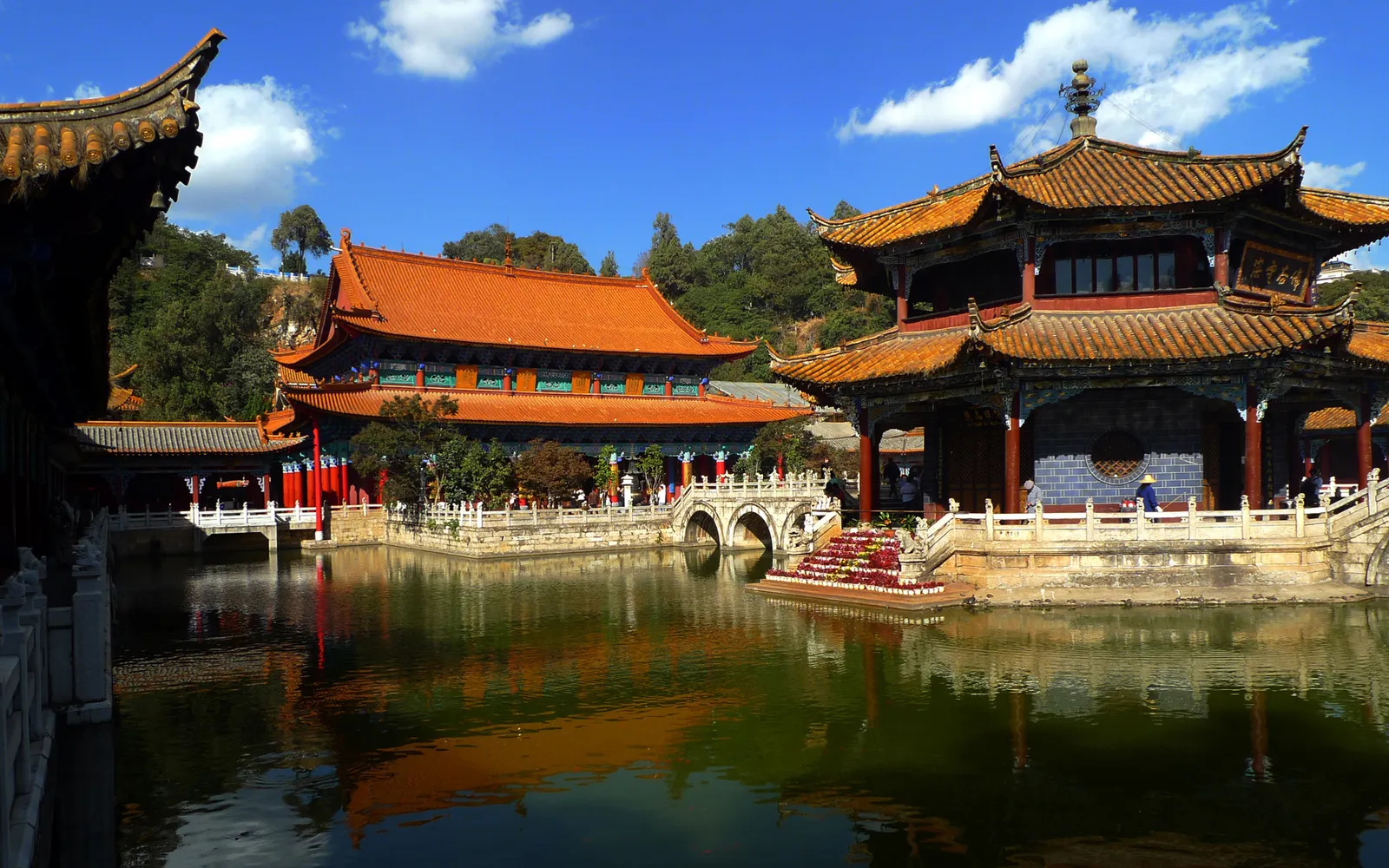
Yuantong Temple is the oldest and largest Buddhist temple in Kunming, with a history of more than 1,200 years going back to the Tang dynasty. It is a 'downhill temple', unlike most others — it begins at the top and slopes down toward a pond in the middle of the grounds. The standout is the octagonal pavilion in the middle of the pond, full of swimming goldfish and linked by arched bridges, surrounded by large trees and flowers. The atmosphere is calm and shaded, good for resting the mind.
- Admission is just 6 yuan — great value for how beautiful it is
- You can buy incense and offerings to make merit inside the temple
- The temple has a hall enshrining a Shakyamuni Buddha image donated by the King of Thailand
 #7
#7 Jiuxiang Caves Scenic Area
The Jiuxiang Caves area is the largest 'karst cave museum' in China, made up of more than 100 limestone caves connected in one enormous system. The highlights include a vast 'underground valley', underground waterfalls, a giant Lion Hall, and oddly shaped stalagmites and stalactites. There are tour boats through the water sections, and a coloured lighting system that makes the caves dazzling. There are also beautiful above-ground valleys to take in the scenery.
- You can combine it with the Stone Forest on the same day, since they are only 20 kilometres apart
- Wear a warm jacket — the temperature inside the caves is much lower than outside
- The cave route runs about 3 kilometres and takes around 2–3 hours
 #8
#8 Yunnan Nationalities Village (Yunnan Ethnic Village)
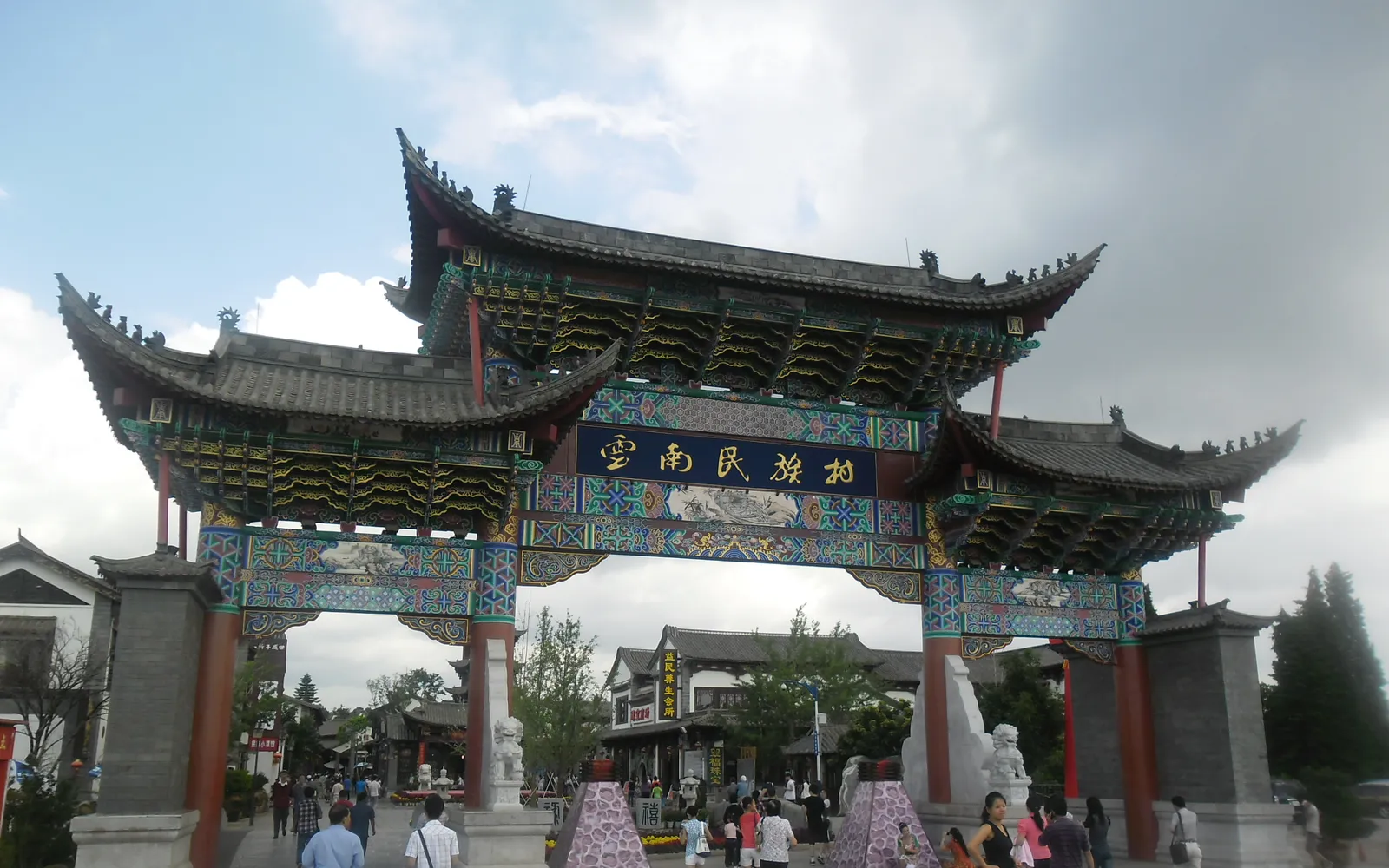
The Yunnan Nationalities Village is an 89-hectare ethnographic park that brings together the architecture, culture, and ways of life of 26 ethnic-minority groups of Yunnan in one place. Open since 1992, each replica village has its own houses, dress, food, and performances for each group — from the white pagodas of the Dai, to the earthen houses of the Yi, to the 'three rooms and a courtyard' architecture of the Bai. There are several local performances a day.
- Check the schedule of local cultural performances in advance — there are several a day
- Allow at least half a day to a full day, since the grounds are very large
- You can combine the visit with neighbouring Dianchi Lake in one day
Where to stay in Kunming for this trip
A well-located hotel means less commuting and more sightseeing. Here are real, top-rated stays in Kunming — compare Agoda · Booking · Trip.com in one click.
Holiday Inn Kunming City Centre
Affiliate links — we may earn a commission at no extra cost to you. Details
InterContinental Kunming
Affiliate links — we may earn a commission at no extra cost to you. Details
Sofitel Kunming
Affiliate links — we may earn a commission at no extra cost to you. Details
Atour Hotel Kunming Green Lake Yunnan University
Affiliate links — we may earn a commission at no extra cost to you. Details
Tours, tickets & activities in Kunming
Day tours, attraction tickets and travel essentials for Kunming — book ahead on Klook with mobile e-tickets.
Affiliate links — we may earn a commission at no extra cost to you.
Before You Pack
Kunming suits a stay of at least 3–4 days, to see the sights in the city alongside the Stone Forest and the Jiuxiang Caves, which lie outside it. The good weather all year round means there is no bad time to visit.