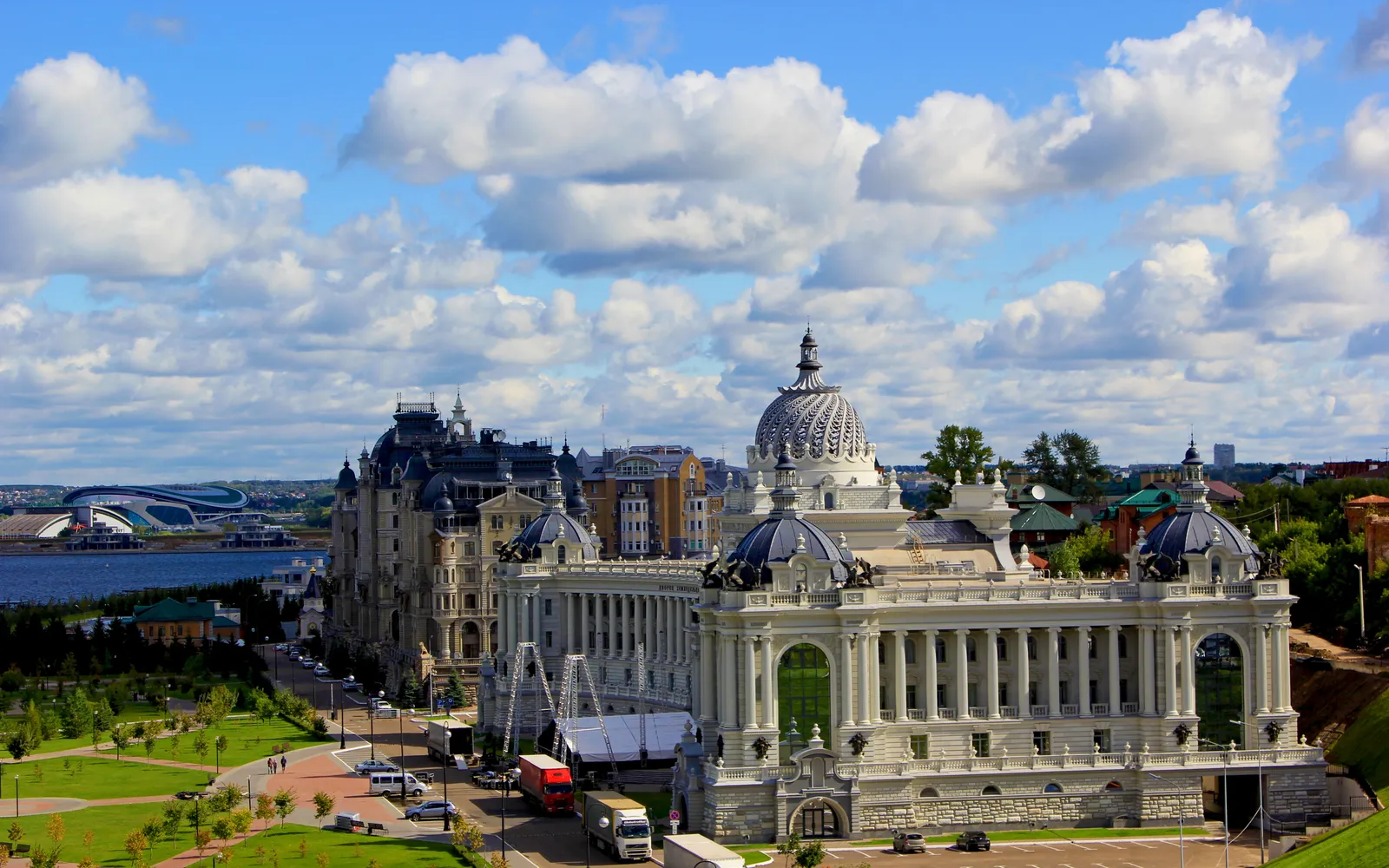
Kazan is no ordinary Russian city — it is the point where two great civilisations converge. The Kazan Kremlin, a UNESCO World Heritage site, stands shoulder to shoulder with a gleaming white mosque; Orthodox bell towers rise next to Islamic minarets. The city holds both worlds without conflict, and when it hosted the 2013 Universiade and the 2018 FIFA World Cup, it showed the world it could perform on any international stage.
 #1
#1 Kazan Kremlin
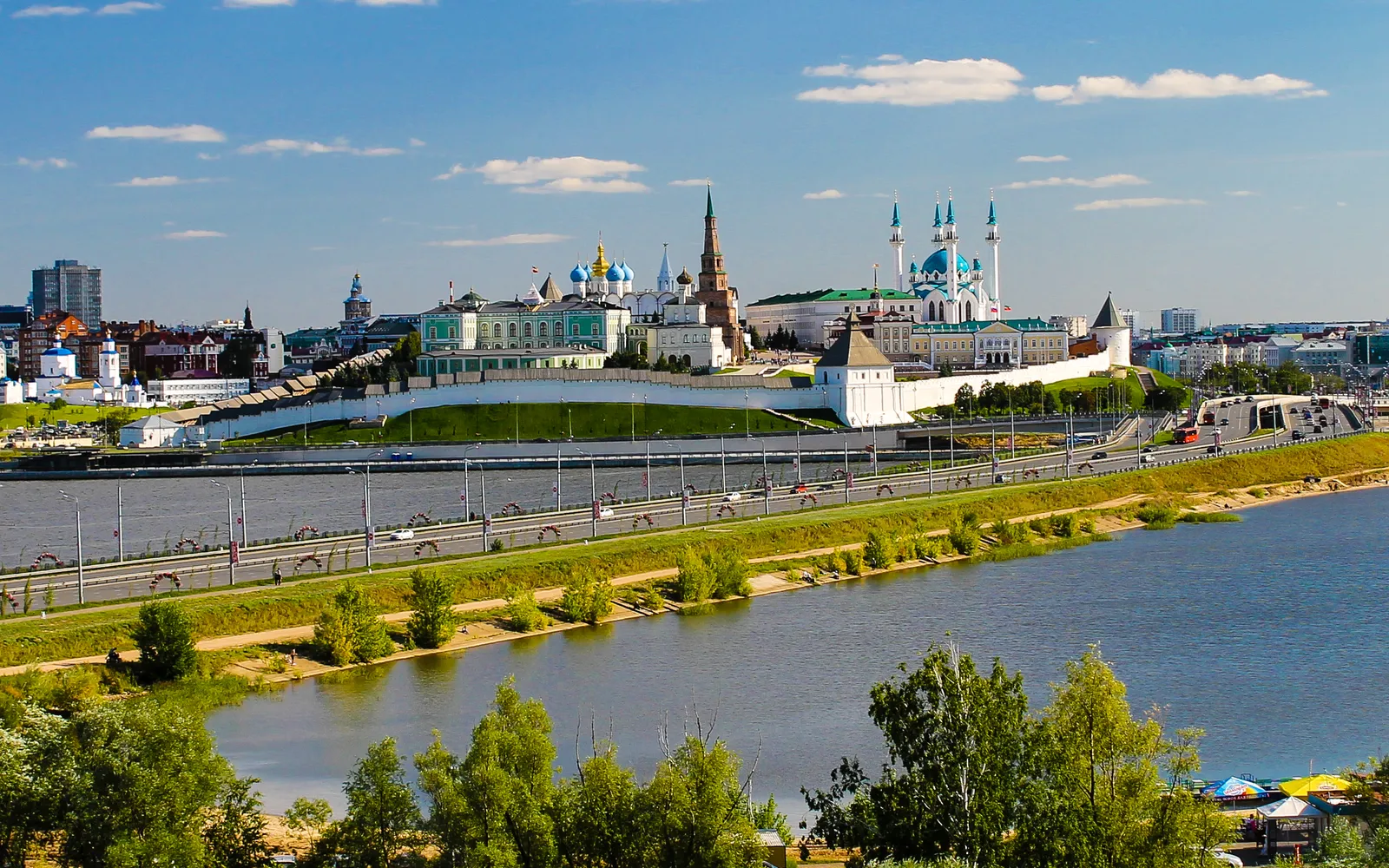
A UNESCO World Heritage site since 2000 and the heart of Kazan. The Kremlin was originally built by the Tatars in the 10th century before Tsar Ivan the Terrible conquered it in 1552. More than 1,800 metres of white stone walls enclose a mosque, churches, towers, and museums within a single complex. The fusion of Tatar and Russian architecture in one place is what makes Kazan unlike any other city on earth.
- Entry to the Kremlin grounds is free all day; individual museums inside charge separately — expect 200–400 roubles per attraction.
- Before 9 a.m. the crowds are thinnest. Morning light on the white walls is especially striking in winter.
- English- and Russian-language guided tours run every 1–2 hours. The history here is layered enough that a guide is worth the cost.
 #2
#2 Kul Sharif Mosque
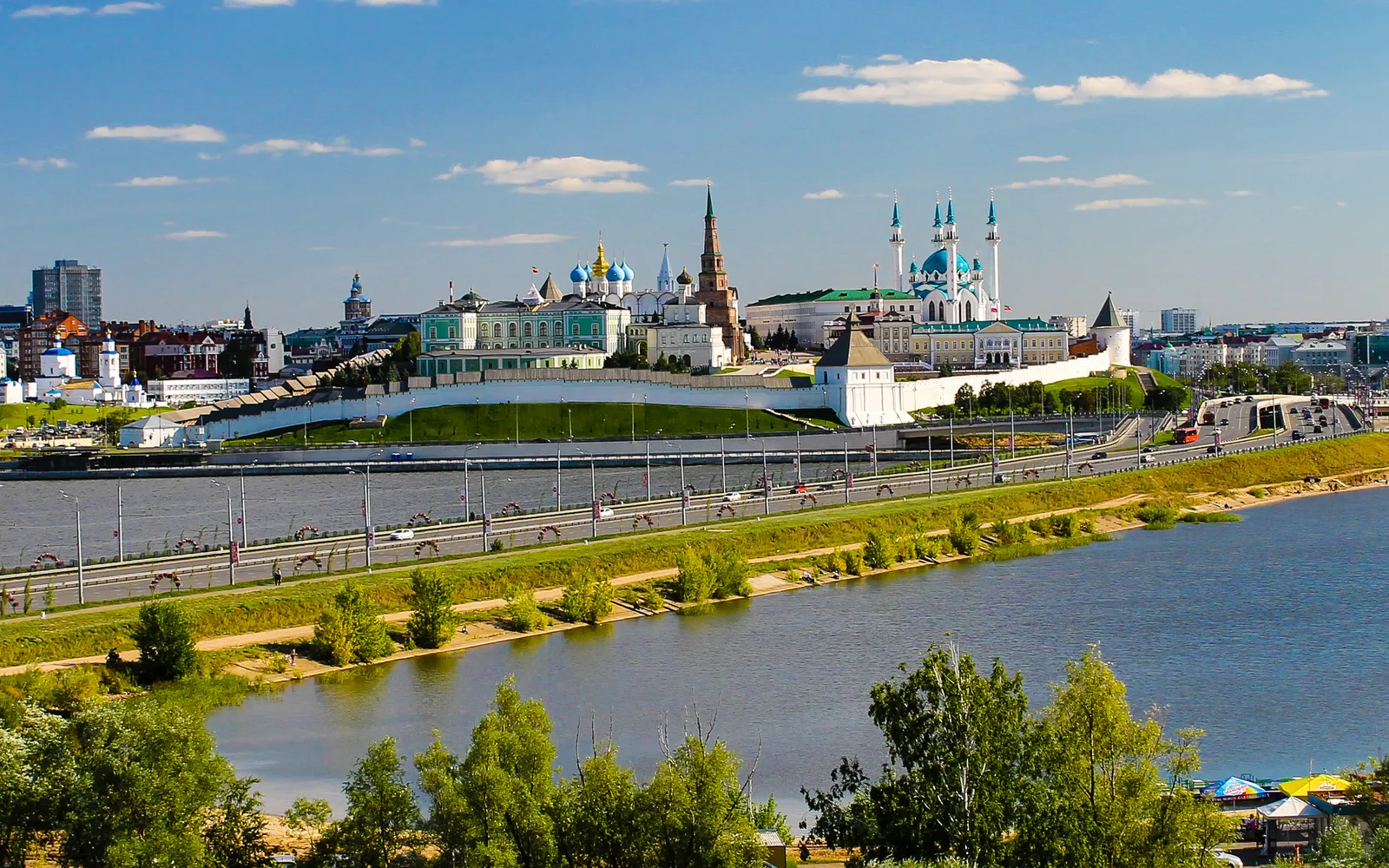
The defining symbol of the Tatar people and of Russian Muslims. The mosque was rebuilt in 2005 to commemorate the original that was destroyed during Ivan the Terrible's conquest, and is named after a Tatar religious scholar who died in the battle of 1552. Its four minarets stand 57 metres tall, designed by Tatar architects; inside, the hall is decorated with mosaic tilework and Iranian carpets and can hold more than 10,000 worshippers.
- Women must cover their hair and wear long clothing — headscarves are available to borrow free at the entrance. Men should wear long sleeves and trousers.
- The mosque is closed to visitors during prayer times, particularly Friday midday prayer. Check the schedule in advance.
- The upper floor houses a museum of Tatar Islamic history that is well worth the 150-rouble admission.
 #3
#3 Temple of All Religions
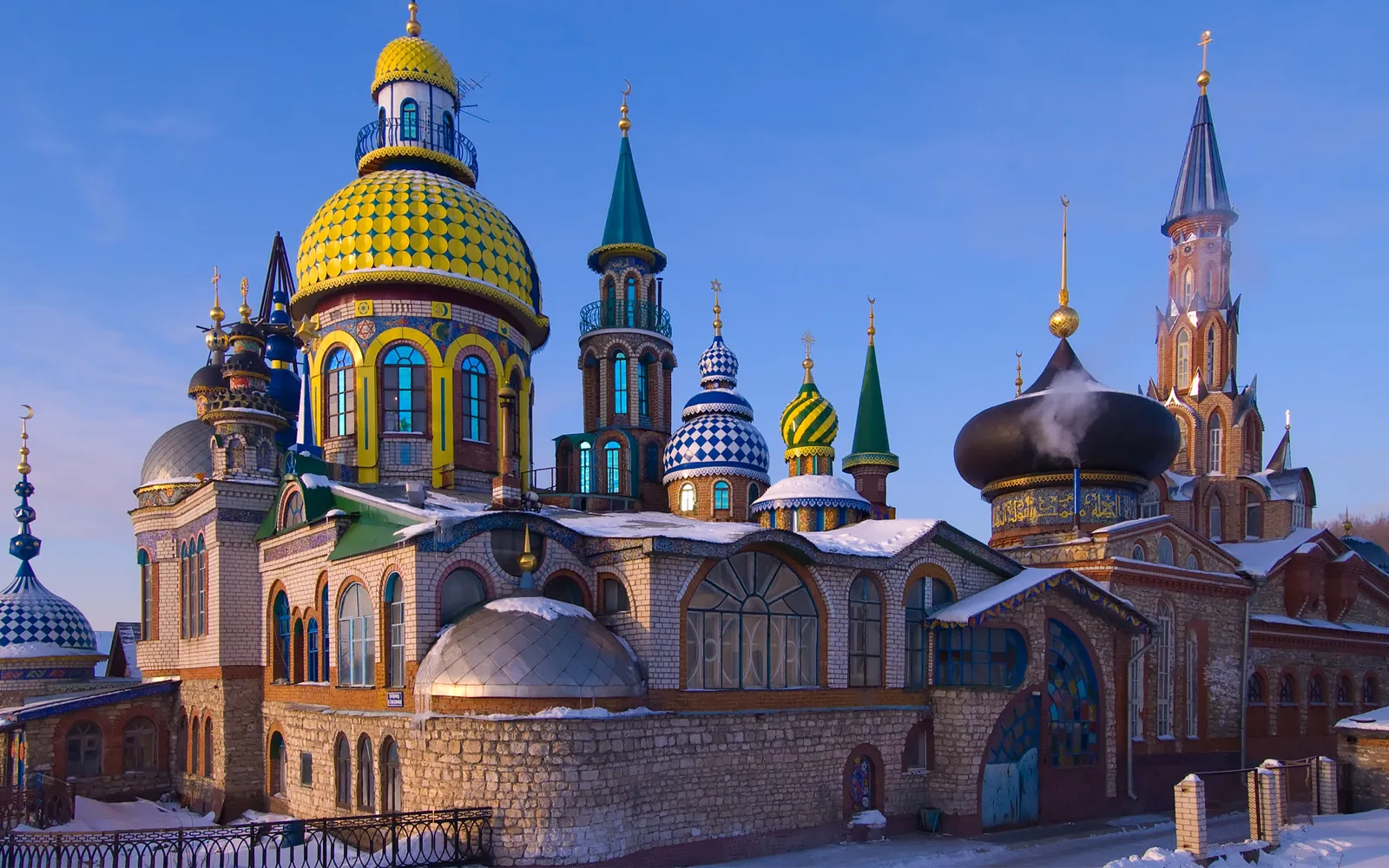
One of the most architecturally singular buildings on earth. It was created by Ildar Khanov, a Tatar artist who dreamed of a place where all faiths could coexist, and it incorporates symbols from 16 religions — Orthodox gold domes, Islamic minarets, a Chinese-style roof, the Star of David, and more. Construction began in 1994 and was still ongoing when Khanov died in 2013, having devoted his life to the project.
- Parts of the exterior are visibly unfinished — that is intentional and part of the building's character and authenticity.
- The best photography angle is from the Volga riverbank in front of the building; afternoon light catches the gold domes well.
- Pair the visit with a Volga river cruise, which passes directly in front of the temple.
 #4
#4 Soyembika Tower
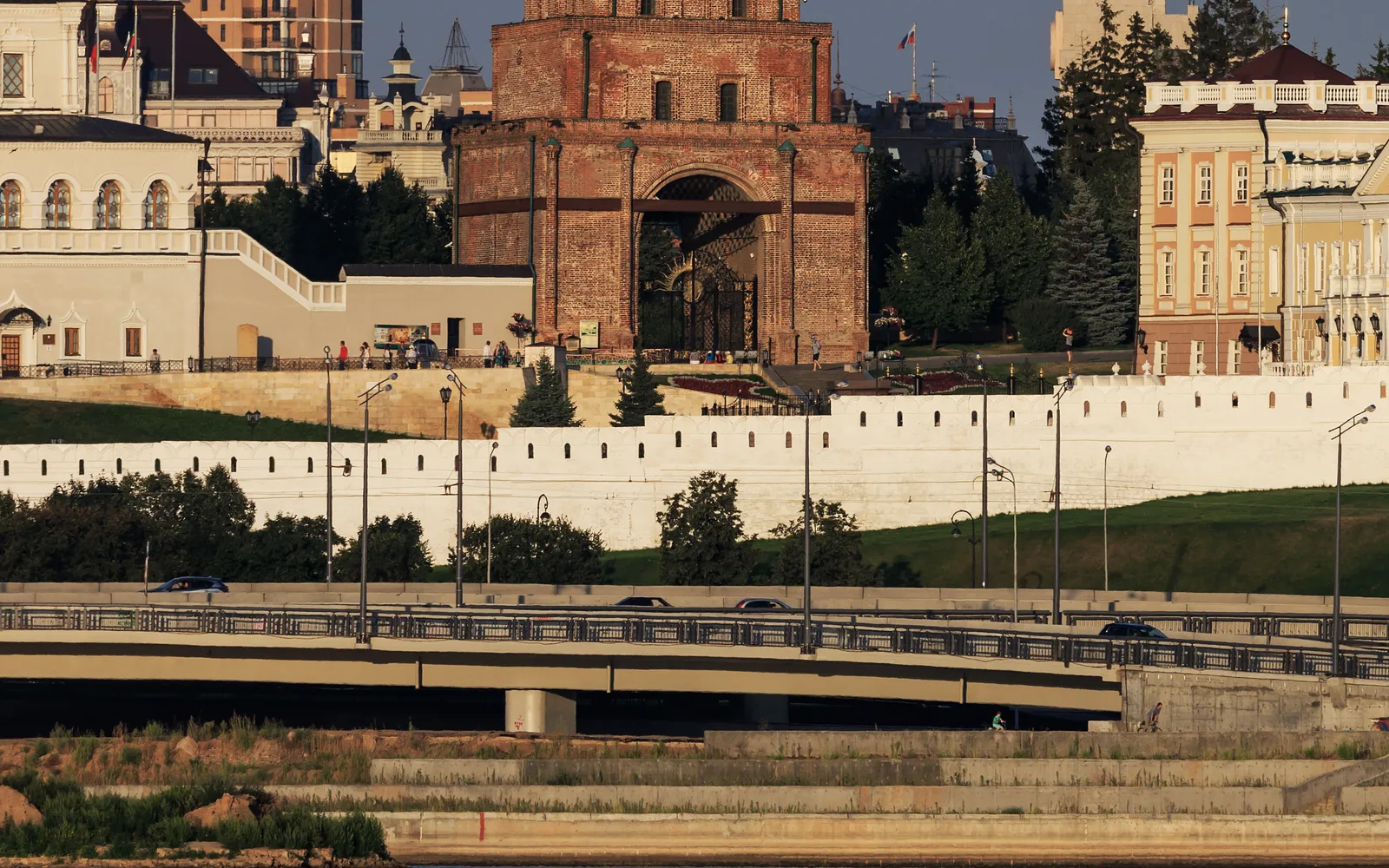
Another Kazan landmark, this one with a melancholy legend. The red-brick tower stands 58 metres tall, was built in the 17th century, and leans approximately 2 metres from vertical — a tilt that draws comparisons to the Leaning Tower of Pisa. Legend holds that Queen Soyembika ordered the tower built and then threw herself from the top to avoid capture by Tsar Ivan. The story lacks confirmed historical evidence, but it gives the tower an air of mystery that no guidebook quite erases.
- Climbing the tower is not permitted, but the best photo angle is from the Kremlin courtyard in front of it, with Kul Sharif Mosque in the background.
- English-language information panels at the base explain the history and the legend even-handedly.
- Step back about 50 metres to see the lean clearly — it is much more visible from a distance than from directly beneath.
 #5
#5 Bauman Street
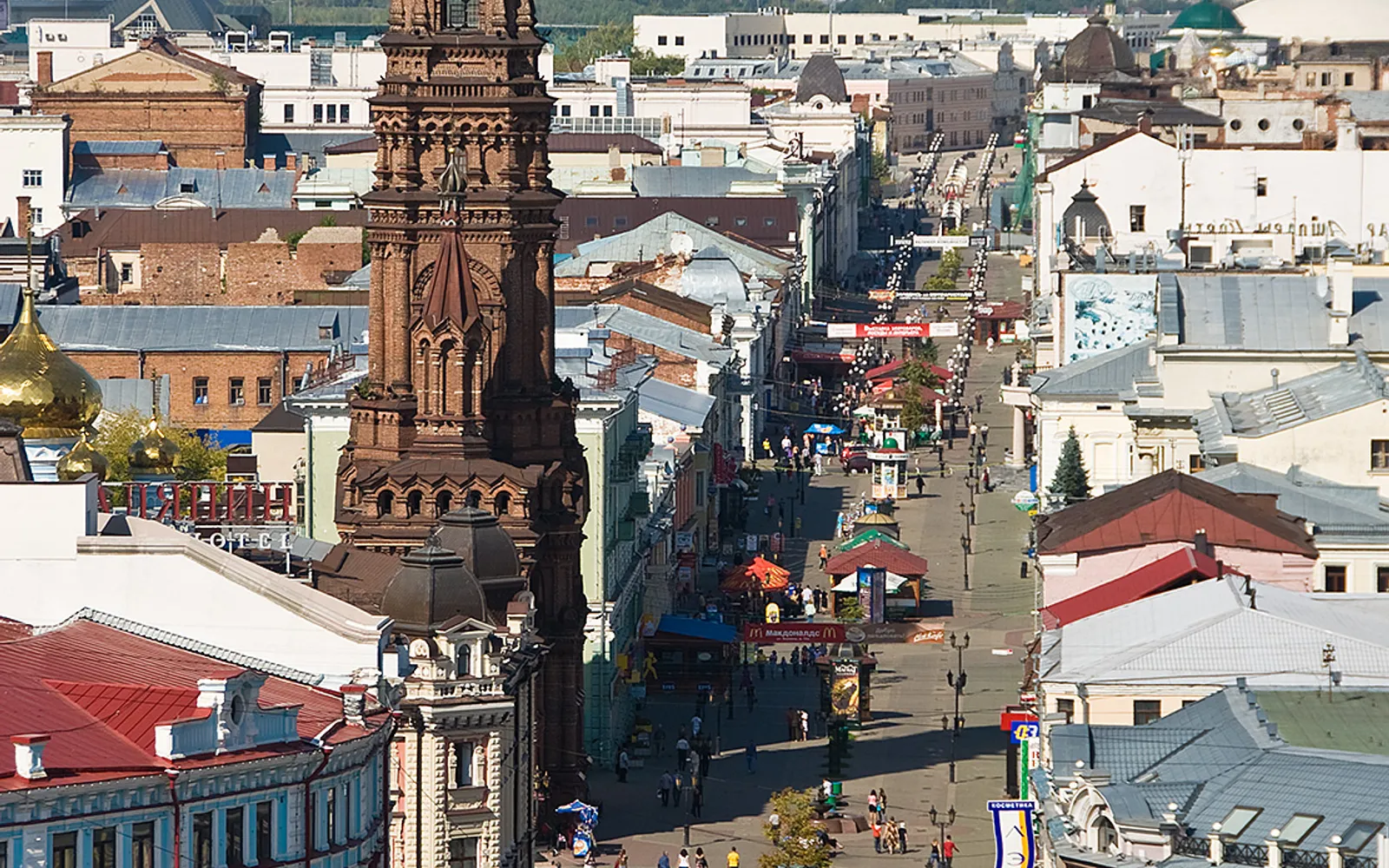
Kazan's main pedestrian street, stretching roughly 1 kilometre from the Kremlin into the old town. The strip is lined with colourful classical Russian architecture, cafés, souvenir shops, and several good photo stops. The famous Kazan Cat sculpture stands at the midpoint — legend holds that Catherine the Great sent 30 Kazan cats to the Hermitage to control its mice problem, and touching the statue brings good luck. It is the most lively part of Kazan at almost any hour.
- The Kazan Cat sculpture sits roughly halfway along the street. The story linking it to Catherine the Great and the Hermitage is displayed on the plaque beside it.
- Several shops along the street sell chak-chak — a Tatar honey-and-dough confection. Try a few stalls to compare.
- The atmosphere is best between 5 and 8 p.m., with street musicians performing and restaurant terraces lit up.
 #6
#6 Annunciation Cathedral, Kazan
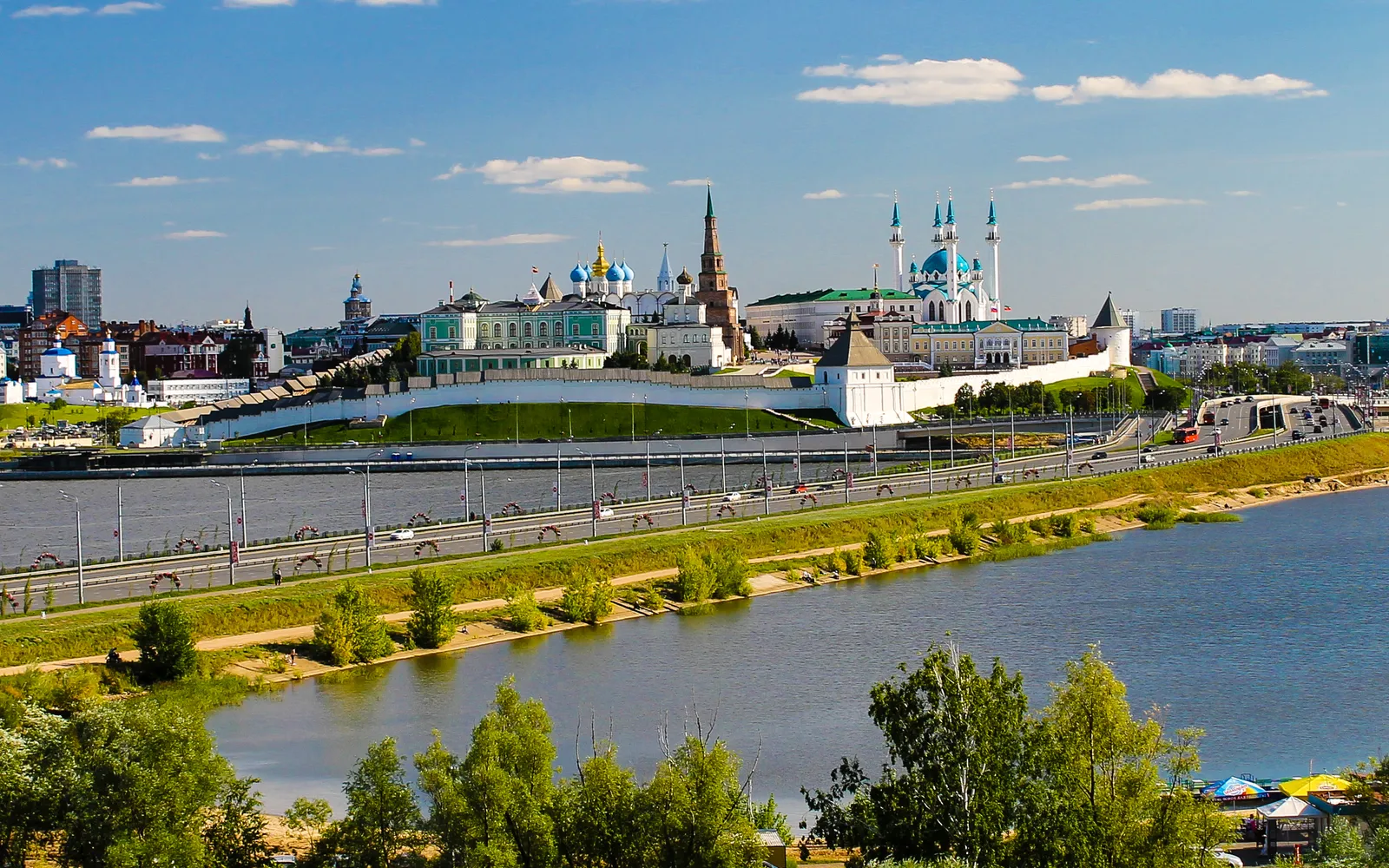
The oldest Orthodox church in Kazan, commissioned by Tsar Ivan the Terrible immediately after his conquest of the city in 1552 — making it one of the first stone churches built in Russia. Inside, the cathedral preserves ancient icons and frescoes dating from the 16th to 19th centuries. The fact that it faces Kul Sharif Mosque across the Kremlin courtyard has made it the defining visual symbol of Kazan's two-faith identity.
- Open only on days without religious services — call ahead to confirm: +7 843 292-72-32.
- Women must cover their heads; men must remove hats. Head coverings are available to borrow at the entrance.
- Frame both the cathedral and the mosque in a single shot from the courtyard — it captures Kazan's dual identity in one image.
Where to stay in Kazan for this trip
A well-located hotel means less commuting and more sightseeing. Here are real, top-rated stays in Kazan — compare Agoda · Booking · Trip.com in one click.
Don Kikhot Hotel
Affiliate links — we may earn a commission at no extra cost to you. Details
Hotel Nogai
Affiliate links — we may earn a commission at no extra cost to you. Details
Ramada by Wyndham Kazan City Centre
Affiliate links — we may earn a commission at no extra cost to you. Details
Courtyard by Marriott Kazan Kremlin
Affiliate links — we may earn a commission at no extra cost to you. Details
Tours, tickets & activities in Kazan
Day tours, attraction tickets and travel essentials for Kazan — book ahead on Klook with mobile e-tickets.
Affiliate links — we may earn a commission at no extra cost to you.
Before You Pack
Kazan rewards a visit in any season. In winter (December–February), snow settles on the gold domes and the white Kremlin walls; in summer (June–August), mild temperatures make the old town easy to explore on foot. Allow at least 2–3 days to cover the main sights properly, with one day set aside for the old neighbourhoods and the Tatar food markets.