
Kazan's food is a bridge between two worlds. On one side sits Tatar cooking rooted in the steppe nomads — lamb, baked dough, and buckwheat honey are its original identity. On the other are Russian classics like pelmeni and borscht. Here you can eat a Tatar pastry for breakfast and finish the evening with Russian soup without the slightest sense of contradiction.
 #1
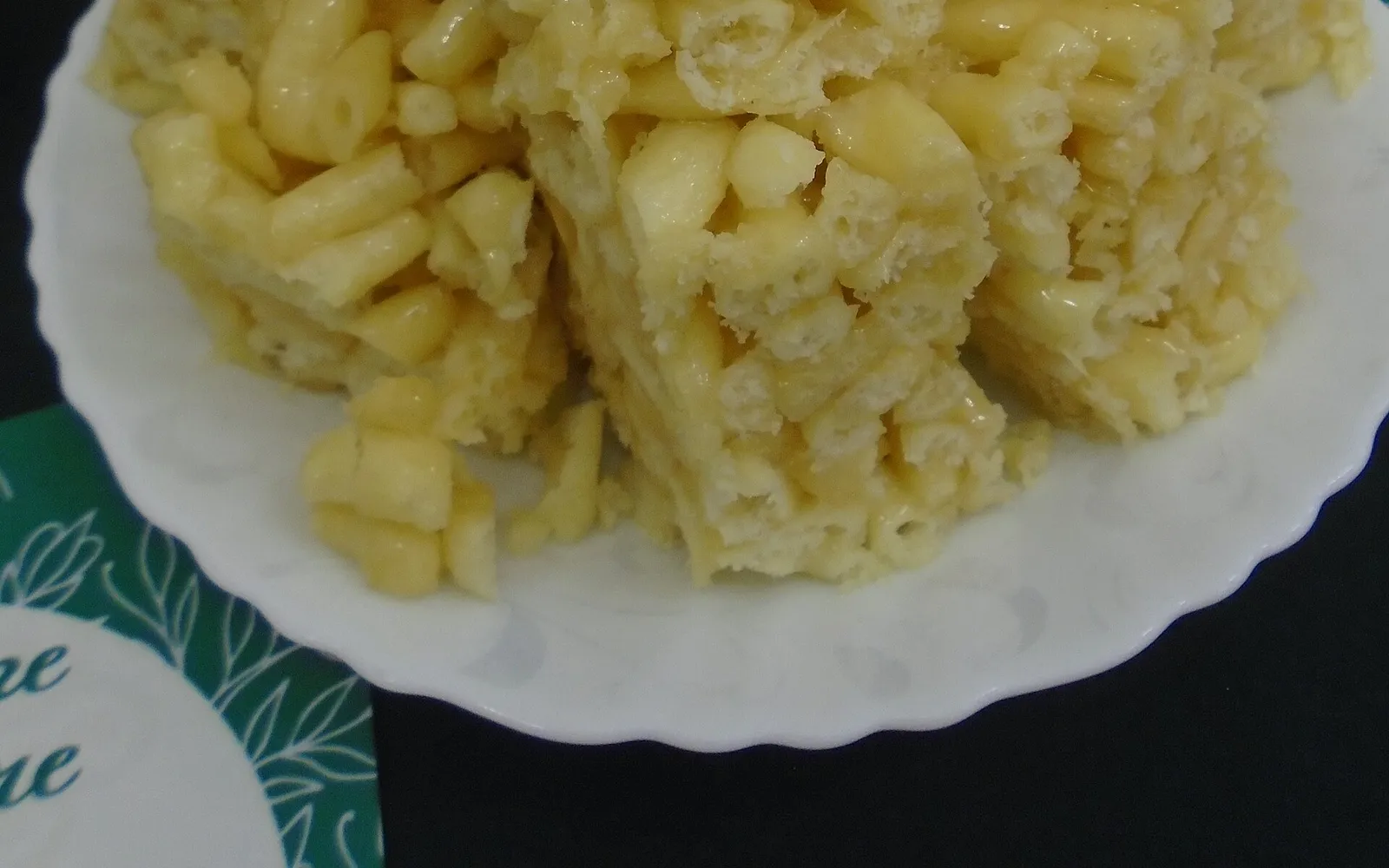
#1 Chak-chak
The sweet at the heart of Tatar culture: egg-dough strands fried crisp, then coated in hot buckwheat honey and pressed into a dome or triangle before the honey sets. Chak-chak is an essential good-luck item at Tatar weddings — the bride is expected to bring it to the groom's family. The flavour is a gentle honey sweetness, crunchy on the outside and soft within. It doubles as a perfect souvenir and a great snack while walking the city.
- Buy from a shop that makes it fresh daily, not pre-packaged in a plastic box from a convenience store — the difference in taste is stark.
- Buckwheat honey (<em>гречишный мёд</em>) has a distinctive bitter-fragrant depth that ordinary flower honey lacks. Worth picking up a jar to take home.
- Many pastry shops on Bauman Street will let you taste before you buy — don't be shy.
 #2
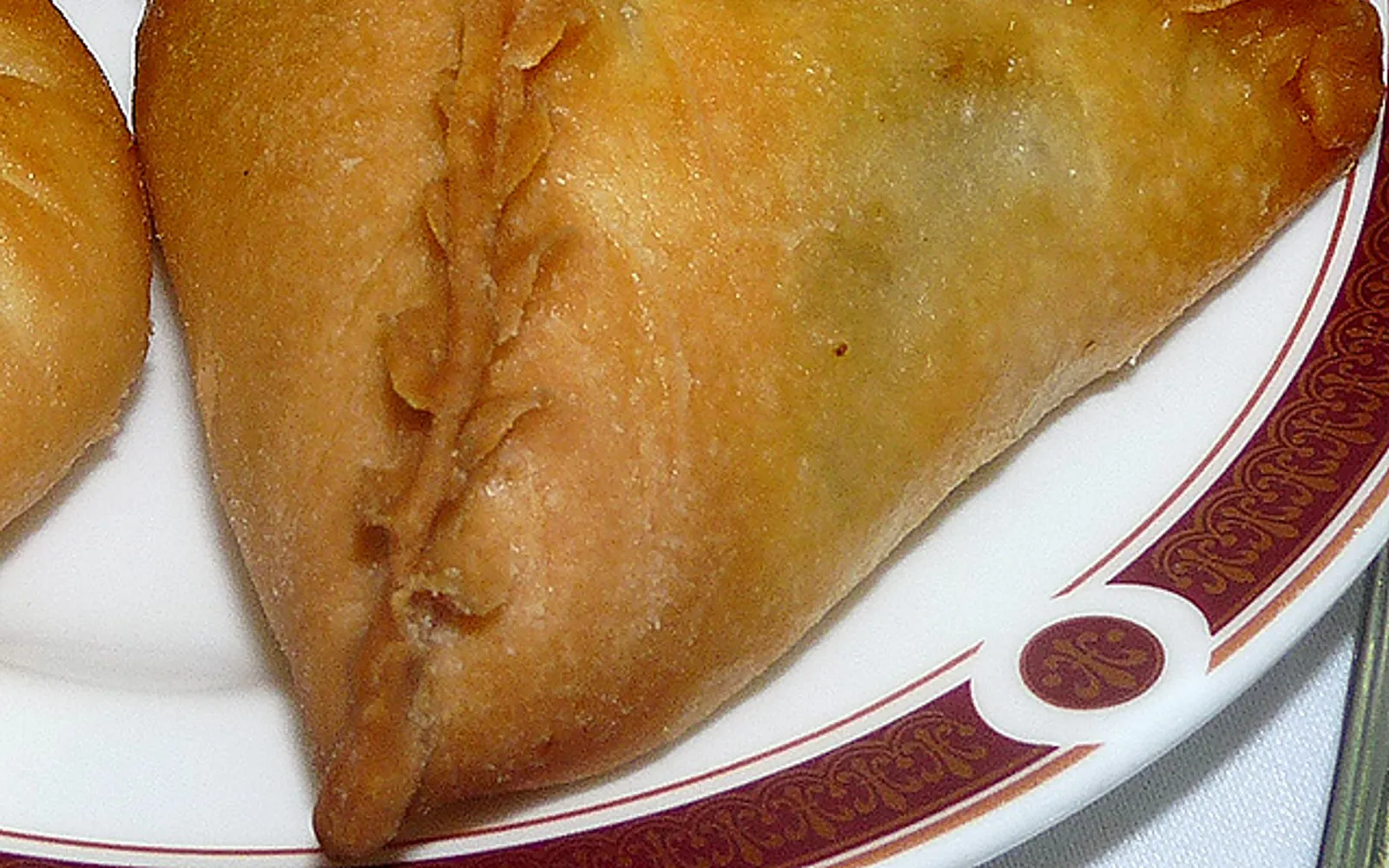
#2 Echpochmak
The Tatar national snack — its name means 'triangle' in Tatar. Crisp baked dough in a triangular shape, stuffed with diced lamb or beef, potato, and onion, seasoned with salt and black pepper. A small round hole at the top allows broth to be added during baking so the filling stays moist. Tatars eat it from morning to evening: as breakfast, a between-meals snack, or a proper main course.
- Order them hot from the oven. By evening the filling can dry out — ask whether a fresh batch has just come out before ordering.
- Price is around 80–150 roubles per piece; 2–3 pieces per person makes a light meal.
- The traditional lamb filling is more aromatic than beef. If you avoid lamb, let the staff know in advance.
 #3
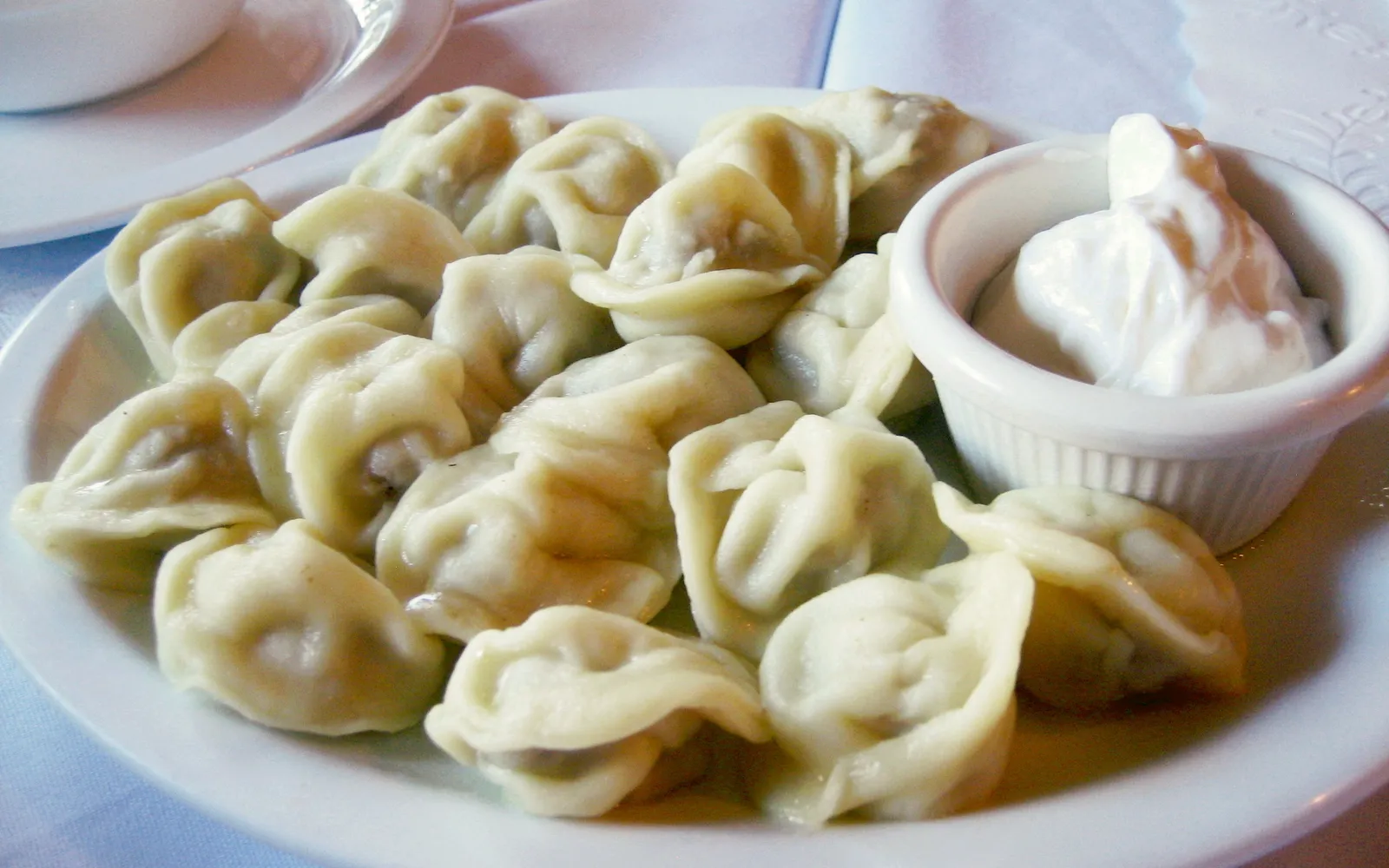
#3 Pelmeni
The Russian dumpling everyone eats year-round, loved across all ages. Thin dough wraps a filling of pork, beef, or a mix, seasoned with garlic, onion, and pepper, boiled until the dumplings float to the surface, then served with sour cream (<em>smetana</em>) or melted butter. Simple in flavour but easy to keep eating. Kazan's pelmeni tend to be smaller than those you find in Moscow, and some restaurants use a Tatar-style lamb blend in the filling — giving them a character of their own.
- Always order extra smetana — it rounds out the flavour considerably. Don't substitute with mayonnaise.
- Shops that make pelmeni fresh every day will display a sign saying <em>домашние пельмени</em> (homemade pelmeni). The difference from frozen is unmistakable.
- A bowl runs about 300–500 roubles — good value as a warm evening meal on a cold day.
 #4
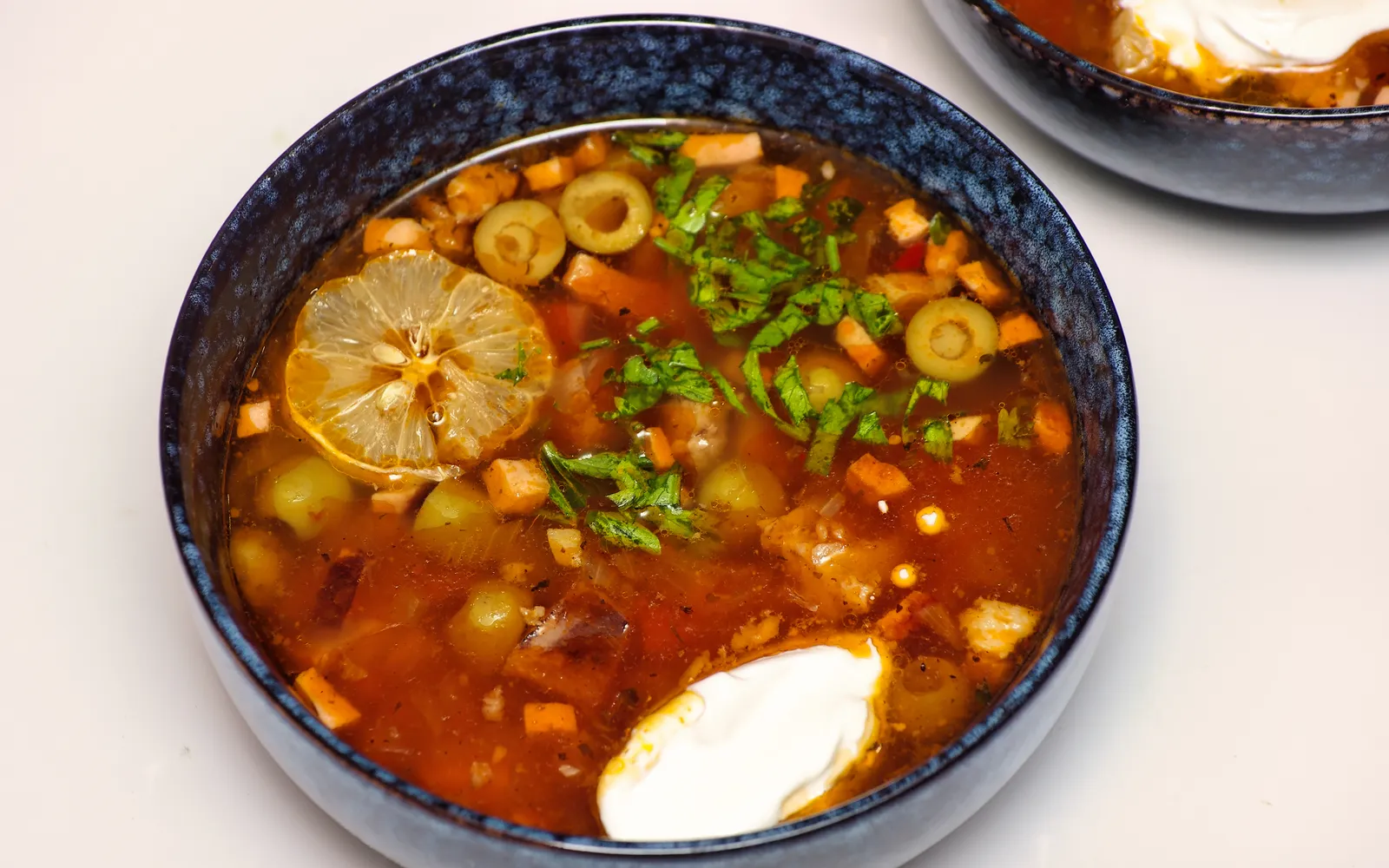
#4 Solyanka
A thick, sour-salty soup that counts as Russia's national dish yet remains largely unknown to outsiders. It is simmered from a combination of meats — pork, sausage, ham, and tongue — together with pickled cucumber, olives, tomato, and onion. The intense sour-salty depth comes from the pickle brine and lemon. It arrives with a spoonful of smetana to temper the acidity. Russians have been eating it as a hangover cure for hundreds of years, and it works just as well as a warming bowl on a cold afternoon.
- Try it with Russian black bread (<em>чёрный хлеб</em>) — they pair exceptionally well.
- The soup is rich enough to be a full meal on its own; no need to order anything alongside it.
- Tell the staff if you avoid pork — a fish or chicken version can usually be made instead.
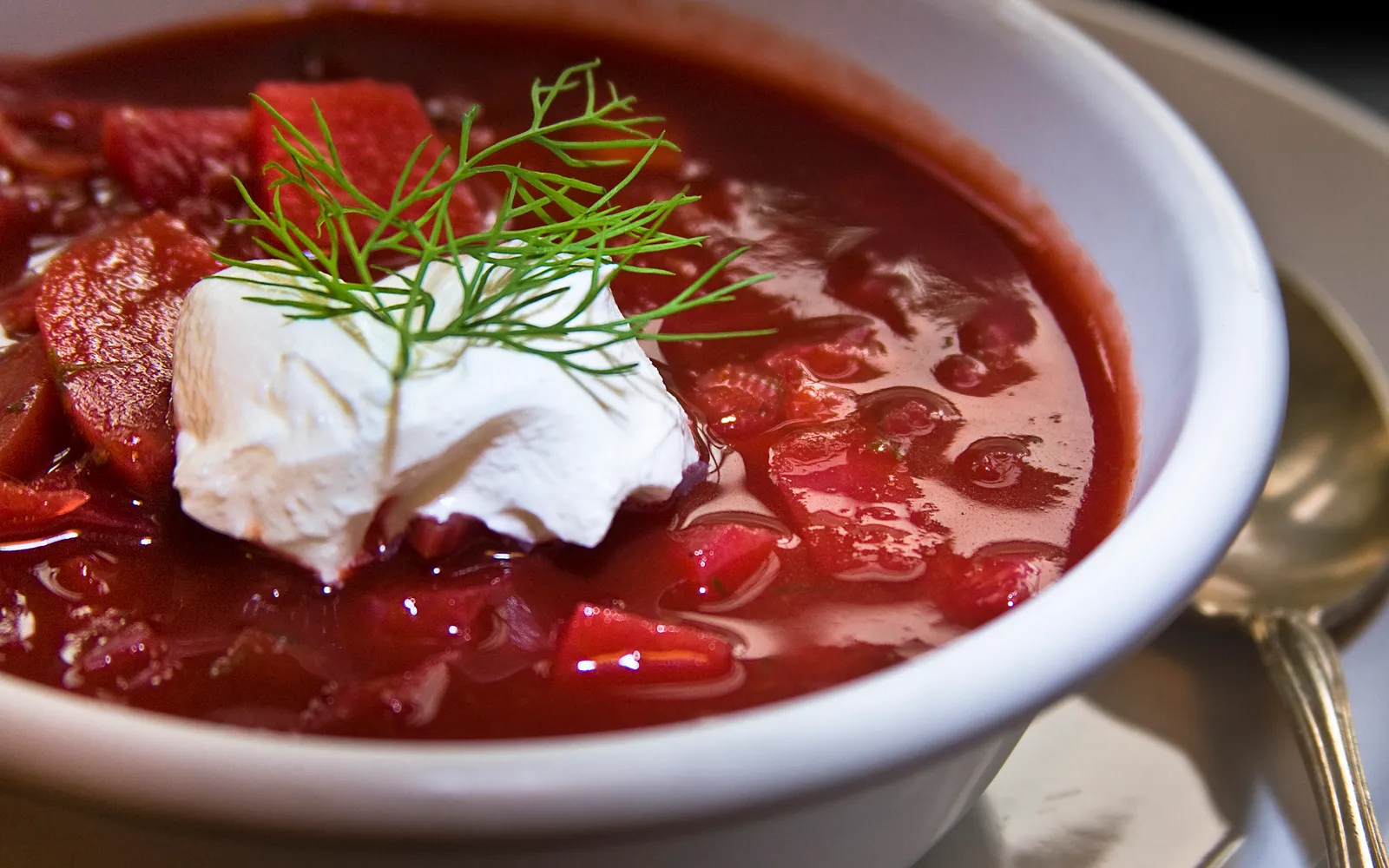 #5
#5 Borscht
The deep-red beetroot soup that has become a symbol of Eastern European cooking. Kazan has several restaurants doing it well: beetroot, cabbage, potato, carrot, and meat (pork or beef) simmered into a broth that gets its vivid colour — and gentle sweetness — from the beetroot, with acidity from tomato. Served hot with sour cream and bread. Travelers often do a double take: this red soup isn't spicy at all, just unexpectedly fragrant and sweet.
- Ask for extra smetana on the side, or order a second serving to stir in — it softens the flavour noticeably.
- The vegetarian version (<em>постный борщ</em>) skips the meat but stays flavourful because the vegetable broth is concentrated enough.
- A bowl costs around 250–400 roubles — cheaper than comparable soup in Moscow or St Petersburg.
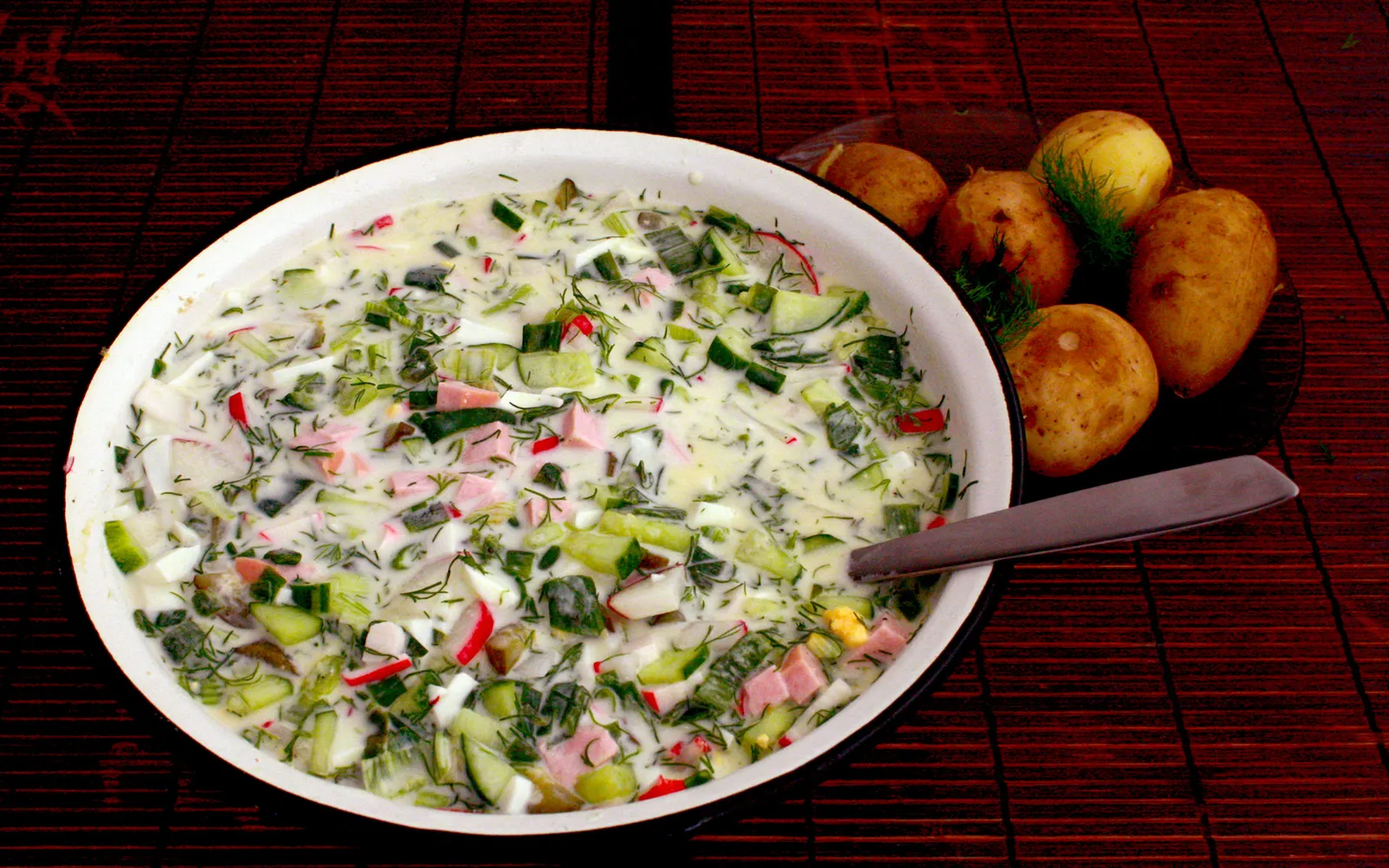 #6
#6 Gubadia
A large round baked pie that anchors the Tatar feast. Inside, layers alternate between cooked rice, cottage cheese (<em>qort</em>), chopped boiled egg, dried fruit, and melted butter, all wrapped in buttery thin pastry and baked to a golden crust. Gubadia comes in both a sweet version (with raisins) and a savoury version (with meat). It is traditionally served at weddings and the Sabantuy festival (the Tatar ploughing celebration), making it a genuine rarity that you need a real Tatar restaurant to find.
- Many Tatar restaurants bake gubadia to order, so call ahead — they don't keep stock on the shelf.
- The sweet version works as dessert; the savoury meat version is a meal in itself. Try both if you get the chance.
- Some stalls at Kolkhoz Market sell gubadia by the slice at low prices — a good way to try it before committing to a whole pie.
Where to stay in Kazan for this trip
A well-located hotel means less commuting and more sightseeing. Here are real, top-rated stays in Kazan — compare Agoda · Booking · Trip.com in one click.
Don Kikhot Hotel
Affiliate links — we may earn a commission at no extra cost to you. Details
Hotel Nogai
Affiliate links — we may earn a commission at no extra cost to you. Details
Ramada by Wyndham Kazan City Centre
Affiliate links — we may earn a commission at no extra cost to you. Details
Courtyard by Marriott Kazan Kremlin
Affiliate links — we may earn a commission at no extra cost to you. Details
Tours, tickets & activities in Kazan
Day tours, attraction tickets and travel essentials for Kazan — book ahead on Klook with mobile e-tickets.
Affiliate links — we may earn a commission at no extra cost to you.
Before You Pack
Kazan food is at its best in neighbourhood spots around Kolkhoz Market and along Bauman Street. Look for restaurants with signage in Russian or Tatar — they tend to offer fresher food at lower prices than hotel dining rooms. Most travelers are pleasantly surprised: nothing here is spicy, but the flavours carry an unexpected warmth that stays with you.