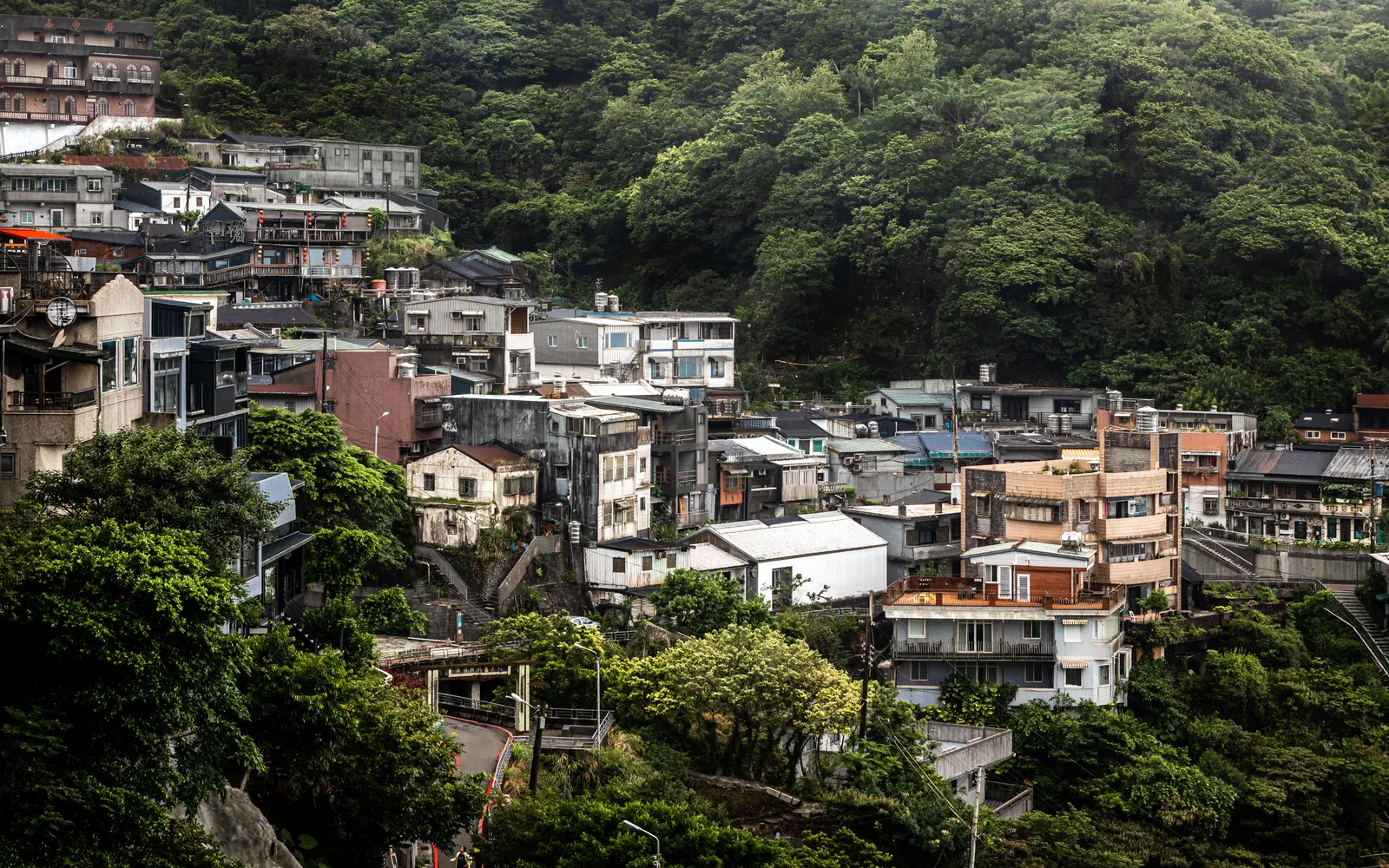
Jiufen is a former gold-mining town clinging to the hillside on Taiwan's northeast coast, about 1 hour from Taipei. Its narrow stone alleys, swaying red lanterns, and clifftop teahouses overlooking the sea have earned it the nickname "the Spirited Away town" — even though director Miyazaki has denied it was a direct inspiration. Beyond the romantic evening atmosphere, the area holds a genuine gold museum, a mineral-stained golden waterfall, and hiking trails suited to every fitness level.
 #1
#1 Jiufen Old Street (Jishan Street)
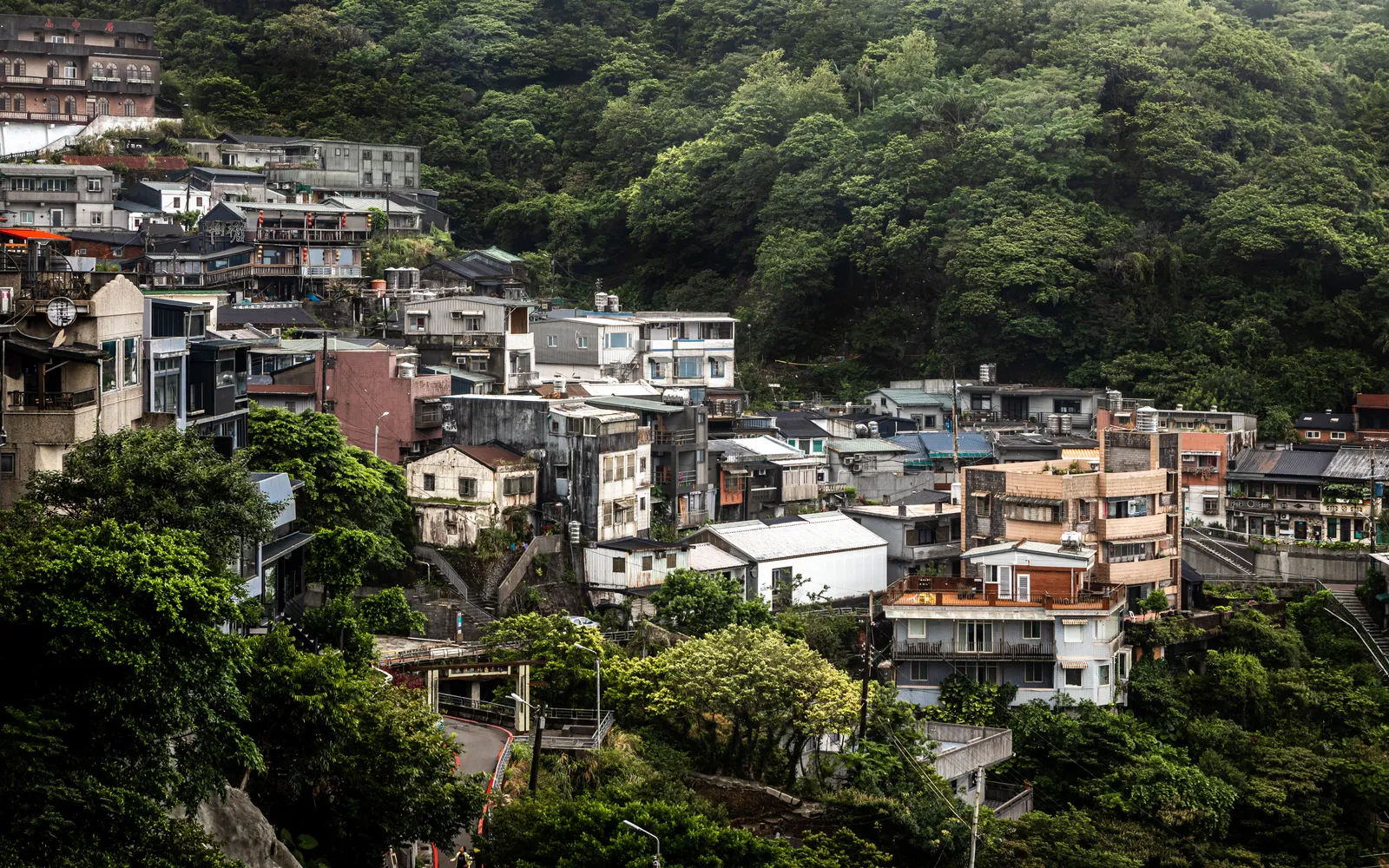
The heart of Jiufen is Jishan Street — a staircase of stone slabs climbing the hillside, packed on both sides with snack shops, tea stalls, and souvenir vendors. After dusk the red paper lanterns glow and bathe the whole alley in warm amber light, pulling travelers from every corner of the world to photograph the scene and taste local snacks: taro balls, grass jelly, and fish-ball soup.
- Arrive between 4 pm and 6 pm — the light is beautiful, lanterns are just switching on, and the crowds have not peaked yet.
- Plastic bags are wasteful here — bring your own tote.
- Most snack shops close between 8 pm and 9 pm.
 #2
#2 A-Mei Teahouse
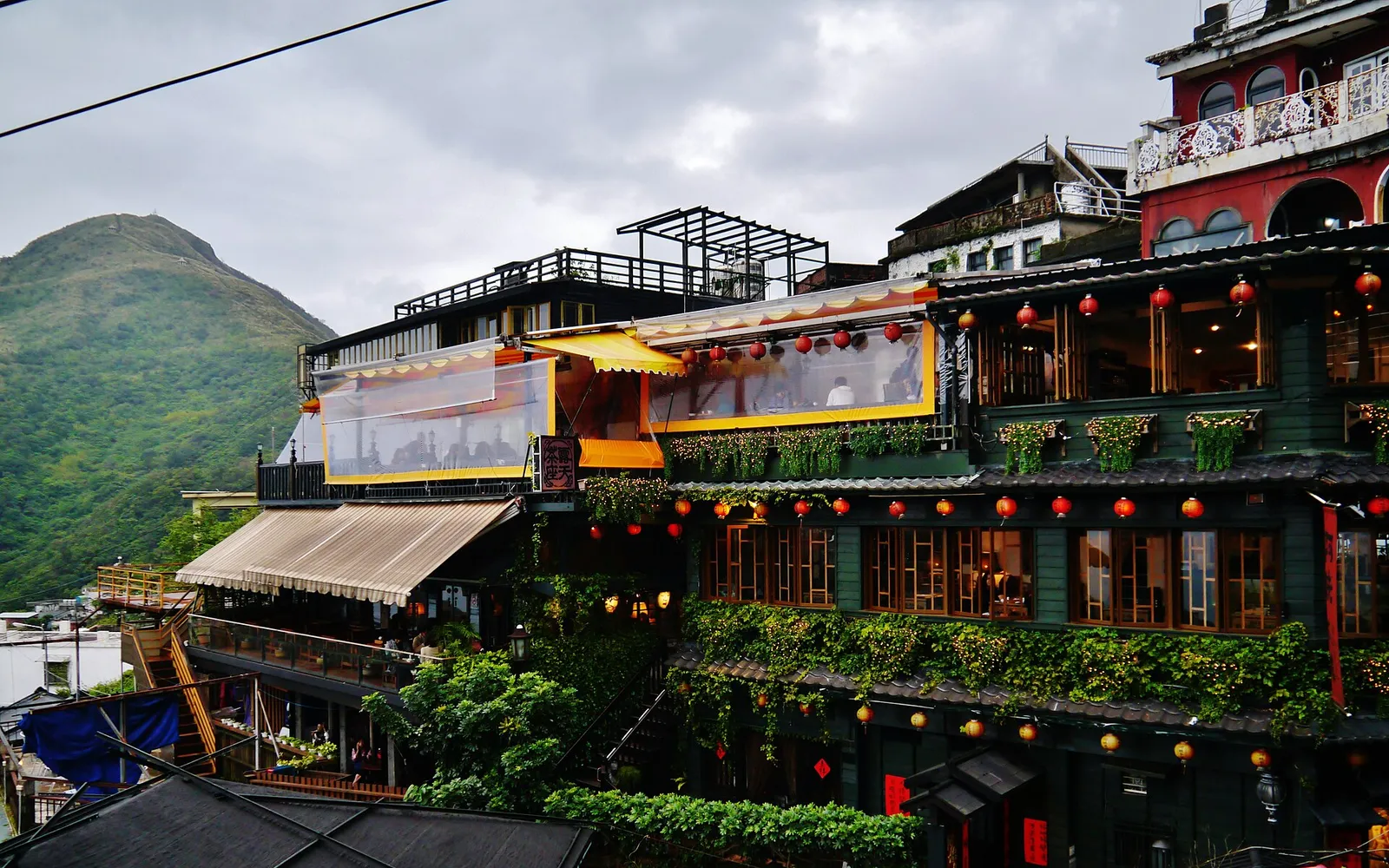
The teahouse that has ended up on more Jiufen postcards than any other. Built by the A-Mei family on land that once held a blacksmith shop during the gold-rush era, the multi-storey Japanese-Taiwanese building is the image most people picture when they think of Jiufen. The top floor has a 180-degree terrace with views across Keelung Mountain and the South China Sea.
- You must order tea or food to sit on the view terrace — prices are higher than average teahouses.
- Go on a misty day for a moody, atmospheric experience.
- Book a table online in advance during holidays and long weekends.
 #3
#3 Shengping Theater
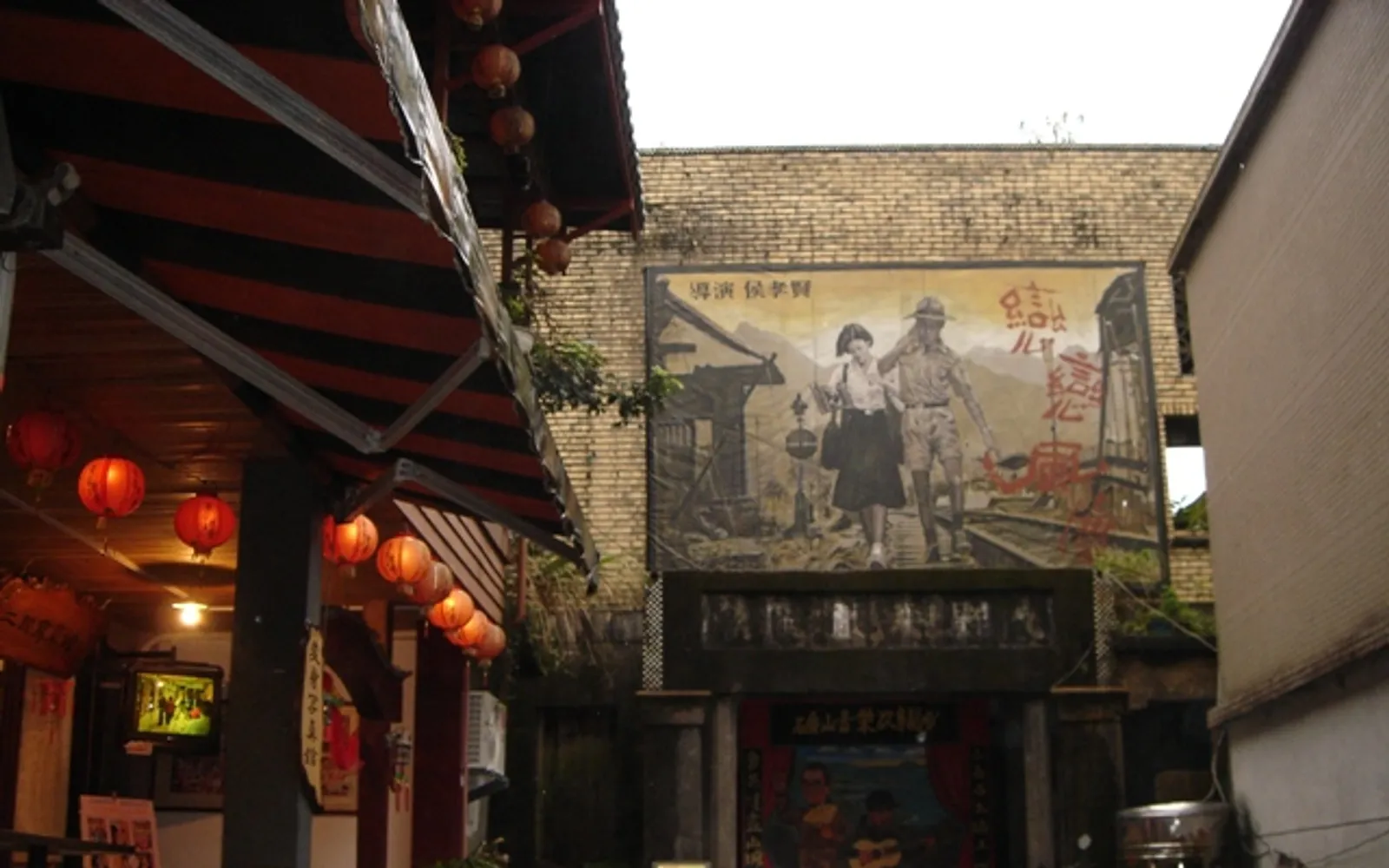
The oldest surviving cinema in Taiwan, built from Taiwanese cypress during the Japanese colonial period. Over its lifetime it served as a movie house, an opera stage, and a political podium. After years of closure it reopened in early 2024 following a careful restoration. Inside, exhibitions trace the history of Jiufen and its gold-mining culture.
- Check the event calendar ahead of time — special performances are held periodically.
- Admission is very affordable, around NT$50–100.
- Photographing the exterior is free at any hour.
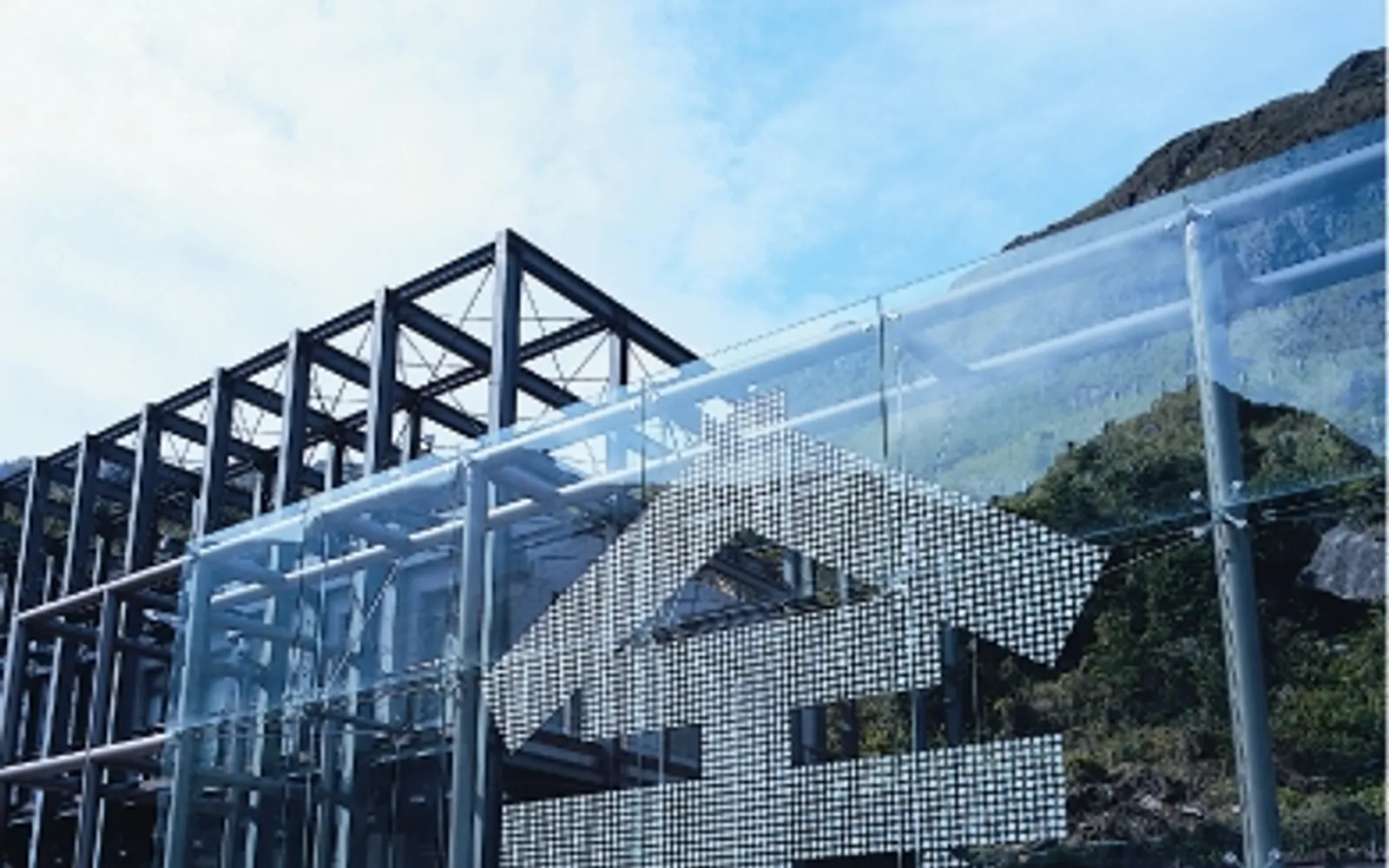 #4
#4 Jinguashi Gold Ecological Park
Jinguashi was once the largest gold and copper mining site in the Japanese Empire. Today it is the Gold Ecological Park, opened in 2004. Visitors can walk through a real mine tunnel, attempt to lift a 220-kilogram gold bar, and explore a museum that documents the history of gold extraction dating back to the 1890s — including the World War II prisoner-of-war camp that once operated here.
- Buy the combined ticket to save money — it covers the mine tunnel and the museum.
- The 220 kg gold bar is touchable, but once your hand is inside, pulling it back out is trickier than expected.
- On weekday mornings the place is nearly empty and the mountain views are exceptional.
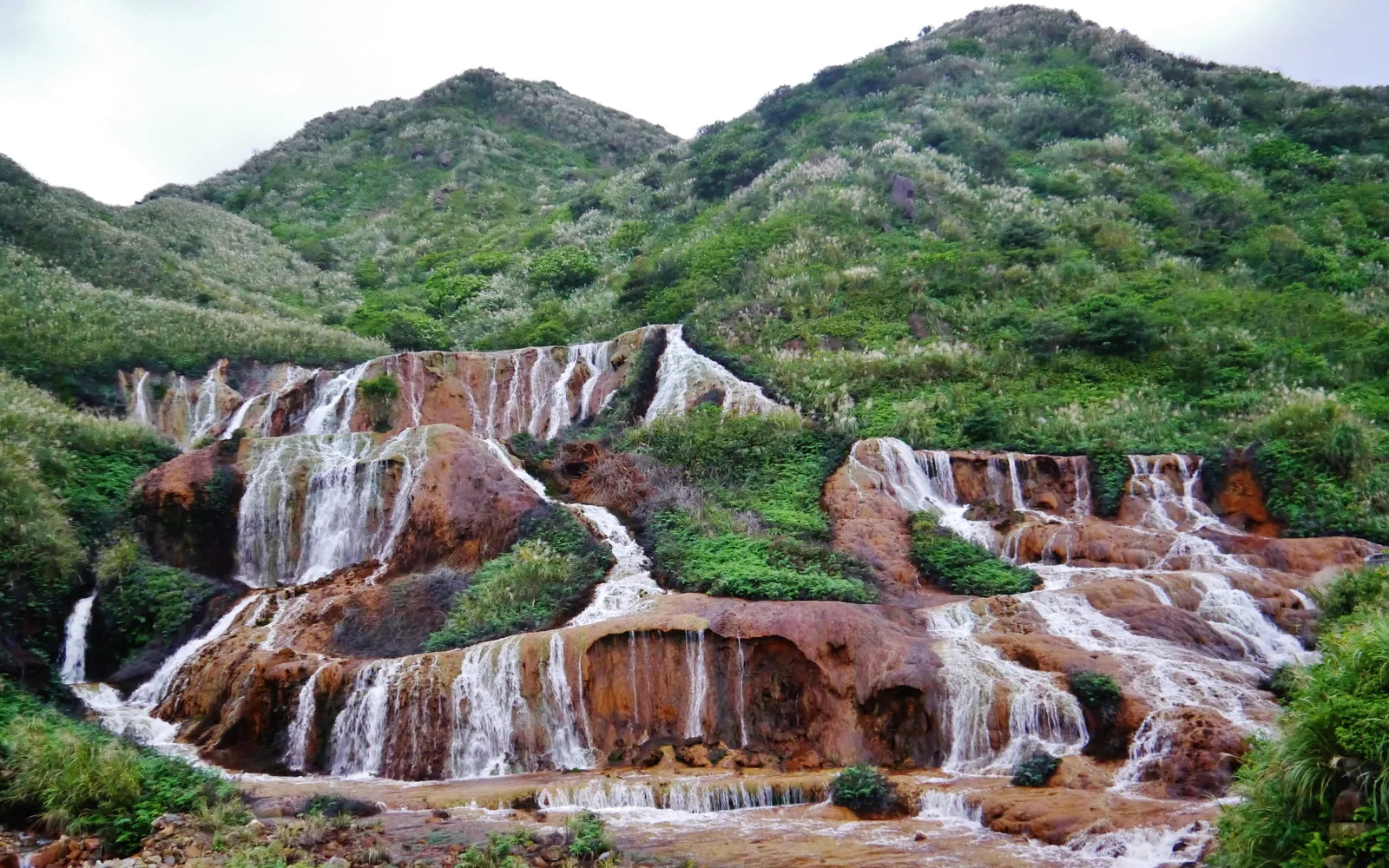 #5
#5 Golden Waterfall
A natural waterfall whose water runs a golden yellow from iron, copper, and arsenic minerals accumulated in the surrounding rock. The flow empties into Shuinandong Bay, creating a striking "yin-yang sea" phenomenon — one half of the bay is ocean green, the other murky gold. Entry is free from the roadside viewing platform. The colors are most vivid immediately after rain.
- Do not enter the water under any circumstances — it contains high levels of toxic minerals.
- The roadside viewing platform is the most convenient vantage point and takes 15–20 minutes.
- After rain the current runs stronger and the color deepens — ideal for photography.
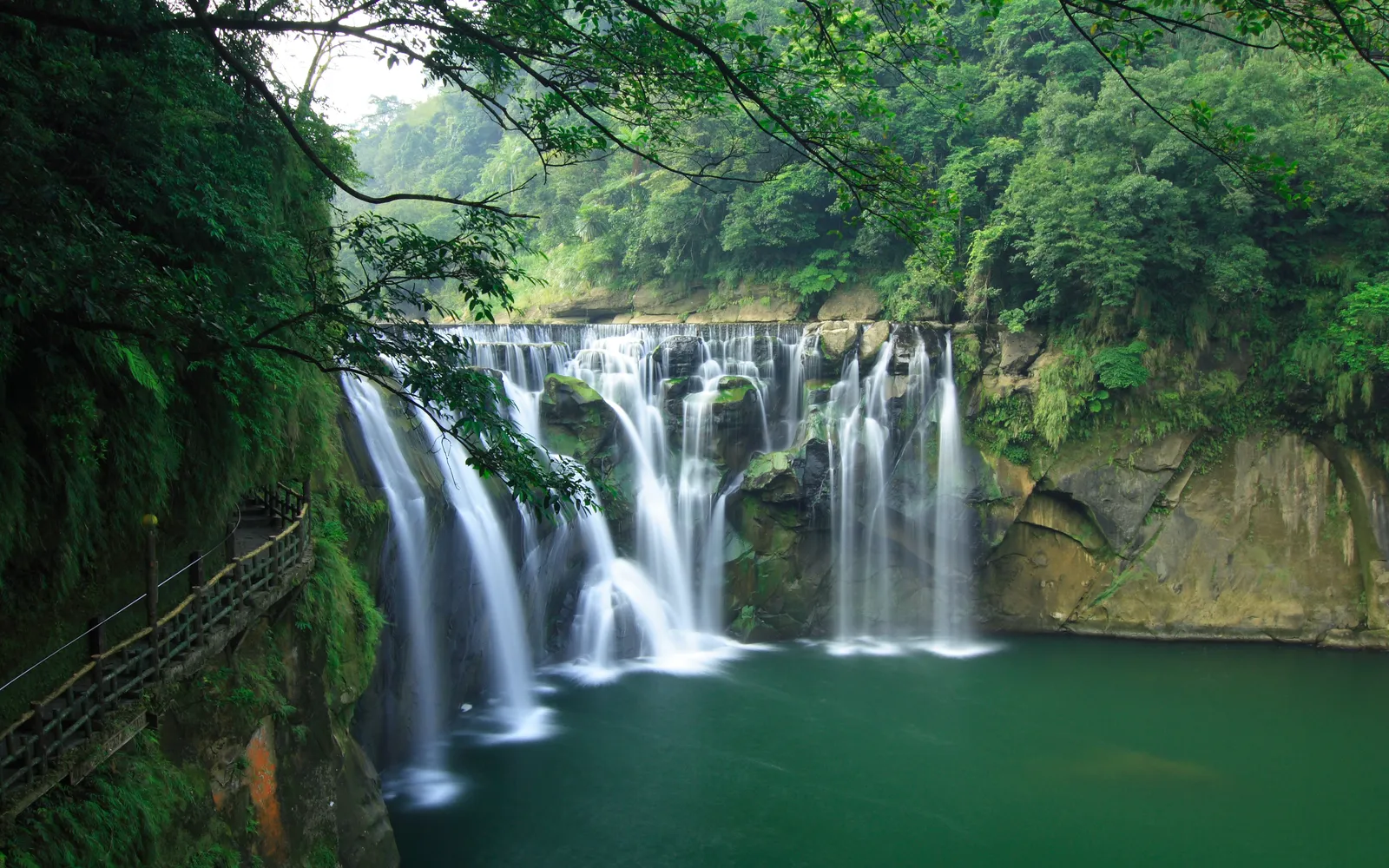 #6
#6 Shifen Waterfall & Sky Lanterns
Shifen Waterfall stands 20 metres high and 40 metres wide and is nicknamed the "Niagara of Taiwan" for the way it spills horizontally as a wide curtain of water. A short walk away, the old Shifen Street has active railway tracks running straight down the middle — the spot where travelers buy sky lanterns and release them as wishes. The lanterns drift slowly upward against a backdrop of green hills.
- Buy your sky lantern directly from a trackside shop — NT$150–200 covers the lantern and staff help with writing your wish.
- Real trains still run on these tracks. Step off when you hear the signal.
- A rainbow forms over the waterfall between 10 am and 2 pm on sunny days.
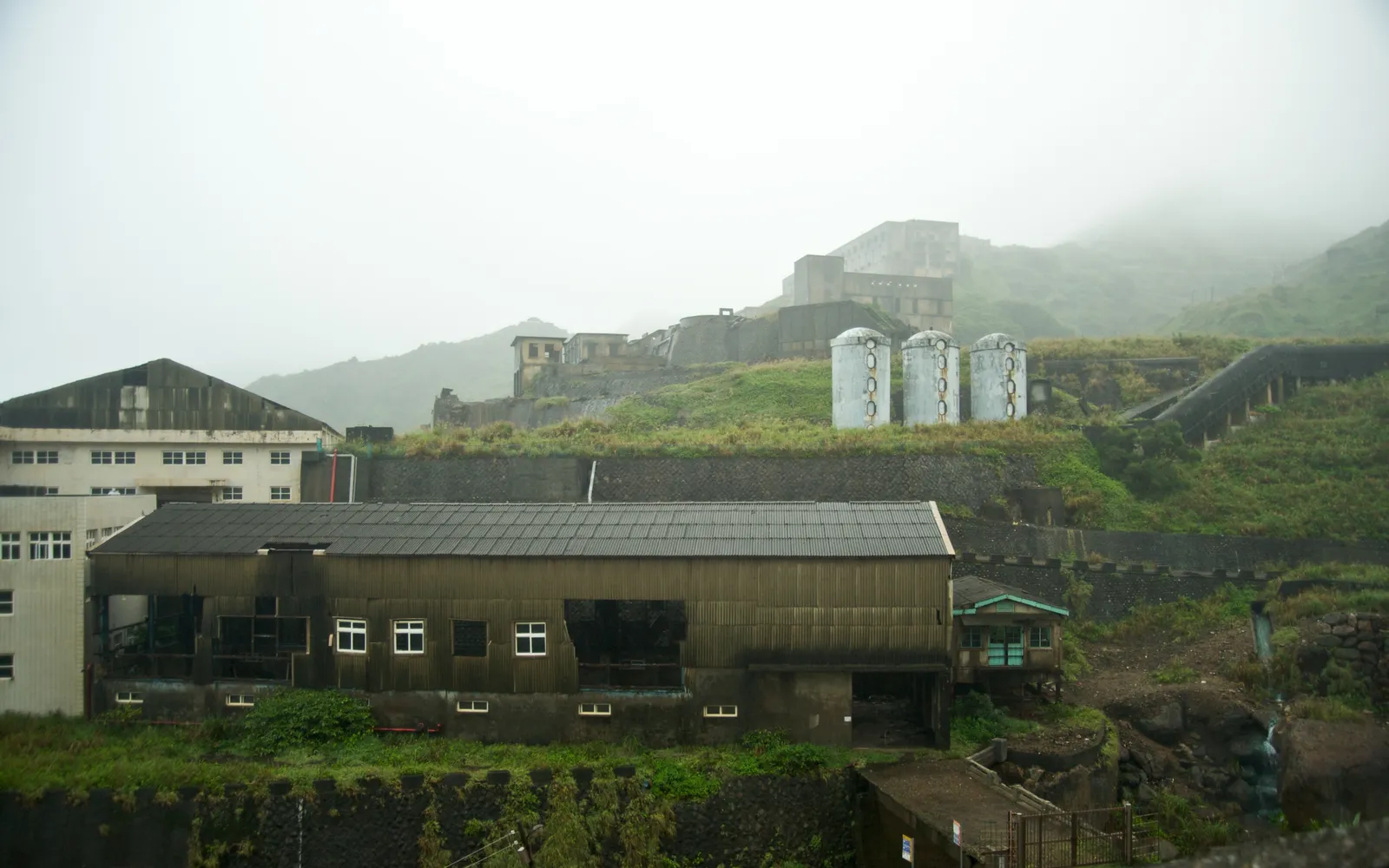 #7
#7 Teapot Mountain
The most popular hiking trail in the Jiufen-Jinguashi area. The round trip covers roughly 3–4 kilometres and takes 2 to 2.5 hours. Stone steps are well-maintained throughout. The 600-metre summit has a large teapot-shaped boulder you can climb, and the panorama from the top takes in Jiufen, Jinguashi, the yin-yang sea, and the South China Sea in a single sweep.
- Wear proper hiking shoes — some sections of the stone staircase are steep.
- Bring 1–1.5 litres of water; there are no shops along the trail.
- Avoid rainy days — the steps become slippery and genuinely dangerous.
Where to stay in Jiufen for this trip
A well-located hotel means less commuting and more sightseeing. Here are real, top-rated stays in Jiufen — compare Agoda · Booking · Trip.com in one click.
Jiufen Sunshine B&B
Affiliate links — we may earn a commission at no extra cost to you. Details
Jiufen Seaside Homestay
Affiliate links — we may earn a commission at no extra cost to you. Details
Jiufen Sunny Room
Affiliate links — we may earn a commission at no extra cost to you. Details
Jiufen Happyland B&B
Affiliate links — we may earn a commission at no extra cost to you. Details
Tours, tickets & activities in Jiufen
Day tours, attraction tickets and travel essentials for Jiufen — book ahead on Klook with mobile e-tickets.
Affiliate links — we may earn a commission at no extra cost to you.
Before You Pack
Jiufen is best experienced with at least one overnight stay. The early morning hours before tour buses arrive give you the alleys almost to yourself. Set aside 1–2 days to combine the hike, the local food, and a proper sit-down tea session with a view of the sea.