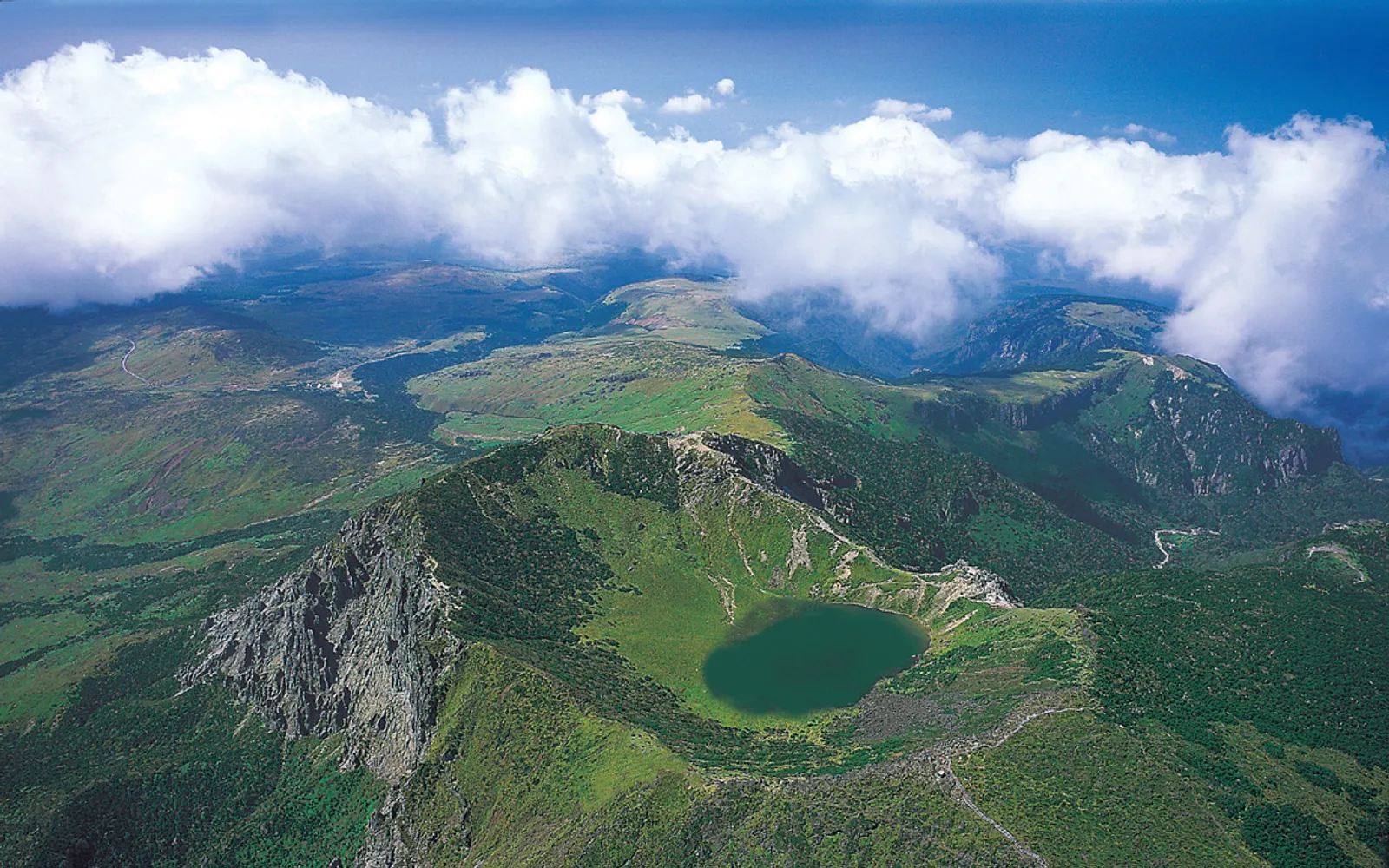
Jeju Island (제주도) is South Korea's largest volcanic island, sitting at the southern tip of the Korean Peninsula. Its landscapes span an extraordinary range — high mountain, lava tubes, waterfalls, white-sand beaches, and seasonal wildflower fields. UNESCO has designated 3 sites on this single island as Natural World Heritage: Hallasan, Seongsan Ilchulbong, and Manjanggul Cave — making Jeju one of the most sought-after destinations in Korea for travelers from across Asia and Europe.
 #1
#1 Seongsan Ilchulbong
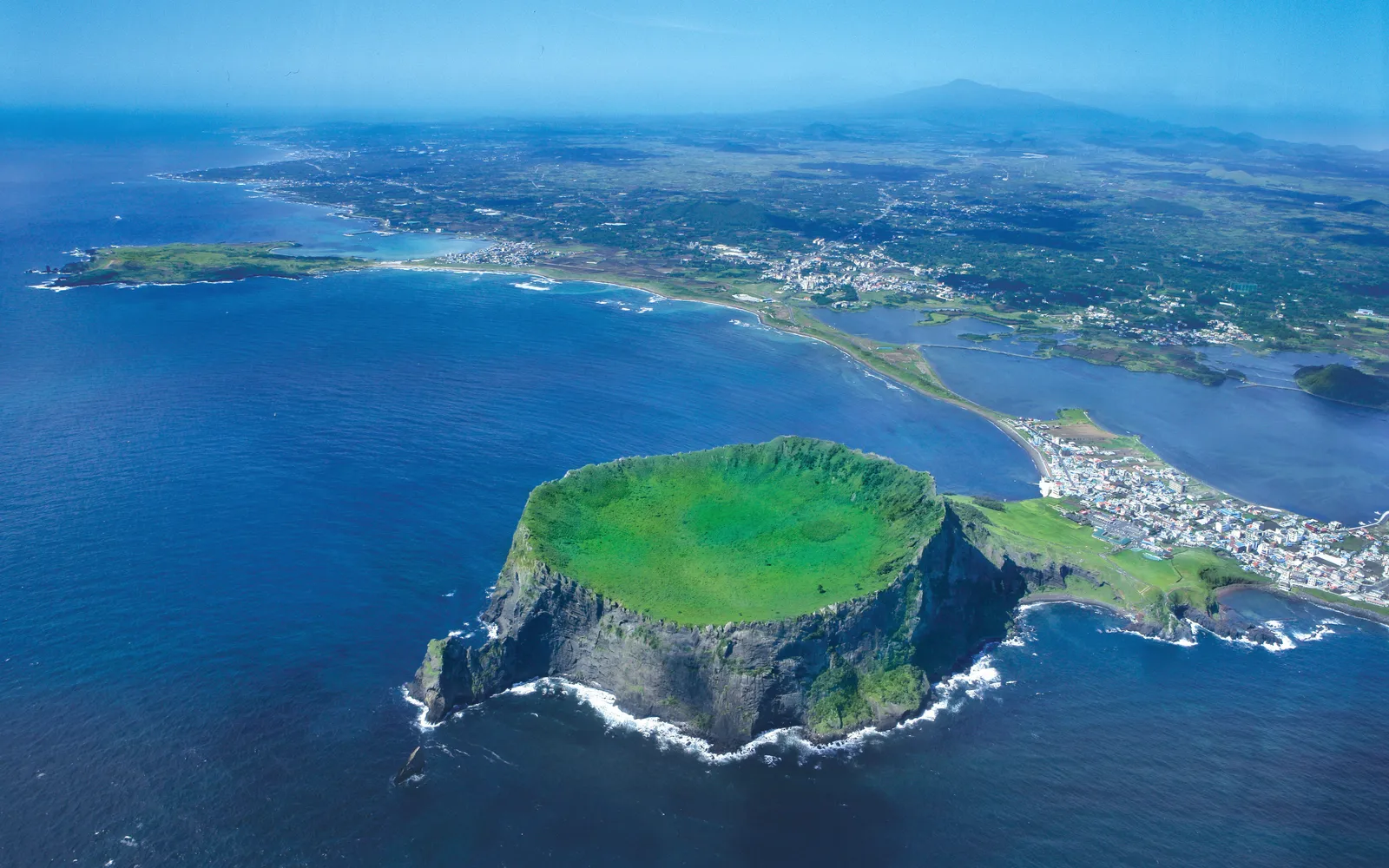
A 6,700-year-old tuff volcanic cone that erupted from the sea floor — rising 182 metres with a crater mouth roughly 600 metres across, blanketed in lush grass. Ilchulbong means 'Sunrise Peak' because this is the island's premier spot to watch the sun come up on New Year's Day. The trail to the top takes about 30 minutes, and from the rim you get a clear view of the open sea and neighboring Udo Island. UNESCO added it to the World Heritage list in 2007.
- Arrive before 06:00 to avoid crowds and catch the sunrise
- Trails open 07:00–19:00 (seasonal); admission is 2,000 won
- Regular trainers are fine — the path is not steep
 #2
#2 Hallasan National Park
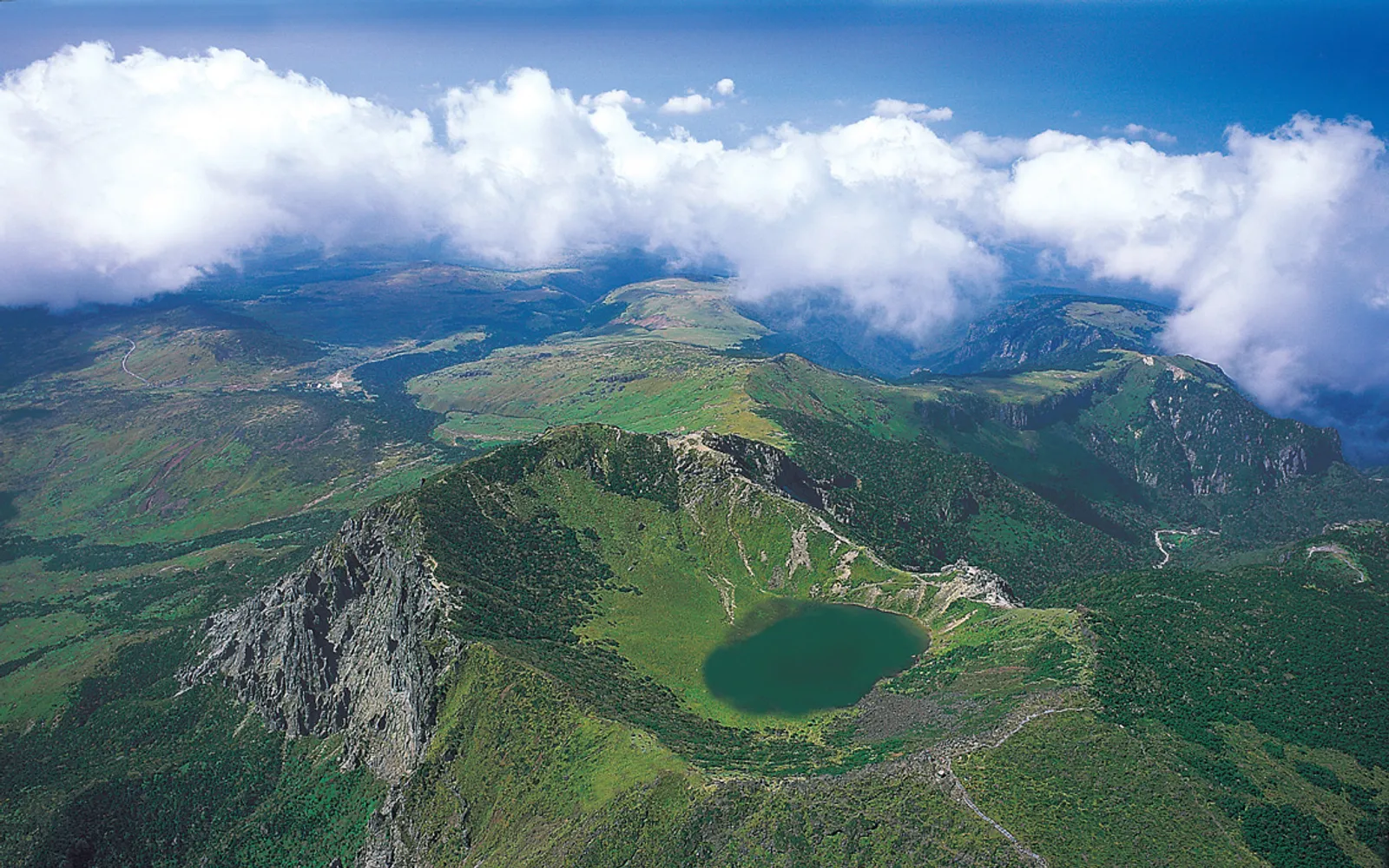
At 1,950 metres, Hallasan is the highest mountain in South Korea and a dormant volcano. The summit holds the Baengnokdam crater lake — genuinely beautiful. UNESCO lists it as both a World Heritage site and a Biosphere Reserve. Two main trails: Seongpanak (9.6 km) and Yeongsil (5.8 km). The crater lake only holds water during spring and the rainy season.
- Seongpanak is the only trail that reaches the very top — allow 4–5 hours round trip
- Start before 06:00 because access is cut off at noon
- The summit runs 10–15°C colder than the coast below — bring a layer
 #3
#3 Manjanggul Cave
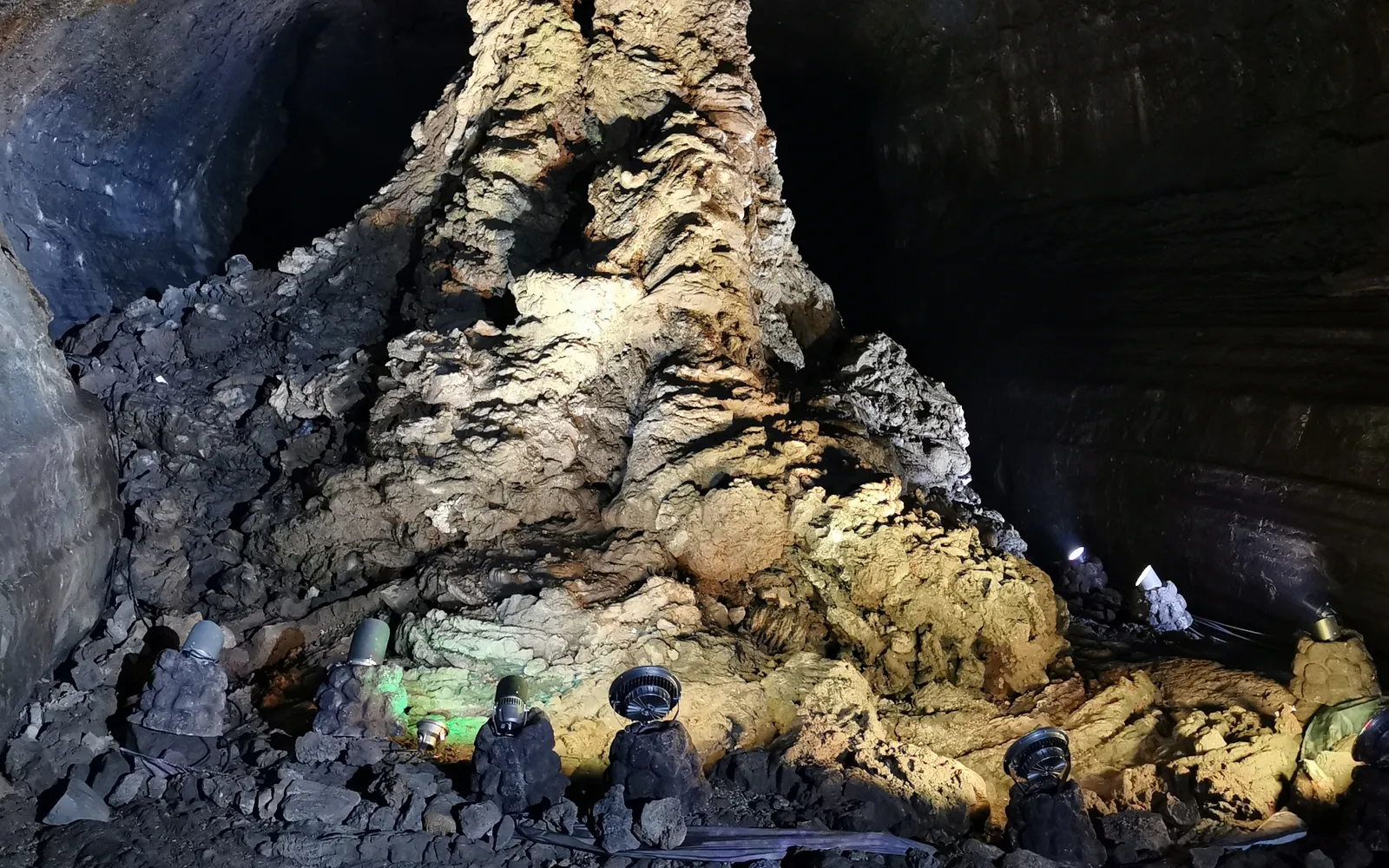
One of the world's longest lava tube systems, stretching over 7.4 kilometres in total — around 1 kilometre is open to visitors. The highlight is a 7.6-metre lava column at the far end, the largest of its kind on the planet. Temperature inside stays a constant 11–21°C year-round. UNESCO inscribed it as part of the Jeju Volcanic Island and Lava Tubes World Heritage site in 2007.
- Bring a layer even in summer — it is cold inside
- The floor is slippery; wear shoes with solid rubber soles
- Open 09:00–18:00; admission 4,000 won (adults)
 #4
#4 Hyeopjae Beach
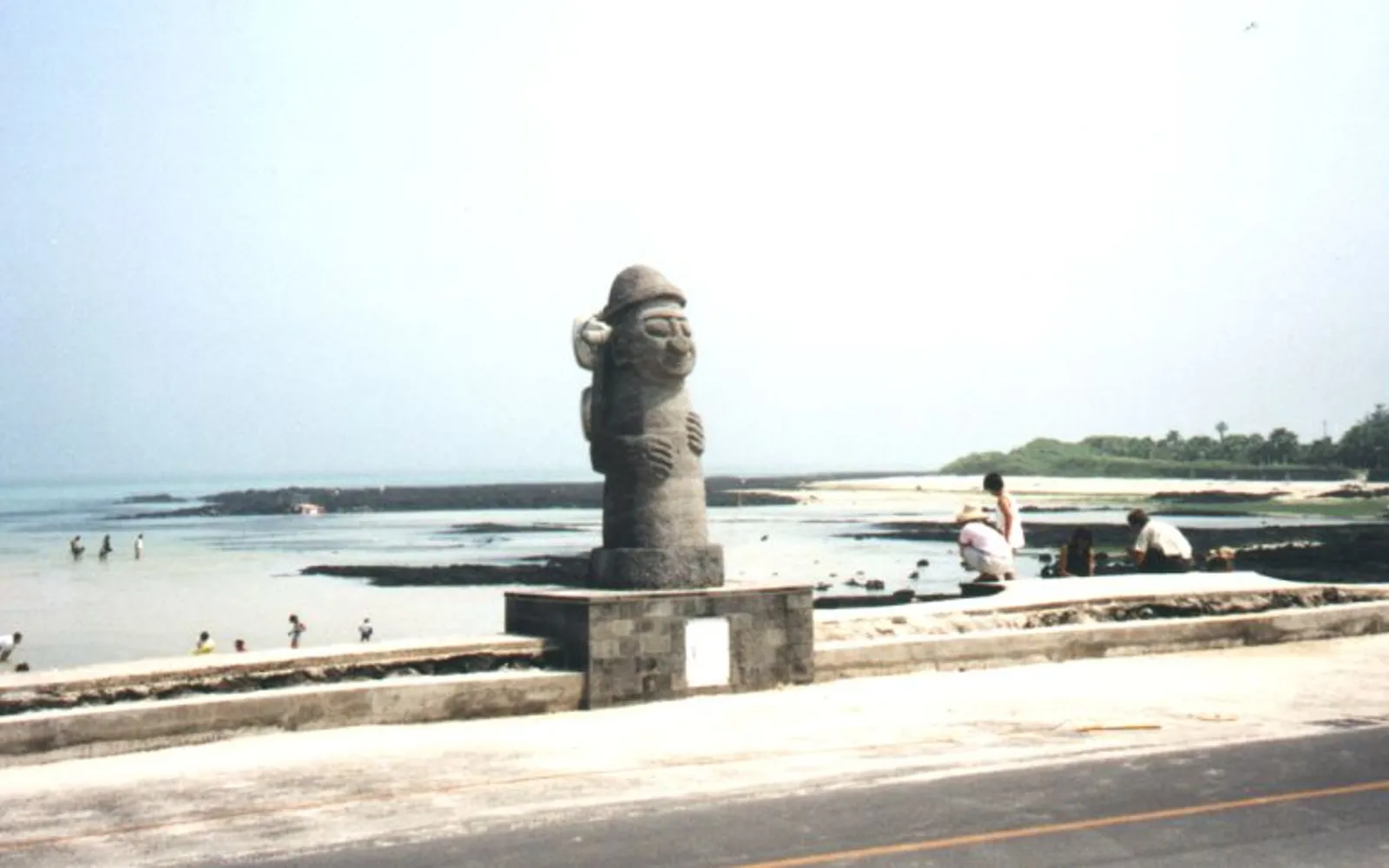
Widely rated the most beautiful beach on Jeju, with fine white sand and water that shifts from emerald to deep blue. The shallows make it well suited for swimming. A natural pine forest lines the back of the beach providing shade, and Hallim Park and the Ssangyong Cave are right nearby — easy to combine several stops in the same area. The sunset from this beach consistently ranks among the island's best.
- Midday sun here is intense — come early or arrive around 16:00–18:00 for the sunset
- Swimsuit rental and changing rooms are available on the beach
- Free parking in the beach car park
 #5
#5 Udo Island
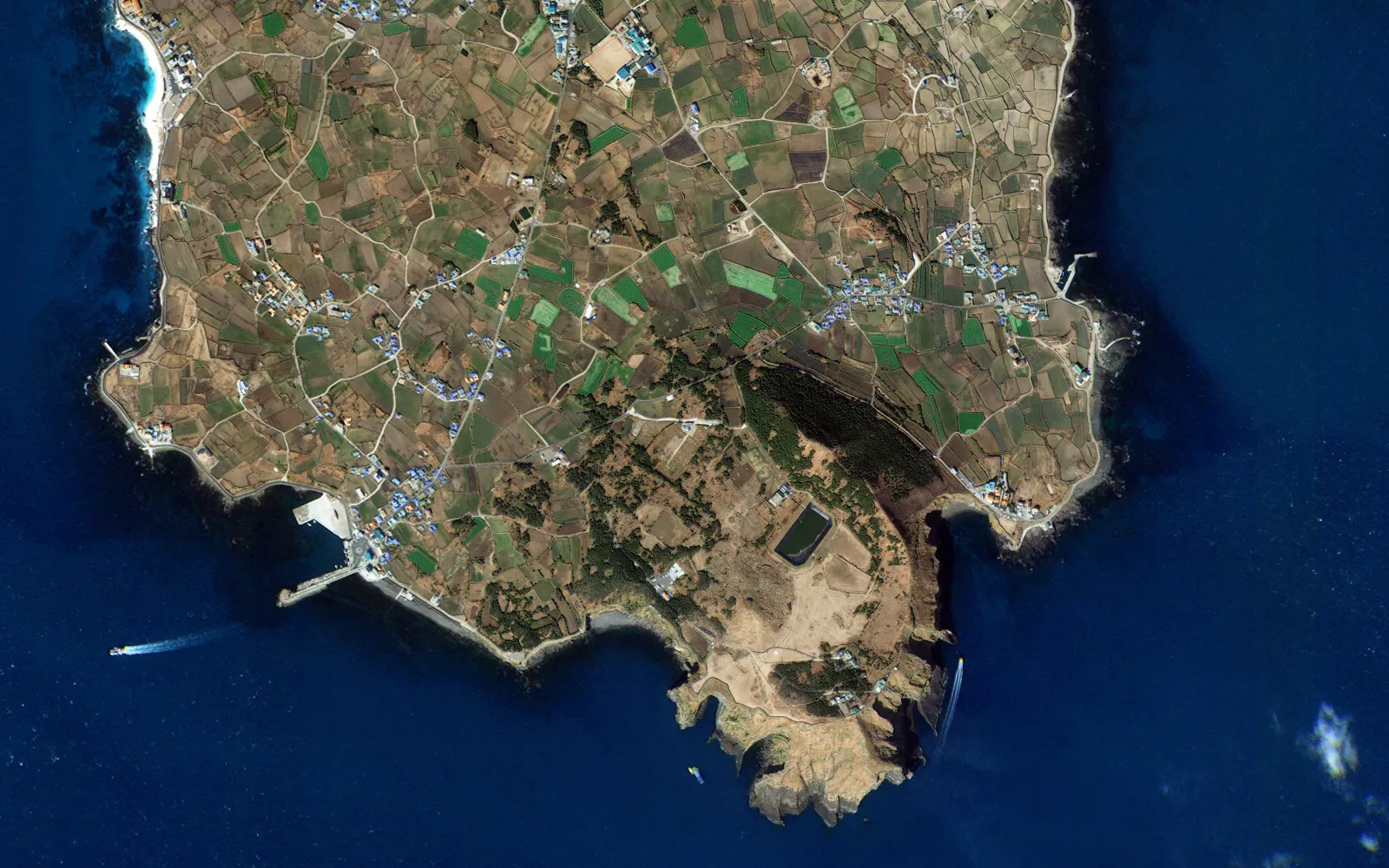
A compact island a 15-minute ferry ride from Seongsan, with a quietly charming rural feel. It has Seobin Baeksa beach — a rare stretch of milky-white sand — and the Dongdo-bongsu cliff with panoramic views around the island. The local specialty is peanut ice cream, a Udo-only thing worth trying. Cycling the 17-km loop around the island takes 2–3 hours and is easily the most popular activity here.
- Rent an e-bike at the ferry dock — around 15,000–20,000 won for a half-day
- Return ferry ticket (including island entry fee) is approximately 12,000–16,000 won
- Cars can come on the ferry but a bicycle is better — the roads are narrow
 #6
#6 Cheonjiyeon Waterfall
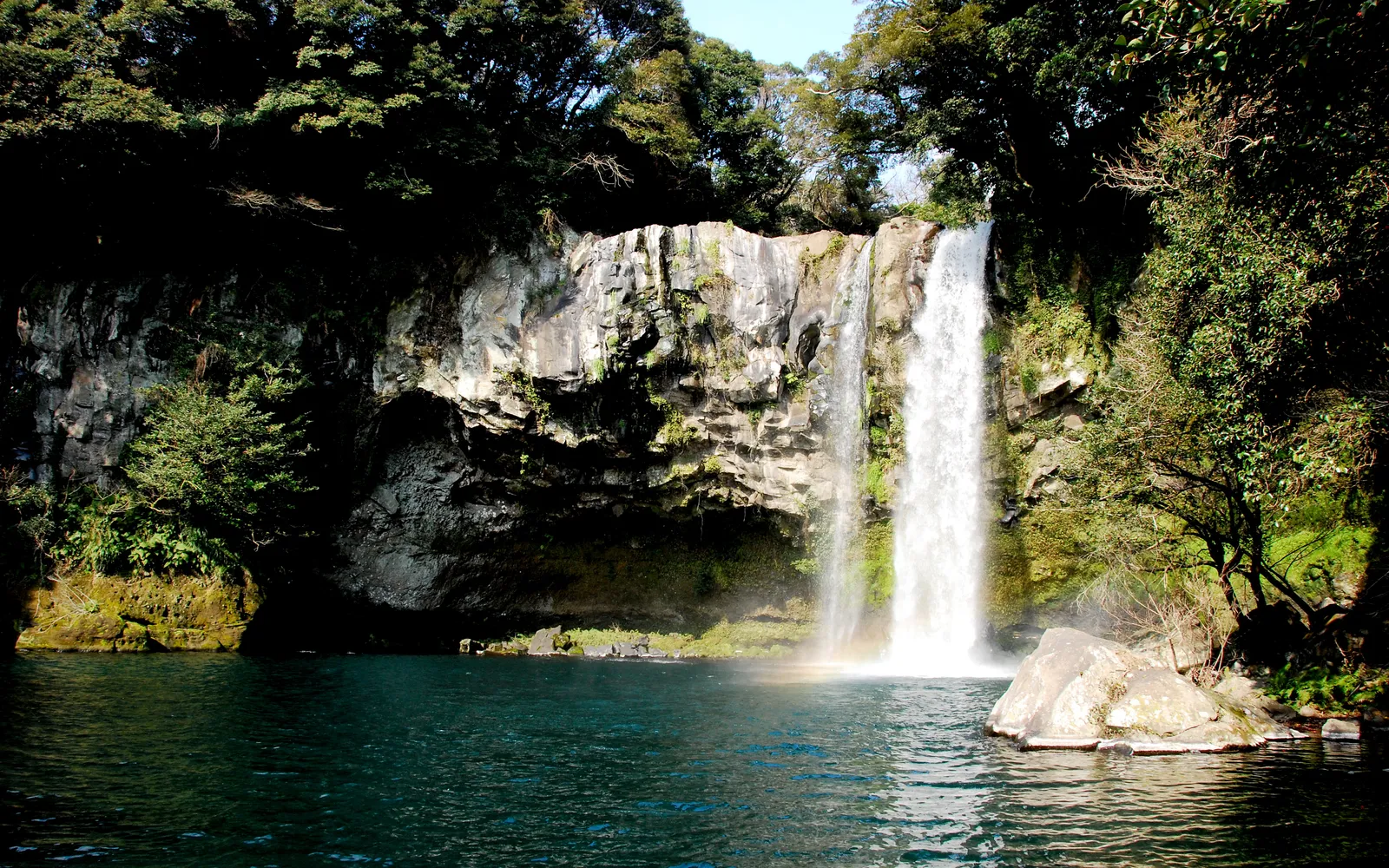
The most celebrated waterfall in Seogwipo — 22 metres high and 12 metres wide, falling into a clear emerald pool. Cheonjiyeon translates as 'pond where heaven and earth meet,' tied to a legend of seven heavenly maidens. The footpath to the falls takes 15–20 minutes through a forested ravine, crossing the Seonimgyo bridge with its carved fairy figures. At night the falls are lit up with coloured lights.
- Open 09:00–22:00; admission 2,000 won — evening lighting is a real draw
- Swimming in the pool is prohibited to protect the ecosystem
- Cheonjeyeon Waterfall (a separate site) is nearby — worth planning both on the same day
 #7
#7 Jeongbang Waterfall
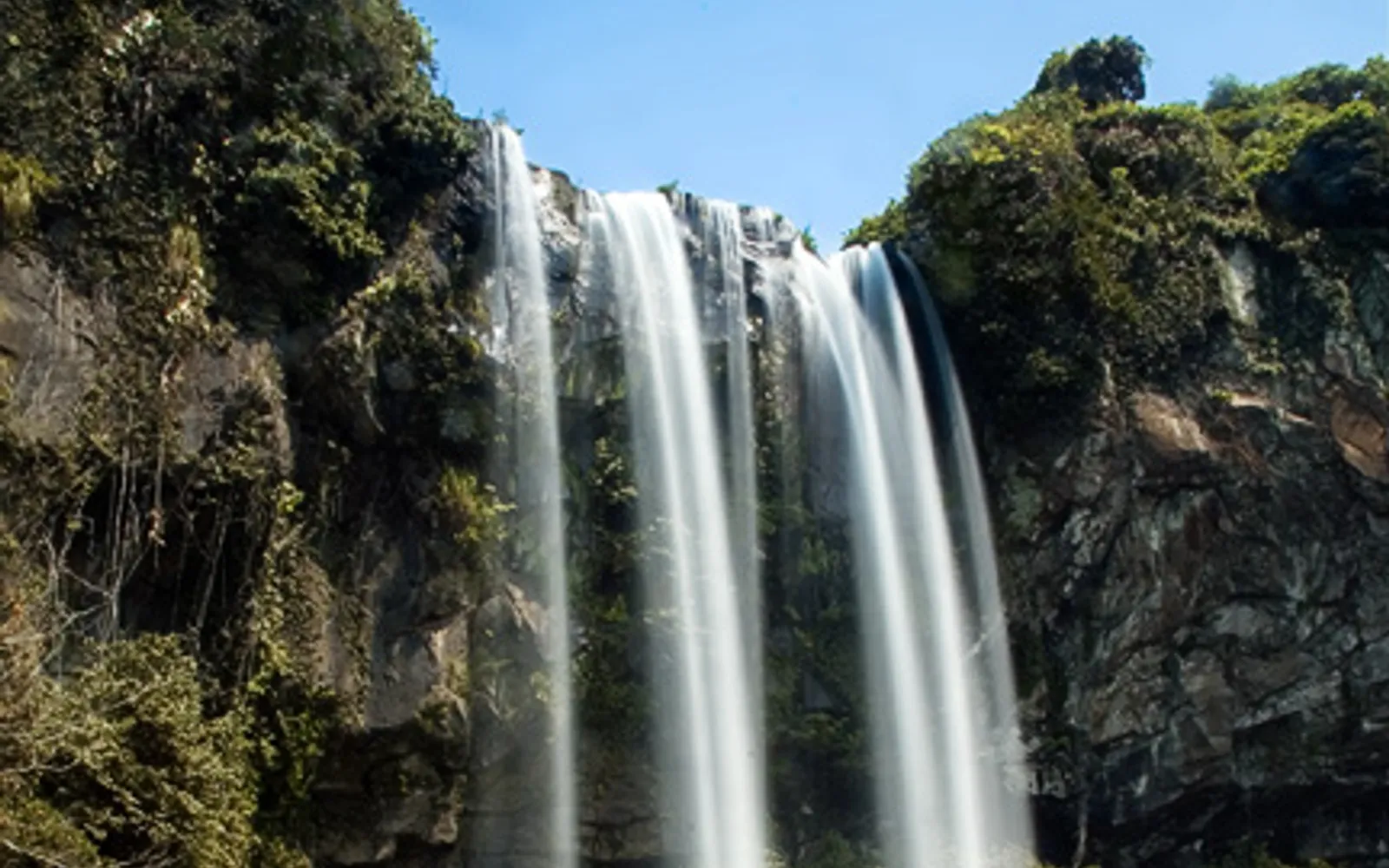
The only waterfall in East Asia that falls directly into the ocean — 23 metres of free-fall onto the Pacific coastline. A coastal viewing path shows off the cliff scenery to excellent effect. In Chinese legend this is counted as one of Jeju's three famous waterfalls alongside Cheonjiyeon and Cheonjeyeon. What makes it genuinely different from any other waterfall is the open ocean as a backdrop.
- Open 09:00–18:00; admission 2,000 won — a steep staircase down takes about 5 minutes
- On days with strong swells, spray can reach the viewing platform — mind your footing
- Shooting from partway down the stairs gives you both the falls and the sea in one frame
 #8
#8 Jeju Olle Trail
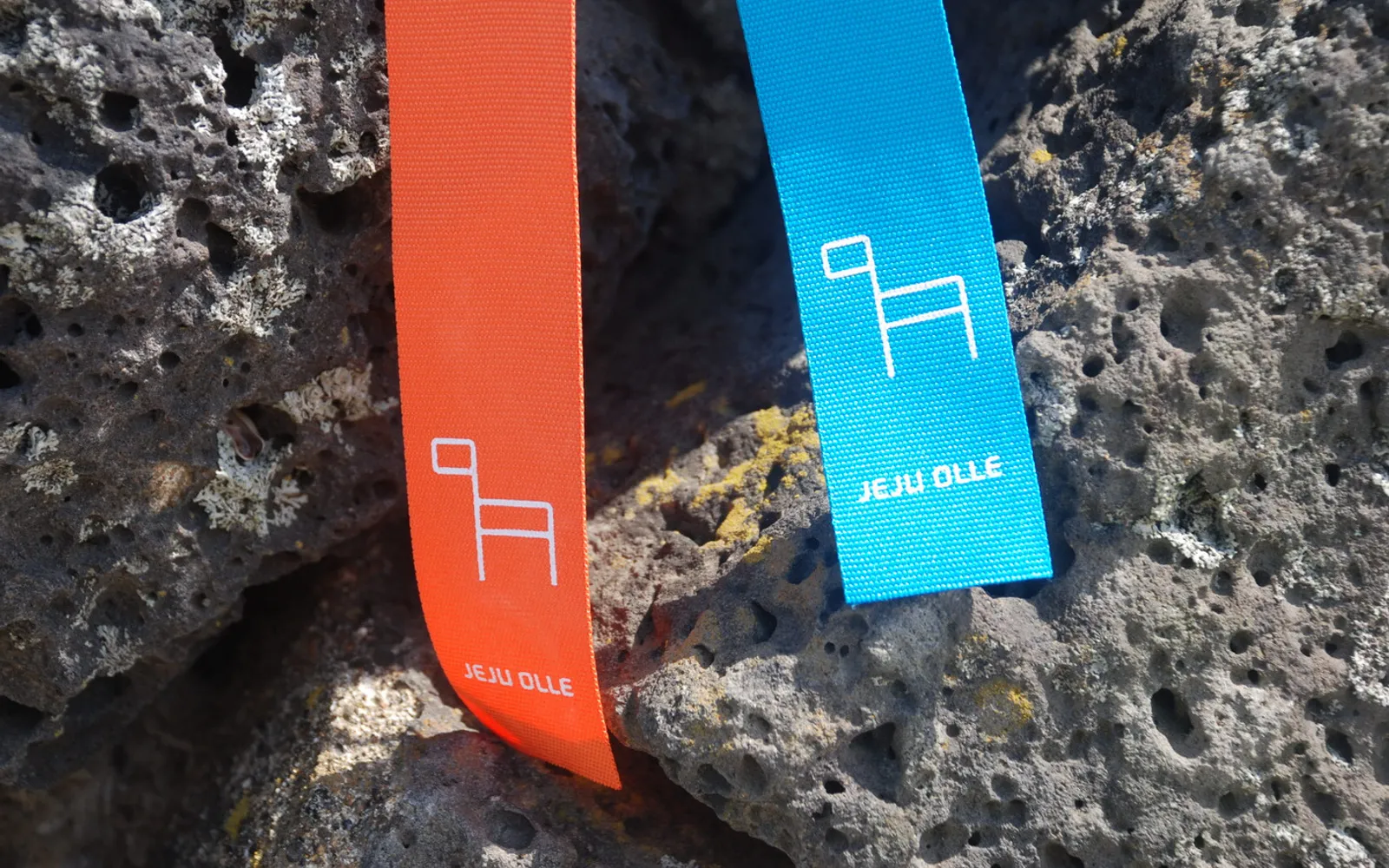
A network of 21 main coastal walking routes totalling 437 kilometres around the island, voted one of the 10 best Coastal Walks in the world by Active Traveller Magazine. 'Olle' is the Jeju word for 'the narrow lane from the road to your front door.' Each route passes fishing villages, grasslands, sea cliffs, and sandy beaches — averaging 15–16 km per route and 4–6 hours of walking. The orange-and-blue striped waymarker posts are hard to miss.
- Route 1 (Seongsan–Seopjikoji) and Route 7 (Seogwipo) are the best starting points for first-timers
- Buy an Olle Passport (2,000 won) and collect stamps at each route — genuinely enjoyable
- Naver Map or Kakao Map both track the Olle Trail GPS routes reliably
Where to stay in Jeju Island for this trip
A well-located hotel means less commuting and more sightseeing. Here are real, top-rated stays in Jeju Island — compare Agoda · Booking · Trip.com in one click.
The Shilla Jeju
Affiliate links — we may earn a commission at no extra cost to you. Details
Lotte Hotel Jeju
Affiliate links — we may earn a commission at no extra cost to you. Details
Grand Hyatt Jeju
Affiliate links — we may earn a commission at no extra cost to you. Details
Jeju Visitor Guesthouse
Affiliate links — we may earn a commission at no extra cost to you. Details
Tours, tickets & activities in Jeju Island
Day tours, attraction tickets and travel essentials for Jeju — book ahead on Klook with mobile e-tickets.
Affiliate links — we may earn a commission at no extra cost to you.
Before You Pack
Jeju rewards travelers who explore it on their own terms — by car or by bike. Volcanic landscapes, waterfalls, and open sea sit within an hour of each other, and nowhere else in Korea packs this much natural variety into a single island.