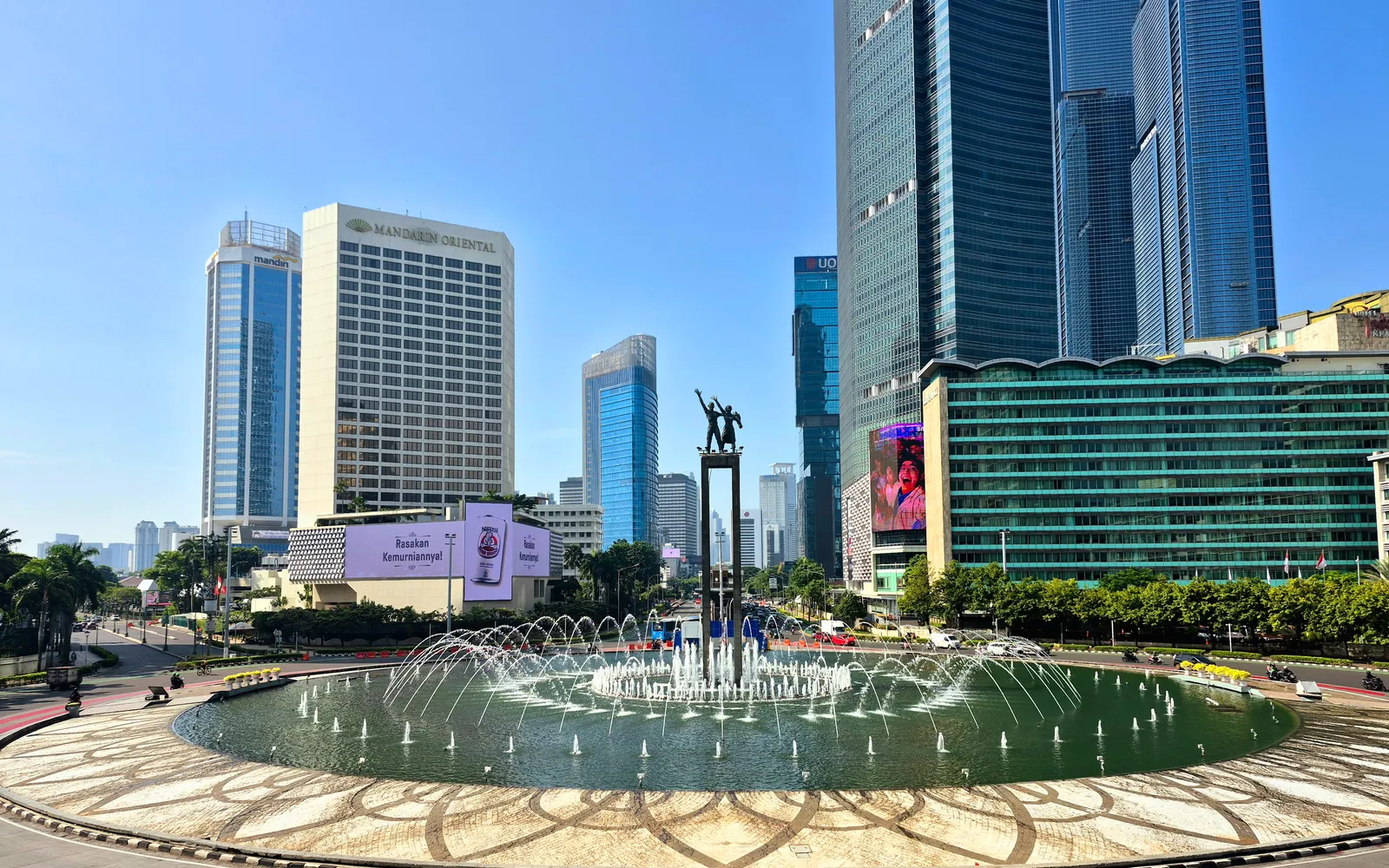
Jakarta's food identity grew from centuries of Betawi natives, Javanese and Sundanese migrants, Chinese settlers, Arab traders, and Dutch colonists living side by side. The result is a staggering breadth of flavor — spanning street carts, old-quarter restaurants, and five-star dining rooms. You don't need to spend much to eat well here; the hawkers and warung (small stalls) lining the streets often outperform the big-name restaurants by a wide margin.
 #1
#1 Nasi Goreng
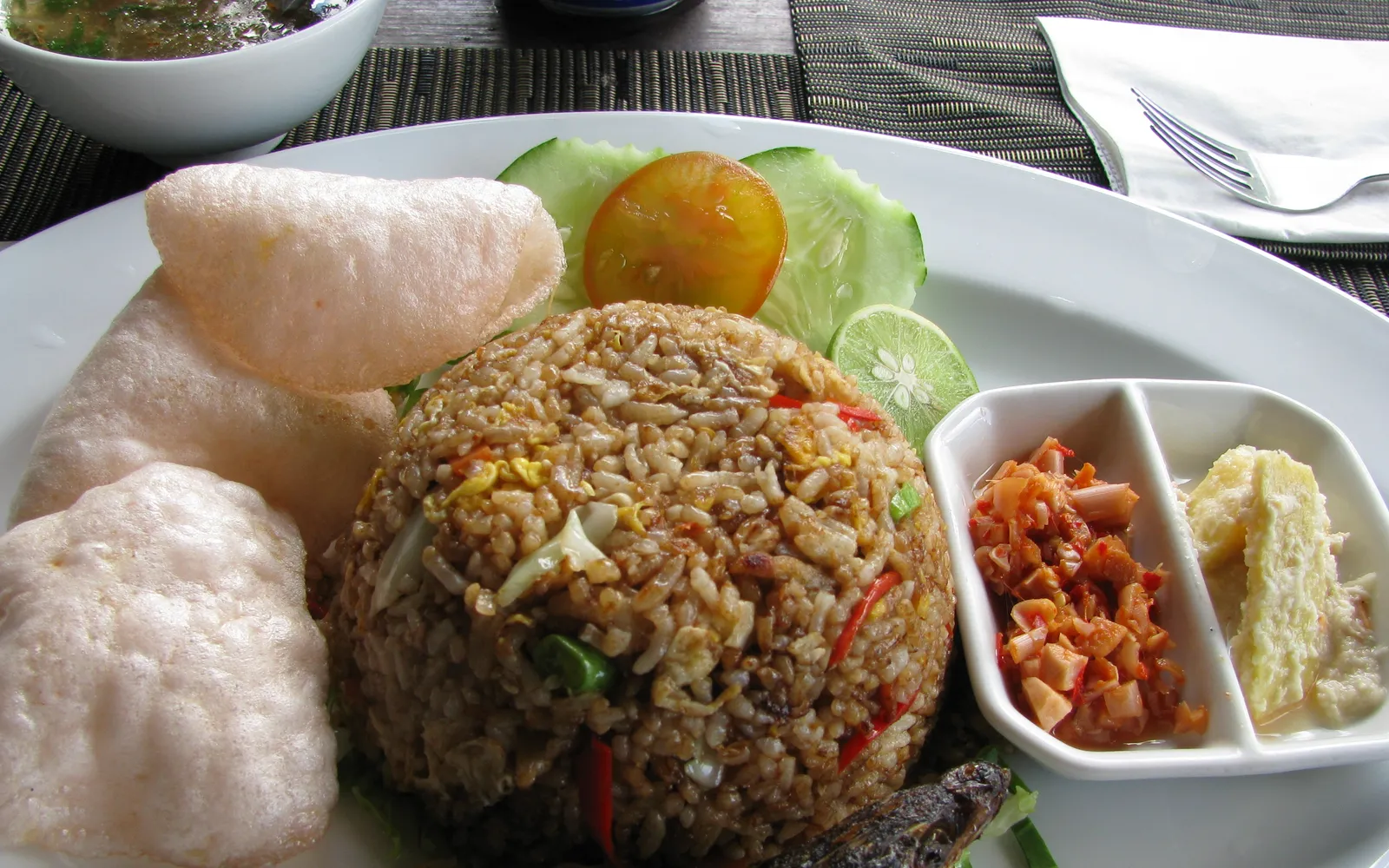
Nasi goreng translates literally as "fried rice," but the flavor is unlike any other version — cooked with sweet soy sauce (<em>kecap manis</em>), shrimp paste, and chili, which gives it a deep brown color and a smoky intensity Indonesians call the "hot smoke" quality. It was declared one of Indonesia's official national dishes and arrives with a fried egg, prawn crackers, and <em>acar</em> (sweet-sour pickled vegetables). You'll find it everywhere from a roadside cart to the restaurant of a 5-star hotel.
- Try it from a late-night street cart — the flavor is far better than tourist-facing restaurants.
- Order 'nasi goreng kampung' for the traditional all-Indonesian version, not adjusted for foreign palates.
- Watch the chili level if you're not used to heat — you can always tell the cook 'tidak pedas' (not spicy).
 #2
#2 Soto Betawi
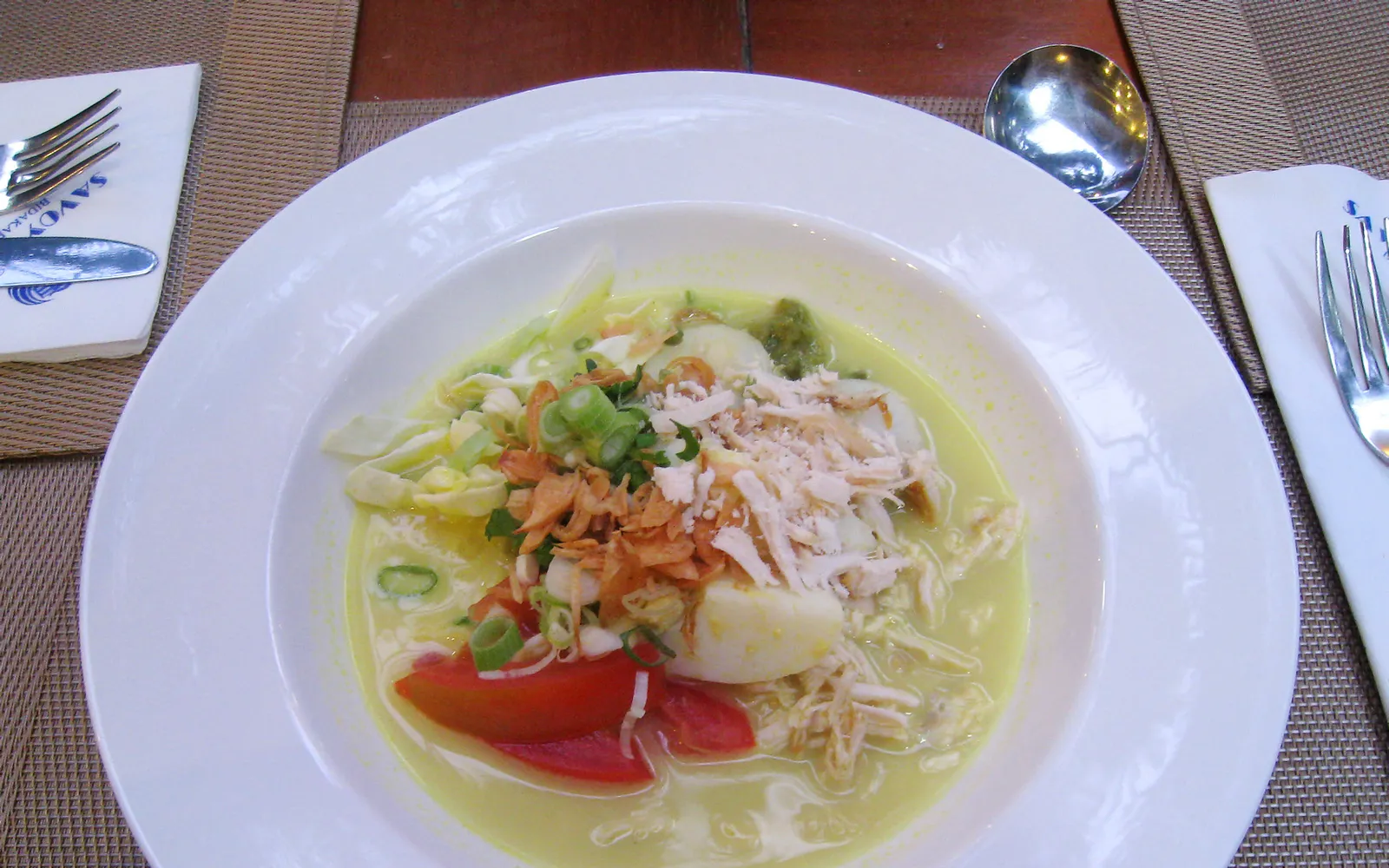
Soto Betawi is the signature soup of the Betawi people — the indigenous inhabitants of Jakarta. It's slow-simmered with coconut milk blended with fresh milk, lemongrass, curry leaves, and aromatics, producing a rich, creamy, ivory-colored broth. The bowl comes with beef and offal, topped with tomato, fried potato, spring onion, and steamed rice. With over 40 regional soto varieties across Indonesia, this ranks among the finest.
- Good restaurants start the broth at dawn — come at midday when it's thickest and most fragrant.
- Order 'daging saja' (meat only) if you'd rather skip the offal.
- Eat it with <em>emping</em> — slightly bitter melinjo crackers that cut through the richness perfectly.
 #3
#3 Gado-Gado
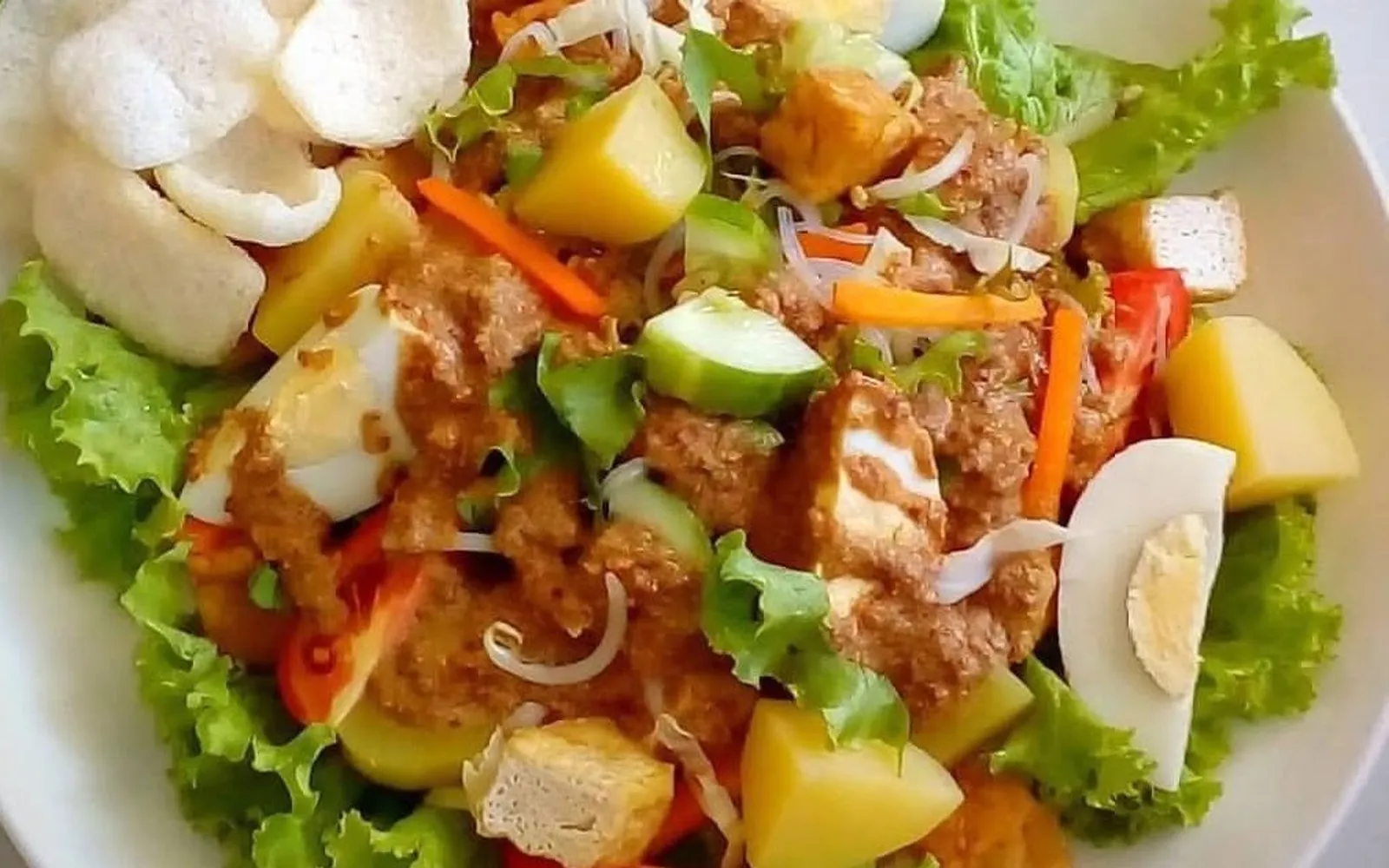
Gado-gado is an Indonesian vegetable salad recognized as one of Indonesia's 5 official national dishes. It combines blanched and raw vegetables, tofu, tempeh, boiled egg, boiled potato, and sticky rice wrapped in banana leaf, all dressed in a Javanese-Sundanese peanut sauce — sweet, spicy, and sour in a single spoonful. Its origins trace to West Java, the region that encompasses Jakarta.
- Ask for 'gado-gado Jakarta' — the shrimp-paste-heavy Jakarta version differs noticeably from the standard Javanese style.
- Say 'tidak pedas' if you want it mild; the peanut sauce is often loaded with chili.
- Fresh gado-gado should be eaten quickly before the sauce dries out and the flavor changes.
 #4
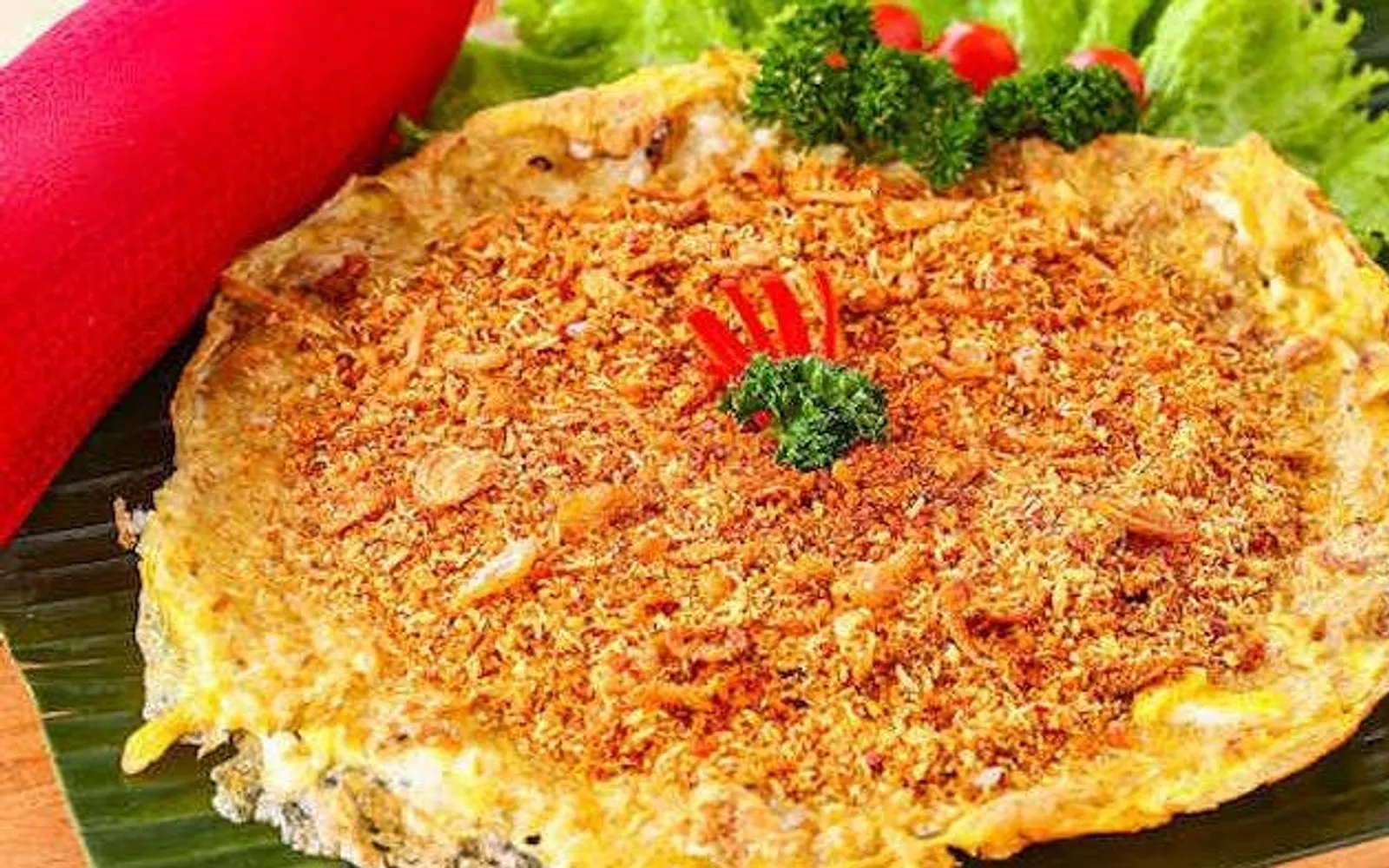
#4 Kerak Telor
Kerak telor is one of the oldest Betawi street snacks in existence. It's made from glutinous rice mixed with chicken or duck egg, cooked on a small iron pan over a charcoal fire — no oil. The cook flips the pan upside down directly over the coals so the egg cooks from the heat above, then tops it with toasted coconut, dried shrimp, and fried shallots. The result is crunchy and smoky. It grows rarer every year but you can still find it in Kota Tua.
- Watching it made live at the stall is an experience in itself — the inverted-pan technique is genuinely impressive.
- Kerak telor is a snack; pair it with hot tea or <em>kopi</em> (Indonesian black coffee) for the full effect.
- The price is very low — around 15,000–25,000 rupiah (roughly US$1–1.50) per portion.
 #5
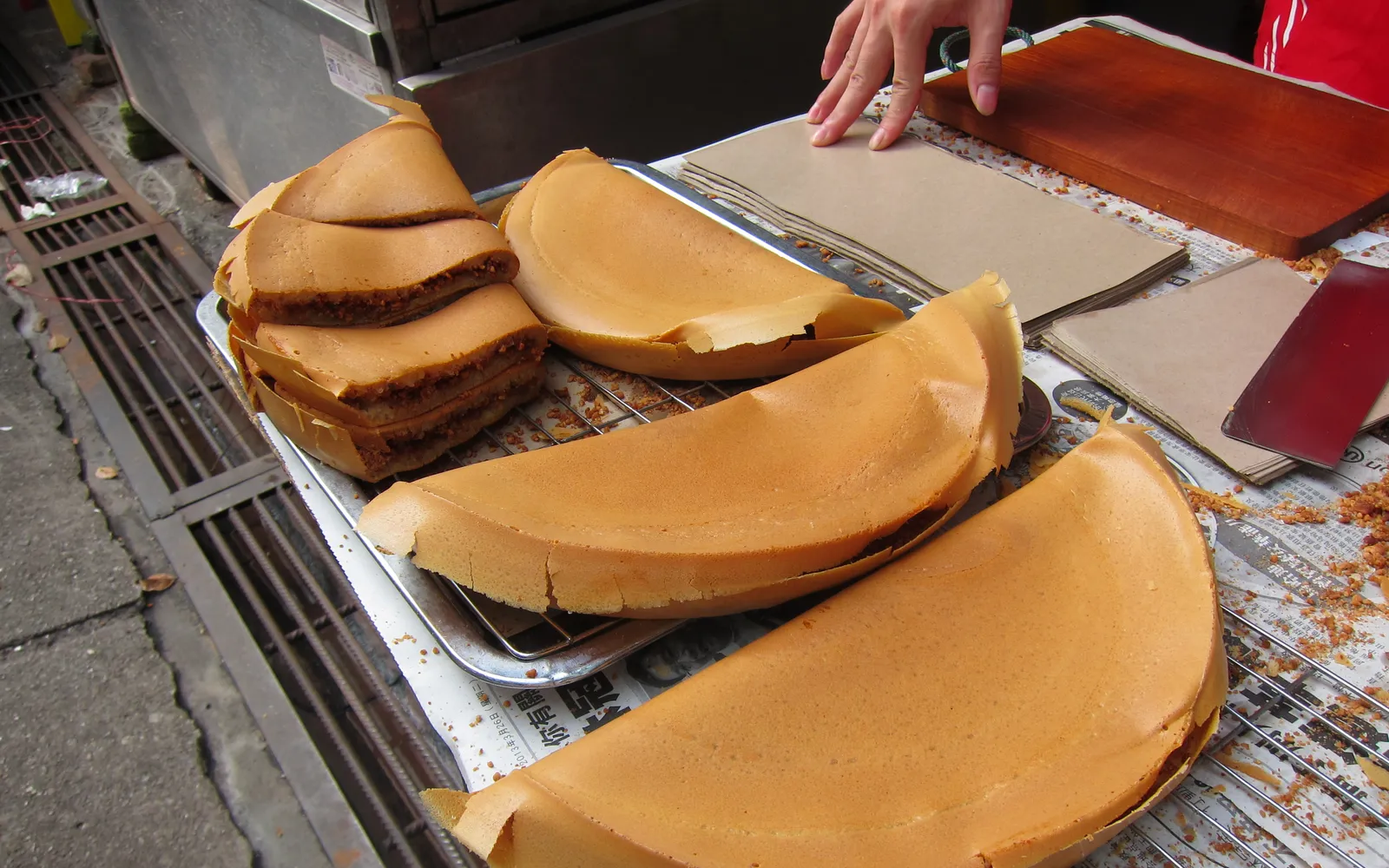
#5 Martabak
Martabak is Jakarta's most popular late-night street food. Two versions: the sweet (<em>martabak manis</em>) is a thick, fluffy pancake filled with chocolate, cheese, peanuts, and condensed milk; the savory (<em>martabak telur</em>) uses thin, elastic dough folded around egg and minced meat. The smell drifting from the large iron griddles draws a crowd from half a block away. The dish traces its roots to Arab-Indian traders who settled in Batavia during the 18th and 19th centuries.
- The classic sweet version is peanut and condensed milk — no need to pay extra for fancy fillings.
- Eat it straight off the griddle while it's hot; the flavor drops noticeably as it cools.
- Most martabak carts open from around 6 pm to midnight.
 #6
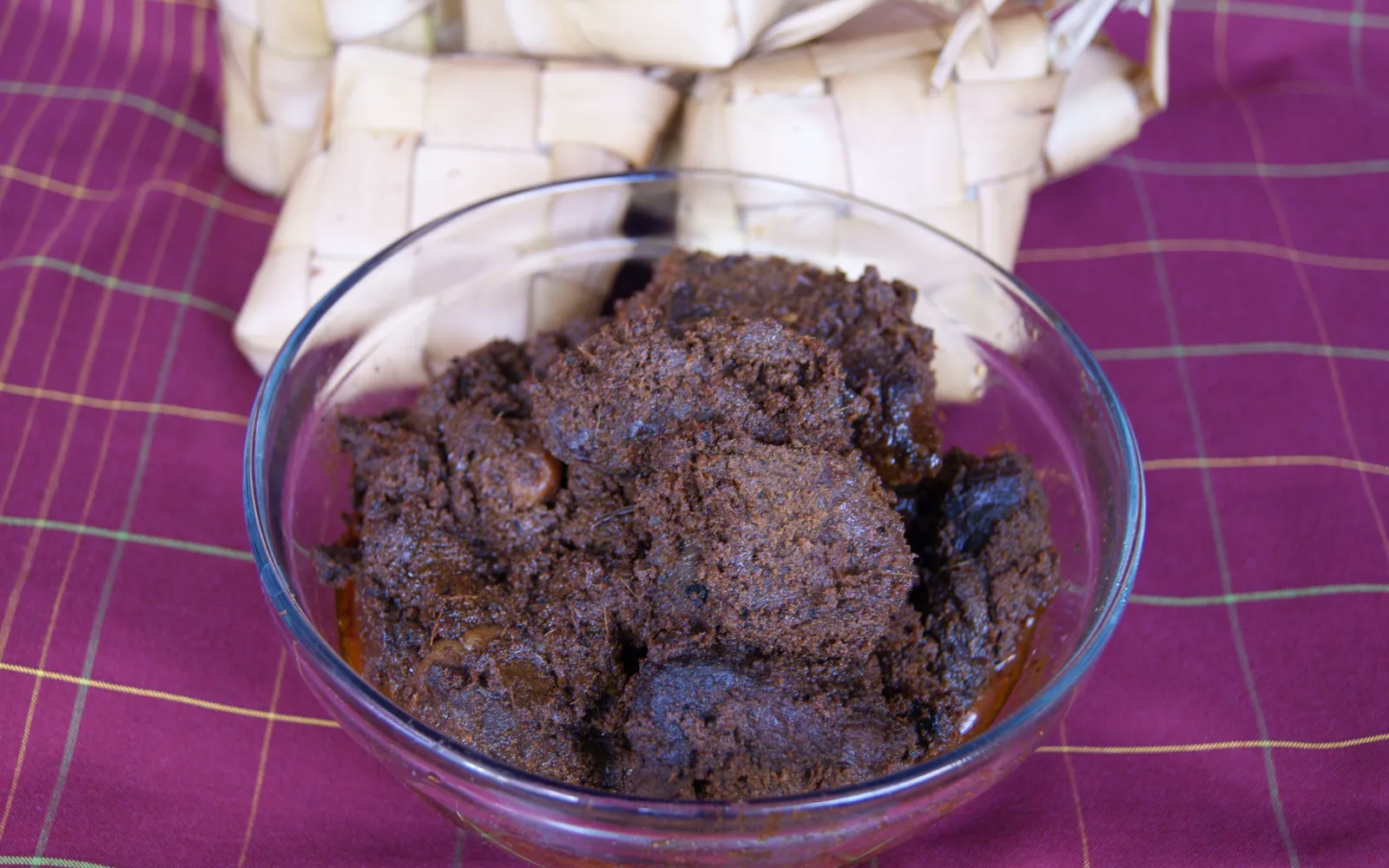
#6 Rendang
Rendang was voted the world's most delicious food by CNN readers in 2011. It originates from the Minangkabau people of West Sumatra, but Jakarta holds the best concentration of Padang restaurants (Minang food) outside Sumatra itself. The dish is beef slow-cooked for hours in coconut milk with a complex spice paste until the liquid fully evaporates — the meat absorbs every layer of the spice blend, producing a deep, almost impossibly rich flavor that stands alone.
- Traditional Padang restaurants stack multiple dishes on your table; you only pay for what you eat.
- 'Rendang kering' (dry rendang) keeps longer and has a more concentrated flavor than 'rendang basah' (with sauce).
- Eat it with hot steamed rice and <em>sayur nangka</em> (young jackfruit curry) — a combination that needs nothing else.
Where to stay in Jakarta for this trip
A well-located hotel means less commuting and more sightseeing. Here are real, top-rated stays in Jakarta — compare Agoda · Booking · Trip.com in one click.
Raffles Jakarta
Affiliate links — we may earn a commission at no extra cost to you. Details
The Langham, Jakarta
Affiliate links — we may earn a commission at no extra cost to you. Details
Mandarin Oriental, Jakarta
Affiliate links — we may earn a commission at no extra cost to you. Details
The Ritz-Carlton Jakarta, Pacific Place
Affiliate links — we may earn a commission at no extra cost to you. Details
Tours, tickets & activities in Jakarta
Day tours, attraction tickets and travel essentials for Jakarta — book ahead on Klook with mobile e-tickets.
Affiliate links — we may earn a commission at no extra cost to you.
Before You Pack
Jakarta's food is the deepest way into understanding Indonesia. Try at least one dish from this list at each meal, and you'll leave with flavor memories that outlast the trip.