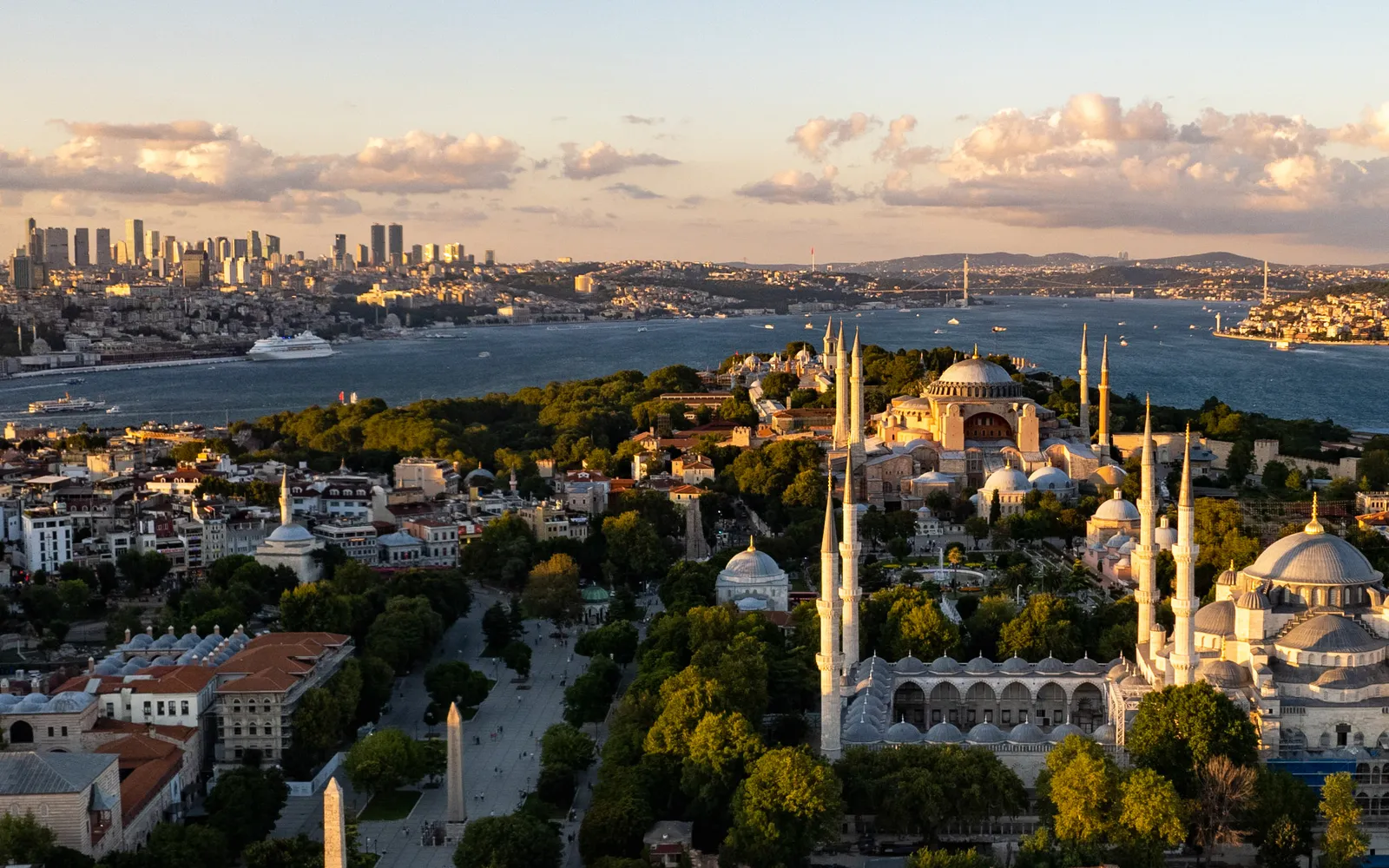
Turkish food in Istanbul is not merely food — it is edible history. The Ottoman kitchen fed soldiers, nobles and sultans for more than 6 centuries, and those recipes survive today in tiny street-side shops. From kebab turning on the spit all day, to tea simmering in a tulip-shaped glass, to crisp-sweet baklava, Istanbul will keep you hungry without even trying.
 #1
#1 Doner Kebab
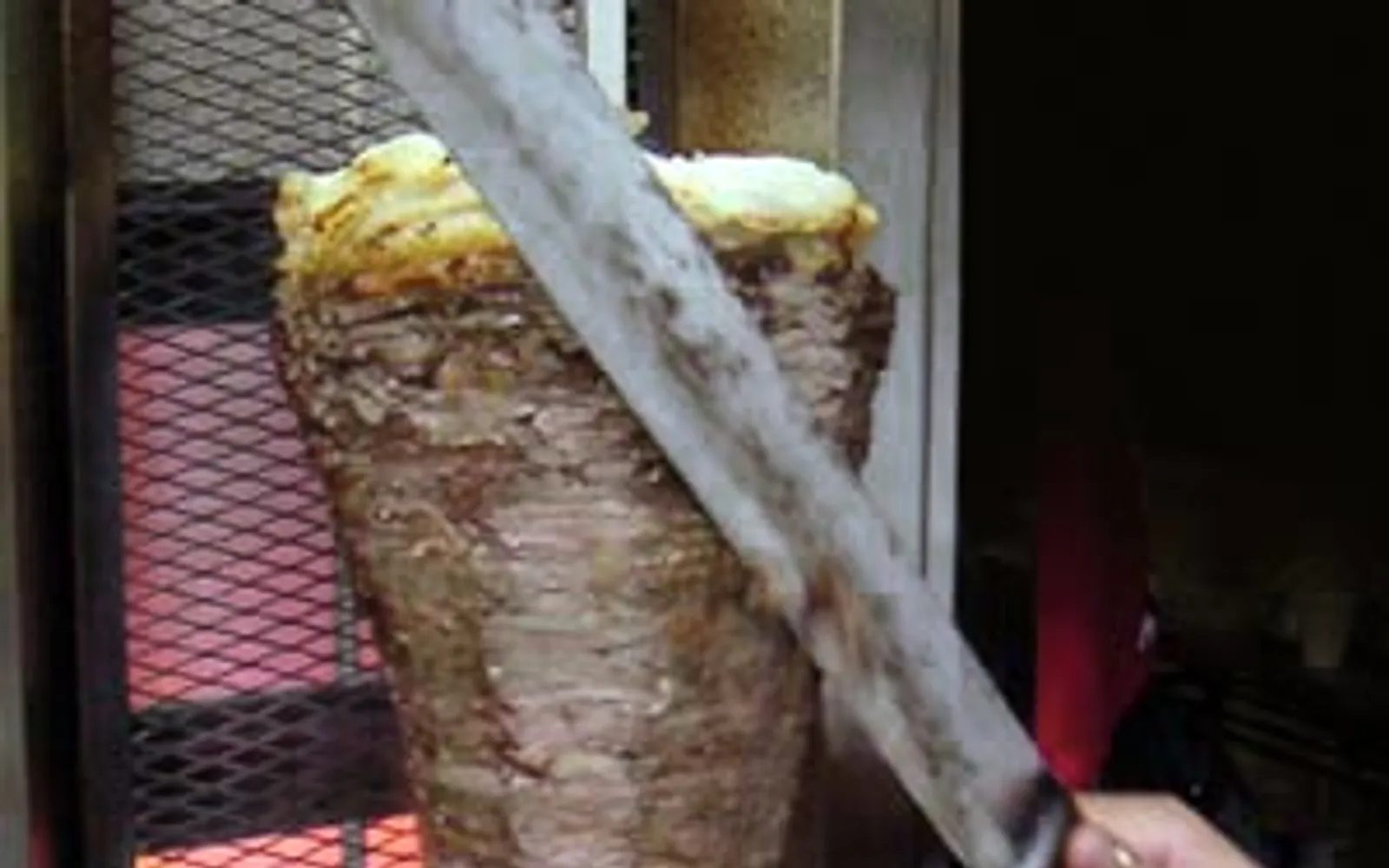
The most internationally recognised Turkish dish, and one that originated in Turkey before spreading worldwide. Lamb or chicken is marinated in spices, pressed onto a large vertical spit, and cooked slowly in front of a flame all day long. It is served on fresh bread (ekmek) or on a plate with rice and salad. The flavour in Istanbul is noticeably deeper and more aromatic than the versions found across Europe, because local shops use better-quality meat and fresh spices. That said, stalls in heavily touristed areas can charge two to three times the going rate.
- A good shop in a residential neighbourhood charges 80–150 Turkish lira; stands along Istiklal and Sultanahmet can be two to three times higher.
- Check that the meat on the spit looks fresh and that customers are ordering steadily — meat that has been rotating for hours without buyers tends to dry out.
- Ask for an Iskender kebab if you want the special version: served with yoghurt and a hot butter sauce poured over the top, it is the pinnacle of the kebab family.
 #2
#2 Baklava
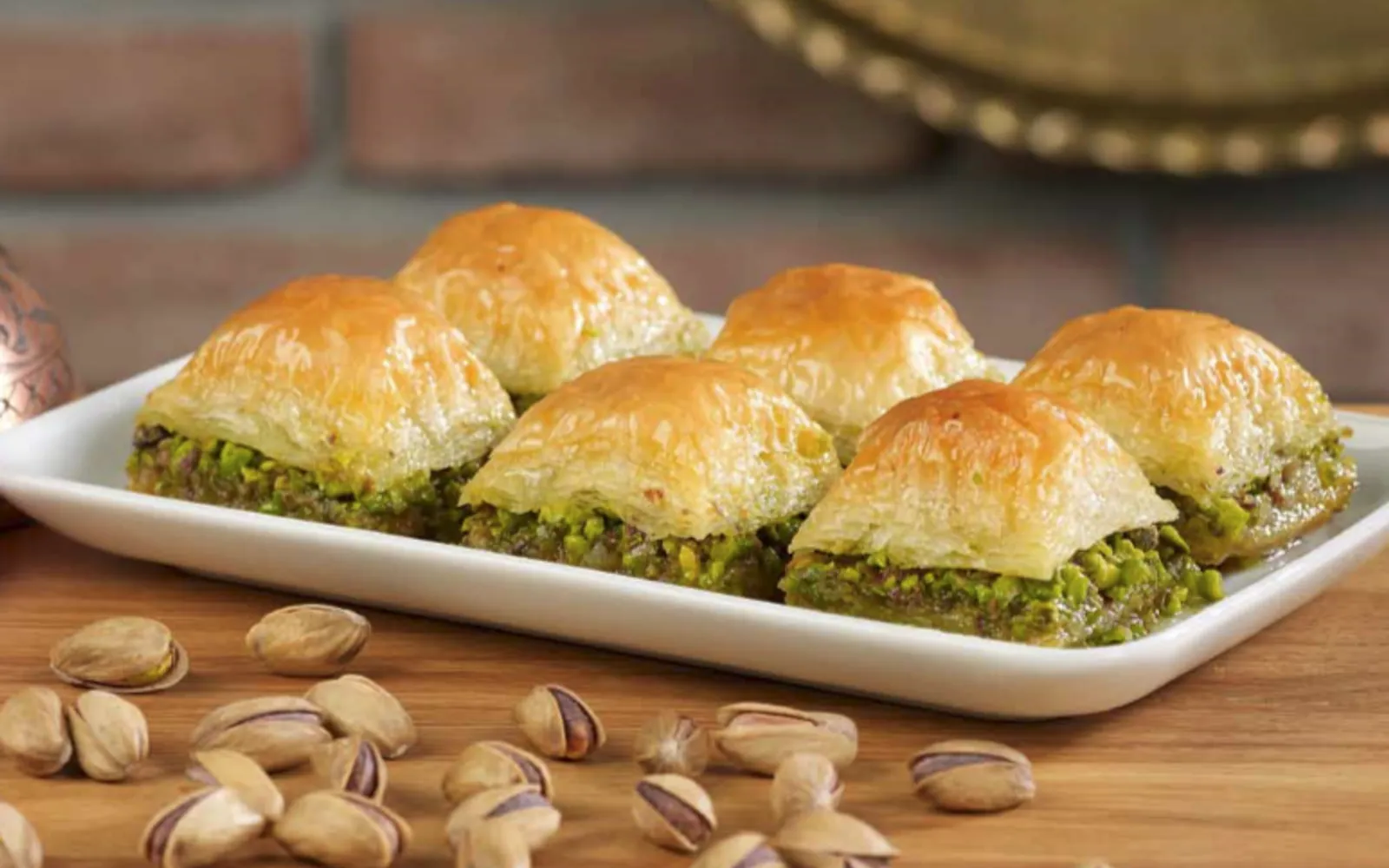
The most iconic Turkish pastry and a living piece of Ottoman culinary heritage. Dozens of tissue-thin phyllo layers are alternated with ground pistachios, walnuts or almonds, baked until crisp, then drenched in syrup infused with rose water. The result is sweet, crunchy and fragrant. Authentic baklava from Gaziantep holds a protected geographical indication, but the best Istanbul shops come remarkably close when they use genuine Gaziantep pistachios.
- Karakoy Gulluoglu has been open for more than 70 years and is the gold standard for baklava in Istanbul. Buy by weight — 250–500 g — rather than by the piece.
- Fresh baklava is best within 2–3 days. If you are taking it home, choose vacuum-sealed boxes, which keep for 2–3 weeks.
- Top shops charge roughly 150–300 Turkish lira per 100 g. Avoid supermarket-bagged baklava — the texture and flavour are a different product entirely.
 #3
#3 Turkish delight
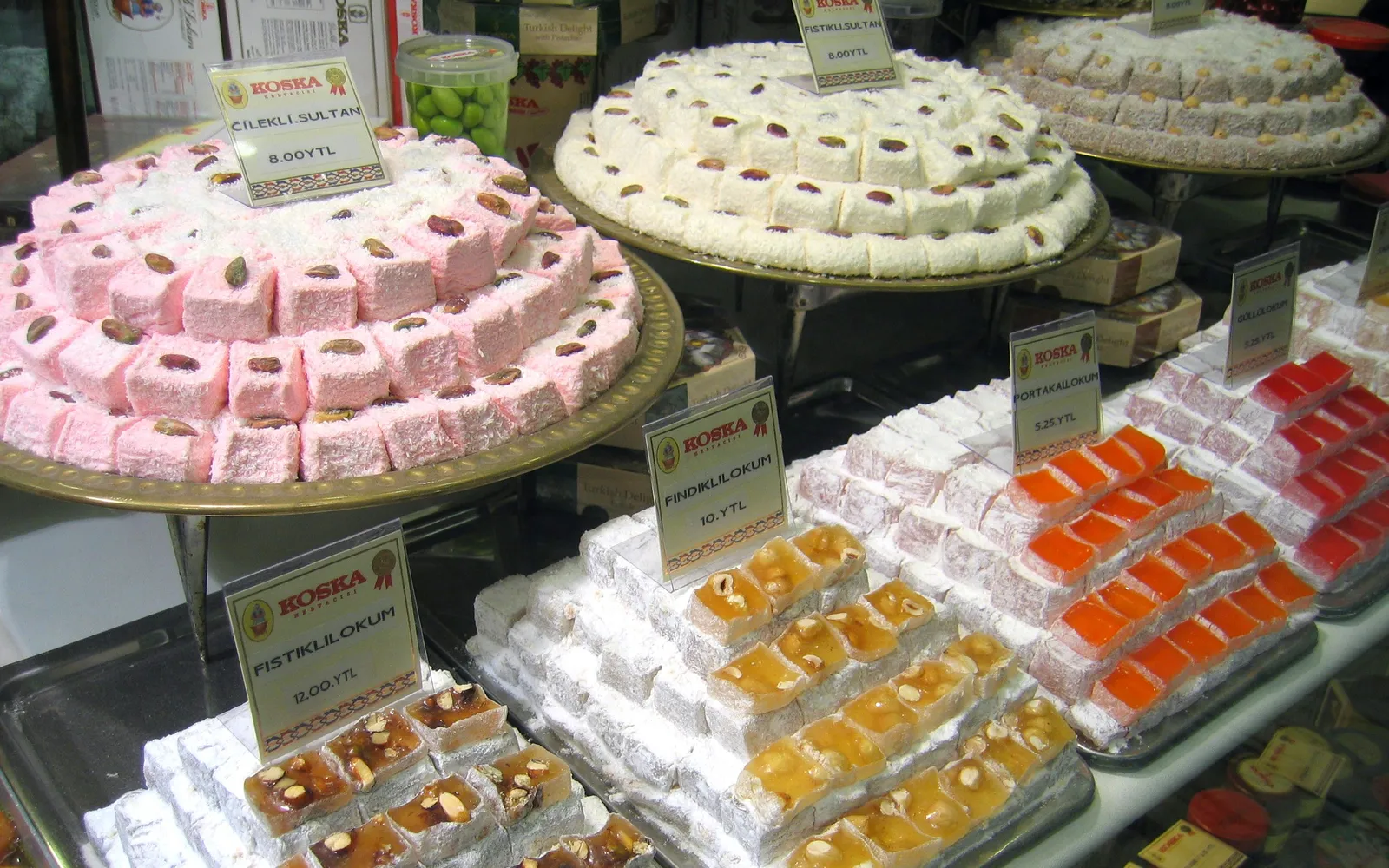
A traditional Turkish confection with a history stretching back more than 500 years, originally produced in the Ottoman court as a premium gift for nobles. It is made by cooking cornstarch and sugar into a soft gel, then flavoured with rose water, citrus, mastic resin or mint, and finished with powdered sugar or coconut. The pieces are sold in colourful squares in many flavours. Quality delight should be soft but not sticky, firm but not hard — and any reputable shop will always offer a taste before you buy.
- Haci Bekir, founded in 1777, is credited with inventing Turkish delight in its modern form. The main branch is on Istiklal Avenue.
- Always taste before buying. Good shops offer samples without prompting; a shop that refuses to let you taste is a reason to walk on.
- Sealed boxes keep for 1–2 months at room temperature, making Turkish delight the most practical edible souvenir among all Turkish sweets.
 #4
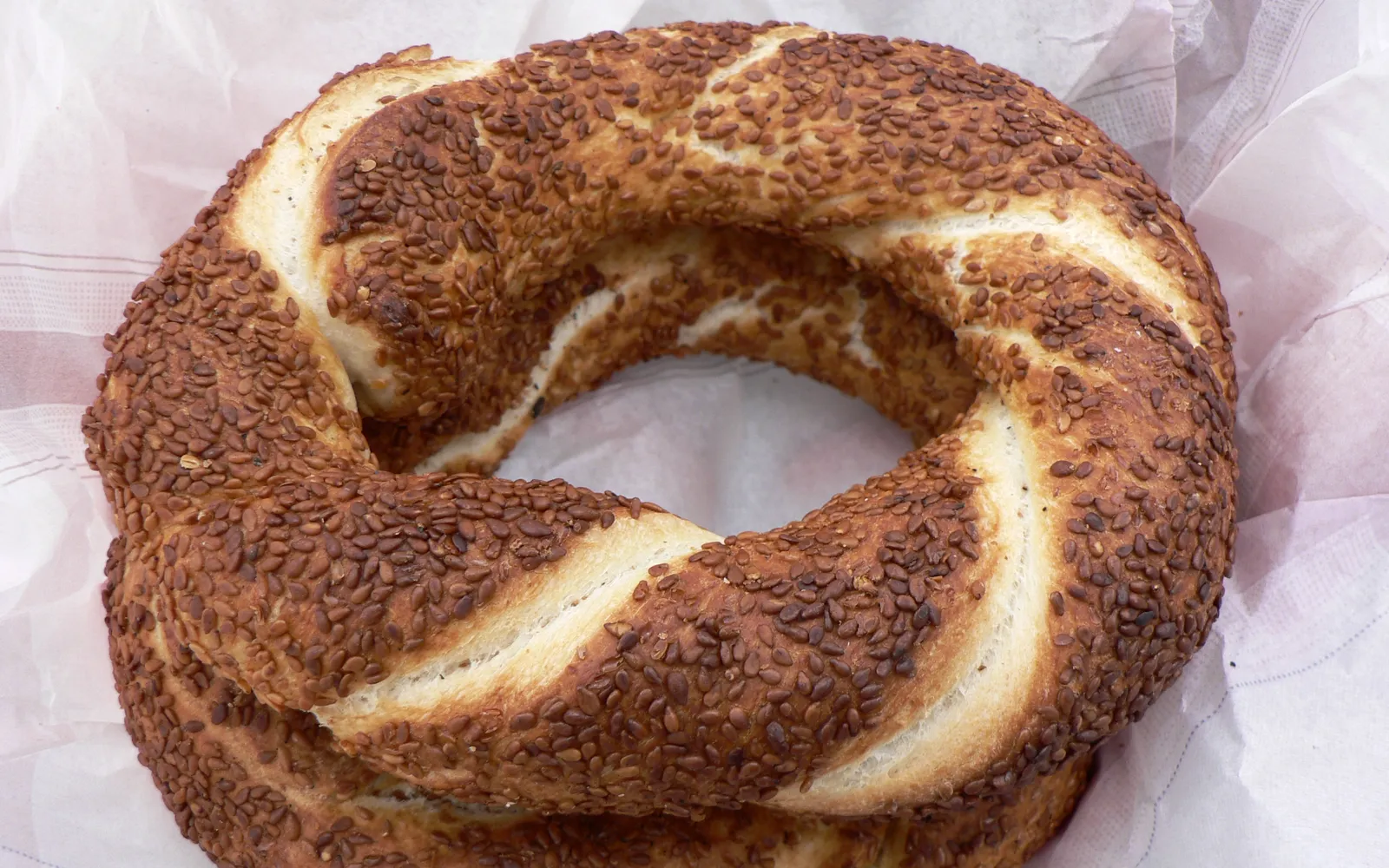
#4 Simit
The circular sesame bread that has been Istanbul's breakfast and street snack since the 15th century. Wheat dough is kneaded, dipped in concentrated grape molasses, rolled in white or black sesame seeds and baked. The crust is crisp and fragrant; the interior is soft and springy. It can be eaten plain or with Turkish white cheese (beyaz peynir) and butter. At 10–20 Turkish lira a piece, it is the cheapest and arguably the best breakfast in the city. The chain Simit Sarayi has branches across Istanbul and sells full sets with cheese and tea.
- Simit is at its best between 07:00 and 10:00 when it comes straight from the oven — by mid-morning the crust loses its crunch.
- Pair it with Turkish tea or water. Buying from a street cart costs almost half what Simit Sarayi charges.
- Watch out for pigeons near the Galata Bridge — the flocks there are notorious for swooping at simit in a visitor's hand.
 #5
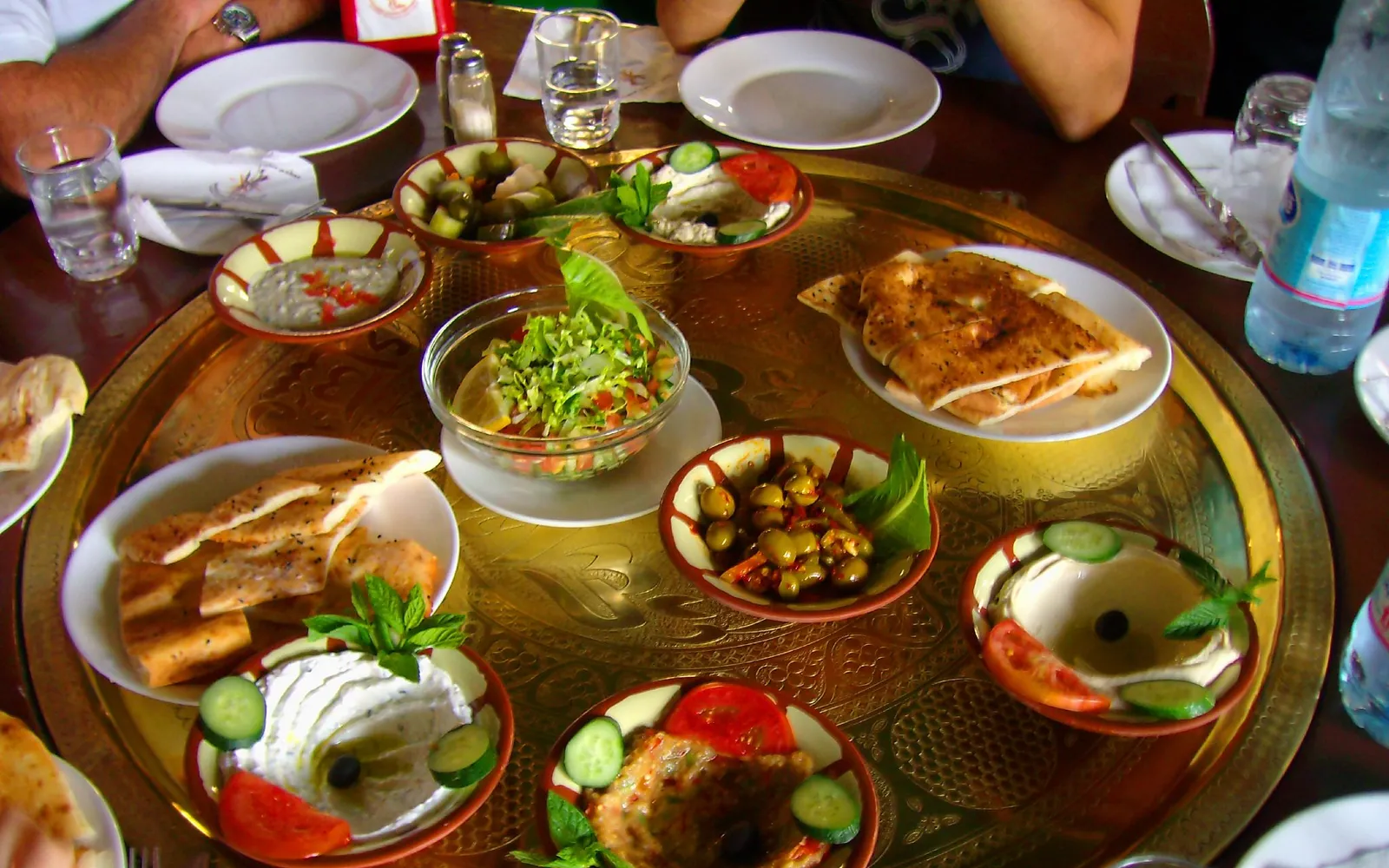
#5 Meze
The Ottoman sharing tradition that has never gone out of fashion. Meze means a spread of small plates ordered all at once and placed at the centre of the table for everyone to share. The spread typically includes hummus, haydari (herbed yoghurt), dolma (rice-stuffed vine leaves), fried calamari, fresh cheese, olives in several varieties and multi-coloured pickled vegetables. The meal is often paired with Raki, the Turkish anise spirit — but ordering meze as a dinner without alcohol is equally common and equally welcome.
- Order 4–6 plates per person. Start with cold dishes (hummus, salads, cheese), then add more as you go — a good waiter will guide you.
- The best meze restaurants rotate their menu seasonally: spring brings fresh pickles and herbs; winter leans toward stews and hot soups.
- The Kadikoy district on the Asian side has excellent meze at noticeably lower prices than equivalent restaurants on the European side — worth the short ferry crossing.
 #6
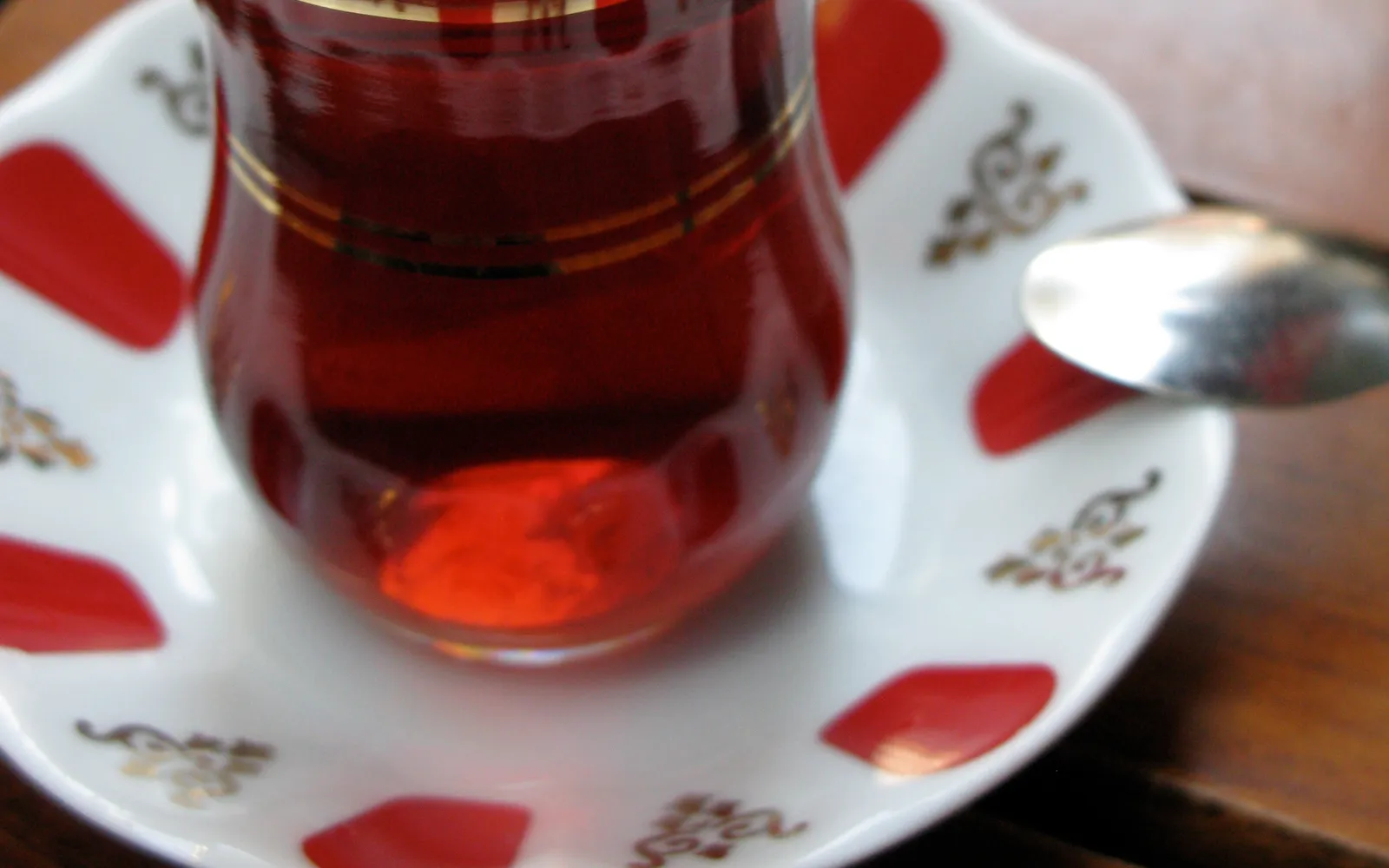
#6 Turkish tea
Turkish tea is not just a drink — it is a social ritual that never stops. Turkey has one of the highest per-capita tea consumption rates in the world. The tea is grown in the Rize region along the Black Sea coast, brewed in a two-tiered pot (caydanlik) to a strong concentrate, then diluted to taste with hot water. It arrives in a clear tulip-shaped glass, deep ruby-red, with no milk — add one or two sugar cubes if you like it sweet. The tea house (cay bahcesi) is one of the most important places of rest in everyday Istanbul life.
- Turkish tea brewed at full strength is very intense. Ask for acik (light) if you want it diluted, or koyu (dark) if you want it strong.
- Tea gardens in public parks and along the waterfront have the best atmosphere. Try a cay bahcesi inside Gulhane Park, near Topkapi Palace.
- If a local invites you for tea while you are browsing in a market, declining is awkward — hospitality is genuine here. Accepting does not mean you are obliged to buy anything.
Where to stay in Istanbul for this trip
A well-located hotel means less commuting and more sightseeing. Here are real, top-rated stays in Istanbul — compare Agoda · Booking · Trip.com in one click.
Four Seasons Hotel Istanbul at Sultanahmet
Affiliate links — we may earn a commission at no extra cost to you. Details
Boutique Saint Sophia Hotel
Affiliate links — we may earn a commission at no extra cost to you. Details
Sura Hagia Sophia Hotel
Affiliate links — we may earn a commission at no extra cost to you. Details
Radisson Hotel President Old Town Istanbul
Affiliate links — we may earn a commission at no extra cost to you. Details
Tours, tickets & activities in Istanbul
Day tours, attraction tickets and travel essentials for Istanbul — book ahead on Klook with mobile e-tickets.
Affiliate links — we may earn a commission at no extra cost to you.
Before You Pack
The best food in Istanbul is rarely found in the upscale waterfront restaurants — it lives in the narrow alleys around Karakoy, the Kadikoy market on the Asian side, and the street stalls where locals queue in long lines. If a shop has a small sign but a crowd at the counter, walk in without hesitation.