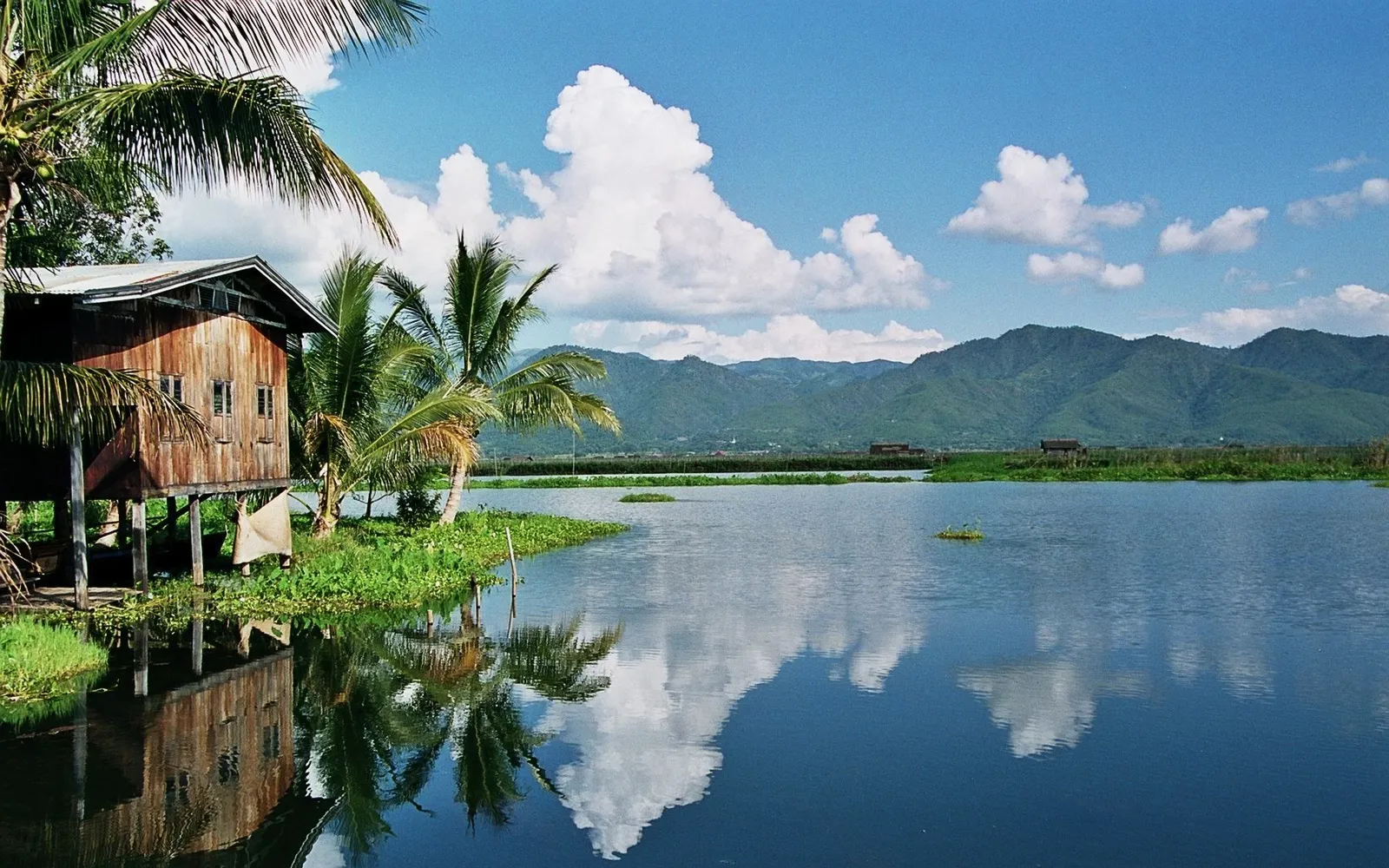
The food around Inle Lake has a character entirely its own — quite different from what you find in Yangon or Mandalay. Shan flavors are gentler, built around freshness: vegetables from the floating gardens, fish pulled straight from the lake that morning, and tofu made from yellow split peas, all coming together in dishes that satisfy without leaning on heavy spicing.
 #1
#1 Shan Noodles
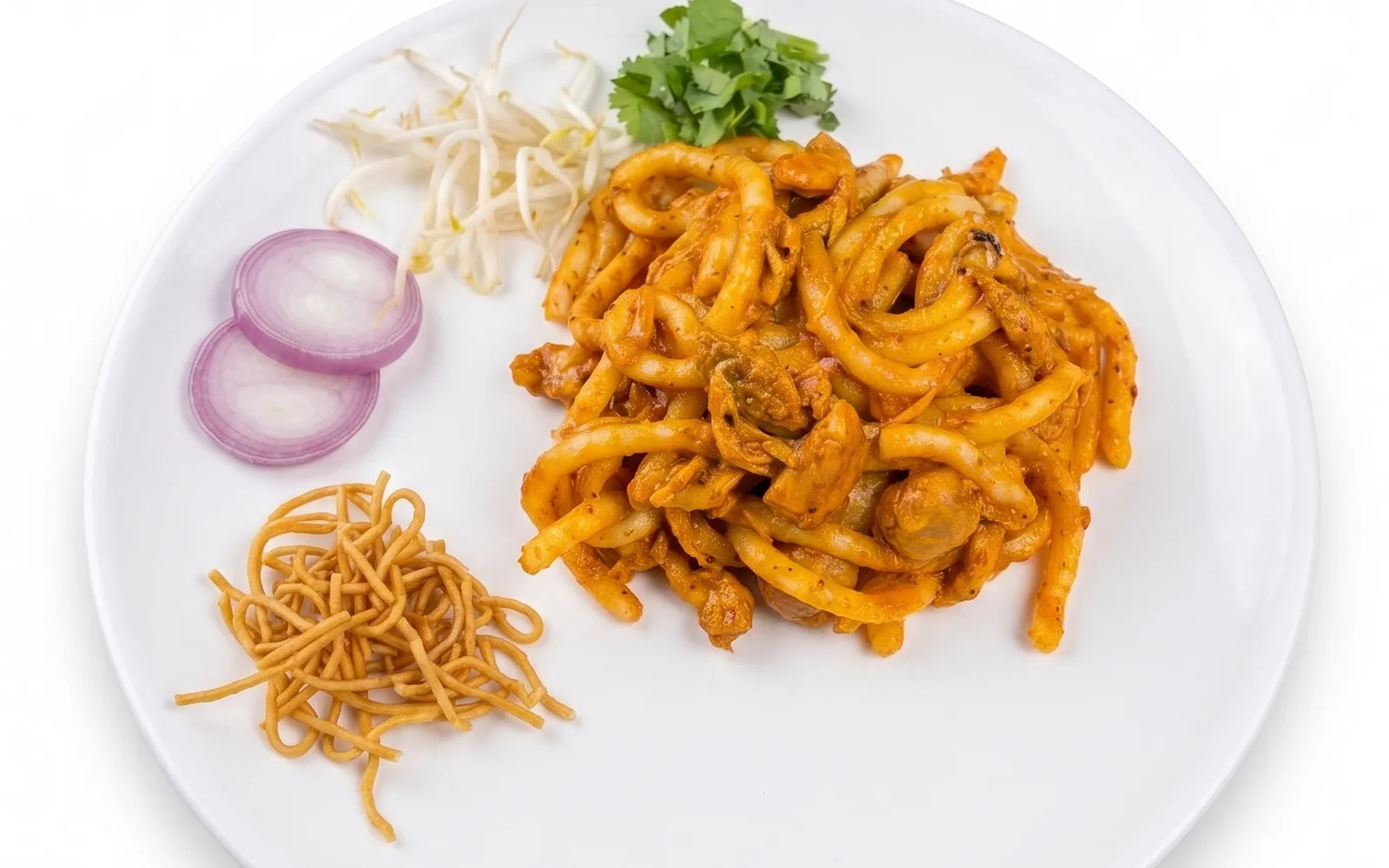
The number-one breakfast for locals and travelers alike at Inle Lake. Soft rice noodles arrive in a clear broth made from pork bones and Shan spices — rounded, not salty — topped with fried minced pork, peanuts, and garlic oil. You can order it wet (with broth) or dry (tossed). The flavor is simple, but first-timers almost always come back for a second bowl because the broth is so clean and fresh.
- Order it dry on your first try, to taste the noodles and Shan sauce properly before adding broth to your liking
- Prices run 1,500–2,500 kyat per bowl — very cheap and filling; good shops open from 6:00 a.m. and often sell out before 10
- Ask for dried red chili flakes or chili-vinegar on the side to adjust the heat
 #2
#2 Inle Lake Fried Fish
Fresh fish from Inle Lake — usually carp or local species caught by Intha fishermen that same morning — fried whole or in pieces until the skin is crisp. Lake fish here is delicate, with no muddy smell, because the lake sits at altitude and the water is clean. Served with a lime-chili dip and Shan pickled vegetables, it is the dish to order when you stop for lunch on the water. The flavor is naturally clean and needs very little seasoning to shine.
- Ask the restaurant whether the fish came in that morning — day-fresh fish tastes noticeably different from overnight
- Floating restaurants mid-lake tend to use fresher fish than in-town shops, though prices are higher
- It comes with rice and a light Burmese curry on the side, making it a complete lunch between boat stops
 #3
#3 Shan Tofu
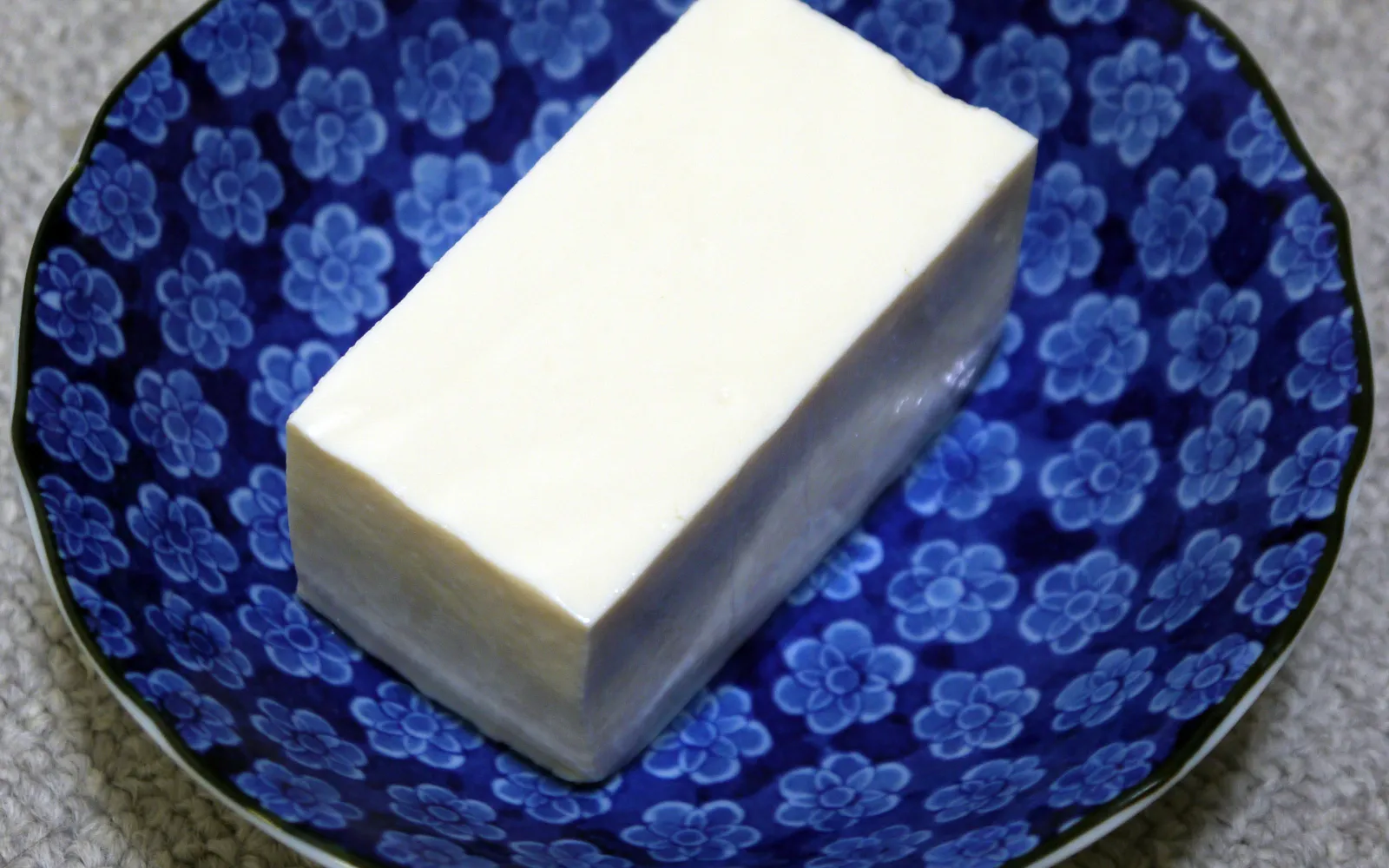
Shan-style tofu is made from ground chickpeas or split peas, not the soy you already know. Turmeric gives it a vivid yellow-orange color. The texture is smoother and more silky than regular tofu — closer to a soft set pudding. You can eat it fresh (cool and soft, with dipping sauce) or fried (crisp outside, molten inside). Both versions come with roasted-sesame sauce and chili oil. The flavor is mild enough to win over people who normally dislike tofu.
- Try both the fresh and fried versions at the same shop to compare — the texture difference is dramatic
- Buy fresh Shan tofu at the morning market for very little and take it back to your guesthouse as a breakfast snack
- Good Shan tofu is made fresh every day; if it feels too firm or dry, it is likely from the day before
 #4
#4 Tea Leaf Salad
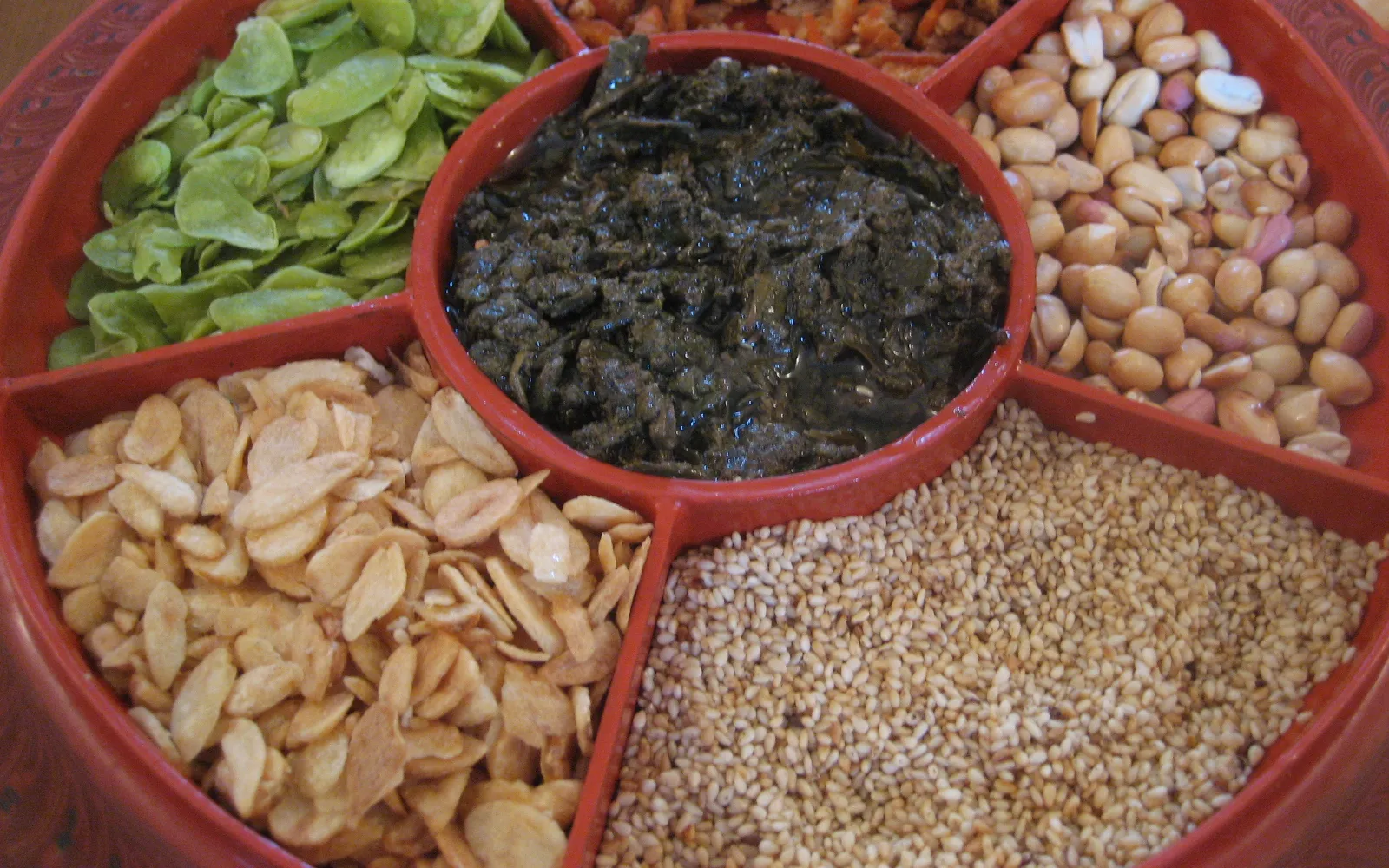
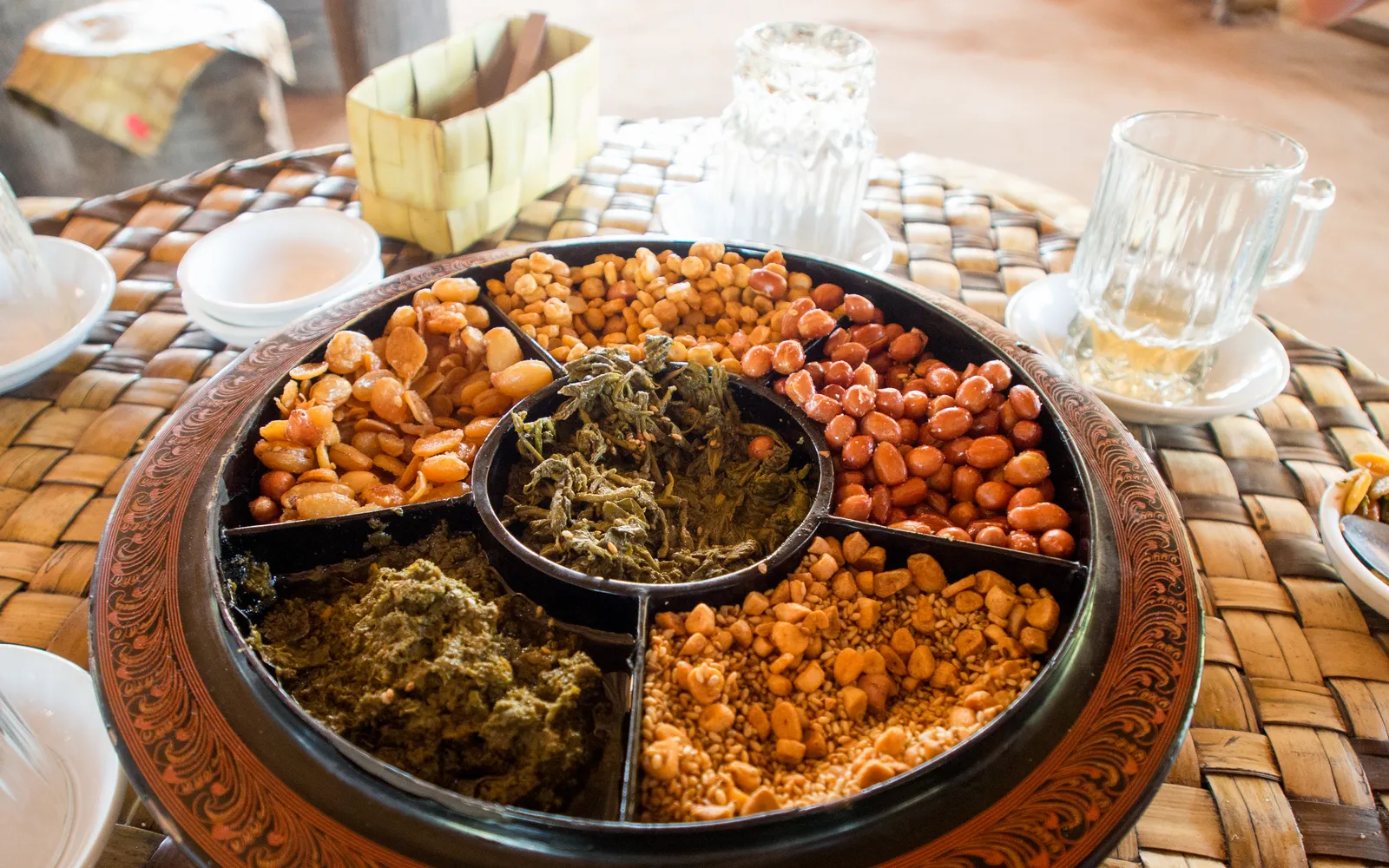
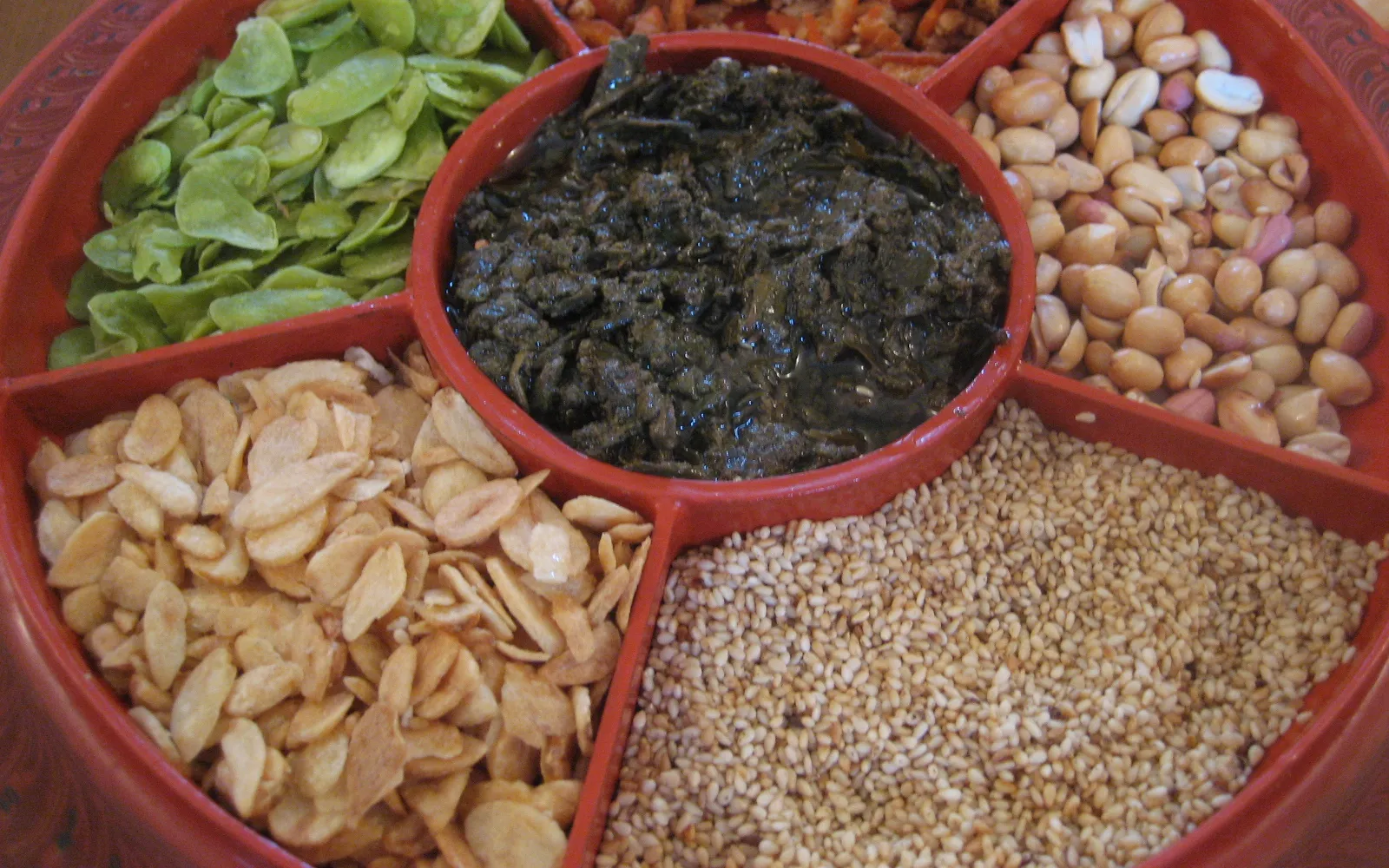
A traditional Burmese dish that appears at almost every meal. Young tea leaves are fermented and steamed over several days until they develop a gentle sourness and a faint bitterness, then tossed with several varieties of fried crispy beans, fried garlic, shredded coconut, toasted sesame, tomato, and lime juice. Every bite delivers something different — salty, sour, crunchy, bitter, and a touch sweet all at once. It is unlike any salad anywhere else; first-timers are usually surprised by how complex the flavors are.
- Ask for it to be tossed at the table so you can watch the components come together and adjust the seasoning as you go
- Fermented tea leaves contain a fair amount of caffeine — ordering this in the evening may keep light sleepers awake
- Try it as a side with a rice lunch or dinner; it pairs particularly well with plain rice and Burmese curry
 #5
#5 Mohinga
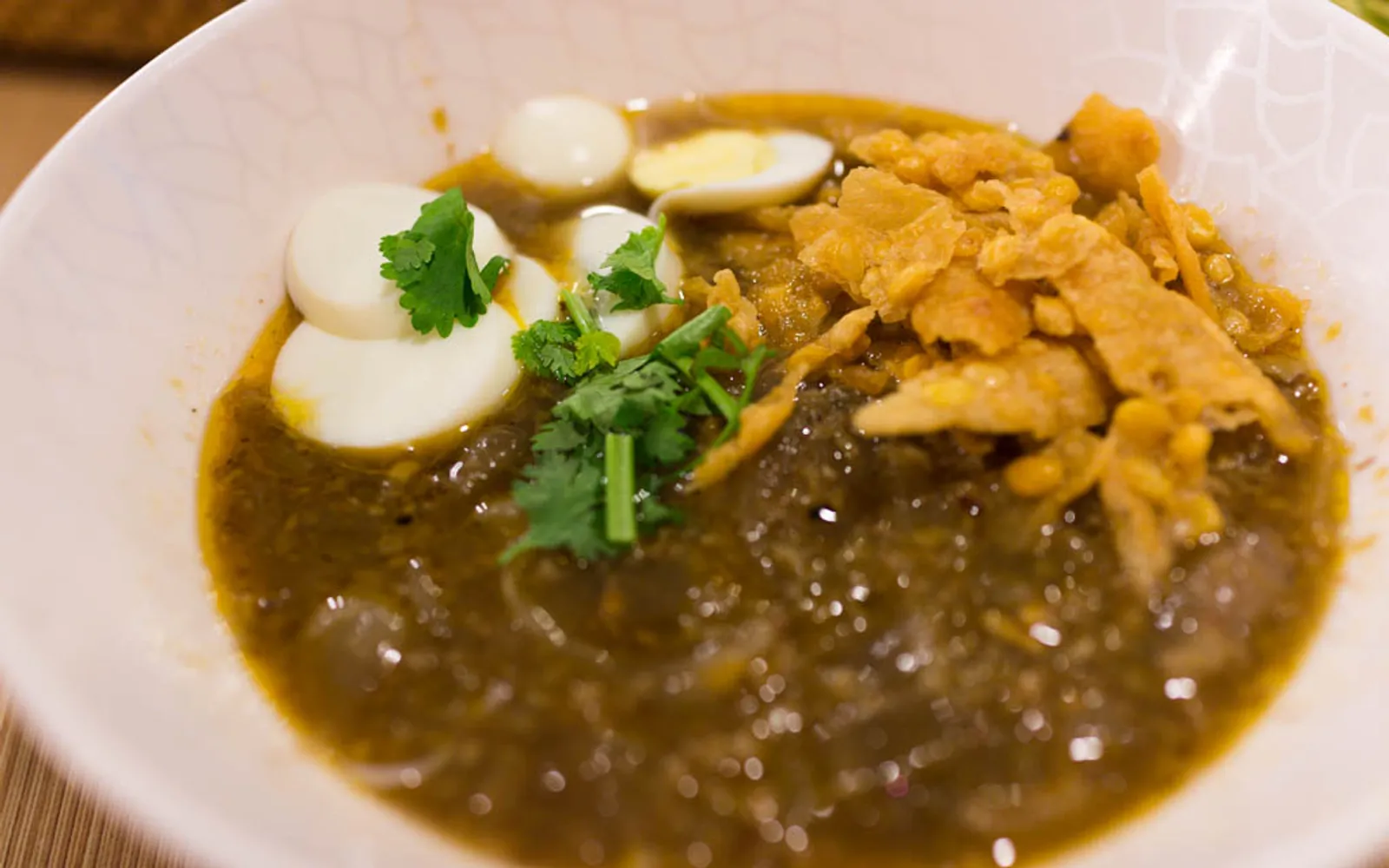
Myanmar's national dish has been eaten for breakfast in Nyaungshwe for hundreds of years. A freshwater fish broth simmered with galangal, lemongrass, and onion is thickened slightly with rice flour and banana stem, resulting in a rounded, aromatic soup with no fishy edge. Thin rice noodles absorb the broth well; crispy fried shallots, a boiled egg, and fish cake go on top. The Nyaungshwe version is lighter and uses fresher fish than Yangon's, because the lake supplies the catch directly.
- Ask for an extra boiled egg and fish cake on the side — each costs just a few hundred kyat and adds real substance
- Good mohinga shops open from 5:30 a.m. and sell out before 9; arrive before the tourist crowd wakes up
- The Nyaungshwe version is less spicy than Yangon's — a good entry point if you are still getting used to Burmese flavors
 #6
#6 Shan Curry
The easiest and best-value lunch order in Nyaungshwe. A Shan rice set typically arrives with one or two curries, several steamed vegetables, clear soup, and a sesame dip — all made from produce grown on the floating gardens of the lake. Shan curries use very little oil and carry nothing like the heat of Thai curries; the focus is on the freshness of the ingredients. This makes it the ideal choice for anyone avoiding spice or simply wanting a lighter meal.
- A rice set costs 3,000–5,000 kyat, including vegetables, curry, and free rice refills — very good value
- Tell them to go light on the oil if you prefer; good restaurants will adjust without issue
- Ask to see the curries before ordering — most Shan restaurants display the day's options so you can point at what you want
Where to stay in Inle Lake for this trip
A well-located hotel means less commuting and more sightseeing. Here are real, top-rated stays in Inle Lake — compare Agoda · Booking · Trip.com in one click.
Trinity Family Inn
Affiliate links — we may earn a commission at no extra cost to you. Details
ViewPoint Ecolodge
Affiliate links — we may earn a commission at no extra cost to you. Details
Golden Empress Hotel
Affiliate links — we may earn a commission at no extra cost to you. Details
Myanmar Treasure Resort Inle
Affiliate links — we may earn a commission at no extra cost to you. Details
Tours, tickets & activities in Inle Lake
Day tours, attraction tickets and travel essentials for Inle Lake — book ahead on Klook with mobile e-tickets.
Affiliate links — we may earn a commission at no extra cost to you.
Before You Pack
The best eating in Nyaungshwe happens in small side-street shops where locals fill every seat. If you spot a place packed with monks and residents at breakfast time, that is the one to walk into. Shan food is at its best fresh out of the kitchen — not in a resort dining room calibrated for foreign palates.